


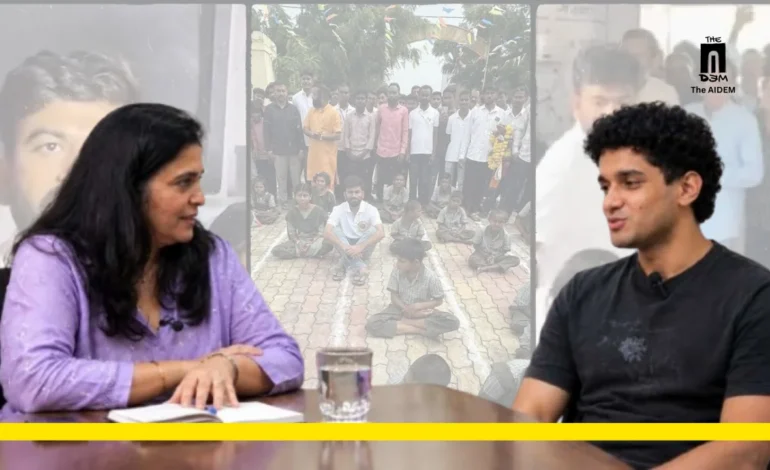
In this freewheeling conversation, renowned writer and social activist Teesta Setalvad and a younger voice of activism, Saurav Das of the Cockroach Janata Party, bridge generations as they reflect on protest, dissent and the changing language of resistance in India. Moving from the CJP’s School Thik Karo (set the schools right) campaign and police accountability to intergenerational solidarity, university spaces and the politics of humour, wit and satire, the conversation explores how a new generation is finding its own ways of questioning power — while drawing on the experience of those who have challenged it for decades.
Teesta Setalvad:
Namaskar, Salam. Today we have a special guest before our viewers, a very special guest, Saurav Das, co-convener of the Cockroach Janata Party (CJP), but also somebody who is a long-time legal writer and analyst on constitutional law, meaning he is also a writer. He has been writing on legal issues for many years. So, Saurav, you are in Bombay. What do you think of Bombay?
Saurav Das:
Bombay, Mumbai, whatever — it’s a beautiful city, and it’s very close to my heart, one of my most favourite cities. So every time I’m here, it’s enjoyable, it’s relaxing, and I meet a lot of good people, like you.
Teesta Setalvad:
It’s a pleasure meeting you. We know that the Cockroach Janata Party has run a very important campaign in this country. A movement that captured the imagination of the people, particularly the young, the youth who are completely ignored. So I just thought of a few questions around the movement, but not the typical ones. First of all, I want to ask you: what is your expectation from the older activists, the people of the movement?
Saurav Das:
See, the older activists and the older struggles have paved the way for today. And there’s so much to learn from them. So our expectation was the same at Jantar Mantar as well.
And even after that, we keep saying that there should be intergenerational collaboration. The older folks should guide us, should share with this younger generation the wisdom that they’ve gathered over so many decades, because, to be very honest, my generation is not very patient about anything, right? We won’t change.
We want change at the same speed as we want our food delivered via Swiggy and Zomato. So I think there’s a lot of patience to be learned from the older generation, and that guidance can come from them. At the same time, they know the system better.
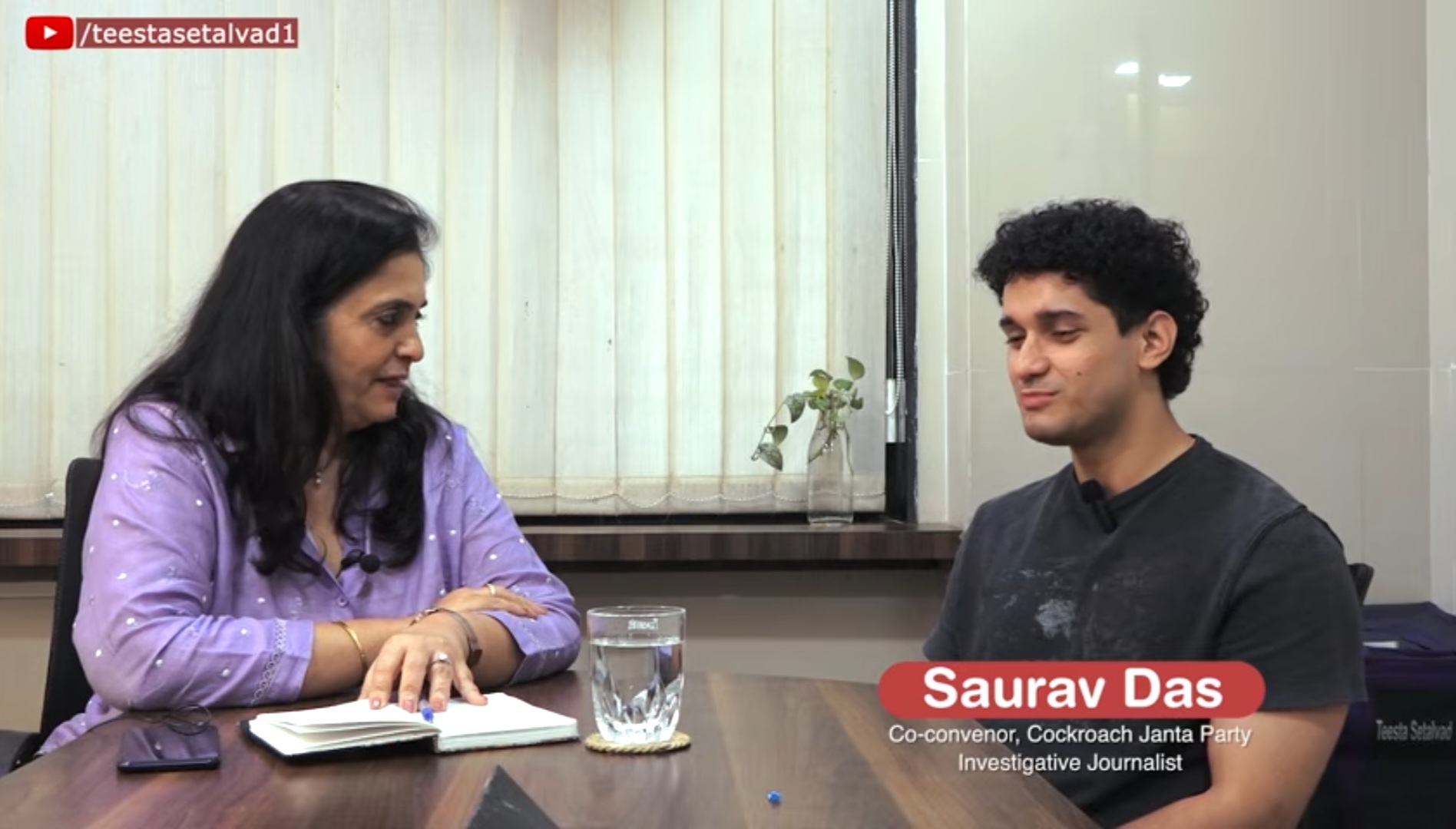
We are out here to change the system. And having seen the system up close and personal, I think the older activists and journalists, and any well-meaning citizen, can teach the younger generation how to engage with it better and how to be careful while dealing with these issues.
Teesta Setalvad:
In May 2026, the Cockroach Janata Party is formed. And then you start the June movement. And Jantar Mantar kind of sets the country on fire.
And then, on July 20, there’s a big protest and an attack by the police, which was very, very painful. So it’s a very quick beginning, a quick rise to fame. And yet we feel, after seeing you, Abhijeet Dipke, Ashutosh Ranka and Ratna Singh, that you are very composed. You’ve taken it quite coolly; you’ve taken it quite calmly. And yet it must be a lot of pressure.
Saurav Das:
It is. I mean, it’s a lot of pressure, but we don’t think much about it. We know that there are a lot of expectations from our generation and from the older generation.
So the burden of — I wouldn’t call it the burden — but the weight of responsibility is considerable. We realise that. And if a person succumbs to that kind of pressure, then they go mad.
So we realise that. At least I personally try to dissociate from things once in a while. For example, I come to Bombay and meet friends for a couple of days…
Teesta Setalvad:
We’ve been to the Ganpati Mandap; sometimes we party.
Saurav Das:
Exactly. So you should do all this so that you can stay in touch with your normal life rather than just be this. I think all of us realise that we are here to make a difference, and it’s a very serious job.
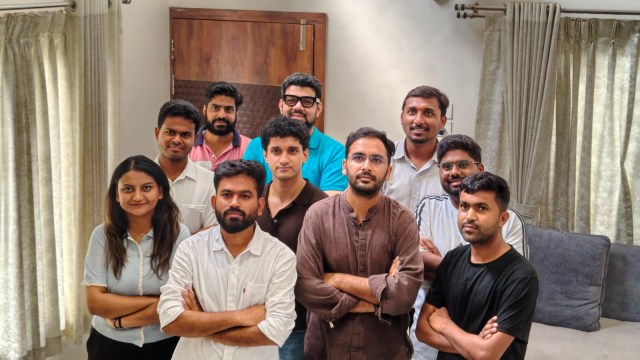
That’s why we consciously try to be level-headed, calm and composed. Personally, I’ve always been like that. I grew up in Pondicherry. It’s a coastal town. And people from Bombay are more chill and relaxed, I would say, compared to other people, say, in Delhi. So I think the coast also has an effect that way. It has had an effect on me. That’s why I’m very calm and composed as well. But yeah, fame will come eventually.
It’s a line of work in which that has to come. So rather than succumbing to that kind of pressure or that kind of fame, I think our eyes are set on what we need to achieve as a generation.
Teesta Setalvad:
So, I mean, what is this Cockroach Janata Party and its School Thik Karo campaign going to achieve? We’re already seeing that. If you look at the tribal areas of Madhya Pradesh, Maharashtra and Rajasthan — I’ll tell the viewers, Ashutosh Ranka was working a lot in schools even before this.
And now Saurav is going to leave from here and go to Uttar Pradesh. We’ll see the schools there and so on. And a caravan also goes with them. People go and see. So, first of all, the schools should get better. The system should get better.
Secondly, there is the subject of the NEET exam that you raised — how examinations are conducted here. So, step by step, you won a big victory. Your FIR was filed in less than a month. Because it was a July 20 FIR. And in mid-August, I think.
Saurav Das:
No, end of August.
Teesta Setalvad:
End of August?
Saurav Das:
In a month and a half.
Teesta Setalvad:
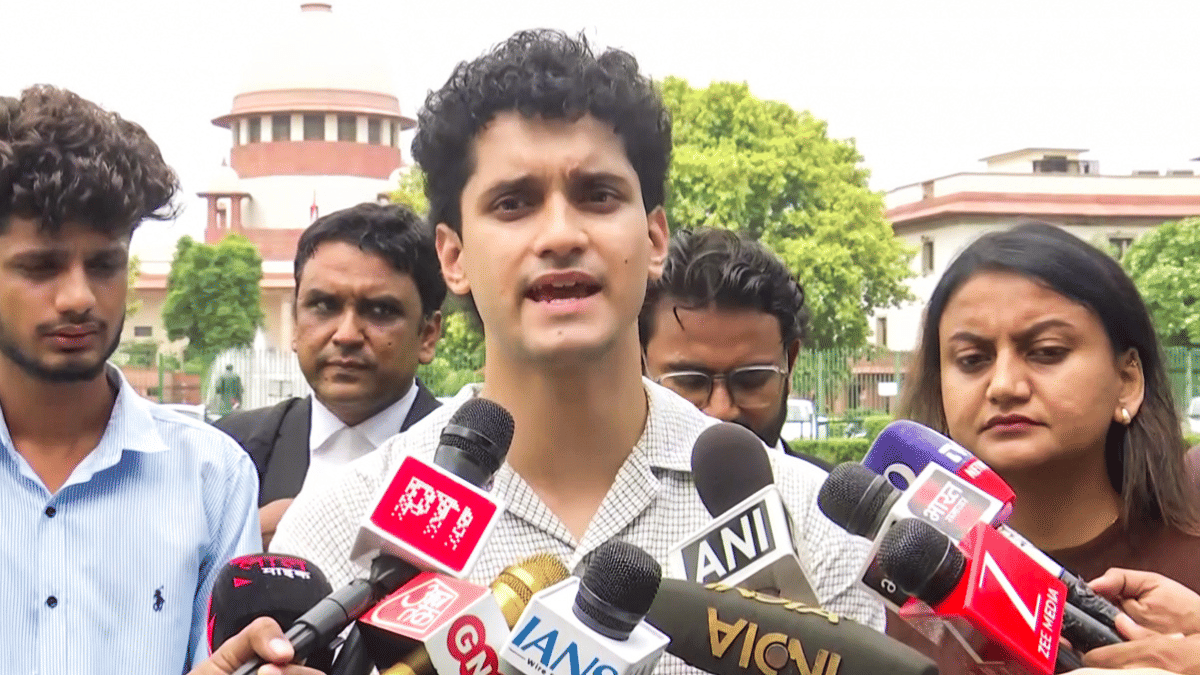
That hearing was held. And Saurav was in the Supreme Court. Saurav Das was there. And he was heard. He spoke in court.
Saurav Das:
I spoke to the Chief Justice.
Teesta Setalvad:
Yes, the Chief Justice of India. No, it’s a huge credit to you that you spoke. You were asked to address the court.
And you got that judgement. I’ll ask a question about the judgement also in a minute. The question is whether is it fully satisfying or not?
Only because of the question of accountability of the police who actually fired those pellet guns, which is a crime. But what I want to ask is: do you feel that, through the School Thik Karo campaign, you would be able to improve the schools?
Have you put together a kind of calendar as to what your success will be? The areas you go to. How many schools you visit? Are the schools good? Are the improvements sustained?
Saurav Das:
See, our intention is that we first expose the system. What have you built in the last 80 years? Show us that.
And how are you sustaining what you have built? Show us that also. This should be fixed first. Transparency.
Now we are working on the transparency bit. Let them show what they have done. And then, when we visit, we see everything. Then we pressure them. So we fix their accountability as well.
And after that, of course, sustaining it is not just our job. It has to be a community effort as well. A collective community effort.
And first, the liability is on the state. They have to provide it. Now the parents who are sending their children there should also ask questions.
Hopefully, our intention is also that by running campaigns like this, we are giving them a voice. When these videos and messages reach them, they also feel that, yes, I should also ask questions. I go to drop my child every day.
I should also ask why the condition is like this. And if it takes time, then there should be a protest as well. So what will happen with that?
There will be mobilisation in the local community. There will also be a discussion in the local community. And accordingly, in a collaborative environment, there will be pressure on the state to keep the schools safe.
That is the intention. Because we practically know that the Cockroach Janata Party, or the three, four, five or ten people in it, will not be able to repair the 1 crore 30 lakh schools all over the country if they try to do it personally. Like we are repeatedly saying, whether it is UP or Maharashtra, the youth should come out and conduct a social audit of the government school nearby.
Teesta Setalvad:
So this is a very big message for our viewers: the Cockroach Janata Party, with its presence and its courage, has created a space for everyone. They have created a space for all of us citizens to take this forward as well. So whether the youth are in Nashik or in Satara, Karad, wherever they are, they themselves can take this message and start working.
And this is starting to happen in Uttar Pradesh. We mapped it that day because sometimes we feel that we get more news from social media and Instagram. And sometimes there are independent YouTubers, like many others, who also show this.
So there are different places in Uttar Pradesh where not even Gen Z, but Gen Alpha students, are asking questions about their schools — that this is not there in the school, that is not there, etc. So if those students, their parents, the stakeholders — who are the stakeholders in the school? There are children, teachers, management and parents.
If they also put pressure, then to what extent will the administration put pressure on them not to show their response? This is a very big question. So anyway, we wish you all the best because I think this is a very fundamental question — to improve the schools, to improve the campaign.
And what is your membership right now?
Saurav Das:
I don’t know the exact membership, but I think by June 6, we had 8 lakh members. If I’m not wrong, we have 20–25 lakh members by now.
Teesta Setalvad:
So, the Bharatiya Janata Party may be the biggest party, but if you look at the fastest-growing party, then maybe…
Saurav Das:
I would also like to say about the Bharatiya Janata Party, both the RSS and the BJP: who has checked the numbers?
Teesta Setalvad:
That is a very big question. Giving a missed call and registering is also a big technology game. The Chief Justice, who first used the word “cockroach”, then himself admitted his mistake when he heard you all.
And at the end of August, when he gave the order under Article 142, all the FIRs were withdrawn. And now a high-level committee has been formed. How the committee will be formed, whether it will be impartial or not, will become clear in the coming days.
But there is this issue of the police using pellets with such mercilessness, which was a crime. You yourself have said in many interviews that their behaviour was against the SOP. Will the Cockroach Janata Party pursue that, or will it wait until the committee’s findings?
Saurav Das:
We are very clear that the police who showed brutality on the 20th, the kind of force they used on protesters — breaking their skulls, molesting women, molesting minors. They molested minors. These people are not police officers.
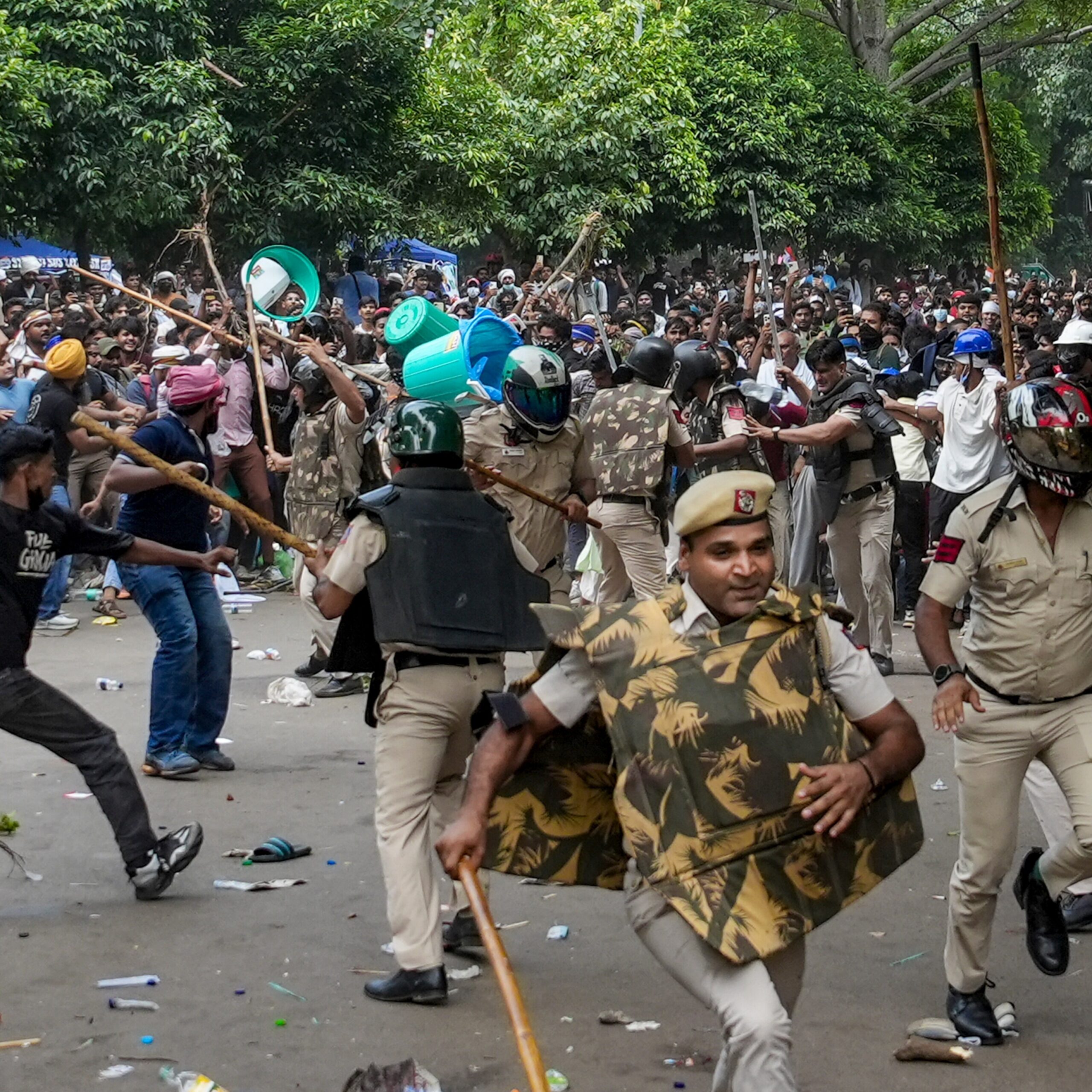
Because, in my view, police officers are people who are supposed to protect citizens and do preventive policing. Those are police officers. But these are not police officers.
These are goons in uniform. And goons have no place in any police force. So we have already said that these people need to be held accountable.
If the Supreme Court thought that the High-Powered Committee was the way to go to ensure that all these problems and allegations are addressed — and what is already very clear to the entire world through social media, videos and everything else — if this committee can do justice, then we welcome it. However, like you said, how fair this committee will be and how independently it will work, only time will tell. And we will monitor the situation.
We are keeping an eye on the work that this committee is doing because this directly connects to our protest. So we have a major stake in this entire process. So we’ll keep an eye on it, and we’ll ensure that the committee does not commit a fraud on the protesters and that it upholds its mandate.
Teesta Setalvad:
That would be a precedent-setting thing, just like the judgement you got was precedent-setting — getting the FIRs withdrawn. And you must know that senior counsels like Mr Kapil Sibal and Ms Vrinda Grover are strongly behind the Cockroach Janata Party, which is very, very welcome. Kudos to them, and kudos to you for getting their support. So this is there, but this is a very important thing that people should not forget. Because we have worked on police accountability for many years.
And police behaviour — what should police behaviour be when it comes to violence and oppression against a citizen? It cannot be a relationship of the stick; it cannot be a relationship of beating. So not only has there been such violence in Delhi and many other places, in Bihar and a few other places, but along with that, we have seen another very dangerous trend.
We saw it in Delhi, we saw it in Bombay and in other places: police officers without nameplates, without names, have been deployed in this kind of crowd control. They are showing brutality, so that you can’t even identify anyone. Who are these people?
Many of them are in civilian clothes. This is also a very dangerous trend. So we hope that the High-Powered Committee will take all these things into consideration.
Saurav Das:
You know, when the protests against the CAA and NRC took place, the protests that took place after Jamia, I think when the Delhi riots took place, during that time, there were some visuals where some Muslims were lying on the road in a very bad condition after facing police brutality. There were some police officers standing there and beating them with sticks. Yes, with a lot of brutality.
They have still not found out who those police officers were. Why? Because they didn’t even have name tags.
So they knew that on the 20th, if they had to break our heads like this, they should remove their name tags. Whereas in other countries, in advanced nations, they wear body cams. So that they know, even if there are allegations, they can defend themselves.
What will this do? This will help the protesters and society decide whether the police were wrong or not. Correct.
Which will inspire confidence in the police. And it will be good for the police because, if there are fake allegations, they will be able to defend themselves. It maintains their integrity as well.
Instead of doing that, you are doing all this, which does not inspire confidence in the police. Now people have lost trust in the entire system. So there is no point in doing all this.
We have to change this. We have to talk about this.
Teesta Setalvad:
I think it is important that not only the CJP, but the rest of the organisations also respond to the police. Because the police are, eventually, public servants. They are public servants.
The police are meant to serve. They are not meant to serve the government. They are meant to protect citizens.
And to prevent violence.
In a constitutional way. In a legal way. Not in this way.
So the police should respond. And this was not there. And Saurav raised a very good point, which I was going to raise.
In 2015–16–17, when there was a youth movement at Hyderabad Central University, the Telangana Police did a lot. They did it in JNU. They did it in D.U. And in Jamia. On December 15, 2019. So this has been a trend with the Delhi Police.
And when the farmers’ movement took place outside Delhi, there was a lot of violence. And if you look at a lot of different movements, police behaviour was very dangerous. Especially that of the Delhi Police.
And we know that the Delhi Police works under the Government of India. So this should be a demand from the citizens. And we all congratulate you from the bottom of our hearts.
And Saurav, in your protest, we saw memes. We saw funny jokes. People were very happy.
There was a lot of humour. A lot of irreverence.
And one of the things Indians do have is a lot of humour. But the establishment likes to pretend that we don’t have humour. I don’t know what it is.
But there is a certain hypocrisy in our society about humour. Many of us just love a good joke. I always wonder why we don’t have a serial like Yes, Prime Minister.
Because it’s such a wonderful way to let off steam and to actually bring people onto a level playing field. I don’t know what irreverence is called in Hindi. Irreverence and humour were very evident in your protest.
A lot of people were doing it in different languages. Can you say something about that? So that we can end on a positive and good note.
Saurav Das:
Humour, wit and satire are the reasons why what happened in our country has happened. These three things are disarming for people in the establishment. The people in power are anti-fun.
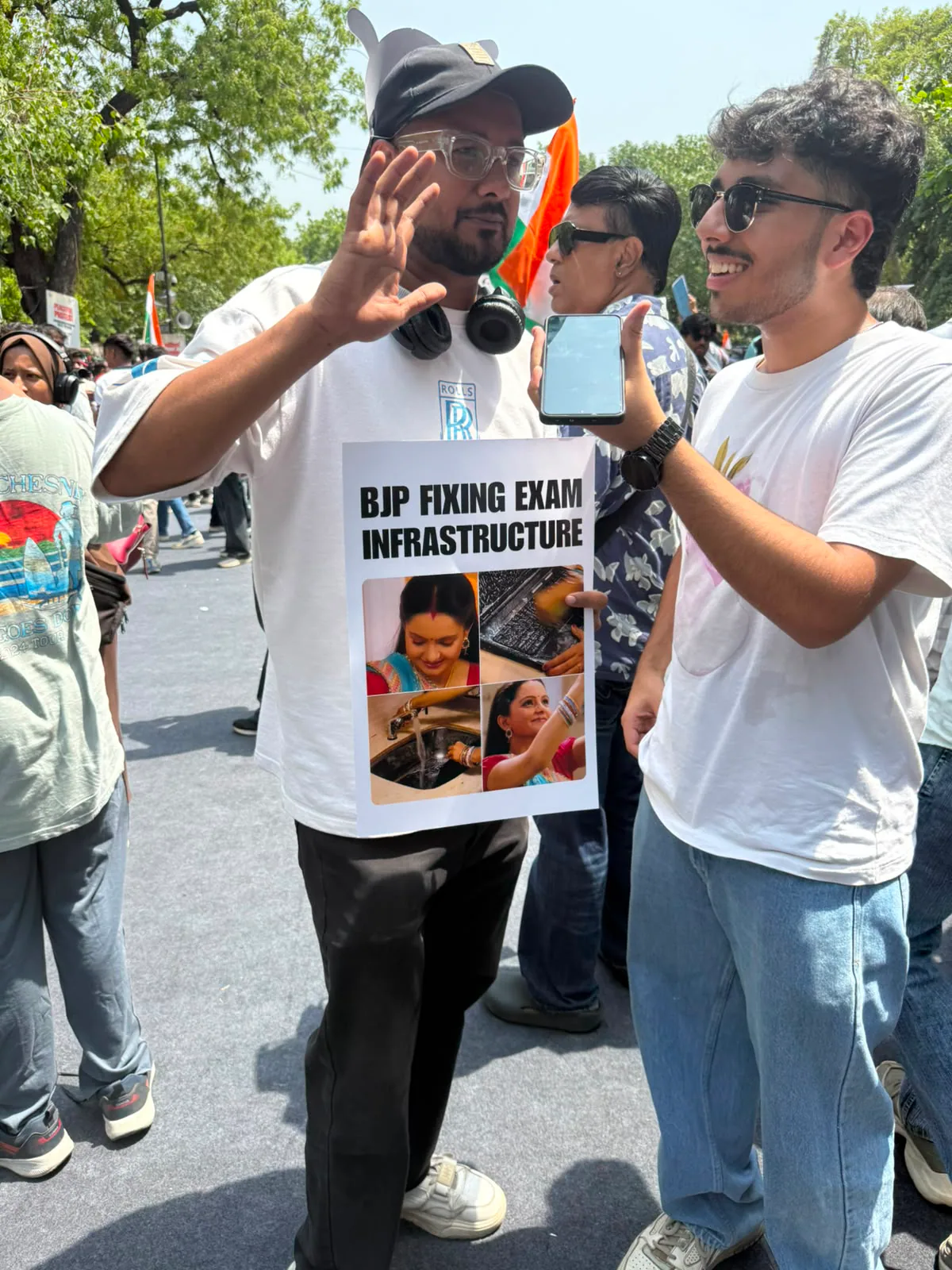
And as a society, they have made us anti-fun. If someone is living their life, then they are doing it wrong. It has become a herd mentality.
If you want to go here, then you should go here like all the sheep and goats. No one should think here. Why?
You see that in universities. In universities, children who think, debate and discuss are actively discouraged. You appoint professors, appoint VCs, who create such an environment. If there is any discussion, they suppress it, ban it.
Teesta Setalvad:
Our whole university system has been weaponised in a way. The police have been allowed in. We are sitting with the Rashtriya Swayamsevak Sangh.
Saurav Das:
If, in a university, you don’t discuss ideas openly, then where will the country go? Because the future of the country lies there. So this power is very much anti-fun, anti-intellectualism, anti-science, anti-anything.
Humour, as you were saying, has become like that. And this movement showed that, by using these very things, we can bring you to your knees. And that happened.
And hopefully, we will remove you from power. In today’s time, the people in power don’t even know how to interact with this generation. How do we talk to them?
They don’t have a language. We have taken away their grammar. So it’s a big, big win for the generation.
Just like that — fun, entertainment, as they say. My generation uses one more word, which I cannot use here. But this is how we will have to move forward. This is how people will come to their senses.
And ultimately, it will be good for the country.
Teesta Setalvad:
Sure. I feel that, as a much older activist — and I don’t know whether we have ever been so successful or not; history will tell — we feel encouraged by meeting such young people, seeing them in public life and seeing their courage come to the fore.
Because you are openly taking on such a system, as the audience knows, which is not going to move at all. So when Saurav leaves, he will go back to Uttar Pradesh or Bihar or Madhya Pradesh, Maharashtra. So we want the rest of the citizens to fully support them.
Because it is the responsibility of all of us that such young people continue to ask difficult questions. Thank you very much.
Saurav Das:
Thank you.
Click to watch the video of this conversation here.








This conversation is a powerful reminder that democracy needs more than elections—it needs questioning, protest, accountability and the freedom to laugh at power. Humour and satire can puncture the aura of unquestionable authority, while young citizens bring fresh energy to the fight for public accountability. A sharp and timely conversation on why silence should never become the price of citizenship.