

Mandate, Authority, Constitution: Why and How Fathima Thahiliya’s Constitutional Distinction Strikes a Chord

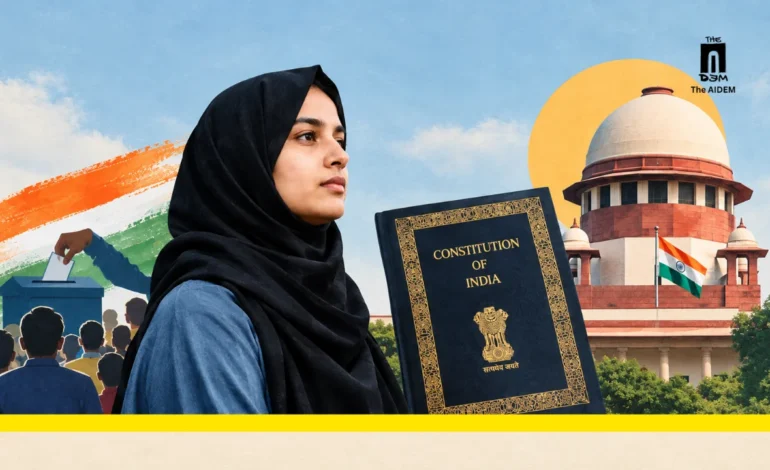
I have often come across some political parties, especially those espousing majoritarian views, frequently justifying questionable actions linked to core ideological promises by stating that these promises have been part of their election manifestos for decades. The indirect suggestion is that winning elections has given them a democratic mandate from voters to implement these promises. Similarly, some political formations, not necessarily confined to the majoritarian space, contend that winning an election or obtaining a mandate has somehow absolved them of their previous deeds.
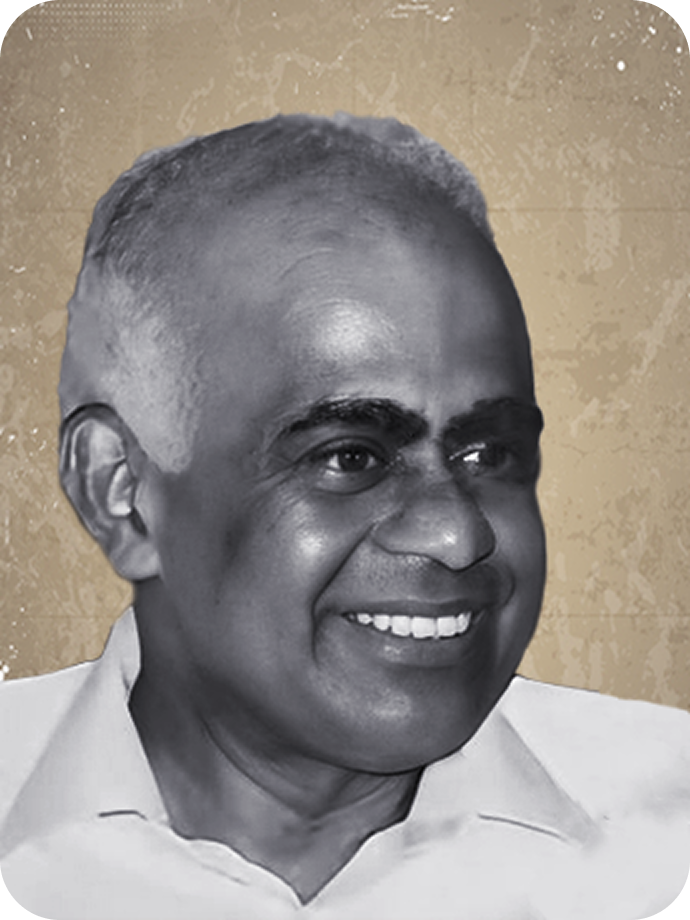
I knew both positions were indefensible, but I could not recall too many citizens contesting these assertions with clarity. Yesterday, at the annual K.M. Bashir Memorial Lecture, held as part of the centennial celebrations of K.M. Bashir, a distinguished statistician who promoted communal harmony and inter-religious understanding, I heard what I thought was the most cogent — and convincing — argument against the “mandate” excuse for behaving in any manner once someone is elected to public office.
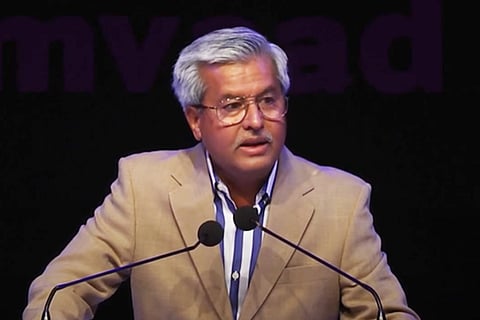
The lecture, organised by the Vakkom Moulavi Foundation Trust (VMFT) on September 24 in Thiruvananthapuram, was delivered by Dushyant Dave, Senior Advocate (retired) of the Supreme Court. Needless to say, Dave delivered a powerhouse of a lecture, drawing sustenance and inspiration from the Constituent Assembly debates and using some of the dire pronouncements made over 75 years ago as a touchstone to skewer many of the contemporary actions being pursued in the country.
After Dave spoke, it was the turn of Fathima Thahiliya, who represents the Perambra constituency in the Assembly and is the first woman MLA elected from the Indian Union Muslim League (IUML). I was familiar with the first-time MLA, a millennial, through videos and reports on the Assembly election campaign earlier this year and because of the Haritha controversy in 2021, but I had never heard her speak in person. In recent months, some social media posts had made me aware that Thahiliya was being subjected to unfair and relentless scrutiny, unlike many of her male colleagues in public office, which must have compounded the pressure on this young lawmaker. One of the reasons I attended the lecture yesterday was to listen to Thahiliya.
The cautious manner in which Thahiliya began her speech made me think (it is just a view, and I don’t know if I am right) that she is aware of the pitfalls that lurk around her and the potential for mischief if she takes one misstep. Being judged at every step of the way — on the basis of the choice of words, attire and even accent, and also on the implausible yardstick of what one did not say — is an unfortunate reality in public life that often stymies constructive engagement and the exchange of creative ideas.
But gradually, Thahiliya began pushing the envelope in her own unobtrusive and restrained manner, and I came across one of the most cogent arguments I have heard in recent memory against the “mandate” defence touted by some parties to justify highly contentious actions when elections provide them with the right to govern.

(It is possible that others may also have offered similar arguments, but I am not aware of them, perhaps also because I have insulated myself from the frog-in-the-well, petty and small-minded discussions in the so-called mainstream media, including the unbearable television sermons that are passed off as public-interest discourse.)
Thahiliya, a lawyer, drew a clear distinction. She said the electoral mandate gives the elected representative the “authority” to govern. But the Constitution guides the elected representative on how to exercise that authority. This is a stunning distinction that stands out for its simplicity — the hallmark of remarkable communication in public life. In short, an electoral victory confers democratic authority to govern but within the constitutional order. This may appear self-evident, but it is not so when viewed against some of the decisions being enforced in the country in the name of “mandate”.
Thahiliya touched upon an idea that echoes a principle at the heart of the Kesavananda Bharati judgement of 1973, in which the Supreme Court held, by a 7–6 majority, that Parliament’s power to amend the Constitution under Article 368 is not unlimited and that the Constitution’s basic structure cannot be altered.
Thahiliya did mention the Kesavananda Bharati verdict, but I don’t know if I am interpreting her opinion correctly on the mandate, the authority that stems from it and how the exercise of that authority must stay within the limits set by the Constitution. Without saying so, Thahiliya, I think, was trying to convey that an electoral majority does not, by itself, justify decisions that may have been mentioned in a manifesto but do not pass the test of the Constitution.
Back in the day, as a professional journalist, I could have got back to the MLA and asked her about this before writing this, but I am no longer a journalist, and I often feel that I don’t have the “mandate” to take away the time of public figures just to satiate my curiosity, although I did meet her briefly after the event.
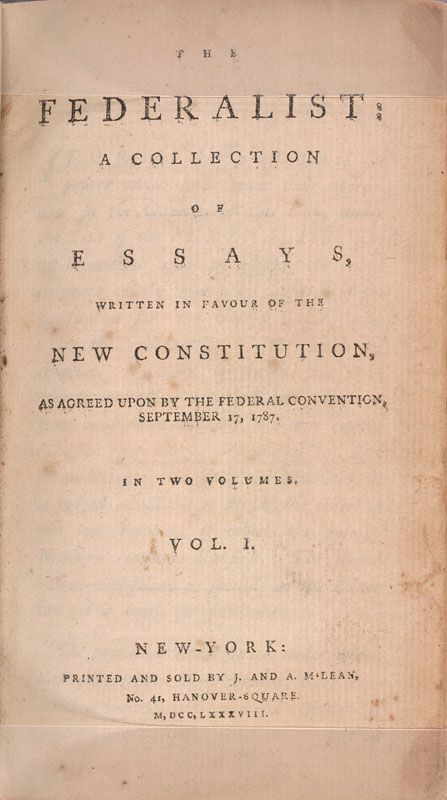
Later that night, when I thought about what Thahiliya said and tried to read up on the issue, I came across references to John Locke’s idea of the “consent of the governed” and James Madison’s concern about the “tyranny” or dangers of majority factions. Locke wrote that political authority ultimately rests on the consent of those who constitute a political society, while also recognising the majority’s authority to act for that society. I was reminded of Madison’s argument in Federalist No. 10 that a majority faction could sacrifice the public good and the rights of other citizens to its ruling passion.
Thahiliya spoke about the dilemma and difficulties involved in implementing in its entirety what a candidate may have promised while running for public office. Once elected, the candidate no longer belongs to their party alone or even to those who voted for them. An elected representative is expected to represent “all” the citizens in their constituency. But the reality is that the representative will not be able to function independently of their party. She did not elaborate.
If I had the chance to have a discussion, I would seek her views on a related question. Let us assume that a constituency has 100 people, of whom 80 have voting rights. After the election, the winning candidate had 30 votes, with the remaining 50 votes split between multiple candidates. Let us say the 30 voted for the winning candidate because the candidate promised to enforce Decision X (any imaginary promise). But the other 50 voters were against Decision X. Even if, for the purposes of this hypothetical, we assume that all 20 non-voters were also opposed to Decision X, those opposed to it would account for 70 per cent of the constituency. The winning candidate has the “mandate” for Decision X, but those opposing it outnumber those supporting it. What should the elected representative do? Accept the mandate or the popular will?
I suppose this is where the constitutional question comes in. Once in public office, the representative cannot treat an electoral mandate as a licence to act outside the constitutional framework. The precise constitutional test will depend on the nature of the decision: different actions may be subject to different constitutional provisions, fundamental rights, statutory limitations and, in the case of constitutional amendments, the Basic Structure Doctrine. If that is so, it is a tough — and probably thankless — decision for the elected representative.
A politically perceptive and scholarly friend felt that Thahiliya, like Dave, who pulls no punches and does not shy away from naming names, too should have attacked the BJP while speaking about the Constitution. I did not agree. I felt that, in order to have a serious engagement in a highly polarised polity, it is better for elected representatives to keep individuals and entities out of it, although specific instances can be mentioned to build one’s case. It was perfectly all right, or perhaps unavoidable, for Dave to refer to parties and people by name because he is a non-partisan and non-political figure. However, for Thahiliya to try and score brownie points at an event commemorating a person who reached out across communities would have been in bad form. She can take on the BJP elsewhere and on the best platform available to her: the Assembly. Or, at least, that is what I feel.
Thahiliya also spoke of the transient nature of power and reminded the audience that she — or any elected representative — need not be in public office after five years. This is a remarkable reflection of a cool composure and of her feet being firmly planted on the ground — evidence that she is not pursuing public life as an imagined fairy tale embedded with thornless roses.
Dave spoke of how he and his generation let down the next generation, which is now making the country hope again. I belong to Dave’s generation. I hope my generation will let young public figures like Thahiliya continue their journey untrammelled by our condescending advice (such as this note, of course) and give them the space to make mistakes, learn from them and emerge stronger.





This is a crucial reminder of what democracy actually means. An electoral mandate is not a blank cheque, and political authority can never rise above constitutional authority. Fathima Thahiliya’s distinction strikes at the very heart of democratic governance: elections decide who gets the responsibility to govern, but the Constitution decides the limits within which that power must operate. Majorities may change governments, but constitutional values must remain the guardrails of power. When mandate is mistaken for unlimited authority, democracy itself begins to lose its meaning. A timely and important conversation that deserves serious attention.