


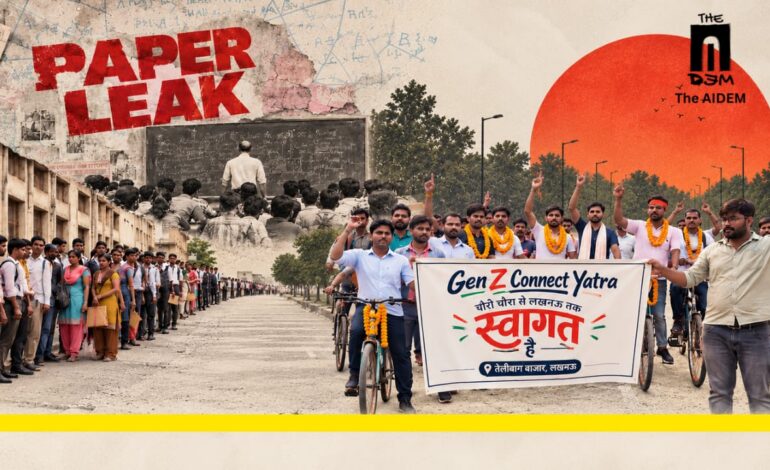
After weeks on the road, a cycle yatra of young job aspirants reaches Lucknow, carrying with it the frustrations of a generation caught between paper leaks, cancelled examinations, delayed recruitment and an increasingly uncertain future.

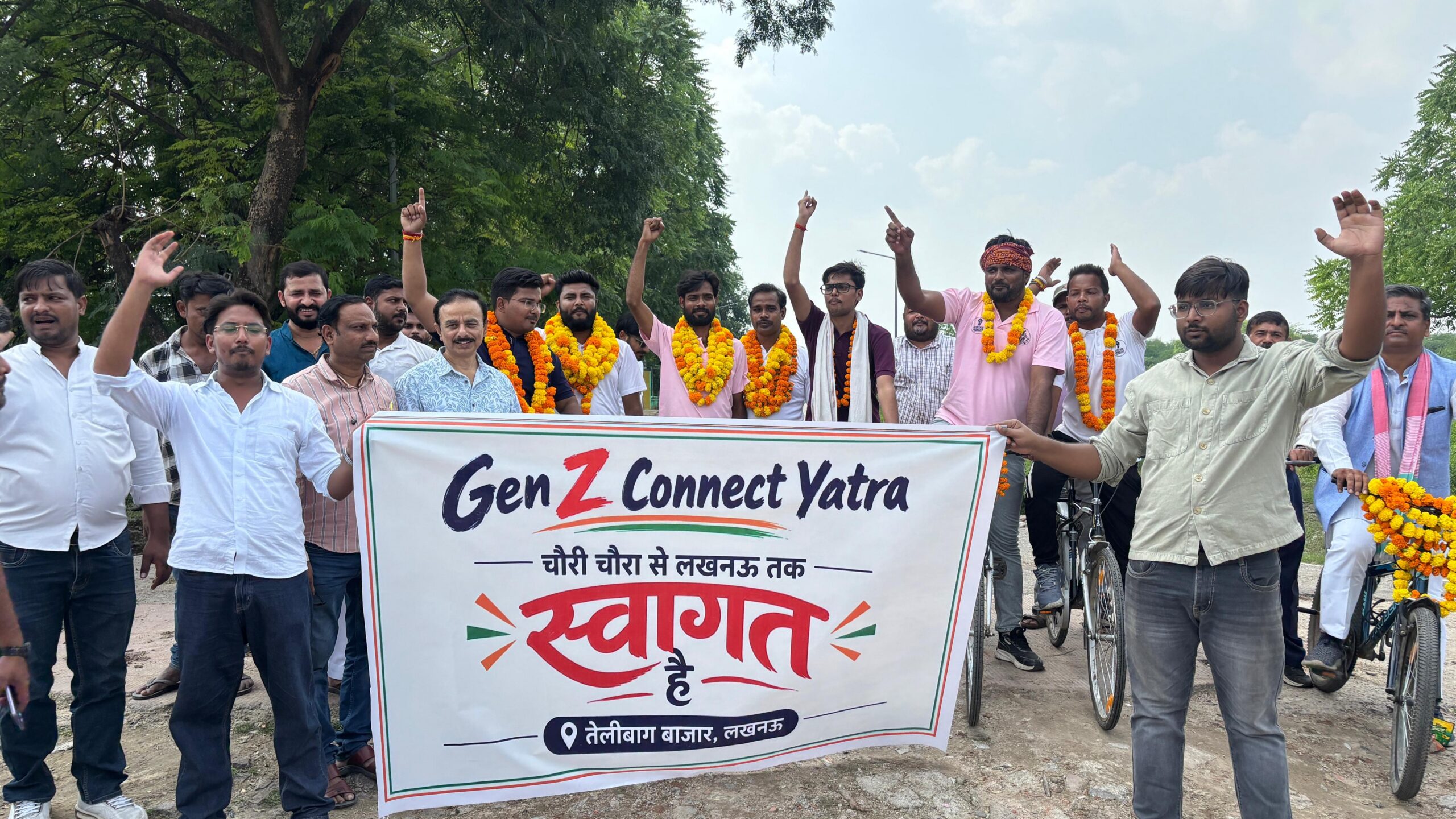
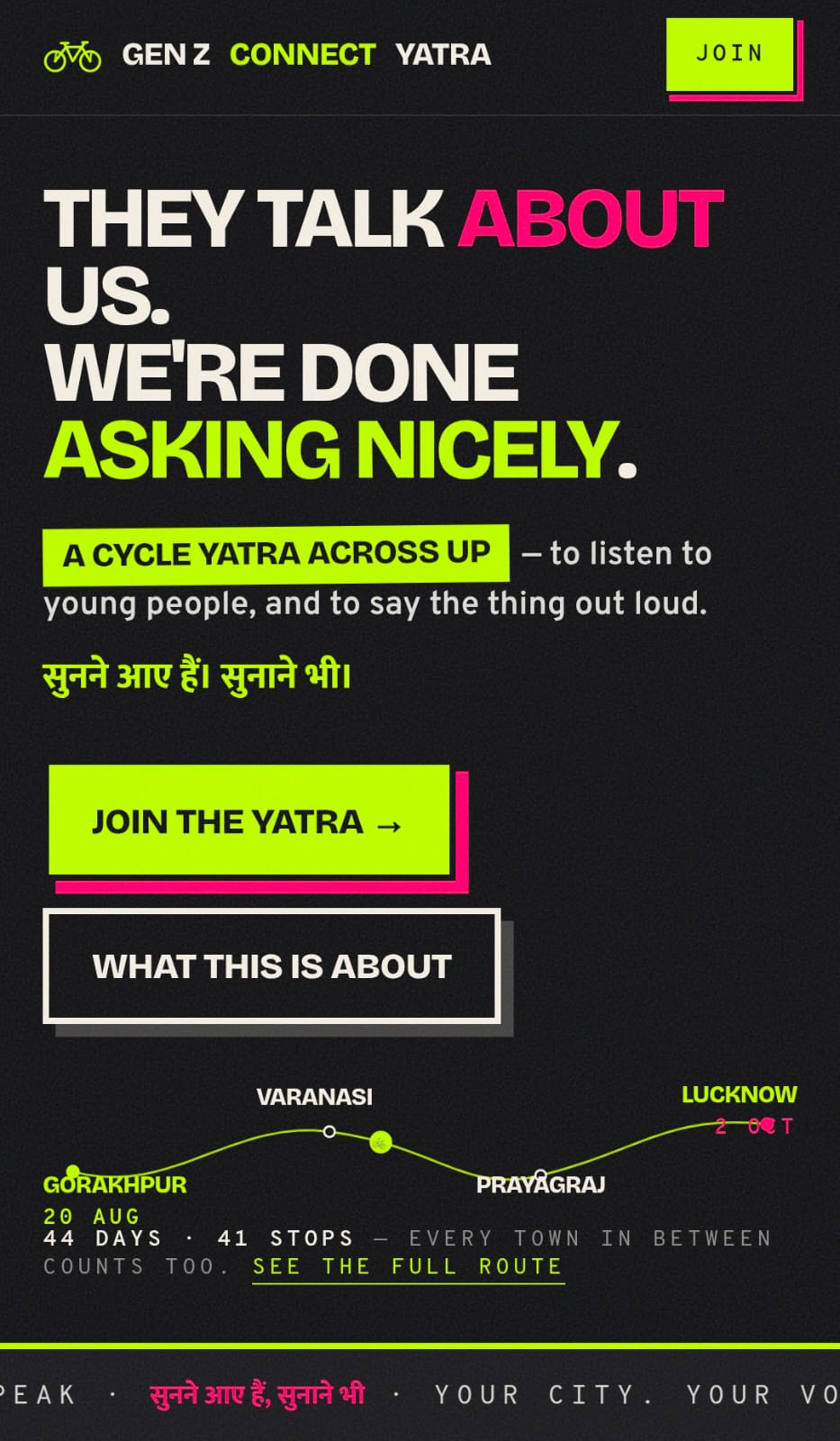
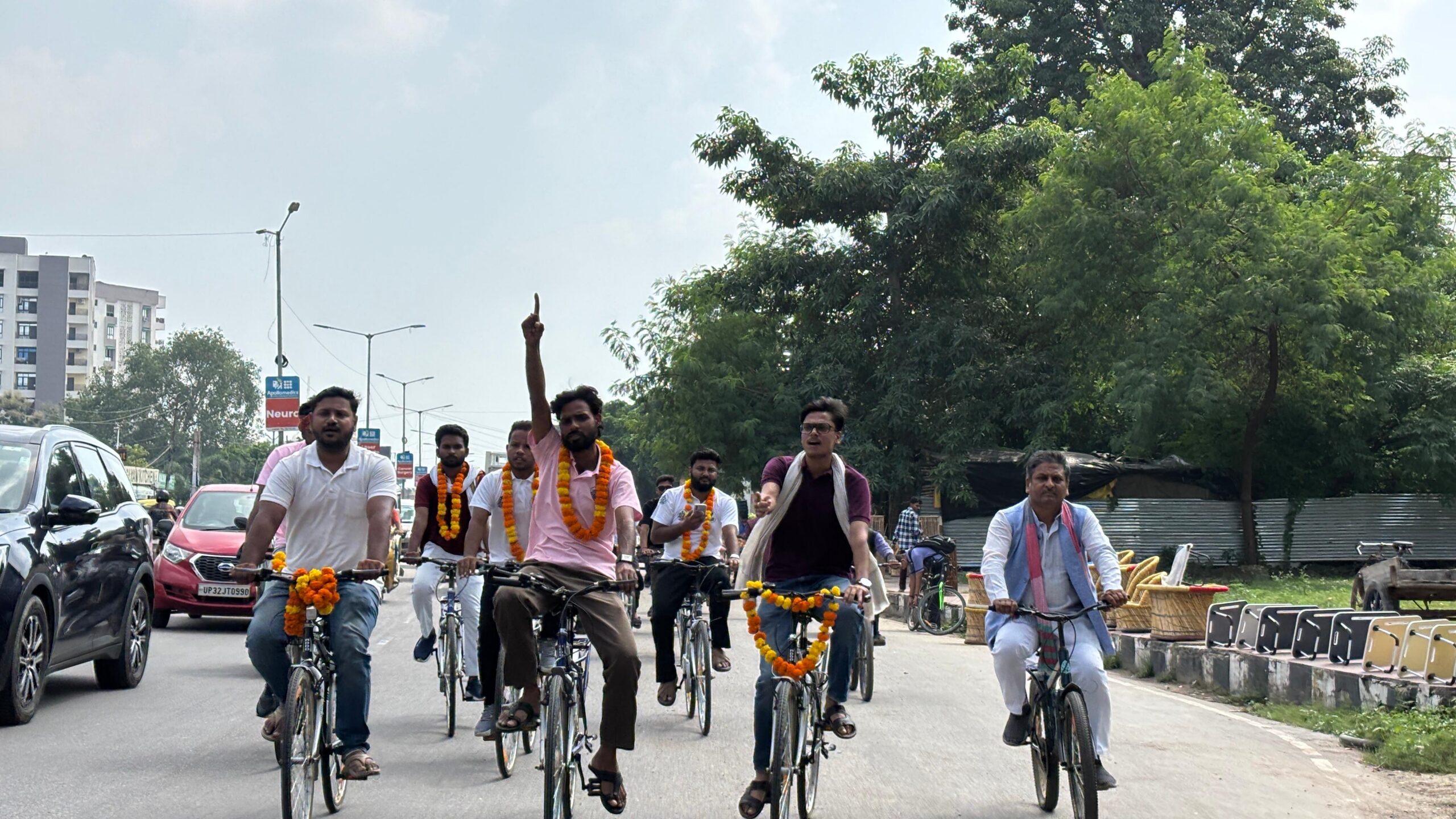
The Gen Z Connect Yatra rode into Lucknow after a journey that began on 20 August from Chauri Chaura in Gorakhpur, a place whose name still stands for a turning point in India’s freedom struggle. What began as a group of 20–25 job aspirants from Purvanchal and Awadh under the banner of Justice Morcha grew into a moving assembly of student groups.
On the Lucknow leg, activists of the NSUI, AISA and the Samajwadi Chhatra Sabha joined Justice Morcha workers. As the riders passed Vidhan Sabha Marg and the BJP’s state office, they raised slogans against the government. They then gathered at the Gandhi statue in Hazratganj, where they sang revolutionary songs and Faiz Ahmed Faiz’s “Hum Dekhenge” as an expression of protest.
The yatra turns a problem that usually plays out in rented rooms and coaching-centre queues into a public march. The organisers frame their central grievance around the time government recruitment processes take. “Filling up of vacancies through exams conducted by the government shouldn’t be a five-year programme,” said Sudhanshu Bajpai of Justice Morcha, paraphrasing remarks he made to The Wire, “which takes five years to reach the stage of declaration of final results.”
The Arithmetic of Waiting
The campaign leans on numbers to make its case. Organisers say the police constable recruitment drew over 48 lakh applications for 60,244 posts — roughly 80 candidates for every vacancy — before the examination had to be cancelled. They say the UPPSC’s RO/ARO recruitment drew 10.76 lakh applications for just 411 posts and was also cancelled. They further claim that the commission received 94.38 lakh applications over five years while filling only about 58,000 posts. These are the campaign’s own figures and have not been independently verified.
Bajpai describes the human cost in terms of family sacrifice. Parents, he says, spend their savings, take loans and sometimes sell land or jewellery to keep a child in an expensive rented room and coaching class. A paper leak, a cancelled examination or a court stay can then wipe out years of effort.
The Faces of the Yatra
The ride is led by a group of young people under the banner of Justice Morcha, several of whom have carried its message from stop to stop. Sudhanshu Bajpai has been among the main voices of the group. Govind Mishra told reporters in Prayagraj that the government was persistently ignoring young people’s employment demands, while Prince Prakash said the organisers had initially doubted whether the youth would support them, but that the response had been strong.
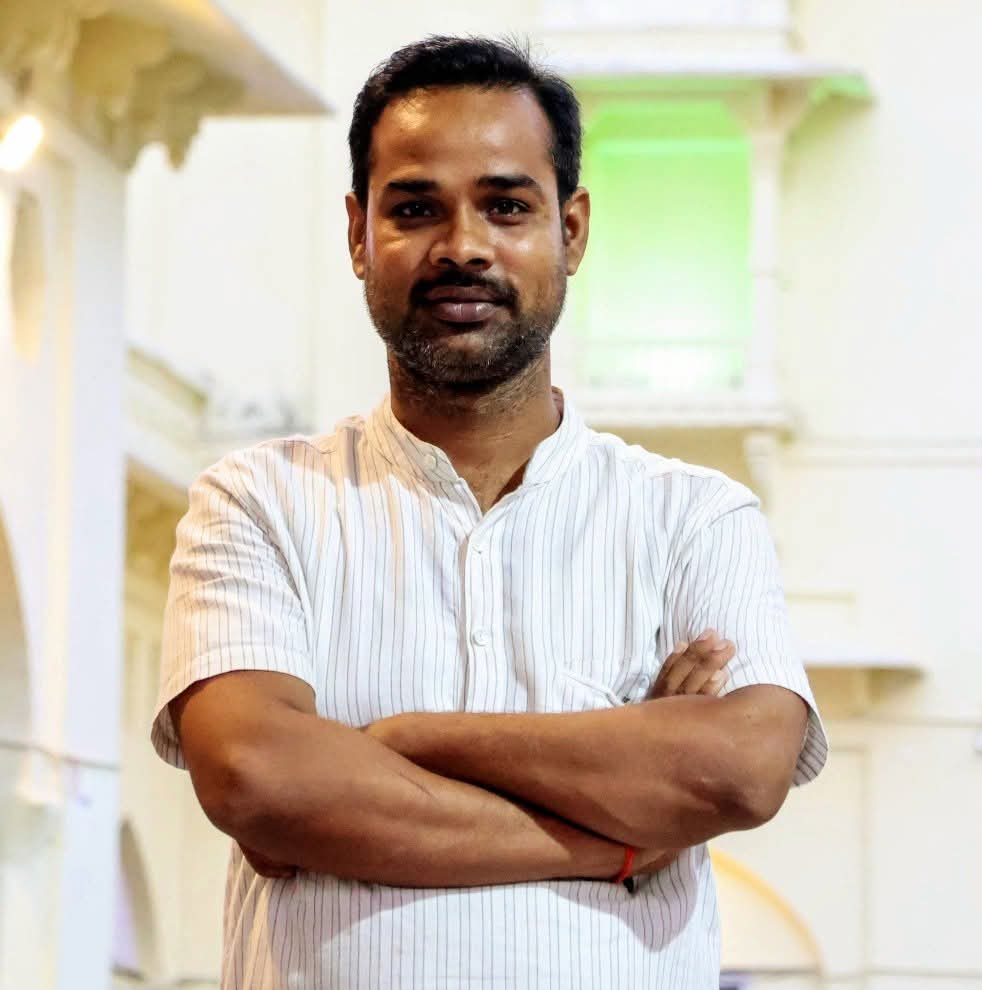
Priyesh Pandey addressed the crowd at Kushinagar. Rajat Singh spoke at Deoria and said he would not be cowed by an FIR registered against him over the condition of a school. In Lucknow, the riders were joined by Shubham of the NSUI and Shashi Bhushan Samad, a former JNU student who travelled from Mumbai to attend. Ashok Kushwaha was also among those who took part in the yatra.
The Route and the Halts
From Chauri Chaura, the yatra moved through Kushinagar, where it held a street-corner meeting at the gate of the Mahaparinirvan site, while the programme opened at Buddha PG College. In Deoria, the riders paid tribute at the statue of Major Amiya Tripathi, and Rajat Singh raised the state of local schools and the idle Kushinagar airport, demanding that flights begin or that the land be returned to farmers.
Ballia and Mau followed. Reports placed the riders at Nagra in Ballia and Madhuban in Mau on the 12th day, and at Mohammadabad Gohna on the 15th day, where they spoke directly with students in intermediate and degree colleges. The route also ran through Azamgarh, Ghazipur, Jaunpur and Varanasi before moving on to Prayagraj, Pratapgarh and Raebareli and finally reaching Lucknow.
Organisers say a parallel outreach drive covers all 75 districts of Uttar Pradesh, with street-corner meetings and public dialogues near more than 1,000 colleges, universities, schools and coaching institutes.
Prayagraj, The Exam City
The most telling stop came in Prayagraj, the city that perhaps best embodies Uttar Pradesh’s aspirant economy. On the 32nd day of the yatra, the cyclists left the Union Hall of Allahabad University and travelled through Colonelganj, University Square, the Science Faculty, Manmohan Park, Kachhari, Bailey Road, Mumfordganj and Teliyarganj before reaching Phaphamau.
On the way, they stopped at the Stone Church protest site, where candidates have been on a hunger strike since 5 September, demanding that the old rules for TGT and PGT teacher recruitment be implemented. The riders extended their support to the fasting protesters and encouraged them to continue their campaign.
Voices In The Capital
The Lucknow gathering brought sharper political language. Samad alleged that attempts to suppress dissent had intensified over the past decade, citing cases, jail terms and bulldozer action against those who ask questions. He said expensive education and healthcare were placing an increasingly heavy burden on ordinary families.
Shubham of the NSUI alleged that an organised paper-leak network continued to operate despite the government’s long tenure. He also criticised the decision to close or merge thousands of primary schools while, according to him, liquor shops were being encouraged.
Prince objected to a recent remark attributed to Deputy Chief Minister Brajesh Pathak, which he described as advising educated young people to drive e-rickshaws. He said that if driving an e-rickshaw was considered a good employment model, political leaders should resign and drive one themselves. These are the speakers’ allegations and characterisations; the government’s response to them has not been reported.

A Charter of Ten Demands
The organisers’ 10-point charter goes well beyond a recruitment calendar. It calls for annual recruitment calendars with examinations held on schedule, all vacant government posts to be filled and stalled appointments restarted. It demands the release of scorecards to ensure transparency, an end to contractual hiring in favour of equal pay for equal work, a cap on private-school fees and equal fellowships for all research scholars.
The charter also seeks the withdrawal of cases against students and teachers, dissolution of the National Testing Agency and rollback of the National Education Policy 2020. Justice Morcha argues that education and employment are inseparable from politics because school fees, examinations and public-sector vacancies are all shaped by government policy.
The Lucknow Test
The journey to Lucknow brought together strands of discontent that are usually experienced individually — in coaching centres, examination halls, rented rooms and homes where families invest savings and years of hope in the prospect of a government job. By taking these concerns onto the road, the cyclists sought to transform the private anxiety of the job aspirant into a visible public question.
Whether that mobilisation travels beyond the yatra itself will depend on the response it generates among young people, political organisations and the government. For now, a few dozen cyclists have taken a long-running argument about jobs, recruitment and fair examinations out of the coaching hubs and onto the road.







Two wheels, ten demands, and one powerful message: India’s young generation is asking for more than slogans—it is asking for jobs, opportunity, accountability and answers. The journey of Uttar Pradesh’s Gen Z towards Lucknow shows how economic frustration can become a public demand for democratic action. When young people take their concerns to the streets, the real responsibility is not to dismiss them, but to listen, engage and respond. This is not merely a ride to Lucknow; it is a reminder that the future cannot be built by keeping the aspirations of the young waiting.