


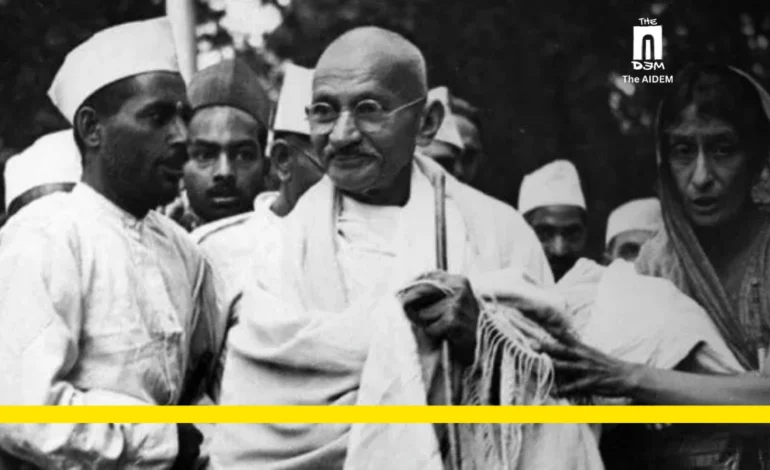
Gandhi and Finance- Part 3
To Gandhi, giving him money was never merely an act of giving. A coin could carry conviction, a bangle could embody sacrifice, and a personal possession could become a statement of social change. As he took his campaign against untouchability across India, fundraising became an act of participation, persuasion and moral reckoning.
This is the third and final article in the three-part series by Anu Jain, exploring Gandhi’s experiments with finance. It traces his Harijan tours, battles with orthodoxy and relief campaigns, revealing how he transformed fundraising into a currency of trust, transparency and collective responsibility.
By the 1930s, the river of Gandhian finance cascaded into its most turbulent and contested terrain. The launch of the weekly journal Harijan in 1933 was not merely the birth of a new publication; it signalled a radical, tectonic reordering of the Mahatma’s priorities. The grand political theatre of marching against the British Empire was now accompanied, and at times completely overshadowed, by an intimate, blistering war against the ancient demon of untouchability.
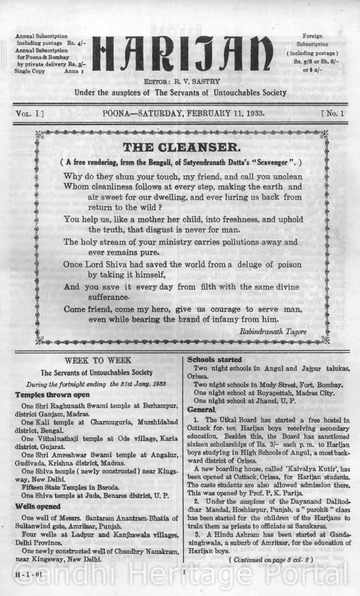
Gandhi was now asking India to give money for a cause that cut like a razor through the social fabric of Hindu society, deeply dividing both his fiercest allies and his oldest opponents.
The blowback was immediate and fierce. Sanatanis, the orthodox Hindu factions, accused Gandhi of fracturing sacred traditions, viewing his temple-entry campaigns as a dangerous cover for political overreach. Simultaneously, practical politicians within the Indian National Congress grew deeply frustrated. They viewed the Harijan campaign as a sentimental diversion from the unfinished business of throwing off the British yoke, publicly lamenting that precious national energy and finite funds were being squandered on social engineering.
Yet, Gandhi refused to budge an inch. He did not dilute his message to keep the purse strings open, nor did he soften his language to appease wealthy donors. He famously remarked that if he had to choose between the liberation of India from the British and the liberation of the untouchables from Hindu tyranny, he would choose the latter without hesitation. For him, fundraising was no longer a side activity attached to political rallies; it was the ultimate weapon of moral persuasion.
The Moral Marketplace
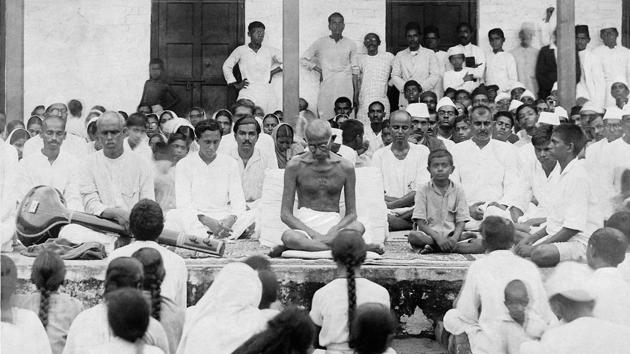
When Gandhi took to the dusty roads of India for his epic Harijan tours, his public collections assumed the character of a spiritual court. At the end of every intense sermon against caste discrimination, he would extend his hands to the crowd, asking for contributions. He made it explicitly clear: this was not an appeal for pity or a request for soft charity. It was a call for collective penance. To give was to pay a debt of historical repair.
In these emotionally charged gatherings, the transactional logic of the marketplace was entirely inverted. The collections shattered the boundaries of cash. Women, deeply moved by his words, would step forward to the makeshift wooden stages, unclasping gold bangles that represented their dowries and undoing heavy necklaces that carried the weight of family histories. These personal treasures were never kept hidden away in trunks; Gandhi had them immediately brought to the front of the stage and auctioned off to the highest bidder, returning the capital instantly into the bloodstream of social reform.
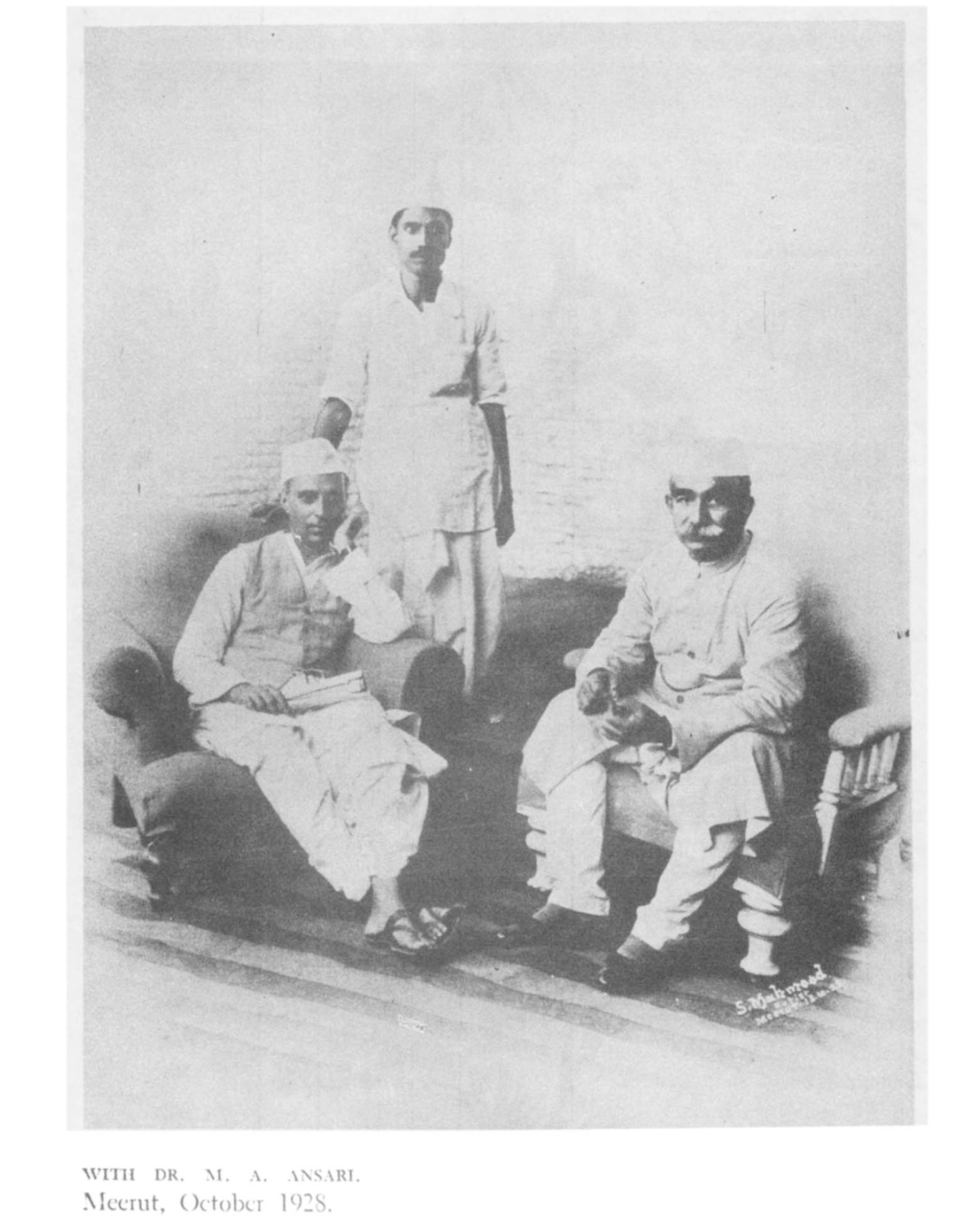
Soon, a fascinating symbolic market emerged around almost any object Gandhi touched. Signed photographs of the Mahatma were held up by organisers, who started the bidding with a rhythmic chant: “Do rupiya ek bar, do rupiya do bar…” (Two rupees once, two rupees twice…). The crowd would erupt, bidding the paper photographs up to astronomical sums. Photographs of Jawaharlal Nehru and the nationalist leader Dr M.A. Ansari were similarly auctioned, transforming political hero-worship into hard currency for Dalit welfare.
Even the beautifully framed, calligraphed civic addresses presented to Gandhi by adoring town municipalities were not kept as trophies. The moment the ceremony ended, Gandhi would look at the silver or wooden frames and playfully announce their auction. An oil painting gifted to him by an artist brought six hundred rupees; even objects as astonishingly mundane as his personal shaving stick acquired significant monetary value the moment they entered this sanctified marketplace. The philosophy was beautifully consistent. Value did not reside in the physical object but in the beautiful act of participation.
A Silent Covenant
Yet, the true soul of these tours was captured not in the orchestrated high bids of wealthy merchants, but in the quiet, heartbreaking torrents of spontaneous sacrifice.
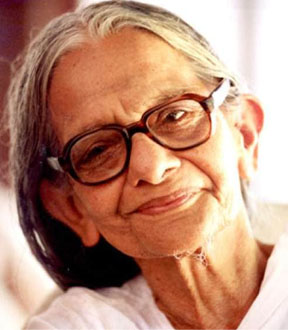
During his travels through the lush green landscape of Malabar, a young girl named Kaumudi stepped out of the crowd and walked up to the platform where Gandhi sat. Without uttering a single word, she reached for her wrists and slipped off her heavy gold bangles, placing them at his feet. As Gandhi watched her in silence, she reached up and unpinned her gold earrings and, finally, unclasped the heavy necklace from her throat, surrendering her entire worldly inheritance in a single, unbroken sequence of devotion.
Gandhi looked into the eyes of the young girl and asked if her parents knew of this immense sacrifice. She nodded quietly. He then told her that the outer ornaments she had surrendered would only truly matter if she replaced them with an inner ornament of truth and pure conduct, promising her that her gold would go directly toward building schools and digging wells for her Dalit brothers and sisters.
Gandhi would later write that Kaumudi’s silent offering remained etched in his memory as one of the most sublime moments of his long public life. Through her hands, a collection of private jewellery ceased to be an investment in gold; it became a public declaration of a new human covenant.
Currency of Trust
Behind this high drama on the stage lay a razor-sharp administrative discipline that guarded the integrity of every single paisa. Gandhi instituted a revolutionary rule that completely disrupted traditional bureaucratic habits: he decreed that the vast majority of the funds raised within a specific province or district must never disappear into a distant, centralised treasury in Delhi or Bombay. Instead, the money had to remain right there, circulating back into the very soil that had generated it.
The money was immediately reinvested into local Harijan welfare, building primary schools, digging fresh-water wells, financing temple-entry initiatives, and providing immediate medical relief. This brilliant mechanism transformed fundraising from an extraction of wealth into a visible ecosystem of local renewal. The donors could look down their own streets and see exactly what their copper coins had built.
In an era where the colonial British financial system was defined by distant, opaque bureaucracies and heavy imperial taxation that drained the countryside, Gandhi’s hyper-transparent, hyper-local ledger offered a beautiful, liberating alternative. Every single receipt was published; every expense was laid bare. Even the suspicious officers of the British Raj, watching closely for any sign of financial embezzlement or political money-laundering, were forced to note in their secret files the terrifyingly immaculate clarity with which the Mahatma’s funds were gathered and audited.
The Double Crisis
As the tour rolled into 1934, the underlying tensions within the national movement threatened to boil over. When Gandhi arrived in Delhi, the collections flowed from every conceivable corner of the urban landscape. The impoverished workers of the Birla Cotton Mills gave generously out of their meagre wages; elite educational institutions like St Stephen’s College and Hindu College competed fiercely in their donations, their giving driven by intense campus rivalries and a shared adoration for the visitor in the loincloth.
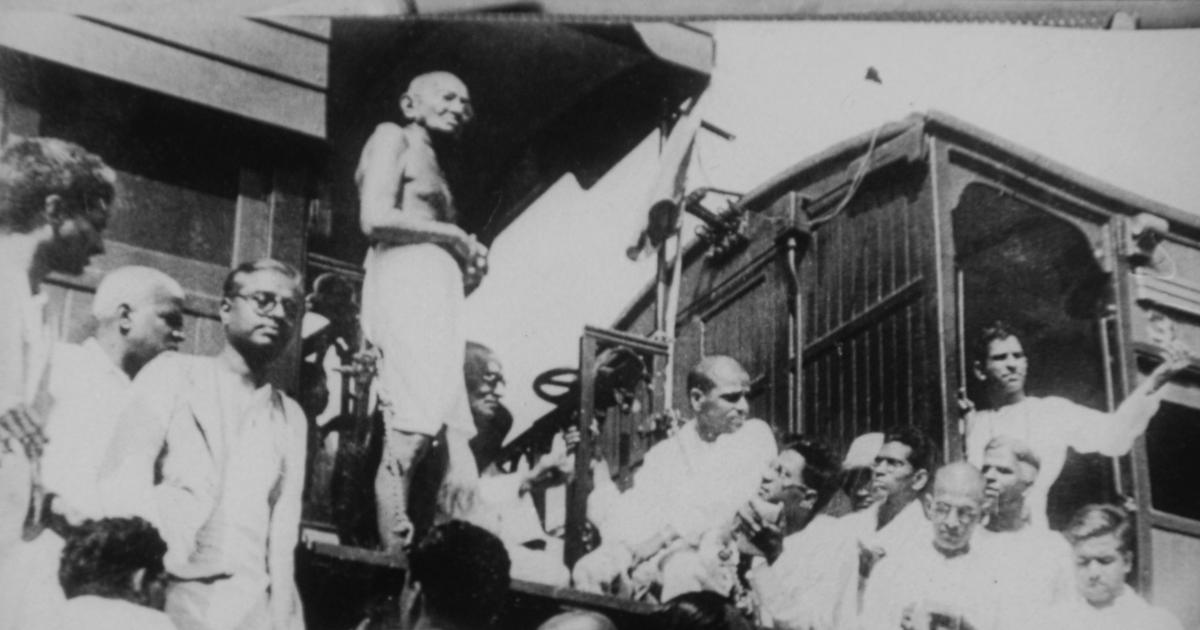
Yet, beneath the surface, a bitter debate was raging among local Congress workers. Many argued that by focusing so completely on untouchability, the Mahatma was cooling the revolutionary fires of the freedom struggle. They believed the political urgency of Swaraj was being eclipsed by social work. Gandhi did not dodge the confrontation. He faced his critics head-on, telling them that winning political independence from the British while retaining the rot of untouchability within Hindu society would merely mean replacing white rulers with brown oppressors. For him, a nation that was socially hollow could never be truly free.
This philosophy was put to its ultimate, tragic test when Gandhi reached the province of Bihar. A monstrous earthquake had just ripped through the region, leaving towns in ruins, fields swallowed by giant fissures, and thousands dead. In an instant, the Harijan campaign had to merge with a massive humanitarian relief operation.
Moving through the devastated heartland, Gandhi channelled the collective grief of the country into a massive fundraising drive, collecting over a million rupees, an astronomical sum for a ruined province. He handed the entire treasury over to his trusted lieutenant, Rajendra Prasad, ensuring that every rupee went directly into rebuilding homes, distributing food, and clearing fields. In this crucible of suffering, Gandhian fundraising evolved into its highest form: a grand mechanism of national solidarity, proving that the pain of Bihar was the shared responsibility of every single Indian.
Capital of a Saint
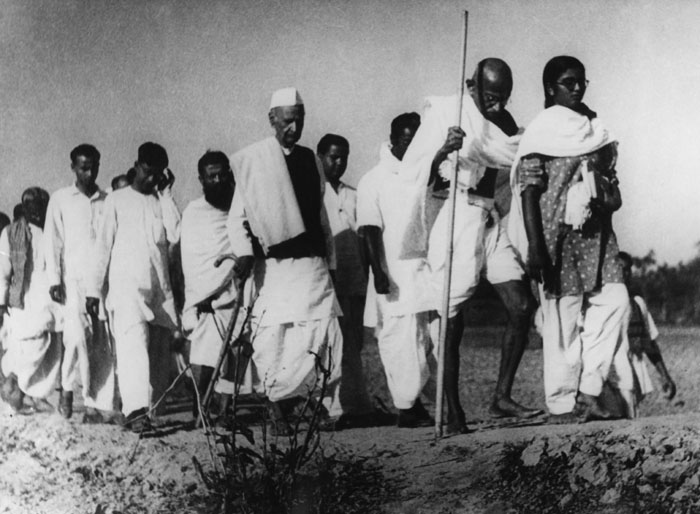
By the arrival of the turbulent 1940s, as India hurtled toward a bloody, fractured independence, Gandhi’s fundraising had long ceased to be about mere organisational survival. It had become the ultimate expression of his moral sovereignty. During the dark, terrifying nights of communal violence in Noakhali and Bihar, when neighbours turned upon neighbours with knives and torches, the Mahatma walked barefoot through the embers, using his immense moral capital to raise funds for the immediate relief and rehabilitation of displaced refugees, regardless of their faith.
He had achieved what no political leader before or since has ever managed: he completely divorced the concept of political finance from the dark world of backroom deals and corporate leverage. He proved that the purity of the means was inextricably tied to the nobility of the end.
The Immortal Audit
The long, winding trajectory of Mahatma Gandhi’s fundraising, from the small, anxious collections among a handful of Indian traders in the dusty towns of South Africa to the millions gathered from the teeming masses of the Indian subcontinent, remains one of the most astonishing chapters in the history of global political movements.
This grand evolution was never an abstract plan mapped out on a blackboard. It was forged in the fire of lived experience, most notably during the historic crisis at Kochrab Ashram, when the withdrawal of elite orthodox funding forced Gandhi to realise that a true revolution can never be a hostage to corporate philanthropy or elite charity.
In doing so, Gandhi did something far greater than merely bankrolling the Indian National Congress. He completely reimagined the human act of giving. He took money, an object so often associated with greed, corruption and hidden leverage, and transformed it into an instrument of moral awakening. In his hands, a copper coin dropped into a box by a barefoot peasant was not a financial transaction; it was a vote of confidence in the future of human freedom. By democratising the funding of the freedom struggle, he successfully democratised the ownership of the nation itself.
Today, in an era where modern political landscapes across the globe are deeply polluted by anonymous electoral bonds, corporate lobbying, and the corrupting shadow of big money, Gandhi’s immaculate ledgers stand as an urgent, burning beacon of light. He leaves behind an eternal, uncompromising lesson for the future of human democracy. The true strength of a political movement is never measured by the depth of its bank accounts but by the transparency of its methods, the inclusivity of its base, and the unyielding moral authority of its soul.
REFERENCES:
- Ambedkar, Bhimrao Ramji. (1936/2014). Annihilation of Caste. Navayana.
- Parekh, Bhikhu. (1997). Gandhi: A Very Short Introduction. Oxford University Press.
- Chandra, Bipan, Mukherjee, Mridula, Mukherjee, Aditya, Panikkar, Kavalam Narayana, & Mahajan, Sucheta. (1989). India’s Struggle for Independence. Penguin.
- Desai, Mahadev. (Ed.). (1948). The Diary of Mahadev Desai. Navajivan Publishing House.
- Gandhi, Mohandas Karamchand. (1909/2009). Hind Swaraj and Other Writings (Anthony J. Parel, Ed.). Cambridge University Press.
- Gandhi, Mohandas Karamchand. (1927). An Autobiography: The Story of My Experiments with Truth. Navajivan Publishing House.
- Gandhi, Mohandas Karamchand. (1958–1994). The Collected Works of Mahatma Gandhi (Vols. 1–100). Publications Division, Government of India.
- Hardiman, David. (2003). Gandhi in His Time and Ours: The Global Legacy of His Ideas. Columbia University Press.
- Nayyar, Pyarelal. (1956–1960). Mahatma Gandhi: The Last Phase (Vols. 1–2). Navajivan Publishing House.
- Sarkar, Sumit. (1983). Modern India: 1885–1947. Macmillan.
- Tendulkar, Dattatraya Govind. (1951–1954). Mahatma: Life of Mohandas Karamchand Gandhi (Vols. 1–8). Publications Division.
To read the previous articles from the series, click here.









Gandhi’s confrontation with finance was ultimately a confrontation with the politics of power itself. He showed that money in public life must never become a tool of secrecy, influence or control; it must remain accountable to the people who contribute it. His insistence on transparency, local responsibility and moral integrity offers a striking contrast to today’s politics of big money and opaque funding. The real strength of a democratic movement is not the size of its treasury, but the trust it earns from the people. A powerful and deeply relevant lesson for our times
All three essays were wonderful to read and take notes
The compilation of rare facts in all these 3 essays is worth appreciating