


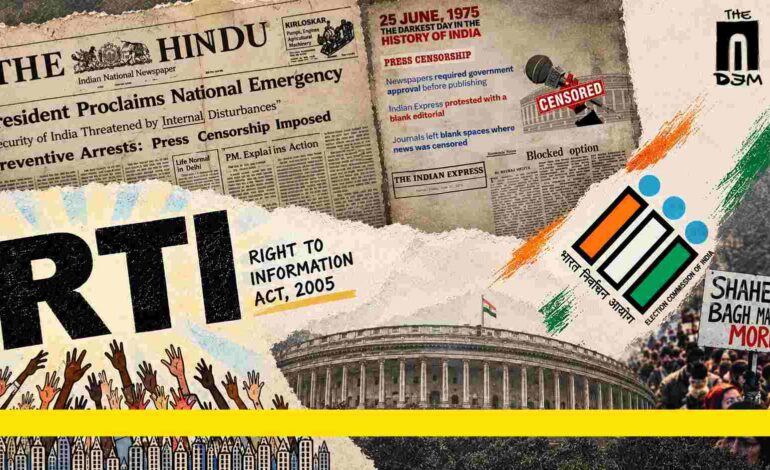
In a democracy, the credibility of an election depends not only on the votes cast by citizens but also on their confidence in the institution responsible for conducting it. The Election Commission of India, a constitutional body entrusted with safeguarding the integrity of elections, is therefore expected to stand above partisan interests. Yet allegations by opposition parties that the Commission has favoured the ruling establishment, together with growing questions about electoral transparency and institutional independence, have brought this constitutional responsibility into sharp public debate.
The concern extends beyond any single election or political party. When citizens begin to question whether institutions mandated to function independently are acting impartially, the issue becomes larger than electoral competition. It also raises a fundamental question about the relationship between citizens and the institutions that exercise power in their name. There is something deeply political about being compelled to remain outside the spaces where decisions are made — outside Parliament, outside a university auditorium, outside government offices or outside the very institutions that claim to represent the people. In a democracy, the distinction between being inside and outside is never merely geographical.
India is a constitutional republic founded on popular sovereignty. The opening words of its Constitution, “We, the People of India”, establish that political authority ultimately derives from the people. Yet we often reduce democracy to a single moment: the casting of a vote. We elect our representatives, celebrate electoral victories and expect the machinery of governance to function. But democracy does not cease to operate between elections. When citizens believe their representatives have failed them, or when they must gather outside the corridors of power to make themselves heard, their democratic role becomes no less important. A vote determines who governs, but the continuing voice of the people helps determine whether those who govern remain accountable.
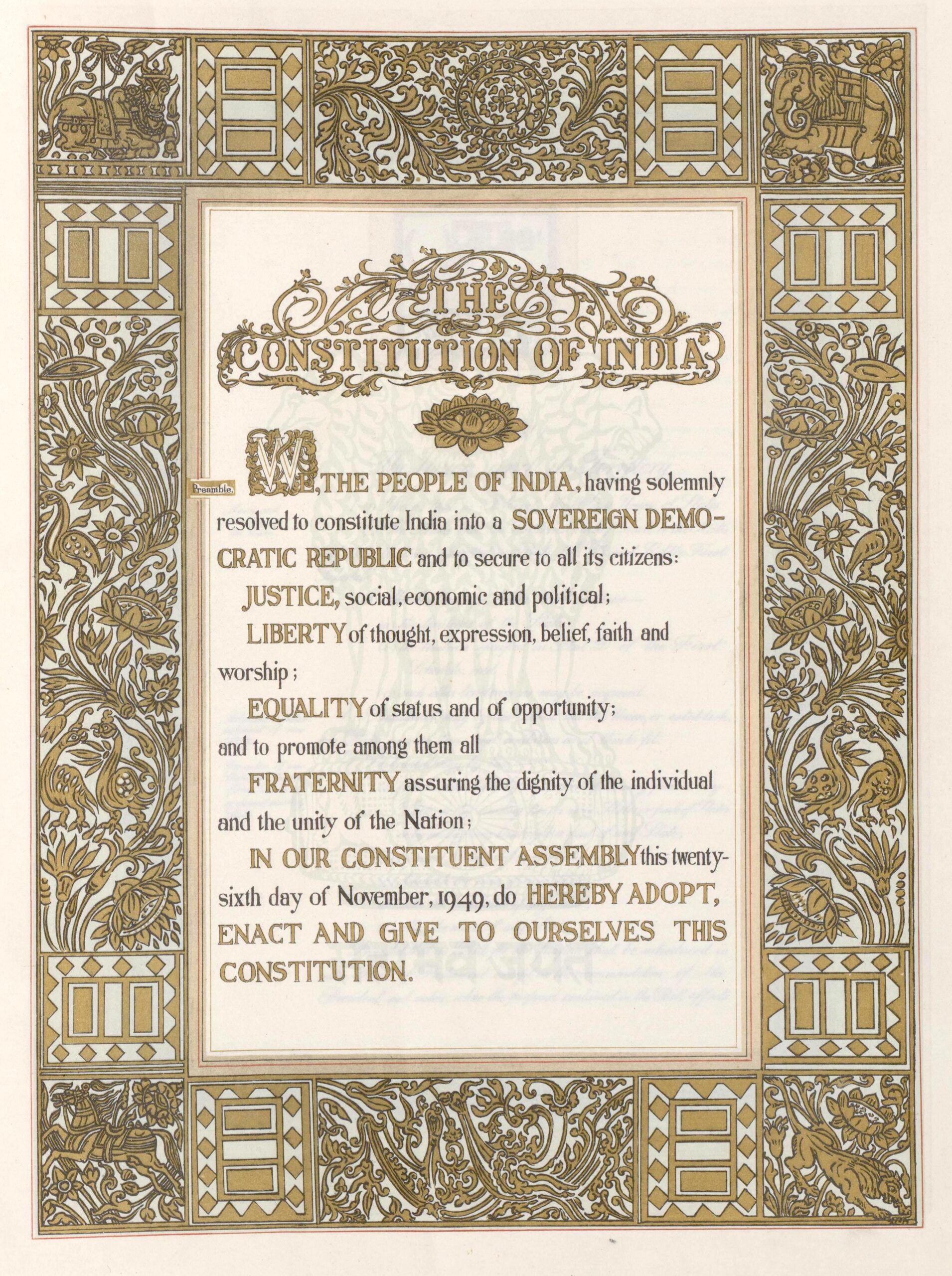
The Preamble to the Constitution of India begins with “We, the People of India”, placing popular sovereignty at the foundation of the Republic. [Image Source: Library of Congress]
Disagreement is natural in a plural society. The problem arises when criticism is treated as disloyalty, opposition to government policy is confused with opposition to the nation, and peaceful protest is viewed as a threat simply because it challenges authority. A government may win an election, but it cannot claim ownership of the republic.
When the People Challenge Power
India’s democratic history cannot be told through elections and parliamentary proceedings alone. It must also be told through the people who marched, organised, protested and challenged the established order. The freedom struggle transformed streets, villages and public spaces into arenas of resistance against colonial rule. Ordinary people did not wait for permission from those in power to demand freedom. Their participation was central to the making of independent India.
One of the most consequential examples of public resistance in contemporary India was the anti-corruption movement led by Anna Hazare and his colleagues in 2011. During Prime Minister Manmohan Singh’s tenure, thousands gathered at Delhi’s Ramlila Maidan to demand the establishment of a strong Lokpal institution to investigate corruption. The movement emerged amid major corruption controversies and growing public dissatisfaction with the UPA government.
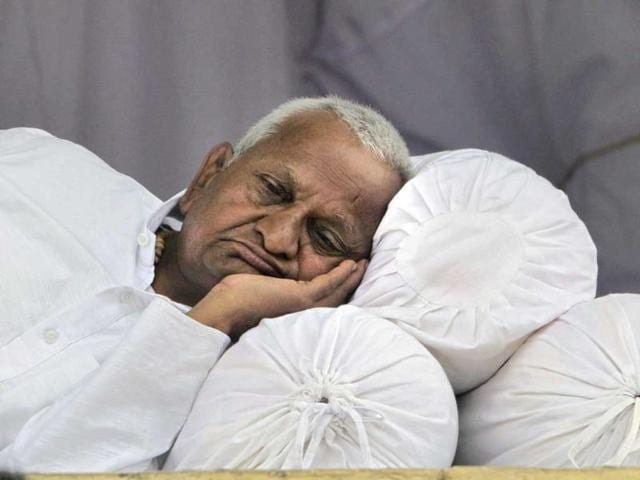
The Social activist Anna Hazare rests on stage during his anti-corruption hunger strike at Ramlila Maidan, New Delhi, August 21, 2011.
The confrontation was not without controversy. Hazare was arrested in August 2011 ahead of a planned hunger strike, provoking further demonstrations. Yet the movement could not simply be dismissed. Public pressure brought institutional accountability to the centre of national debate, and the Lokpal and Lokayuktas Act was enacted in 2013 under the UPA government. The movement also contributed to the wider anti-establishment sentiment preceding the 2014 change of government, although it was not the sole cause of that electoral outcome.
The Mazdoor Kisan Shakti Sangathan (MKSS) movement stands as a powerful reminder that democracy is not secured by elections alone but also by citizens’ ability to question those in power. Beginning in Rajasthan, rural workers and farmers peacefully demanded access to official records on wages and development spending, exposing corruption through jan sunwais (public hearings) and a historic 40-day dharna at Beawar in 1996. The movement demonstrated how sustained public mobilisation could transform local grievances into a wider national demand for democratic accountability.
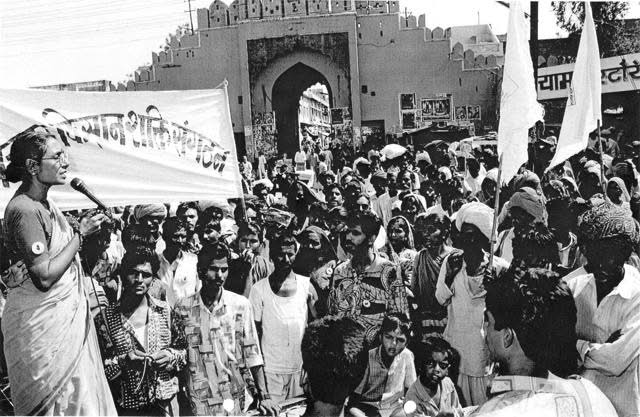
Social activist Aruna Roy addressing a gathering of farmers and daily-wage laborers during the historic 40-day dharna launched by the Mazdoor Kisan Shakti Sangathan (MKSS) at Chang Gate, Beawar, Rajasthan, in April 1996.
The struggle initiated by the MKSS and carried forward by the broader right-to-information movement contributed significantly to the enactment of the Right to Information Act in 2005 under the first UPA government. The legislation transformed a longstanding demand for access to public information into an enforceable legal right. This landmark law empowered ordinary Indians to inspect government records and hold public authorities accountable, demonstrating the importance of organised public action in advancing transparency and democratic accountability.
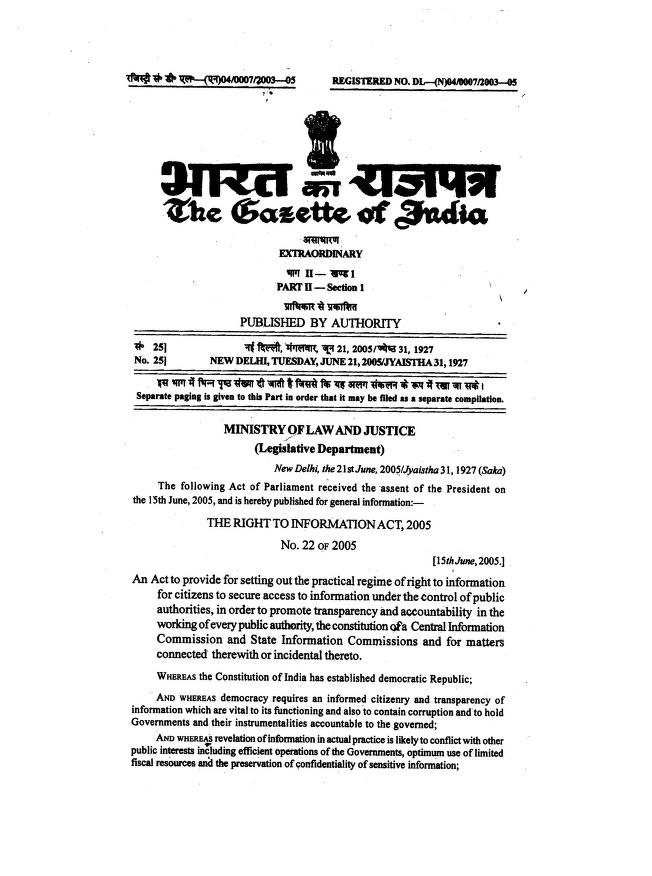 The first page of the Right to Information Act, 2005, published in The Gazette of India Extraordinary (Part II—Section 1, No. 25) on June 21, 2005.
The lesson is significant. A government can disagree with a movement, but it cannot expect public anger to disappear merely by containing it. Such struggles demonstrate how resistance can compel political institutions to confront uncomfortable questions. Democracy is strengthened when public demands find meaningful institutional responses.
The same lesson emerges from the defence of civil liberties during the Emergency of 1975–77. The suspension of fundamental freedoms and restrictions on the press demonstrated how quickly democratic institutions can be weakened when political authority becomes concentrated. The electoral defeat of Indira Gandhi’s government in 1977 subsequently showed that citizens could use the ballot to reject authoritarian excesses. Indian democracy has endured not because dissent disappeared, but because people continued to demand their constitutional rights.
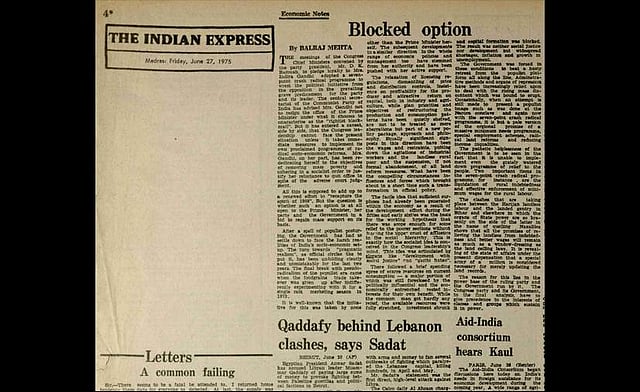
The Indian Express front page/editorial layout from June 1975, showing the blank columns left by editors to protest the state-enforced pre-censorship guidelines during the National Emergency.
Equating Dissent to Disloyalty
The Constitution guarantees freedom of speech and expression and the right to assemble peacefully and without arms under Article 19, subject to constitutionally permitted reasonable restrictions. These freedoms are not absolute, but restrictions cannot become a convenient instrument for silencing criticism. In Amit Sahni v. Commissioner of Police (2020), concerning the Shaheen Bagh protest, the Supreme Court addressed the limits of indefinitely occupying public ways. The democratic challenge is to protect peaceful dissent while respecting the rights of other citizens.
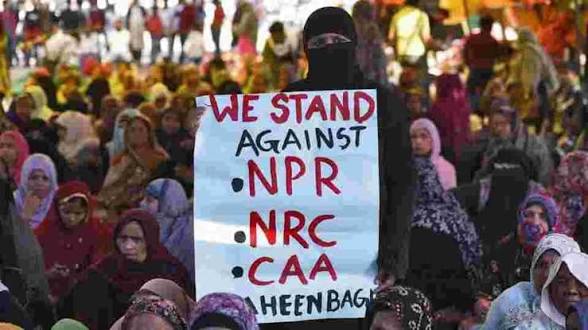
The historic women-led Shaheen Bagh protest against CAA, NRC and NRP in January, 2020.
Recent events in our neighbourhood offer a sobering warning. In Bangladesh in 2024, student protests over government job quotas escalated into a wider uprising against Sheikh Hasina’s government. A violent crackdown and mounting public anger preceded her resignation and departure from the country. Nepal’s Gen Z-led protests in 2025 likewise exposed the dangers of political alienation and declining public confidence in established leadership.
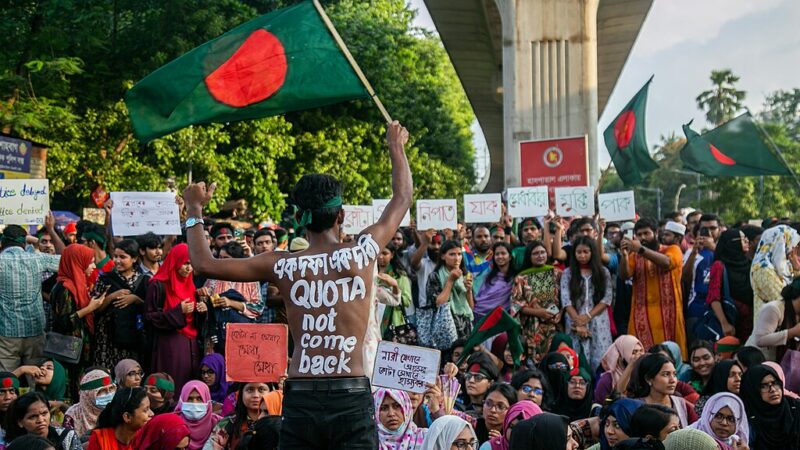
A demonstrator holding the national flag during the “Bangla Blockade” protests in Dhaka, where university students demanded a transition to a merit-based hiring system.
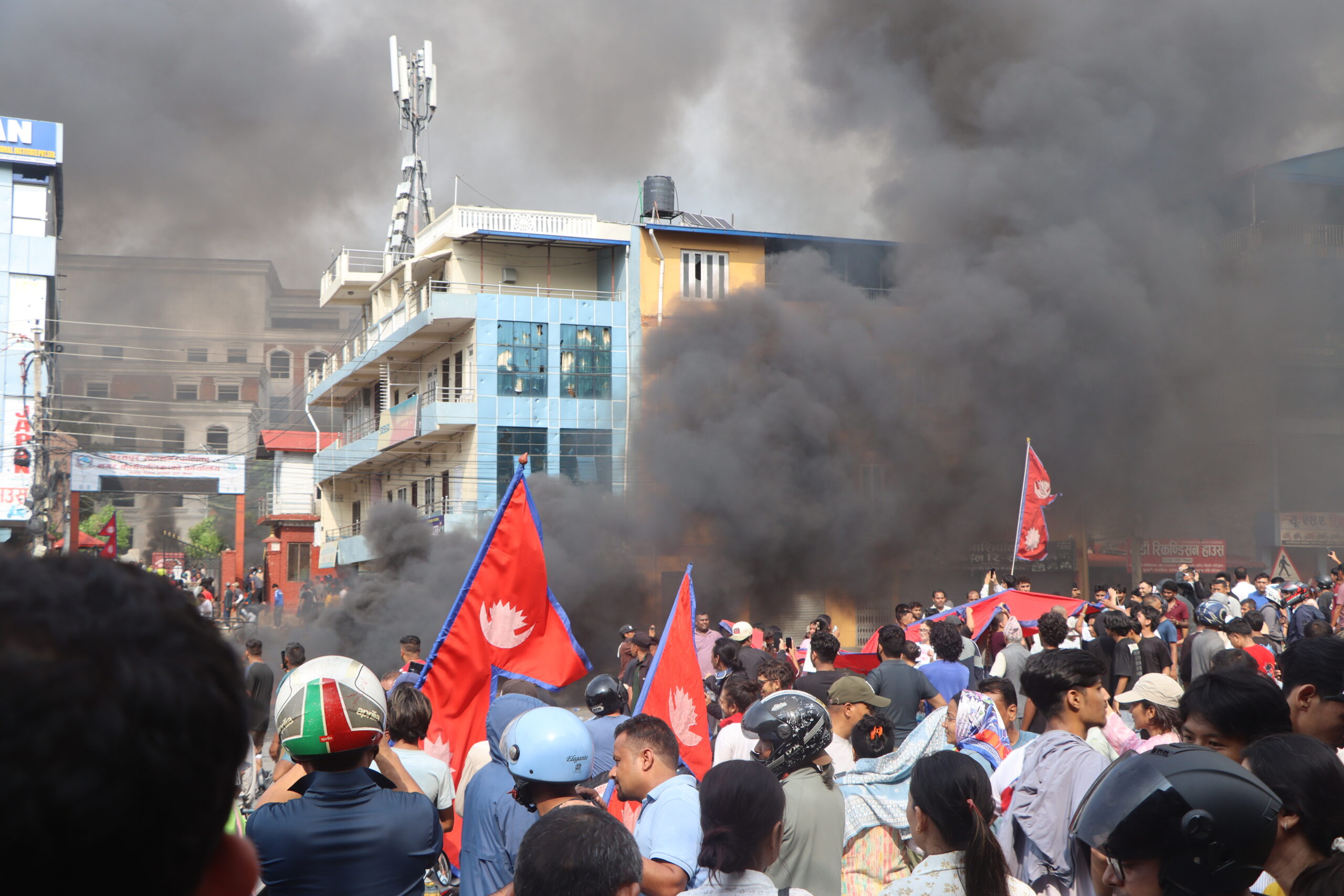
Nepalese Gen Z protesters gather in front of the Bharatpur Mahanagarpalika (Municipal Executive) office as thick black smoke rises from a government building set on fire during anti-corruption and anti-censorship demonstrations on September 9, 2025.
These events are not templates for India, nor should violence be romanticised. The political and social circumstances of these countries differ from those of India, and each movement emerged from its own historical and institutional context. They demonstrate, however, that suppressing grievances does not necessarily extinguish them. When peaceful channels of dissent are obstructed, institutions fail to respond and citizens lose faith in the possibility of change, a political crisis can grow beyond the control of those governing. Governments that mistake silence for consent may discover too late that public anger has merely accumulated.
India Is a Republic of Voices
Democracy is not merely an administrative arrangement; it is an inheritance secured through struggle and sacrifice. A republic needs institutions where decisions are made, but it also needs institutions whose doors remain open to the people and whose representatives are willing to listen when legitimate concerns go unanswered. A vote is an act of citizenship, but so is a question put to a minister, an investigation published by an independent journalist, a student assembly, a worker’s march or a peaceful protest outside the gates of power.
The questions now being raised about electoral transparency and the independence of constitutional institutions must therefore be understood as part of a larger democratic demand for accountability. Such questions cannot be settled merely by invoking an electoral mandate. They require institutions to respond with openness, impartiality and a willingness to be scrutinised.
The republic belongs as much to the critic as to the supporter, and as much to the citizen standing outside as to the representative seated inside. Its strength will be measured not only by how people vote but also by whether they remain free to speak afterwards and whether those in power are willing to listen. A vote gives a government the authority to rule. It does not give it the right to silence the people.

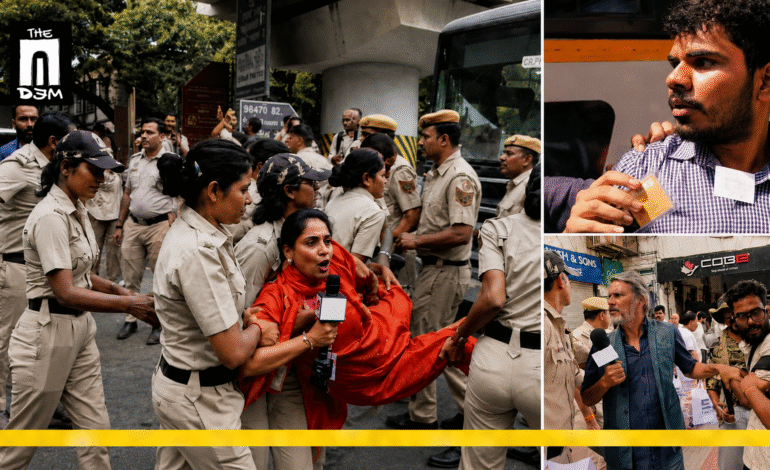
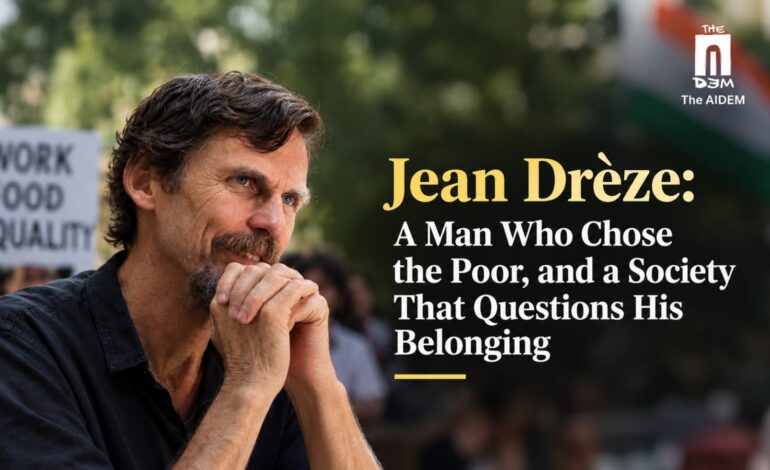





An electoral mandate is not a blank cheque to undermine democracy or silence dissent. Winning an election gives a government the authority to govern, not the right to suppress people’s voices, weaken constitutional institutions, or escape accountability. In a true democracy, citizens are not subjects to be controlled but equal stakeholders whose rights must be respected. The real strength of a government lies not in silencing its critics, but in having the courage to face their questions. Democracy belongs to the people, not to those who temporarily hold power.