
The Unfinished Revolution: Evaluating the Dravidian Movement’s Legacy and Charting its Next Trajectory – Part 2

What must a century-old social justice movement become to remain relevant in a rapidly changing world?
In the second part of “The Unfinished Revolution,” Balasubramaniam Muthusamy examines the Dravidian movement’s future through the challenges of human development, gender equality, Ambedkarite thought, technological change and ecological sustainability. He argues for moving beyond democratising access towards building institutions that generate knowledge, foster rational inquiry and shape intellectual and civilisational progress.
The challenge ahead is not merely to catch up with the world, but to help shape its future.
Based on a paper presented at the 5th Periyar International Humanist Conference, Tokyo, on 11 October 2026.
Theoretical Framework: Maslow And Societal Trajectories
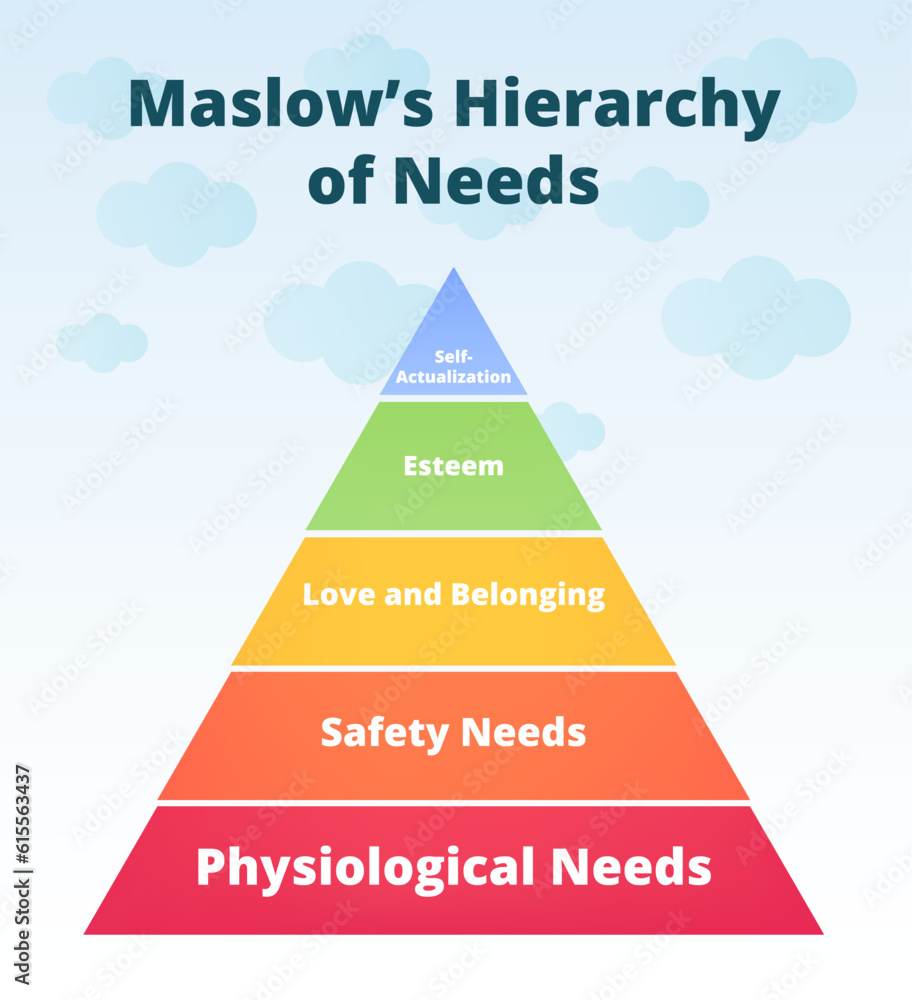
Abraham Maslow’s hierarchy of needs – physiological, safety, belonging, esteem, and self-actualisation — was designed as an account of individual psychological development. Its application to the trajectory of social movements and communities must be understood as heuristic rather than deterministic. Nonetheless, as a framework for understanding the direction of a society’s developmental momentum, it has proven useful in the sociological literature.

The proposition advanced here is as follows. Tamil Nadu’s Dravidian movement has, over approximately a century, enabled the majority of Tamil society to successfully navigate the first four levels of this hierarchy: from material survival (physiological and safety needs) through social belonging to the formal assertion of self-esteem. The movement’s policy contributions — universal education, reservation, anti-Brahmin identity politics were precisely calibrated to address the conditions that prevented lower-caste communities from achieving the first four levels.
The fifth level — self-actualisation, or the realisation of one’s full human potential — requires different conditions. It requires not the removal of external oppression but the generation of internal aspiration. It requires institutions that invite individuals to transcend the category into which they were born and to contribute to the full range of human intellectual and creative endeavour. The Dravidian movement has not yet built these institutions.
The analogy with Western European secularisation is relevant here. As Norris and Inglehart (2004) document, the societies with the highest Human Development Index scores are also the societies with the lowest levels of conventional religious observance. This correlation is not incidental. The withdrawal of women from the institutional church made possible by their economic independence and educational attainment was both a signal of and a catalyst for the social conditions in which full human self-actualisation became achievable at a population level. The Dravidian movement has not catalysed an equivalent transition.
The Accelerating Global Context
The adequacy of the movement’s existing policy framework must be assessed not against the challenges of the twentieth century but against the challenges of the twenty-first. Those challenges are of a different order of magnitude.
The COVID-19 pandemic accelerated the reorientation of global investment away from China and toward alternative production and intellectual centres. A protracted conflict between major Western powers has disrupted global supply chains and energy markets in ways whose full consequences remain unresolved. Climate change is generating increasingly frequent and severe meteorological events across multiple continents. Artificial intelligence is disrupting the labour markets, professional structures, and knowledge hierarchies on which the movement’s own developmental model was premised.
The pace of change in the next decade is likely to produce transformations equivalent or more in aggregate to those of the preceding century. The policy instruments — reservation, education access, anti-caste political mobilisation that were adequate responses to the challenges of 1950 are not adequate responses to the challenges of 2050. This is not a criticism of the instruments; it is an observation that the context has changed more rapidly than the instruments have adapted.
The fundamental question is: does Tamil society have the human capital, the institutional infrastructure, and the cultural ambition to participate at the leading edge of twenty-first-century intellectual and technological development? The evidence suggests that Tamil society has built the base, a broadly literate, economically mobile, institutionally represented population — from which this ambition could be launched. What it has not yet built is the superstructure: the institutions of excellence, the culture of intellectual risk-taking, and the global networks of engagement through which the next generation of ideas are produced.
Propositions For The Next Trajectory
On the basis of the foregoing analysis, this paper advances six propositions for the movement’s strategic direction over the next quarter-century.
Inclusive Stake holding Across All Social Groups
The movement must expand its constituency beyond its historical base. It must create genuine political and social stakeholding for groups including Dalit communities and upper castes disaffected by the movement’s historical exclusions to create an inclusive Tamil identity. A movement that speaks only to its existing members cannot generate the societal consensus required for transformative change.
Gender Equality as a Non-Negotiable Condition
The movement must treat substantive, not merely formal gender equality as a prior condition of all other social progress. The international evidence is unambiguous: no society has achieved high-level human development without the full social and economic liberation of its women. This requires not only legal reform but the sustained cultural engagement with the informal norms and domestic arrangements that constrain women’s lives in ways that statute cannot easily reach.
Full Integration of Ambedkarite Analysis
The movement must formally and theoretically integrate Ambedkar’s analysis of caste as its co-foundational framework alongside Periyar’s rationalism. The task of dissolving caste-based residential segregation and social exclusion is specifically Ambedkarite in its diagnosis and its remedies. The Dravidian movement cannot claim the mantle of social justice while leaving this foundational work incomplete.
Engagement with Global Scientific and Technological Frontiers
The movement must develop the capacity to identify, engage with, and promote leading-edge scientific and technological developments. This is not merely instrumental though the economic case is compelling but represents the logical extension of the movement’s rationalist intellectual tradition. A rationalist movement that is disengaged from the contemporary practice of reason in its most advanced forms has abandoned its own first principles.
Ecological and Agricultural Integration
The movement has historically has not engaged with the questions of environmental sustainability and agricultural transformation. Given the existential urgency of climate change, the movement must develop a coherent ecological political economy that connects its existing social justice commitments to the emerging demands of sustainable development.
Centres of Intellectual and Civilisational Excellence
The movement must invest in the creation of institutions, research centres, think tanks, creative residencies, international exchange networks designed not to serve its existing political programme but to generate new intellectual and civilisational contributions. The question is not merely how Tamil society can catch up with the world’s leading centres of knowledge production. The question is how Tamil society can contribute to reshaping those centres.
Conclusion
The Dravidian movement has achieved something that few social movements in modern history have managed: it has demonstrably and measurably improved the material and social conditions of majority of the population of a large, poor, caste-stratified society. Its centennial achievement is not in doubt.
But the logic of its own success now demands more than it has delivered. A movement built on reason, equality, and human dignity cannot be satisfied with having democratised access to a social order that still excludes its most marginalised members, still subordinates its women in informal ways that formal equality does not reach, and still lacks the intellectual infrastructure to engage with the challenges of the twenty-first century as a producer rather than a consumer of knowledge.
Periyar’s challenge to his contemporaries was to question everything that authority declared sacred. The movement’s challenge to itself, in this century, is to question the adequacy of its own inherited instruments and to build, with the same rigour and courage, the next generation of institutions that a rapidly changing world demands.
To stagnate is not a neutral option. In an era of accelerating change, the movement that does not advance will find that the world has advanced beyond it. The choice is between a leap into the future and a slow, quiet irrelevance. The case for the leap is compelling. The capacity for it exists. The will to make it is what remains to be demonstrated.
Read the First Part of the Article here: