
The Unfinished Revolution: Evaluating the Dravidian Movement’s Legacy and Charting its Next Trajectory – Part 1

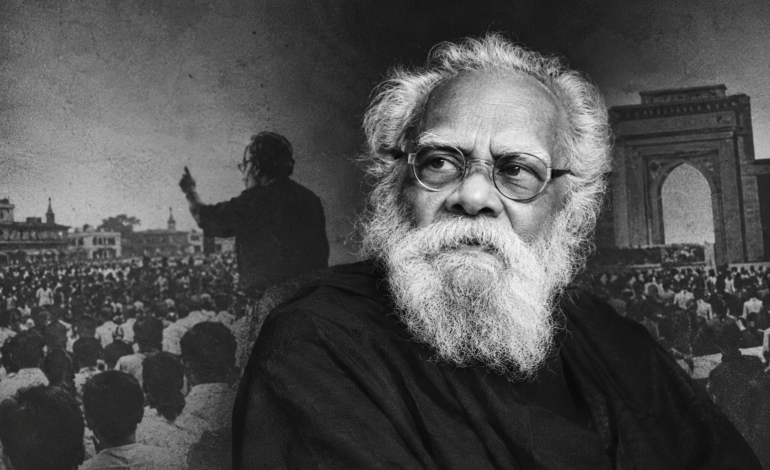
Can a movement that transformed social justice also confront the inequalities it has yet to overcome?
In “The Unfinished Revolution: Evaluating the Dravidian Movement’s Legacy and Charting its Next Trajectory ,” Balasubramaniam Muthusamy examines the Dravidian movement’s historic achievements in democratising education, expanding affirmative action and challenging caste-based hegemony. But the revolution remains incomplete. Persistent Dalit residential segregation, the gap between legal rights and women’s lived realities, and the resurgence of caste-linked religious practices raise difficult questions about the movement’s unfinished promise.
The first part of this two-part paper explores the distance between the movement’s transformative legacy and the inequalities that continue to shape Tamil society, asking what meaningful social justice must still confront.
Based on a paper presented at the 5th Periyar International Humanist Conference, Tokyo, on 11 October 2026.
Abstract
The Dravidian rationalist movement, originating in early-twentieth-century Tamil Nadu under the intellectual leadership of E. V. Ramasamy Periyar, has produced one of the most consequential social justice transformations in modern India. Over a century, the movement dismantled Brahminic hegemony, democratised access to education and public life, and institutionalised reservation-based affirmative action in ways that remain unmatched in any other Indian state. This paper draws on personal biographical testimony, comparative sociological evidence, and theoretical frameworks including Maslow’s Hierarchy of Needs and the secularisation thesis of Norris and Inglehart to assess where the movement has succeeded, where it has stalled, and what its next strategic trajectory must be. The paper argues that while the movement has successfully addressed the first four levels of individual and social need from material survival to self-esteem — it has not yet catalysed the fifth-level transition to collective self-actualisation. With accelerating global transformation driven by artificial intelligence, climate change, and geopolitical realignment, the paper contends that the Dravidian movement must now pivot from democratising access to generating intellectual and civilisational leadership.

Introduction
The Dravidian rationalist movement stands as one of the defining political and social movements of modern South Asia. Founded on principles of reason, equality, and the systematic dismantling of caste-based hegemony, it has over the course of a century reshaped the social architecture of Tamil Nadu in ways without parallel in the Indian subcontinent.
This paper is structured around a biographical framing one practitioner’s journey through the movement’s institutional outputs across five decades — as a device for generating empirical observations about the movement’s outcomes. The biographical method, long employed in the sociology of social movements is particularly suited to evaluating movements whose successes and failures manifest most legibly in individual life trajectories rather than in aggregate statistics alone.
The paper proceeds in five stages: a characterisation of the movement’s foundational achievements; an assessment of its specific failures, particularly with respect to Dalit inclusion and gender equality; a theoretical framework for understanding where Tamil society currently sits in its developmental arc; an analysis of the accelerating pace of global change and its implications for the movement’s adequacy; and a set of programmatic propositions for the movement’s next century.
The Dravidian Movement and its Foundational Achievements
Democratising Education and Economic Opportunity
The most measurable achievement of the Dravidian political movement has been the systematic democratisation of educational and employment access. Through the consistent implementation of reservation-based affirmative action across state’s educational institutions, the movement produced a generation of first-generation learners from backward and most-backward communities who were able to access professional education and subsequently opportunities offered by the formal economy.
This along with the reservations for the Dalits, has ensured that close to 85% of the Tamil population is represented in proportion to their population. The Dalit reservation is a national phenomenon through a parallel struggle by the Dalits led by Dr B. R. Ambedkar and supported by Gandhi.

This is not a trivial achievement. While across the country, few other states like Kerala and Maharashtra have also ensured affirmative action, at the national level, most North Indian states and the Union Government have long ignored the needs of the Other Backward Classes. This is in spite of the constitutional Mandate via article 340. The first report on OBCs was submitted by the Kalelkar commission which made many recommendations, including a caste census, in 1961. The report was quietly shelved, and the caste census, which should have been the basis for the affirmative policies, was never conducted. The second commission under the chairman, B.P Mandal, was also not acted upon for 11 years after submission. And finally when it was set to be implemented, anti-reservation riots exploded in the Capital Delhi and most north Indian states. Yogendra Yadav, a political activist noted with angst that many people belonging to OBC groups also joined the protest against the reservations for OBCs. This was the level of awareness in the northern part of India.

But the announcement of reservations for OBCs was received with jubilation in the state of Tamil Nadu because the Tamil society understood the impact of an affirmative action. While, Mr. V P Singh, the Prime Minister who implemented Mandal Commission recommendations, is a hated figure in the North, he is hailed as a hero in Tamilnadu with a statue built in his honour.
This dichotomy explains the success of the Dravidian movement.
Even after 75 years of reservations for Dalits and Adivasis and 20 years of reservations for OBCs, the elite institutions like IITs, IIMs, the representation of these caste groups is less than 20% among the faculties. The case is the same with Supreme court and higher levels of bureaucracy, where the dominance of Upper castes is disproportionately high. This structural exclusion was not incidental; it was the product of millennia of institutionalised caste hierarchy which could not be dismantled in spite of a mandate by the Constitution and the Government.
On the contrary, the Dravidian movement dismantled this hierarchy through a sustained and politically consistent insistence on proportional representation, producing, over five decades, a labour market and educational landscape that was more equitable than any other Indian state.
Challenging Brahminic Socio-Political Hegemony
Beyond formal reservation, the movement performed a more subtle but equally important function: it provided an ideological counter-narrative to the Brahminic social order that had operated as the default framework of Hindu social life. The rationalist critique of religious rituals, caste hierarchy, and the hegemony of priestly interpretation gave succeeding generations of backward-caste and Dalit individuals not only formal access to institutions but a philosophical vocabulary within which to understand and resist their own oppression. The Dravidian Movement spent decades preparing the Tamil society, ideologically, for the recognition of Social Justice as a legitimate right.
Failures and Unfinished Business
The Persistence of the Dalit Colony
Against these achievements, the movement’s most consequential failure is its inability to dissolve the segregated social architecture of Dalit communities. The ‘Dalit colony’ — the physically separated, socially enclosed settlement that persists in Rural and urban peripheries in Tamil Nadu alike — represents the most visible evidence that the movement’s democratisation has not been completely transformative.
Dr. B. R. Ambedkar’s formulation — that caste is a graded inequality — has a corollary that the Dravidian movement has been slow to confront. That the immediate beneficiaries of upward mobility within a graded hierarchy are the groups just below the dominant stratum, not the groups at the lowest positions. The backward-caste communities that the movement primarily empowered were not identical with the Scheduled Caste communities for whom Ambedkar wrote and organised. The movement’s failure to recognise this distinction and to build a genuine political and social alliance with Ambedkarite formations, represents its most significant structural inadequacy.
No meaningful social transformation is possible without the full dismantling of caste-based residential and social segregation. The movement requires Ambedkar as a co-theorist, not as a rhetorical citation.
Gender Equality: Legal Without Being Social
The Dravidian movement’s formal record on gender equity is strong. Women’s education, suffrage, property rights, and participation in public life have all been advanced by movement aligned governments. Yet the social reality of Tamil women’s lives particularly within families and communities remains far behind the formal legal position.
Evidence of this gap is present at every social scale. School teachers need to fight an invisible ban by the patriarchy to wear a Salwar without a duppatta. Bank accounts and ration cards belonging to employed professional women remain under the effective control of their husbands. The cultural celebration of rituals including fasting practices specific to women’s subordination to their husbands persists even among highly educated populations. The Indra Nooyi anecdote, in which the CEO of PepsiCo, on the day of her appointment, was sent to buy milk instead of her husband, by her mother rather than allowed to celebrate is a domestic data point, but it speaks to a structural condition.
The international comparative evidence is unambiguous on the relationship between women’s substantive not merely formal equality and social development. The secularisation research of Norris and Inglehart (2004) demonstrates that as a society’s human development index improves, particularly in healthcare, economic stability, and educational opportunity, existential insecurity declines, and with it the reliance on organised religion as a coping mechanism. Critically, the departure of women from institutional religious structures is both a leading indicator and a contributing cause of further improvements in human development, primarily through the mechanism of gender equality. Western European societies, where women’s economic independence preceded their departure from the institutional church, are the empirical referent. Tamil Nadu has not undergone this transition.
The Return of Pre-Rational Social Formations
A third and deeply concerning failure is the partial reversal of the movement’s secular-rationalist cultural project in recent decades. Evidence of this reversal is observable in multiple registers: the persistence of caste-specific religious votive practices among economically prosperous backward-caste communities; the colonisation of informal communication networks, particularly WhatsApp groups, by religious content dressed in caste identity; and the resurgence of Brahminic ritual practices within Hindu institutions, which have been permitted to fill the cultural vacuum left by the movement’s retreat from constructive social engagement.
These are not trivial cultural preferences. They are indicators that the movement has succeeded in advancing communities to the fourth level of Maslow’s hierarchy — esteem, without generating the conditions necessary for the fifth: self-actualisation or realisation of the self
Part 2 Follows Tomorrow



The Dravidian movement’s legacy of social justice is undeniable, but its struggle remains unfinished as caste discrimination, gender inequality and social exclusion continue to persist. True social justice cannot be limited to political slogans or historical achievements; it must challenge every form of oppression, including those within its own ranks. The real test of the Dravidian movement lies in whether it can turn its founding ideals of equality, dignity and self-respect into reality for every section of society. Social justice is not a finished achievement; it is a continuing struggle for equality and human dignity.