
The Fall of Iqbal: Modi and the Nahusha Legend

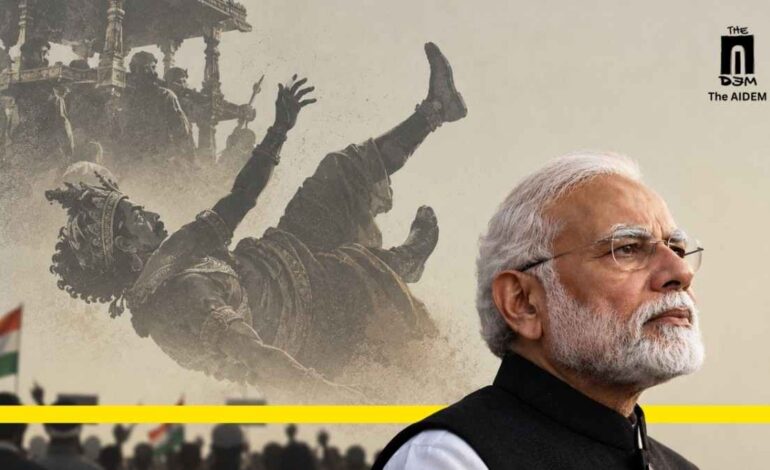
Power can command obedience, but only public trust can sustain an aura. In the Mahabharata, King Nahusha was granted the crown of swarga for his virtues, only to fall from heavenly glory the moment hubris blinded him. Today, a similar question hangs over India’s political landscape: Has Prime Minister Narendra Modi lost his iqbal—the towering aura of prestige and trust that once resonated from Bihar’s farmlands to Munger’s youth?
In this edition of Everything Under The Sun, Nalin Verma looks through the journey of a leader’s political merit, tracing how grand promises and early adulation have given way to rising discontent and a generation in rebellion.
Indian folklore and the Mahabharata have a story of Nahusha who, because of his great virtues and righteous deeds, replaced Indra as the King of the devatas in swarga (heaven). But soon he succumbed to blinding arrogance and hubris. Intoxicated by absolute power, he demanded that revered sages carry his palanquin; crossing every moral boundary, he impatiently kicked the sage Agastya with his foot.
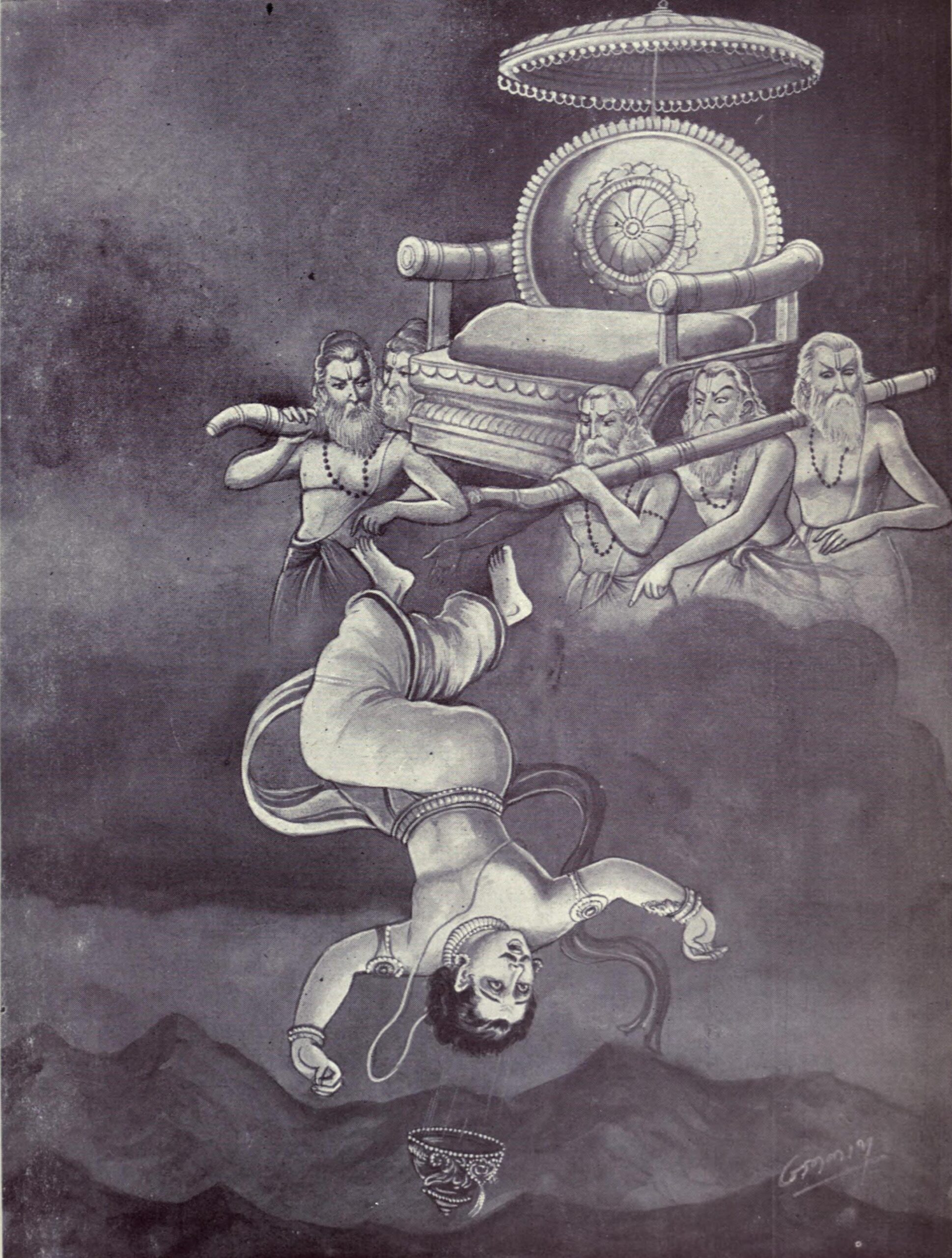
In a single act of supreme disrespect, his accumulated punya (merit) evaporated and his divine aura instantly shattered. The outraged sage cursed Nahusha for his foul karma—he was stripped of his royal aura, fine garments and human form, tumbling down from heaven to roam the earth as a python.
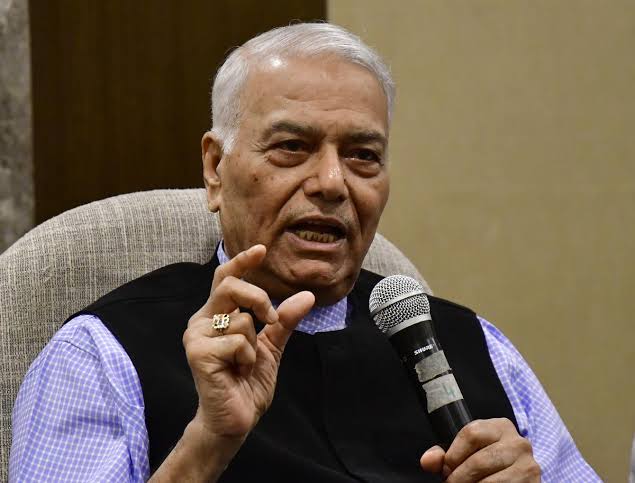
Referring to Prime Minister Narendra Modi in a recent interview with an internet channel, former finance minister Yashwant Sinha said, “Modi’s ‘Iqbal’ has gone; a Prime Minister stripped of his ‘Iqbal’ can’t last long”. The word Iqbal has Arabic roots, which the Persian lexicon integrated over time, and is widely used by Indians as a synonym for prestige, aura and respect.
Yours truly, a journalist by training and folklorist by passion, vividly remembers the ‘aura’ and ‘acceptance’ among the larger Indian masses that Modi commanded not so long ago. Travelling on the streets at Karom—a nondescript village on the Siwan-Darauli road in Bihar—I saw a middle-aged man in a tattered vest and soiled lungi working with a small spade in his field ahead of the 2019 Lok Sabha elections. I asked who his favourite leader was, and he instantly replied, “Narendra Modi”.
I was amused because the villager didn’t look like someone much interested in politics and political discourse. Similarly, travelling with my journalist friends Kanhaiya Bhelari and Ashok Mishra in a roadside village in Jamui district ahead of the 2014 general elections, we stumbled upon a barber’s shop set up in a small hut. When we asked the young barber, who was working with his scissors on an old man’s head, who he would vote for, he replied instantly, “Narendra Modi”.
The Bihar chief minister, Nitish Kumar, was immensely popular at that time. He had severed his ties with the Bharatiya Janata Party (BJP), and his Janata Dal (United) was contesting the 2014 elections separately. Kanhaiya Bhelari asked, “Why not Nitish Kumar? Why Modi?” The barber said, “Ham log ooper dekh rahe hain”. What the barber tried to convey with his reply was that Modi was contesting to become the Prime Minister, and he and his fellow villagers would vote to choose a PM, not a CM.
We met a group of college-going youths in Munger and asked about their electoral choice. They, without exception, said, “Narendra Modi”, and walked past, shouting “Modi-Modi” in chorus. The group was apparently a microcosm of the Generation Z of their time. This writer has no clue about what exactly the students who shouted “Modi-Modi” in chorus on their way to college on the streets of Munger in 2014 are thinking about Modi today. But what is certain is that they might have become 30 to 32 years old, with Modi continuing as PM for over 12 years. It is also hard to guess the condition and state of mind of the then Munger youths now that they are in their 30s.
But this writer’s encounters with a peasant at Karom, a barber at Jamui and students at Munger ahead of the 2014 and 2019 elections amply suggested that Modi—irrespective of his own political ideology—was endowed with the “Iqbal”, or aura, prestige, love or respect of citizens across social divides in North India.
Accumulation of Punya
What earned him that ‘Iqbal’?
They were clearly his promises, spoken with flourish and clarity from the campaign podiums. “I don’t relish in dividing the people in Hindus and Muslims. I will like both Hindus and Muslims to unite and fight against their common enemy, that is poverty”, He famously said, addressing a mammoth gathering at the Gandhi Maidan in Patna on October 27, 2013. At that meeting, Modi had clearly spoken about creating “derh (one and a half) to two crores of jobs every year, doubling farmers’ income, devolving powers and shunning centralisation, and making New India with equality and justice as its core principles”.
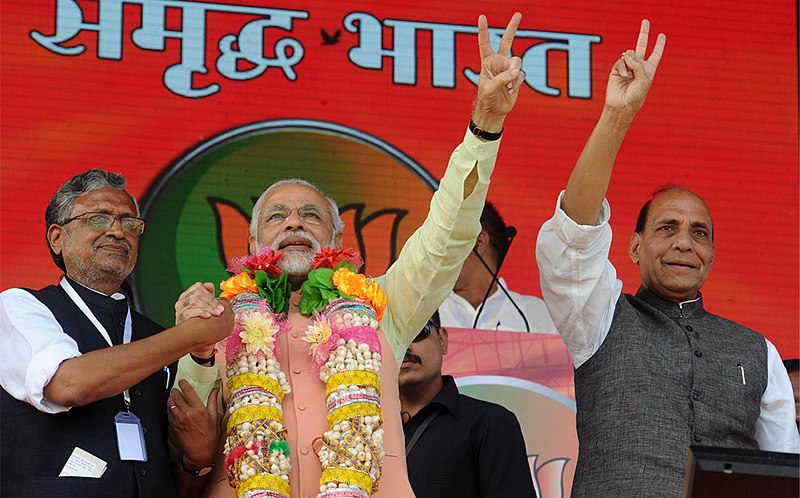
At another election campaign meeting at Chhapra ahead of the 2014 polls, Modi said, “I grew as youth in a poor family and I am fully conscious of the dreams of youths. I will carry the dream of the youths if I get the opportunity to serve them”, he said, ladling his tone with emotion. “Modi-Modi” emerged from the huge gathering of youths at Chhapra and reverberated in the air.
The response of the people—young and old alike—to his promises rooted in larger well-being probably earned him that Iqbal or punya (merit) which Yashwant Sinha, a former IAS officer who had been accorded favourable treatment by the likes of A.B. Vajpayee, Chandra Shekhar and L.K. Advani but was sidelined by Modi, tried to explain.
Gen-Z Rebellion
Has Modi really lost the ‘Iqbal’? Before answering this question, it is pertinent to explore whether Modi has been honest in fulfilling the promises he made to the people. Expert accounts say that, against his promise of creating two crore jobs, there is unprecedented unemployment in India. Against his promise of doubling farmers’ incomes, the farm sector is in a pitiable condition. Against his talk of Hindu-Muslim unity in the fight against poverty at Patna in 2013, his party, its affiliates and supporters are resorting to tricks to widen the chasm between the two communities.
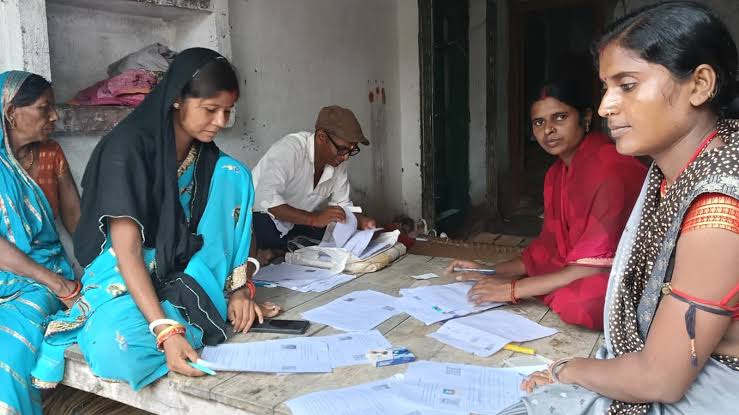
And against his talk of devolution of powers and decentralisation, the Election Commission of India, which is responsible for guaranteeing citizens their right to vote, has become a byword for centralisation under its current Chief Election Commissioner, Gyanesh Kumar.
The EC, under Gyanesh’s stewardship, has struck off the names of over 12 crore voters without the knowledge of Electoral Registration Officers (EROs), who are entitled to add or delete voters at block, sub-divisional and district levels across India, as alleged by opposition parties, myriad agencies and civil society groups.
In contrast to the youths of Munger in 2014, who were heard shouting “Modi-Modi”, India now has a vast and apparently unmanageable number of youths repeating a viral video clip that sings: “Chhappan Inch Ka Chhota Bandar, Bhag Narender-Bhag Narender”.
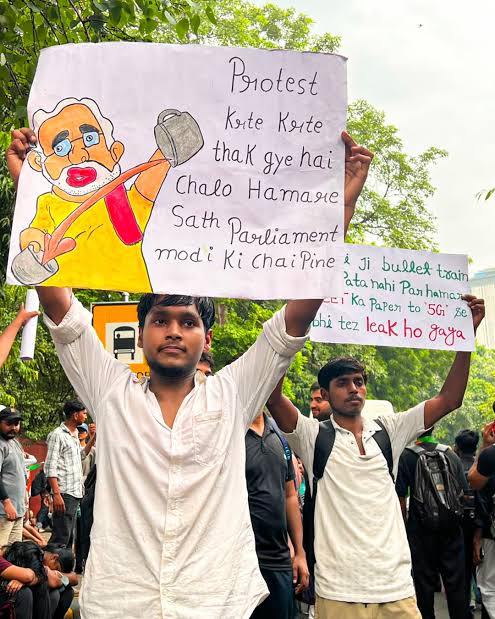
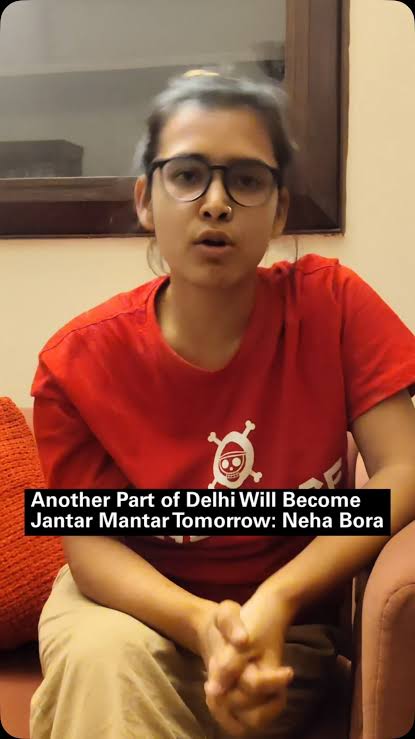
The Modi government, apparently unable to manage the surge of student protests, has de-notified Jantar Mantar in Delhi as a protest site. Jantar Mantar had been a protest site for over three decades, considered a safety valve for citizens’ grievances. The valve stands shut now, but can the grievances be shut? No way! The youth leader Neha Bora has said that every nook and corner across India has turned into Jantar Mantar.
This writer has no means of verifying Neha’s claim in the context of the entire country, but he is an educator in folklore, social sciences, literature and media, lecturing to classes of students where he can very much see the spirit of Jantar Mantar among them.
Nahusha was a mythical figure living in a different and distant era. He squandered his punya (accumulated merit) through his arrogance and was reduced to a python crawling on the muddy streets of the earth. Is it appropriate to draw a parallel between Nahusha and Modi?
Yours truly has chosen a mythical character from India’s rich epic tradition to tell his story of the current scenario. If you have reached this far and read it, you are free to agree or disagree, or even draw your own analogy to understand or explain India’s contemporary story. Thank you for reading it.


The fall of Iqbal Modi is a powerful reminder that arrogance, unchecked ambition and the illusion of invincibility can ultimately lead to downfall. The legend of Nahusha carries a timeless lesson: power without humility and accountability never lasts. No individual, however influential, is above the law. True greatness lies not in wealth or authority, but in integrity, responsibility and respect for justice.