
Can BJP Win Back the Lost Narrative?

Nationalism and regime change face a changing political mood.
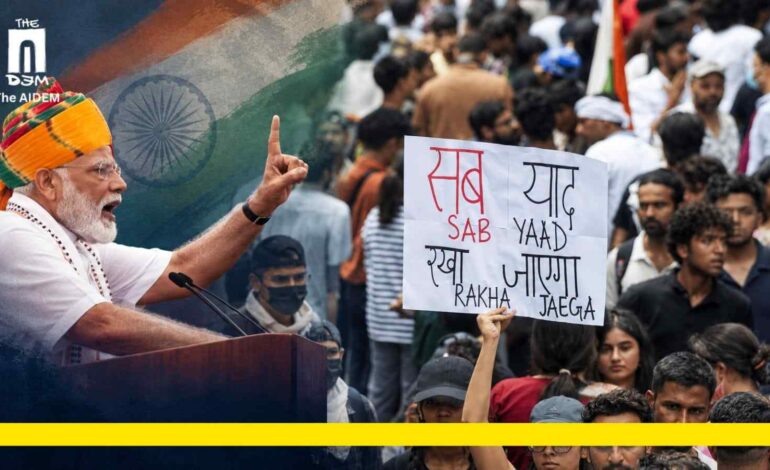
THE STUDENTS PROTEST against the paper leaks and the emergence of the Cockroach Janata Party (CJP) in May earlier this year have now turned into a nationwide agitation against what has been termed “vote chori”.
The agitation demanding the resignation of Chief Election Commissioner Gyanesh Kumar is now threatening the very existence of the Modi government.
Unnoticed by most of us, the agitation has also brought about a paradigm shift in the battle lines of the war of words. Since around 2012, the BJP-RSS ecosystem had been dominating the world of narratives and, with it, the minds of the masses.
It succeeded in creating the impression that the Manmohan Singh government was suffering from policy paralysis, that corruption was rampant, and that Rahul Gandhi was a “pappu”.
Former Prime Minister, the late Dr. Manmohan Singh (left), with Congress leader Rahul Gandhi at an event.
The BJP-RSS think tank used emerging social media platforms very effectively to attack a weak and defenceless Congress leadership and question the legacy of Congress rule since Independence.
The India Against Corruption agitation led by Anna Hazare, a pliable press, a status quoist middle class, and champions of big business helped build a powerful narrative against the Congress government of Dr Manmohan Singh.
The larger-than-life image of Narendra Modi, backed by his oratory, gave the BJP-RSS a head start in its propaganda war against the Opposition.
The Congress was certainly the main target, with the slogan of a Congress-Mukt Bharat, but all other Opposition parties, as well as the entire spectrum of Left-liberal opinion groups and civil society organisations working for the empowerment of disadvantaged sections of society, were also on the firing line.
Supporting the Modi government’s drive against its opponents was the state machinery, with the ED, CBI, police, and bureaucracy standing in line to obey orders. A pliable media and a less-than-fair lower judiciary were also there to oblige the ruling establishment.
The chinks in the armour of the Modi government started becoming visible in 2016 with the disastrous step of note-bandi and a half-baked GST system imposed in haste. But the simmering discontent took another eight years to be reflected in the Lok Sabha election results of 2024. The party that had been boasting of getting 400-plus seats could not even secure a bare absolute majority to form the government on its own.
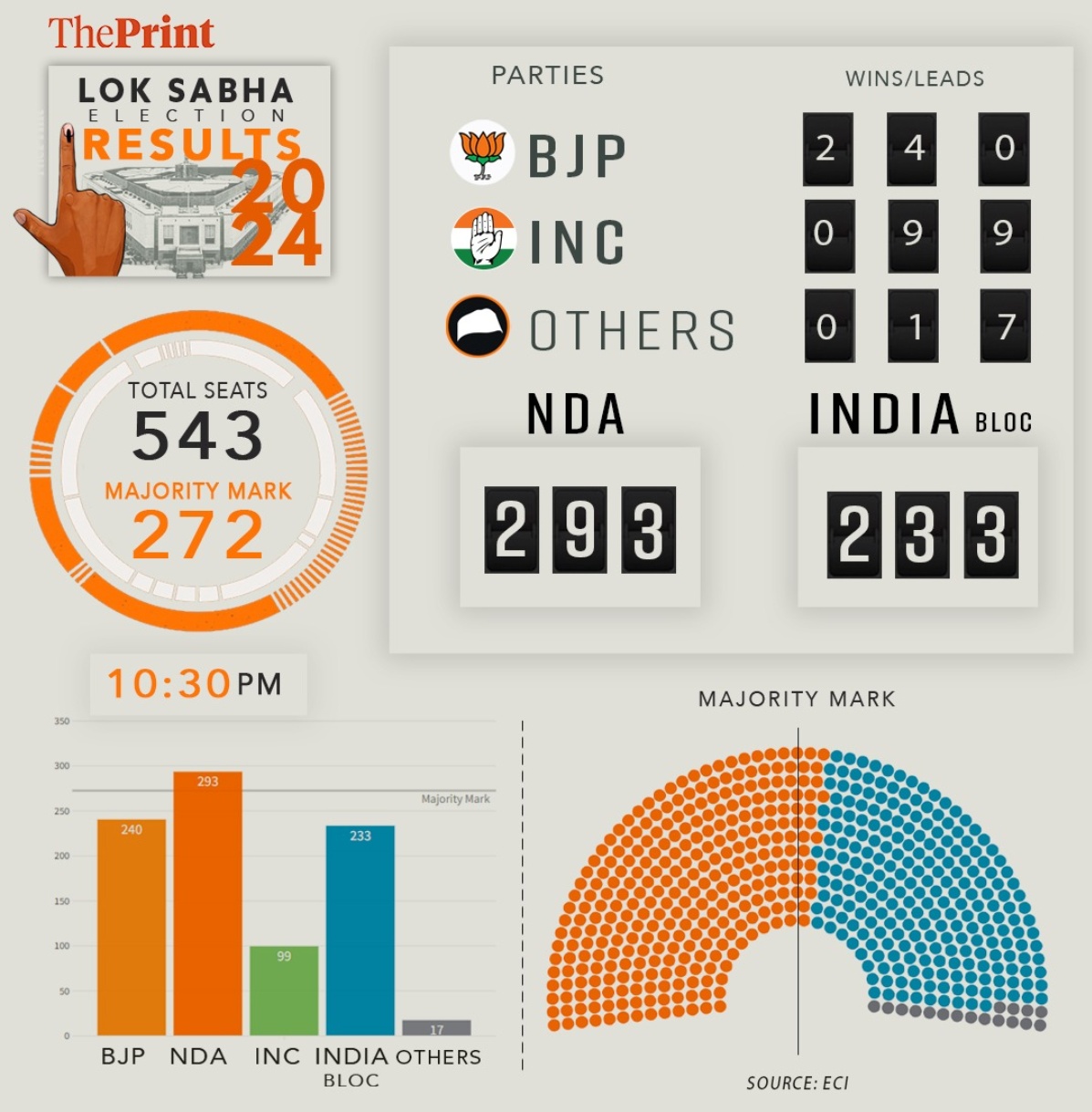 The 2024 Lok Sabha election results showing the NDA finishing at 293 seats—failing to hit the projected “400 plus” mark—while a resurgent INDIA bloc secured 233 seats.
Though the BJP somehow managed to do well in the Assembly elections held earlier this year, the simmering discontent soon erupted like a volcano. It can be said with a degree of certainty that the Modi government seriously underestimated the political significance of the youth unrest that erupted over the NEET paper leak and the cancellation of examination results in May.
Buoyed by electoral victories and surrounded by an ecosystem accustomed to applauding its every move, the BJP leadership appeared convinced that all was well with the country.
BJP-RSS Narrative Loses Its Grip on Public Perception
With the change in mass perception about the Modi government, there is now a marked shift in the narrative. The BJP IT cell’s propaganda no longer commands the same authority. Supportive media outlets are losing credibility and audiences.
Attacks on the Congress are becoming less persuasive, and Rahul Gandhi can no longer be dismissed simply as a political novice.
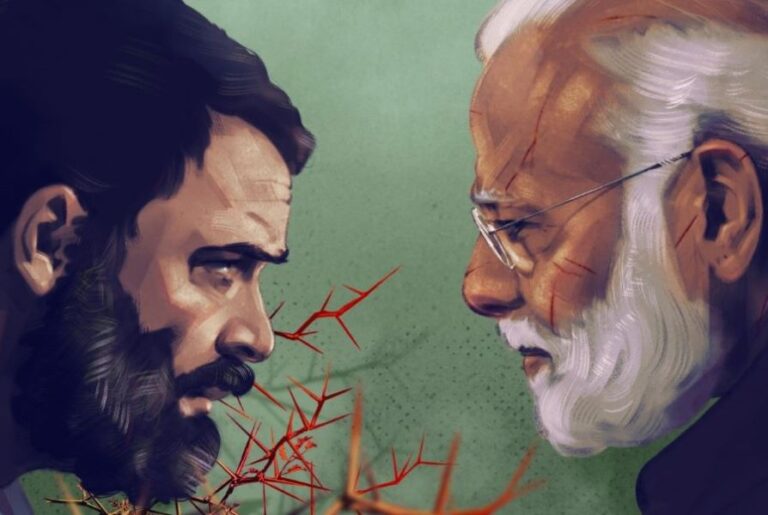 An artistic look at the deep-seated polarisation between India’s top political leaders, Opposition Leader Rahul Gandhi (left) and PM Narendra Modi (right)
The mobilisation of Hindu voters through anti-Muslim rhetoric and the repeated assertion that Hindus are in danger are also facing growing scepticism.
Even Narendra Modi’s once-formidable oratory appears to have lost some of its magic, despite the invention of fresh political labels such as “naraz fufa” and “urban Naxals”.
In contrast, the charges of vote chori levelled by the entire Opposition, Rahul Gandhi’s jibes, Neha Rathore’s satire and hard-hitting folk songs, and the angry, aggressive, and even indecent slogans chanted by young boys and girls facing police oppression have become the toast of media audiences.
Though late, Opposition leaders, as well as the independent press, have learnt to use social media techniques effectively. This is proving very costly for the BJP-RSS establishment, as its opponents are digging up old videos and uploading them to embarrass the top BJP leadership.
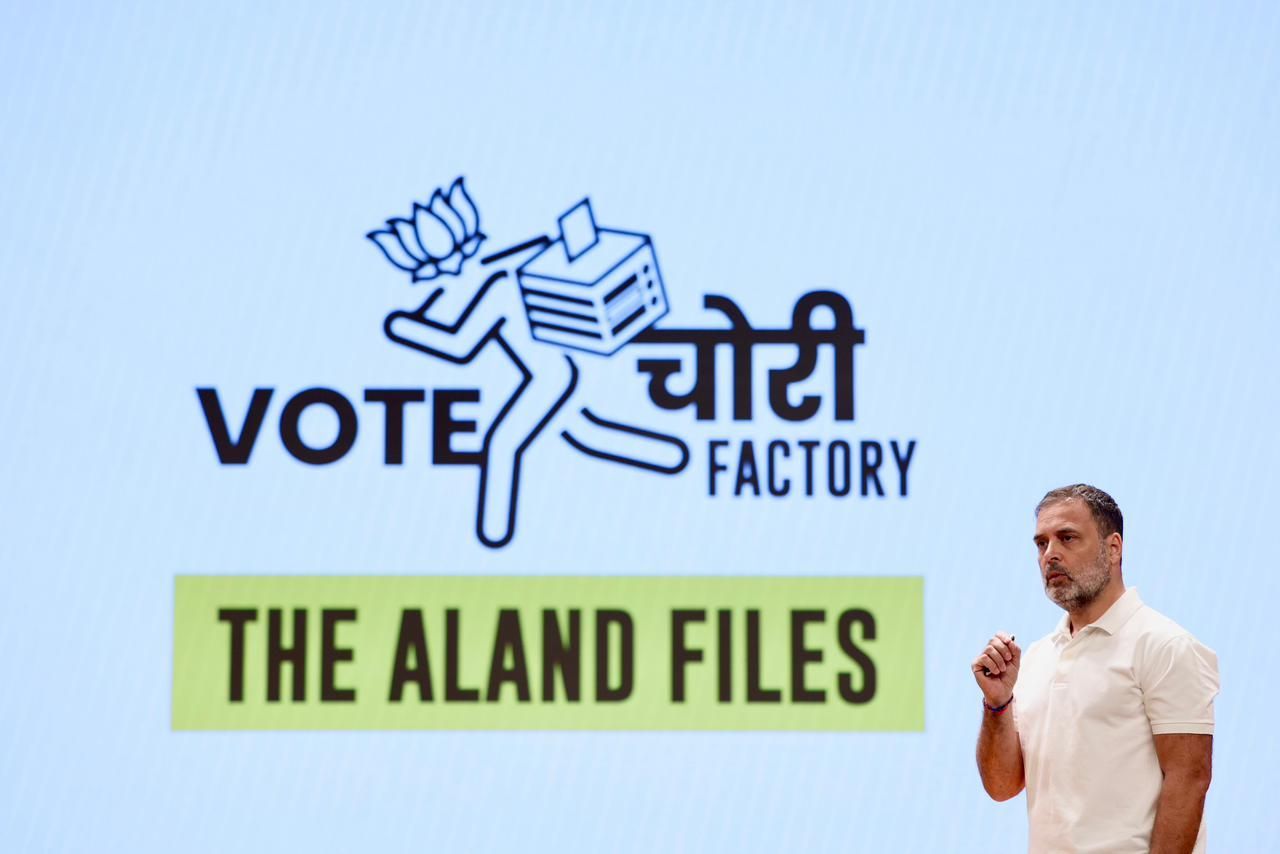 Rahul Gandhi presenting documents during his press conference on alleged electoral-roll irregularities (Vote Chori)
When the youth agitation gathered momentum at Jantar Mantar, reinforced by Sonam Wangchuk’s fast, the Modi government initially dismissed it as inconsequential. As the protests grew into a wider movement, the response shifted from indifference to coercion.
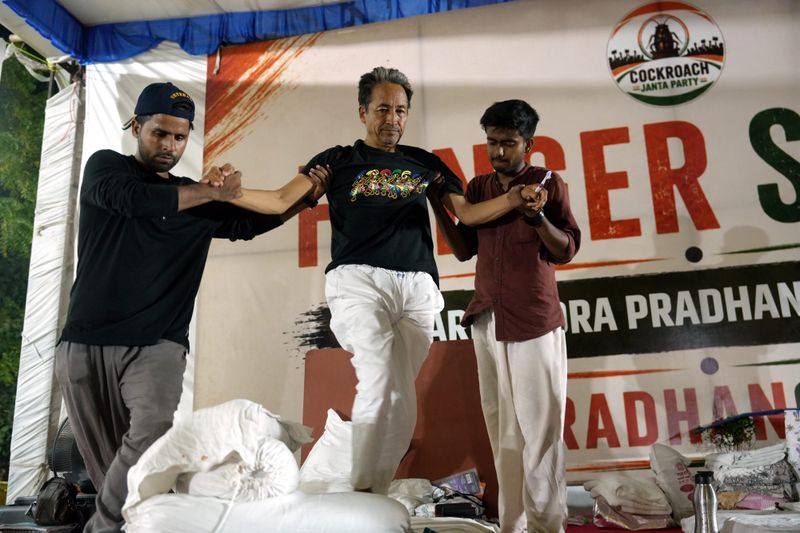 Climate and education activist Sonam Wangchuk—who famously dubbed himself an “honorary cockroach” in support of the youth movement—relies on aides to stand during the intense Jantar Mantar demonstrations.
Home Minister Amit Shah’s reported reliance on police force to contain the agitation proved politically counterproductive, culminating in the July 20 setback for the ruling party and the resignation of Education Minister Dharmendra Pradhan.
One might have expected the government to learn from this experience and reconsider its approach. Instead, the effort to intimidate young protesters and suppress dissent has continued. What appears to have changed, however, is the effectiveness of the BJP’s traditional political weapons.
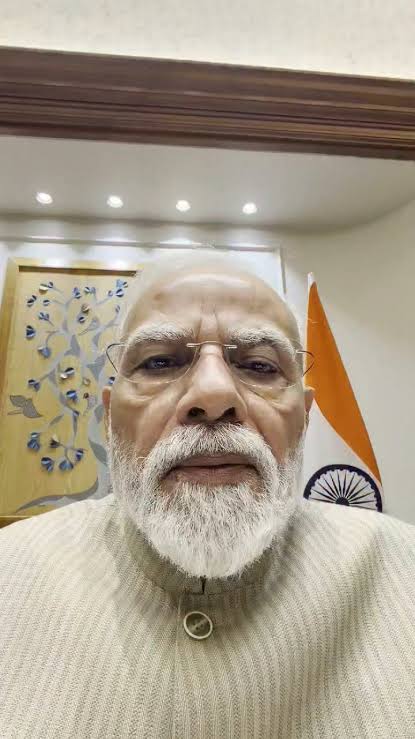 A still from PM Modi’s ridiculed midnight selfie video posted on July 23, 2026. Dropping in the middle of weeks of persistent, youth-led competitive exam paper leak protests, the direct video message aimed to reassure anxious students by promising stricter anti-leak laws, fast-track courts, and harsher punishments for offenders.
Nationalism and Regime Change: BJP’s New Political Weapons
The BJP-RSS establishment is now using two new weapons that it believes will prove more effective in influencing the public mind. These are nationalism and regime change.
The calculation is that talk of regime change will alarm our status quo-oriented middle class, which generally sets the tone of public perception, while the invocation of nationalism will appeal emotionally to young protesters and wean them away from the current movement.
However, this strategy reveals a deeper dimension: the BJP has a leadership that is incapable of understanding how political consciousness is changing.
It is highly unlikely that these two weapons, being used by Modi and RSS chief Mohan Bhagwat in their Vijayadashami addresses, will prove effective in their war of narratives with their opponents.
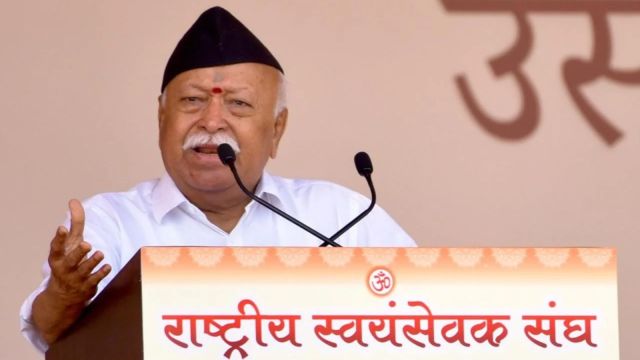 RSS chief Dr Mohan Bhagwat speaks at the annual Vijayadashami celebrations on October 20, 2026, at the Reshimbagh ground in Nagpur of the Rashtriya Swayamsevak Sangh (RSS) marking the conclusion of the organization’s centenary year.
For decades, the BJP-RSS ecosystem has sought to establish a particular brand of nationalism, closely associating it with hostility towards Muslims and Pakistan.
That formula can no longer persuade a new generation that acquires political information through the internet. It does not depend on political parties, ideological organisations, or traditional media that once exercised control over political discourse.
The political awareness displayed by young protesters, their slogans, campaign briefs, and interactions with the media suggest that they understand nationalism as a force capable of uniting a country, but also of dividing it when loyalty to the nation is measured by a citizen’s religion, cultural identity, or political allegiance.
The leaders associated with the Cockroach Janata Party (CJP), as well as Neha Bora of AISA, are asking questions that the ruling establishment may find uncomfortable: What is nationalism? Who defines it? And by what standards should a citizen’s commitment to India be judged?
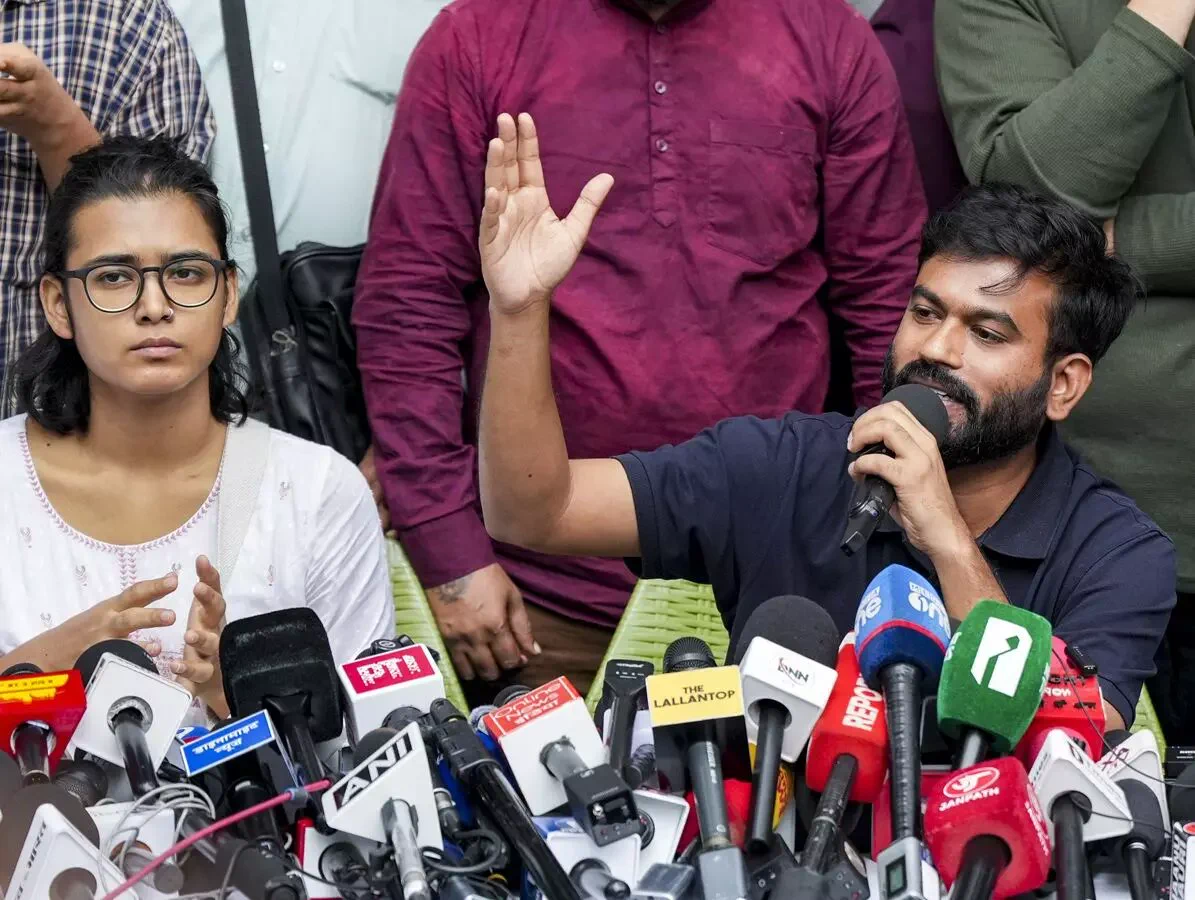 Cockroach Janta Party (CJP) Founder and National Convenor Abhijeet Dipke (right), alongside All India Students’ Association (AISA) National President Neha Bora (left), addressing a joint press conference in New Delhi.
Can the BJP Win Back the Lost Narrative?
The young protesters know that, in our democracy, nationalism must be measured by commitment to India’s sovereignty, respect for its Constitution, equality of citizenship, protection of democratic institutions, and responsibility towards fellow citizens.
Therefore, they are not rejecting nationalism but demanding a more inclusive understanding of it.
The same applies to the spectre of regime change. In a democracy, a change of government through constitutional and electoral means is neither a national calamity nor an act of disloyalty. It is a process natural to popular democracy.
It is unlikely that the BJP government will be able to win back the popular narrative now.
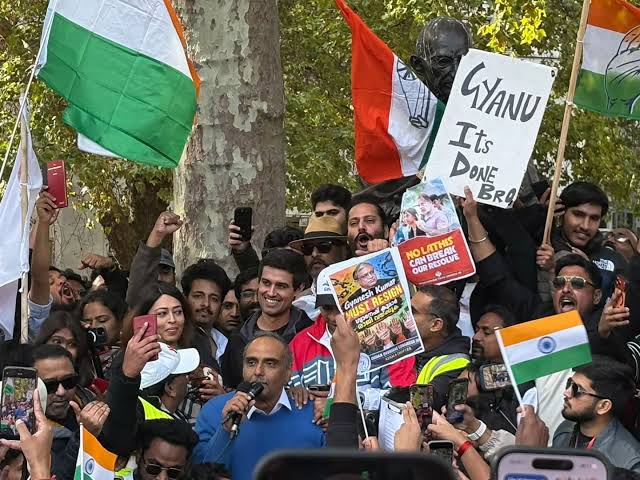 Demonstrators gather in London to protest against India’s Election Commission, holding placards demanding the resignation of Chief Election Commissioner Gyanesh Kumar over alleged voting list discrepancies, on 17th October, 2026.
With anti-Modi and vote chori slogan-chanting crowds in the US and Western capitals changing perceptions about the Modi regime, it will be well-nigh impossible for the BJP-RSS ecosystem to return to the chessboard of popular narratives with any hope of emerging victorious.
This article was originally published in Punjab Today News and can be read here:
https://www.punjabtodaynews.com/bjp-war-of-narratives/