

From Backwaters to Global Trade Routes: Can Mission Samudra Deliver?

Keralam’s Mission Samudra represents one of the state government’s most ambitious attempts in decades to make the sea, rather than scarce land, a foundation of economic growth. Announced in the 2026–27 Keralam Budget and launched alongside the commencement of full export–import operations at Vizhinjam International Seaport on 18 August 2026, the five-year, ₹400-crore programme aims to turn Keralam into a global maritime, logistics and industrial hub.
The programme’s latest legislative expression is the Keralam Maritime Board (Amendment) Bill, 2026, introduced in the State Assembly on 14 October 2026 by Chief Minister V. D. Satheesan, who also holds the Ports portfolio. The Bill seeks to restructure the Keralam Maritime Board, place the Chief Minister at its head, make the Ports Minister its vice-chairperson, create a maritime land bank, establish port-area development authorities and enable long-term public–private partnerships of up to 45 years.
The central idea is straightforward, although its implementation presents considerable challenges. Keralam would naturally aspire to replicate the large-scale industrial growth achieved by states such as Tamil Nadu and Maharashtra. However, translating that ambition into reality may not be easy, given Keralam’s overall track record in industrial development. At the same time, the state has registered significant improvements in its ease-of-doing-business environment over the past few years, a development that could provide considerable impetus to this new initiative.
Nevertheless, unlike these other states, Keralam has a densely populated coastline, limited contiguous land, strong environmental protections and high land-acquisition costs. These structural and operational constraints make the replication of land-intensive industrial models particularly difficult. Mission Samudra therefore seeks to build on Keralam’s distinctive advantages—its 600-km coastline, deep-water port facilities, backwaters, rivers, fisheries, tourism assets and human capital—to develop a port-led economy capable of generating industrial growth and employment.
The New Bill and Mission Samudra
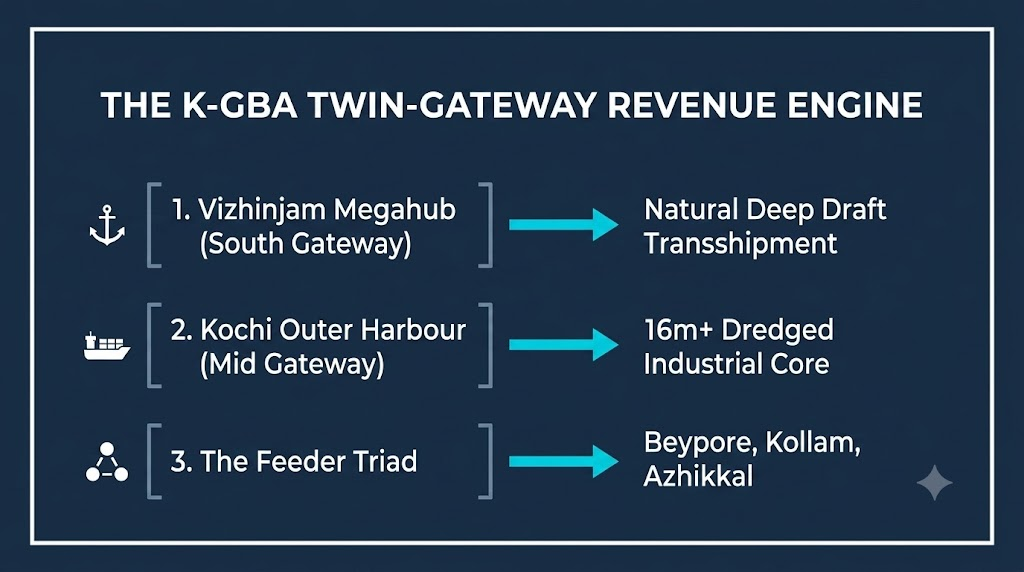
Mission Samudra is not a single-port project. It seeks to connect Vizhinjam International Seaport, Kochi port and its container infrastructure, 18 minor ports, inland waterways, airports, industrial estates, fisheries harbours, cruise terminals and logistics facilities into a coordinated network. The government has described its goal as making the entire state function as an integrated port city.
The Bill is intended to give this vision administrative force. The proposed Board will be chaired by the Chief Minister and include ministers and officials responsible for ports, fisheries, industries, finance, revenue, law and coastal security. The aim is to reduce departmental silos and enable decisions on land, investment, environmental clearances, port development and logistics through a unified mechanism. It also proposes a State Maritime Land Bank. This matters because Keralam’s biggest constraint is not capital alone, but the availability of large, contiguous, legally usable tracts of land near ports and transport corridors. The land bank would allow the government to identify, assemble and allocate land for port-linked logistics parks, container freight stations, warehousing, industrial units, ship-repair facilities and tourism projects.
Another major proposal is to use government land as equity in port-development ventures. Rather than funding every project entirely from the state exchequer, Keralam could contribute land while private investors provide capital, technology and operating expertise. The Chief Minister has said this ‘land for equity’ model is intended to attract investment while allowing the state to retain a stake in future value creation. The Bill also proposes port-area development authorities and concessions of up to 45 years for private partners. Such long tenures are intended to make major infrastructure investments financially viable, since ports, logistics parks and industrial zones often take years to generate returns. They also raise important questions about contract design, competition, revenue sharing and public accountability.
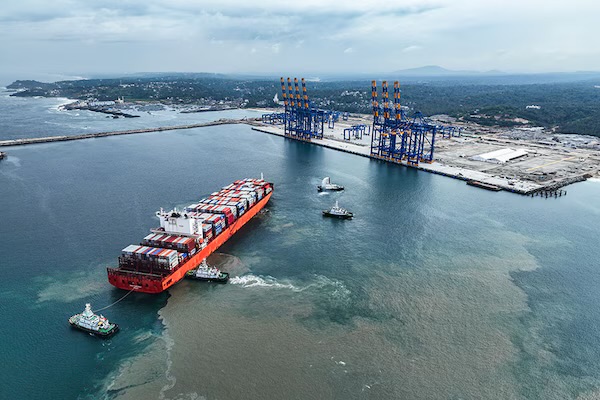
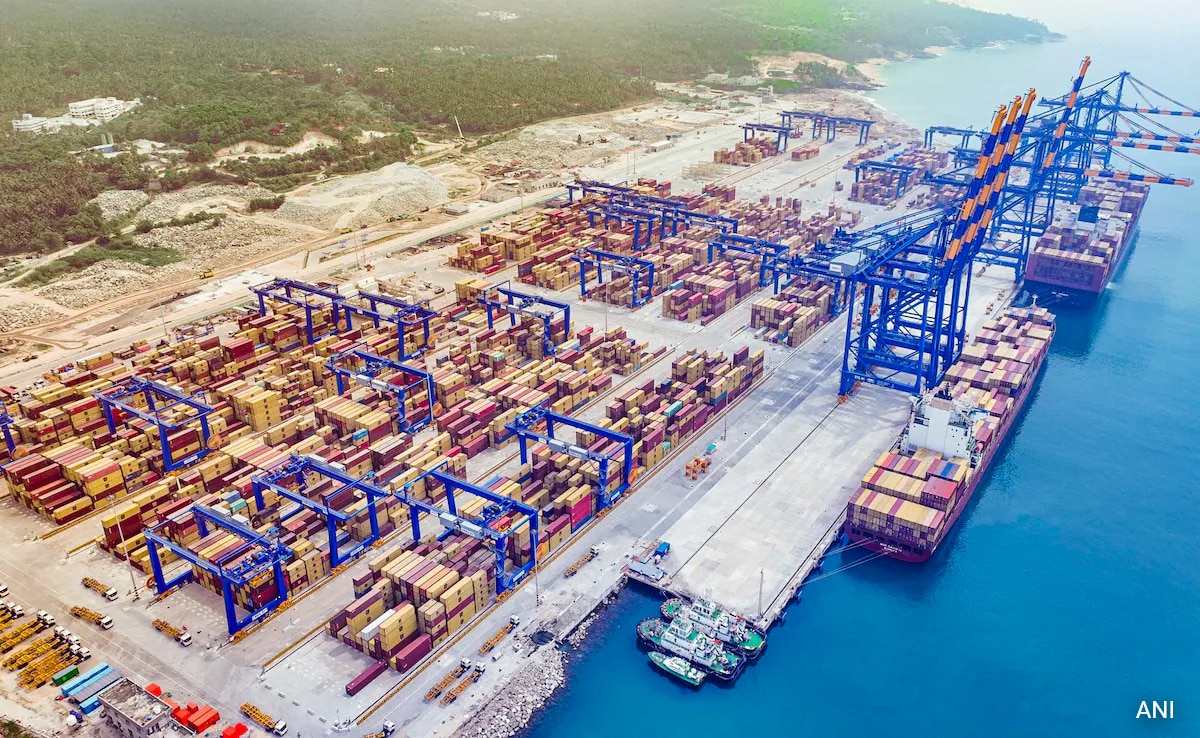
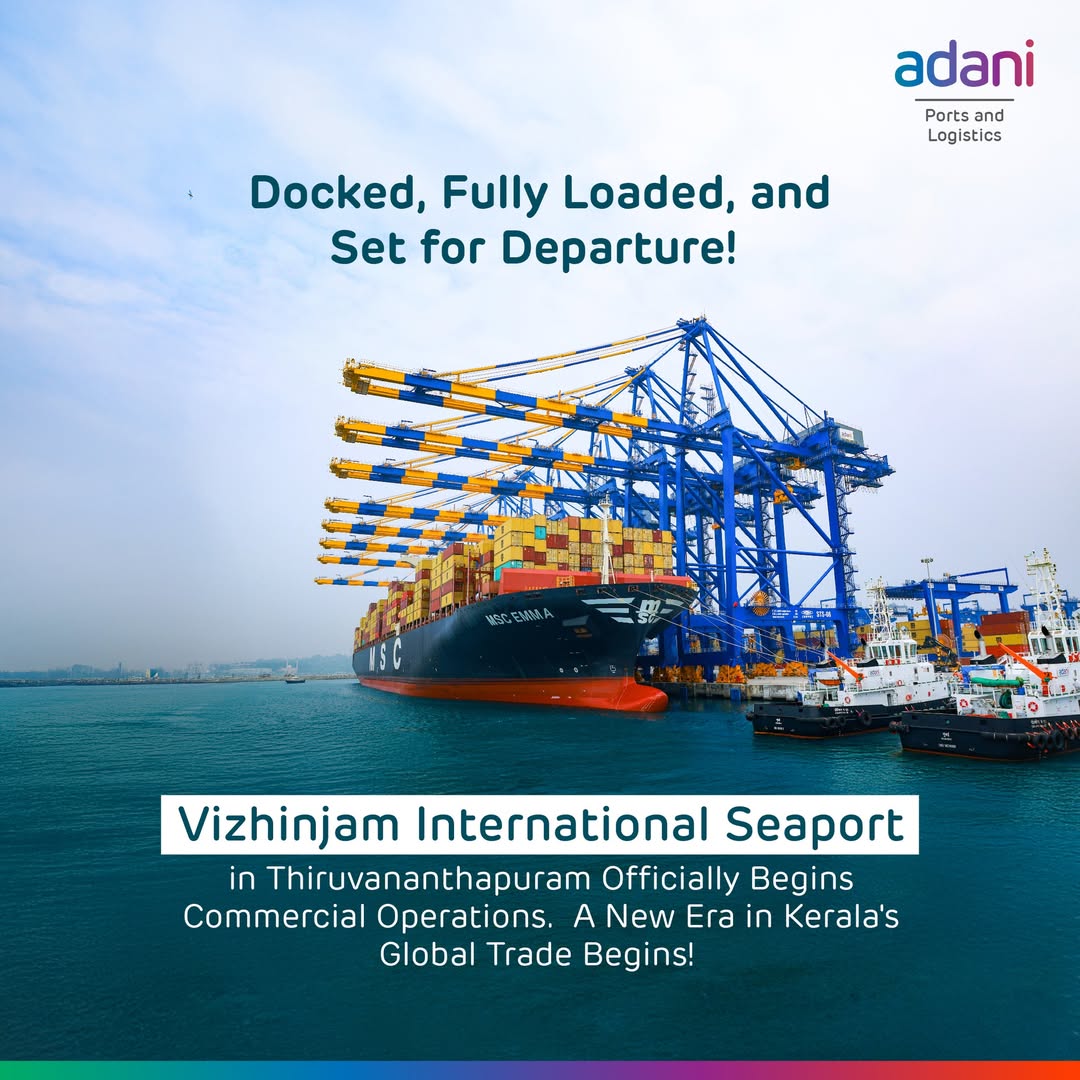
Vizhinjam is the anchor of the programme. Full EXIM operations began there on 18 August 2026, when Chief Minister Satheesan flagged off export containers from the port. The government has positioned Vizhinjam not merely as a transshipment terminal but as the starting point for a wider ecosystem of container freight stations, warehouses, logistics parks, manufacturing, ship repair, bunkering and export-oriented industry.
International Trade Possibilities
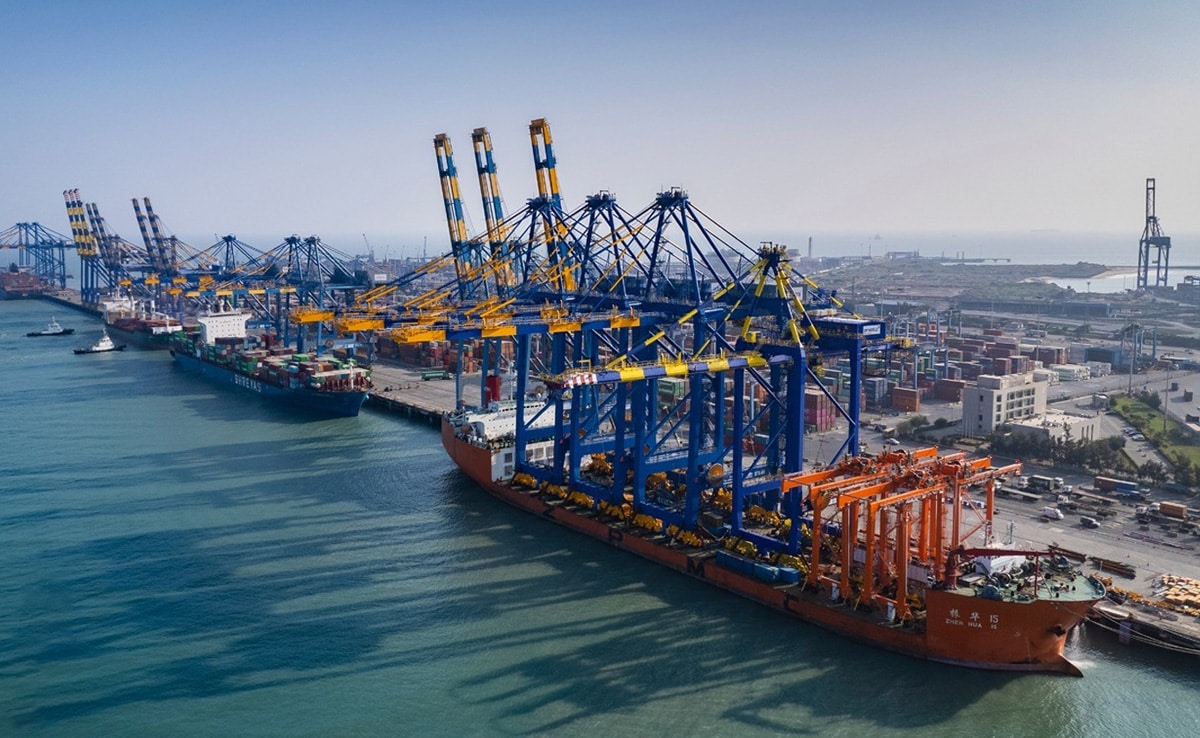
Vizhinjam’s ability to attract mainline vessel calls presents an important international opportunity. Located close to major east–west shipping routes, the port could enable cargo to reach destinations across six continents without first being transshipped through Colombo, Singapore or other foreign hubs.This could reduce transit times and logistics costs and give Indian exporters more direct access to global markets.
For Keralam, the opportunity could be especially valuable to exporters in Thiruvananthapuram, Kollam, Alappuzha, Ernakulam, Kozhikode and Kannur. Marine products, spices, cashew, rubber products, coir, garments, ayurvedic products, machinery, electronics and processed foods could gain faster access to Europe, West Asia, Africa, Southeast Asia and the Americas. The benefits need not be confined to Keralam. Industrial clusters in Tamil Nadu, Karnataka and other southern states could use Vizhinjam as a western gateway, with Bengaluru, Coimbatore, Tiruppur, Madurai and Salem potentially routing cargo through the port if road, rail and customs processes become efficient.
Mission Samudra could also help Keralam capture value beyond the movement of containers between ships and shore. A container that merely passes through a port generates limited local economic value. By contrast, cargo that is packed or unpacked locally, stored, processed, insured, financed or converted into finished goods can generate employment and business revenue. This is why container freight stations, empty-container yards, bonded warehouses and logistics parks are central to the plan. The port could also support freight forwarding, customs brokerage, shipping agencies, marine insurance, trade finance, cold-chain logistics, packaging, quality certification, digital documentation and supply-chain analytics. Such services can create skilled employment without requiring extensive land. Connectivity will be decisive. Proposed and ongoing highway corridors linking Keralam’s ports and industrial centres with hinterland markets including routes connecting the capital to Mangaluru, Ponnani to Coimbatore, and Palakkad to Kozhikode could move cargo more efficiently between Vizhinjam, Kochi, Kozhikode and southern India’s manufacturing clusters. Mission Samudra also proposes to use Keralam’s inland waterways to improve connectivity and reduce transport costs. If these waterways and the port, road and rail networks are developed together, they could substantially strengthen the state’s logistics system.
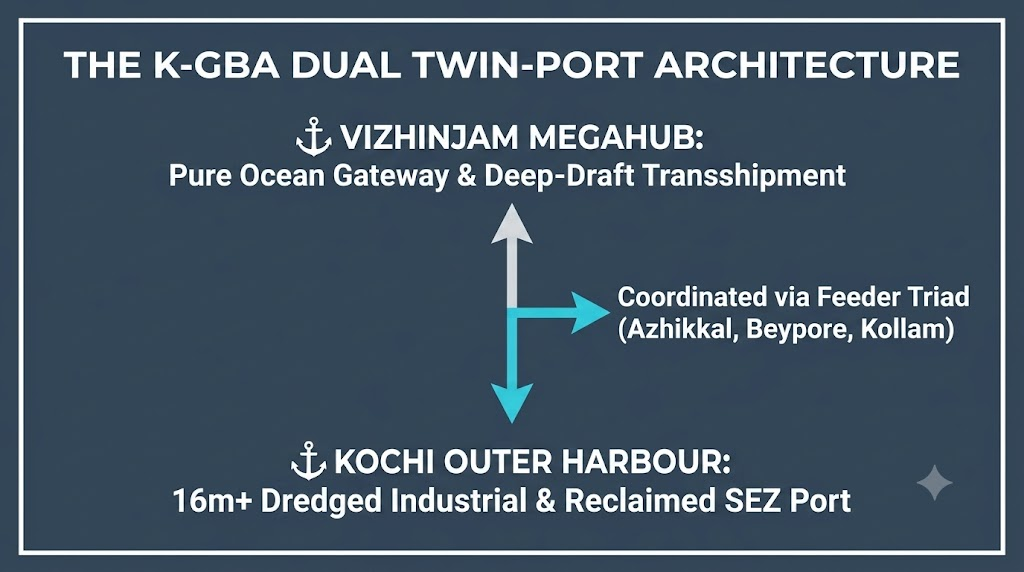
South Asia could benefit too. Vizhinjam’s transshipment role could serve not only Indian cargo but also shipments from Sri Lanka, the Maldives and other Indian Ocean markets. With efficient services, Keralam could become a complementary regional gateway rather than a competitor to every nearby port. Cruise tourism offers another international opportunity, with proposed routes from Kochi to Dubai, the Maldives, Sri Lanka and Goa, alongside plans for river tourism across Keralam. If developed responsibly, these links could bring international visitors to the state and spread tourism income across coastal and backwater regions. For India, a successful Keralam maritime ecosystem could strengthen its presence in Indian Ocean trade, reduce dependence on foreign transshipment hubs, add capacity on the west coast and provide another gateway alongside Mundra in Gujarat and JNPA near Mumbai. It could also support the country’s wider blue-economy and maritime-security objectives.
Benefits for Keralam and India
Employment is among the most immediate potential benefits. The government expects Vizhinjam’s initial EXIM catchment to support more than 5,000 direct and indirect jobs. Over time, port-linked logistics, warehousing, construction, transport, hospitality, fisheries processing and industrial activity could create a much larger employment base.
Coastal shipping could also deliver substantial cost savings. The government estimates that transporting goods by sea can cost about one-third as much as road transport. Mission Samudra has set an eventual target of shifting up to 50% of suitable road cargo to waterways. Even a partial shift could reduce highway congestion, fuel consumption, accidents and logistics costs, particularly for bulk cargo, construction materials and hazardous goods.
The blue-economy component could help revive Keralam’s seafood sector. The Chief Minister has said that Keralam’s marine exports have lost ground to states such as Andhra Pradesh. Planned support for aquaculture, fish farming and export infrastructure could help coastal districts, especially Alappuzha, regain competitiveness. More importantly, port-based processing could allow Keralam to retain more value within the state rather than exporting raw catch alone. Tourism could also benefit. Cruise terminals in Kochi and Kozhikode, regional cruise routes and river tourism projects could diversify Keralam’s tourism economy. Rather than concentrating visitors in a few established destinations, maritime tourism could bring income to smaller ports, coastal towns, fishing villages and backwater communities.
The programme could strengthen Keralam’s industrial base as well. Port access facilitates the import of raw materials and export of finished products. This could support food processing, marine products, rubber, coir, textiles, electronics assembly, pharmaceuticals, ayurveda, furniture, construction materials and light engineering. The challenge is to attract industries that genuinely need sea connectivity rather than assume that every industry will locate near a port. For the state exchequer, the land-for-equity model could prove beneficial if managed well. Keralam could receive dividends, asset appreciation, employment and tax revenue without bearing the full capital cost of every project. But this would depend on competitive bidding, realistic land valuations, clear equity terms and safeguards against unfavourable contract renegotiations.
For India, Keralam’s maritime development could improve supply-chain resilience. Another major west-coast transshipment and gateway hub could reduce congestion risks at existing ports and provide alternative routes during disruptions. It could also support India’s Act East and Indo-Pacific connectivity goals by strengthening links with Southeast Asia, West Asia and East Africa.
Risks, Negatives and Way Forward
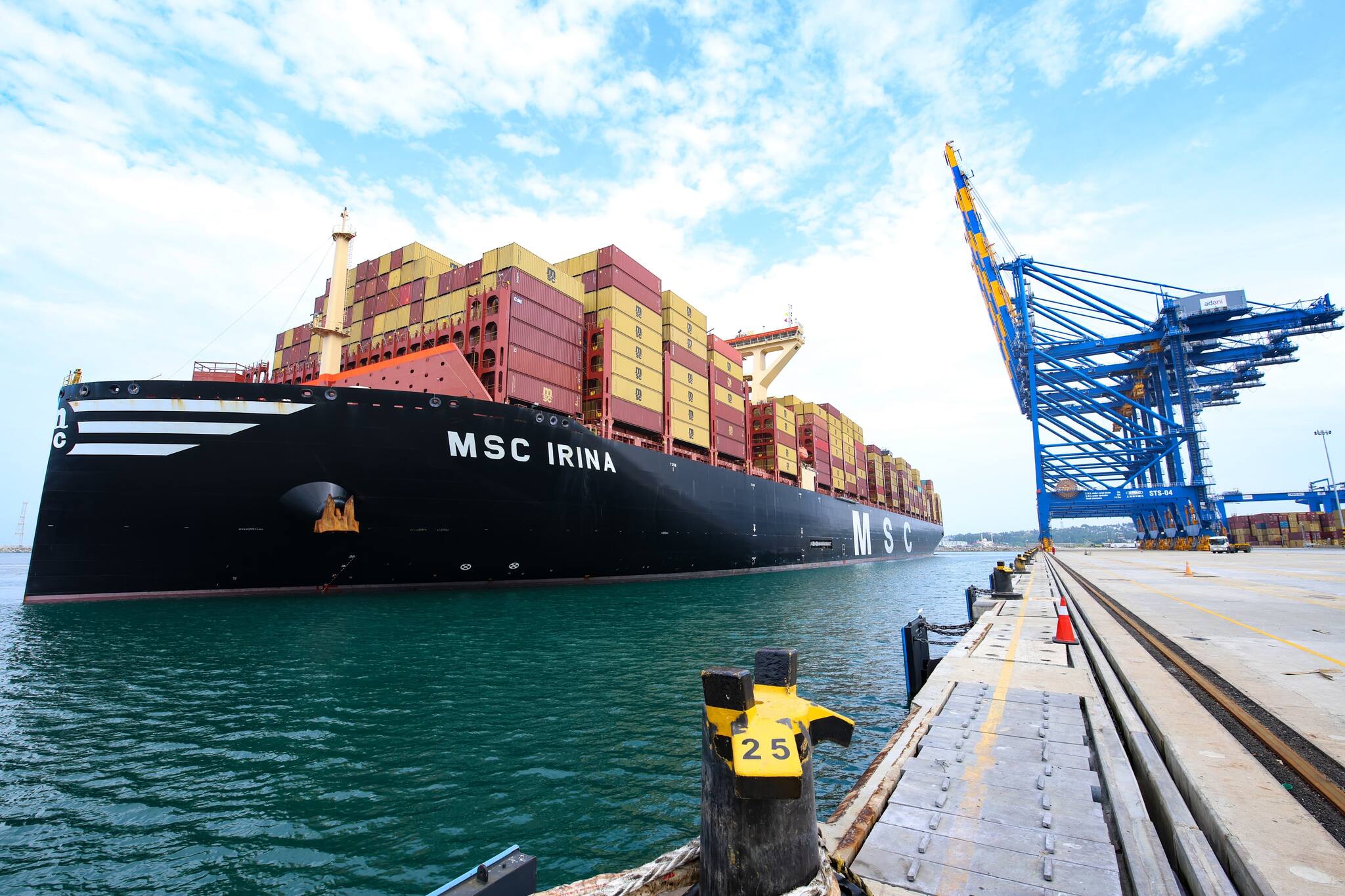
The biggest risk is that Keralam builds a world-class port but fails to develop the economy around it. Vizhinjam has a significant natural advantage: its near-shore depth of more than 20 metres exceeds Mundra’s roughly 16–19-metre dredged draft and JNPA’s 14–15-metre dredged depth, enabling it to handle large mainline vessels close to shore. Its location about 10 nautical miles from the east–west shipping route further strengthens its transshipment potential. Yet its present footprint is compact and constrained. Phase 1 provides an 800-metre quay and a 40-hectare container backup yard, while the port initially lacked a designated container freight station, multimodal logistics park and empty-container yard—facilities that help turn ship calls into local trade, warehousing and manufacturing activity. This matters because shipping lines and exporters choose ports not only for their depth or location but also for total logistics costs, customs clearance times, container availability, warehouse capacity, road and rail connectivity, reliability and ease of doing business. Mundra has developed into a multi-commodity industrial gateway that captures substantial value through its industrial and SEZ ecosystem, while JNPA benefits from a substantial hinterland and strong multimodal links. Vizhinjam, by contrast, is still moving from a transshipment hub towards becoming a gateway port. Keralam’s first dedicated CFS at Balaramapuram is being developed, with full operations targeted for February 2027, and Adani Ports has separately proposed a 100-acre CFS near the port. If Vizhinjam remains primarily a transit point for international cargo, Keralam risks losing much of the associated economic value: the state could provide deep-water infrastructure while warehousing, processing, financing and distribution activity develops elsewhere.
Land acquisition is likely to be the most difficult constraint. A preliminary estimate suggests that nearly 2,000 acres may be needed for a free-trade warehousing zone and off-dock logistics facilities. In Keralam, even government-owned land can be subject to competing departmental claims, coastal-zone restrictions, resettlement concerns and local opposition. The proposed maritime land bank could help, but only if land identification, compensation, rehabilitation and environmental assessment are transparent and credible.
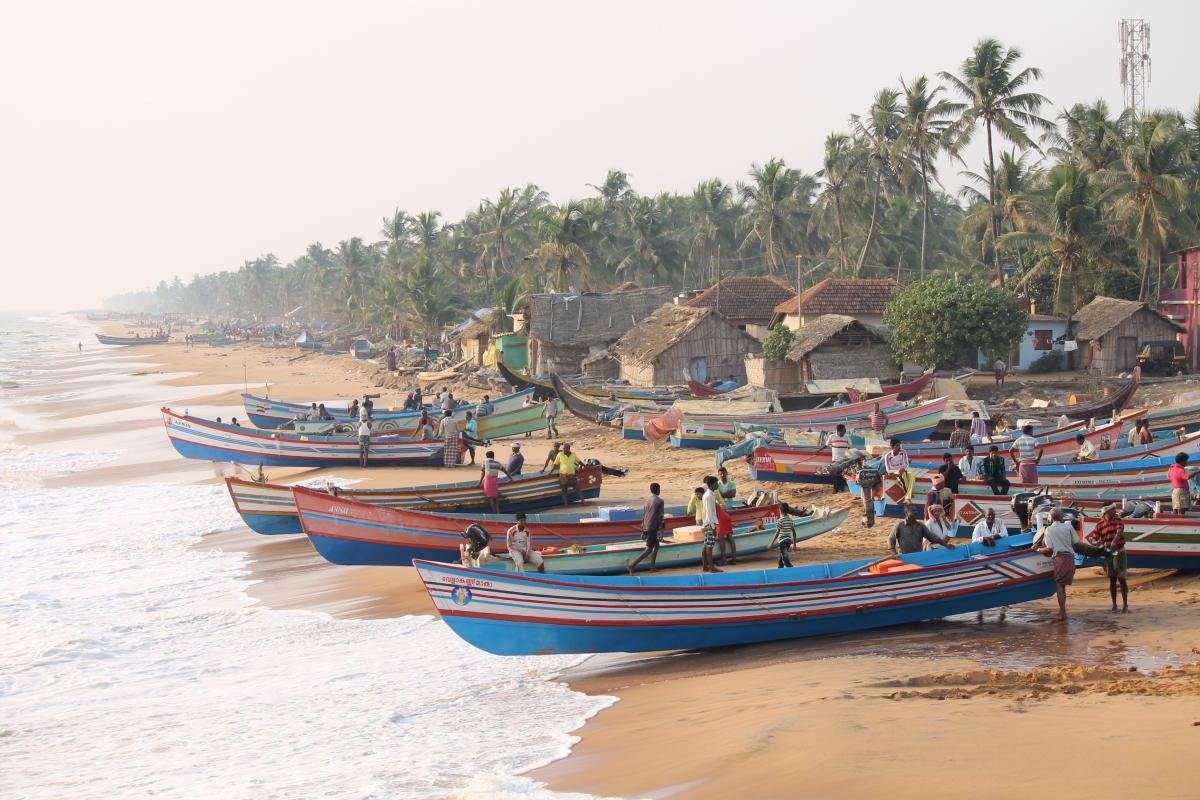
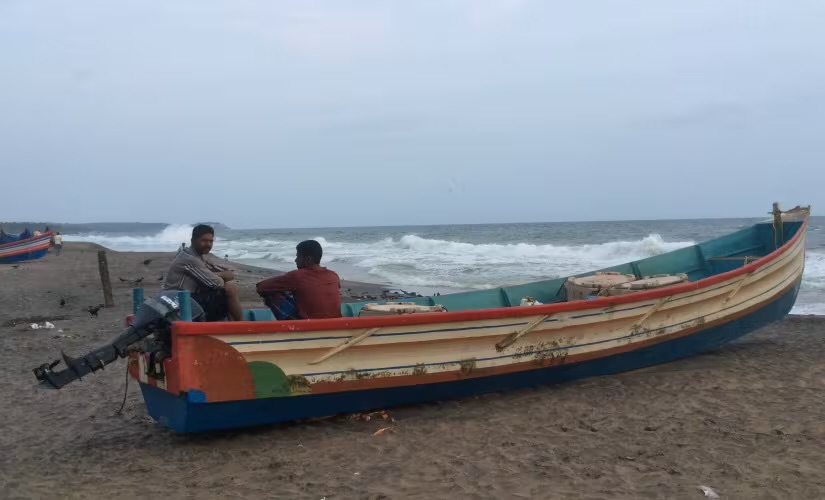
Environmental and social risks must be treated as central project concerns, not public-relations issues. Dredging, port expansion, coastal shipping, cruise operations and waterfront construction can affect fisheries, shoreline stability, mangroves, water quality and traditional coastal livelihoods. Fishing communities may bear immediate costs through reduced access to fishing grounds, habitat disturbance or displacement, while many benefits may arise later and elsewhere. The state should therefore invest early in scientific coastal-impact assessments, independent monitoring, compensation mechanisms, alternative livelihood support and genuine consultation with fishing communities. If these communities see tangible benefits through cold storage, processing, aquaculture, insurance, safety equipment and market access, they may be more willing to support the wider programme.
The concentration of decision-making power is another concern. Making the Chief Minister chairperson of the Board may accelerate decisions, but it could weaken institutional checks if technical, environmental, financial and community concerns are overridden in the name of speed. The Board’s expanded powers and land bank require clear accountability, independent review and strong audit mechanisms.
Financing remains uncertain. Keralam’s government has limited capacity to fund every proposed project directly, and the plan depends heavily on private investment, central cooperation and market confidence.
Delays in road and rail connectivity, last-mile access, power, water and digital infrastructure could make even commercially attractive port projects unviable.
There is also a risk of overpromising. The target of shifting half of suitable road cargo to waterways depends on vessels, terminals, cargo-handling capacity, storage and inland connections that do not yet fully exist. Cruise routes, river tourism plans and port-city projects remain elements of a vision; they do not establish that every route or terminal has been approved, financed or made operational. The government should therefore adopt a phased, evidence-based approach. Its first priority should be to complete Vizhinjam’s container freight station, empty-container yard and logistics park before expanding its focus to other ports. The second should be to secure reliable rail and road links. The third should be to assemble land through transparent processes.
Mission Samudra can succeed only if Keralam treats it as an integrated supply-chain initiative rather than a collection of port announcements. If the state combines Vizhinjam’s geographical advantage with reliable hinterland connectivity, credible regulation, environmental responsibility and equitable benefits for coastal communities, the programme could become one of India’s most consequential experiments in port-led development.
The real measure of success will not be the number of ships calling at Keralam’s ports, but the livelihoods, enterprises and opportunities created ashore. If Keralam gets this right, its coastline could become a gateway to a new phase of economic development.









Mission Samudra can open new opportunities for Kerala and India in global trade, but its success must be measured by who truly benefits. Strategic ports and maritime connectivity cannot become excuses for corporate monopolies, opaque deals, or the exploitation of coastal communities. Kerala’s maritime future must serve public interest, protect fishermen’s livelihoods, ensure environmental sustainability, and deliver genuine economic benefits to ordinary people—not just private corporations