

India’s Growth Story and the Persistent Reality of Hunger

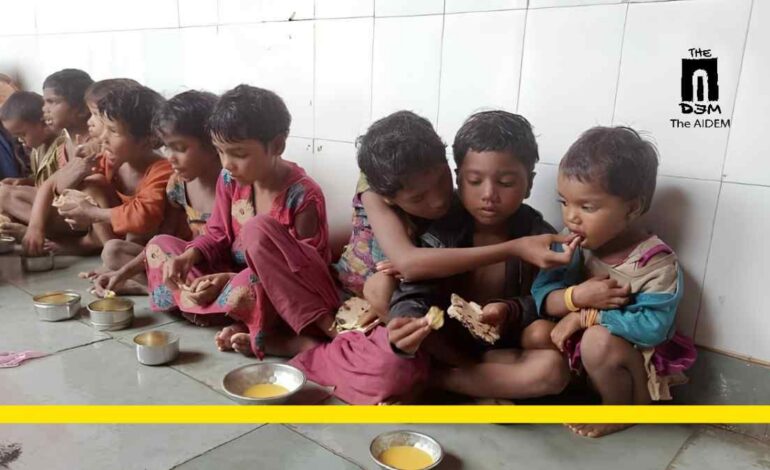
India takes pride in being one of the fastest-growing economies in the world. Yet, in the Global Hunger Index 2026, it ranks 100th among 122 countries. The report, released on 14 October 2026, gives India a score of 24.1, placing it in the “serious” hunger category, where it has remained since 2012. Last year, India ranked 102nd among 123 countries. But an improvement of two places in the ranking offers little reason for satisfaction. Behind these figures are malnourished children, mothers weakened by anaemia, and families in tribal hamlets struggling to secure two square meals a day.
The Global Hunger Index, published annually by Concern Worldwide and Welthungerhilfe, measures hunger through four indicators: the proportion of undernourished people in the population, stunting among children under five, wasting or low weight for height among children in the same age group, and mortality among children below five. Scores are calculated on a scale of zero to 100, with lower scores indicating a better situation. The global average score is 18.1, while the South Asian average is 23.5. India’s score of 24.1 is worse than both. In other words, India’s performance remains below the global average and is unsatisfactory even within its own region.
In 2006, India’s score was around 37. It has since declined to 24.1. The proportion of undernourished people in the country, which stood at 18.4 per cent in 2000, has fallen to 9.8 per cent, compared with 10.5 per cent in the previous reference period. Stunting among children has declined from 50 per cent in 2000 to 29.3 per cent. The mortality rate among children under five has fallen from 9.2 per cent to 2.7 per cent. These improvements have been supported by the expansion of immunisation, institutional deliveries, maternal and child healthcare services, and foodgrain distribution. Yet, despite this progress, nearly 10 per cent of the population remains undernourished, while almost three in every ten children suffer from stunting. Given India’s population, these percentages translate into numbers running into crores.
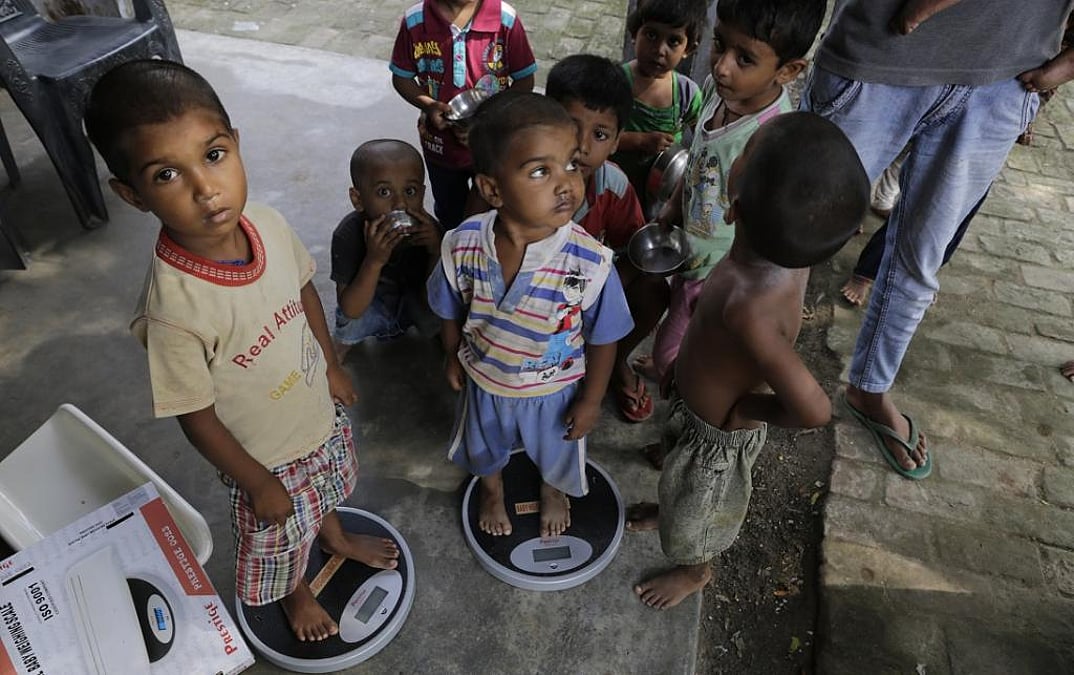
The most disturbing finding concerns child wasting, or low weight for height. Its prevalence has risen from 16.9 per cent in the previous reference period to 19 per cent, the highest rate in South Asia. According to the report, child wasting has remained exceptionally high in India across successive reference periods. This indicates that progress on this front has been inadequate over the past two decades, with the latest figures showing a further deterioration. Wasting is an indicator of acute malnutrition. Children affected by it have weakened immunity, are more susceptible to repeated illness, and face a heightened risk of death if they do not receive timely treatment. That nearly one in five Indian children suffers from wasting is a matter of grave concern.
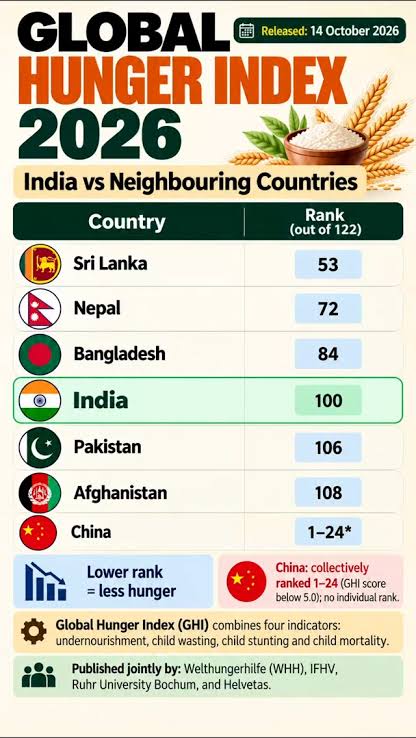
A comparison with neighbouring countries makes the picture clearer. Nepal ranks 72nd with a score of 14.5, while Bangladesh stands 84th with a score of 19.2. Both countries fall in the “moderate” category, as does Sri Lanka. Pakistan, ranked 106th with a score of 25.5, performs worse than India. Afghanistan’s position is also worse. In Bangladesh, stunting among children has declined from 54.9 per cent in 2000 to 24 per cent. Its child wasting rate is 12.9 per cent, compared with India’s 19 per cent. Bangladesh, once considered economically poorer than India, has moved ahead on these important nutritional indicators. Greater attention to women’s health, sanitation, and community-level nutrition programmes is considered one of the factors behind this progress.
The Government of India has repeatedly questioned the Global Hunger Index. One of its arguments is that three of the four indicators concern children under five and therefore cannot adequately represent the nutritional condition of the entire population. The government has also raised objections to the methodology. No index is beyond criticism, and some of these concerns deserve consideration. However, the high prevalence of child wasting is not reflected in the Global Hunger Index alone. India’s own National Family Health Surveys have documented this problem over several years. Malnutrition is therefore not merely a statistical construction; it is a reality on the ground. Rather than concentrating its energies on disputing the methodology, the government would do better to acknowledge the problem and address it.
India today does not face a general scarcity of foodgrains. Agricultural production has reached record levels, and more than 81 crore people receive free foodgrains through the public distribution system under the National Food Security Act. Anganwadi services, the midday meal programme, and the Poshan Abhiyaan operate across the country. The expansion of foodgrain production and the strengthening of social safety nets have contributed to the reduction in undernourishment. Yet child malnutrition persists because satisfying hunger and ensuring adequate nutrition are not the same thing. Rice, wheat, sorghum, and millet provide essential calories and nutrients, but a balanced diet also requires pulses, vegetables, fruits, eggs, milk, and other nutritious foods. Many poor and rural households cannot afford such dietary diversity. The report draws attention to the quality of diets, the distribution of food within households, childcare practises, and the rising cost of nutritious food.
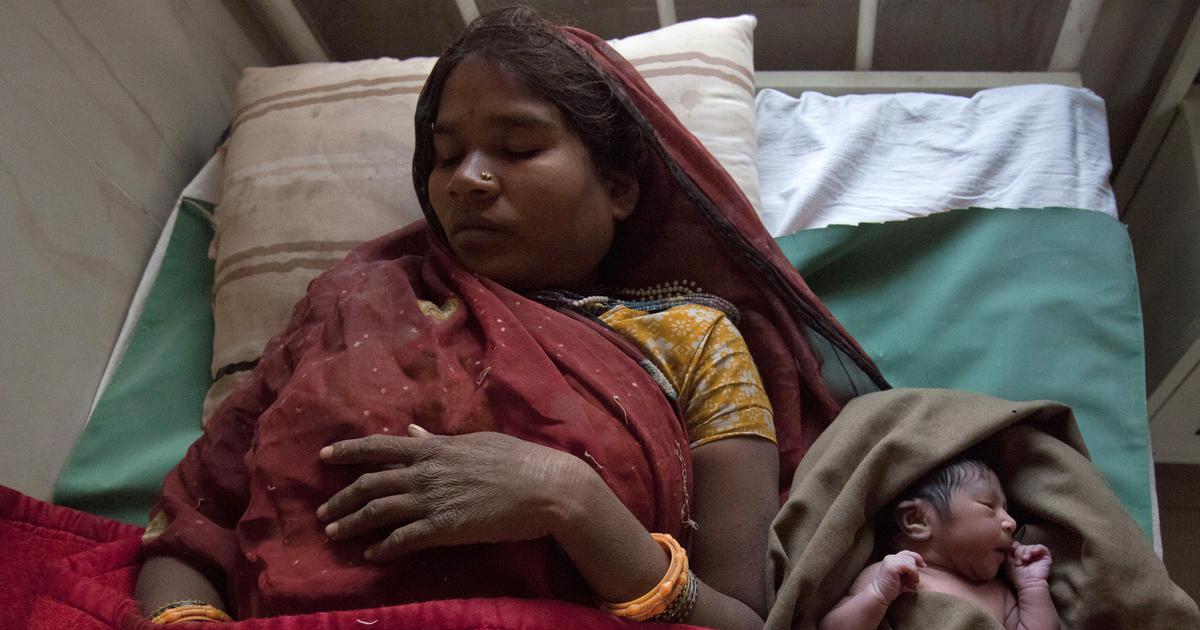
Malnutrition often begins before a child is born. A woman who has received inadequate nutrition, suffers from anaemia, was married at an early age, or has not received proper care during pregnancy faces a greater risk of giving birth to a low-birth-weight baby. The child may subsequently suffer from malnutrition, perpetuating a cycle that can extend across generations. In many rural households, women work in the fields, manage domestic responsibilities, and eat only after other family members have finished their meals. Pregnancy does not necessarily bring any significant change in these circumstances. Child nutrition, therefore, cannot be separated from women’s health, education, and decision-making power. Breaking this cycle requires coordinated attention to the nutrition of adolescent girls, the prevention of child marriage, antenatal care, and appropriate guidance on breastfeeding.
National averages also conceal much harsher conditions in particular regions and communities. Malnutrition is often more prevalent in tribal hamlets, hilly and remote areas, forest-dependant villages, and among migrant families. Melghat, Nandurbar, Gadchiroli, and Gondia in Maharashtra, along with tribal-dominated regions of Madhya Pradesh, Rajasthan, and Gujarat, illustrate the challenges. Food insecurity in these areas is compounded by inadequate roads, healthcare facilities, clean drinking water, and sanitation. Tubers, wild vegetables, mahua flowers, and traditional coarse grains gathered or cultivated locally were once important components of tribal diets. Restrictions affecting access to forests, changes in agricultural practises, and the decline of traditional crops have reduced this dietary diversity.
Seasonal migration for employment further disrupts children’s access to anganwadi services, immunisation, and supplementary nutrition. These regions require interventions designed around their specific circumstances rather than uniform programmes imposed from above. Including traditional foods and locally cultivated grains in nutrition programmes could improve their effectiveness. Linking women’s self-help groups with anganwadi supplementary nutrition programmes and local food production could also strengthen livelihoods while improving nutritional outcomes.
The 2026 report offers another warning concerning the growing vulnerability of food systems to climatic uncertainty. It refers to an India Meteorological Department forecast indicating a 60 per cent probability of below-average rainfall in the monsoon belt, which encompasses much of the country’s rain-fed agricultural area. Erratic rainfall can reduce agricultural production, undermine farmers’ incomes, raise food prices, and place the greatest burden on poorer households. The report, titled No Security Without Food Security, also draws attention to the global consequences of conflict, climate change, economic instability, and inflation. Since 2018, hunger conditions have worsened in 32 countries. Against this background, strengthening rain-fed agriculture through irrigation, crop insurance, and climate-resilient seeds becomes increasingly important. Encouraging the cultivation of traditional coarse grains and millets could contribute both to village-level food security and to farmers’ incomes.
The contradiction between economic growth and persistent hunger demands closer examination. India’s aggregate income continues to rise, but the benefits of growth are distributed unequally. Workers in the unorganised sector, landless agricultural labourers, small and marginal farmers, women, and Dalit and Adivasi communities often struggle to afford nutritious food, particularly when prices rise. Economic growth alone cannot be the measure of development. Whether every child receives adequate nutrition must be an equally important consideration. Malnutrition in childhood can impair physical and cognitive development, disrupt education, reduce future earning capacity, and increase vulnerability to illness. Its consequences extend beyond individuals and households to society and the economy, often persisting across generations. Public expenditure on nutrition should therefore be regarded not merely as welfare spending but as a vital investment in the country’s future.
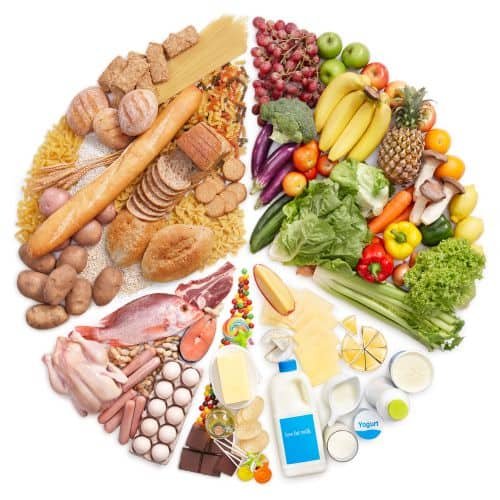
Addressing the problem requires a shift from the distribution of foodgrains alone to the provision of adequate and balanced nutrition. Greater emphasis must be placed on including pulses, eggs, milk, oilseeds, leafy vegetables, and traditional grains in public food programmes, particularly meals provided through anganwadis and schools. Giving priority to locally produced foods could help contain costs while creating markets for local farmers. Regular monitoring of children’s height and weight is essential for the early identification of malnutrition, while severely affected children must receive timely treatment, including care at nutrition rehabilitation centres where necessary.
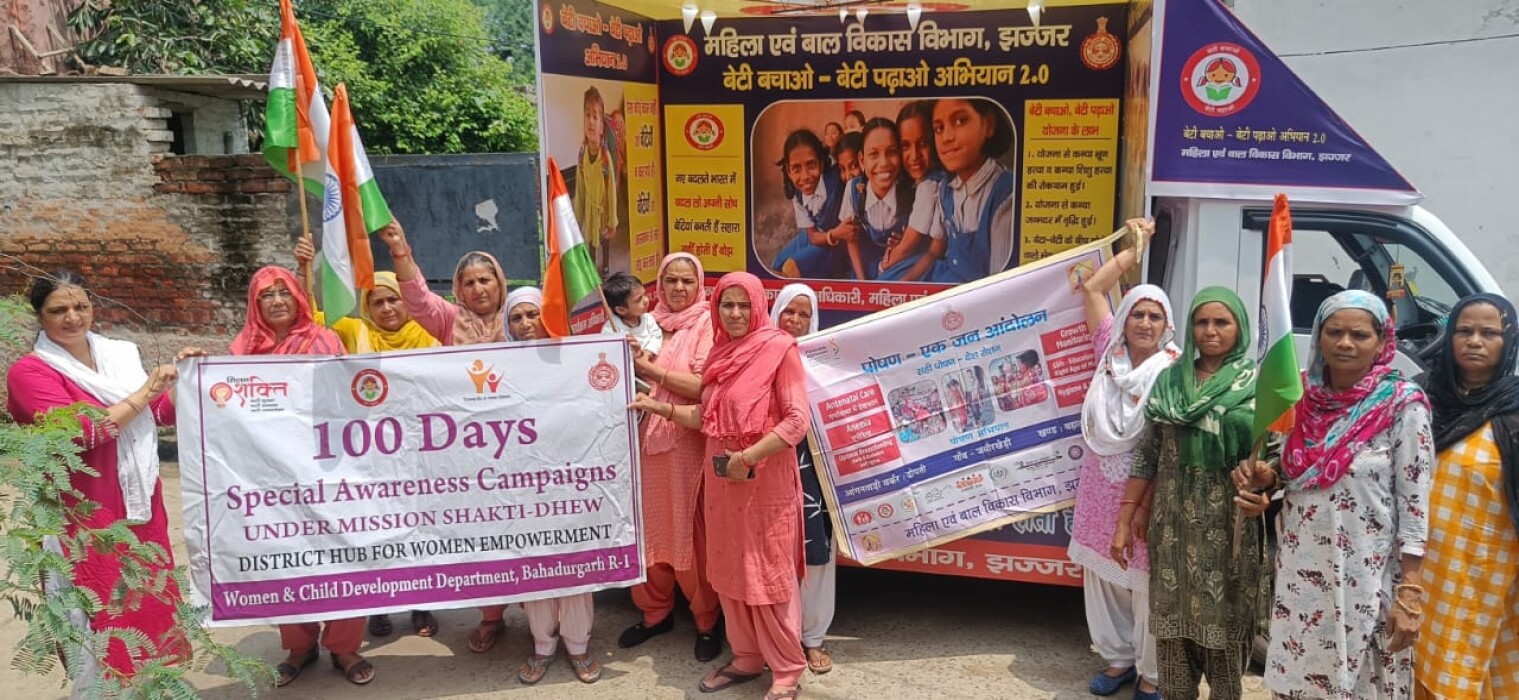
Anganwadi and ASHA workers are central to these efforts. They need adequate remuneration, training, equipment, and institutional support. Access to clean drinking water, sanitation, and healthcare is equally important, since repeated diarrhoea and infections can prevent children from absorbing nutrients even when sufficient food is available. Social audits, the participation of gram sabhas, and reliable data can help ensure that benefits reach those who need them most. Voluntary organisations and community-based groups also have an important role in strengthening implementation and accountability.
Government schemes alone, however, cannot eliminate hunger and malnutrition. Wider social participation is necessary. Reducing food waste, encouraging the consumption of locally available nutritious foods, identifying vulnerable households, and participating in the functioning of schools and anganwadis are among the contributions citizens can make. The media, too, must move beyond discussing hunger for a few days following the release of the Global Hunger Index. Malnutrition deserves sustained coverage throughout the year, particularly through reporting that examines the actual living conditions of rural and marginalised communities.
The Global Hunger Index 2026 presents two contrasting realities. India has made measurable progress over the past two decades. Its score has fallen from 37 to 24.1, stunting has declined, child mortality has dropped substantially, and the prevalence of undernourishment has been nearly halved. Yet progress has slowed, and child wasting remains exceptionally high. India’s 100th position is therefore no occasion for celebration. The experience of neighbouring countries such as Nepal and Bangladesh demonstrates that sustained policies and effective implementation can improve nutritional outcomes even where resources are limited.
India has the agricultural capacity, institutional infrastructure, and experience required to confront this challenge. What remains necessary is a determined shift from ensuring the availability of foodgrains to guaranteeing adequate nutrition, and from announcing welfare schemes to securing measurable improvements in people’s lives. Adequate nutrition is not a matter of charity but a fundamental entitlement, particularly for children. A country’s development must ultimately be judged not only by the wealth it generates but also by its ability to ensure that its people, especially its most vulnerable, do not go hungry.










India cannot call itself a global superpower while millions struggle to afford nutritious food. GDP growth means little when hunger remains widespread and children are denied a healthy future. The real measure of development is not how fast the economy grows, but whether every citizen can live with dignity, nutrition and security. A nation cannot celebrate its rise while its people go hungry.