
Methil Radhakrishnan : The Rubik’s Cube of Language and Sensibility

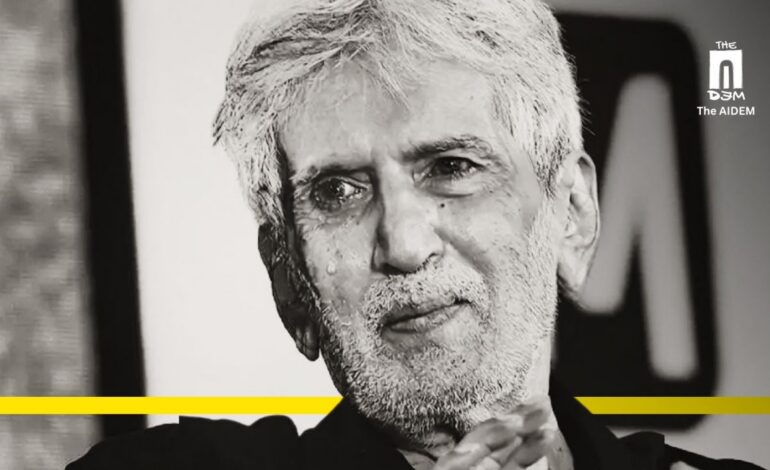
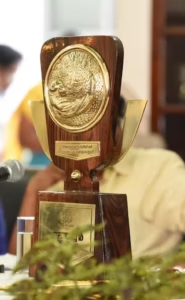
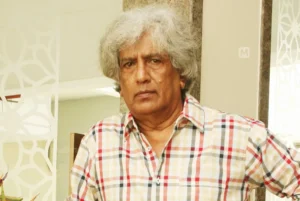
The conferment of the Kerala Government’s prestigious Ezhuthachan Puraskaram on Methil Radhakrishnan marks a significant recognition of one of Malayalam literature’s most unconventional and experimental writers. For a writer who has consistently maintained that literature is not a competitive pursuit, the award carries a special significance, particularly because of his profound regard for Thunchath Ezhuthachan and his literary legacy.
Methil’s creative world, shaped by an extraordinary interplay of science, technology, philosophical inquiry and linguistic experimentation, has continually challenged conventional literary forms and reading practices. In this critical appreciation, the author revisits Methil’s remarkable literary journey, examining the distinctive sensibility and restless intellectual exploration that have defined his work across decades.
It certainly seemed that the underlying conviction behind Methil’s statement , “All I need is the self-assurance of a leaf and the wisdom of an ant”, had been vindicated. Methil has often stated that he does not participate in literary competitions, maintaining that literature is not a sport. Now, as the State Government’s ‘Ezhuthachan Puraskaram’ (award) comes his way, I find that Methil shares in the joy of this recognition. Perhaps he sees this award as a meaningful form of recognition, one that exists outside the realm of competitive contests. His words also reveal a deep respect for the ‘Father of the Language’ (Ezhuthachan). It occurs to me that perhaps Ezhuthachan and O.V. Vijayan are the two figures Methil has held in the highest regard! Methil is also a writer who has explored the ‘modernity’ inherent in Ezhuthachan’s work.
In this context, I revisited an article I wrote when he turned eighty. The central observations of that piece — titled “The Rubik’s Cube of Language and Sensibility”, remain, by and large, unchanged. For a writer who consistently counters chronological age through an inner youthfulness and a continuing process of self-renewal, the ‘annual rings’, the markers of time, are, in reality, nothing more than artistic circles.
A literary language of his own
The truth is that the core elements of that piece titled “The Rubik’s Cube of Language and Sensibility”, remain, by and large, unchanged. Moreover, for a writer who consistently counters chronological or physical age through an inner youthfulness and a perpetual process of self-renewal, the ‘annual rings’, the markers of time, are in reality, nothing more than artistic circles. Defining exactly what constitutes ‘Methil-ezhuthu’ (the specific literary mode associated with the author) and what it encompasses is a remarkably difficult task. In short, one might say it functions as a perennial, wondrous kaleidoscope, a ‘vichithra darshini’ that offers fresh ‘visions’ in diverse forms across different eras. This is, in essence, the core of the poem titled ‘Vichithra-darshini’ (2013), written as a tribute by Balachandran Chullikkad. Years ago (in June 1996), while writing about the story ‘Melinjavarude Manashasthram’ (The Psychology of the Lean), I noted, in an essay titled ‘Swakaryathayude Virunnu’ (Private Feast) – that through these new narratives which offer a respite from the stories we are already familiar with, ‘Methil’ (the author) inscribes complex, challenging terrains into the intellectual worlds of his readers.
Years ago (in June 1996), while writing about the story ‘Melinjavarude Manashasthram’ (The Psychology of the Lean), I noted, in an essay titled ‘Swakaryathayude Virunnu’ (Private Feast), that through these new narratives which offer a respite from the stories we are already familiar with, ‘Methil’ (the author) inscribes complex, challenging terrains into the intellectual worlds of his readers. I further observed that, in this way, these ‘Methil-stories’ transform the evolution of our short-story genre into a progression from one set of profound complexities to another. The story in question served as a rare form of expression, one that subtly unveiled the conflict between the ‘public sphere’, represented by the newspaper, and the ‘private sphere’, represented by the home.
Much like the pivotal line in ‘Dylan Thomas’s Ball’, “the ball thrown high while playing back then has yet to come down”, one might say that many of the themes and metaphors launched into the heights by the author, Methil, have not yet fully returned to the realm of language and literature. This suggests that our critical inquiry and reading practices must still venture further, launching their own exploratory vessels, into those expansive skies where the author’s world of themes has spread its wings.
The scientific imagination
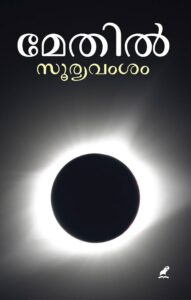
Born in 1944, Methil worked for a long time as a computer data analyst; yet, as early as 1970, he had already published his debut novel ‘Sooryavamsham’, a work that clearly demonstrated the breadth of his diverse interests and extensive knowledge. Following a series of writings, resembling the subversive, fifth-columnist efforts of ‘red jesters’, Methil entered a period of complete silence that lasted for nearly two decades. A closer look reveals that the life of Methil, which might appear to be a collection of contradictions, is actually synthesised more through a scientific sensibility than a purely literary one. This unique characteristic is evident in the fact that an individual who earned a degree in Economics in 1968 went on to work as a journalist for eight years, while simultaneously conducting research into the behaviours and ethics of insects (insect ethology).
Constantly seeking to understand the outer limits of human intelligence and its various manifestations, including, in more recent times, artificial intelligence, one might say that Methil has always lived and moved in the realm of the future. While functioning as a unique time machine and a measuring instrument for our language, sensibilities, and thought, he kept his feet firmly planted on the earth. Using his innate, exceptional powers of perception, he meticulously and ceaselessly observed and documented the natural world. In this sense, one could say that Methil, an artist and ‘scientist’ who constantly spoke of, and redefined, the earth and death, kept our literary forms (short stories, poetry, novels, essays, and columns) in a state of perpetual vibration.
The Rubik’s Cube as literary method
It was in 1974 that the Hungarian Ernő Rubik, born in the same year as Methil, invented the Rubik’s Cube. It is striking that, by that very same time, Methil’s own body of work had evolved into a unique, distinctive ‘Rubik’s Cube’ of our language and sensibilities! A prime example of this is ‘Sooryavamsham’, which I had mentioned earlier.
When reading a novel like ‘Sooryavamsham’, one must be mentally prepared to fully embrace all the experimentation contained within it. In a sense, all of Methil’s novels are significant experimental works; this implies that our own conscious and intellectual preparedness is crucial for engaging with such uncompromising experiments. Just like ‘Sooryavamsham’, with its many layers, evolves into a ‘Rubik’s Cube’ of sorts, one can consistently observe unconventional arrangements of symbols and characters throughout his other writings as well.
I also held a vague, yet firm, recollection that Methil had incorporated the mechanics of a Rubik’s Cube into his own literary craft, though I could not immediately recall which specific work it appeared in. I remember with pleasure that a subsequent conversation with Methil himself provided the answer. The discovery that a Rubik’s Cube functions within the central theme of his story “July, August, September”, offered an entirely fresh perspective to my reading of Methil’s work.
Do these writings not implicitly suggest that, alongside the narrative, another mechanical intelligence, a microprocessor or a system of analysis, is at work, utilising a writing scheme based on the binary code of computers? This implies that the texts also demand a mode of reading capable of decoding their various symbols and images. Even as this ‘computer language’ remains vibrant and active, the author simultaneously constructs a new realm of ‘organic’ language, one that, much like the language employed in the story “How to Kill a Centipede,” acquires a multiplicity akin to the many legs (or ‘words’) of a centipede.
Nor can one overlook the fact that there are numerous pivotal moments where the ‘linguistic body’ of ‘Methil’ evolves into a structure composed of countless minute, interconnected parts, much like the body of a centipede itself. When the wall is envisioned as a creature with a hundred legs, reminiscent of a centipede, or when it is defined through the lens of the ‘untouchability’ brought on by COVID (where spaces devoid of physical contact become mere surfaces), the ‘language’ of the wall effectively immerses itself entirely within the realm of living organisms, the biological world. By acting as a synthesis of opposites, bridging the organic and the mechanical, ‘Methil’ emerges as a new progenitor of language, a ‘second Ezhuthachan’ (a foundational literary figure) in our linguistic landscape.
The organic and the mechanical
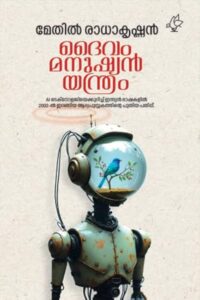
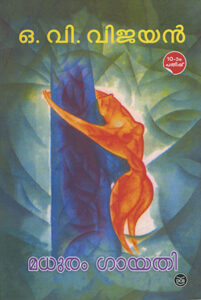
Meanwhile, beyond the realm of fiction, the book ‘Daivam Manushan Yanthram’ (God, Man, Machine, 1999) explores the conflict-ridden realities existing between the biological human and the artificial (or ‘intelligent’) human. Notably, ‘Daivam Manushan Yanthram’ offers a robust continuation and a profound scientific analysis of the creative anxieties raised by O.V. Vijayan in his fiction (such as in ‘Madhuramgayathi’, 1990), as well as the persistent, restless unease inherent in the concept of the ‘mechanical’ (‘yanthrima’). Methil had already anticipated the complex terrain that humanity would reach, a future where artificial intelligence might evolve in such a way that it begins to exhibit organic, living pulses.
The anxieties and upheavals brought on by the COVID-19 pandemic seemed to unfold as a natural, organic continuation of the themes explored in this scientific text. In our frequent phone conversations during that period, Methil would repeatedly point out that COVID was, to his knowledge, the singular, overarching crisis to have ever affected the entire world. He even created a website titled ‘COVID-19,’ which he later developed into a social networking platform where people could share information. I recall him expressing deep concern back then, noting that, far from understanding the virus’s full progression, we did not even truly grasp its fundamental nature. In such instances, one is inclined to concede to Methil’s argument that science always holds a position above literature.
The search for a new language
“We need entirely new words to describe things, words that carry fresh meanings and new forms of beauty.” “What is the use of words that, much like cigarettes left lying open on a table during the Karkadakam rains, have lost both their colour and their potency?” It seems that the meticulous care the author takes to craft a distinct, resonant language is both a continuation and a legacy of the line of thought found in ‘Sooravamsham’.
Cinema and music exert a significant influence on the author’s writing. C.S. Venkiteswaran once remarked that there is perhaps no other writer who, while carrying none of the conventional baggage of Malayalam literature, maintains such rigour, precision, strength, and intensity in their work.
The author’s writing did not seek an already existing community of readers; rather, this free-flowing, autonomous body of work had to create its own readership, a task it continues to accomplish within the Malayalam literary landscape. In this ever-evolving ecosystem, elements such as music, cinema, scientific knowledge, visionary dreams, and environmental consciousness, alongside literature itself, constantly converge. What truly distinguishes this body of work is not its continuity, but its deliberate ruptures; yet, within these very interruptions, the author consistently conjures an ocean of meaning.
I recall him ending a phone conversation with a long, hearty laugh, remarking that when people travel by helicopter or airplane, it carries with it a memory, a lingering sentiment, of the bicycle their grandfather once used. In reality, I only think within myself about how many ‘light-years/distances’ we would have to travel to discover and recognize the worlds that Methil flew to using those ‘bicycle wings’. The fact that these are also journeys undertaken by Methil, stepped into by Ezhuthachan, is now becoming clearer through his own words. In a sense, they are two ‘founding fathers’ of the Malayalam language!