


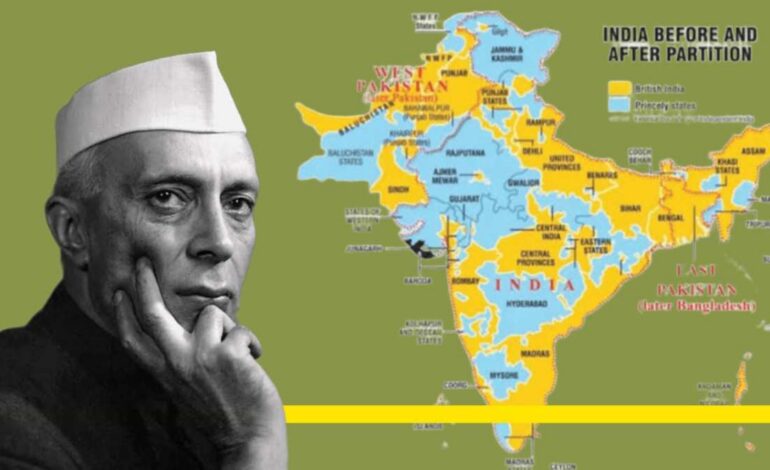
Revisiting Nehru Part III
In the third and final part of her Nehru anniversary series, researcher and writer Anu Jain examines what Jawaharlal Nehru actually carried from Mahatma Gandhi into the governance of independent India, moving beyond simple claims of faithful continuity or outright betrayal.
Tracing how Nehru translated Gandhi’s moral politics into the institutional language of a modern republic, she explores a question that still defines India’s democratic journey: how can a nation pursue modern statecraft and industrial progress without losing sight of ethical governance, decentralisation, and the relationship between means and ends?
Nehru built an India that Gandhi would barely have recognised. Why, then, do we still call him Gandhi’s heir? In January 1942, Mahatma Gandhi publicly named Jawaharlal Nehru his successor, saying Nehru would speak Gandhi’s language once he was gone. Nehru’s seventeen years as Prime Minister were devoted to steel mills, dams, atomic reactors and Five-Year Plans. It is hard to find any of this in Hind Swaraj, Gandhi’s 1909 manifesto, which primarily focused on developing rural synergies rather than on industrial development.
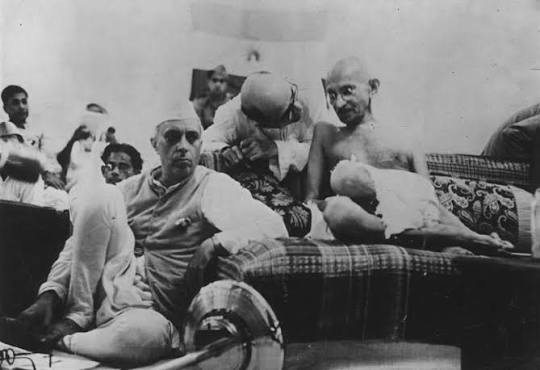
So what did Nehru actually carry from Gandhi into the government he led? As we remember Nehru, this question deserves a better answer than the two we usually get. There are historians who claim Nehru took up the Mahatma’s legacy and carried it faithfully into independent India. Others argue that Nehru dropped Gandhi at the first opportunity and built a statist, Westernised republic. Both interpretations fall short.
The first ignores how openly and how often Nehru disagreed with Gandhi, long before Indian independence. The second assumes Gandhi left behind a governing programme that Nehru could then abandon. He did not. As the scholar Bhikhu Parekh has argued, Gandhi offered a moral critique of modern civilisation and a theory of political action, not a theory of the state.
The two men were never natural allies. Nehru was an Anglicised, Cambridge-educated barrister with a Fabian temperament and a wariness of religious language in politics. He admired Gandhi’s genius for mobilising India’s peasantry but chafed at the “inner voice” and religious metaphors. When Gandhi read the 1934 Bihar earthquake as divine punishment for untouchability, Nehru was openly critical, insisting that natural events have natural causes.
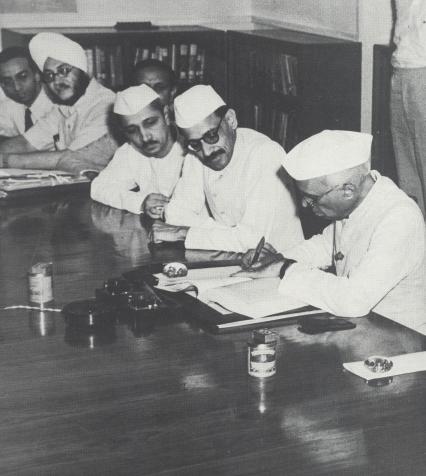
What Nehru took from Gandhi before 1947 was a political method and a sense of moral purpose: satyagraha as a technique, the primacy of means over ends, and a deep sense of obligation to the poor. He did not take the critique of industrialisation. The National Planning Committee he chaired from1938 already assumed an industrial future that Gandhi viewed warily.
The clearest evidence of the divide is their correspondence of October 1945. Gandhi reaffirmed that India’s future lay in self-governing villages. Nehru replied politely but firmly that the village as it actually existed was not repository of truth and non-violence, but a place of backwardness, and that India needed the technology and organisation of the modern age. Gandhi did not press the point. He suggested Nehru lead in his own way, which effectively released Nehru from any duty to implement Hind Swaraj. Gandhi gave Nehru permission to depart from him.
The Mahatma’s strongest imprint on Nehru’s governance lay in ethics and moral framing. On means and ends, Nehru credited the Gandhian insistence on the integrity of means with helping to secure India’s democratic and peaceful transition. His commitment to parliamentary procedure, his conduct towards opponents and his rejection of revolutionary violence all owed much to the discipline of the freedom movement.
On communal harmony, Gandhi spent his last years trying to halt killing in Noakhali, Bihar, Calcutta and Delhi. After a Hindu nationalist assassinated him in January 1948, defending a plural India became for Nehru both a moral and a political obligation. Historian Ramachandra Guha shows how Nehru’s resolve to protect Delhi’s Muslims and resist demands for a Hindu state flowed directly from that martyrdom.
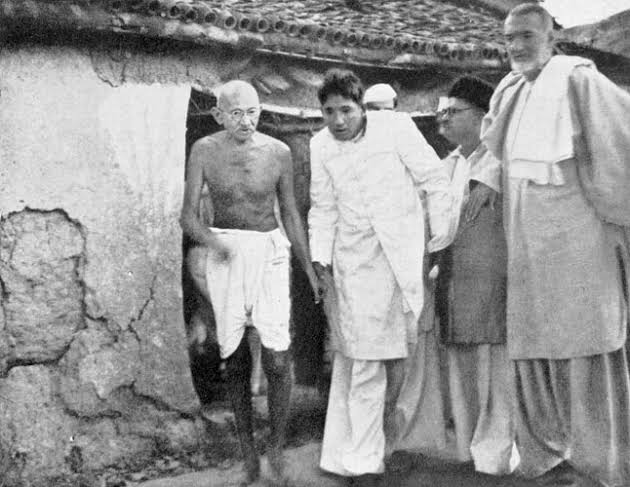
Yet their conceptions of secularism differed. Gandhi’s sarva dharma sama bhava treated religion as a positive public resource. Nehru leaned towards a rationalist separation of religion and State, and towards reform of personal law, as with the Hindu Code Bills. He inherited the outcome of Gandhi’s communal ethic, not its religious grammar.
On the marginalised, Gandhi’s campaign against untouchability helped build the national consensus behind Article 17 of the Constitution. But the legal path that followed, driven largely by B. R. Ambedkar was rights-based rather than paternalist-reformist. Nehru’s government managed that tension rather than resolving it.
In a second set of cases, Nehru adopted Gandhian programmes but folded them into a very different logic. Gandhians in the Constituent Assembly were dismayed that the draft Constitution said nothing of village panchayats. Under pressure from them, Article 40 was added to the Directive Principles. A principle at the heart of Gandhi’s political vision thus became a non-justiciable aspiration, while the real constitutional machinery remained parliamentary and federal, with a strong centre, heavily shaped by the Government of India Act of 1935.
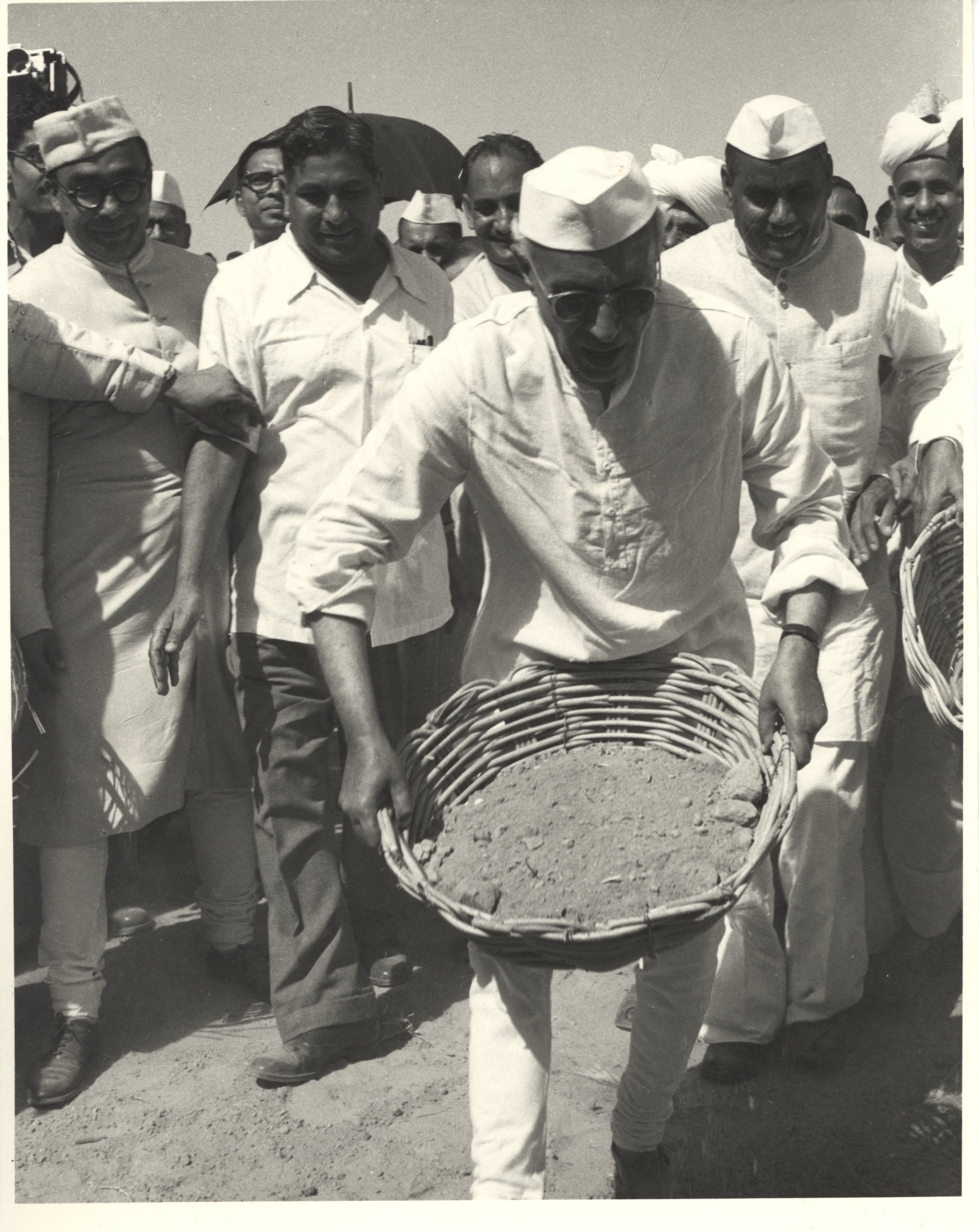
The Community Development Programme, launched on 2 October 1952, Gandhi’s birth anniversary, aimed at rebuilding village life through participation and self-help. In practise, it was run by officials from the topdown. The Balwantrai Mehta Committee later identified the lack of popular participation and recommended a three-tier panchayati raj, which Nehru inaugurated at Nagaur, Rajasthan, on 2 October 1959. Yet panchayats remained administratively subordinate to state governments until the constitutional amendments of the early 1990s. Khadi, too, received statutory backing and a dedicated commission, and Nehru wore it all his life. But under the Second Plan it was assigned a protective, employment-generating role within a heavy-industry strategy: a Gandhian form with a subordinate function.
Critics call this co-optation, and defenders call it pragmatic synthesis. The fairer conclusion is that Nehru used Gandhi’s legitimacy to underwrite a project that Gandhi’s own economics would have contested. On the economy, Gandhi’s influence was at its weakest. The Industrial Policy Resolution of 1956 reserved the commanding heights for the public sector, and the Mahalanobis-inspired Second Plan prioritised capital-industries. Nehru’s description of dams and steel mills as the “temples of modern India” expressed a spirit at odds with Gandhi’s scepticism about machinery and scale. Gandhi’s trusteeship, the idea that the wealthy should hold property in trust for society, never became a policy instrument. Nehru preferred legislation, taxation and public ownership to voluntary moral transformation. The Gandhian ideal of limiting wants found little place in a planning discourse built around growth.
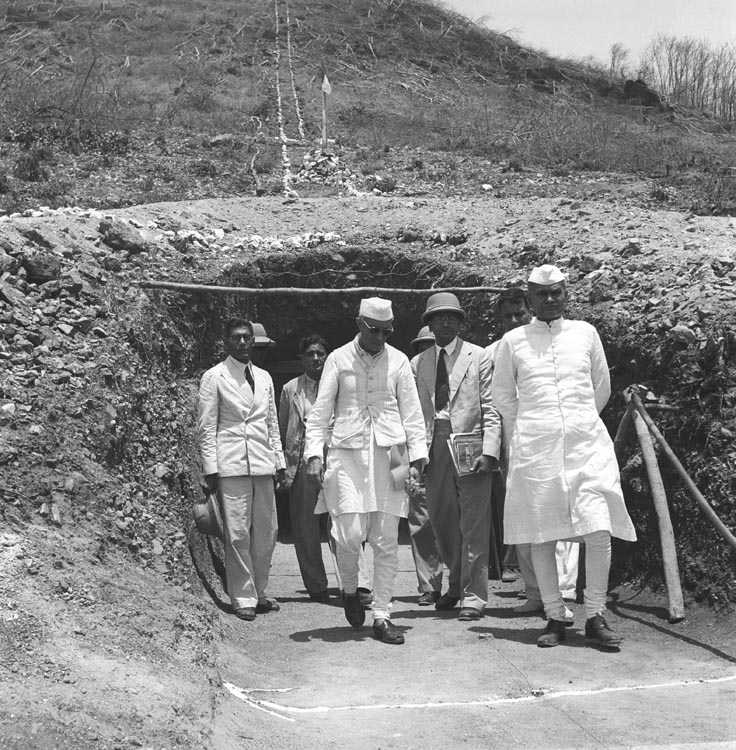
Even so, Nehru’s war on poverty owed something to the Gandhian imperative of serving the last person. What separated them was Nehru’s conviction that industrialisation provided the means to achieve Gandhi’s ends. That was a consequential bet, and one whose success was far from unambiguous. The neglect of primary education, the agrarian stagnation of the 1950s and the later burdens of the licence-permit system all complicate the verdict.
Nehru’s foreign policy is often called Gandhian, a description that is only partly accurate. Panchsheel, the advocacy of nuclear disarmament, support for decolonisation and the refusal to join military blocs all echoed Gandhi’s moral internationalism.
But on security, Nehru was a pragmatist. He sanctioned the military defence of Kashmir in 1947, the police action in Hyderabad in 1948 and the use of force in Goa in 1961. The 1962 war with China exposed the limits of a foreign policy that leaned partly on moral expectations of other states and underinvested in preparedness. The Nehruvian state remained a conventional sovereign state, with an army and a doctrine of national interest. Gandhi’s politics rested on the citizen’s right and duty of resistance. Nehru’s government enacted the Preventive Detention Act of 1950 and, through the First Amendment of 1951, curtailed freedom of speech. Partition’s aftermath, the Telangana insurgency and communal violence help explain these choices, but they do not dissolve the tension with satyagraha.
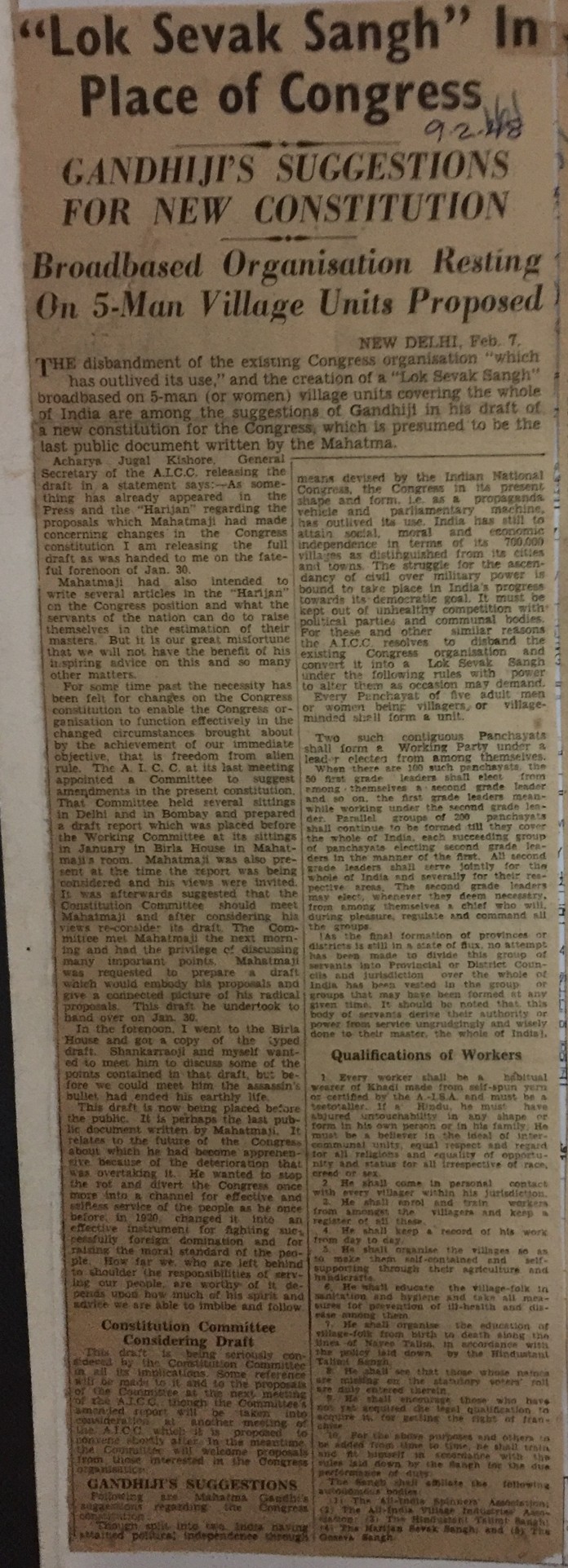
Then there is the question of power itself. In his last weeks, Gandhi drafted a proposal for the Congress to disband as a party and become a Lok Sevak Sangh, a service organisation working in the villages. Nehru and his colleagues declined, believing parliamentary democracy needed a strong,organised party. The disagreement says it all. Nehru saw democracy as institutions, parties and elections. Gandhi saw it as a moral condition of self-rule.
The betrayal thesis treats Hind Swaraj as a blueprint for governance, though Gandhi himself released Nehru from any such obligation, and Gandhi’s followers disagreed about what Gandhian governance meant. The continuity thesis —that Nehru simply adapted Gandhi’s vision for modern times—glosses over the real divide on technology, centralisation and the state, and risks an uncritical celebration that hides what Nehru’s departures cost.
The better word is translation. Nehru rendered Gandhi’s moral politics into the institutional language of a modern democratic republic. He kept the ethical framework, which meant non-violence in political conduct, communal inclusion, concern for the poor and legitimacy through mass consent. He set aside the critique of modernity.
Translation always involves loss. What was lost here was Gandhi’s challenge to the scale and concentration of power, which later debates on decentralisation, ecology and participatory development have only partly recovered. Gandhians must also face a counter-argument. An attempt to build a Gandhian state in 1947, amid the upheaval of Partition, mass poverty, a food crisis and the threat of disintegration, might well have failed.
Nehru’s institutional modernism gave India parliamentary continuity, a professional civil service and scientific institutions that few postcolonial states could match.
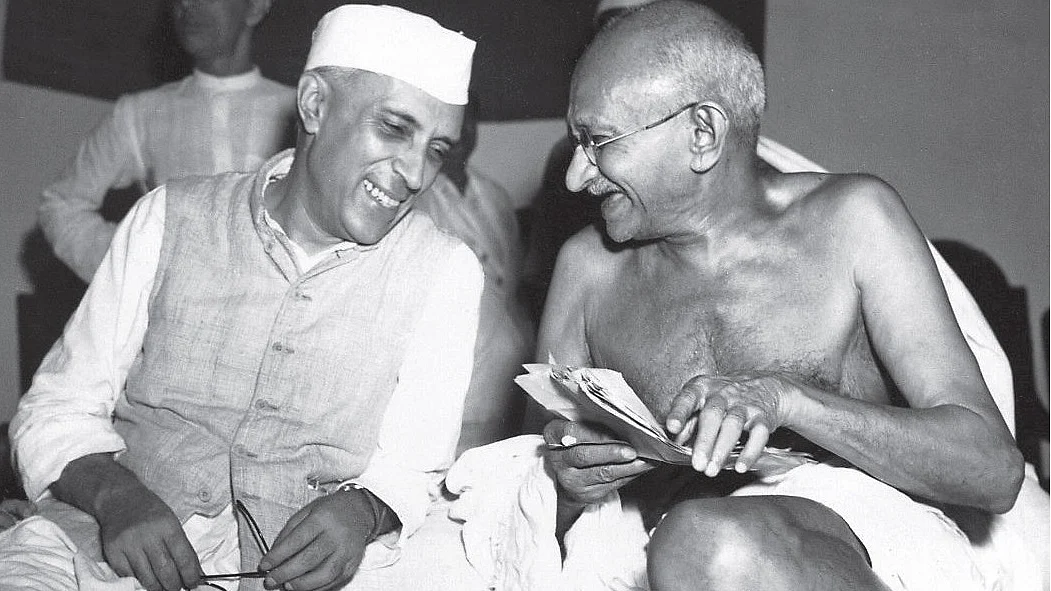
Nehru was Gandhian in his ethical aspiration towards a peaceful, plural and egalitarian polity, and Nehruvian in his confidence in planning, science and the State. This was not discipleship in the doctrinal sense, but a creative and often uneasy partnership, in which the follower reinterpreted the master for a different historical task. For a country honouring Nehru, the most respectful verdict is also the most critical one. His achievement was to give Gandhi’s moral politics an institutional afterlife. His limitation was that the institutions he built did not fully answer the questions Gandhi had raised about power, scale and the good life. Those questions about decentralisation, ecological limits and the relationship between means and ends remain open. They are the true inheritance of both men.
To read previous articles from the series, click here.





बहुत ही गहराई से शोध करके लिखा गया है