
From Multan to MANUU, Hyderabad: The Enduring Fragrance of Fraternity

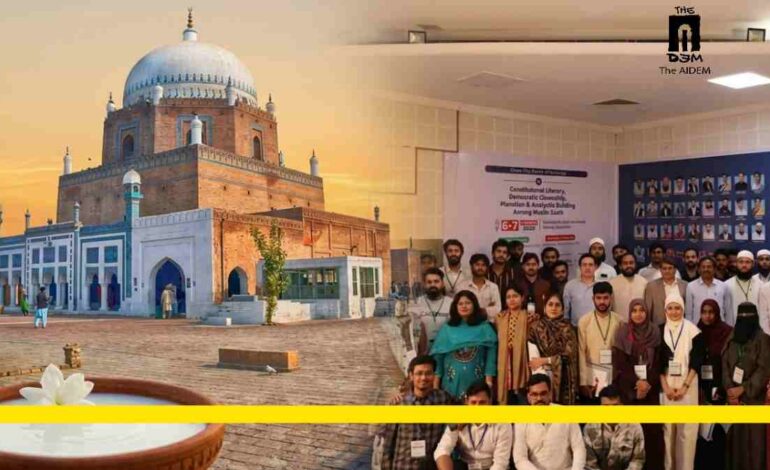
Across the Indian subcontinent, rising polarisation and majoritarian politics have made constitutional literacy more urgent than ever, particularly for minority youth navigating questions of belonging and democratic citizenship. Yet, the antidote to modern division lies within South Asia’s own centuries-old syncretic heritage, where diverse traditions have historically flourished not by displacing one another, but by enriching the shared cultural fabric.
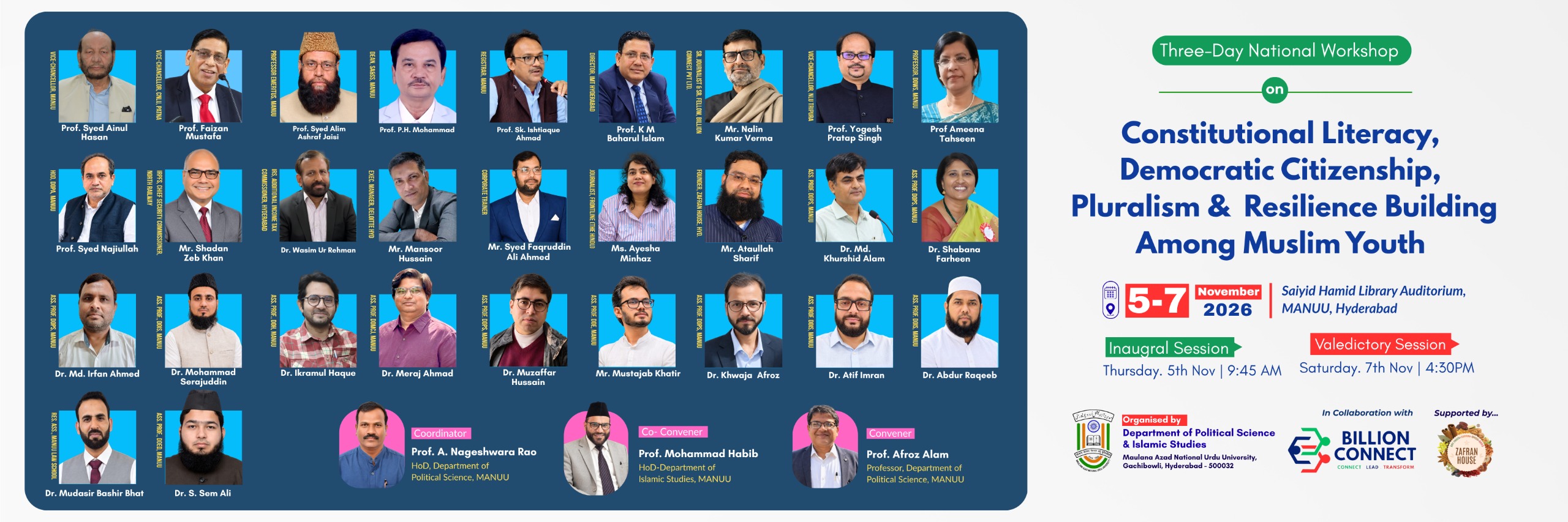
Against this backdrop of contemporary anxiety and historical resilience, a three-day national workshop at Hyderabad’s Maulana Azad National Urdu University (MANUU) brought together legal scholars, educators, and storytellers to explore pluralism and resilience building. Drawing a compelling arc from a 12th-century Sufi parable in Multan to the vibrant academic halls of modern-day Hyderabad, this article draws attention towards folklore, constitutional insights from legal luminary Prof. Faizan Mustafa, warnings on digital echo chambers, and vivid encounters with Deccan syncretism.
In the latest article in his column “Everything Under The Sun,” Nalin Verma brings to light a timeless lesson for a fractured age: knowing and living by the spirit of the Constitution—anchored in love, fraternity, and mutual harmony—remains the surest way to outlast the politics of hate.
There is an evocative parable associated with the arrival of the Sufi saint Hazrat Bahauddin Zakariya in the ancient city of Multan (Punjab) in the 12th century.
The local spiritual leaders, fearing that their tradition would be crowded out, sent the Sufi saint a bowl filled to the brim with milk—a silent message of rejection, meaning, “Our land is already full; there is no room for you here.”
Without saying a word, the visiting mystic plucked a single, fragrant jasmine (Chameli) flower and gently placed it on top of the milk. The flower floated effortlessly without spilling a single drop, adding its fragrance to the entire bowl. It became an enduring metaphor for how Sufism entered India: not by displacing what was already there, but by floating lightly atop it and perfuming the ambience.
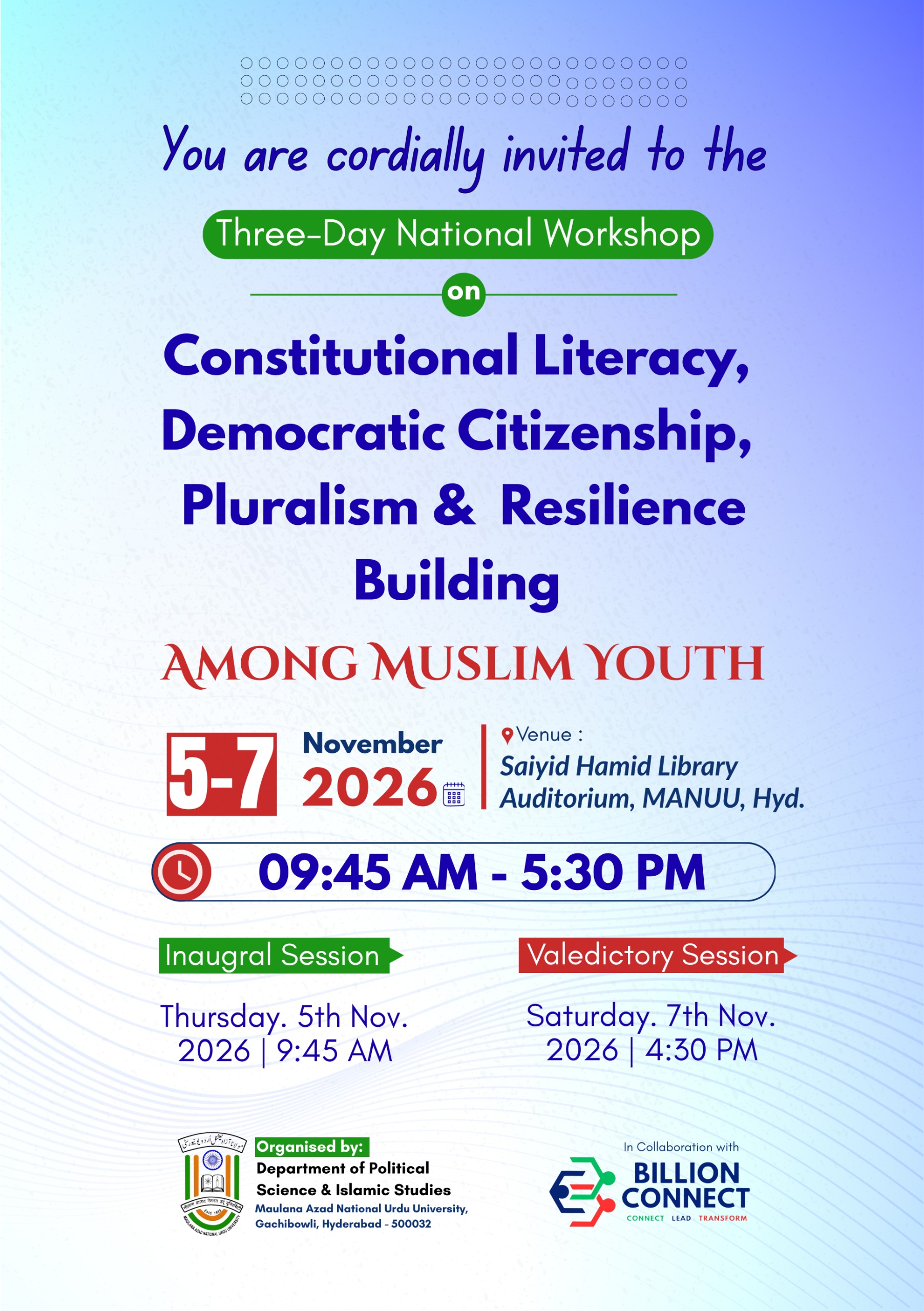
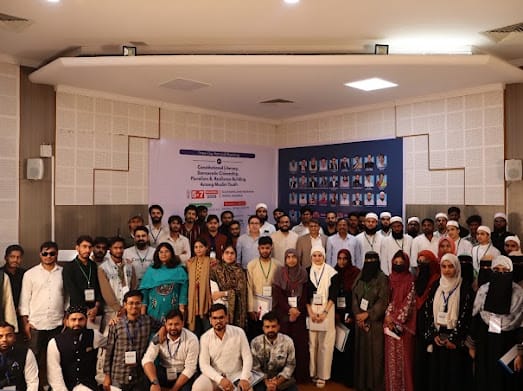
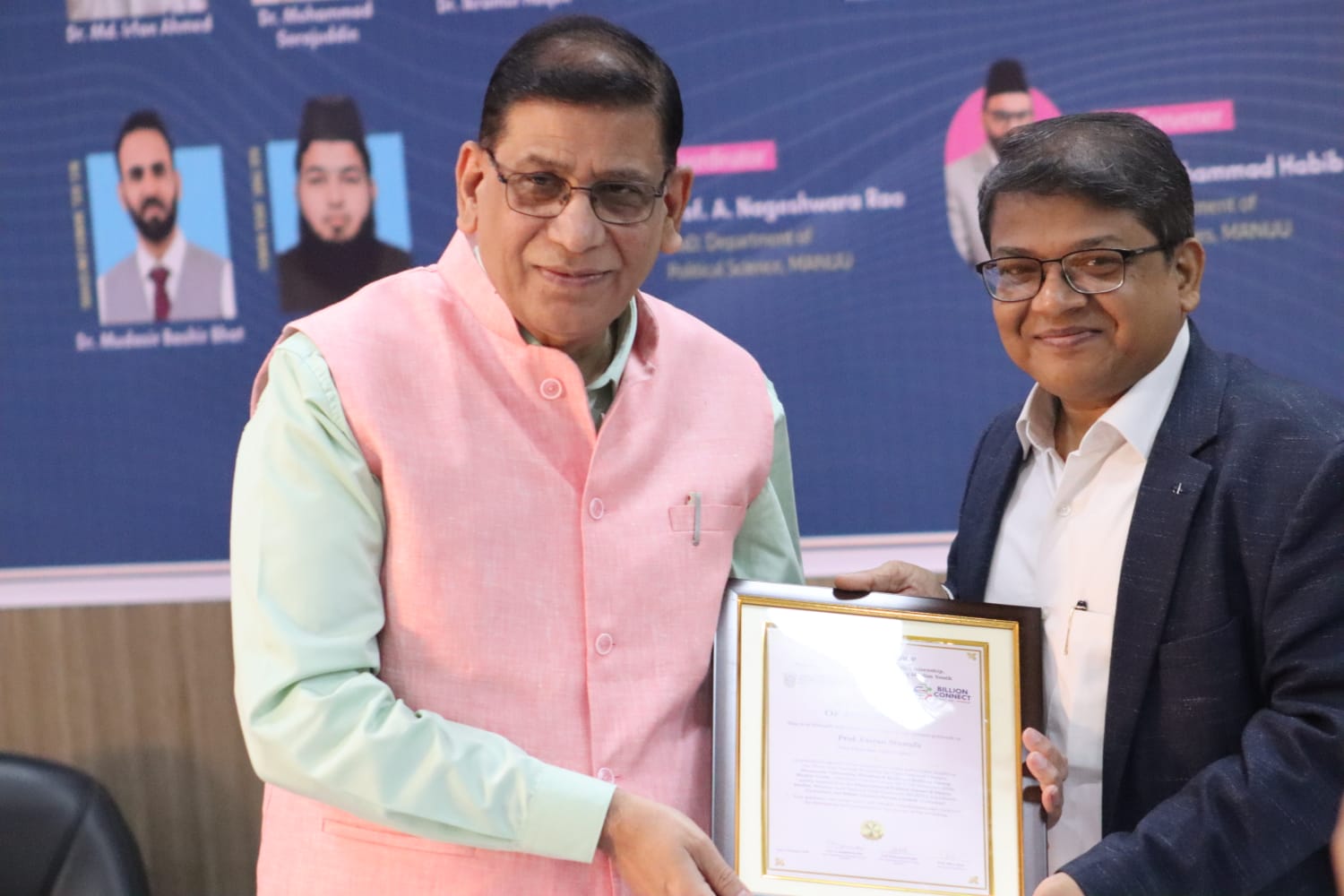
Nine hundred years down the line, scholars in the Indian subcontinent continue to advocate “love for fellow human beings, a sense of justice and fraternity” at a time darkened by the politics of hate, violence and division. “Live with the sense of fraternity as enshrined in the Constitution of India. Don’t live in your own cocoons; mix with others and live in love with fellow citizens,” exhorted the Vice-Chancellor of Chanakya National Law University (CNLU), Patna, Prof. Faizan Mustafa, while speaking at a national workshop on “Constitutional Literacy, Democratic Citizenship, Pluralism and Resilience Building among Muslim Youth” at Maulana Azad National Urdu University (MANUU), Hyderabad.
Prof. Mustafa, an acclaimed academic leader, constitutional expert and columnist, did not harp on old tales or rely on emotional exhortations to drive home his points. He quoted the exact words and lines of the Constitution and spoke in clear constitutional language to explain how the Constitution had incorporated the essence of what the Prophet of Islam and his preachers had preached and prescribed.
“Don’t confuse general literacy with constitutional literacy. As a citizen, you are not compelled to know biology, chemistry, physics and sundry other subjects. But you can’t do without knowing the law of your land. Knowing the law is fundamental to your existence,” Prof. Mustafa said, while drawing attention to the realities of the present.
“Don’t think that you enjoy every right that the Constitution has given you. But you have to strive and struggle for it, which you can do only by knowing and reading it and acting according to its spirit. My salute to the founding fathers of the Constitution,” Prof. Mustafa said, exhorting the students, scholars and teachers, largely drawn from the Muslim community, at the three-day event (November 5–7), jointly organised by MANUU and Billion Connect, a Hyderabad-based governance and public policy consultancy that bridges academic research, institutional advisory and grassroots strategic initiatives.
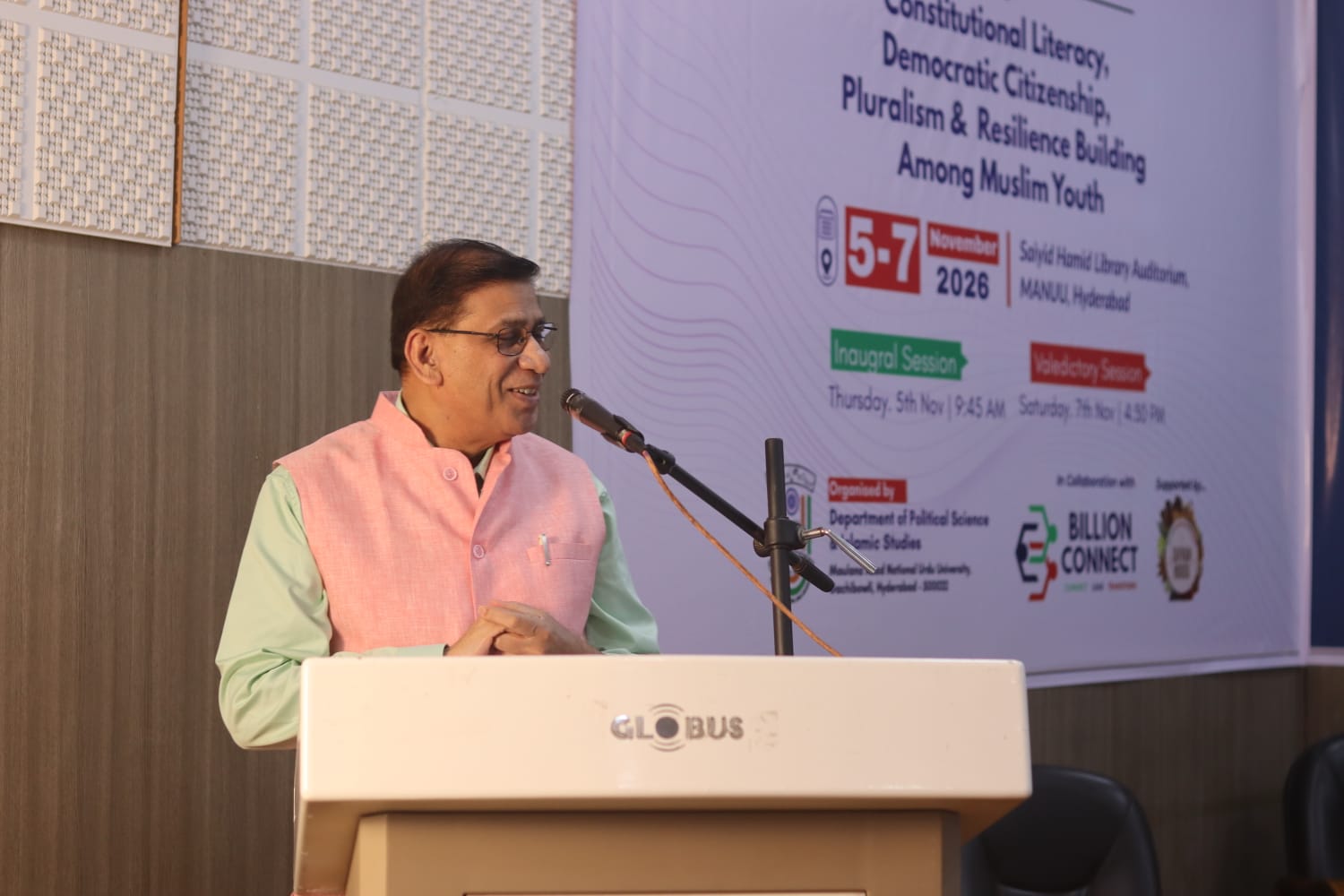
Prof. Mustafa is more than 900 years younger than the Sufi mystic Hazrat Bahauddin Zakariya. They belong to two different eras. In nine hundred years, the subcontinent has undergone sea changes in all spheres of life. Its geography stands altered beyond recognition. Multan is now part of Pakistan, while Hyderabad, the city of the Nizams, became part of the Indian Republic after Independence. But the guiding principles for living and flourishing in this part of the planet, distinguished by multilayered diversity, pluralism and coexistence, remain the same: living in love and in a spirit of fraternity.
Digital Detox
Syed Fakruddin Ahmed, a corporate trainer from Hyderabad, explained how artificial intelligence (AI)-aided social media had been rewiring the human mind and thought processes to serve the interests of global technology giants. Drawing on a range of data and empirical evidence, Ahmed elaborated on how people were damaging their eyesight and mental health through the mindless use of screens.
In layman’s language, what Ahmed tried to elucidate can be understood by any user of an Android phone. Algorithm-based content is designed to inflate or amplify the kind of material a user is interested in and, in the process, has the power to imprison the user in a make-believe cyber world. He rightly exhorted the students and scholars to detox themselves from the mass of deleterious information on social media platforms.
We The People
Prof. Mustafa, though an eloquent speaker and powerful communicator, chose to read aloud the words and lines of the Constitution that he wanted to elaborate upon.
“The Constitution is a contract between the citizens and the state. If you don’t know about your rights that we, the people, have given to ourselves, you can’t expect the state, which is by its very nature prone to accumulate power at the expense of citizens, to come to your aid. So read, learn and act in the manner the Constitution prescribes you to live in your dealings with the state,” he said, reminding the audience that “the basic structure of the Constitution, embedded in socialism, justice, secularism and broader human values, can’t be altered. The state has no right to starve even Rohingyas to death, who don’t enjoy the rights that Indian citizens do, but they too have the right to life.”
Dose of Love and Power of Brotherhood
Yours truly, too, participated as a speaker at the event. While inviting me, Prof. Afroz Alam, the brain behind the mega workshop and architect of Billion Connect, said to me,
“You are a storyteller. The objective of the workshop is preparing the Muslim youth—feeling persecuted or segregated—to act like citizens rather than sulking in the confines of their religious identity. Do it by framing your narrative in stories, as you always do.”
It is for the organisers and participants of the event to judge my deliberation. I don’t know the worth of the stories I narrated, but I gathered so many lovely stories during my sojourn in Hyderabad. I was amazed to meet a professor of Hindi at MANUU, Dr G. V. Ratnakar, a Telugu by birth and upbringing, but a scholar and author in Hindi. I am yet to meet a Hindi speaker with authoritative knowledge of Telugu, Tamil, Malayalam, Kannada or any other South Indian language.
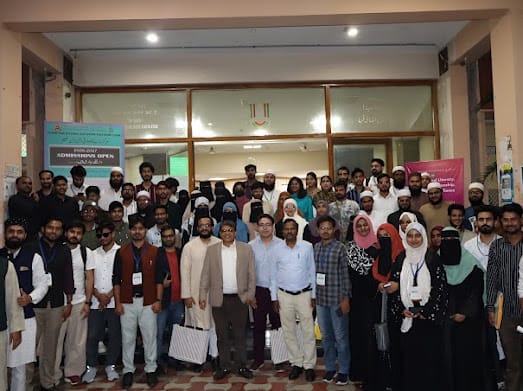
More importantly, Dr Ratnakar was an authority on Dr B. R. Ambedkar, the architect of the Constitution. He gifted me several of his books on Ambedkar, which will only add to my knowledge and understanding of a man who is as important as Gautam Buddha and Mahatma Gandhi in the Indian imagination. The Head of the Department of Islamic Studies at MANUU, Prof. Mohammad Habib, was equally generous and gracious in welcoming the guests.
It is hard to contain the names of the myriad speakers and their enlightening speeches within the space of this column. But beginning with the powerful inaugural address by the MANUU Vice-Chancellor, Prof. Syed Ainul Hasan, the cardinal message of all the speakers—Prof. Nageshwar Rao, Prof. Bahrul Islam, Prof. Ishtiaq Ahmed, Mr. Mansoor Hussein, Prof. P. H. Mohammd, Ms Ayesha Minhaz, Prof. Syed Najiullah, Dr Muzaffar Hussain, Dr Atif Imran, Prof. Ameena Tahseen and Dr Shabana Farheen—was the same: live in love, shun hate and violence, and guard and respect the Constitution in the spirit of “We, the People of India”.
A septuagenarian Telugu journalist, Sree Ramamurthy, took me to Golconda Fort, guiding me through a labyrinth of weathered stone where Kakatiya foundations, Bahmani ramparts and Qutub Shahi domes seamlessly converged into a timeless monument of Deccan syncretism.
Bigots’ vs Liberals
Be it the era of Hazrat Bahauddin Zakariya or that of Prof. Faizan Mustafa, our subcontinent has always had its share of bigots and liberals. But the bigots and fundamentalists have failed to find a lasting place even in the footnotes of our folklore and history. For example, the “religious leaders” who sent the bowl filled with milk to Bahauddin Zakariya represented the bigots and fundamentalists of their time, whose rejection failed to deter the Sufi mystic from spreading his message of love and syncretism.
Today, we have bigots and fundamentalists occupying positions of power and targeting minorities. But if we delve into our history and folklore and live up to the tenets and ideals of the Constitution, rooted in our larger values of syncretism, love and mutual harmony, we will eventually swim ashore from the tide of the current spell of hate and disharmony.
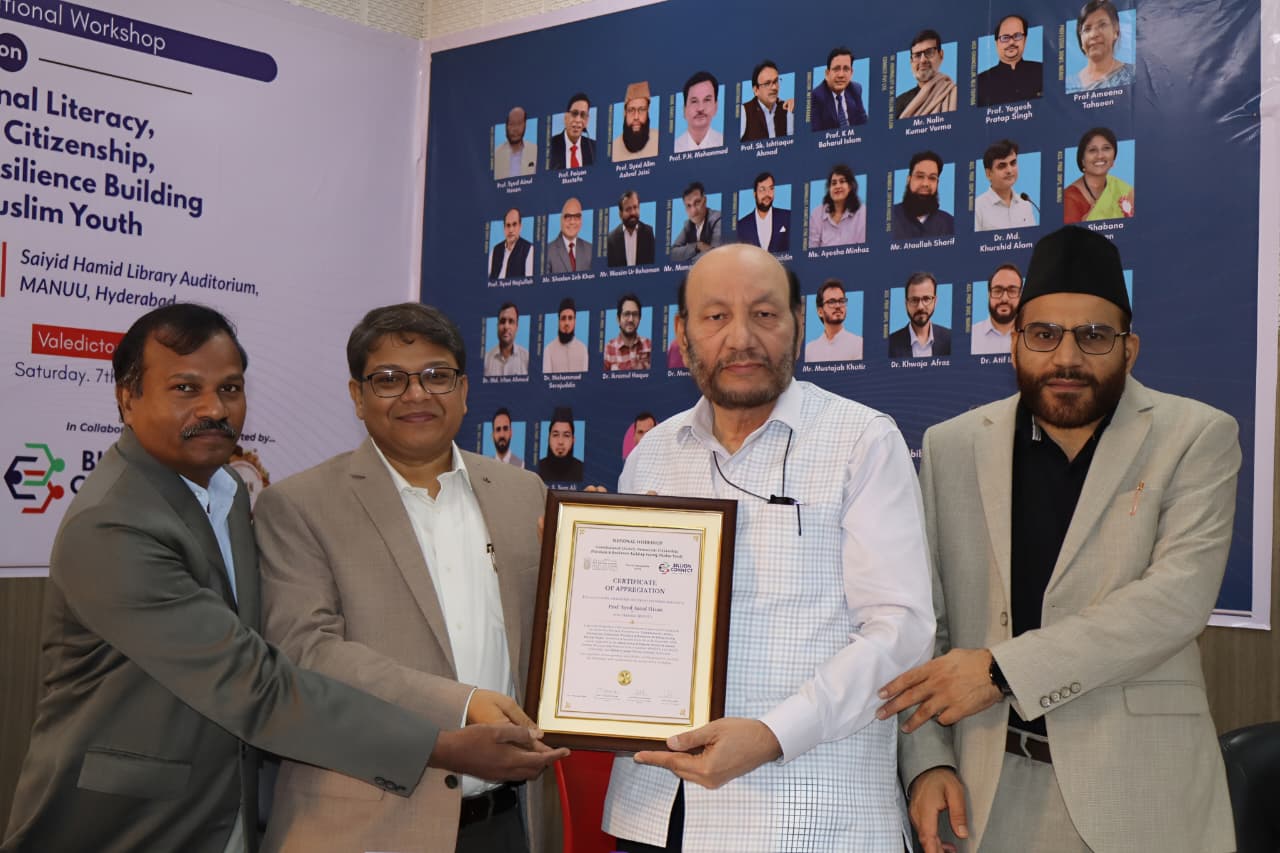
The story of the workshop at MANUU is simple: Love all and hate none.
Thank you, Prof. Afroz Alam and Prof. Mohammad Habib.