

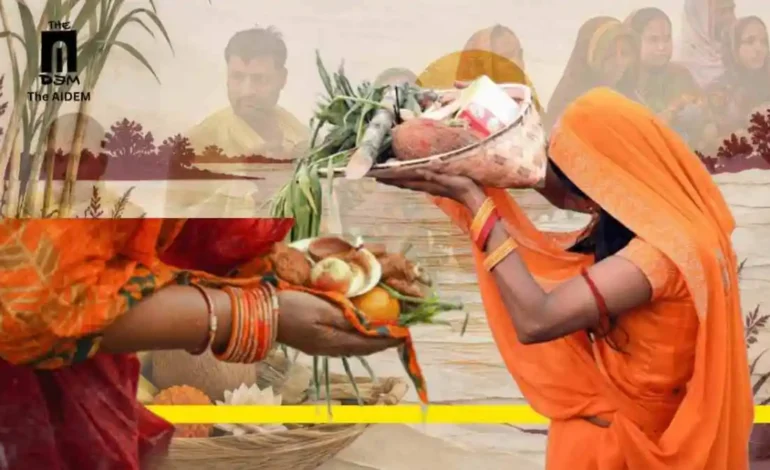
For generations, Chhath Puja was a community-based festival observed across Bihar, Jharkhand, eastern Uttar Pradesh and Nepal’s Terai. Dedicated to Surya, the Sun God, and Chhathi Maiya, the four-day observance includes strict fasting, ritual bathing and offerings of arghya to the setting and rising sun.
Over decades, migrants have carried Chhath well beyond the riverbanks of its traditional heartland. Women offering arghya have become a recurring visual motif across Hindi cinema, television, social media, and India’s political imagination. Internal migration gave this intimate observance a wider public presence, while electoral politics and mainstream cinema brought it to new audiences.
The urban history predates the recent films. In 2003, The Times of India reported thousands gathering on both banks of the Yamuna in Delhi. By 2008, the celebration at Mumbai’s Juhu Beach had become the focus of a public row involving Maharashtra Navnirman Sena leader Raj Thackeray. The two episodes show how migrant communities made Chhath visible in the cities where they worked, and how that visibility could become politically contested.
From Caricature to Cinematic Anchor
For decades, much of mainstream Hindi cinema took a narrow view of Bihar and eastern Uttar Pradesh. Characters from the region were reduced to a handful of stock roles, including the exploited migrant labourer, the domestic worker, the small-time gangster and the comic figure with an exaggerated accent. The range widened in the 2010s as more filmmakers set their stories in smaller towns and rural areas. Films like Gangs of Wasseypur, alongside later Hindi-heartland web series, brought local dialects and social realities into the mainstream. These stories gave Bihar and Purvanchal greater social and emotional depth on screen.
By the mid-2020s, some films were taking a closer look at caste and the conditions in which migrants work. Neeraj Ghaywan’s film Homebound, shortlisted for the Academy Award for International Feature Film, follows north Indian migrant workers and examines how caste and insecure livelihoods shape their search for work and dignity.
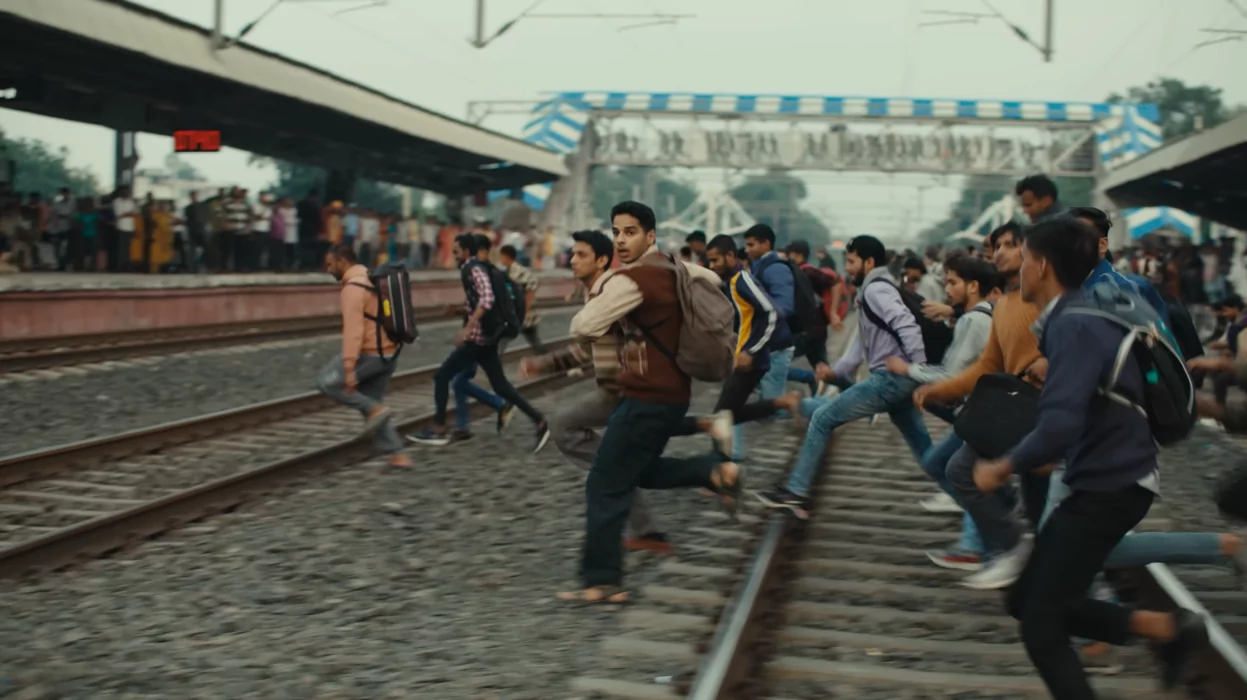
Around the same time, Chhath began to appear more prominently in mainstream Hindi film releases and their publicity. From the 1990s, Hindi family dramas helped popularise a glossy screen version of Karwa Chauth, complete with designer saris and ritual fasting. Chhath had comparatively little visibility in mainstream Hindi cinema, even as regional music carried its songs to listeners far from home. By 2026, a small number of Hindi film projects were using Chhath to evoke home, family and the ties migrants maintain with the places they have left. The folklore fantasy adventure by Deepak Mishra, The Vvaan: Force of the Forrest links Chhath to the protagonists’ homecoming. Vishal Mishra’s Bhojpuri song Chhathi Maiya puts the festival at the centre of the film’s promotion. Similarly, the song Bulaye Chhathi Maa, sung by Shreya Ghoshal, associates Barjatya’s family drama Yeh Prem Mol Liya with the festival.
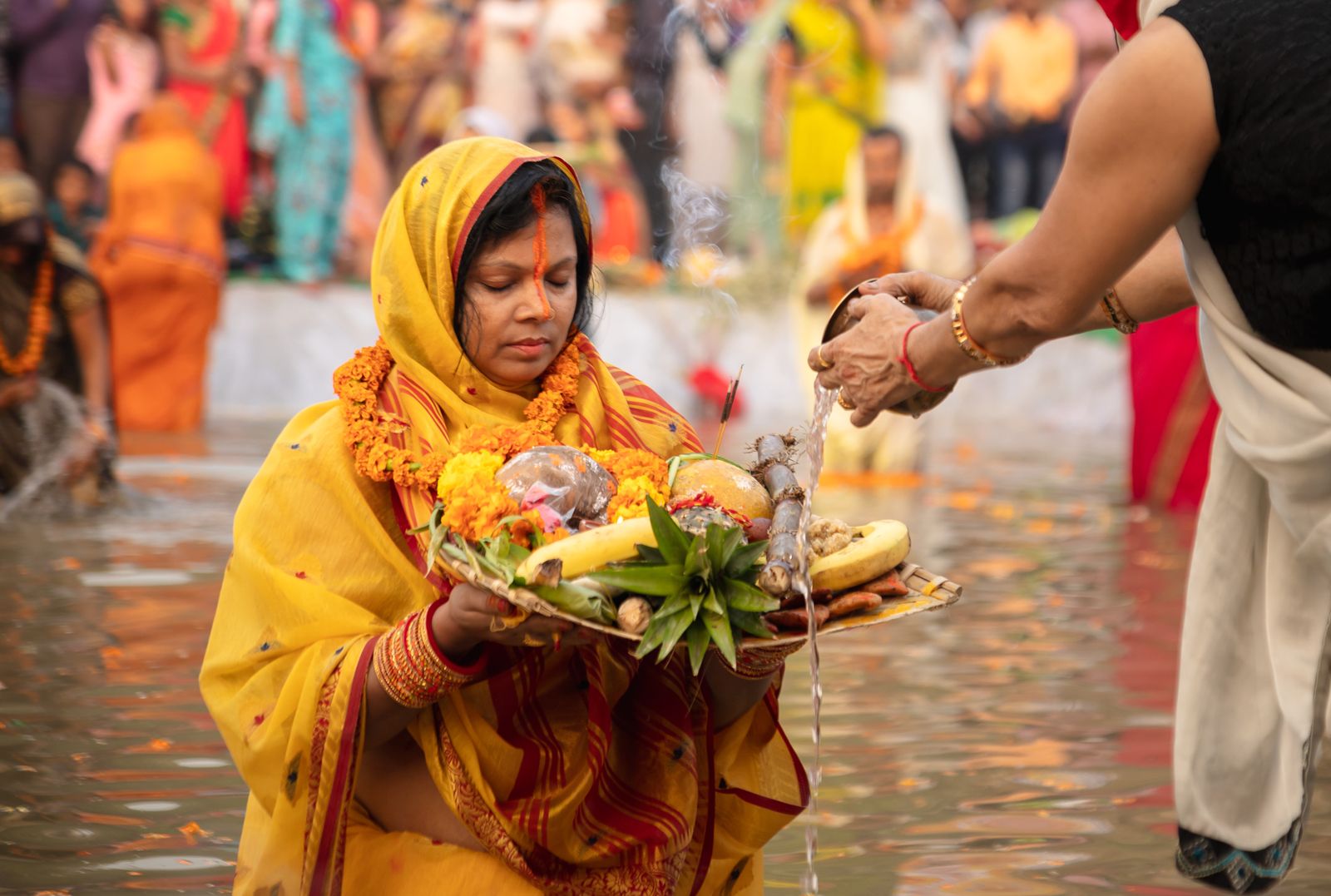
The two focal moments of Chhath Puja, Sandhya Arghya (offerings at sunset) and Usha Arghya (offerings at sunrise), naturally have a great visual appeal. Drone shots convey the scale of the gatherings, while close-ups pick out vermilion sindoor, fruit-laden baskets and glowing diyas. Music is equally central. For decades, folk songs, including those made widely familiar by the late Sharda Sinha, have expressed the pain of migration, the joys of motherhood and the language of devotion. Some contemporary productions recast those melodies with orchestral arrangements for younger and wider audiences. Yet commercial gloss often smooths over the raw intimacy between singer, community, and ritual, just as wide-angle cameras capture the spectacle of thousands while missing the physical toll of a 36-hour waterless fast.

Women have helped sustain Chhath across generations and places through the work of preparing offerings, keeping the fast and passing on songs. That role matters to the history of the festival’s spread. A scene at the ghat captures the culmination of an observance whose rhythms are also set in homes and neighbourhoods.
Claiming the City’s Ghats
Chhath’s appearance in Bollywood follows decades of migration from Bihar, Jharkhand and eastern Uttar Pradesh to cities such as Delhi, Mumbai, Surat and Ludhiana. In many home villages, caste shapes social relationships and access to common resources. In metropolitan cities, shared experiences of economic hardship and discrimination can encourage organising under a broader Purvanchali identity, though caste and village ties continue to matter. Driven by rural distress and uneven development, these migrants form the backbone of urban economies, building high-rises, driving buses and taxis, working in factories and keeping households running, even as they face persistent linguistic and regional prejudice.
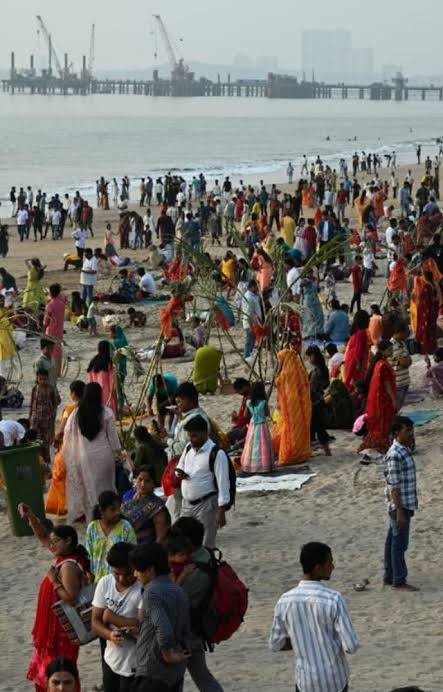
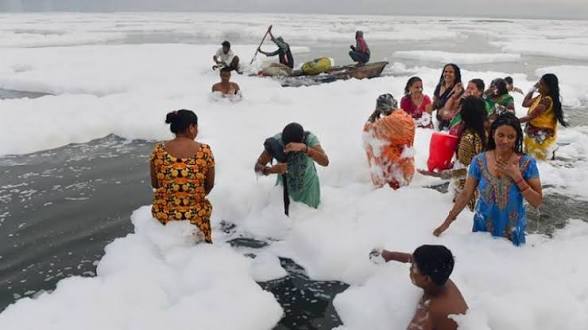
During Chhath, urban riverbanks and neighbourhood parks become temporary extensions of the villages migrants left behind. Devotees and volunteers clean embankments, dig makeshift ponds, and rig strings of lights. For four days, spaces that often receive little civic attention become places of worship, and communities often pushed to the margins gain public visibility. Massive gatherings at Mumbai’s Juhu Beach and Delhi’s polluted Yamuna ghats are acts of devotion through which the people who build and sustain the city also assert a place in its public life.
As Chhath gatherings grew, political parties began to see the ghats as a place to court voters. In cities such as Delhi and Mumbai, parties have competed to associate themselves with Chhath as part of their outreach to voters with roots in Bihar and eastern Uttar Pradesh. Preparations and parts of the observance take place in homes, while the public offerings at the ghats give politicians a visible platform.
State governments and civic bodies now facilitate large-scale Chhath gatherings in several cities, raising questions about public provision and political patronage that also arise at events such as Varanasi’s Dev Deepawali and Ayodhya’s Deepotsav, each with its own history. Municipal authorities build temporary ghats, provide lighting and arrange security, while parties and local politicians vie for visibility through banners and ties to organising committees. Safe access, sanitation and crowd management are civic responsibilities, while party branding can turn a community-led observance into a photo opportunity.
Delhi offers a concrete example. In 2021, worshippers went to the Yamuna despite restrictions on celebrations at the riverbank, while the government provided alternative sites. In 2025, the authorities allowed worship in the river while barring immersions, ahead of the Bihar Assembly election. These decisions brought river pollution, access to a public waterway and electoral outreach into the same debate.
Caste, Labour and the River
Cinematic and political images of the festival give little attention to the labour behind it or the condition of the water in which devotees stand.
First is the question of caste. Popular narratives often celebrate Chhath as an egalitarian festival because devotees pray directly to the Sun without needing a Brahmin priest to mediate. Direct worship can coexist with social hierarchy. A shared riverbank can still be divided by caste, and access to ritual spaces depends on local arrangements.
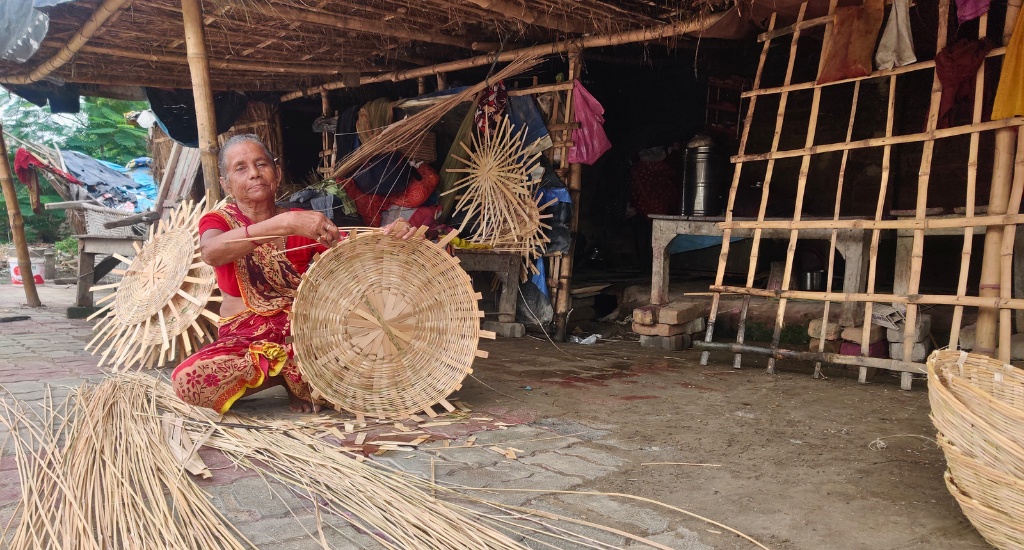
Nowhere is this contradiction sharper than in the soop, the winnowing tray woven from bamboo strips used alongside the larger daura basket to carry offerings to the Sun. In parts of Bihar, artisans from marginalised communities, including the Dom community, earn seasonal income by cutting, splitting and weaving bamboo for these baskets. The soop is treated as ritually pure in the devotee’s home, even as Dom artisans have historically faced untouchability and social exclusion. While other artisan groups also weave baskets depending on the region, cinematic close-ups of bamboo trays rarely acknowledge the marginalised labour that makes the ritual possible.
The bamboo trade also extends across the border. Documentation from Nepal’s Terai records Dom artisans weaving baskets for Chhath and selling them in local markets. Who makes the baskets and how artisans are treated are questions best answered locality by locality.
Second is the ecological crisis unfolding at the water’s edge. Water is central to Chhath, and urban devotees may have to choose between polluted rivers and temporary tanks, depending on local conditions and rules. Large gatherings bring attention to a year-round civic responsibility to address untreated sewage and industrial effluent entering rivers such as the Yamuna.
An Evolving Cultural Mirror
For millions from Bihar, Jharkhand, and eastern Uttar Pradesh, Chhath’s greater public visibility can be a source of pride after decades of metropolitan stereotyping. It offers urban migrants a vital emotional anchor to home. Visibility also gives filmmakers, platforms and political parties greater power to shape how the festival is seen. As Chhath becomes a fixture of commercial cinema, social media reels, and electoral campaigns, there is a real danger of flattening a rigorous four-day spiritual discipline into an aesthetic performance.
The public life of Chhath shows how migrants have shaped India’s cities and, over time, its popular culture. The people who keep the fast, prepare the ghats and weave the baskets remain at the centre of this history, which also raises questions about the dignity of artisans and the condition of the rivers that sustain the observance.