
After 9/11, a World at War: Sunera Thobani on Empire, Race and Resistance

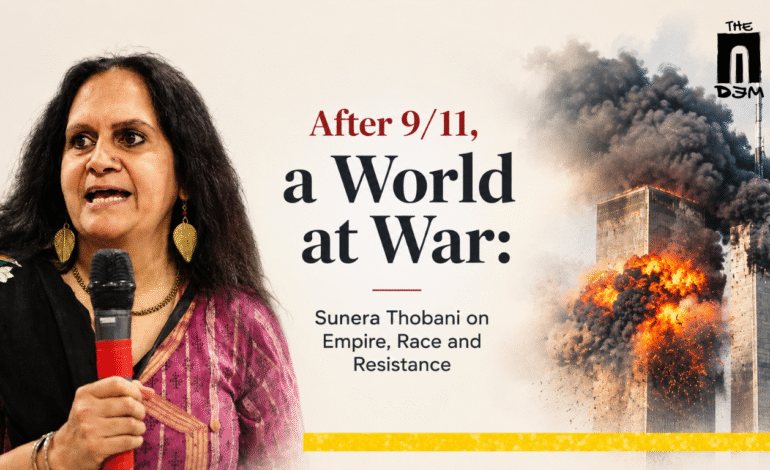
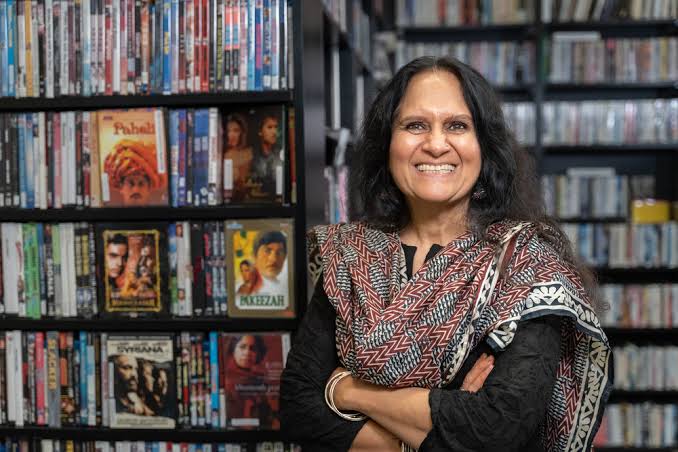
In the aftermath of the September 11 attacks, scholar and feminist activist Sunera Thobani became the centre of an intense controversy in Canada after publicly opposing the impending invasion of Afghanistan and declaring that US foreign policy was “soaked in blood”. She faced denunciations, demands for her dismissal from the university, an RCMP investigation, death threats and sustained personal intimidation.
More than two decades later, Thobani looks back at that moment and argues that the consequences of the post 9/11 “war on terror” are still unfolding. In this conversation with journalist Gurpreet Singh for his audio visual platform ‘ Navin Taazi’, she discusses Afghanistan, the racialisation of Muslims, the Gujarat violence, Gaza, surveillance, militarisation, the rise of the political right and the continuing need for resistance to war.
The link to the audiovisual interview is also part of this transcription.
Gurpreet Singh: Thank you for joining me. Let us begin with the statement you made immediately after 9/11. What exactly did you say, and what was the context in which you made the remarks that became so controversial?
Sunera Thobani: I made a speech at a national conference in Canada, held in Ottawa, on the issue of violence against women. At that time, 9/11 had just happened, and it was very clear that the US was going to launch the “war on terror” with the invasion of Afghanistan. It was also clear that the Canadian government was going to be a partner in this war, along with other European countries.
My intention at the conference was to address the situation and examine its consequences for women’s lives. Based on my own research and activist work, I knew that war is always bad for women and that women pay some of its worst costs.
I argued that the women’s movement in Canada should oppose the global war on terror, oppose the war on Afghanistan, and mobilise across Canada to stop the Canadian government from participating in it.
That was the crux of my speech. I also pointed to what US foreign policy had done around the world. The phrase I used was, “US foreign policy is soaked in blood.” I cited examples of what the US had done in different countries, from Vietnam to Chile, and argued that the Canadian government should not blindly follow US foreign policy.
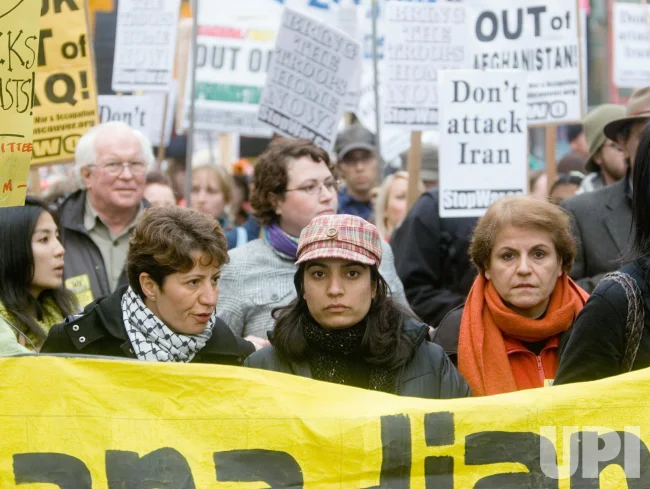
That phrase became extremely controversial or, I should say, was made controversial. There were already many critics of US foreign policy whose criticisms were considered acceptable. But this particular phrase was turned into a huge controversy, and there was an enormous backlash against what I had said.
My intention, however, was to mobilise the Canadian women’s movement across the country against the war in Afghanistan.
Gurpreet Singh: What was the immediate reaction in the room? Did you sense discomfort or hostility among some of those present?
Sunera Thobani: There were some big names in the room, and I could see that they did not like what I had said. I won’t name names, but a very famous person in the legal and human rights community, who later went on to occupy a very high position in Canada, countered what I had said in their speech.
Link to Sunera Thobani’s speech at the “Women’s Resistance: From Victimisation to Criminalisation” conference in Ottawa on October 1 2001, provoked a storm of controversy after her remarks were interpreted as blaming the September 11th terrorist attacks on U.S. foreign policy. Canada’s Prime Minister, Jean Chrétien, described it as a “terrible speech that we are 100 percent against.”
https://herizons.ca/article/the-speech-that-shook-the-country
The argument was essentially that everybody knew the US was a force for good. It was the usual hegemonic line that the US was going to save the rest of the world.
The response in the media was immediate and intense, and that really sparked the backlash against me. Politicians denounced me, academics denounced me, and even many people within the feminist community denounced me. The backlash continued to build over the months that followed.
Gurpreet Singh: How long did that backlash continue, and how serious did it become personally and professionally?
Sunera Thobani: It went on for quite some time. There were petitions and attempts to get me fired from my job. At that point, I did not have tenure; I was an untenured faculty member.
Academics at my own institution signed petitions and sent them to the president’s office saying that I should never be given tenure and that I should be fired.
Then the RCMP announced that they were investigating me for a hate crime against Americans, of all things. That went on for a long time as well. I had to obtain legal defence to respond to it. They never actually charged me, but the matter continued for quite some time before it was finally resolved.
And then there were the death threats. I started receiving threats at home and at work. I had to move my family out of my home because people were showing up and banging on the door. The intimidation in that period was extremely intense.
Looking back now, I sometimes think I may have been among the first people in the post 9/11 period in Canada to be subjected to that kind of personal intimidation, hate mail, death threats, demands that I be deported.
Today, of course, this has become much more common. We see massive social-media campaigns against people who speak out, with threats and intimidation. But as far as I know, I was probably among the first in Canada in the post 9/11 period to experience it on that scale.
Gurpreet Singh: To what extent do you think the reaction was shaped by your ethnicity and gender? After all, white intellectuals such as Noam Chomsky and Michael Moore were also making strong criticisms of US policy.
Sunera Thobani: Absolutely. It was because I was a woman, because I was speaking in the name of feminist politics, and also, of course, because I am a woman of colour.
That was very clear in the attacks on me. There were calls to deport me from the country. People were saying, “Send her back to Afghanistan,” even though I had never been to Afghanistan.
There was a very intense anti immigrant sentiment in the hate mail I was receiving. So there is no doubt in my mind that the nature of the reaction was connected to the fact that I am a woman of colour and that I was speaking in the name of feminist politics.
Gurpreet Singh: Much has happened since then. Several countries became targets of wars launched in the name of the “war on terror”, and some of those conflicts and their consequences continue. Looking back, do you feel vindicated?
Sunera Thobani: I really wish I had been wrong. I wish that what I feared at the time had not happened.
The consequences have been terrible. The war on terror is ongoing. It continues to take new forms and to identify new, quote-unquote, “enemies”. We can see how profoundly the world has been transformed by the global war on terror, including in India.
I don’t think that the Gujarat genocide is unconnected to the global war on terror. The implications around the world have been severe and catastrophic.
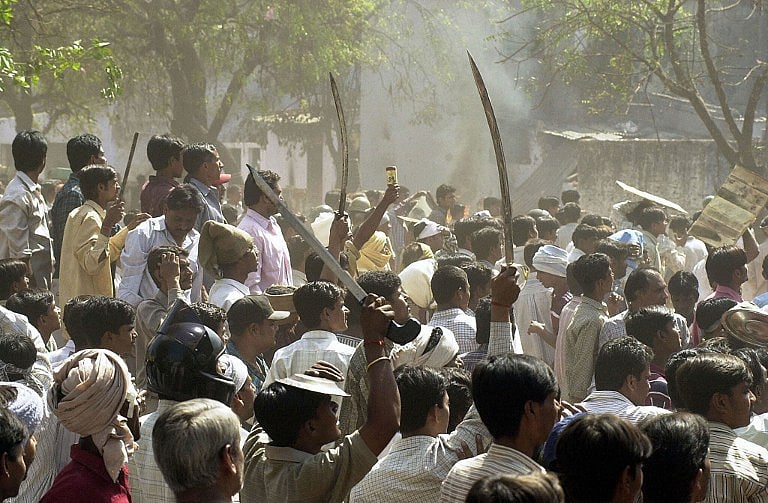
When I look at some of the mainstream coverage of the war on terror in Canada, there seems to be this idea that the war is somehow over and that “we made some mistakes”. But clearly the war is not over. It is ongoing. Wars, massacres and genocides are ongoing.
When I look back, I feel that there was a moment when things could have been different. If social movements had genuinely mobilised against the war in Afghanistan, and if the Canadian government had not supported the US and British governments, perhaps it could not have acquired the legitimacy of a global war in the way that it did.
It might have happened differently, but the support of governments such as Canada and the UK gave legitimacy to the claim that this was a global war being fought against a global threat.
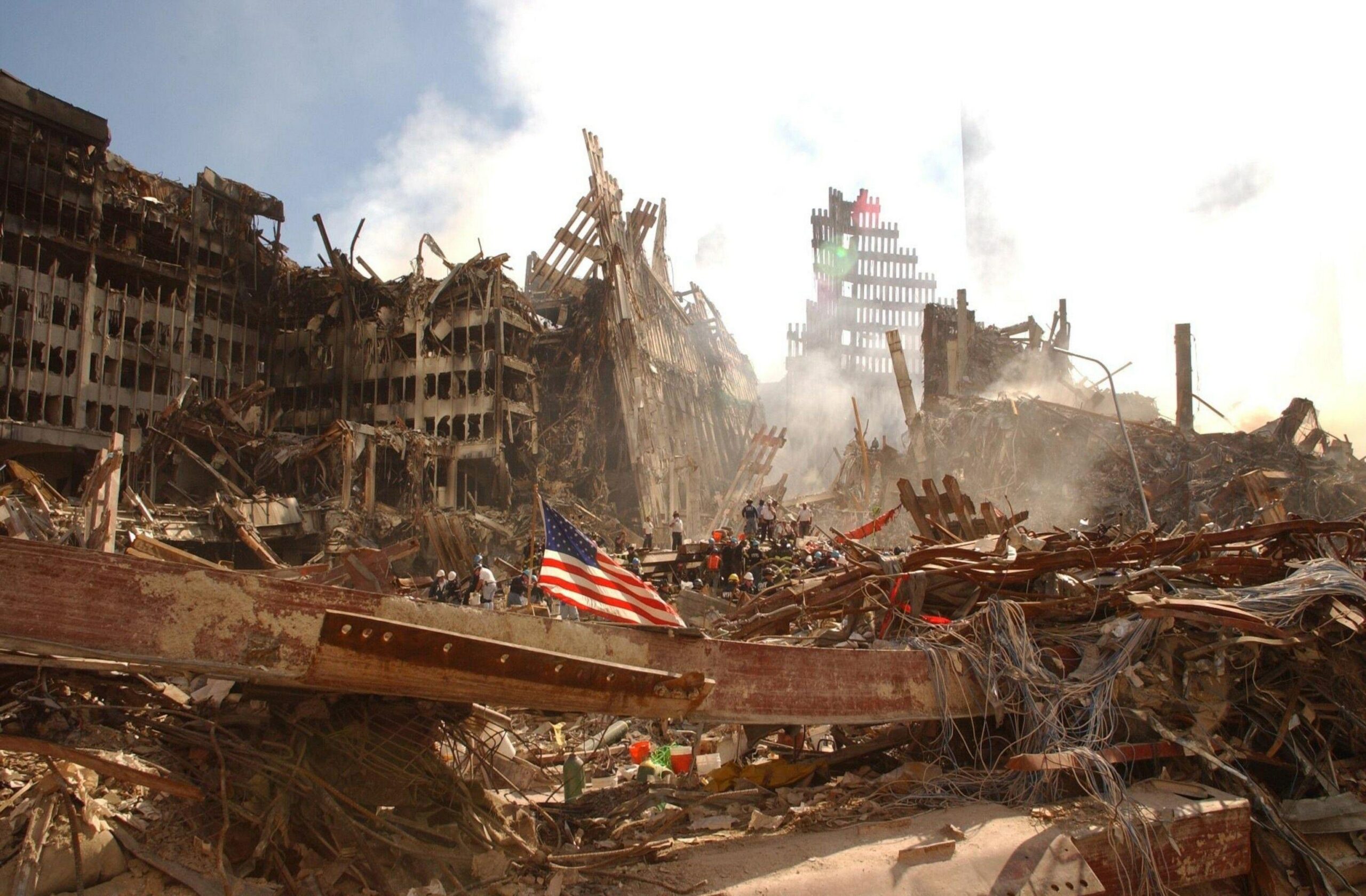
The 9/11 attack on the United States was terrible. So many people died. But instead of seriously coming to grips with the causes of the attack, what we saw was a depoliticisation of the attack itself.
George W. Bush framed the response as a fight for Western civilisation. That was a colonial and racial discourse. It drew attention away from the consequences of US foreign policy and instead focused the perceived threat on Muslims and Muslim bodies. They became the easy targets.
So rather than confronting the consequences of US foreign policy and Canadian foreign policy, what followed was the demonisation of Muslims and a depoliticisation and dehistoricisation of the effects of state policies on people around the world.
Gurpreet Singh: More than two decades later, what do you see as the most important lessons of 9/11 and its aftermath?
Sunera Thobani: For me, one of the central lessons is that these wars remain ongoing and that our world has been fundamentally transformed.
Look at surveillance and the securitisation of the nation. Look at immigration controls, border controls and militarisation. Look at the emergence of mercenary operations around the world that profit from these wars. Our world has been fundamentally transformed, and it is important to understand that these transformations are continuing today.
There is also an urgent need to mobilise resistance against these wars.
Look at the genocide in Gaza and the terrible consequences Palestinians have had to pay. Netanyahu was a proponent and advocate of the US attacking Iraq after Afghanistan. The objective, clearly, even then, was to remake the Middle East.
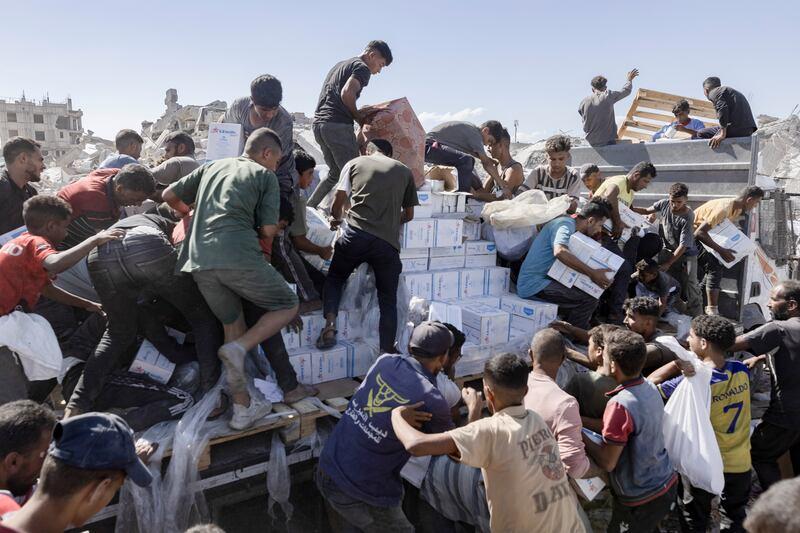
These wars are connected. It is extremely important for us to understand those connections and to mobilise opposition and resistance to what I can only describe as a pathological drive towards war not only in the United States but among its allies around the world.
I acknowledge that the situation is changing. Some of these allies, including Canada, are now experiencing their own challenges and problems in their relationship with the United States.
But in a sense, these countries helped pave the way for what has subsequently happened in the US: the election of Trump and the entry of white-supremacist and racist movements into mainstream politics.
These movements existed before 9/11, of course, but they were not part of the political mainstream in the way they have now become.
One of the most important lessons for me, therefore, is the urgency of continuing to make these connections and mobilising public resistance and public opposition. The entire world is now in crisis.
Gurpreet Singh: Is there anything important that we have not covered that you would like to add before we conclude?
Sunera Thobani: No, I think we have pretty much covered it. Thank you very much for giving me this opportunity to restate my opposition. Thank you so much.
Gurpreet Singh: Thank you for your time.

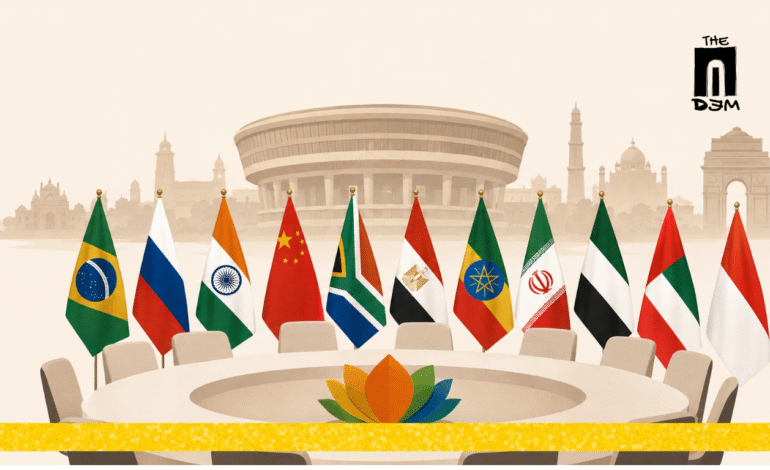




Even twenty-five years after 9/11, the world continues to live with the consequences of the wars, racism and imperial narratives unleashed in its aftermath. Sunera Thobani’s powerful reflections remind us that resistance is not just about opposing war—it is also about challenging the systems of empire and inequality that make endless conflict possible. A timely and deeply important conversation.