

The Relevance and Meaning of India – Cuba Relationship in the BRICS Era

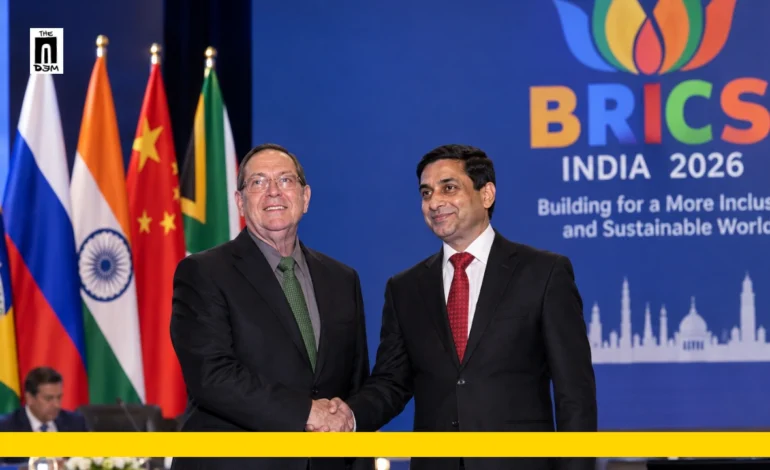
BRICS represents a new era in the global economy and politics. Long dominated by the Bretton Woods financial system and the dollar, global finance now has alternatives offered by BRICS. It also initiates a process towards eventual de-dollarisation. These two developments constitute and define the BRICS era. Cuba, harassed by US sanctions for 62 years, finds a new lifeline in BRICS, as Cuban ministers participate in the 18th BRICS Summit in Delhi. The Summit has ‘resilience’ as one of its slogans. Sixty years of blockade, and Cuba still stands; that exemplifies resilience more than perhaps any other country.
Why does Cuba matter? There are only a few countries in the world whose size is inversely proportional to their global footprint. Cuba is one of them — 11 million people, an island about 180 kilometres (90 miles) from Florida, and yet it shook the world.
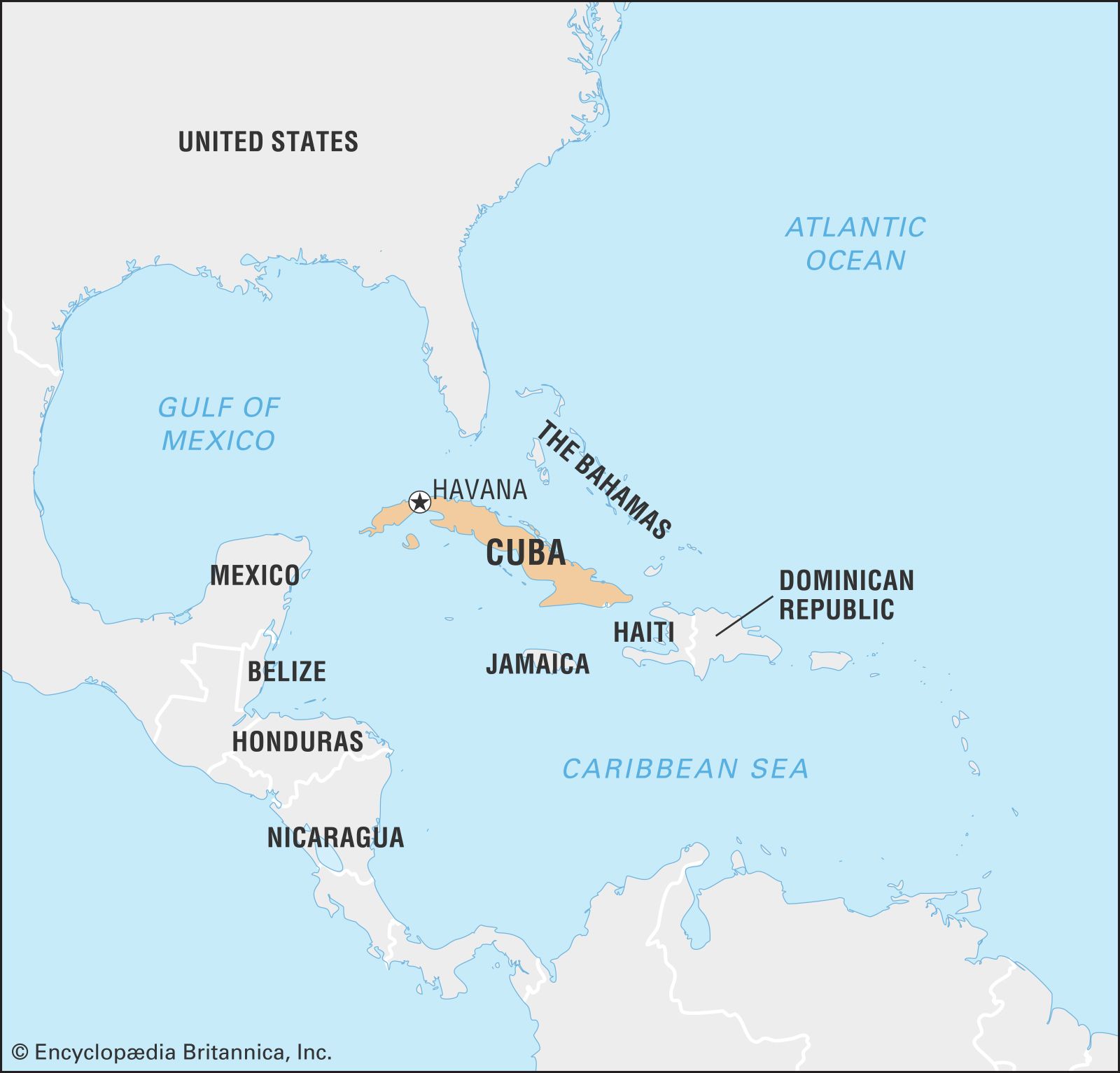
In October 1962, the world came closest to nuclear annihilation, and where? Not in Berlin, not in Korea — but over Cuba. The Cuban Missile Crisis was the moment when humanity held its breath for 13 days. Kennedy and Khrushchev were on the phone, but Fidel Castro was in the room. At 36, he taught the superpowers what sovereignty means. He told Moscow: you can negotiate over our heads, but not over our souls. That is Cuba’s historicity.
And then Fidel. We are told in Western textbooks that Fidel Castro was a dictator, a disruptor. Let me tell you how history will judge him. Fidel ruled for 49 years. He survived 10 American Presidents and 638 assassination attempts — by the CIA’s own admission, including poisoned cigars, exploding seashells and toxic wetsuits.
There is a famous joke in Havana. They say the reason Fidel always wore two watches was not to know the time in Havana and Moscow — it was to know how much time America had left before its next attempt!
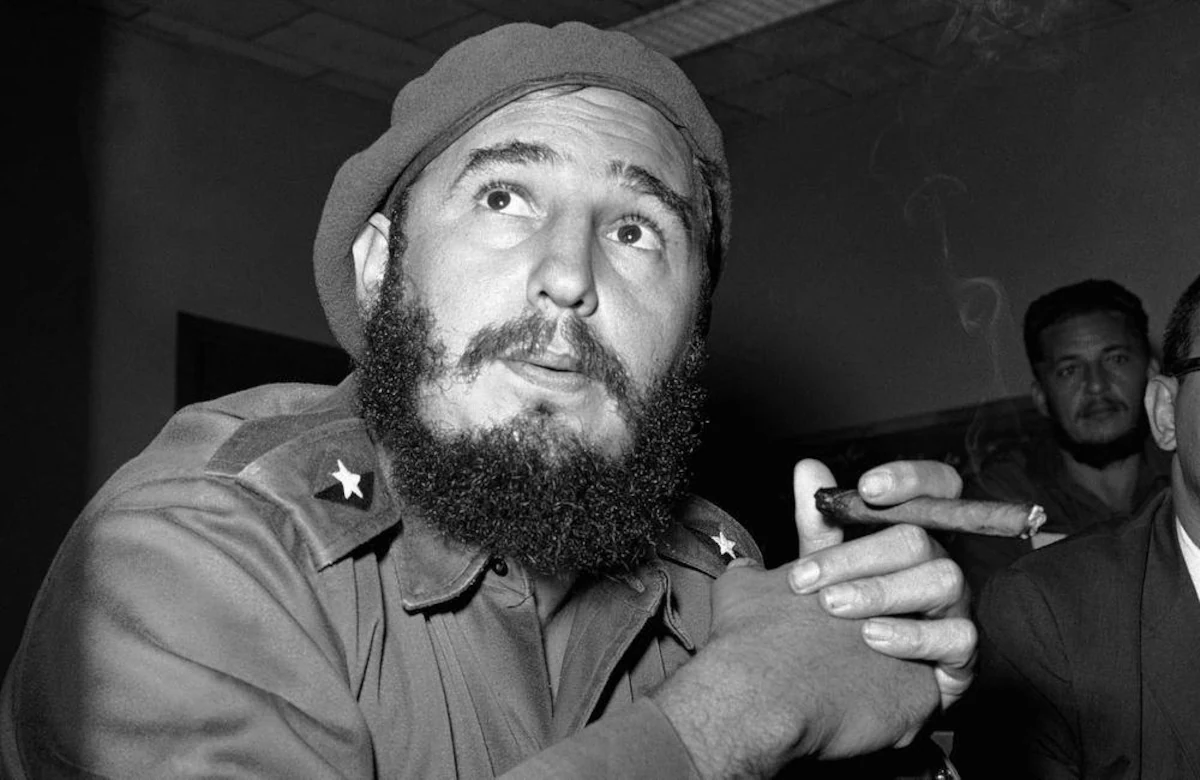
And his hat? That olive-green cap was not fashion. It was defiance. In a world where every leader wanted to look like a Wall Street banker, Fidel kept wearing the uniform of the Sierra Maestra. He told the world: I am still on the march. The cigar? Well, I am told a Cuban cigar is never just smoked; it is contemplated. Fidel contemplated imperialism with it for half a century.
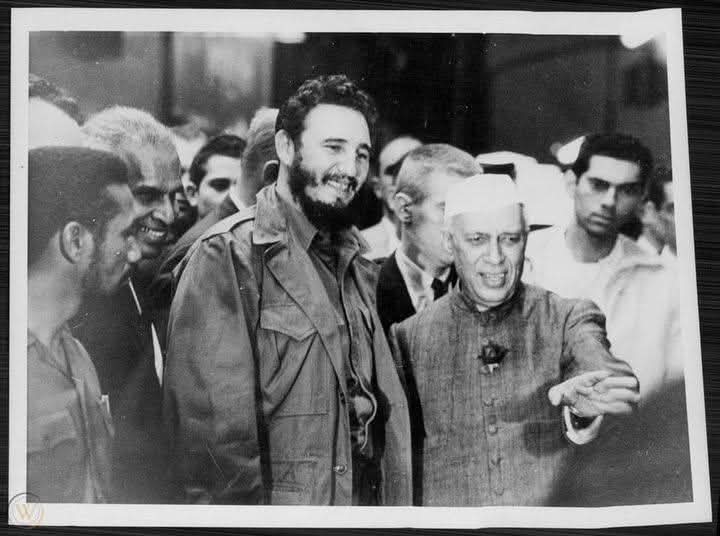
Despite international opprobrium — sanctions, blockade, propaganda — he built a country that sends doctors, not soldiers. Cuba has 30,000 doctors in 67 countries today. During COVID, while rich nations hoarded vaccines, Cuba made five vaccines of its own. Literacy is 100%, and infant mortality is lower than in the US. You may disagree with his politics, but you cannot ignore his destiny-shaping role. As our own Nehru said to Fidel in 1960: “You are a great man, and we in India admire your courage.”
Why does Cuba remain America’s next target? Why is Cuba still America’s obsession in Latin America after 65 years? Why does the blockade persist when even Vietnam is now a US partner? There are three possible reasons.
First, the geography of defiance. As long as there is a socialist island 90 miles off Key West, the American claim to hemispheric hegemony is incomplete. The Monroe Doctrine of 1823 still lives.
Second, ideology. Cuba proved that the small can be sovereign. That is a dangerous contagion for Washington. If Cuba can say no and survive, others can.
Third, and most current — resources and realignment. Cuba has nickel, cobalt, rare earths and now oil prospects in its EEZ. And, more importantly, Cuba is no longer alone. It is in BRICS as a partner country. Its ministers are in Delhi this week for the 18th BRICS Summit. It has Russia, China, Iran and India behind it. For Washington, which wanted to isolate Cuba, seeing the Cuban flag at Bharat Mandapam alongside Putin and Xi is a nightmare. That is why pressure will increase, not decrease.
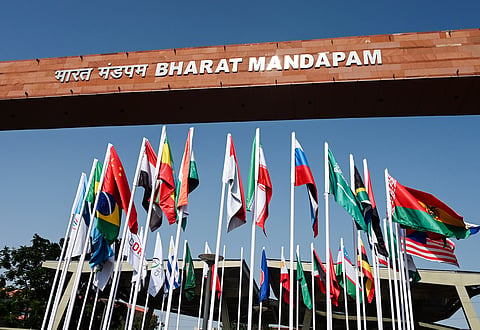
What does BRICS mean for Cuba? It means three unlockings. Economic unlocking: access to the New Development Bank, which is now targeting 30% lending in local currencies. For a blockade-hit economy, the BRICS Clear payment system, outside SWIFT, is oxygen.
Political unlocking: BRICS is non-Western, not anti-Western. It does not ask you to join a military bloc. It gives you a voice. Cuba, which has been silenced in the Bretton Woods system, now speaks on the reform of the UN and international financial institutions.
Strategic unlocking: Cuba’s entry as a BRICS partner alongside Nigeria, Belarus and Malaysia shows that BRICS is no longer just about big economies — it is a voice of resistance and resilience. Our chairship theme is “Building for Resilience, Innovation, Cooperation and Sustainability.” Who epitomises resilience more than Cuba?
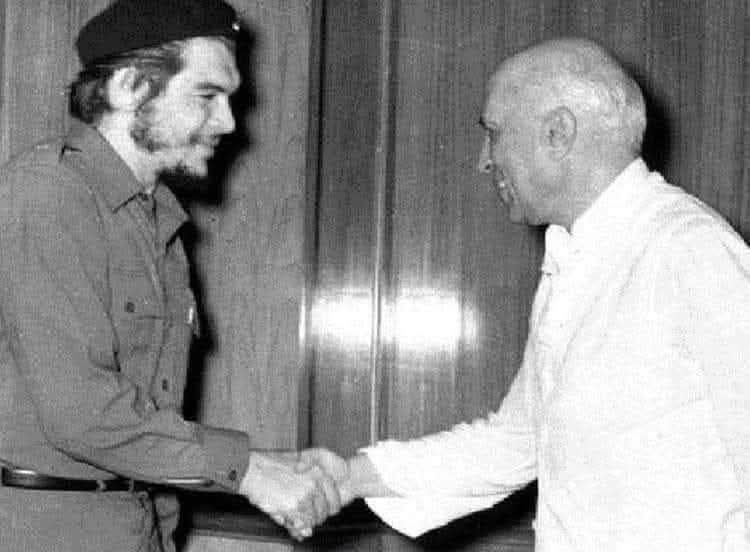
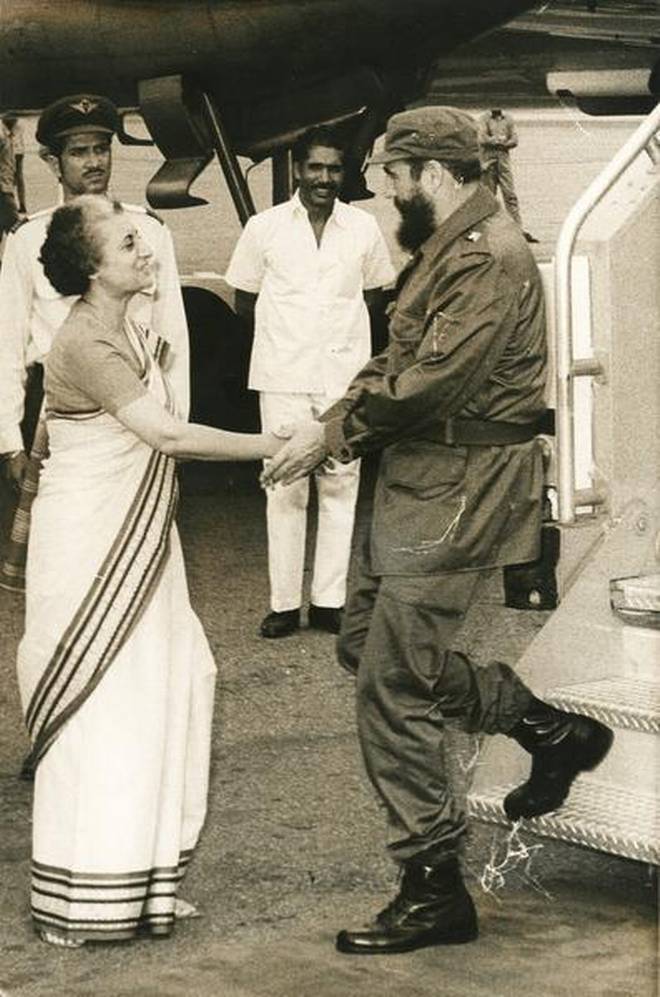
Now to India-Cuba bilateral relations — our relations are not transactional; they are civilisational and political. India was one of the first countries to recognise Cuba after the revolution in 1959. Che Guevara came to Delhi in 1959 and met Nehru. Fidel and Indira Gandhi were pillars of NAM. In 1983, Fidel handed over the NAM chairmanship to Indira in Delhi with that famous hug. When India conducted its nuclear test in 1974, Cuba did not condemn it.
Economically, we have been modest, but honest. Trade is about $30–35 million today — pharmaceuticals from India, vaccines, heavy-industry know-how and rice support. India has given lines of credit for agriculture, renewable energy and a milk powder plant. During COVID, India sent medicines; Cuba offered its expertise in biotech. We are discussing a pharma park, technology transfer for vaccines and traditional medicine.
Cuba needs what India has — affordable medicines, digital public infrastructure, solar energy, millet-based food security, and two-wheeler and tractor technology. India needs what Cuba has — biotech — Heberprot-P for diabetic foot, CIMAvax for lung cancer, and a model of public health delivery for the Global South. In BRICS, we can undertake triangulation: an India-Cuba-Africa health partnership. Cuba’s doctors, India’s generics, Africa’s need — this is Humanity First.
Let me add, on a lighter note — if trade negotiations get stuck, I suggest we do not call lawyers. We call for a box of Cuban cigars and Indian Darjeeling tea. In Havana, they say you never lie with a cigar in your mouth — because you are too busy enjoying it. I propose we test our FTAs on that principle!
My last point is political. The world is telling small countries — choose sides, either Washington or Beijing. But , Cuba and India say — we choose our own side. We choose strategic autonomy. That is why India-Cuba friendship matters in the BRICS era. It is not about trade alone. It is about proving that dignity is not for sale, that history does not end, and that an island can still teach continents how to stand.
Fidel once said, “They can crush flowers, but they cannot stop spring.” Cuba is that spring. Let us, through the India-Cuba partnership in BRICS, not just unlock opportunities, but unlock that spring.






India–Cuba relations carry a powerful legacy of solidarity, sovereignty and South–South cooperation. In the evolving BRICS era, this relationship gains renewed relevance as the Global South seeks a more balanced and multipolar world order. A timely reminder that cooperation built on mutual respect can become a strong alternative to domination and inequality.
Absolutely well said Dr Giri – BRICS meet this time is yet another signal- and a resounding one at that – as to how Cuba is holding on and fighting US machinations against the country’s egalitarian record –