

Another ‘Historic’ Trump Peace Deal in Gaza Unravels on Arrival

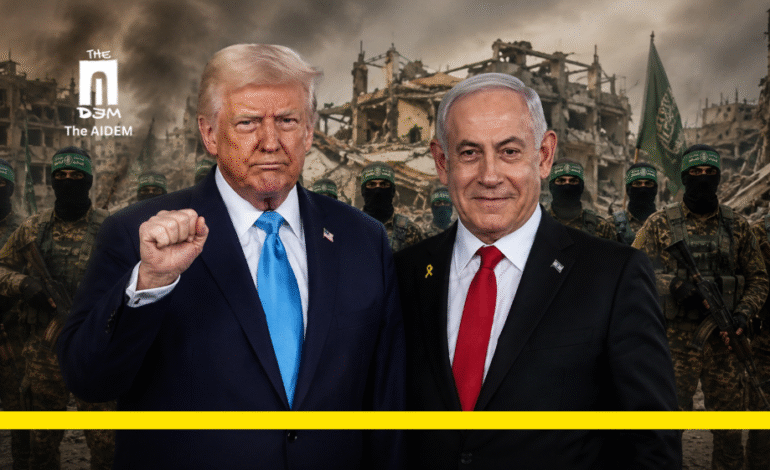
Donald Trump has proclaimed a “historic” agreement for Hamas to disarm completely in Gaza, brokered by his Board of Peace. But with Benjamin Netanyahu dismissing it as inadequate, Hamas tying disarmament to a full Israeli withdrawal, and Washington simultaneously preparing fresh military action against Iran, the announcement has exposed just how unsettled the region remains.
On the night of July 30, 2026, President Donald Trump once again declared what he described as a historic breakthrough in the Middle East. Taking to Truth Social with characteristic bravado, he announced: “Today, the Board of Peace reached a HISTORIC agreement for the COMPLETE DISARMAMENT of Hamas and all other armed groups in Gaza. This is a monumental step toward lasting PEACE and SECURITY.”
Trump presented the announcement as the long-awaited second act of the ceasefire he brokered in October 2025 and as vindication of his ambitious 20-point Gaza peace plan.
Within hours, however, the triumphalism began to unravel.
Hamas negotiators had indeed signed a disarmament framework in El-Alamein, Egypt—the first document in the movement’s history committing, at least on paper, to relinquishing its weapons.
Yet Netanyahu’s office almost immediately undercut the announcement, insisting that the Board of Peace’s 15-point proposal fell short of Israel’s demands for Gaza’s complete demilitarisation, leaving the path forward deeply uncertain. An Israeli official was blunter still, telling reporters that despite “various publications” claiming diplomatic progress, there would be no withdrawal from Israel’s current positions until Hamas had genuinely disarmed.
What the Deal Actually Says
The Board of Peace—a Trump-chaired body inaugurated in February with representatives from 40 countries, including Israel and several Arab states but no Palestinian representatives—describes the agreement as a roadmap for implementing the ceasefire reached last October. Calling it “a historic breakthrough”, the Board argues that, for the first time, Hamas has committed to an actionable plan for surrendering all its weapons, to be followed by an Israeli withdrawal.
Under the proposal, Hamas would gradually hand over its arsenal over an eight-month period to the National Committee for the Administration of Gaza, a Board of Peace-supervised body comprising Palestinian technocrats. Police weapons would be surrendered first, followed by progressively heavier arms, with personal weapons handed over last.
As disarmament proceeds, Israeli forces would withdraw in stages, while an International Stabilisation Force, working alongside a newly constituted Palestinian police force, would assume responsibility for security.
Trump envisaged a Palestinian administration that would “work closely with the Board of Peace to help the Palestinian people”. Even so, regional officials continue to insist that the Palestinian Authority must first undertake substantial reforms before it can assume any governing role in Gaza.
The territorial question, however, remains the agreement’s biggest fault line.
The proposal envisages the Israel Defense Forces returning immediately to the “Yellow Line”, which broadly divided Gaza into eastern and western sectors. Yet Netanyahu had previously ordered the army to occupy almost 70 per cent of the Strip, departing from the original ceasefire framework and leaving Israel in control of roughly 53 per cent of Gaza. Since then, Israeli forces have expanded their footprint to more than 60 per cent of the enclave—a departure from the earlier framework that the Board of Peace appears to have quietly accommodated in order to secure Hamas’s agreement to the disarmament proposal.

Nickolay Mladenov, the Board’s High Representative for Gaza, summed up the fragility of the moment:
“What the agreement says matters. What happens next matters even more. Implementation and verification have to be real. Withdrawal must move in lockstep with decommissioning.”
Netanyahu’s Political Minefield
For Israel’s prime minister, the agreement is less a diplomatic triumph than a political minefield.
Sources quoted by The Times of Israel say the agreement was finalised by negotiators representing Hamas, the Board of Peace, and mediators Egypt, Qatar and Turkey—effectively leaving Israel to react to what amounted to a diplomatic fait accompli. Netanyahu’s government reportedly conveyed its objections to Board of Peace envoy Tony Blair, reiterating that there could be “no IDF withdrawal from the Yellow Line before Hamas is disarmed and the Strip is fully demilitarised.”
The domestic backlash was immediate.
Former military chief and Netanyahu rival Gadi Eisenkot accused the prime minister of keeping Israelis in the dark.

“Once again, Israeli citizens are learning about a fateful agreement from foreign publications, and the outrageous gap between Netanyahu’s promises and reality is further exposed.”
He went on to accuse Netanyahu of capitulating without securing the war’s stated objectives.
Political analysts note that Netanyahu’s electoral position leaves him little room for visible compromise ahead of elections scheduled for October 27. His far-right coalition partners have repeatedly threatened to withdraw support if the war ends without Hamas being completely dismantled.
Signing Without Surrender
For Hamas, the political calculation is no less complicated.
Senior Hamas official Ghazi Hamad confirmed to CNN that the movement had agreed to surrender its weapons, contingent upon the deployment of an International Stabilisation Force. Yet agreeing on paper has proved considerably easier than relinquishing authority on the ground.
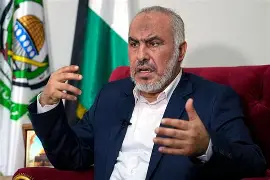
Since the ceasefire took effect, Hamas has steadily redeployed its own security forces across parts of Gaza. In recent weeks, those forces reportedly killed more than 30 people whom they described as members of “a gang”. The incidents prompted the US military’s CENTCOM to issue an unusually direct statement calling on Hamas to “immediately suspend violence and shooting at innocent Palestinian civilians” and proceed with disarmament “without delay.”
Palestinians themselves remain caught between hope and deep scepticism.
A displaced schoolteacher from northern Gaza, Mohammed Hamdouna, expressed cautious optimism.
“Finally, the world’s longest nightmare will end.”
Yet he immediately tempered that hope.
“I am afraid to dream or believe it until the crossings are opened and aid and temporary shelters begin to enter Gaza.”
Others describe an atmosphere of continuing intimidation under Hamas’s renewed street presence. One activist alleged that the movement has been punishing families accused of collaboration and carrying out executions without trial “in front of people’s eyes”.
Whether this roadmap survives will depend precisely on this tension: a population desperate for peace but deeply wary of exchanging Israeli bombardment for continued Hamas coercion.
Regional Backing, Reluctant Confidence
Diplomatically, the agreement has been carefully choreographed to project broad regional support.
Board of Peace officials say they consulted “all the countries of the region—Jordan, Saudi Arabia, Qatar, the Emirates and others”, describing the proposed implementation as a genuinely regional undertaking rather than a narrowly American initiative.
European capitals have responded with cautious optimism rather than celebration.
EU foreign policy chief Kaja Kallas described the proposed agreement as “a constructive step” if implemented in full. Britain’s Foreign Secretary, Ed Miliband, likewise welcomed the announcement, while stressing that genuine progress would depend on implementing the entire 20-point framework, including a phased Israeli withdrawal, unrestricted humanitarian access and credible post-war governance arrangements.

Yet the wider regional security landscape undercuts any suggestion that the Middle East is moving decisively towards stability.
On the very day Trump hailed the Gaza agreement as “historic”, Lebanese President Joseph Aoun condemned explosions at Beaufort Castle in southern Lebanon as a “highly dangerous escalation” capable of derailing talks in Rome on the Israel-Lebanon-US security framework. The incident served as a reminder that Gaza remains only one theatre in a wider conflict system stretching from Beirut to Tehran.
That contradiction is becoming increasingly difficult to ignore.
Even as Washington celebrates diplomatic progress in Gaza, it continues to prepare for possible military escalation elsewhere in the region. Reports of fresh contingency planning against Iran reinforce the impression that American policy remains caught between peacemaking and power projection. The result is a strategic paradox: while one arm of US policy attempts to institutionalise regional stability, another continues to generate the very insecurities that repeatedly threaten to unravel it.
For the Arab states that have cautiously endorsed the Board of Peace initiative—Egypt, Qatar, Turkey, Jordan, Saudi Arabia and the UAE—the real challenge begins only now. Their endorsement will ultimately be judged not by diplomatic communiqués but by whether they can help construct a durable governance and reconstruction framework capable of filling the vacuum should Hamas genuinely relinquish its weapons.
That reconstruction effort, expected to cost tens of billions of dollars, remains effectively frozen until the disarmament dispute is resolved. Investors, aid agencies and regional governments alike remain reluctant to commit resources while the political and security architecture remains uncertain.
The agreement therefore represents less an end than the beginning of a far more demanding political process.
Every previous attempt to stabilise Gaza has ultimately faltered over the same unresolved questions: who governs the territory, who controls the guns, who guarantees Israel’s security, and who safeguards Palestinian sovereignty and dignity. This agreement does not eliminate those questions. It merely seeks to sequence them differently.
Whether that sequencing succeeds will depend not on declarations made in Washington or celebratory posts on Truth Social, but on painstaking implementation on the ground. Disarmament will have to proceed in tandem with verified Israeli withdrawals. Reconstruction will have to become visible to ordinary Palestinians. Regional actors will have to remain engaged long after the diplomatic headlines have faded. Above all, trust—perhaps the scarcest commodity in the conflict—will have to be built incrementally between parties that have spent decades preparing for the next war rather than the next peace.
Absent genuine implementation, the likeliest outcome is not lasting peace but yet another temporary ceasefire—another “historic” agreement destined to join the long catalogue of unfinished Middle East peace initiatives.
For Gaza’s more than two million residents, the measure of success will not be the rhetoric surrounding the agreement, nor the superlatives attached to it by its architects. It will be whether the bombs stop falling, humanitarian aid begins moving freely, families can return home, and political promises finally outlive the headlines.










This article is a timely reminder that announcing a peace deal is only the beginning. Lasting peace requires trust, accountability, and sustained political commitment from all sides. A balanced and insightful analysis of why diplomacy must be measured by implementation—not headlines