

Best ‘Popular Justice’ and the Flawed Moral Barometer of Society

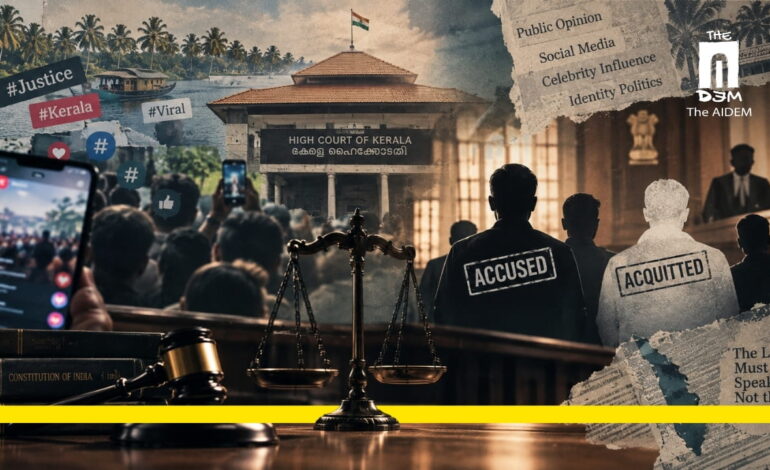
When high-profile tragedies become cultural spectacles, public sentiment is easily hijacked by viral aesthetics, elite privilege and identity politics. Examining cases from ancient Athens to modern Kerala, this essay argues that popular justice must be carefully cultivated as society’s moral barometer.
In the dead of night near Cochin International Airport, a speeding Mini Cooper—allegedly hurtling at over 120 km/h—slammed into a scooter, snuffing out the lives of three young part-time salespersons who had merely stepped out for tea. Rather than prompting an immediate reckoning with this horrific loss of life, the aftermath spiralled into a familiar modern spectacle. The 19-year-old driver, Suhail Sajeev—whose luxury car was reportedly a birthday gift and whose digital footprint boasted past speedometer clips touching 220 km/h—was confronted by local residents. His reported response, chilling in its casual arrogance, was that his father would handle the consequences.

Suhail Sajeev, in many ways, represents the precise inverse of the Cameron Herrin episode. When 18-year-old Cameron Herrin killed a mother and toddler while street-racing in Tampa, Florida, USA, his trial sparked a global digital phenomenon. When Herrin was formally sentenced to 24 years in prison in April 2021, a grim tragedy should have found a quiet, solemn closure within the bounds of penal law. Instead, the courtroom doors opened directly into the hyper-reality of the internet. A brief video clip of Herrin standing in court went viral on TikTok, where millions of users—mesmerised by his youthful features, aesthetic appeal and apparent vulnerability—poured out an ocean of misplaced sympathy. A Change.org petition demanding a lighter sentence amassed tens of thousands of signatures, with admirers swooning over the supposed “wasted potential” of a handsome lawbreaker and reducing the grieving victims to footnotes in a viral fan club.
Yet Suhail is the inverted mirror image of Herrin: instead of drawing an ocean of digital sympathy through aesthetic charm, his arrogance, generational wealth and elite impunity ignited immediate, visceral outrage. In both cases, however, the underlying pathology is identical. Whether public sentiment is dangerously distorted into misplaced sympathy by a viral mugshot or violently polarised by the arrogant flaunting of elite privilege, the true human loss is pushed to the periphery.
This grotesque spectacle is not merely a modern digital or class anomaly. More than two millennia ago, the Athenian courts witnessed an identical perversion of justice during the trial of Phryne, a legendary courtesan accused of capital impiety. When legal arguments and forensic rhetoric failed to sway the Areopagus judges, her defence attorney, Hypereides, took a radical, theatrical gamble: he tore open her garments to bare her breasts before the assembly. His appeal bypassed the law entirely, arguing that such breathtaking physical perfection was a manifestation of divine grace and that a living masterpiece could not harbour an impious soul. Stricken by aesthetic awe and superstitious fear, the judges acquitted her on the spot. Whether it is an ancient Greek assembly yielding to a bared chest, an online fandom romanticising a TikTok criminal, or the shield of elite generational privilege invoked on a highway outside Kochi, human psychology has long been vulnerable to the same trap: allowing superficial charm, wealth or status to short-circuit accountability.
Privilege, Power and Identity
In our current era, this ancient pathology has simply expanded in scale, migrating from the marble courts of Athens to decentralised digital platforms and local judicial systems. Consider how rapidly high-profile tragedies in India—such as the Kochi Mini Cooper disaster or the Sriram Venkitaraman case (the 2019 vehicular manslaughter incident in which a speeding IAS officer’s car struck and killed journalist K.M. Basheer, sparking intense public controversy over delayed medical investigations, evidence tampering and the insulation of the elite bureaucracy)—mutate into cultural flashpoints.

In these instances, public grief and institutional inquiry are immediately hijacked by extraneous distortions: elite generational privilege, bureaucratic impunity and identity-driven polarisation. When a wealthy youth behind the wheel of a luxury car boasts of paternal protection, or when an accident involving a high-ranking bureaucrat fractures public sentiment along lines of religion, status and background, we witness the same psychological sickness. Polarised factions weaponise community identity to reframe a structural failure of road safety and parental accountability as a proxy cultural battle, subjecting the tragedy to asymmetric communal filtering rather than focusing on forensic evidence such as blood-alcohol reports and speedometer reels. Ultimately, this fixation on identity allows digital commentators to project their own political and communal biases, distorting public opinion into an identity-driven culture war. The foundational premise of justice—that it is blind—is dragged into the mud of privilege, identity and algorithmic virality, as the public stops evaluating the carnage on the highway and starts evaluating the social standing, community ties or lifestyle of the person who caused it.
Nanavati and O.J. Simpson
Long before luxury sports cars and viral video clips, Indian jurisprudence wrestled with this very distortion in the historic trial of K.M. Nanavati v. State of Maharashtra (1961). Naval Commander Nanavati, having discovered his wife Sylvia’s affair with Sindhi businessman Prem Ahuja, drove to his naval base, procured a service revolver under false pretences, went to Ahuja’s apartment and shot him dead. By every forensic parameter of the Indian Penal Code, it was a textbook case of premeditated murder.

Yet the jury returned an astonishing 8:1 verdict of acquittal because the media and public sentiment portrayed Nanavati through an idealised lens: an upright, handsome, uniformed Parsi military officer defending his family’s honour, contrasted with the victim, who was cast in popular stereotypes as a cosmopolitan playboy. Popular justice—driven by class sympathy, community mobilisation and romanticised notions of honour—completely overrode forensic accountability. The verdict was so notoriously perverse that it prompted the Supreme Court to convict him and, crucially, led to the abolition of the jury trial system in India, leaving a permanent stain on the country’s legal history despite his eventual pardon in 1964. Decades later, the 2016 Bollywood film Rustom romanticised this tragedy, serving as a modern cultural artefact that demonstrated how cinema and mass media sanitise violence by framing a calculated execution as the honourable outburst of a noble patriot.

Similarly, while cases such as Cameron Herrin’s or the Kochi Mini Cooper crash illustrate how aesthetics, viral media and elite privilege distort public perception, the O.J. Simpson trial in the USA (1995) demonstrated how systemic historical grievances and racial identity can be weaponised to turn a murder trial into a cultural proxy war. In that courtroom, the strict logic of physical evidence was buried beneath an “emotion salad” of celebrity worship, institutional distrust of the police and deep societal divisions. Just as Phryne’s bared breast and Nanavati’s uniform bypassed formal rules through emotional appeal, the Simpson trial showed that when a case enters the hyper-reality of media spectacle, the public and the jury stop asking what happened and instead ask who represents their side. It remains a prime example of how, when popular sentiment and identity politics overwhelm legal logic, the rule of law collapses into a theatre of tribal allegiance.
The Myth of Mechanical Justice
To understand why this happens across centuries, we must look beyond the comforting fiction of legal formalism. Classical jurisprudence treats the law as a mechanical, neutral apparatus: feed in the facts, apply the statute, and out comes pure justice. But American legal realists such as Karl Llewellyn and Jerome Frank shattered that illusion decades ago, reminding us that the law is administered by human beings who are profoundly vulnerable to social conditioning, psychological moods and external pressures. When an accused individual goes viral or a high-profile case triggers deep cultural grievances, an “inchoate public mood” descends upon the courtroom.
Legal realism warns us that law in action is rarely as pristine as law on the books. But when descriptive realism degenerates into prescriptive anarchy—when the public demands that the law yield to popular emotion, internet aesthetics or demographic allegiance—the legal system ceases to function as a mediator of truth and becomes a reflection of the loudest and most polarised digital mob.
This interplay between formal statutes and public sentiment finds its deepest theoretical grounding in Friedrich Karl von Savigny’s Volksgeist theory and its sociological evolution into Eugen Ehrlich’s concept of the “living law”. Savigny posited that law grows organically out of a society’s shared culture and collective consciousness, forming the foundational essence of popular justice. However, in our hyper-accelerated digital age, this national spirit is easily hijacked by viral algorithms, aesthetic shock and identity-driven tribalism, degenerating into a reactionary mob ethic.

While the formal legal system (forensic justice) provides the superstructure, the living law (popular justice, encompassing community stigma, sympathy and moral expectations) forms the underlying foundation. When forensic justice becomes completely detached from the living law, it loses its social legitimacy. Yet when the living law itself is hijacked by superficial “uff” moments—the knee-jerk emotional reactions triggered by elite wealth, a cinematic uniform or viral charm—it becomes corrupted, subverting the true spirit of justice and transforming it into a mob ethic that champions impunity over equity.
Cultivating the True Spirit of Justice
Ultimately, popular justice serves as the moral barometer of a society. When it functions with clarity, empathy for victims and a firm commitment to truth, it keeps the legal system anchored in human reality. However, when it is hijacked by superficial “uff” moments, aesthetic fascination or identity-based tribalism, it threatens to drag the rule of law into mob rule and moral confusion.
This vulnerability means that we cannot afford to leave popular sentiment at the mercy of viral algorithms, cinematic hagiography and emotional manipulation. Just as formal legal institutions require vigilant oversight, popular justice, too, must be carefully cultivated in our society. We must foster a civic and digital culture that refuses to let looks, wealth or power eclipse human suffering, ensuring that our collective moral voice remains a guardian of true justice rather than a casualty of spectacle.

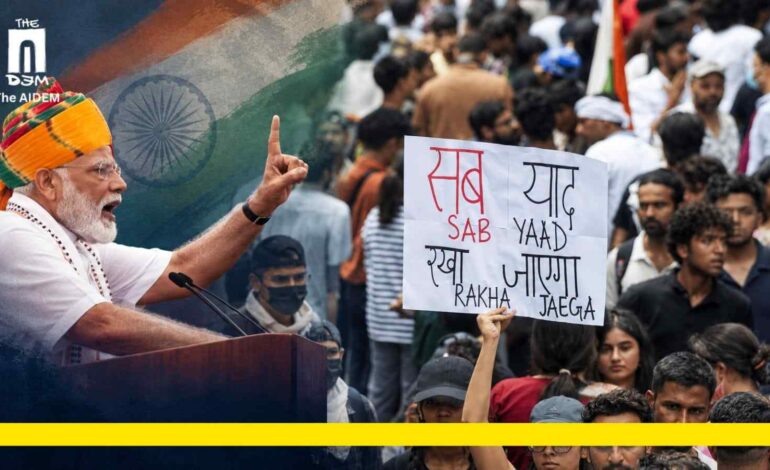








When popularity becomes the measure of justice, morality is reduced to public applause rather than principles. A society that judges right and wrong by popular sentiment risks sacrificing truth, fairness and human dignity at the altar of public opinion. Justice must be guided by evidence, constitutional values and equal rights—not by the mood of the majority. The real moral test of a society is whether it stands for justice even when the truth is unpopular.
Brilliant and detached narration.