

Between Mountain Dreams and Migration: The State of Youth in the Eastern Himalayan Region

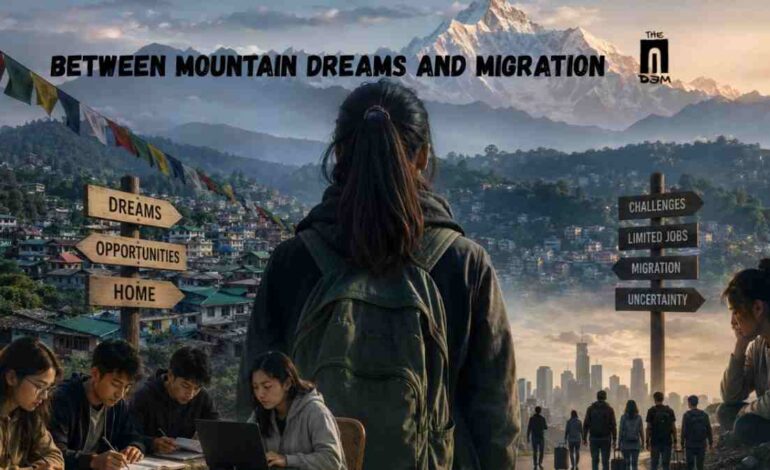
Walk into any college or cafe in the Eastern Himalaya, and you are likely to stumble upon a curious mix of ambition and apprehension. Young people here are as globalised and well-informed as the college-educated youth anywhere else in modern India. At the same time, the spectre of transition haunts them, with aspirations reaching far beyond the low-hanging fruit of livelihoods available in the region.
The Eastern Himalayan youth narrative has long been one of broad-brush assumptions, both on the ground and in policy think tanks, with little attention paid to local realities. What do youth themselves have to say? Institutional reports such as the State of the Youth series, collated by regional networks and foundations such as the Eastern Himalayan Foundation and Reading Himalaya, provide invaluable insight into the lives and challenges of the region’s youth based on extensive on-ground surveys, interviews and reports. This article collates and synthesises the common threads and concerns which emerged from these reports to highlight the situation of the youth in the Eastern Himalayas.
Educational Aspirations, Institutional Myopia, and the Road Ahead
To understand the Eastern Himalayan youth, one has to begin in the classrooms of the region’s many colleges. According to multiple on-ground surveys conducted across a dozen colleges in the region, including interviews with students, faculty, and institution heads, the modern Eastern Himalayan student is as aspirational as any other. Students in the region are enrolling in a range of undergraduate courses beyond the traditional arts/science streams, including professional courses, computer applications, and hospitality management.

The mismatch begins when these students attempt to transition from academics to work. One key finding from studies by youth-focused institutions such as the Eastern Himalayan Foundation is that most students have unrealistic perceptions about the skills and competencies required to secure gainful employment. Migration, it seems, is the preferred option for most graduates, with students across all surveyed colleges expressing an interest in relocating to major metropolitan cities or even overseas if required. At the same time, most colleges are viewed as temporary stepping stones, with very few students interested in pursuing careers in the local region. Most crucially, young students do not receive adequate support from their colleges for placement or research. An illustrative quote from a student at a Darjeeling-based college sums up the situation best –
“About careers in Darjeeling, I think for boys it is the army, and for girls, nursing, we are only aware of that profession, okay. We are not aware of other any other opportunities. I’m also not aware because we don’t know about the admission procedures.”
Livelihoods, Tourism, and the Paradox of Stagnation
If the classroom is where dreams begin, the local economy is where they often end, sometimes in disappointment. For most of the Eastern Himalayan region, traditional livelihoods such as tourism, tea plantations, and government jobs continue to dominate. For the youth, the promise of job security has increasingly pointed towards government jobs, or sarkari naukri. However, with the youth bulge in the region showing no signs of diminishing, the competition for these limited jobs has made the entire system unsustainable.
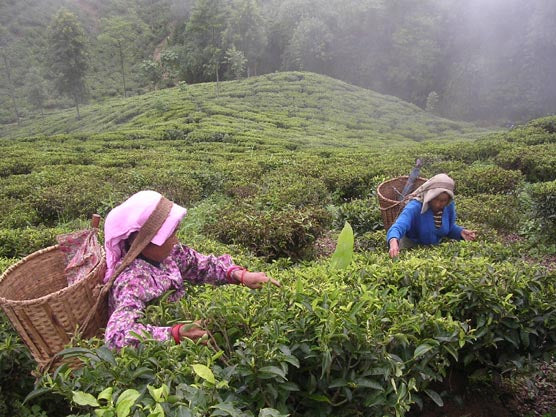
At the same time, the informal and seasonal nature of jobs in tourism and plantations makes it a poor substitute for the stability offered by government jobs. Youth in the region, according to multiple surveys, are beginning to look at opportunities outside the region, with many opting to migrate to metro cities in pursuit of better-paying jobs.
This migration, however, comes with its own set of costs. For a region that has long struggled with brain drain, the youth outflow represents a permanent exodus of opportunity. At the same time, the people who do choose to stay back often face social stigma, with the youth being viewed as failures by their communities.
Gender Contours and Invisible Divides
While the general situation of the Eastern Himalayan youth has been outlined above, it is important to note that age cohorts are not monoliths. There are invisible fault lines which run through this seemingly unified mass of young people, dividing them based on gender, class, and location. While the region as a whole has seen a rise in progressive attitudes, particularly in places such as Sikkim, traditional patriarchal attitudes continue to hold sway, particularly in regard to females. According to multiple studies, young women in the region continue to face tremendous social pressure to conform to traditional gender roles, despite a rise in female literacy and workforce participation.
Youth in urban areas also face stark inequalities when compared to their rural counterparts. While urban centres such as Darjeeling Town have better access to digital infrastructure and coaching centres, this is not the case for many of the remote rural pockets which make up the Eastern Himalayan region. Any serious policy-level discourse on the region’s youth must therefore account for these disparities.
Institutions, Responsiveness, and the Need for a Social Compact
When asked about institutional responsiveness, most young people surveyed expressed deep scepticism, with many feeling that political rhetoric around youth empowerment had little bearing on their lived realities. Youth engagement with the political process is often reduced to symbolic gestures such as cultural showcases or election-time consultations. Years of disconnected policymaking, both at the institutional and governmental levels, have bred cynicism among the region’s youth. The situation is worsened by the fact that many youth-focused policies are formulated without adequate consultation with local youth themselves. This is why initiatives such as the youth-focused reports collated by the Eastern Himalayan Foundation and Reading Himalaya are so vital – in highlighting the specific concerns of the region’s youth, they help ensure that these concerns are meaningfully addressed.
Moving Towards Sustainable Futures
Much of the discourse around the Eastern Himalayan youth has been dominated by the spectre of the brain drain. It is time to move beyond apprehension and toward sustainable solutions. Based on the findings of the aforementioned reports, we present four broad areas of focus which can help transform the Eastern Himalayan youth landscape.
Firstly, it is time to rethink curricula at the regional college level. The current courses offered at most hill colleges are outdated and ill-suited to the needs of the local economy. It is therefore important to reorient the academic landscape towards mountain-specific studies. Courses related to sustainable ecotourism, digital freelancing, and high-value horticulture can be integrated into mainstream curricula to ensure that students are better prepared for the local job market.
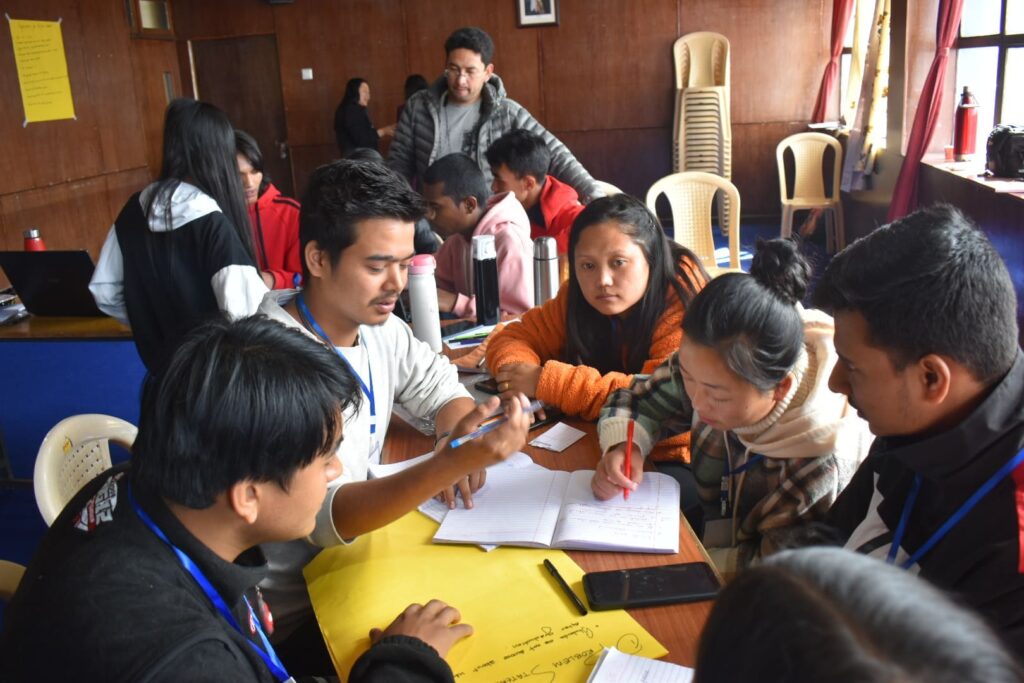
Secondly, it is time to invest in institutional infrastructure. Most colleges are completely unaware of the local job market or the skill sets required for gainful employment in the region. Therefore, college-level placement and mentorship cells must be created to assist students in securing local jobs or starting their own enterprises.
Thirdly, it is time to rethink investment in the local economy. Youth in the region are no longer content to be employees; many wish to become entrepreneurs. By creating local capital markets and incentivising digitisation, local governments can help youth create jobs for themselves while remaining rooted in their homeland.
Finally, it is time to invest in youth mental health. The invisible burden borne by the youth of the Eastern Himalayas has resulted in an unprecedented crisis, with many young people turning to self-medication and other unhealthy coping mechanisms to deal with their stress. De-stigmatising mental health and creating safe physical and digital spaces for youth engagement can go a long way in countering this crisis.
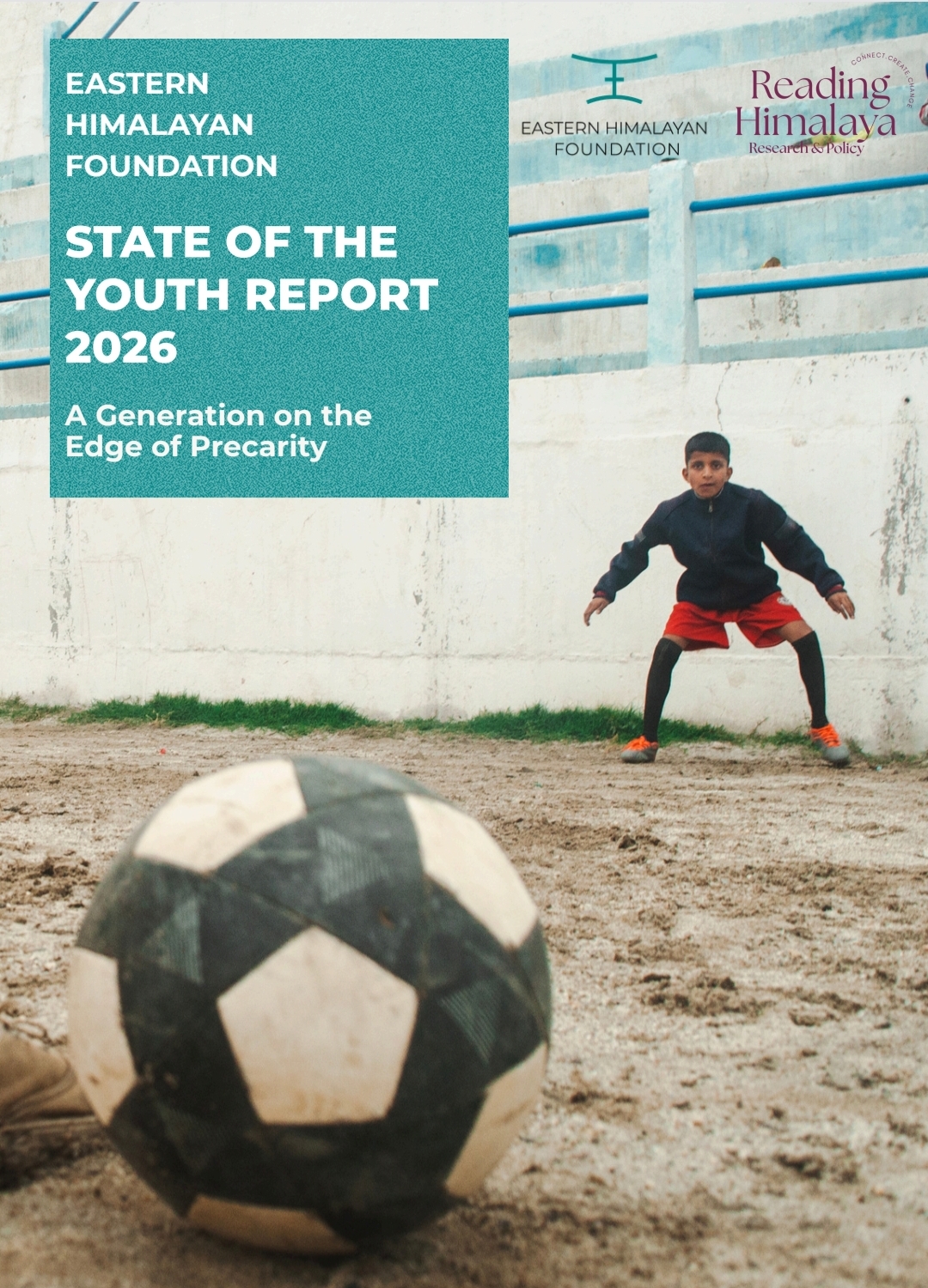
The State of Youth Report, 2026, is a crucial insight into the aspirations, anxieties, and the lives of the Eastern Himalayan youth. It provides a timely evidence-based perspective on a region which, at present, seems to be at a crossroads. The report highlights the opportunities available to the youth as well as the challenges they encounter. It does so by collating evidence on themes such as education, employment, emigration, skills, social attitudes, and well-being. Further, the State of the Youth Report, 2026, is significant in that it reminds us that the future of this region lies in the hands of its young people. Left without opportunity, the youth of the Himalayas will seek opportunity elsewhere, leaving the region’s economy, society, and sense of self-identity to wither away. The Report also acts as a guide, a stimulus, and a prompt for policymakers and planners that can aid in laying out the contours of the region’s development strategy. It offers a reference point that can enable a region to understand, engage with, and harness the potential of its youth.
The Eastern Himalayan youth narrative is neither a sob story nor a feel-good saga about mountain resilience. It is a coming-of-age account of a generation caught in between, caught between aspirations and apprehension. Reports such as the aforementioned State of the Youth series can provide invaluable insights into this unique region and its youth. By addressing the concerns of the Eastern Himalayan youth, local policymakers and institutions can ensure that this generation does not have to choose between their dreams and their homeland.
Read the State of the Youth Report, 2026 here.









This is far more than a story of migration—it is a powerful indictment of a development model that leaves the mountains behind. When people are forced to abandon their homes in search of dignity, education and opportunity, migration is not merely a personal choice; it reflects a deeper failure of governance and policy. The mountains deserve more than promises—they deserve investment, justice, livelihoods and a future where leaving home is not the price of survival. A powerful and deeply necessary piece.