Democratising Technology: Platform Cooperatives as a Path Beyond Corporate Control
K Sahadevan
September 20, 2026
5 min read
Reviewing Trebor Scholz’s “Own This”
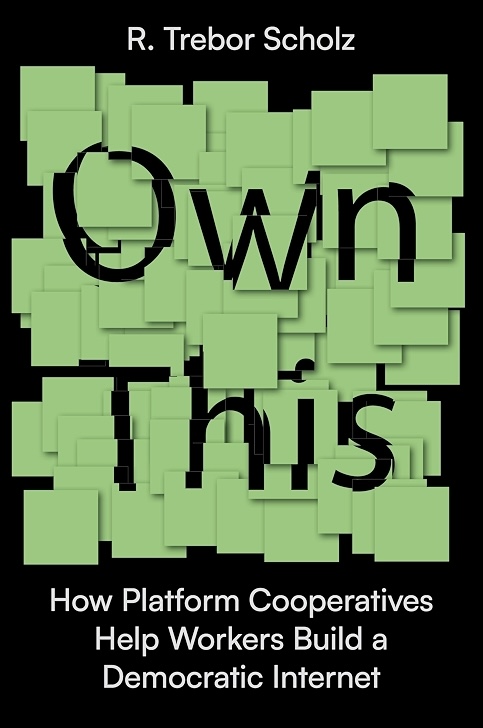
If one were asked to select books that share ideas conducive to the systemic transition demanded by our times, Trebor Scholz’s “Own This!: How Platform Cooperatives Help Workers Build a Democratic Internet” would certainly rank among the first on the list. While I have read numerous books this year that accurately depict the problems and crises facing the present day, Scholz’s work stands out. It distinguishes itself by explaining how if we approach the very factors driving these crises with greater care and nuance we can unlock significant potential for new forms of decentralized politics and power dynamics.
It is a fact that many books have recently been published analyzing the crises confronting the modern world including the rise of authoritarian regimes, the hegemony of big tech companies, economic inequality, the denial of labor rights, and the climate crisis. However, Scholz’s book shows us how to steer technological development along democratic and sustainable paths by upholding humanity’s fundamental nature of cooperation our innate instinct as homo reciprocans.
We are well aware that the digital economy is gaining strength on a global scale. Large tech corporations, which leverage social cooperation as a means to concentrate capital, dominate the digital sector. It is a fact that modern tech corporations have transformed not only social cooperation but also labor and services into avenues for expanding their capital. Through his book, Trebor Scholz explores how to impart a human face to the digital economy, a system that is embedding itself ever more deeply into our socio-economic structures, making any reversal impossible. Of course, we know that Scholz is not alone in proposing such an idea.
Trebor Scholz
Focusing on platform operations in the digital age, Scholz expands his research to examine the theoretical and practical possibilities of“platform cooperatives.” He seeks to integrate the long history of cooperative movements with new technologies.
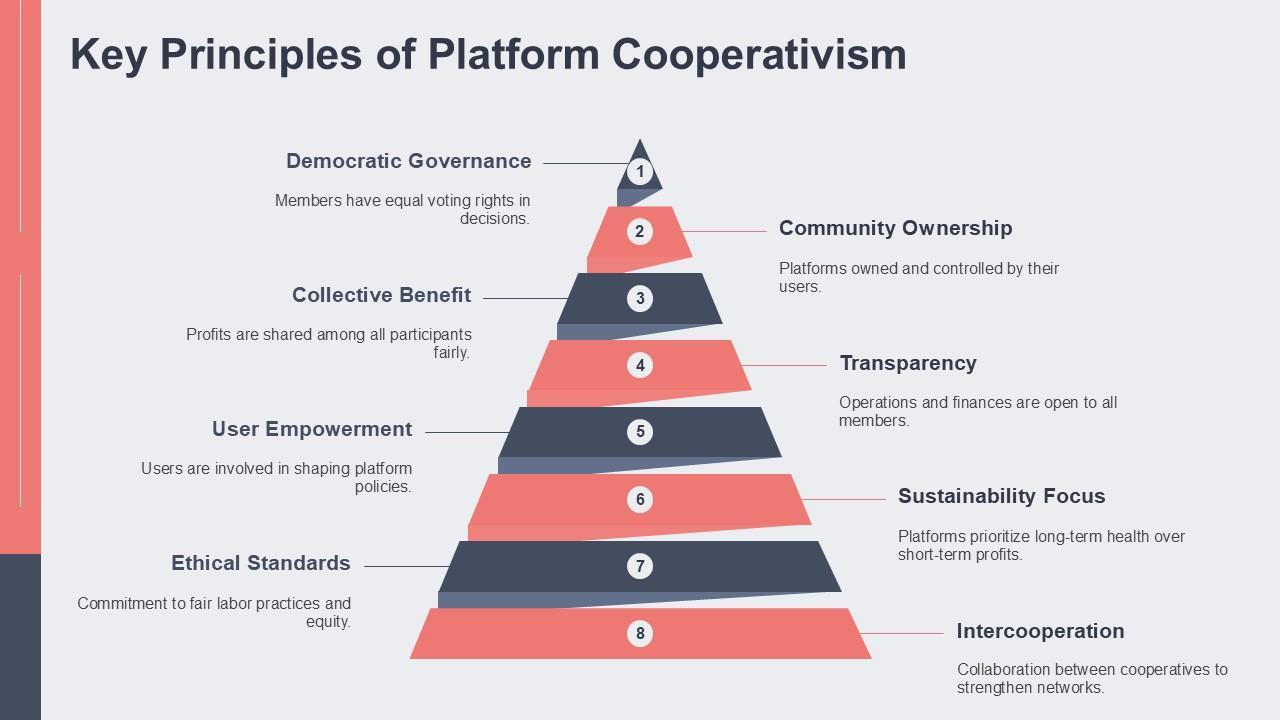
Although workers are characterized as “partners” in the newly emerged “platform economy,” it is evident that this sector has grown by stripping away virtually all the rights and entitlements workers enjoyed during the industrial era. In response to this, Scholz and others propose “platform cooperatives”within the digital economy, a cooperative model that enables workers to hold full or partial ownership. These books provide a detailed account of numerous platform cooperative movements currently being piloted across the globe.
Such cooperative movements promise a future in which people exercise greater control through the ownership of apps, platforms, and protocols within the digital economy. The author attempts to offer practical insights into the potential of these cooperatives by highlighting examples such as ride-hailing platforms owned by taxi drivers. The book points to various possibilities—ranging from high-speed internet infrastructure established within the cooperative sector to social care initiatives—aimed at bridging the deep-seated digital divide in society.
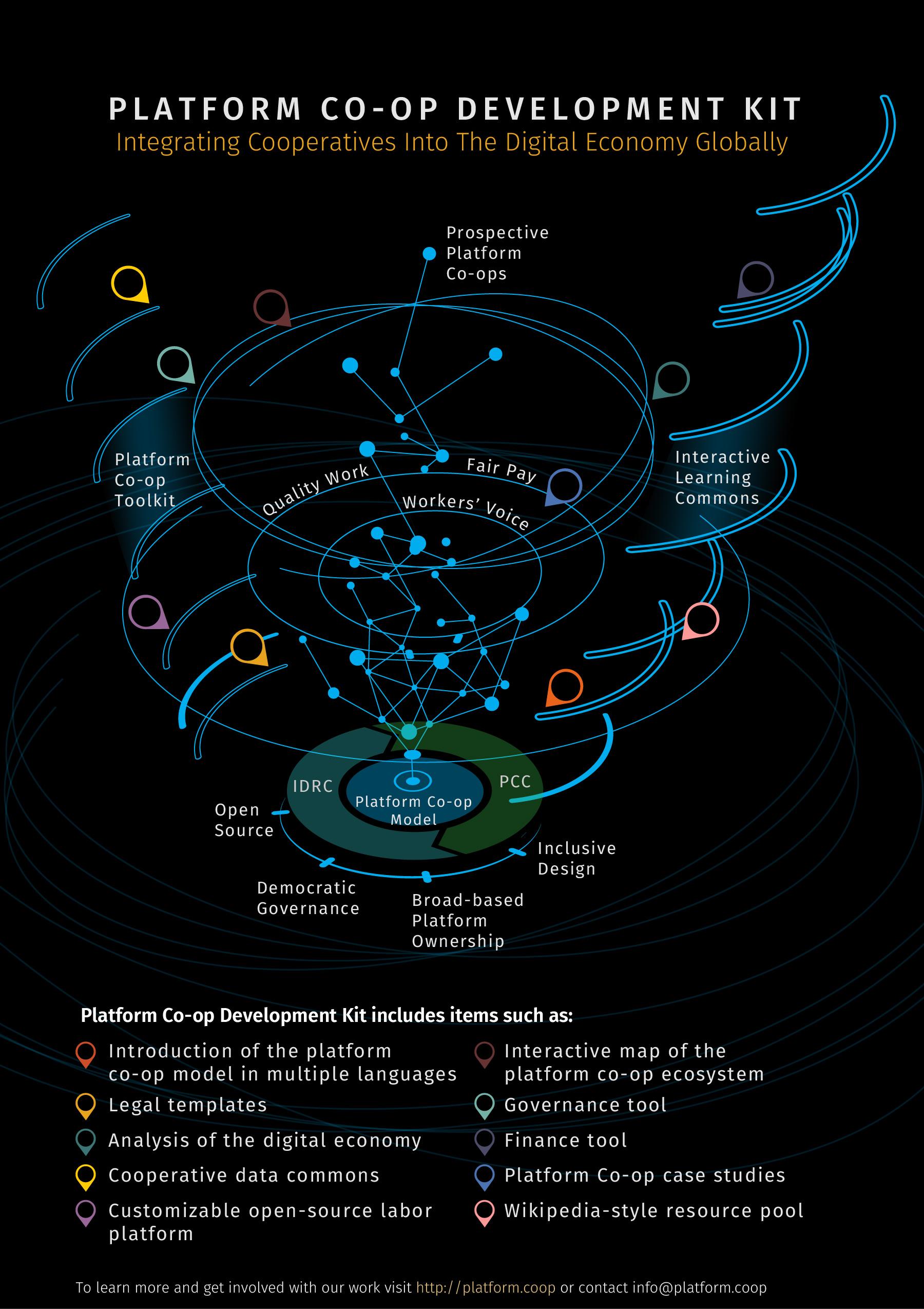
The author argues that it is entirely feasible to develop a collaborative model for a global ecosystem of “platform co-ops”, comprising labor platforms, social media, and web infrastructure.
Scholz explains:
“It represents a more just and democratic digital world guided by cooperative principles where labor platforms act as generators, while social media and other internet platforms function as circuits.”
He advocates leveraging innovative technologies to achieve a democratic and decentralized digital economy. Blockchains, crypto, Web3,and decentralized autonomous organizationsare being proposed as ways to reorganize traditional cooperative societies and the operational models of tech startups.
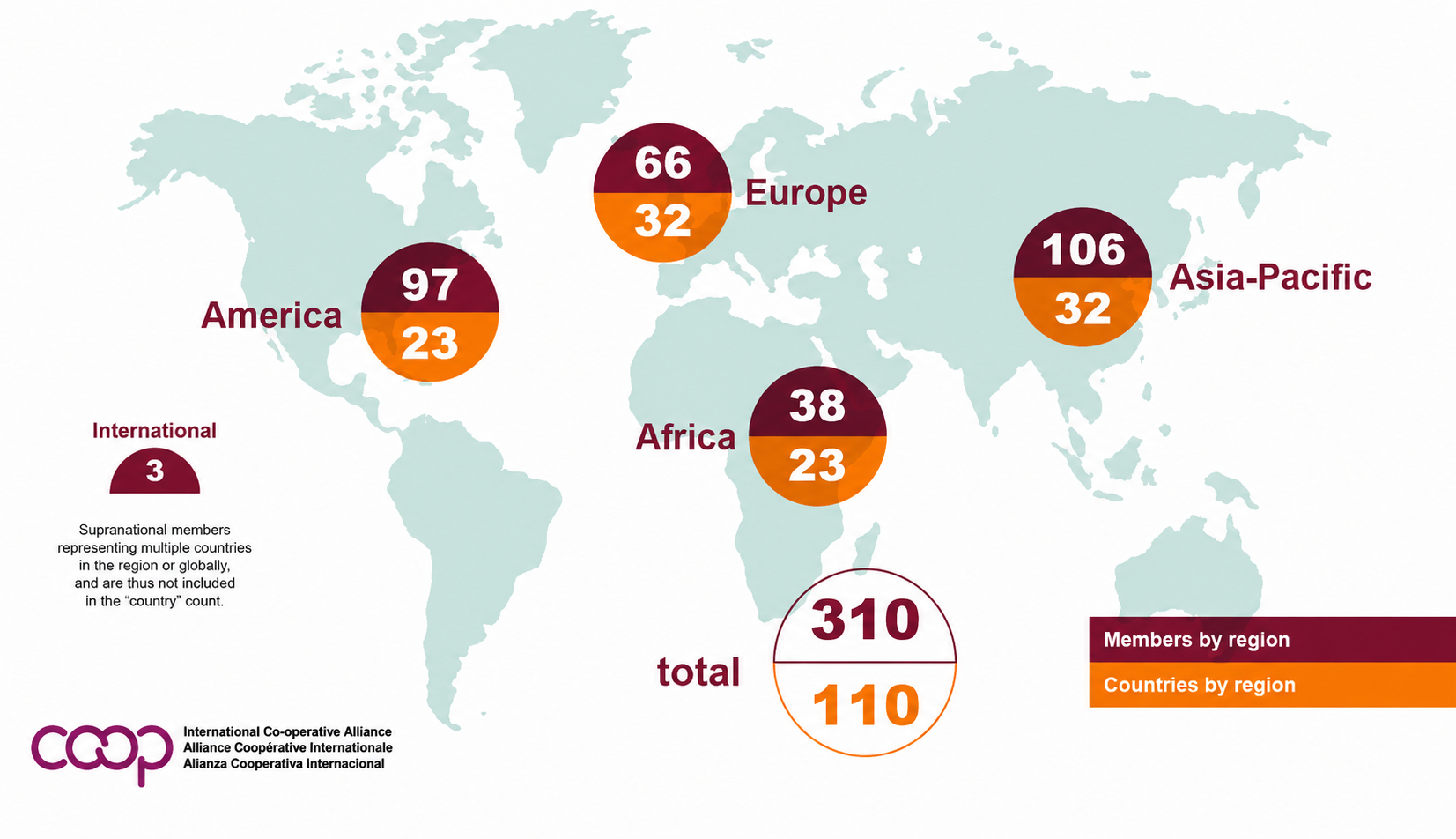
Scholz presents successful traditional cooperative models in his book. He outlines pathways toward platform cooperativism by citing examples of cooperative federations, such as SEWA in India and Mondragon in Spain.It is worth noting that Scholz highlights federations of platform cooperatives which are more realistic and facilitate better member control rather than advocating for the creation of a single, massive cooperative on the scale of Amazon. He also identifies global initiatives aimed at interconnecting these entities, such as the International Co-operative Alliance, as positive interventions. He suggests that the International Co-operative Alliance is well-positioned to boldly embrace technological transformation and actively encourage and support efforts to establish cooperatives within the digital economy. Furthermore, the author emphasizes the need to initiate discussions regarding global cooperation for a “data commons” and the establishment of data standards.
(Photo courtesy: ICA)
The book poses a fundamental question: “Do we accept handing over control of vital aspects of our lives such as healthcare, food distribution, transportation systems, and education to a handful of corporations?” Platform cooperatives can certainly play a significant role in resisting corporate control over basic human needs. The book asserts that this is a sector well-positioned to become a prime practical model for efforts to democratize technology.
Cooperative Veterinary Care owners gathered for a board meeting in a private room at Grandma Mary’s Cafe in Arena, Wisconsin.(Photo courtesy: Dr. John Dally, VIN News)
Activist and scholar Trebor Scholz is the founding director of the New York-based Platform Cooperative Consortium and the Institute for the Cooperative Digital Economy.
Own This!
How Platform Cooperatives Help Workers Build a Democratic Internet
R. Trebor Scholz, Verso Publication, 2023.
About Author
K Sahadevan
Writer and social activist K Sahadeven has highlighted environmental, social and economy related concerns for decades through his articles and activism
Technology should not remain concentrated in the hands of a few powerful platforms. Platform cooperatives offer a meaningful alternative—putting ownership, decision-making and the value created by technology back in the hands of the people who actually build and use it. Democratising technology is ultimately about democratising economic power and creating a fairer digital future
Support Us
The AIDEM is committed to people-oriented journalism, marked by transparency, integrity, pluralistic ethos, and, above all, a commitment to uphold the people’s right to know. Editorial independence is closely linked to financial independence. That is why we come to readers for help.
















Technology should not remain concentrated in the hands of a few powerful platforms. Platform cooperatives offer a meaningful alternative—putting ownership, decision-making and the value created by technology back in the hands of the people who actually build and use it. Democratising technology is ultimately about democratising economic power and creating a fairer digital future