
Elizabeth Holmes and Theranos: When the Promise Itself Became the Product

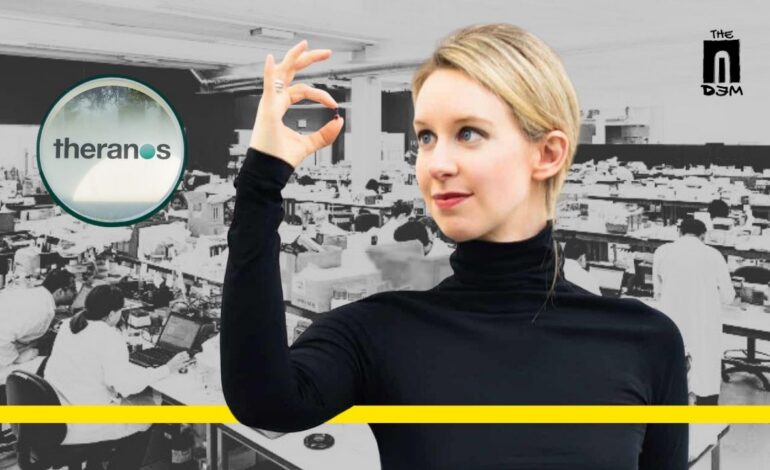
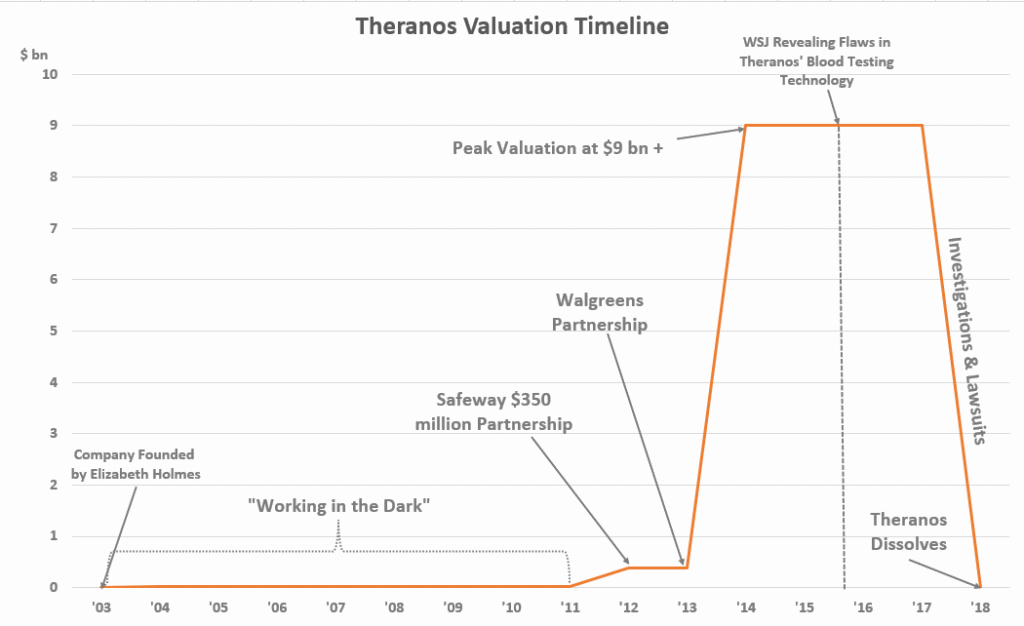
The rise and fall of Elizabeth Holmes is one of Silicon Valley’s most spectacular scandals. In 2003, at the age of nineteen, she dropped out of Stanford to build a company that promised to revolutionise medical diagnostics. Barely a decade later, she was celebrated as one of America’s youngest self-made female billionaires, presiding over a company valued at $9 billion and backed by some of the country’s wealthiest investors and most influential political figures. But the technological revolution she promised turned out to be an elaborate fraud. In May 2023, Holmes began serving a prison sentence for defrauding investors.
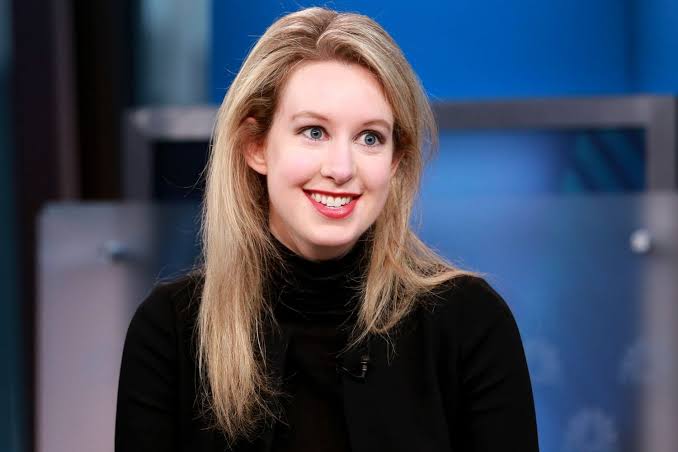
Recently, a new documentary, ‘You Can See Everything’, directed by Nathan Fielder and Lance Oppenheim, has brought her story back into focus. Beginning 34 days before Holmes entered prison, the film reportedly develops into exploration of her life with her partner, Billy Evans, and the unsettling relationship between truth, perception and deception.
But Holmes’s story raises a larger question: How did a young entrepreneur fake a scientific breakthrough so convincingly that she won the confidence of America’s wealthiest investors, most influential political figures and prestigious media organisations? Was this deception simply the work of a single fraudster or a symptom of systemic failure?
Holmes founded Theranos, promising to develop a compact machine capable of performing hundreds of laboratory tests from a few drops of blood collected through a finger prick. The technology would supposedly make healthcare cheaper, faster and more accessible. It was an irresistible proposition that combined Silicon Valley’s yearning for technological disruption with an apparently humanitarian mission. Theranos attracted hundreds of millions of dollars in investment. Holmes became a Silicon Valley icon, even as the technology remained unproven.
She recognised the importance of carefully constructing and sustaining a public persona. Adopting Steve Jobs’s signature black turtleneck and radiating messianic certainty, Holmes projected an image that Silicon Valley instinctively associated with genius. Some observers believed that she had even cultivated an unyielding baritone to project authority. Her identity became inseparable from the technological future she promised. Theranos’s board included two former US secretaries of state, Henry Kissinger and George Shultz; former US secretary of defence William Perry; retired Marine Corps general James Mattis, who later became secretary of defence; and other prominent establishment figures. Business magazines celebrated Holmes as a revolutionary entrepreneur, while investors competed to participate in what appeared to be the next great technological breakthrough.
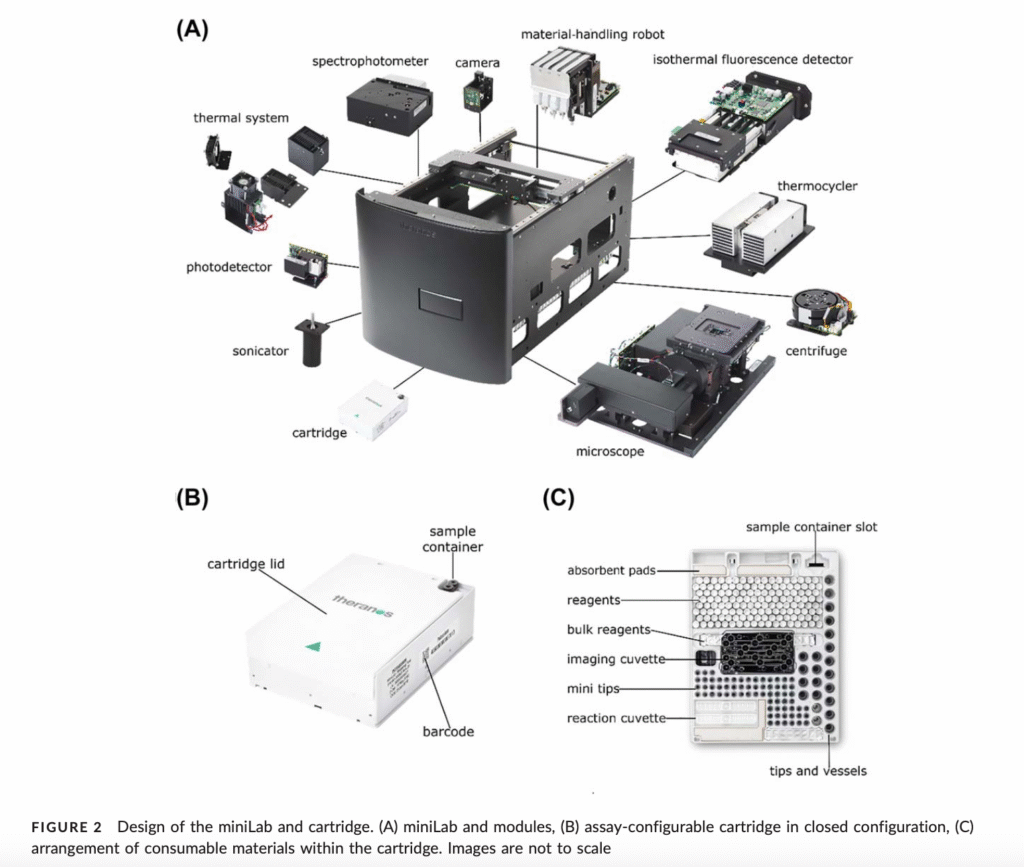
But Theranos’s proprietary machines could not reliably perform the range of tests advertised. The company relied extensively on conventional laboratory equipment, while its own technology suffered persistent technical failures and produced unreliable results. Its scientific claims remained largely shielded from independent scrutiny. At the same time, employees and whistleblowers who challenged them faced intimidation and legal threats. Holmes falsely claimed that Theranos’s technology had been deployed by the American military and presented reports bearing pharmaceutical company logos as evidence of independent validation. She also made impressive revenue projections that had no relationship to the actual financial performance of the company. These were not overenthusiastic exaggerations of an entrepreneur but intentional misrepresentations to mask unproven technology.

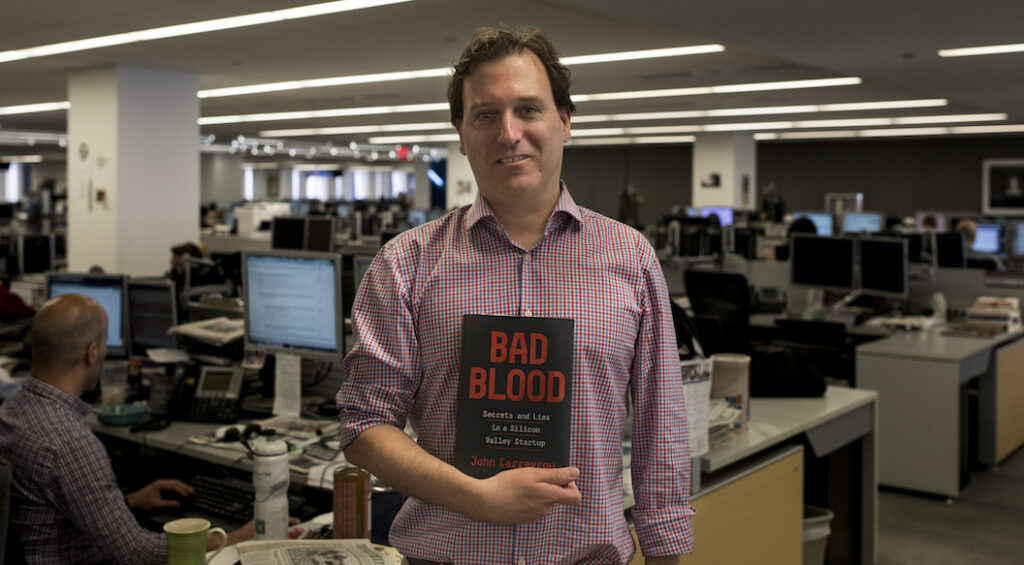
John Carreyrou’s landmark investigation in The Wall Street Journal in 2015 began to unravel the carefully constructed facade. Subsequent regulatory investigations and mounting revelations accelerated the company’s decline, which culminated in its dissolution in 2018. Holmes was convicted in January 2022 of wire fraud and conspiracy to defraud Theranos investors. She was sentenced to eleven years and three months in prison later that year. Her former romantic partner and Theranos president, Ramesh “Sunny” Balwani, was separately convicted and imprisoned. By the time Holmes entered prison in May 2023, the woman once celebrated as a symbol of America’s technological future had become an emblem of Silicon Valley’s excesses.
Reducing the affair to a masterclass in deception overlooks an uncomfortable truth. Holmes’s guilt is clear, but the extraordinary scale and duration of her fraud cannot be explained by individual cunning alone. Her deception flourished within a market that desperately sought an innovative breakthrough like the one she promised.
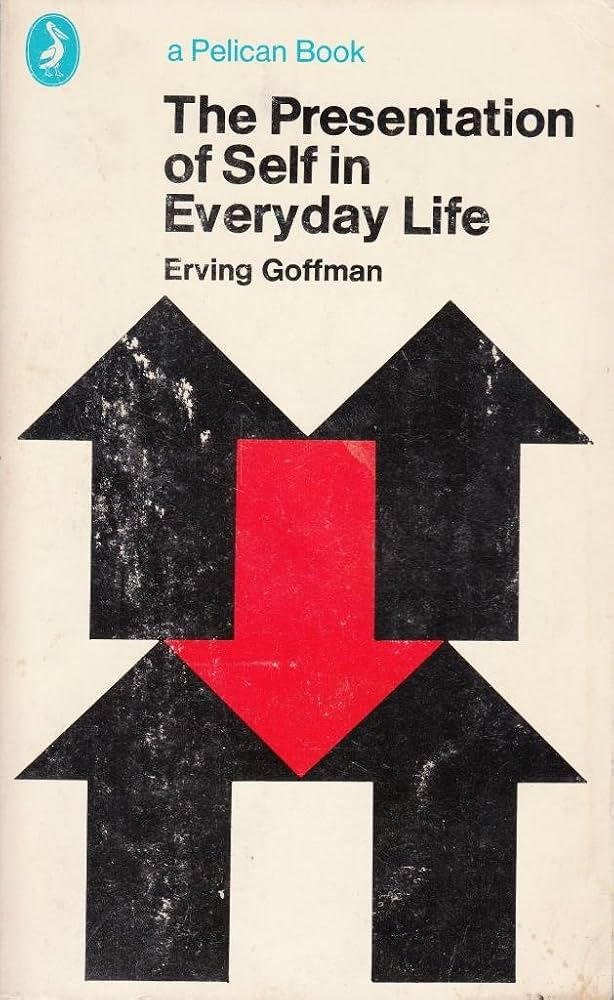
Beneath the Theranos delusion lies a basic psychological truth. Human judgement relies heavily on semiotics and social proof. We often mistake the show of competence for its actual presence. As the sociologist Erving Goffman argued in his seminal work, The Presentation of Self in Everyday Life, social interactions at all levels invariably involve the performance of roles and the management of impressions. Holmes did not invent this dynamic. She just perfected its Silicon Valley dialect. Her trademark black turtlenecks, carefully cultivated intensity and unwavering composure reinforced the image of a visionary entrepreneur, drawing on the familiar symbols of genius and exceptional talent celebrated in Silicon Valley.
But Holmes’s story cannot be explained as a successful exercise in impression management alone. What made it exceptional was the transformation of a personal performance into a reality legitimised by institutions. Her staged persona took on a life of its own, sustained by the privilege, capital and vested interests of those who needed the narrative to be true. Holmes convinced investors that a nonexistent breakthrough had already arrived. And Theranos harvested the immense valuation and public acclaim reserved for such an innovation.
How Theranos engineered its aura of respectability is an object lesson in collective institutional blindness. Investors took comfort in the presence of luminaries like Kissinger and Shultz. They believed that senior statesmen must have vetted the details. Journalists treated enormous valuations and heavyweight directors as substitutes for evidence of commercial viability and success. Prospective partners assumed that other sophisticated actors had already done the heavy lifting on scientific scrutiny.
The result was a recursive, self-reinforcing web of validation, a consensus built on assumptions. The fundamental question of whether the technology worked was simply bypassed.
The episode reads like a textbook case of Baudrillardian simulation, where the representation of reality acquires an existence increasingly detached from reality itself. Theranos constructed the image of a triumphant technological enterprise without ever demonstrating the scientific capabilities on which that image rested. The financial clout and institutional support it acquired, in turn, reinforced the charade. An imagined future was made to appear as an accomplished present. In constructing this illusion, Holmes expertly leveraged Silicon Valley’s myth of the lone visionary whose genius defies conventional wisdom. In this environment, healthy scepticism is dismissed as a lack of imagination, and institutional pushback is rebranded as proof of disruptive intent.
Yet the hype eventually collided with material reality. Theranos could manufacture financial valuations, prestige and media attention; it could not achieve the biochemical precision needed to perform reliable blood tests.
The scandal also poses an unsettling psychological question: did Holmes become a hostage to her own performance? While her trial established criminal fraud, the degree of her self-deception remains elusive. When an individual’s identity and public stature become entirely intertwined with a staged persona, admitting failure poses an existential threat. Holmes may well have fallen victim to the very theatre she orchestrated.
Whatever Holmes believed about her own intentions, the deeper question is why the institutions supposedly responsible for scrutinising her claims proved so susceptible to them. Scientific expertise was displaced by personal prestige and the celebration of entrepreneurial success. And independent verification and critical scrutiny by corporate secrecy. Investors, directors and commercial partners had staked financial and reputational capital on Theranos. This created powerful incentives to preserve confidence in its claims. The extraordinary concentration of wealth and influence surrounding Holmes helped create an environment in which challenging her claims became increasingly difficult.
The affair lays bare a central pathology of modern financialised capitalism. Financialisation is not an anomaly but a structural development within capitalism. One important force behind this development is the accumulation of surplus capital seeking profitable outlets. While finance has historically played an important role in supporting production, capitalism has also long provided opportunities for money to generate more money through financial transactions, seemingly independent of productive activity. Under financialisation, this tendency has acquired growing prominence. Finance has become more than an instrument supporting production; it increasingly shapes the process of capital accumulation itself, directing capital towards financial speculation. In doing so, it also creates new sources of economic instability.
Financial markets routinely convert anticipated future earnings into present asset values, granting enormous financial resources to startups with little or no revenue. Such speculation is not inherently deceptive; it is a normal feature of capitalist investment. The danger arises when valuations based on anticipated technological achievements begin to serve as evidence that those achievements have already occurred. Theranos exemplified this contradiction. Despite the absence of independent scientific validation and other warning signs concerning its technological claims, the company attracted hundreds of millions of dollars in investment and achieved a valuation of approximately $9 billion. Its growing financial valuation became an additional source of credibility, encouraging the assumption that the company’s technological claims had already survived rigorous scrutiny, even as serious questions about their validity remained unresolved. Financial capital thus did more than sustain the enterprise; it lent credibility to claims that had never been independently substantiated.
The underlying dynamics extend far beyond Theranos. Consider Elon Musk’s ambition to colonise Mars, a venture whose feasibility remains deeply uncertain. Unlike Theranos, SpaceX has delivered substantial technological breakthroughs and commercial achievements. Yet its loftiest ambitions illustrate how the promise of a technological future can acquire enormous economic and symbolic significance in the present. The contemporary artificial intelligence boom presents an even more compelling example. AI has already demonstrated remarkable technological capabilities, but the extraordinary investments and valuations it attracts rest upon expectations of breakthroughs whose scale, timing and economic consequences remain uncertain. The prospect of artificial general intelligence, the transformation of entire industries and the displacement of human labour have become powerful forces shaping present investment decisions.
None of this necessarily implies deception. The critical question is whether the financial and institutional credibility generated by these expectations can begin to substitute for independent scrutiny of what the technology has actually achieved and can achieve. The line between mobilising capital to create an uncertain future and treating that future as an accomplished reality can easily become blurred.

Holmes pushed the logic of speculative capitalism to its fraudulent extreme. The most significant lesson of the Theranos affair, however, is not merely that a charismatic fraudster duped the elite, but that modern capitalism creates conditions in which the narrative performance of innovation eclipses its substance.