

Lula Returns and Stands Tall Against Latin America’s Right-Wing Tide, Opens New Possibilities for India

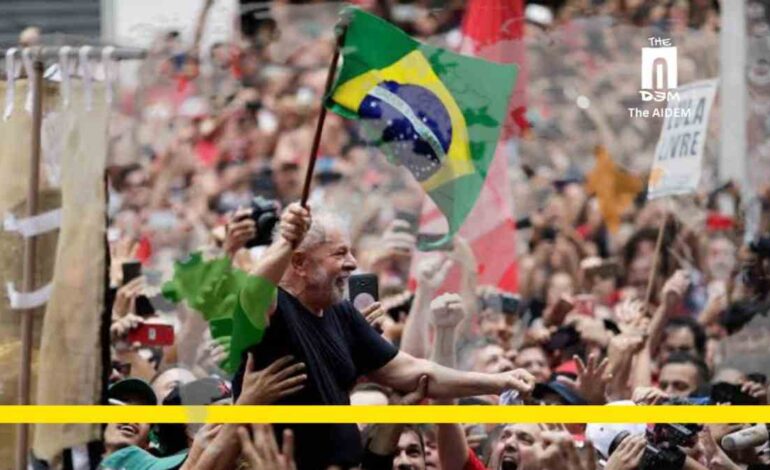
At a time when Latin America has been witnessing a succession of right-wing electoral victories, Brazil has bucked the trend. In the presidential election held on 25 October, the veteran left-wing leader Luiz Inácio Lula da Silva, popularly known as Lula, pulled off a dramatic, record-breaking victory. His triumph carries significance far beyond Brazil, challenging the rightward political shift across the continent and opening up new possibilities in international politics.
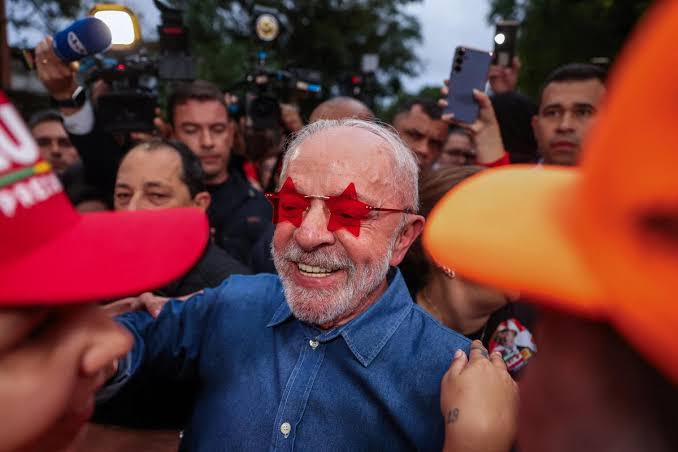
I write this with a particular sense of personal satisfaction, having had the opportunity to meet Lula in São Paulo at a conference organised by the Progressive Alliance. His Workers’ Party is a member of this international grouping, as is the Association for Democratic Socialism, the think tank with which I am associated. I was struck by Lula’s humility and camaraderie as he interacted with delegates from different countries.
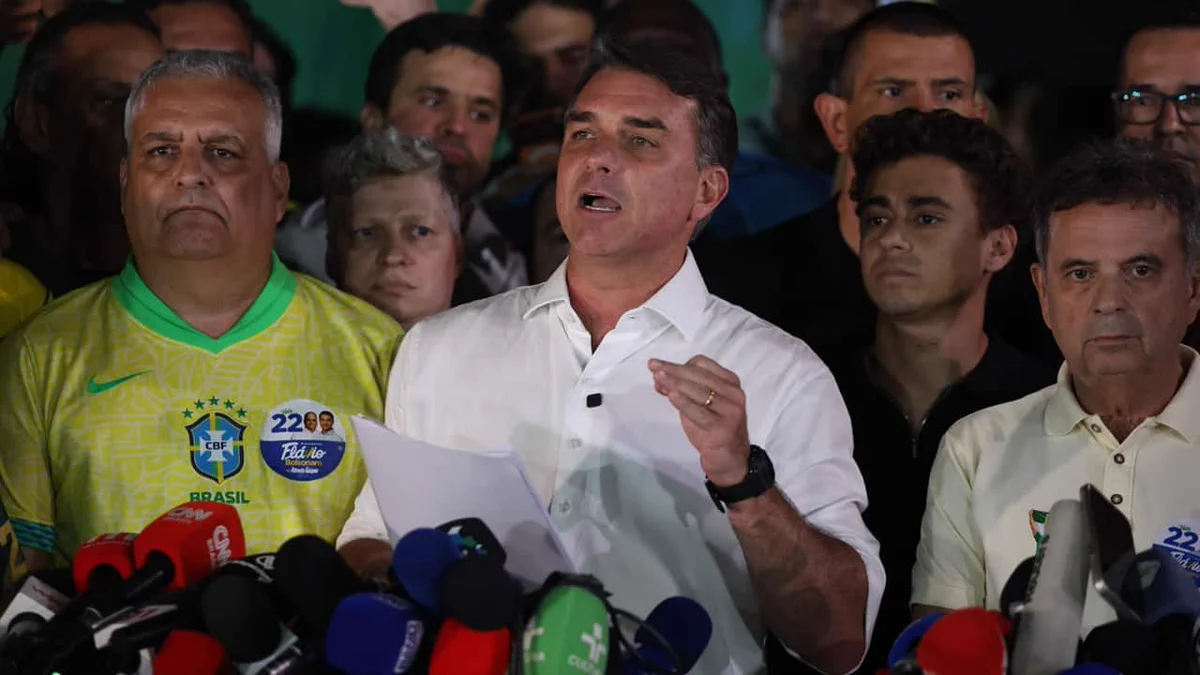
As India’s biggest trading partner in Latin America and a fellow founding member of BRICS, Brazil occupies an important place in New Delhi’s diplomatic and economic calculations. Lula’s victory is therefore particularly significant for India. His rival, Flávio Bolsonaro, a 45-year-old right-wing senator and son of the jailed former President Jair Bolsonaro, could also have been a potentially influential partner for New Delhi. However, his close political alignment with Donald Trump, whose unpredictable approach to international relations has created considerable uncertainty, would have complicated that relationship.
The election results, at the time of writing, remain clouded by political controversy and the possibility of legal challenges. The disputes centre on alleged disruptions to public transport services, which affected voter turnout, and the extension of polling hours by two hours, from the official closing time of 5 pm to 7 pm. Flávio Bolsonaro has accused Supreme Court Justice Cristiano Zanin of partisanship, pointing to his earlier role as Lula’s lawyer and his appointment to the Supreme Court by Lula in 2023.
Late on 25 October, Flávio refused to concede defeat and called for the results to be annulled, describing the extension of polling hours as unprecedented. The Superior Electoral Court (TSE), however, confirmed the count, giving Lula 51.78 per cent of the vote against Flávio’s 48.22 per cent, a lead of nearly 4.4 million votes. Significantly, both camps had requested an extension because of bad weather and transport disruptions.
The prevailing assumption is that higher voter turnout benefited Lula. In the first round, held on 4 October, an estimated 33.4 million Brazilians stayed away from polling stations despite voting being compulsory for adults. This represented an abstention rate of 21 per cent, the highest in a general election since 1998. Lula intensified his campaign after finishing second in the first round, securing 45.16 per cent of the vote against Flávio’s 47.03 per cent. The Workers’ Party had complained that reductions in public transport services in several cities made it difficult for working-class voters, a core constituency of Lula, to reach polling stations.
A Victory Against the Regional Right-Wing Surge
Lula’s victory has several important political implications. First, he has broken his own record as Brazil’s oldest elected President. Currently 80 and due to turn 81 on 28 October, he is set to begin his fourth non-consecutive term on 5 January 2027.
Second, he has achieved something unprecedented in Brazil’s modern electoral history. Since the restoration of direct presidential elections in 1989, no candidate finishing second in the first round has gone on to win the run-off. Lula has now overturned a deficit of nearly two percentage points to secure victory.
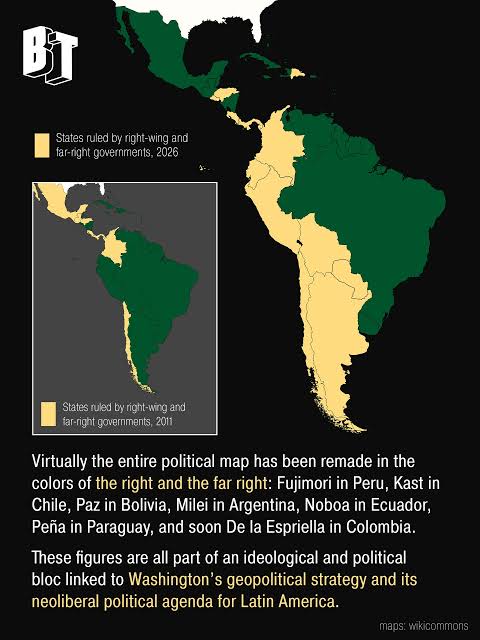
Third, and perhaps most significantly, Lula has prevailed against a wider wave of right-wing electoral victories across Latin America, including Argentina, Chile, Colombia and Peru. This is a region where Donald Trump has sought to expand Washington’s political and economic influence.
Trump had also sought to influence developments in Brazil through the imposition of 50 per cent tariffs on Brazilian imports and sanctions aimed at weakening Lula’s political position and helping Jair Bolsonaro, who was convicted in connection with an attempted coup. In his victory speech, Lula referred to the external interference he had been compelled to overcome.
His victory means that Brazil and Mexico, Latin America’s two largest economies, remain under left-of-centre governments. This provides an important counterweight to the growing influence of the right and offers some encouragement to political forces resisting Washington’s attempts to consolidate its dominance in the region.
Fourth, Lula’s victory takes him into a record fourth non-consecutive presidential term, following his periods in office from 2003 to 2006, 2007 to 2010 and 2023 to 2026. His new term will run from 2027 to 2030. No other democratically elected Brazilian President has served four terms.
What Lula’s Victory Means for India
For India, the significance of Lula’s victory extends beyond bilateral relations. It comes at a time when the intensifying rivalry between the United States and China is unsettling the international order and prompting renewed debates about multilateralism and the need for a more balanced global system.
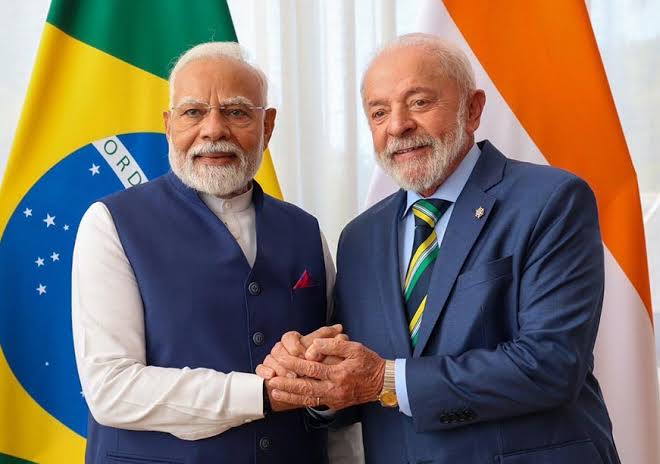
Lula has consistently advocated strategic autonomy, multilateralism and stronger cooperation among emerging economies. These positions have considerable resonance with India’s own diplomatic approach. Just as New Delhi has sought to maintain constructive relations with both Washington and Beijing, Brazil under Lula is expected to pursue a similar course while strengthening the collective voice of the Global South.
This is an important area of convergence between India and Brazil. During Lula’s state visit to India in February 2026, Prime Minister Narendra Modi observed: “The voice of Global South becomes stronger and more confident when India and Brazil work together.”
The challenge, of course, is to translate this political understanding into tangible economic and diplomatic gains.
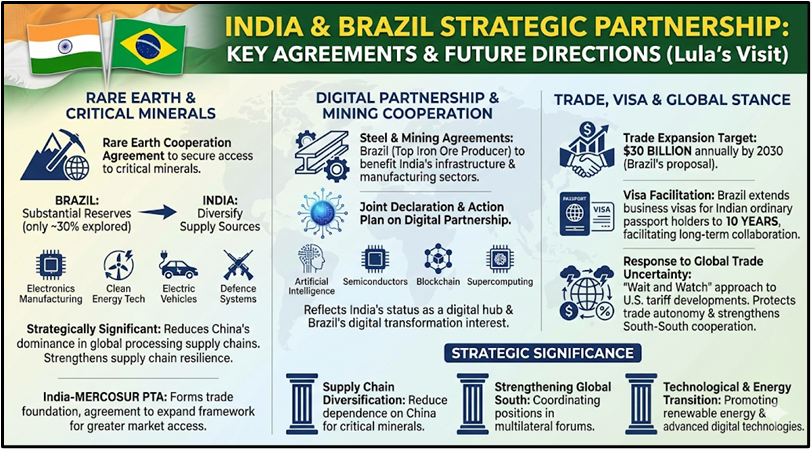
India and Brazil have already agreed to raise bilateral trade to $20 billion by 2030, from $15.21 billion in 2025. During Modi’s visit to Brasília in July 2025, the two countries set the target of achieving $20 billion in bilateral trade within five years.
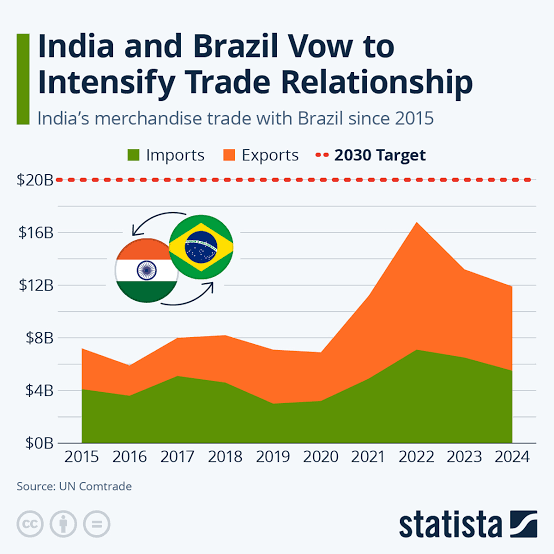
The principal areas of trade include Brazilian exports of crude oil, raw sugar, soya oil and gold, and Indian exports of diesel, pharmaceuticals and engineering goods. Lula’s re-election provides an opportunity to sustain this momentum and deepen economic cooperation.
At the same time, Lula will face considerable pressure from financial markets. Following the first round, Brazil’s Bovespa stock index had risen by 7 per cent and the real had appreciated by 5 per cent amid expectations of a Bolsonaro victory. Investors will now look for fiscal discipline, while Lula will have to balance these demands against his commitment to the Bolsa Família programme and other social welfare expenditure.
BRICS, Strategic Autonomy and the Global South
Lula’s re-election also assumes considerable importance for BRICS. Both New Delhi and Brasília have advocated urgent reforms of global institutions, including the United Nations Security Council, where both countries seek permanent membership.
As BRICS expands, with countries such as Indonesia and Saudi Arabia joining the grouping, Lula and Modi are increasingly seen as leaders capable of maintaining a balance between competing approaches to its future. While China and Russia have pushed for a more assertive stance against Western dominance, India and Brazil have generally favoured preserving BRICS as a platform for development cooperation, institutional reform and greater representation for emerging economies.
Another important area of convergence is the growing debate over the use of national currencies in international trade.
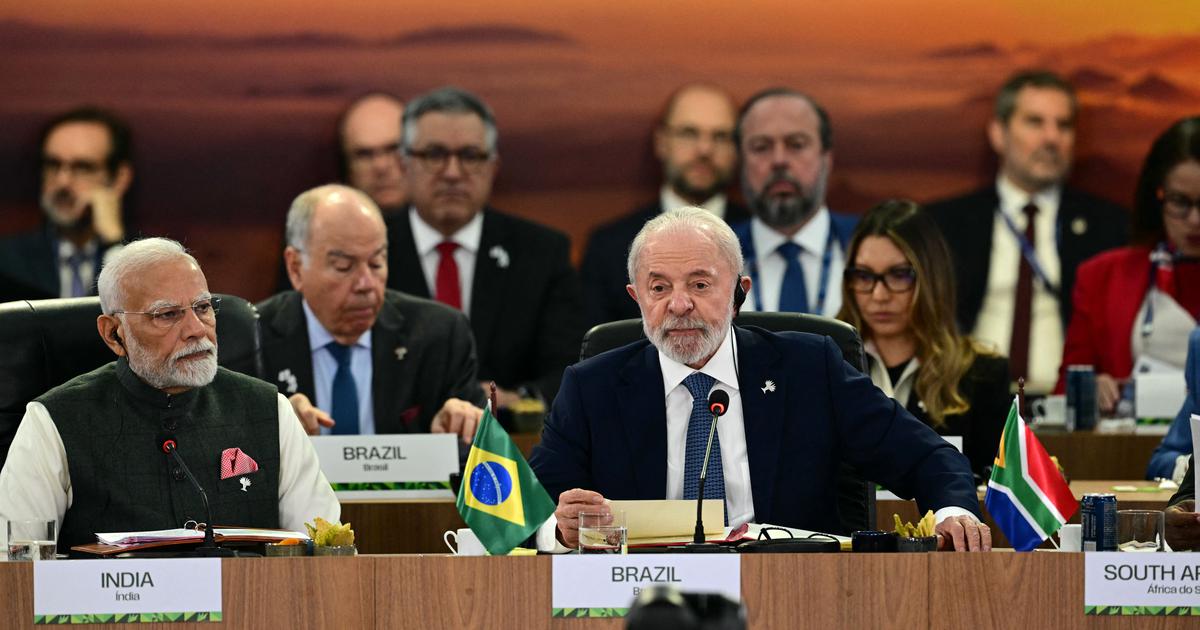
Lula has been a strong advocate of reducing excessive dependence on the US dollar. During an interview on his February 2026 visit to India, he observed: “It is not necessary that a trade agreement between India and Brazil has to be carried out in US dollars. We can use our own currencies. It is difficult, but we can try.”
This approach is broadly consistent with India’s efforts to promote rupee-based trade settlements and the wider debate on de-dollarisation, particularly in the context of Washington’s increasing use of tariffs and other economic instruments as tools of geopolitical pressure.
Lula has also demonstrated an ability to combine domestic social policy with an active international agenda. His earlier terms were marked by programmes credited with lifting around 30 million people out of poverty, initiatives to protect the Amazon and efforts to strengthen South–South cooperation.
In what could be his final presidential term, given his advancing age, Lula may seek to consolidate this legacy while playing a more influential role in international politics. Climate action, building on the legacy of COP30 in Belém in 2025, the global alliance against hunger and reforms of the Bretton Woods institutions are among the areas where he could make a significant contribution.
A Political Moment with Wider Implications
Lula’s victory comes at a time of considerable uncertainty in international relations. India, too, is attempting to navigate this changing environment, pursuing a trade agreement with the United States while maintaining its commitment to strategic autonomy.
For New Delhi, the continuation of Lula’s leadership in Brazil could therefore present a valuable diplomatic opportunity. The two countries have substantial common ground on multilateralism, economic cooperation and the need to give developing nations a stronger voice in global decision-making.
But the wider political significance of Lula’s victory should not be overlooked. At a time when right-wing political forces have been gaining ground across Latin America, his success demonstrates that this trend is neither uniform nor irreversible.
I recall something Lula told us during our meeting in São Paulo: “Democracy is not won once, it has to be defended everyday — on street and online.”
Coming from a political leader who, at 80, has once again prevailed in a fiercely contested election, those words carry particular weight. They are worth remembering in New Delhi as well.







Lula’s return is more than a personal political victory; it is a powerful reminder that the far-right wave is not unstoppable. His leadership offers renewed hope for social justice, economic equality and an independent Global South. For India, the message is clear: true global leadership comes from defending democracy, empowering the poor and standing up to authoritarian politics—not from surrendering to powerful interests. Lula’s resurgence opens a new chapter of possibilities for India, Latin America and the world.