

From Barrister to Sardar: Patel, Gandhi and the Making of a National Leader – Part I

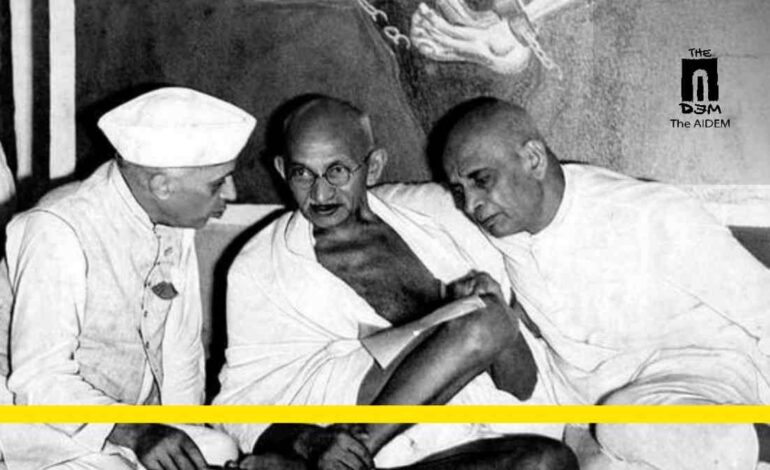
As India marks the 150th birth anniversary of Sardar Vallabhbhai Patel, his political legacy has once again become the subject of intense public attention and competing historical narratives. One of the principal architects of independent India, Patel played a defining role in the freedom struggle and the consolidation of the Indian Union. Yet his contributions cannot be fully understood in isolation from those of Mahatma Gandhi and Jawaharlal Nehru, whose political journeys were closely intertwined with his own.
In this five-part series, writer and researcher Anu Jain revisits Patel’s political evolution, his relationship with Gandhi and Nehru, his role in the nationalist movement and the ideological and political differences that shaped the leadership of the Indian National Congress. The series seeks to place Patel in his proper historical context, beyond contemporary attempts to appropriate his legacy or construct an artificial rivalry between the principal makers of modern India.
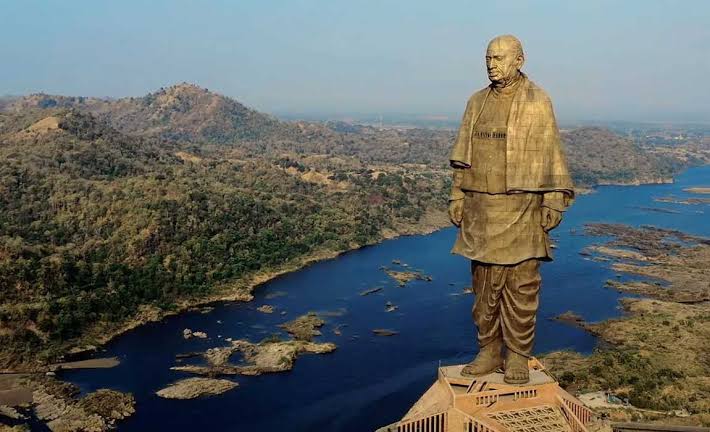
India is marking the completion of the two-year national commemoration of Sardar Vallabhbhai Patel’s 150th birth anniversary. On 31 October each year, India remembers Vallabhbhai Patel not merely as a freedom fighter, but as a national symbol of unity. The occasion has acquired an increasingly visible public presence, particularly through Rashtriya Ekta Diwas ceremonies and the Statue of Unity at Ekta Nagar in Gujarat. Yet behind the monumental figure of the Sardar was a man whose political journey was far less predetermined.
Before India knew him as Sardar Patel, Vallabhbhai Patel was known simply as a successful barrister. He had built a flourishing practise in Ahmedabad, entered municipal politics and became part of the city’s prosperous professional world. In the evenings, he could still be found at the Gujarat Club, playing cards with lawyers and other members of the urban elite. There was little in this life to suggest that the same man would soon be spending his days in villages, organising cultivators against the colonial revenue system, or enduring imprisonment for the nationalist cause.
The transformation began with another Gujarati who had returned from South Africa and was beginning to change the vocabulary of Indian politics. Their first encounter is generally associated with the Gujarat Club in Ahmedabad, where Patel, then a successful barrister and regular bridge player, came into contact with Gandhi sometime around 1916–17. The exact date remains uncertain. According to one well-known account, Patel was playing bridge at the club in June 1916 when Gandhi arrived to speak to a small gathering. Patel initially showed little interest in the newcomer from South Africa. This suggests that the change was not the result of a single dramatic conversion. Their relationship became politically consequential only later, in 1917, when Gandhi’s work in Gujarat brought the two men into much closer contact.
What followed was not simply the story of a leader being converted by another leader. It was the making of a political partnership between two men with very different temperaments and abilities. The card table gave way to village meetings; the courtroom to political organisation; and the successful barrister increasingly found himself working among people whose lives were shaped by land revenue, indebtedness and the authority of colonial officials. Kheda became his first major apprenticeship in mass politics, and Bardoli established him as a leader capable of organising thousands of peasants with remarkable discipline.
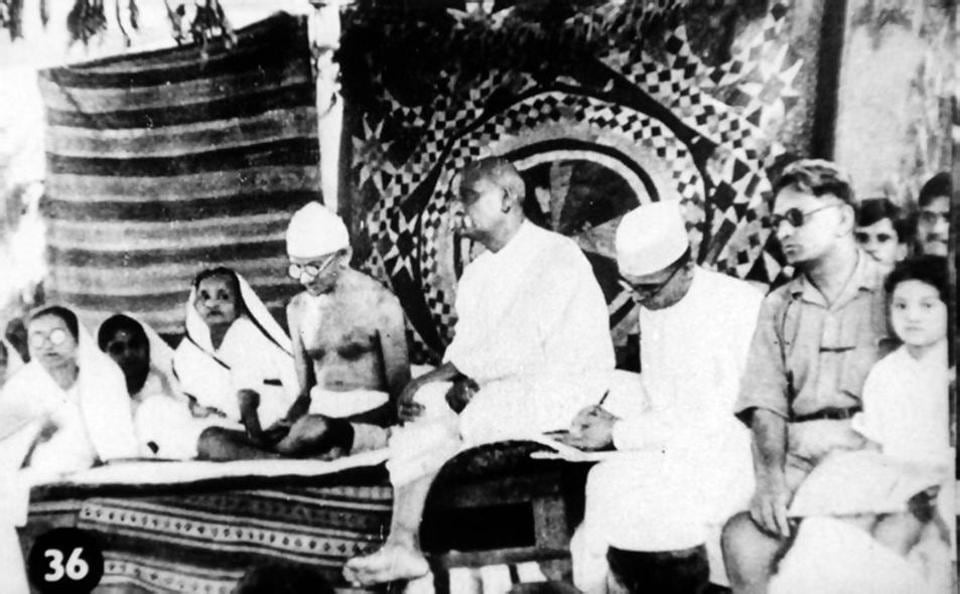
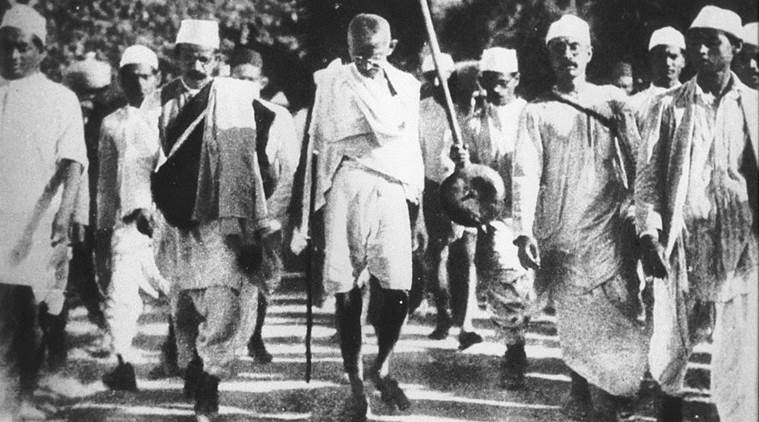
There was no looking back. His transformation did not end in Gujarat. Patel went on to participate in the wider national movement, face repeated arrests and imprisonment, and stand alongside Gandhi during some of the defining campaigns of the freedom struggle. He became involved in the Salt Satyagraha and the wider Civil Disobedience Movement and emerged as one of the Congress’s principal organisers. The man who had once spent his evenings at a card table was now moving through a very different India—one of salt marches, village campaigns, political arrests and mass mobilisation.
What makes Patel’s transformation significant is not simply that he abandoned a successful legal career for politics. Within Gandhi’s movement, he developed a political capacity of his own. Gandhi gave the nationalist struggle its language of satyagraha and mass participation; Patel increasingly supplied the organisation, discipline and practical leadership required to carry that politics into the countryside.
From Kheda to Bardoli: The Making of a Political Partnership
Gandhi was turning Indian nationalism into a mass movement rooted in satyagraha; Patel was discovering how his strengths in organisation, discipline and negotiation could translate that vision into action.
Kheda in 1918 was their first major test. Following a crop failure, the colonial government continued to demand land revenue. Gandhi entered the dispute, while Patel, then secretary of the Gujarat Sabha, organised cultivators and helped maintain non-violent discipline. Though the settlement was limited, Kheda brought Patel into rural politics and established him as an effective organiser.
The Rowlatt legislation and the Jallianwala Bagh massacre further drew Patel into the national movement. During the Non-Cooperation Movement, he adopted khadi, travelled through Gujarat and organised campaigns against foreign cloth and liquor. When Gandhi suspended the movement in 1922, Patel shifted his attention to local campaigns. In the Borsad Satyagraha of 1923–24, he organised cultivators against an additional police tax imposed on the villagers, eventually securing its withdrawal. Patel was no longer simply following Gandhi’s politics; he was emerging as one of the leaders capable of organising and sustaining it on the ground.
Bardoli in 1928 showed how far the partnership had evolved. When the Bombay Presidency raised the land-revenue assessment in Bardoli taluka by 22 per cent, with some villages facing even higher increases, Patel did not rush to lead the cultivators. He first tested their resolve and ensured that they understood the possible consequences of refusal: confiscation of land and cattle, and possible arrest. Gandhi was consulted, but Bardoli became a local satyagraha led by Patel and the cultivators themselves. Volunteers kept the villages organised and the movement non-violent even as property was seized, until a settlement was reached on the assessment and confiscated property. At an open meeting in Nanifalod village, the farmer Kuverji Durlabh Patel addressed Vallabhbhai as “Our Sardar”. The title, meaning ‘leader’, soon became permanently attached to his name. Mahadev Desai’s contemporary account, published the following year, was already referring to Patel as “The Peasants’ Sardar”. The title, born in the movement and taken up beyond that meeting, stayed with him thereafter.
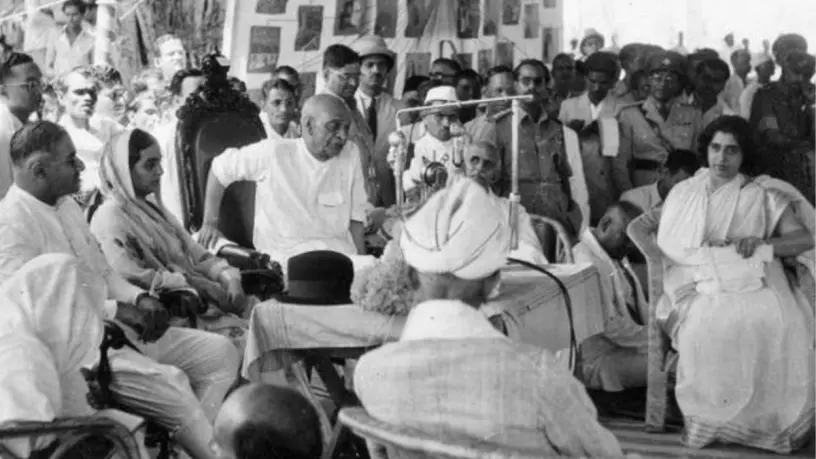
Gandhi later stressed that there could have been no struggle without Patel and no settlement without his consent, while praising the courage of the people of Bardoli. By the end of the 1920s, Gandhi remained the central moral force of Congress, while Patel had emerged as one of its leading organisers and negotiators. Motilal Nehru considered him for the presidency of the 1928 Calcutta Congress and described him to Gandhi as the “hero of the hour”. From the Gujarat Club to Bardoli, their relationship had evolved alongside Patel’s political transformation: Gandhi brought the mass politics of satyagraha; Patel brought the organisational discipline that could make it work.
The Sardar Behind Bars
By 1930, Vallabhbhai Patel had become a political figure in his own right. Bardoli had given him the name “Sardar”, and the coming struggle would give that title a national setting. On 7 March 1930, at Ras near Borsad in present-day Anand district, Gujarat, Patel was arrested after addressing a meeting in defiance of prohibitory orders. The Gandhi Heritage Portal records that he was sentenced to three months’ rigorous imprisonment. He was therefore already behind bars when Gandhi set out from Sabarmati Ashram five days later to break the salt law.
Patel’s arrest did not quiet Gujarat; it became part of the mobilisation. On 8 March, Gandhi addressed a large gathering in Ahmedabad, urging people to continue the struggle, while textile mills in the city closed in protest. Four days later, on 12 March, Gandhi left the ashram with seventy-eight companions and began the march to Dandi. The contrast was striking: Patel, the organiser who had built his reputation through village campaigns, was in prison; Gandhi was carrying the challenge before the country. By the time Gandhi was arrested on 5 May, the movement had already spread far beyond the original march. Actions followed at Dharasana in present-day Valsad district, Gujarat, and Wadala in Mumbai, Maharashtra, while arrests continued across the country.
The imprisonment of its leaders had not brought the movement to a halt. Indeed, Patel’s arrest had acquired a different meaning. The man who had once organised cultivators in Kheda and Bardoli was in prison as the struggle he had helped build entered its first truly national phase. Gandhi’s march gave the Salt Satyagraha its most visible symbol; Patel’s absence from the field was itself a reminder of the repression the movement was confronting. Their partnership had moved beyond Gujarat: one was marching towards the sea, the other was behind bars, and both were now part of a struggle whose scale neither could confine to a single province.
When Congress Entered Power
The 1937 elections changed the nature of Congress politics. The Government of India Act of 1935 had introduced provincial autonomy, although British authorities, particularly the governors, retained substantial powers. Congress had initially hesitated over whether participation would compromise the struggle for independence. Nehru remained sceptical about entering office under a constitutional framework that fell far short of Purna Swaraj. After prolonged discussion, however, the Congress Working Committee authorised the formation of ministries where Congress had secured majorities.
For Patel, this was a different kind of political battlefield. There were no peasants refusing revenue or salt laws to break. There were candidates to select, provincial organisations to coordinate, legislatures to manage and governments to form. The habits developed during satyagraha now proved useful in an institutional setting.
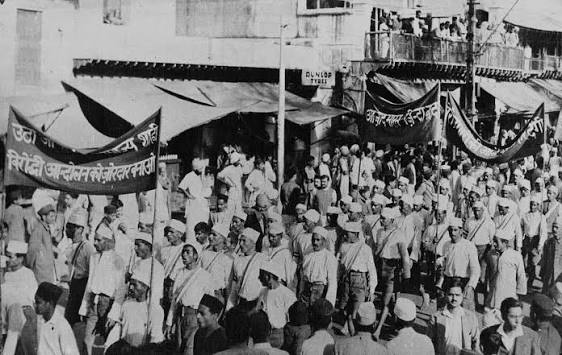
Nehru became the most visible national campaigner during the elections, travelling widely and addressing mass meetings. Patel concentrated on the machinery behind the campaign: candidates, provincial leaders, funds and constituencies. Their contrasting strengths were becoming increasingly apparent. Nehru could carry the Congress message to enormous crowds while Patel could transform an organisation into an effective electoral machine.
Once Congressmen became ministers, however, they were no longer merely protesting against the government. They were governing while still claiming to be engaged in a struggle against colonial rule. Nehru worried that office could weaken the movement’s larger purpose, while Patel and others were more willing to use the limited institutional authority available. The disagreement was not simply one between moderate and radical politics; both wanted independence, but differed over how the existing institutions should be used.
The Congress eventually accepted office in several provinces. For Patel, the experience marked another stage in his political development: the organiser of satyagraha was becoming an organiser of government.
Patel, Bose and the Crisis within Congress
By the late 1930s, Patel had become one of Congress’s most powerful organisational figures and one of Gandhi’s closest political colleagues. Their closeness did not mean agreement on every question. The controversy surrounding Subhas Chandra Bose in 1938–39 revealed both the tensions within Congress and Patel’s growing role in its organisational politics.
Bose was elected Congress president at Haripura in present-day Surat district, Gujarat, in 1938. He represented a more impatient strand of nationalism and believed that the international crisis developing in Europe created an opportunity that India should not waste. The prospect of another world war sharpened the question: if Britain entered a war, should India cooperate with the British Empire, or should the Congress use Britain’s vulnerability to demand independence?
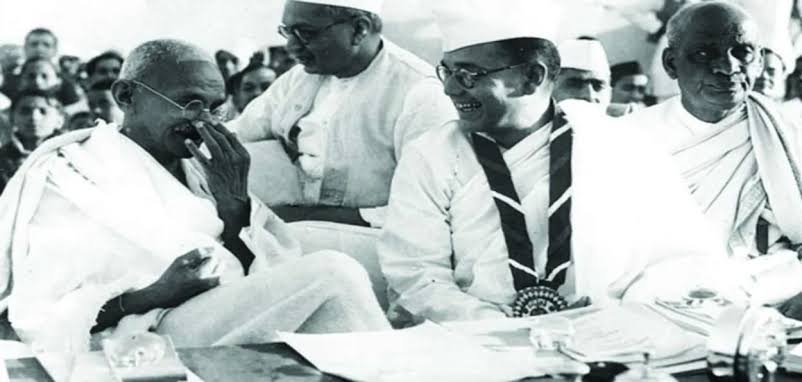
For Patel, the issue was not merely ideological. It was also a question of Congress discipline and collective leadership.
The presidential election of 1939 brought the tension into the open.
Gandhi’s preferred candidate was Pattabhi Sitaramayya. Bose decided to contest the election again, and Patel and other senior Congress leaders opposed Bose’s candidature. The result took the Congress establishment by surprise. Bose defeated Sitaramayya. Gandhi accepted the result but interpreted it as a defeat for his own position.
The confrontation deepened at Tripuri in March 1939, when Bose, despite his re-election, struggled to form a Working Committee acceptable to the senior leaders around Gandhi. Govind Ballabh Pant moved a resolution asking him to form the committee in accordance with Gandhi’s wishes. Twelve members eventually resigned, and Bose later stepped down as Congress president. The episode left lasting bitterness. Bose’s supporters regarded Patel as one of the principal figures obstructing his programme, while Patel saw the dispute as a question of Congress discipline and collective leadership.
The historical record, however, is more complicated than either version suggests. The surviving correspondence shows that Nehru himself was uncomfortable with the confrontation and tried to find a compromise. In April 1939, he wrote to Gandhi that the deadlock needed to be resolved and that Gandhi was the one person who could still help bring the opposing sides together.
This was one of the recurring features of the Gandhi–Patel–Nehru triangle. Gandhi was not simply choosing between two heirs. He was trying to hold together two political temperaments that increasingly represented different visions of India’s future.
The War Changes Everything
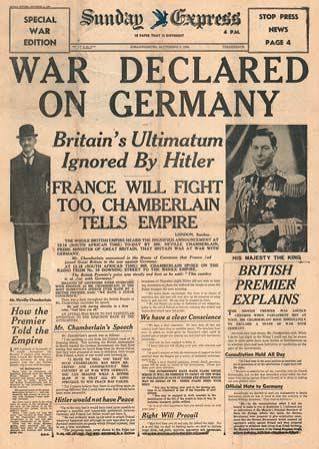
In September 1939, Britain declared war on Germany and the Viceroy committed India to the conflict without consulting its elected representatives. The Congress ministries thus faced a fundamental question: could they remain in office while India was being drawn into a war by a colonial government?
Nehru, who had consistently opposed fascism and Nazism, recognised the international stakes but insisted that India could not support the Allied war effort without the freedom to determine its own future. Patel, too, recognised the gravity of the crisis, but the denial of India’s political rights remained his central concern. When Britain failed to provide a satisfactory commitment to Indian independence, the Congress ministries resigned in October and November 1939.
Patel’s political focus shifted once again from provincial administration to resistance. Gandhi, however, did not immediately launch another mass movement. In 1940, he initiated Individual Satyagraha, selecting individuals to assert their right to freedom of speech and oppose India’s forced participation in the war.
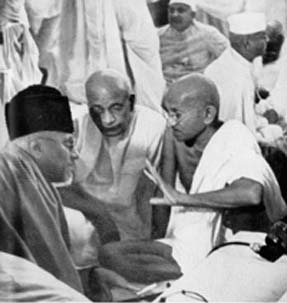
Patel was chosen as the third individual satyagrahi and arrested on 17 November 1940. The selection reflected Gandhi’s confidence in one of his most experienced political associates. By 1942, with France having fallen, Germany dominating much of Europe and Japan at war, the possibility of the conflict reaching India had become increasingly real.
The Three Leaders and the Many Layers of the “Quit India” Call
The approach to the Quit India Movement also brought into focus the differences within the Congress leadership. Neither Jawaharlal Nehru nor Vallabhbhai Patel approached the coming movement without considering its risks. Nehru, in particular, had been concerned about the international consequences of an immediate British withdrawal, especially the possibility that it might open the way for Japanese aggression. Yet by 5 August 1942, he had publicly clarified his position. In his speech, ‘A Struggle for Survival’, delivered in Bombay, he declared his full support for Gandhi’s proposed movement, explaining that his earlier concern had centred on the withdrawal of Allied forces and the danger this could pose to India. He also urged Congressmen to extend complete support to Gandhi in his new initiative.
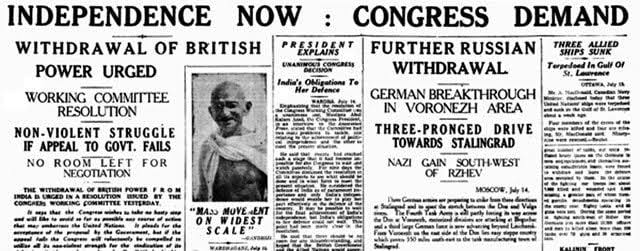
The differences did not disappear, but they did not prevent the three leaders from moving forward together. On 7 August 1942, at the All-India Congress Committee meeting in Bombay, Nehru moved the Quit India resolution, and Patel seconded it. In his speech, Patel defended the decision, arguing that India could not be expected to contribute to the war effort while its people remained under foreign rule. The resolution was adopted on 8 August, and Gandhi gave his call of “Do or Die”. In the early hours of 9 August, Gandhi, Nehru, Patel and other Congress leaders were arrested.
The episode revealed something important about the relationship between these three leaders. Gandhi, Nehru and Patel differed in temperament, political outlook and their assessments of particular situations. Their disagreements were real, and their relationship was not without tensions. Yet when the question of India’s freedom reached a decisive point, they were able to work towards a common political objective. Nehru and Patel, despite their reservations and differing concerns, ultimately supported the course advocated by their mentor, Gandhi.
Make sure to check back tomorrow for the second part of article in this series.






Happy to read something credible about Patel
Sardar Vallabhbhai Patel’s transformation from a successful barrister into one of the strongest pillars of India’s freedom struggle is a remarkable chapter in our history. Gandhi provided the vision, but Patel brought extraordinary determination, organisational strength and political courage to turn that vision into action. His commitment to national unity, secularism and public service deserves to be remembered in its true historical context, beyond today’s political attempts to appropriate his legacy. History belongs to the people, not to those who selectively rewrite it for political gain.