

Guardians Beyond Faith: How Muslims Preserve Kolkata’s Jewish and Chinese Sacred Spaces

At the height of the British Raj, Kolkata was renowned as the “Second City of the British Empire”. On any given day, its streets were crowded with traders and migrants from all over the world, including Armenians, Chinese, Arabs, Scots, Spaniards, Malays, and Japanese. Among these was a group known as the Baghdadi Jews. While other Jewish communities had settled in places like Mumbai and Cochin centuries earlier, the Baghdadi Jews did not arrive in Calcutta until 1798. Originally from Baghdad and other Arabic-speaking parts of the Ottoman Empire, they built powerful trade routes across Asia as merchants dealing in lucrative goods like opium and indigo. An Aleppo-born merchant named Shalom Aaron Cohen can be credited as the founder of the Baghdadi Jewish community in Kolkata, thus paving the way for a wealthy and influential diaspora.
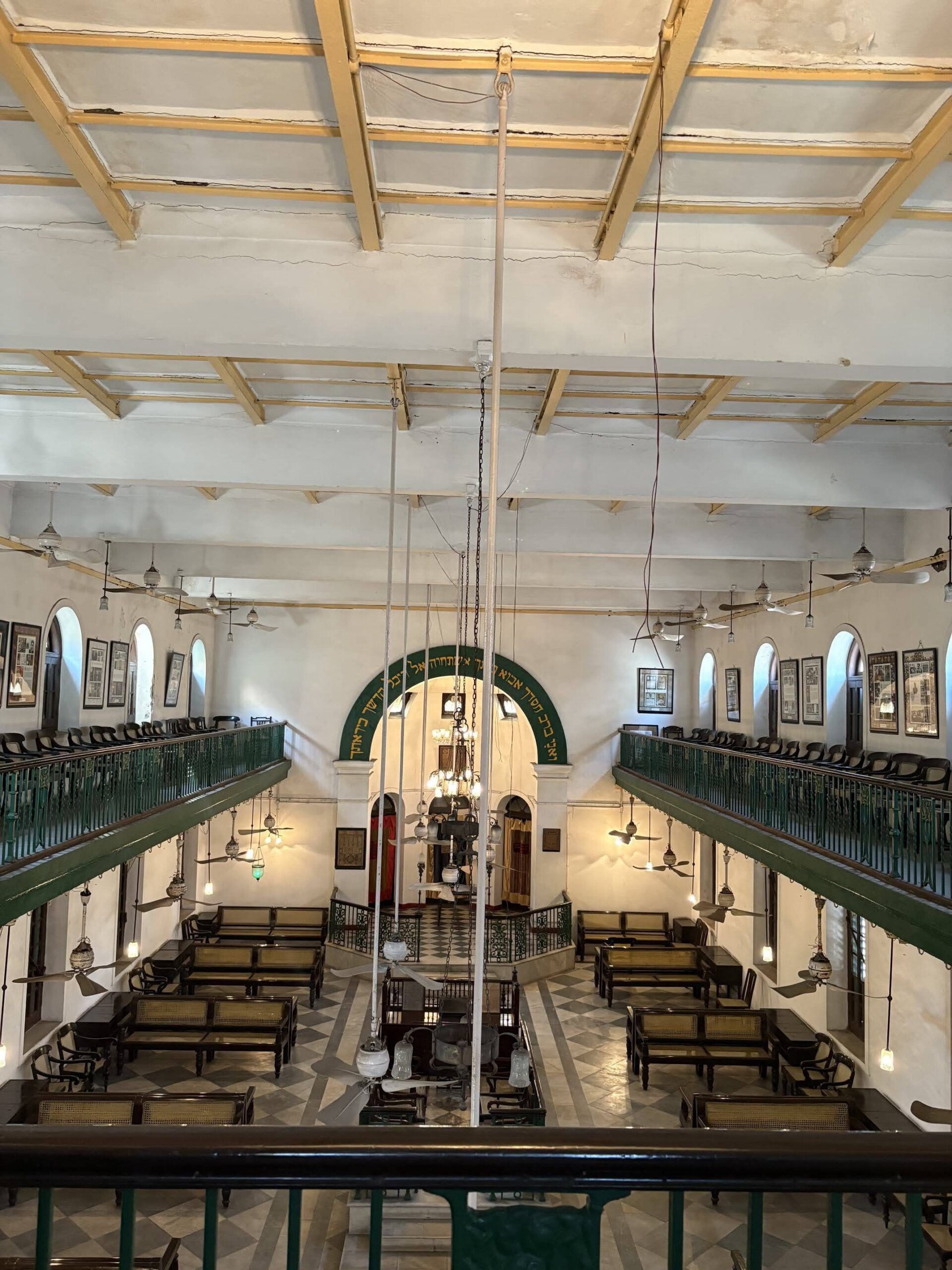
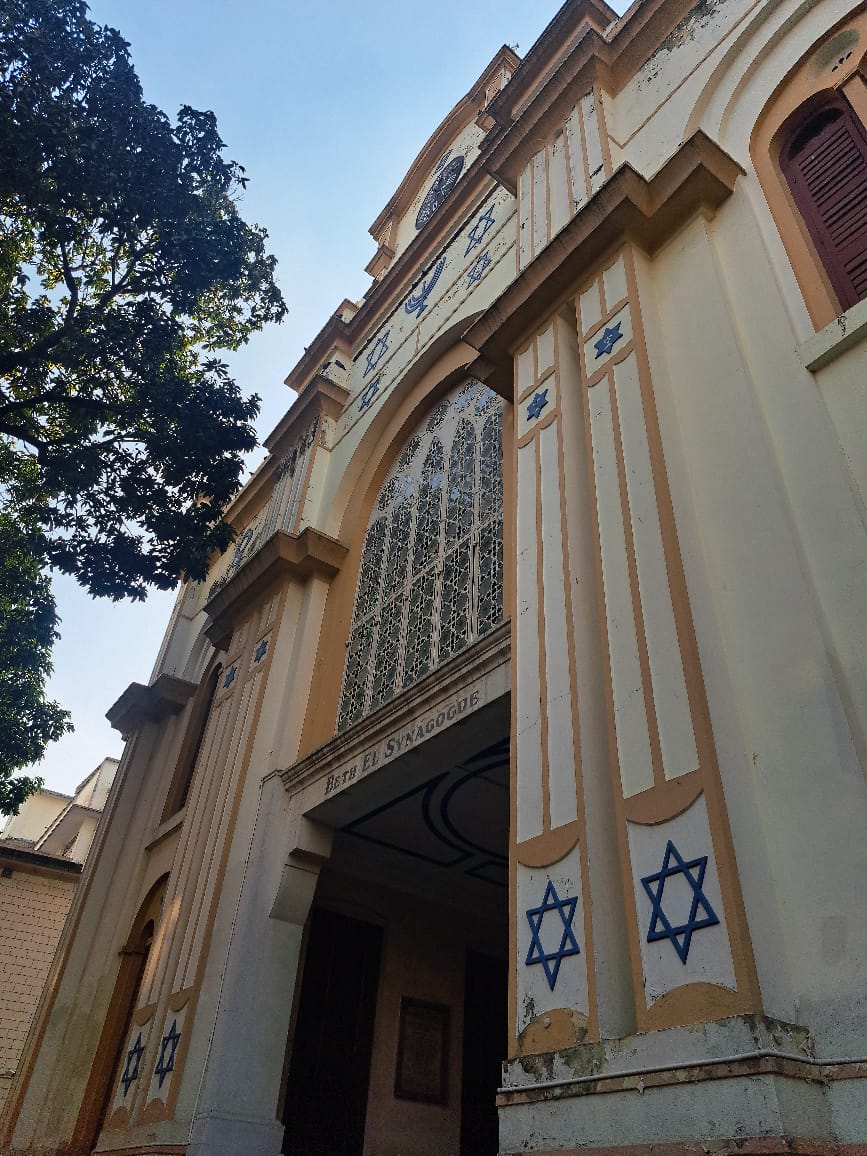
As the community grew richer, they built prayer halls in Kolkata, called synagogues, three of which still stand today. The very first was called Neveh Shalome Synagogue, established in 1823 by Shalom Aaron Cohen and his partners, Ezekiel Musleah and Benjamin Abraham Solomon David. As trade wealth from opium and indigo continued to pour into the city, the community funded a second prayer hall in 1856 called the Beth El Synagogue. Years later, in 1883, the Neveh Shalome Synagogue was demolished to make room for the much more magnificent Maghen David Synagogue (locally known as Lal Girja), which was built by Elias Ezra in honour of his father, David Ezra. Again, in 1911, the community members together funded the amount required for the reconstruction of the old Neveh Shalome Synagogue, which stands close to the Maghen David Synagogue today.
There were also two smaller neighbourhood prayer halls that faded into history. The Maghen Aboth and Yesheebath Jacob Benjamin Elias (Beth Hakeneseth) prayer hall, which was a relatively small prayer hall, was opened by a religious teacher named Hakham Twena inside his own home in the year 1897. In the year 1942, this prayer hall was taken over by Benjamin Nissim Elias, and then it was renovated by the Elias family and thus named Maghen Aboth. At present this prayer hall does not exist anymore; the old building was demolished in 2007 for a residential building. Similarly, the Sha’areh Rasone prayer hall was built in 1933 for Jewish families working near New Market but closed permanently in 1963 when its Torah scholar, Abraham Silas, emigrated to the United Kingdom.
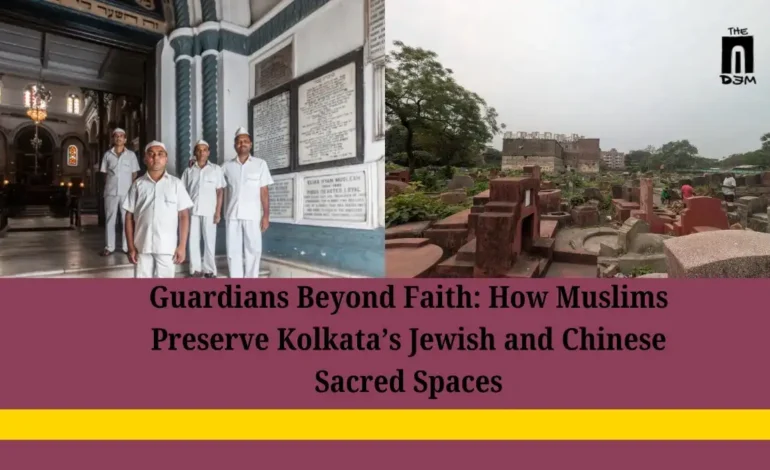
During World War II, Calcutta’s Jewish population had peaked at over 3,000 members. Today, however, most families have moved away to countries like Israel, the UK, and the USA, leaving only a handful of Jewish residents in the entire city. Because their numbers are so small, regular Saturday Sabbath prayers rarely happen anymore, and the grand buildings mostly echo with memories. Yet, in contrast to the global Israel-Palestine conflict and rampant Israeli assault against innocent Muslim Palestinians, these Jewish holy sites—Beth El, Maghen David, and Neveh Shalome—have been kept alive and perfectly preserved by local Muslim families who have served as their devoted caretakers for generations. At the Beth El Synagogue, a Muslim family has looked after the building for four generations, with Anwar and Siraj currently managing the daily upkeep. Nearby, at the Maghen David Synagogue, a man named Rabbul Khan serves as the third-generation caretaker from his family. These caretakers sweep the floors, polish the brass ornaments, and guard the sacred spaces with deep respect. As Rabbul Khan explains, the wars belong to other countries, and because there is mutual respect, religion never gets in the way of their duty. Ms Cohen, the secretary of Kolkata’s Jewish community, sums up this historic bond by noting that she believes in people rather than ideologies, emphasising that if people simply took the time to get to know one another, hate would disappear, proving that this sense of acceptance remains one of India’s greatest traditions.
Running parallel to this city’s history, the story of the Chinese community in Calcutta is another tale of migration and deep cross-cultural bonds. The roots of this community can be traced back to the late 18th century when a Chinese trader named Tong Atchew landed on the banks of the Hooghly River and established a sugar mill in an area now known as Achipur, near Budge Budge. Today, Atchew’s horseshoe-shaped tomb in Budge Budge remains a sacred landmark, standing as a historical monument to the pioneer who started India’s only Chinatown. As the community grew and shifted inward toward the city, Kolkata’s first Chinatown emerged at Tiretta Bazaar in the heart of Central Kolkata. For generations, Tiretta Bazaar flourished as a vibrant hub of Chinese culture, famous for its early morning street markets serving traditional Chinese breakfast, its churches and its social clubs.
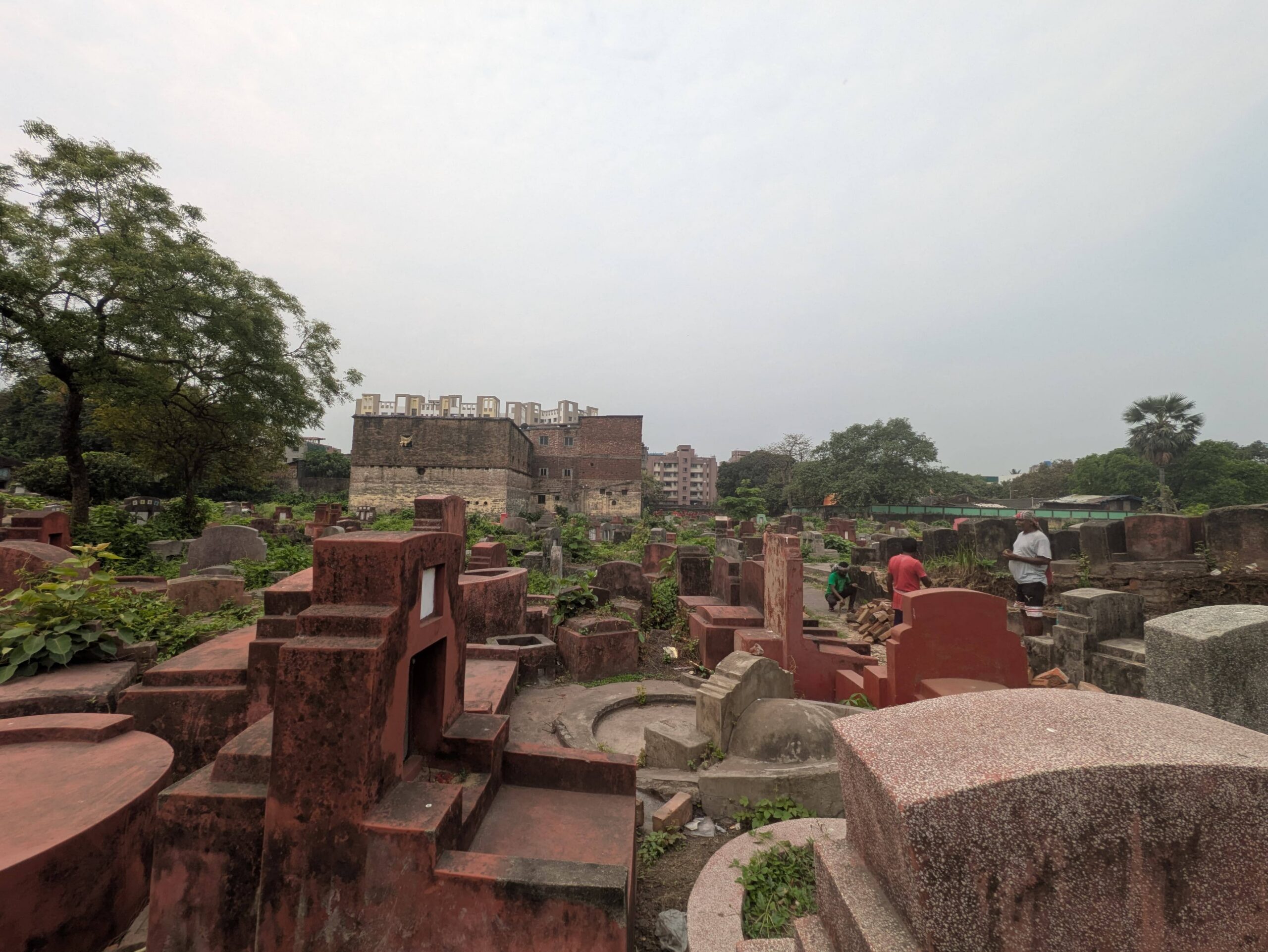
As time went on and the community expanded, particularly into the tanning and shoemaking industries, a second Chinatown emerged in Tangra, located in the eastern fringes of the city. Tangra became the new industrial and cultural centre for Kolkata’s Hakka Chinese population, famous worldwide for its unique Indo-Chinese cuisine. Beyond the bustling restaurants, Tangra also became the final resting place for the community members. The neighbourhood houses several Chinese cemeteries, each belonging to different huigans, which are traditional Chinese clan or community associations based on regional and linguistic origins. Among these, the Gee Hing huigan is the oldest Chinese clan association in Kolkata, which serves as caretakers of the Chinese temple in Budge Budge, as well as looking after Atchew’s tomb.
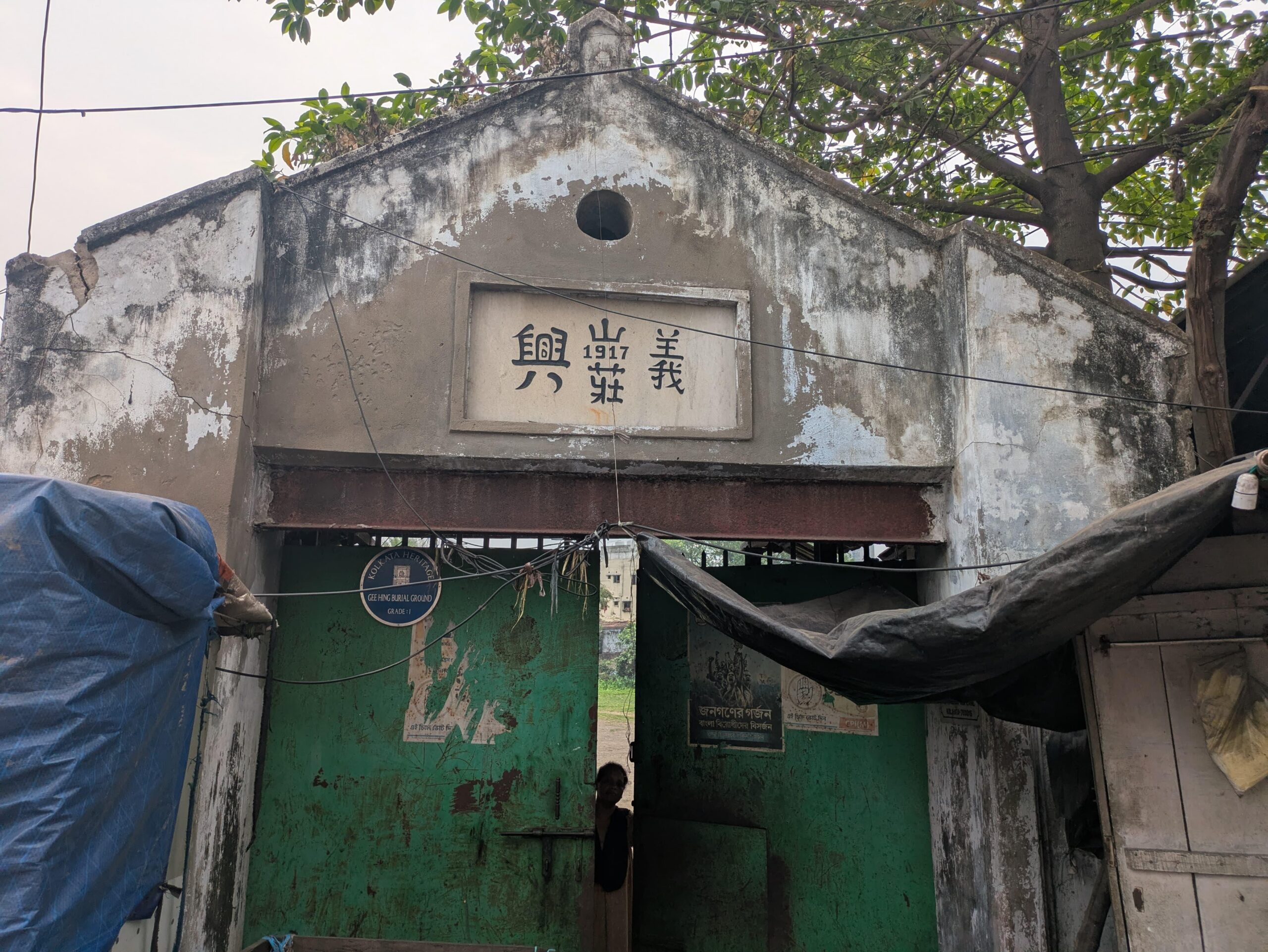
The task of guarding the Chinese resting places has bridged religious divides just as it did for the city’s synagogues. The Gee Hing cemetery located in Tangra is looked after by a local Muslim man named Karim (name changed to maintain privacy). According to Karim’s wife, her husband is the third generation of his family to serve as the caretaker of this Chinese cemetery, carrying on a legacy of trust that spans decades. The relationship is built on mutual care and respect: the members of the Gee Hing club take care of the basic day-to-day financial and material needs of Karim and his family. In return, Karim dedicates his time to maintaining the grounds, ensuring the cemetery is kept clean, hygienic, and peaceful.
While the cemetery remains quiet for most of the year, it comes alive with memory and tradition during pivotal times. Members of the Gee Hing huigan visit the grounds when there is a death in the community to lay their loved ones to rest or when individuals come to pay respect to their ancestors. The cemetery also becomes a focal point during major traditional Chinese festivals, most notably Qingming (the Tomb-Sweeping Festival) and Chung Yeung (the Hungry Ghost Festival), when families gather to clean the graves, offer food, and burn incense for the departed. This beautiful arrangement of cross-cultural care is not unique to Gee Hing; the nearby Choong Ye Thong cemetery as well as the Sea Voi Koon Coon cemetery also relies on a local Muslim family as its dedicated caretakers. Together, these families ensure that even as Kolkata’s Chinese population shrinks due to emigration, the resting places of their ancestors remain protected, standing alongside the grand synagogues as a quiet, powerful symbol of Indian pluralism and neighbourhood solidarity.
From the following examples it is clear that while India’s global diplomatic stance suggests a pro-Israel policy, the local experiences are far more diverse and intricate. On one hand, employment of Muslim caretakers suggests a nod to pluralism where the religious identity of each individual is kept aside. On the other hand, it highlights that the Muslim population in regions like Canning Street and Tangra had to depend on a more symbiotic relationship with micro-minority communities to survive. While this is indicative of a positive friendly relationship where international and religious biases are kept aside to ensure survival, it also has certain negative connotations. From statements like Rabbul Khan’s, it is clear that there is a certain layer of ignorance which dismisses the war and acts of bigotry as something “foreign”, as in outside their realm of reality and, therefore, that they do not matter.
Furthermore, the Muslim and micro-minority relationship is not always peaceful or respectable. Accusations against Muslims in Kolkata are built upon a fairly prejudiced position. For example, the Chinese and Parsi minority community constantly blames the Muslim population of Tangra and Ezra Street for encroachments and for accelerating the decay of their historic and religious sites.
Therefore, the varied forms of relationships suggest that identity cannot be classified or labelled into binaries. The absence of a clear black-and-white position, giving way to a grey, rather than an “orange” path, suggests that the legacy of Kolkata’s micro-minority community is too varied and plural to be sorted into pre-determined categories by a communal right-wing government of hate.








This is far more than a story about heritage—it is a powerful reminder that humanity, trust, and compassion can transcend religious boundaries. The quiet dedication of Muslims preserving Kolkata’s Jewish and Chinese sacred spaces challenges divisive narratives and shows that coexistence is built through everyday acts of care. A deeply moving and timely piece that deserves to be read widely. Kudos to the author and The AIDEM for bringing this inspiring story to light.
This article shows how Kolkata, the great teeming City of india also carries a historic tradition of secular conventions . Prachi Jha captures this essence beautifully . A worth read on a day the Gen Z. Scored a memorable secular victory against an authoritarian Modi government