



A video clip that has gone viral on social media shows a senior police officer slapping a young girl without any apparent provocation during the students’ protest in Delhi. Another clip shows a policeman allegedly sexually assaulting a girl. Yet another exposes men dressed in civilian clothes carrying batons. Then there is a video showing policemen themselves overturning a police vehicle so that the blame could be shifted to the protesters. Numerous other videos circulating online clearly depict instances of alleged police brutality.
None of these videos or photographs were shown on any of the national television channels or published by the mainstream media.
The coverage of the ongoing student protests led by the Cockroach Janta Party by much of the electronic media has dealt a severe blow to its credibility and has marked the emergence of social media as a more dependable and transparent source of information.
Mainstream Media’s Silence Creates an Information Vacuum
Given the inherent advantage of visual media, which has greater retention value than print, any discussion on the state of the media in the country inevitably focuses on television news. Although it had earned the moniker of “Godi media” over the years because of its perceived pro-government coverage, public anger against it spilled into the open during the students’ march to Parliament on Monday.
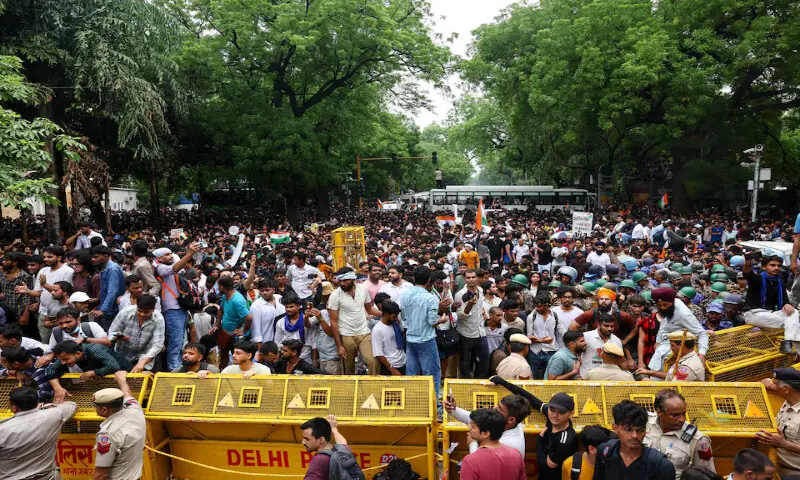
Ever since the Cockroach Janta Party began its protests in Delhi, including the indefinite fast launched by climate activist Sonam Wangchuk from Ladakh, almost the entire mainstream media has downplayed the agitation. While none of the Delhi-based television channels gave the protests any significant coverage, most newspapers published from the capital also kept the story off their front pages.
Citizen Journalists Fill the Gap
That huge information gap was filled by social media, including citizen journalists, who allowed the visuals to speak for themselves as support for the agitation steadily grew. Many young reporters, carrying nothing more than their mobile phones, continued to report from the protest site throughout the demonstrations.
One of the country’s leading English newspapers made no mention of the lathi charge or the injuries sustained by students and policemen in its main headline. Instead, it merely reported that the police had thwarted an attempt to gherao Parliament and that a delegation of students had met Union Minister J.P. Nadda. Several other newspapers prominently carried photographs of students pelting stones rather than images of the police lathi charge.
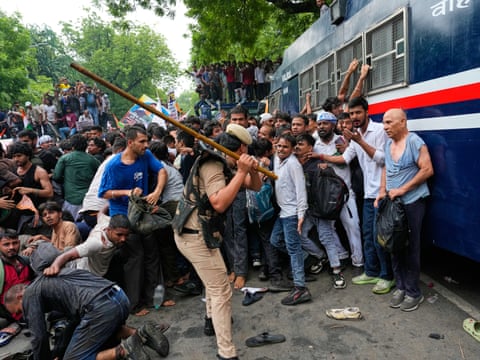
It is also unfortunate that the government allowed the protests to continue for so long without reaching out to students who had been demonstrating for over a month. Perhaps it believed that the agitation, which began online against the repeated leakage of question papers for competitive and entrance examinations, would eventually lose momentum. Instead, it continued to grow and has now spread to several cities.
Government Missed an Opportunity for Dialogue
The protest grew organically, with no indication that any political party was behind the growing unrest among the youth. The government should not have turned it into a matter of prestige by continuing to ignore it. It would have earned the respect of students and the public at large had it initiated a dialogue with the protesting students.
Coming back to the role of social media, it must be acknowledged that it has come of age. Its reach is now far wider than that of television news channels, many of which have lost public credibility. It will now be increasingly difficult for the police or other security agencies to conceal instances of excess.
However, a note of caution is necessary. Citizen journalism may not always be accurate or responsible. In the age of Artificial Intelligence, it is sometimes difficult to distinguish genuine content from manipulated material.
Nevertheless, the unedited visuals captured by protesters have revealed incidents that might otherwise have remained hidden from public view or escaped the attention of the mainstream media because of its limited presence on the ground.
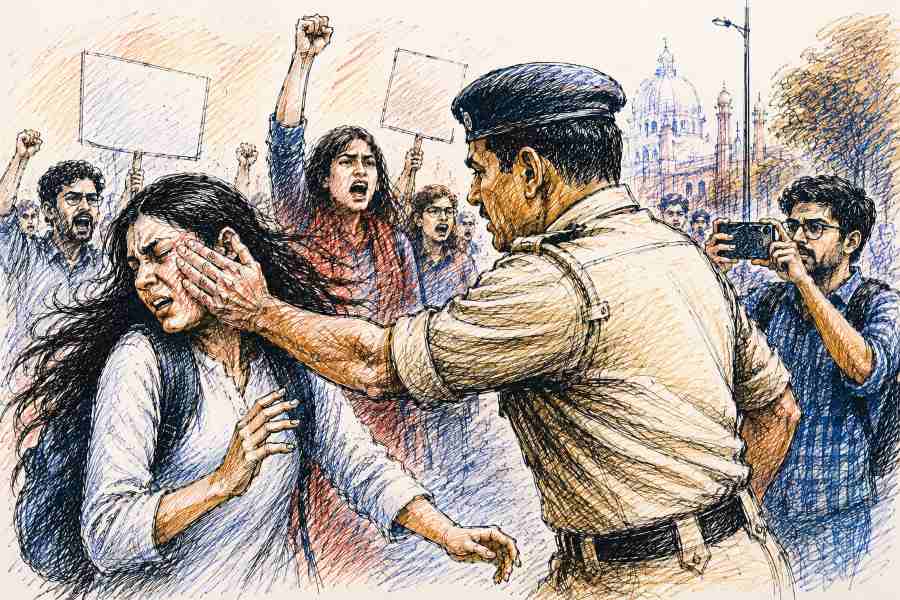
The government would do well to take cognisance of all instances of alleged police excesses, including the presence of baton-wielding policemen in civilian clothes, and ensure that those found guilty are held accountable. In this age of information technology and the power of the mobile phone, it will become increasingly difficult for any government to sweep such excesses under the carpet.









When mainstream narratives fail to answer public concerns, people increasingly turn to independent voices and first-hand documentation. An insightful piece
This is in the capital, imagine the situation for the minority tribes in the periphery of Manipur