

Mahabaleshwar’s Strawberry Farmers Struggle as Mercury Fails to Dip

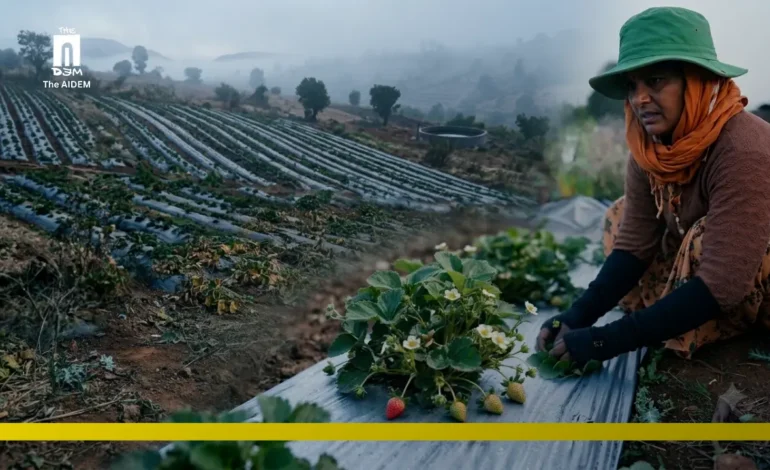
The strawberry season begins in winter in Mahabaleshwar, Panchgani and the surrounding villages in Maharashtra’s Western Ghats. Mahabaleshwar and Panchgani are known not just as hill stations and popular tourist destinations but also as two of India’s major strawberry-growing regions.
But this year, things are changing in the region. There has been less rainfall, and parts of Maharashtra have been facing drought conditions. Water levels in wells and borewells have dropped, while the expected winter chill has yet to set in, even in November. In Satara district, Mahableshwar and Wai, these two talukas, are also included in the drought-prone talukas.
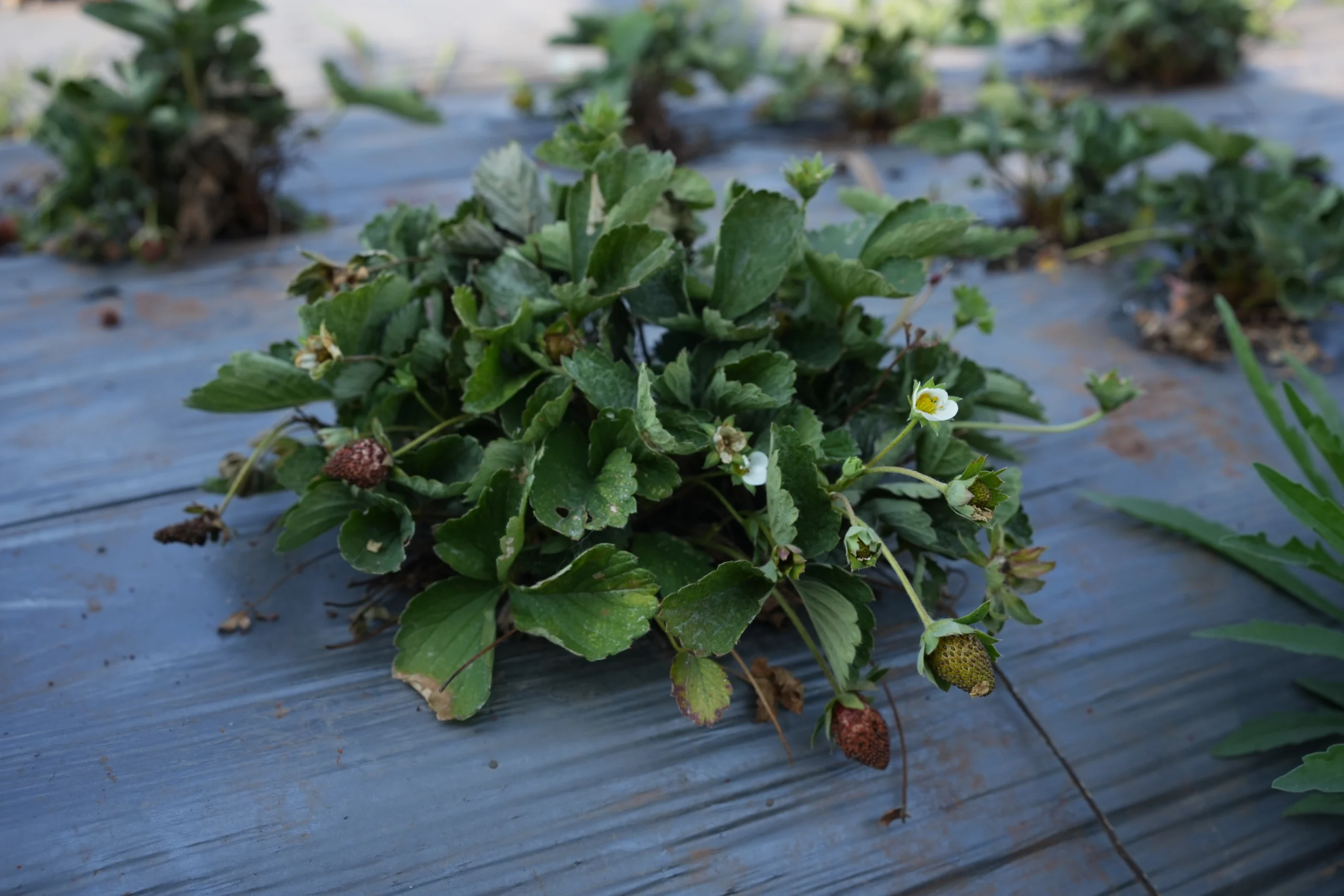
These climatic changes are beginning to affect everything from strawberry planting to the growth of the fruit. Some farmers in the region have reduced the area under cultivation, while others are struggling to keep their existing strawberry crops alive and are having to manage their limited water supplies carefully. As the season progresses, farmers are worried about how much they will be able to harvest and whether their water reserves will last through the upcoming summer.
Farmers in Mahabaleshwar, Panchgani and the villages around them in Satara district have been growing strawberries for decades. Local farmers say the crop first came here during British rule. Over time, farmers turned it into a business, and for many families it is now the main source of income. Bhilar is the best example, a village that has made a name for itself through strawberries.
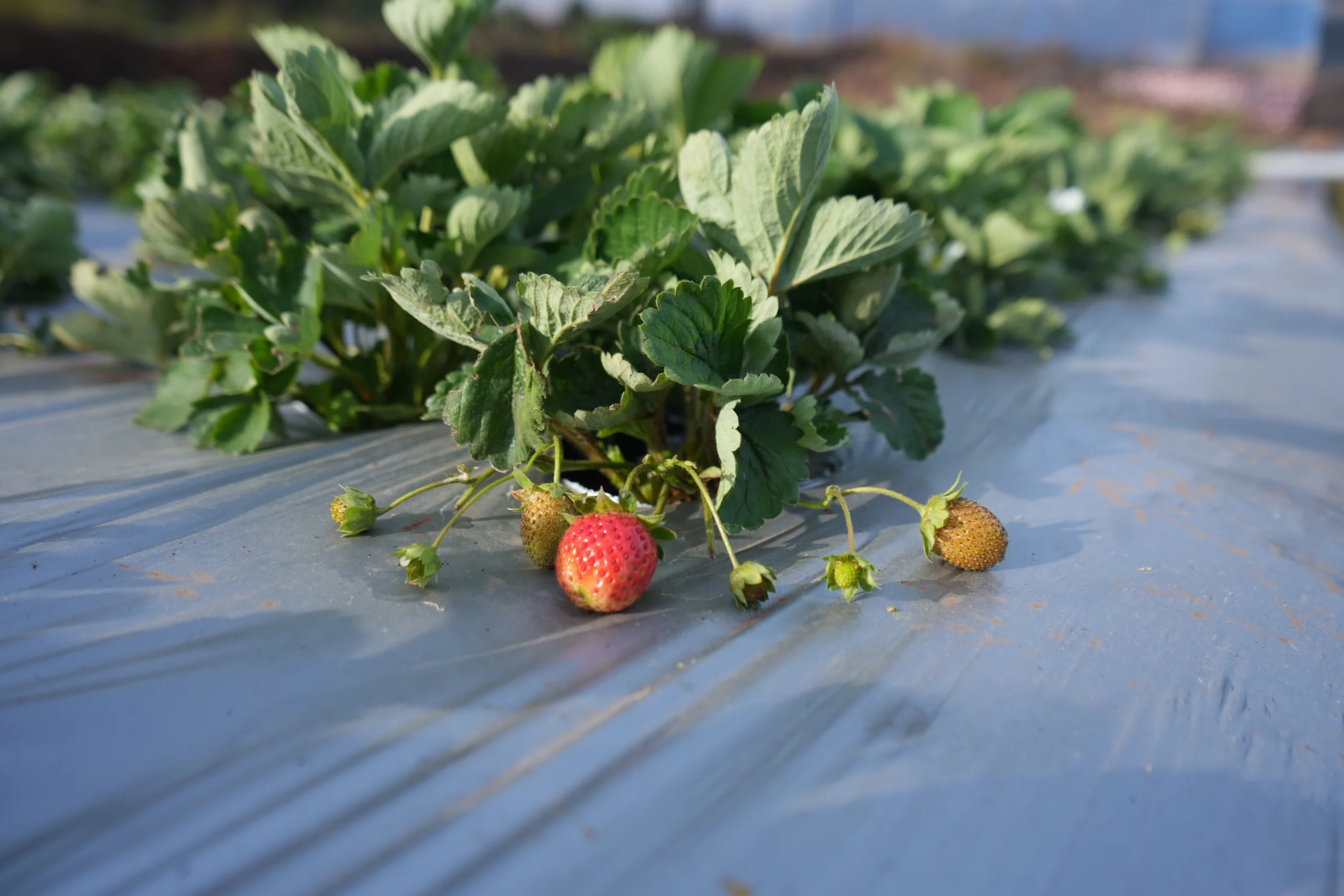
Strawberries are now much more than a fruit crop here. For many farming families, they are the main source of income. In 2010, Mahabaleshwar strawberries got a Geographical Indication (GI) tag, which gave the fruit an identity of its own in this region. The cool climate, hilly land and red soil of the region suit the crop well.
Santosh Shirke, a farmer in Panchgani, has been growing strawberries for over the past 15 years. He usually plants one to two acres every year, but this year there was so little water that he couldn’t even plant half an acre the way he wanted to, and some of the plants he did put in have already dried up. In all his years of farming, he says, he has never seen anything like it.
“This year, strawberry production has fallen to less than half of what we usually get. Many of the plants we planted have dried up because of the water shortage. The plants are not growing properly, and that is affecting the crop. At this time of the season, we would normally get around 100 kg of strawberries per acre. This year, we are not even getting 25 kg. Earlier, it used to get cold in October itself. But this year, even in November, we have hardly felt any cold. The afternoons are particularly hot. Strawberries need cold weather to grow well, but that is missing this year. It is affecting both the growth of the plants and the yield. There is also a shortage of strawberries in the market, and prices have risen to around Rs 600 per kg. If the wells run dry in the coming months, saving the crop will become very difficult for us.”
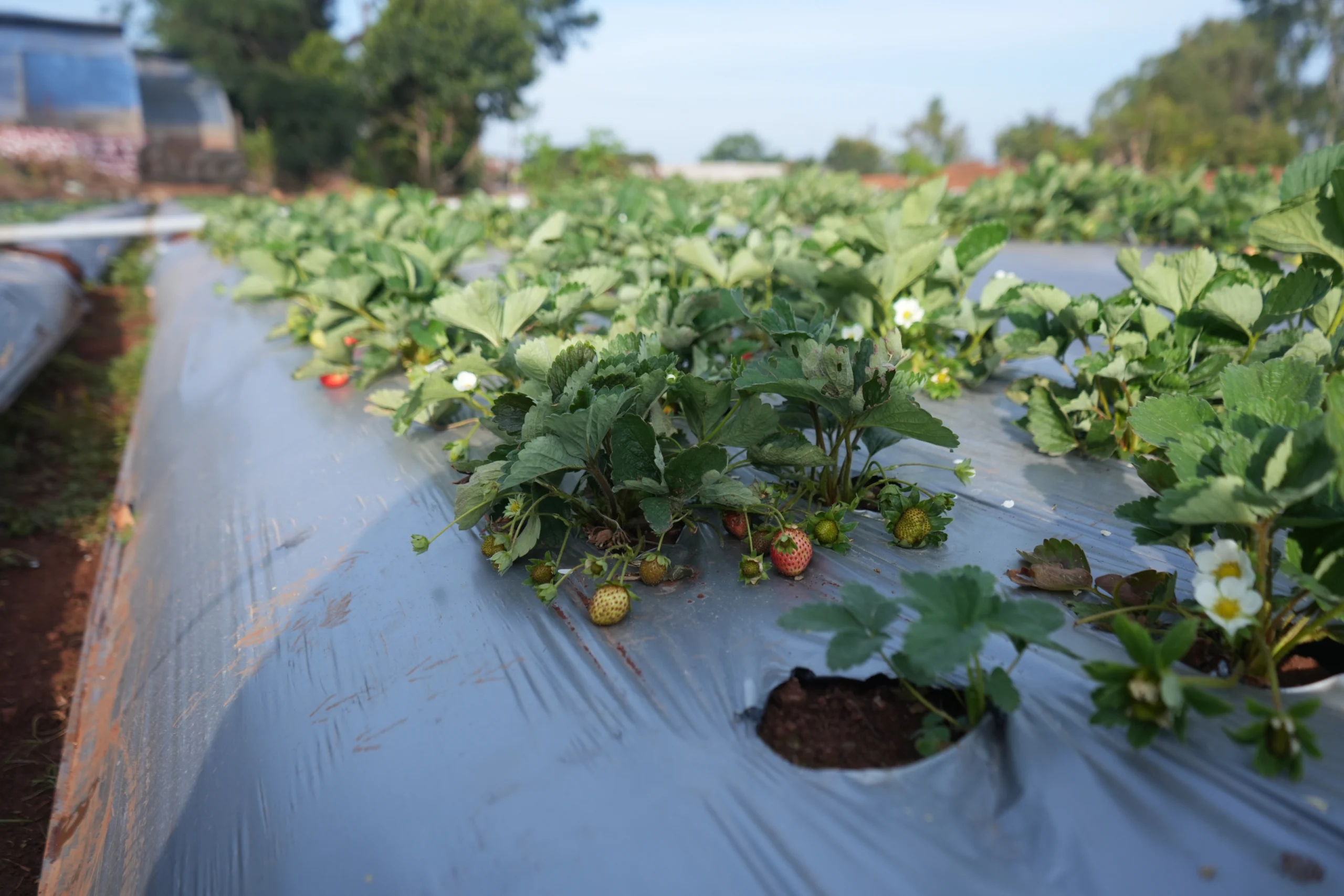
Until a few years ago, the strawberry fields around Panchgani and Mahableshwar would be covered in dew every morning. This year, they aren’t. We went to the fields ourselves between 6 and 9 am, and the leaves were dry. Farmers think the weather is changing. The morning dew helps the plants grow, so its absence this season may be affecting the strawberry crop in the region.
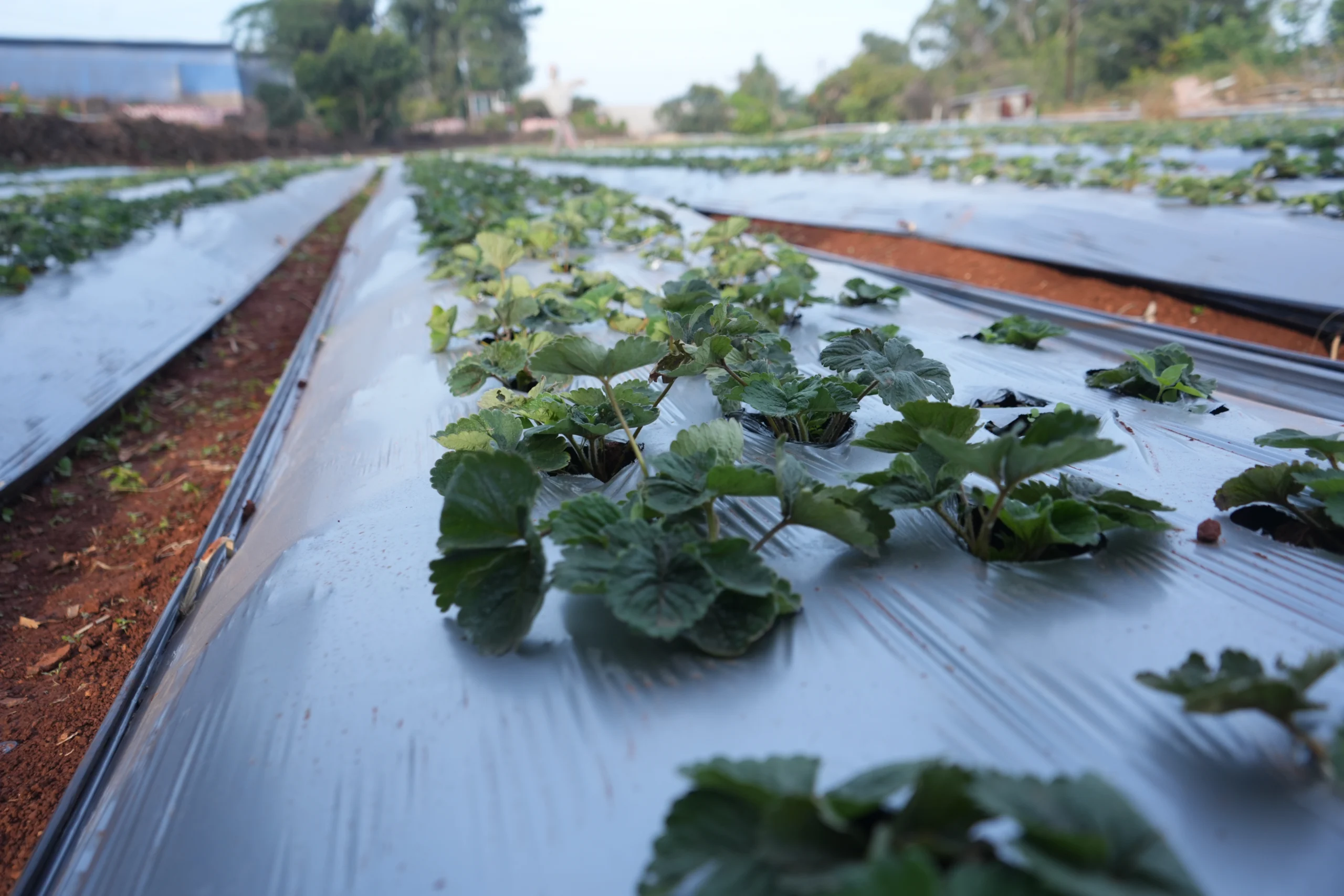
Strawberries are a delicate crop. In the strawberry region of Mahabaleshwar, the red soil has to hold enough moisture through the monsoon, and winter has to bring the right amount of cold.
Strawberries usually require a temperature of 15 to 20 degrees Celsius, so even a slight change in the weather immediately affects this crop. This is exactly what has been seen in Mahabaleshwar in the last few years. Farmers here said that due to the sudden cold in December 2024, production decreased by 60 to 70 per cent.
Also, due to the increase in temperature and heat waves in February-March 2025, the flowers of the strawberries initially fell; the fruits ripened early and remained small in size. Even though November has dawned this year, it has not been cold here; the effects of climate change can be seen here.
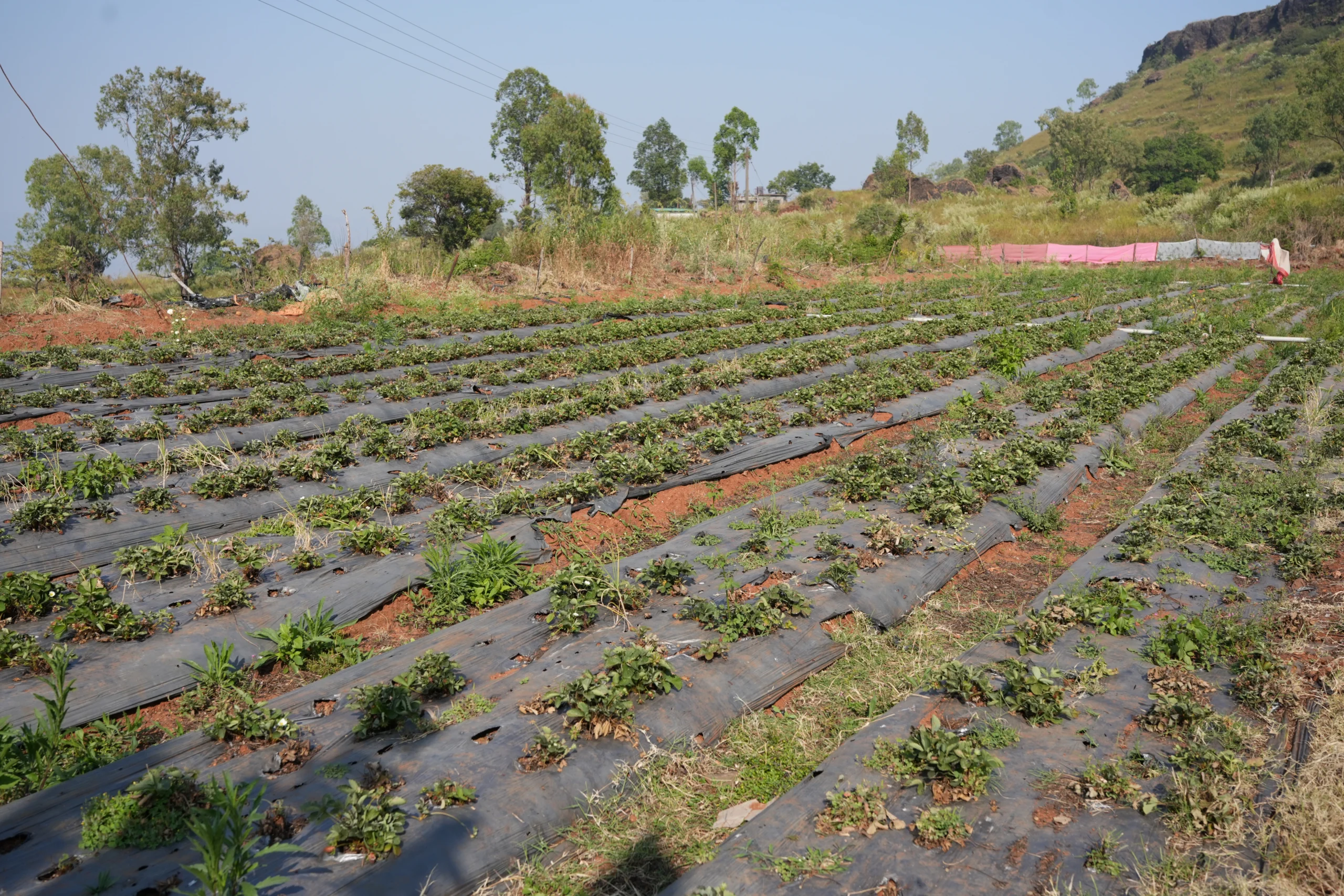
The effects of the changing weather are now showing up in Mahabaleshwar’s strawberry fields. Agriculture Department official from the Mahabaleshwar region, Deepak Borade (Deputy Agriculture Officer, Mahabaleshwar), says temperatures are touching 26 to 27 degrees Celsius even in November. This year, drought is hitting Mahabaleshwar and Satara. Resulting rainfall was also lower this year, and water levels in wells have dropped sharply. According to the Department, the area under strawberry cultivation in Mahabaleshwar is down by 30 to 35 per cent this season. With temperatures rising and water running short, production is likely to take a hit.
“The ideal temperature for strawberry cultivation in Mahabaleshwar is around 15 to 20 degrees Celsius. Night-time temperatures are usually even lower. But this year, temperatures are reaching 26 to 27 degrees Celsius. As a result, the plants are not getting the cool weather they need, which is affecting their growth. These changes in weather are also causing water stored in the soil to dry up faster. Mahabaleshwar usually receives around 5,000 to 6,000 mm of rainfall every year. But this year, rainfall has been below normal. Water levels in wells have dropped significantly. Earlier, strawberries were cultivated across around 2,500 to 3,000 acres in Mahabaleshwar. This year, however, 30 to 40 per cent of that area has been left uncultivated. Water availability will remain a major concern for farmers in the coming months. We are therefore encouraging farmers to build farm ponds and focusing on well recharge, soil conservation and water conservation measures,” agriculture officer Deepak Borade said.
While changing weather patterns and water scarcity are posing serious challenges to strawberry cultivation in Mahabaleshwar, the growing number of tourists is also putting pressure on the local environment.
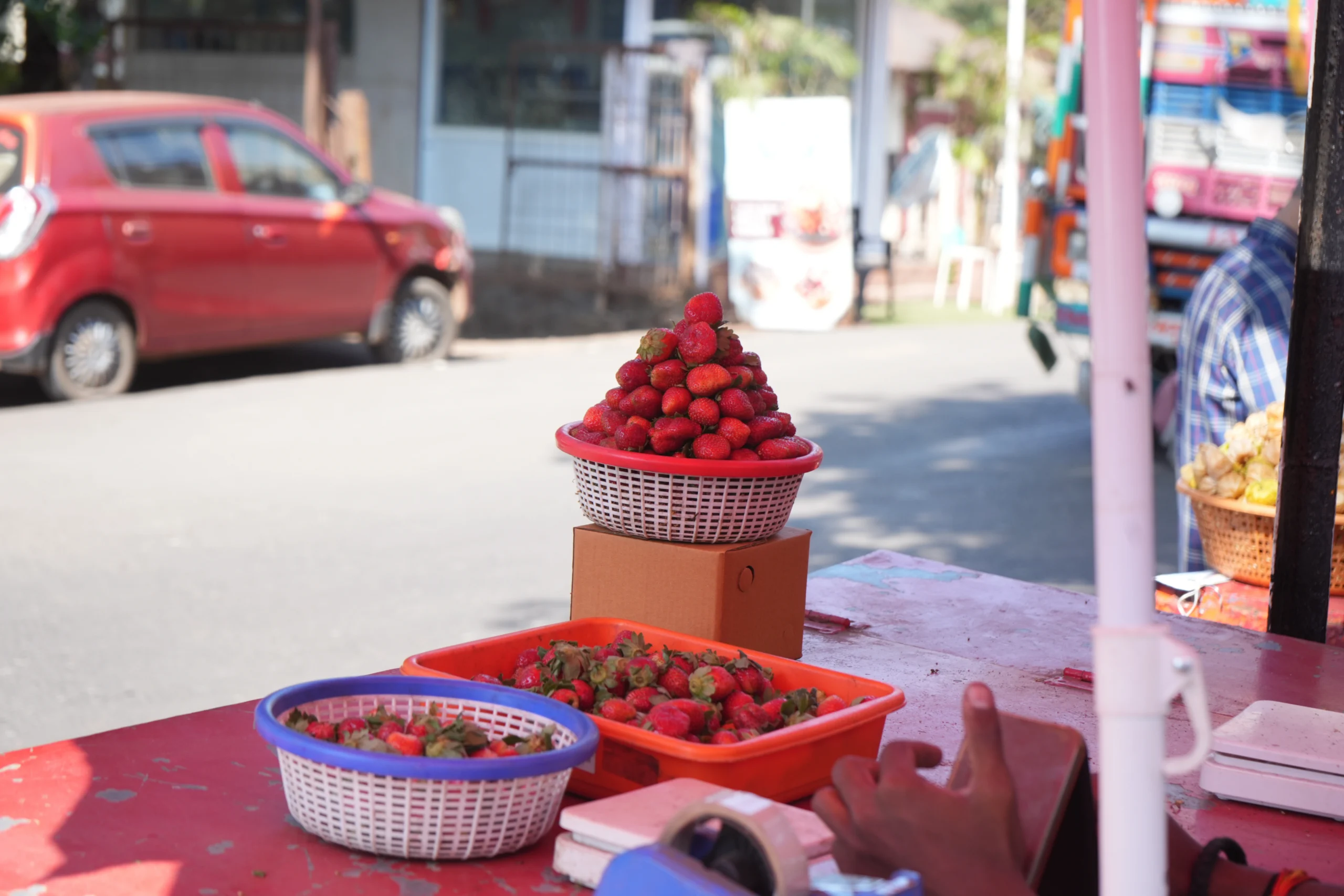
Every weekend and holiday, thousands of tourists from Pune, Mumbai and other parts of Maharashtra head for Mahabaleshwar and Panchgani. You can see it on the roads, where long lines of vehicles are a regular sight. Traffic often jams up around the markets, the tourist spots and the main roads. Smoke from all those vehicles, and the pollution that comes with it, is becoming a worry for the local environment.
We spoke to young farmer Vaibhav Zagade about these changes. He said:
“Over the past few years, we have noticed major changes in the weather in Mahabaleshwar. Our region is known for its cool climate, but pollution is increasing. Trees are being cut down, and construction activity is growing. This year, because of the low rainfall, strawberry plants have not grown as expected. Strawberries need rainfall and cool temperatures, but we have not had the weather conditions required for the crop. Plant growth has slowed, and the leaves of some plants are drying up and falling off. Even after we water the fields in the morning, the soil becomes dry again within a few hours. Pest attacks, particularly from sucking insects, have also increased. Spraying pesticides has not produced the expected results.”
Krishnaji Bhillare, a progressive farmer from Bhilar village in Mahabaleshwar who has decades of experience in strawberry cultivation, believes that this year’s changing weather could affect not just crop growth but the entire strawberry business.
According to Bhillare, the lack of cool weather has contributed to an increase in pest attacks, particularly thrips and mites. Normally, the rate of plant mortality after transplantation is around one to two per cent. This year, however, it has risen to between 20 and 30 per cent, he said.
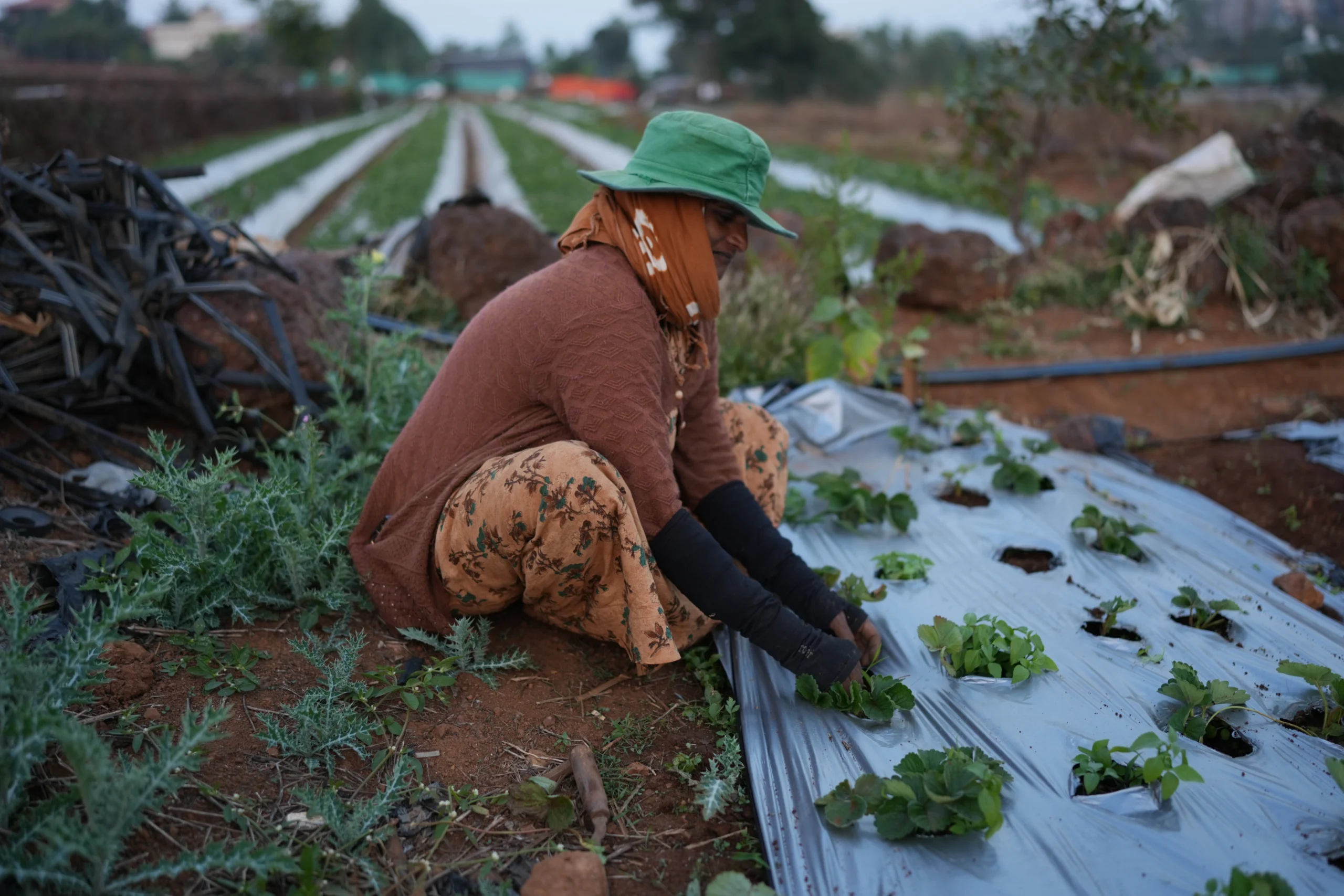
Fresh strawberries from Mahabaleshwar are supplied to cities including Ahmedabad, Hyderabad, Bengaluru, Chennai, Kochi, Goa, Pune, Mumbai, Delhi and Jaipur. A decline in production could affect supplies to these markets. It could also create shortages of raw material for industries that use strawberries to make ice cream, jam, jelly and sweets.
The impact of changing weather, therefore, may extend beyond individual farms to the entire strawberry supply chain.
Atul Howale is a mentee of the Climate Change Media Hub at the Asian College of Journalism. The programme is supported by Interlink Academy, Germany.










Mahabaleshwar’s strawberry farmers are paying the price for a climate crisis they did little to create. Rising temperatures, declining rainfall, water scarcity and unchecked environmental degradation are threatening not just a crop, but the livelihoods of thousands of farming families. This is a stark warning that climate change is no longer a distant threat; it is destroying rural economies right now. Protecting farmers, forests and water resources must become an urgent priority, not just another political promise.