

Mahatma Gandhi’s Journey: From Merchants to Masses for Raising Funds

Gandhi and Finance- Part 1
For Mahatma Gandhi, money was never merely a resource; it carried the weight of sacrifice, duty and trust. From the family sacrifices that enabled his journey to England to his years organising India’s community in South Africa, Gandhi gradually developed a distinctive philosophy of political finance—one rooted in transparency, frugality and voluntary giving.
This is the first article in a three-part series by Anu Jain exploring how Gandhi transformed fundraising from a financial necessity into a form of political participation, where every contribution, however small, became an act of trust and commitment to a larger cause.
Mohandas Karamchand Gandhi did not start fundraising as a clever political strategy. Instead, it grew out of personal necessity. As a young man wanting to study law in England, he faced the first of many financial rejections that would change how he thought about money forever. He asked the administrator of Porbandar for financial help, but his request was flatly refused, even though the Gandhi family had a long history of working with the State.
Because of this refusal, the burden of finding money fell entirely on his family. His older brother, Laxmidas, took on the task of raising the funds, and the family had to pawn their own jewellery to make up the difference. Later in his autobiography, Gandhi remembered that his journey to England happened because of family sacrifice, not wealthy protectors. This left a deep moral mark on him. To young Gandhi, money wasn’t just a helpful resource. It was a heavy burden wrapped in duty and accountability. This early lesson created a lifelong belief: when you raise money from other people, you must be far more responsible with it than you would be with your own wealth. Historians like Judith Brown point out that Gandhi’s famous obsession with financial transparency started right here, rooted in these early days of dependence and family obligation.
After qualifying as a barrister, Gandhi moved to South Africa in 1893 to handle the business cases of a merchant named Dada Abdulla. This move dropped him right into a fast-growing world of Indian traders. The Indian community in Natal was changing rapidly. In 1870, there were only 665 Indians in Durban, owning property worth £500. By the end of the century, that number had exploded to nearly 15,000 people controlling over 400 shops and owning property worth more than £600,000.
This rapid economic growth brought both great opportunities and deep anxieties. As the historian Robert Huttenback noted, the rising wealth of the Indians “frightened and offended” the European settlers. The Europeans saw the Indians as dangerous business competitors and did not like living so close to them in daily life.
This tense environment is exactly why organised politics began. Making money did not automatically make the Indian community safe. In fact, their financial success actually made racial hatred and legal restrictions worse. The colonial government were terrified of Indian wealth, but they were even more terrified that the Indian community might unite politically. It was during this tense time that Gandhi’s role began to shift from a simple legal representative to a political organiser.
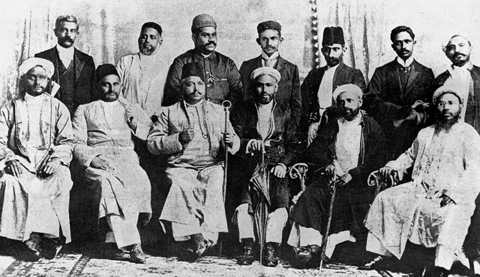
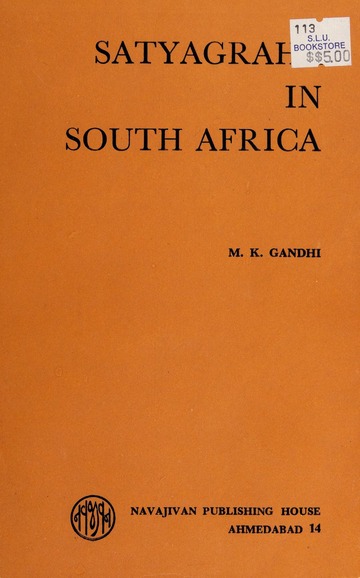
By the mid-1890s, Gandhi was working as the Secretary of the Natal Indian Congress (NIC). He quickly faced a massive problem: how do you keep a political group running financially when the community is completely split by social class, jobs, and levels of safety? Many wealthy merchants did not want to give money to a lawyer doing public work that did not bring them immediate profits. Some even worried Gandhi might become a “white elephant”, a very expensive figure whose actual usefulness was unproven. In his book Satyagraha in South Africa, Gandhi admitted that his early public efforts did not inspire immediate confidence.
The founding of the NIC in 1894 was a huge step toward making political funding official. Instead of just asking for money randomly, the NIC was set up with a subscription system where members paid graded fees based on what they could afford. It tried to turn occasional charity into a steady, reliable commitment. In its very first year, the Congress collected around £500, even though Gandhi calculated that they actually needed £2,000 to be stable. This gap between what he hoped to raise and what he actually collected would be a constant theme throughout his life.
At first, financial support came from a very tight circle of wealthy merchant elites. Among them, Parsee Rustomjee was a standout figure. He did not just donate cash. He provided the actual physical spaces for the movement. Early Congress meetings were held right inside Rustomjee’s shop, squeezed between heavy sacks of grain and jars of pickles. This shows us just how grounded early political life was. Politics wasn’t some abstract idea. It lived inside everyday business spaces. Ramachandra Guha has suggested that these unique settings showed the hybrid nature of early Indian politics in South Africa, part business network, part community group.
But Gandhi knew he couldn’t just rely on wealthy bosses forever. To build a larger base of support, he started travelling across Natal. These tours revealed that political passion was spread out very unevenly. In some towns, people gave money generously. In others, fear and hesitation held them back.
Gandhi described a powerful example of this in Satyagraha in South Africa. In Victoria village, the local Indians were terrified of getting into trouble with their European employers, so they refused to give anything. Gandhi didn’t get angry, use force, or fight them. Instead, he took off his turban, a huge gesture of humility and vulnerability, placed it right on the ground in front of the gathered crowd, and refused to eat. This act completely changed the moral weight of the room. What started as fearful reluctance instantly turned into active participation.
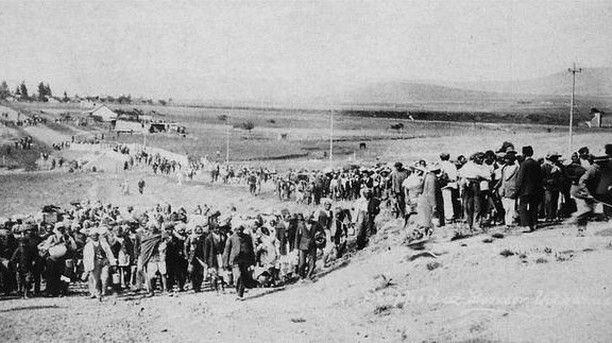
This story shows Gandhi’s unique method. His fundraising relied on moral persuasion. He didn’t just appeal to what people wanted. He appealed directly to their consciences. While scholars often view these acts as symbolic politics, they served a highly practical purpose. They turned quiet sympathy into hard donations.
Still, doubts remained. Colonial observers openly dismissed Gandhi as weak and untrustworthy, even spreading rumours that he might steal or misuse the funds. These harsh criticisms show how fragile his position was back then. He was not yet a universally trusted leader, but he was already being heavily judged.
Gandhi didn’t fight back with angry words. Instead, he responded with disciplined practise. He recorded every single penny that came in, cut expenses to the bone, and kept his donors completely informed. Over time, this flawless accounting became the anchor of his public credibility. He successfully turned fundraising from a cold, business-like transaction into a moral relationship built on pure trust.
When major crises hit, these financial habits grew even stronger. During times of intense satyagraha (non-violent resistance), the need for money skyrocketed. Funds were desperately needed not just for political organising but also to take care of the families of protesters who had been thrown in prison. Contributions went up, but so did the pressure. Merchants like Rustomjee promised massive amounts of help, while towns like Pietermaritzburg raised large sums of money. These donations started to mean something much bigger than simple payments; they became proof of a shared, collective commitment.

One deeply revealing moment happened when Gandhi was badly injured and was taken in and cared for by a Christian minister named Joseph Doke and his wife. The Indian community responded with an outpouring of emotion, flooding them with money, jewellery, and messages of deep thanks. Reverend Doke suggested using these unexpected funds for education. This moment marked a major shift: fundraising was no longer just about immediate political emergencies. It was starting to look toward long-term community development.
The heavy financial toll of long-term resistance became dangerously clear during the campaigns of 1907 to 1909. Writing from London in 1909, Gandhi warned his team that their money was almost entirely gone. Yet, he insisted that their newspaper, Indian Opinion, must keep printing, even if it had to be a much smaller version. This insistence highlights a core rule of his: once you create an institution for the public good, you must keep it alive, no matter how bad the finances look. In Satyagraha in South Africa, Gandhi wrote that navigating these dark times was a true test of commitment for both himself and his followers.
Desperately needed relief finally arrived through global networks, proving that Gandhi’s fundraising power was expanding across borders. People like Pranjivan Mehta, Henry Polak, and Annie Besant helped rally support outside of South Africa. The biggest turning point came from the Indian industrialist Ratanji Tata, whose massive donation saved the movement at its most dangerous moment. This donation did more than just pay the bills. It was a loud stamp of approval from India’s top business and intellectual minds. It sparked a wave of new donations from all over the world, linking the local fight in South Africa to a much wider global network.

Even with this major help, money worries never truly went away. During the 1913 satyagraha campaign, critics began complaining that there was “no money for martyrs”, highlighting the real stress and hidden arguments fracturing the community. Gandhi’s response to this criticism marked a massive turning point. Instead of relying mostly on elite merchants, he started focusing directly on poor workers, miners, and plantation labourers.
This completely changed both the size and the spirit of the donations. The small coins given by ordinary, working-class participants carried a completely different moral weight. It proved that the movement didn’t just belong to the rich; it belonged to every single person who contributed, no matter how small their gift.
Gandhi’s famous communal ashrams, Phoenix Settlement and Tolstoy Farm, were the ultimate real-world examples of his economic theories. While they were originally started using donations, they were built to be kept alive through hard, daily physical labour. They were a deliberate attempt to stop relying on outside money. The residents grew their own food, ran the printing presses, and handled education, creating a community that could survive on its own. In his autobiography, Gandhi described these experiments as a way to make sure that daily, material life matched high ethical standards. To Gandhi, living simply and wasting nothing wasn’t just a bitter necessity. It was a form of spiritual discipline.
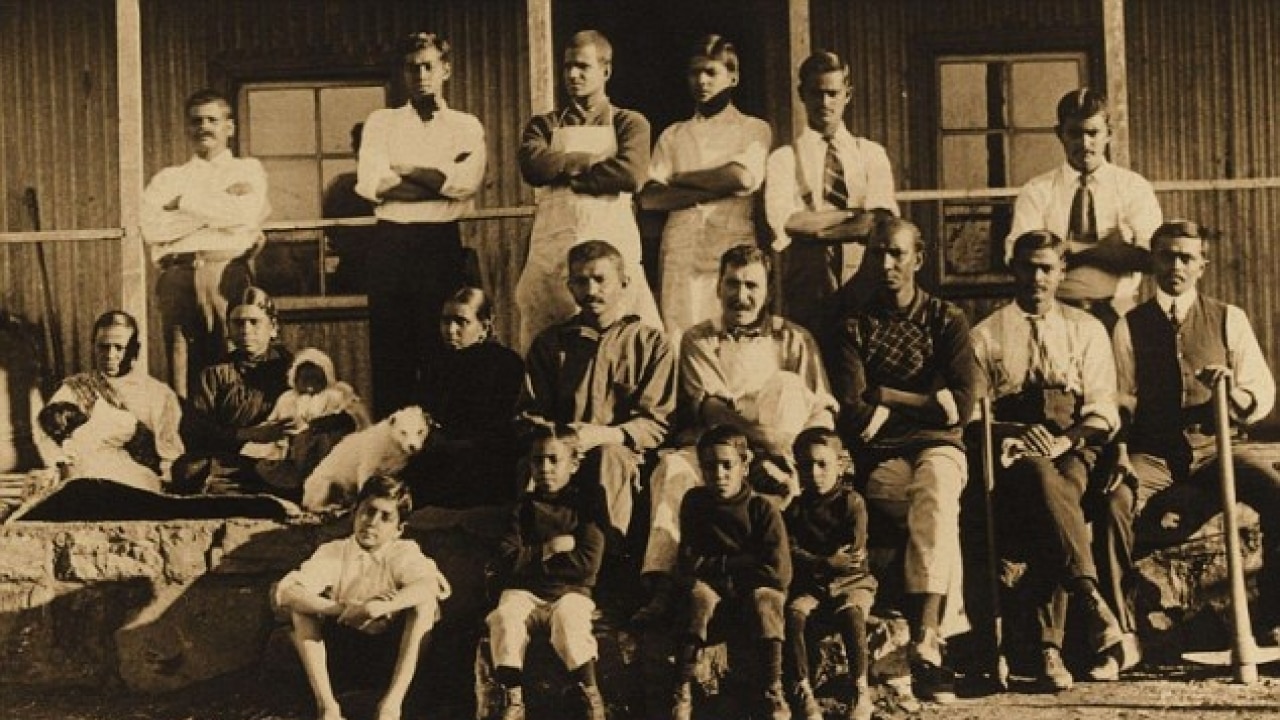
Through all these difficult years, Gandhi kept an unshakeable faith in voluntary giving. Whenever his team panicked about running out of money, he would calmly reassure them that they would “manage somehow”. This wasn’t just blind hope. It was a calculated strategy: he knew that if you tie a request for money to a deep moral purpose, you create a powerful type of human commitment that can survive any financial storm.
By the time the South African struggle finally ended, Gandhi had completely rewritten the rules of political fundraising. What started as a desperate reliance on a tiny group of rich merchant patrons had grown into a brilliant, diverse, and globally connected network built on deep ethics. The money now came from everywhere, from massive cheques written by India’s richest industrialists to a few small coins handed over by poor labourers. Every single donation carried both practical value and deep symbolic meaning.
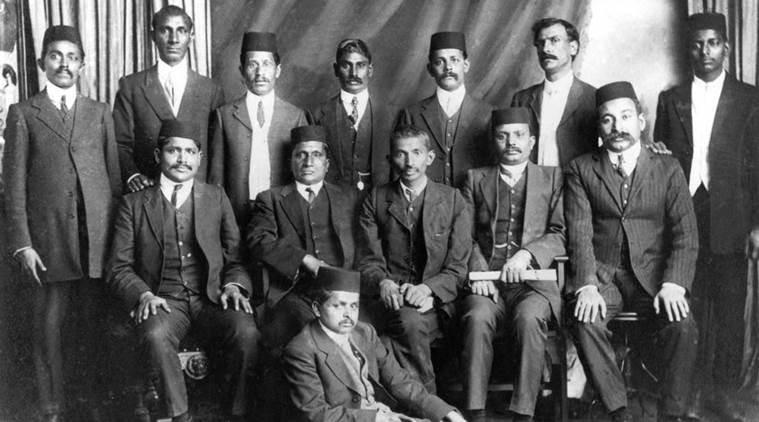
This change wasn’t just about better organisation. It was a whole new way of thinking. Gandhi turned fundraising into a form of political action itself, a way for everyday individuals to stand up and align their lives with a shared cause. In this new world, the very act of giving was a political statement. The powerful blueprints Gandhi built in South Africa – transparency, living simply, mixing up funding sources, and appealing directly to the human conscience – would later find their full, historic expression when he returned home to India. Under the hardest conditions of poverty and doubt, Gandhi proved to the world that maintaining absolute ethical consistency is, in itself, a source of unstoppable financial strength.
REFERENCES:
- Gandhi, M.K. An Autobiography: The Story of My Experiments with Truth.
- Gandhi, M.K. Satyagraha in South Africa.
- Gandhi, M.K. Collected Works of Mahatma Gandhi (CWMG), Vols. 1–5. Publications Division, Government of India.
- Guha, Ramachandra. Gandhi Before India.
- Guha, Ramachandra. Gandhi: The Years That Changed the World.
- Doke, Joseph J. M. K. Gandhi: An Indian Patriot in South Africa (1909).
- Brown, Judith. Gandhi: Prisoner of Hope.
- Huttenback, Robert A. Gandhi in South Africa.
Read the next part of the series tomorrow.










Interesting topic , Gandhi and his ways of funding his own ideas has been a difficult topic for many to attempt. This is different from all other Gandhi Jayanti stories I read this season. Good
This is a ready reckoner for today’s politicians who mortgage their political independence to corporates for the sake of funds.
Gandhi’s journey from merchant-backed fundraising to mass participation reveals a powerful idea: political movements are strongest when people feel that their contribution, however small, truly belongs to a larger public cause. His emphasis on transparency, accountability and voluntary giving turned fundraising from a financial necessity into a form of political participation. This is not just a story about money—it is a story about trust, responsibility and the strength of ordinary people coming together for a shared purpose.
Refreshing new ways to know Gandhi
I think finding details from South African work of Gandhi is rare among Indian writings