

Nehru’s Bet on Computers and Lessons for AI Today

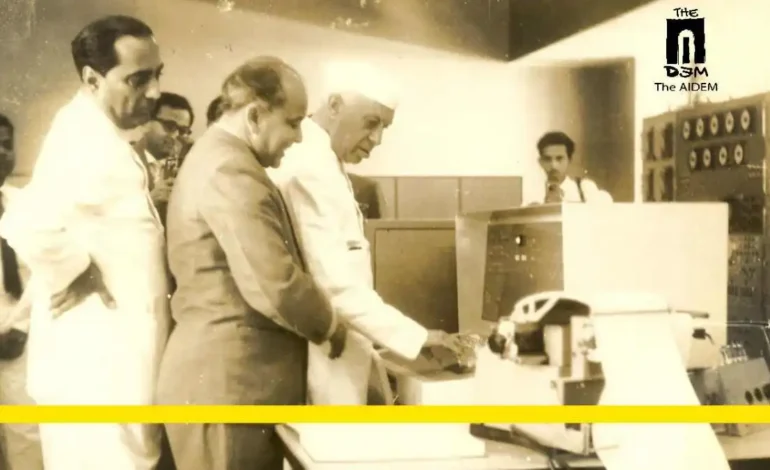
This is the first of a three-part series by Anu Jain, beginning on the 137th birth anniversary of Jawaharlal Nehru. Drawing on her substantive historical research, particularly on Mahatma Gandhi, Nehru and Vallabhbhai Patel, Jain examines Nehru’s early support for computing and scientific institutions, and the lessons that experience offers for India’s ambitions in Artificial Intelligence.
Her research pays particular attention to Nehru’s promotion of scientific temper and his vision of technology as an instrument of national development. It explores how he sought to translate that vision into enduring institutions and investment in people.
In 1958, India was nearly out of money, and its Prime Minister Jawahar Lal Nehru was still backing scientists who wanted to build computers. Today, India has more money and less patience. The same year Nehru gave American officials a stark warning. At the current rate of spending, he said, India would soon be “face to face with disaster.” The country was running out of foreign currency, and it needed that currency to buy food, fuel and machines.
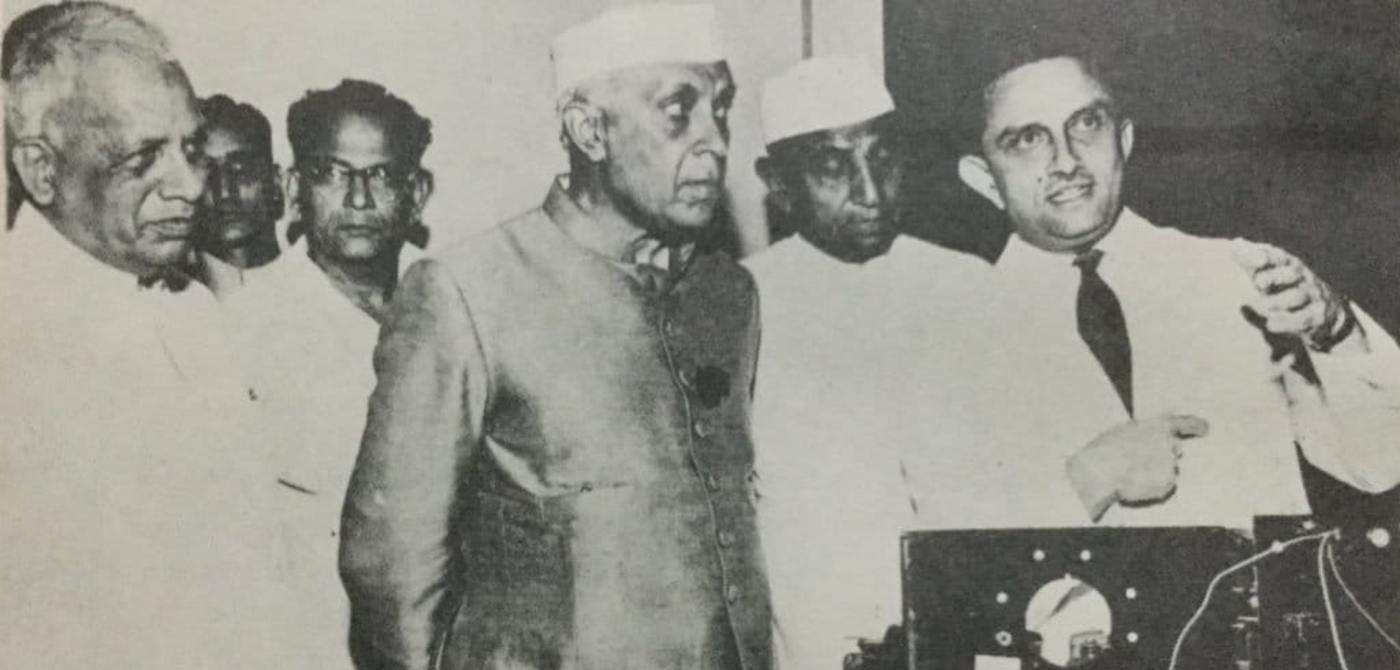
That same year, his government passed the Scientific Policy Resolution. It promised to train technical personnel “as rapidly as possible” and to encourage creative talent to the fullest extent.
This history is seldom recalled today. When we talk about India’s rise as a tech power, we usually point to the 1990s, when the economy opened up and software exports took off. But the people who built that industry had been trained decades earlier, in laboratories and institutes set up by a government with empty pockets.
Now India is in a new race, this time for artificial intelligence. AI needs powerful computers, skilled people and long-term research. These are the same three things Nehru struggled to bring together seventy years ago. His choices therefore are worth a second look.
The 1950s were not an easy time to start a computer programme. India’s Second Five-Year Plan (1956–61) put its money into steel plants and heavy industry, and it ran into a serious shortage of foreign exchange. A 1957 American State Department record noted a deficit of around $3 billion.
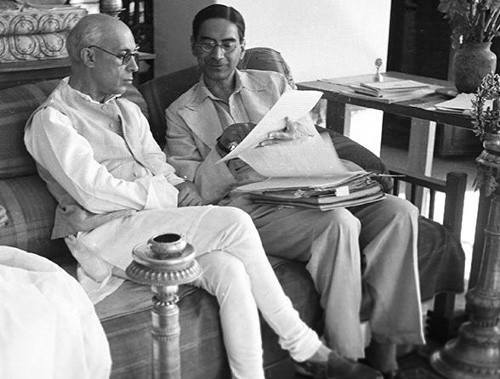
In January 1958, Nehru wrote that without “bold and painful measures” India would face difficulties meeting its international payments. Computers had to be imported, and there was no factory in India that could make their parts. Yet this was also the period when India’s first machines were built and its first computer training began. Looking back, we can identify four major choices made by Nehru’s government.
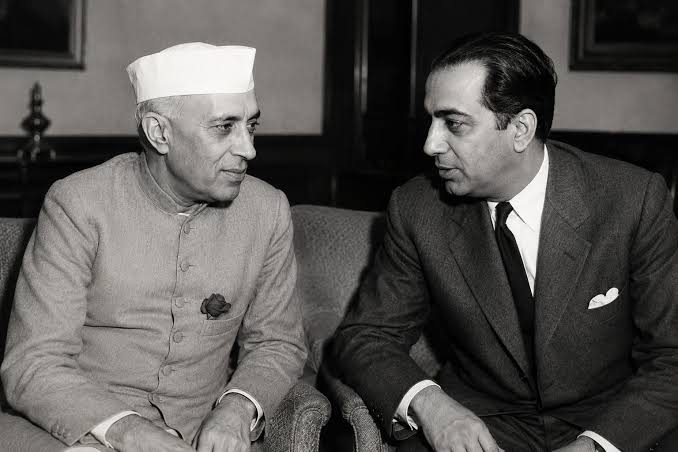
The first was to trust the scientists. Homi Bhabha, the nuclear physicist, was one of the people closest to Nehru. He was given unusual freedom to oversee atomic energy research, and he reported directly to the Prime Minister, so his projects were not held up by routine bureaucratic delays. That freedom helped electronics and computing grow, and it eventually led to the Electronics Corporation of India Limited. There was a price. Power became concentrated around a few trusted scientists, and others, such as Meghnad Saha, were left out. Nehru accepted that trade-off to get things moving.
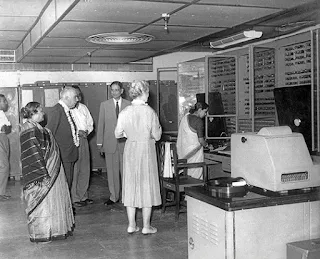
The second choice was to make do with what was available. Indian teams built computers out of whatever they could find. Engineers at the Indian Statistical Institute (ISI) and the Tata Institute of Fundamental Research (TIFR) used war-surplus parts, and ISI engineers even travelled to an ordnance factory to get components electroplated. In 1953, the ISI machine was ready, and it could solve equations with ten variables. In 1957, Bhabha’s team designed TIFRAC, a general-purpose digital computer that was commissioned in 1960.
These machines were not the best in the world, and the historian D. C. Sharma says they were not technological breakthroughs. But they taught Indian engineers how to design, build, test, maintain and programme computers. TIFRAC was used by government laboratories, universities and private organisations, and its programming manual helped spread skills. India was investing in capability, not in bragging rights.
The third choice was to seek help from a wide range of partners. India had no money to buy knowledge, so it borrowed it. The ISI used United Nations funds to get a British HEC-2M and a Soviet URAL. IIT Bombay received equipment and expertise from the Soviet Union and Eastern Europe. IIT Madras received German assistance. IIT Kanpur was backed by American universities and IBM. Bhabha even pushed American funders to give TIFR a CDC3600 in 1964, one of the most powerful research machines of its time.
India was a non-aligned country, and Nehru used that to his advantage. He did not pick a side. He let rival blocs compete to be useful to India.
The fourth choice was to invest in people. In the 1960s, very few Indian companies could afford a computer, yet Nehru’s government continued to establish IITs and computer centres. The first IIT began in 1951, and in 1961, IIT Kanpur signed a ten-year partnership with American universities, before computer science degrees even existed in India.
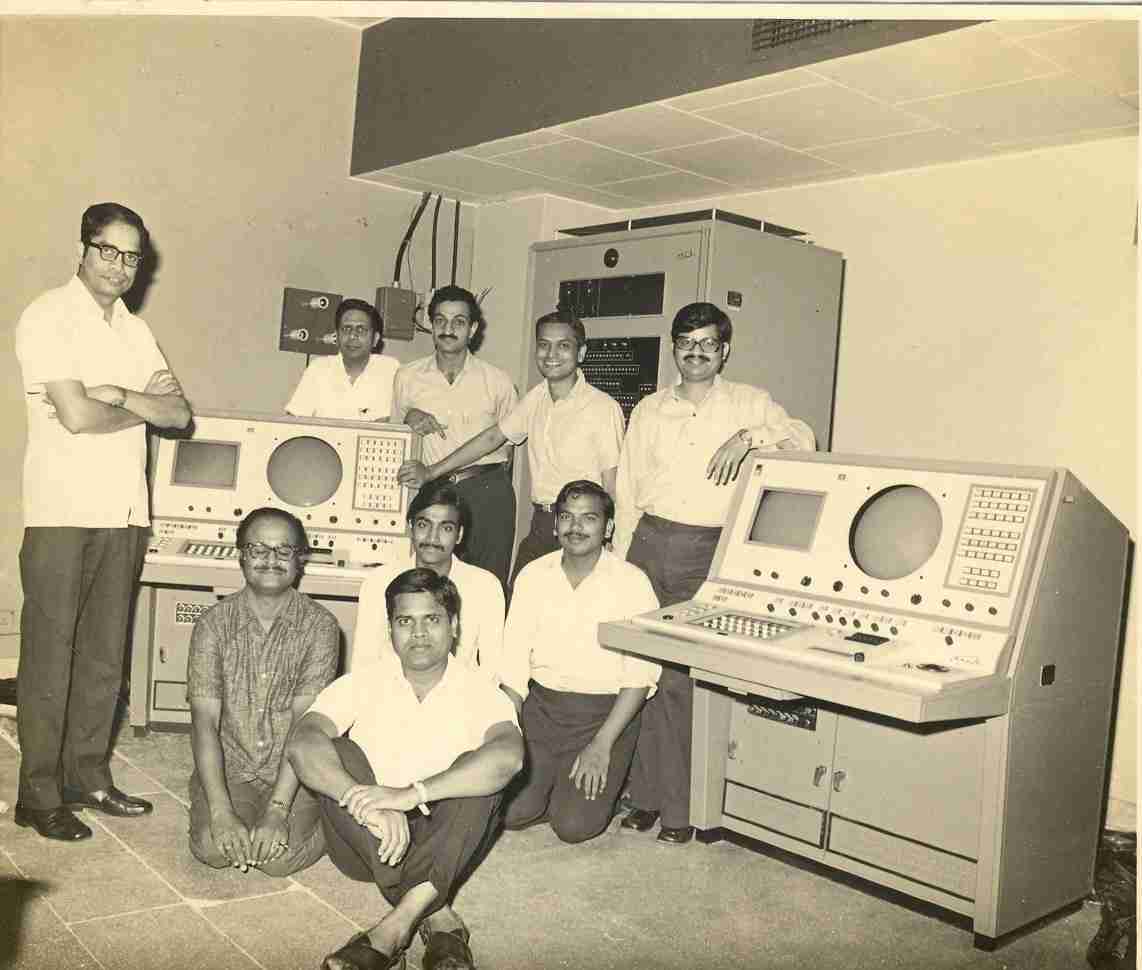
Students at Kanpur sometimes had to write their own software just to keep old imported machines running. That was demanding training, and it paid off later, when Indian companies began serving American clients. The returns took about twenty years to materialise, and waiting for them required patience.
It would be wrong, though, to say Nehru planned a “computer revolution.” The scholar Nasir Tyabji has warned that many of Nehru’s statements on science were personal visions, not state policy. India had no clear computing strategy until the Bhabha Committee, formed after the 1962 war with China.
Some plans to manufacture computers never materialised. IBM, which began operating in India in 1951, left in 1977. And strict import substitution and licencing rules meant India missed the hardware boom of the 1960s. So the lesson is not “copy Nehru’s economics.” What he did get right was the creation of an enabling environment. He built institutions, trained people and kept doors open to the world, so that India was ready when computing became important.
Consider the present. In 2025, according to the Stanford AI Index, American private investment in AI came to about $286 billion. China’s visible private investment was far smaller, though Stanford notes China also invests substantial sums through government-guided funds. Money matters, but so does how a country organises it.
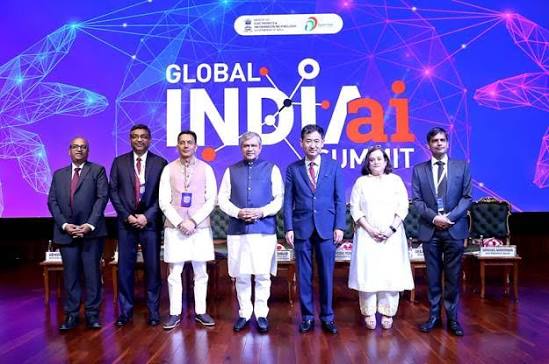
India’s answer is the IndiaAI Mission, approved in March 2024 with a budget of ₹10,372 crore, or about $1.2 billion, over five years. That sounds substantial until it is placed in perspective. In 2023, Microsoft invested $10 billion in a single company, OpenAI. India’s entire five-year mission is less than one-eighth of that.
Even this modest sum has been slow to arrive. By early February 2026, only ₹400.94 crore had been released, which is 3.9 per cent of the total. The mission’s 2025–26 budget was cut from ₹2,000 crore to ₹800 crore, and a parliamentary panel found that by the end of December 2025 only 32 per cent of the revised amount had been spent.
The Finance Ministry has approved only half of what was requested for 2026–27. The shortfall in the number of people selected for training is starker still. The mission’s skilling programme aimed to select 5,000 undergraduates, but only 150 were chosen.
There have also been tangible successes. Start-ups and researchers now have access to more than 38,000 GPUs, far beyond the original target of 10,000, and most of the compute subsidy has gone to home-grown generative AI models.
Part of the slow spending is also by design, because the mission pays providers as computing resources are used. But the same parliamentary panel noted that even the first batch of 10,000 GPUs was delayed. The design is sound, but execution has been slow.
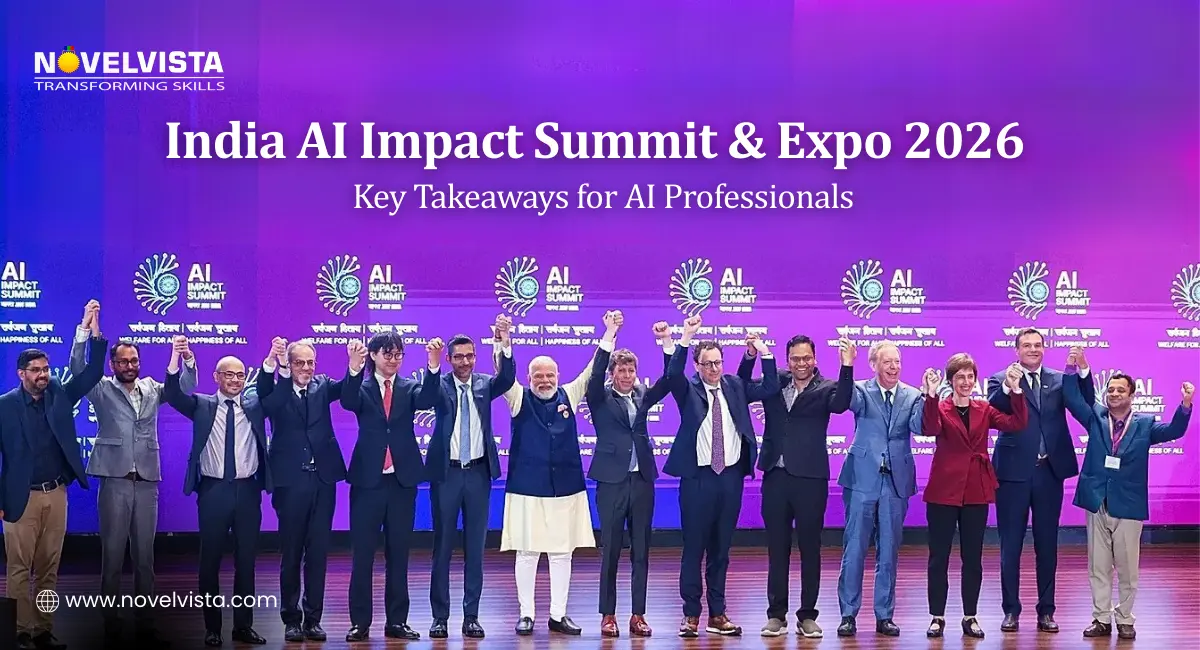
There is also a strong counter-argument: surely private money can carry the load? In February 2026, India’s IT minister said more than $250 billion had been pledged for AI infrastructure. Reliance has promised around $110 billion over seven years, and Adani has pledged $100 billion by 2035. India’s research spending also reached a milestone in 2023–24, when private companies spent more on R&D than the government for the first time.
That is encouraging, but it has limits. These are pledges, not completed projects, and most of them are for data centres. Some of the capacity will serve foreign customers, and OpenAI was named as the first client of one Tata Consultancy Services data centre. Data centres do not train researchers, build open datasets or create public-interest AI models. That job still falls to the state.
India’s total R&D spending is only 0.64 per cent of GDP according to one Economic Survey figure, against 3.48 per cent for the United States and 2.43 per cent for China. Newer government data put India’s figure at 0.84 per cent, which is an improvement but remains far below those levels.
So how does today’s India measure up against Nehru’s? In terms of authority, Bhabha could go straight to the Prime Minister, while today’s AI mission sits inside a ministry and received only half of what it asked for this year. On the pace of funding, Nehru’s computing projects kept getting money even in a foreign exchange crisis, while only 3.9 per cent of the AI Mission’s money has been released. On training, Nehru trained hundreds of engineers through the IITs and computer centres, while the AI Mission has reached 150 of a planned 5,000.
On partnerships, however, India does well. It has access to 38,000 GPUs and deals with global companies, much as Nehru drew on Britain, the Soviet Union, America, Germany and the UN. The last test is patience with imperfect home-grown efforts. TIFRAC and ISI’s machines were never world-beaters, but they were allowed to teach people.
Today’s results are mixed: domestic models get subsidies, but research spending is still low. The pattern is clear. India is good at buying and borrowing computing power, but weak where the government has to show patience and commitment.
This points to a handful of practical lessons, rooted in Nehru’s approach. Put people first, with fellowships, jobs and IIT-style AI centres, and close the gap between 150 and 5,000. Release funds promptly and sustain funding over several years, because a five-year mission that receives a trickle in its first two years is not a mission. Give mission leaders real authority, as Bhabha had, while keeping the process open so that other voices are not shut out, as Saha’s was. Keep many partners, using Nehru’s non-aligned logic to widen the sources of chips, computing power and expertise. And tie private pledges to public good, pushing for open access to computing resources for universities, research partnerships and datasets in Indian languages, so that data centres build national capability rather than merely profits.
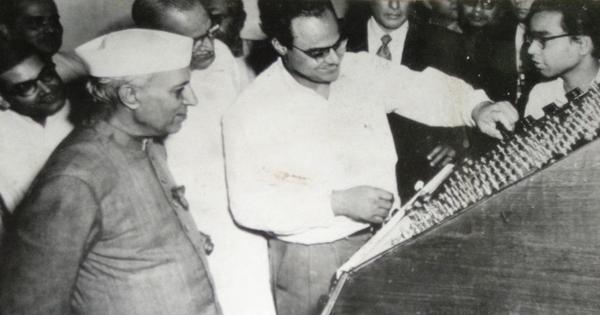
Nehru did not have a master plan for the computer age, and some of his economic policies held India back. But when the country was close to running out of money, he backed his scientists, accepted modest machines, sought help from rival camps and invested in people years before there was a market for them. That is how India got the skills that later built its IT industry.
Today, India has what Nehru never did: substantial private capital, a lively start-up scene and strong digital infrastructure. What remains weak is the public core, the part only the government can build. No policy can guarantee success in the AI race. But the early record suggests that what India lacks is not money. It is the willingness to invest early and patiently in people and institutions, the way it once did when it had far less.
Make sure to check back tomorrow for the second part of article in this series.









Nehru’s vision of investing in computers was not merely about embracing new technology; it was about building India’s scientific capabilities and preparing for the future. That is precisely the lesson today’s AI revolution demands. India must move beyond technological hype and corporate interests to invest in public research, education, innovation and independent scientific institutions. Nehru understood that technological progress requires vision and long-term public investment. If India wants to shape the AI future rather than remain dependent on others, it must rediscover that spirit of scientific ambition.
Something different from the other stories by this expert writer. Notes for policy studies
Every corporate pre-2014 know this reality underlined here. Some of us are just of saying it.