


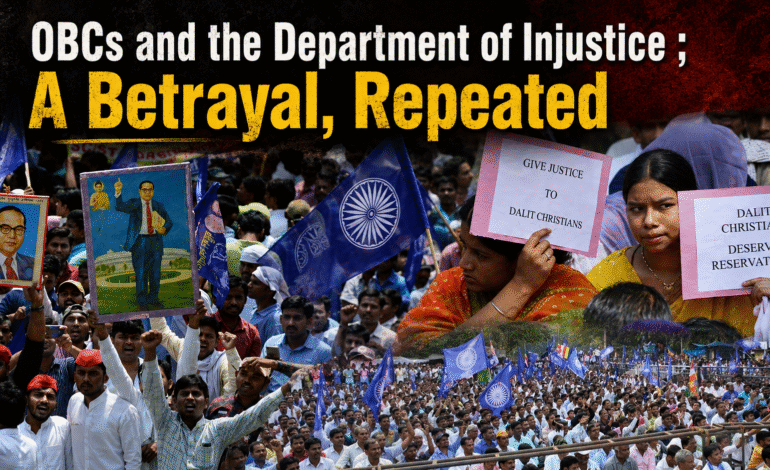
For seventy-nine years, India has promised its backward communities a count of who they are and how many. The count keeps being sabotaged. The method of sabotage has been so consistent—and so profitable for the communities that benefit from the absence of data—that calling it an accident has become difficult.
India is conducting a caste census in 2026 after decades of demands for a credible count of its backward communities. Yet, even as the exercise is under way, questions are being raised over a methodology that could once again render the data unusable. At the same time, parts of North India are witnessing renewed anti-reservation agitations, exposing the continuing political battle over who gets counted, represented and entitled to a share of public opportunities.
The coincidence is revealing: while one side seeks to prevent the country from knowing the social composition of its population, the other is mobilising to challenge the constitutional principle of affirmative action. Against this backdrop, the history of India’s repeated failure to conduct a meaningful caste enumeration reads less like administrative incompetence and more like a pattern of institutional betrayal.
There is a particular kind of bureaucratic fraud that does not look like fraud at all. It looks like incompetence, or administrative caution, or a genuine concern about methodology. Its practitioners are usually senior officials who understand exactly what they are doing, working within institutions that will not ask uncomfortable questions, producing documents that will be stored in archives and cited in future proceedings as evidence of an honest effort that unfortunately failed. India has perfected this art form in the domain of caste enumeration, and it is performing it again.
On the twenty-ninth of January, 1953, the government of India, acting under Article 340 of the Constitution, appointed a commission under the chairmanship of Kaka Kalelkar to study the condition of the socially and educationally backward classes and recommend measures for their advancement. The commission submitted its report on the thirtieth of March, 1955. It had identified two thousand three hundred and ninety-nine Other Backward Classes and eight hundred and thirty-seven Most Backward Classes. It recommended that the 1961 census include a caste-wise enumeration of the population. It recommended reservations for OBC communities in government employment and education. It recommended that women be recognized as a backward class.
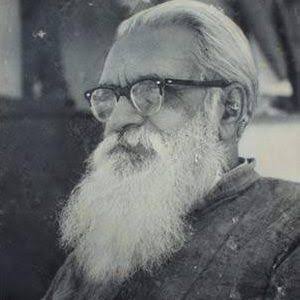
The government of Jawaharlal Nehru, having commissioned this report and received it, declined to act on it. The stated reason was methodological: the commission had not established adequate criteria for identifying backward communities. No alternative methodology was proposed. No revised commission was constituted. The report was filed and forgotten.
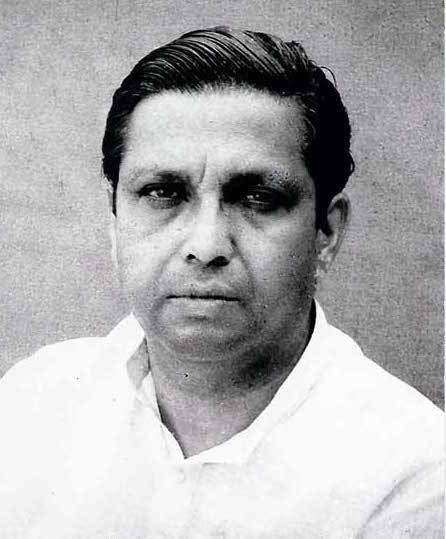
Twenty-four years passed. The Constitution had always permitted the government to inquire into and act on the situation of backward classes. The permission sat unused. Then, in 1979, the Janata government formed a new commission under B. P. Mandal. The Mandal Commission submitted its report in 1980, estimating that Other Backward Classes constituted fifty-two per cent of India’s population and recommending a twenty-seven per cent reservation for them in central government jobs and educational institutions. The Congress government that succeeded the Janata government set the report aside. It was not implemented. It sat.
The 1931 British census recorded 4,137 castes. The 2011 caste survey recorded 4.6 million. No one in authority asked how this had happened.
Mandal And Its Aftermath
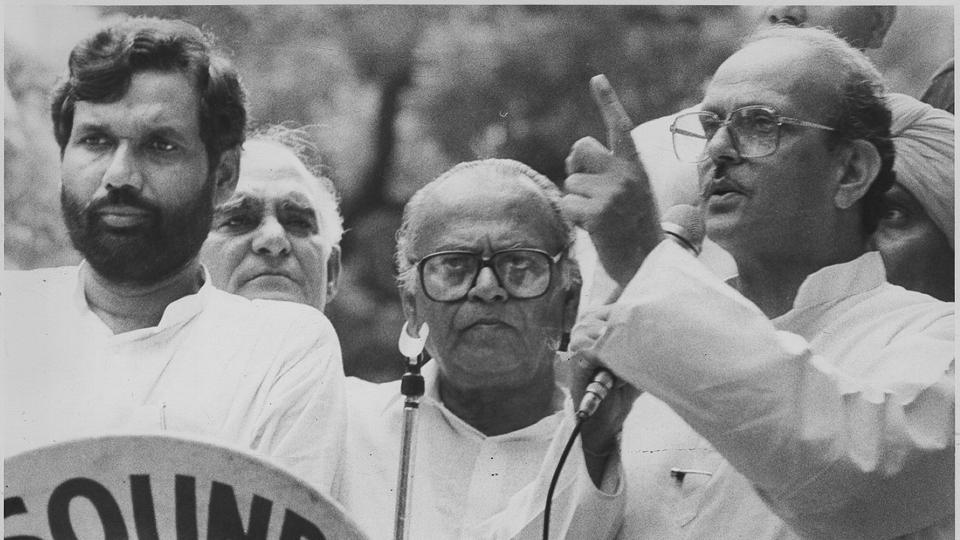
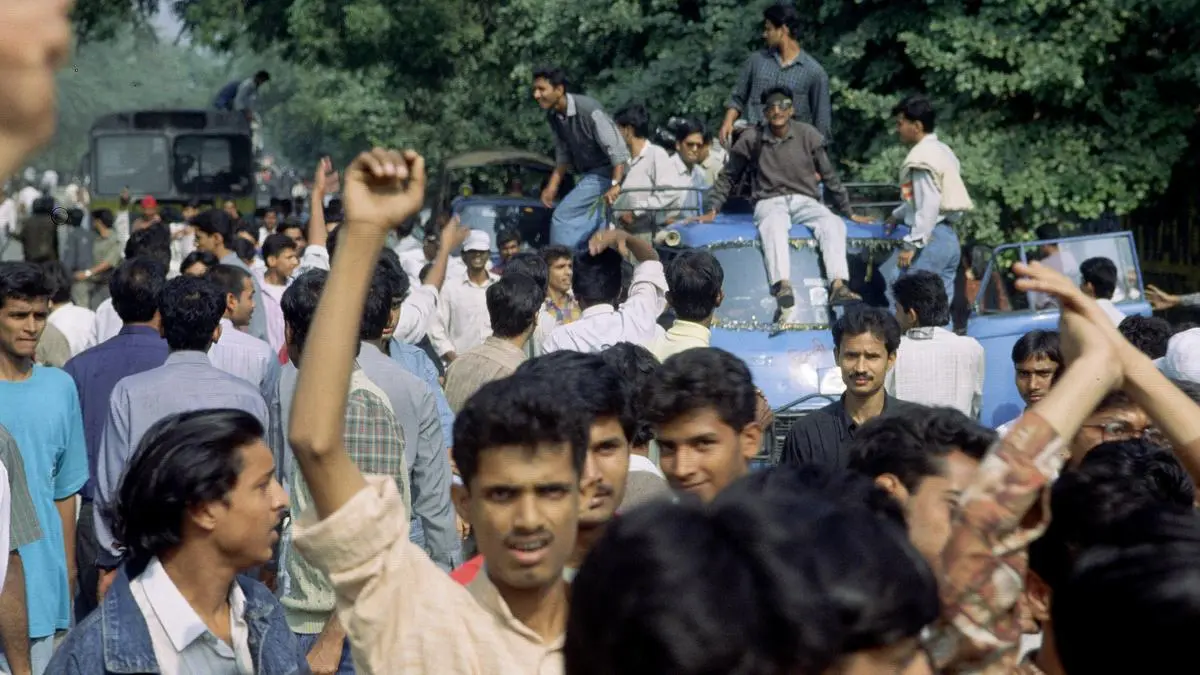
In 1990, the V. P. Singh government announced that it would implement the Mandal Commission’s recommendations. The announcement produced immediate and violent resistance. Upper-caste students in northern India organized protests; some set themselves on fire. Legal challenges were filed in the Supreme Court.
The Supreme Court, in its 1992 Indra Sawhney judgment, upheld OBC reservations in central government employment while imposing a cap: total reservations could not exceed fifty per cent. The court’s reasoning was careful and its conclusions, though contested, established a constitutional framework within which subsequent policy would operate. Reservations in central government institutions of higher education followed eventually, taking effect from 2006, after sustained political pressure over more than a decade.
There is a complaint, persistent and not without evidence, that even these reservations have not been fully implemented—that the gap between what is mandated and what actually occurs in admissions and hiring is wider than official statistics suggest. This complaint is difficult to adjudicate precisely because the data needed to adjudicate it does not fully exist. And the reason that data does not exist is the subject of this essay.
The Census That Was Not Taken
From the beginning of British census-taking in India, through 1931, the decennial census recorded caste. The enumeration was imperfect—the British had their own interests in how Indian society was classified and described—but it produced data. It established, however roughly, how many people belonged to which communities, where they lived, what they did, how much they owned.
After independence, the government of India discontinued caste enumeration for the general population.The stated reason was that counting by caste would deepen caste divisions—that the act of enumeration would make the thing it measured more real. This argument has a certain surface plausibility and an obvious self-serving dimension.
The communities that stood to benefit most from a caste census—OBC communities, whose share of educational and employment opportunities was dramatically lower than their share of the population—were the ones who needed the data most. The communities that stood to lose from a caste census—the upper and other dominant castes that had disproportionately captured those opportunities—were the ones whose political influence was most likely to shape government decisions. Scheduled Castes and Scheduled Tribes continued to be enumerated; their reservations depended on the numbers. Everyone else was left to argue from estimates.
The Mandal Commission, working in 1980, used data from the 1931 British census—a document that was then nearly fifty years old. It used these numbers because they were the best available. No newer systematic count of OBC communities existed. The gap between the data and the present reality was not incidental; it was the product of a deliberate administrative choice to keep OBC communities in the dark about their own numbers.
Political pressure for a caste census intensified over the following decades, as OBC political mobilization grew and the argument that policy could not be rationally designed without baseline data became harder to dismiss. In 2011, the government of India agreed to conduct a caste enumeration alongside the national socio-economic survey. This was hailed as a significant concession. It was not.
The 4.6 Million Castes
The normal methodology for a caste census is straightforward. Before the enumeration begins, each state compiles a list of the castes present in its territory. Enumerators carry these lists into the field. When they reach a household, the respondent identifies which caste on the list they belong to, or which sub-caste within that listing. The data is then aggregated: a count of persons belonging to each named caste, which can be compared across states, cross-referenced with income and education data, and used to design policy.
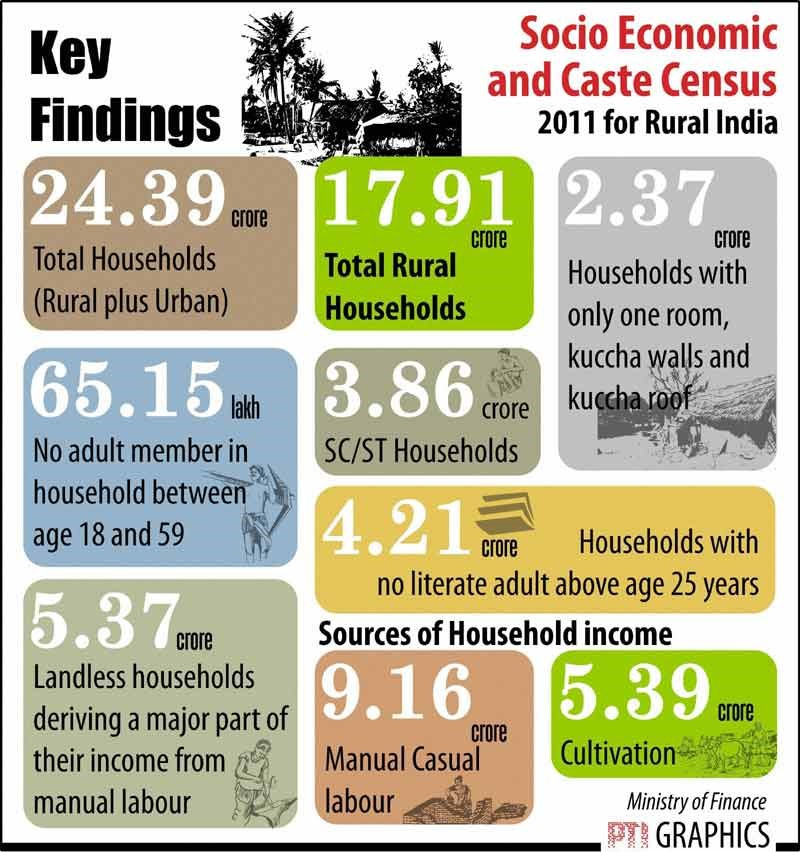
The 2011 Socio-Economic and Caste Census did not use this methodology. Instead of presenting respondents with a list, it asked them to state their caste and recorded whatever they said. This decision—which someone in the design process made, and which multiple layers of bureaucratic review did not correct—had a consequence that any student of Indian social life could have predicted.
Indian caste nomenclature is not standardized. A single caste is known by different names in different regions, different dialects, different contexts.
The Kongu Vellalars of Tamil Nadu—a broad grouping that encompasses numerous sub-castes, some of which qualify as Most Backward Classes while others do not—are known by several names even within a single district: Koundar, Goundar, Vanniya Goundar, Vettuva Goundar, Narambu Katti Goundar, and so on. The same sub-caste may be written differently by a literate and an illiterate respondent. The same household might describe itself differently in two different surveys conducted a month apart.
When you record whatever respondents say without any standardization, you do not get a caste census. You get a list of strings. The 2011 exercise produced a list of four million six hundred thousand apparent caste names. The 1931 British census, with all its limitations, had recorded four thousand one hundred and thirty-seven. The difference between these numbers is not explained by any development in Indian demography. It is explained by the design of the survey instrument. A survey designed to produce usable data would not have been designed this way. A survey designed to produce unusable data—a survey whose failure could be cited as evidence that a caste census was too methodologically complex to conduct—would have been designed exactly this way.
The 2011 data was never published. The government’s explanation was that the data was too complex to be meaningful. This is precisely true of data that was designed to be complex. The crore-scale expenditure that produced it was written off. The communities that needed the count remained uncounted. The question that a hundred thirty million Indians did not collectively ask—how did 4,137 castes in 1931 become 4.6 million in 2011?—was not asked, and the people responsible for the answer were not asked to provide it.
A survey designed to produce usable data would not have been designed this way. A survey designed to produce unusable data would have been designed exactly this way.
The Repetition
The caste census that is being conducted in 2026 was awaited with genuine hope by the communities that most need its results. The political context had shifted: Congress leader Rahul Gandhi had spoken more loudly and consistently about the need for a caste census than any figure of comparable prominence in the party’s recent history, framing it as a necessary step toward understanding how comprehensively few sections of the society had monopolized access to education, employment, and public institutions. Serious observers of Indian social policy—people whose interest in the question is analytical rather than political—had similarly argued that without reliable caste-wise population data, it was impossible to design social justice welfare programs that actually reached their intended beneficiaries.
Retired civil servant Harshvardhan Shetty had warned, months before the enumeration began, that the 2011 error must not be repeated—that the survey needed to use standardized caste lists rather than open-ended recording of whatever respondents said. His warning was specific, technically detailed, and based on a clear understanding of what had gone wrong the previous time. It went unheeded.
Yogendra Yadav, the political scientist and social activist whose long career has focused on precisely these questions of representation and data, confirmed in recent days what Shetty had feared: the 2026 caste census is being designed in the same way as the 2011 exercise. Castes are not being listed in advance. Respondents are being asked to state their caste and whatever they say is being recorded. The methodology that produced 4.6 million caste names in 2011 might even produce ten million in 2026 making the entire exercise as a farcial one.
The result will be the same. The data will be unpublishable. The enumeration will be cited as evidence that caste enumeration is too methodologically complex to be done reliably. The communities that needed the count will remain uncounted. The dominant communities that benefit from the absence of data will benefit again. The cycle will continue.
Seventy-Nine Years
There is a pattern here that is no longer plausibly explained by incompetence. The Kalelkar Commission was appointed in 1953 and its recommendations shelved by the government that commissioned them. The Mandal Commission was appointed in 1979, reported in 1980, and its recommendations shelved by the government that succeeded the one that commissioned it. Caste-wise enumeration was discontinued after 1931 and not resumed for eighty years. When it was finally attempted in 2011, it was designed in a way that guaranteed its failure. When it is attempted again in 2026, it is being designed the same way.
The word ‘betrayal’ implies a relationship of trust that has been violated. There was, perhaps, a moment—in the early years of independence, in the debates of the Constituent Assembly, in the drafting of Article 340—when the promise to India’s backward communities could be described as a good-faith commitment that circumstances had prevented from being honoured. That moment is long past. What has happened since is not failure. It is a sustained, methodical, repeatedly renewed act of institutional bad faith, carried out by successive governments of different parties, through instruments of the state that were designed to serve all citizens and have been used to protect the interests of a few.
The communities that bear the cost of this—the small OBC sub-castes at the bottom of the backward-class hierarchy, the Most Backward Classes who appear on the lists but rarely receive the benefits those lists entitle them to, the communities for whom a reliable count would be the first step toward a visible presence in the institutions that shape their lives—have been waiting since 1947. The Constitution told them, in Article 340, that the state would inquire into their condition and act on what it found. Seventy-nine years later, the inquiry produces unusable data and the action does not follow.
Harshvardhan Shetty asked the right question months ago. Yogendra Yadav has now confirmed that the answer will be wrong.
The people who will pay for that wrong answer are not in the rooms where the methodology is decided. They are not in the newspapers where the methodology is not reported. They are in the villages and towns and urban peripheries that the state has been describing, for seventy-nine years, as its primary concern and treating as an afterthought.
Who answers for this? Who is accountable—not in the abstract language of constitutional obligation, but concretely, by name, by position, by the decision they made and the outcome they engineered? In a country with functioning institutions of accountability, these would not be rhetorical questions.









A powerful and deeply uncomfortable piece by Balasubramaniam Muthusamy. When a country repeatedly fails to accurately count its backward communities, the problem is no longer mere administrative incompetence—it becomes a question of justice, representation and institutional accountability. OBC communities deserve facts, fair representation and equal opportunity, not another cycle of promises and unusable data. Democracy cannot deliver social justice while keeping the numbers deliberately uncertain.