



Over the past two years, India’s elites have found a remarkably convenient explanation for the country’s failures: its young people.
The reflex is remarkably consistent across institutions. On 9 January 2025, L&T Chairman S.N. Subrahmanyan, speaking during an internal employee interaction that later went viral, wondered aloud how long employees could bear to “stare” at their spouses before returning to the office, while advocating a 90-hour work week. It was an escalation of an earlier proposition made by Infosys co-founder Narayana Murthy, who, in a podcast conversation with Mohandas Pai released on 26 October 2023, urged young Indians to work 70-hour weeks in the name of national competitiveness.
But the corporate sector is not alone. During a Supreme Court hearing on 15 May 2026, Chief Justice of India Surya Kant described unemployed youth who turn to journalism, social media and RTI activism as “cockroaches” and “parasites of society.” After widespread criticism, he clarified that his remarks had been directed only at individuals holding fake degrees who masqueraded as journalists, and that his comments had been quoted out of context.
Following protests over the NEET-UG 2026 examination controversy, BJP MP Kangana Ranaut, speaking to the media in July 2026, labelled young women protesters “Generation Gutter,” describing their conduct as “crass” and questioning who had raised them. Meanwhile, on 30 July 2026, amid protests by unemployed youth outside recruitment boards, Telangana Chief Minister A. Revanth Reddy questioned whether engineering graduates could even fill out a job application, calling the situation “a criminal waste,” while also acknowledging deficiencies in the state’s education system.
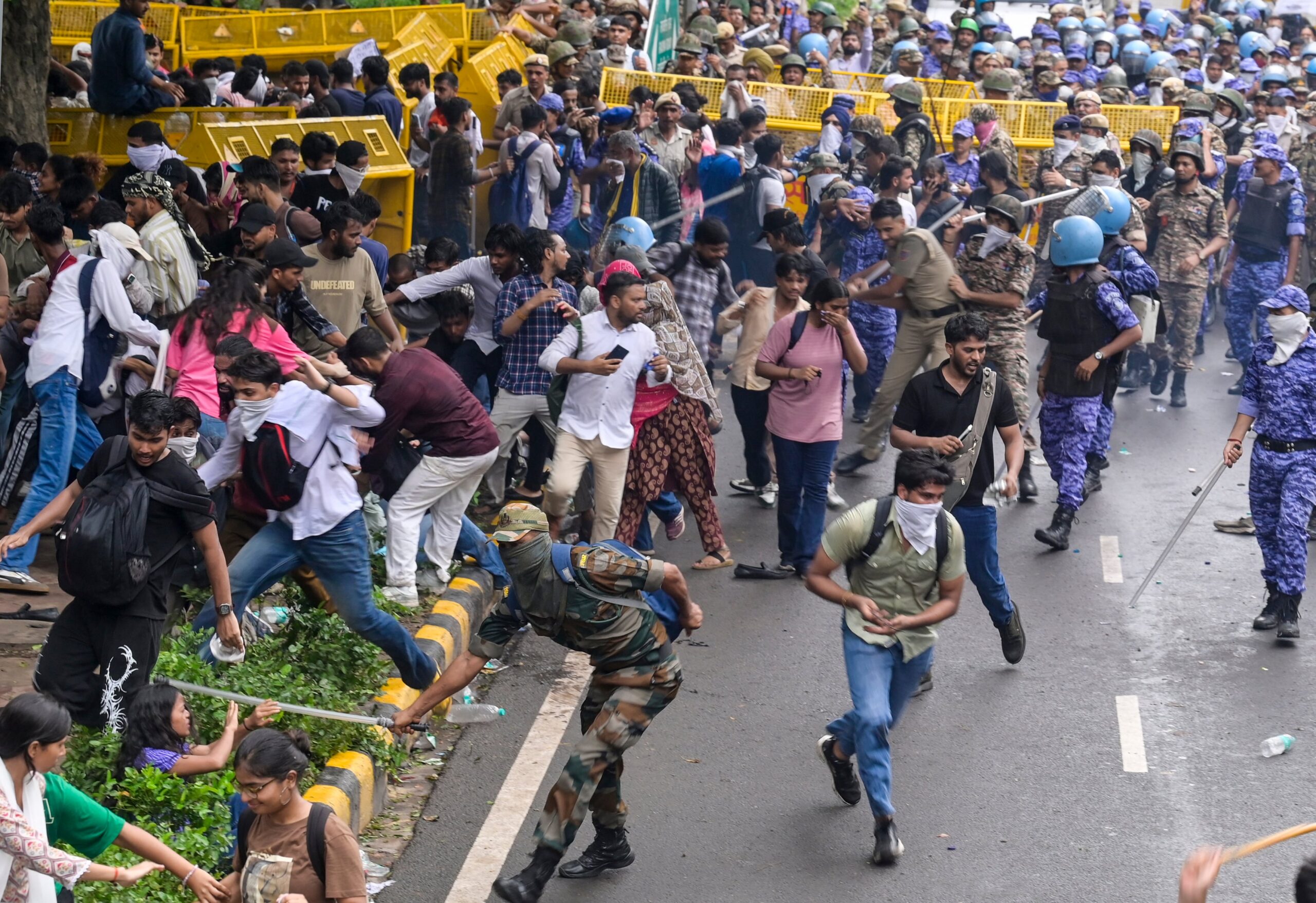
Even when a politician attempts nuance—as Reddy did by acknowledging in the same speech that the state had failed to provide quality education—the media ecosystem strips the caveat away. The elite gesture towards systemic blame is ignored; the insult directed at the young is what lands, spreads and serves the system.
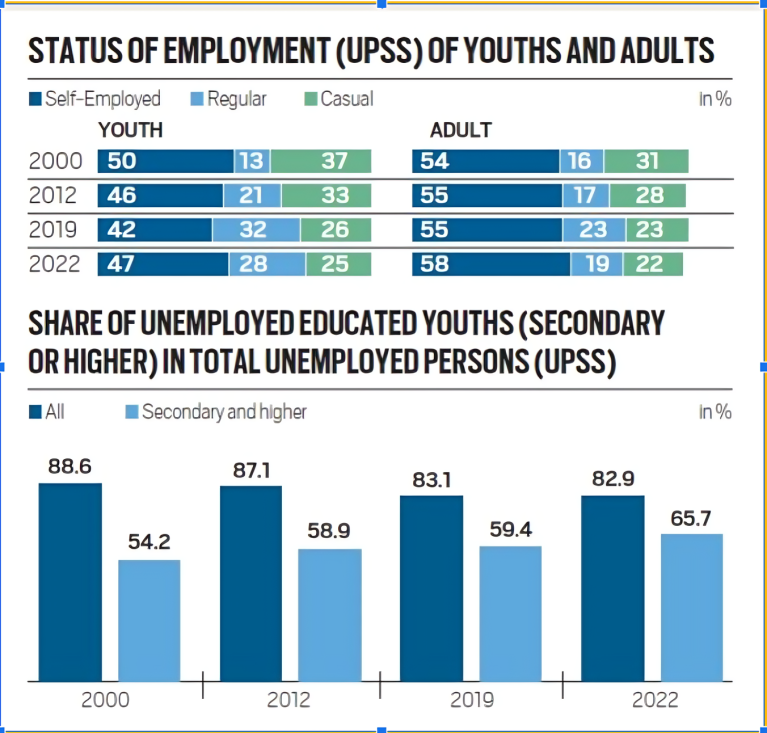
This is a classic moral panic. According to the India Employment Report 2024, prepared jointly by the International Labour Organization and the Institute for Human Development, the unemployment rate among youth (15–29 years) with a graduate degree or higher stood at 29.1 per cent in 2022—the highest of any education group and making educated young people the single most affected cohort in India’s labour market. The rate was higher still among young women graduates (34.5 per cent) and among Scheduled Caste graduates (35 per cent). Colleges produce far more degree-holders than the formal economy can absorb, while a succession of compromised competitive examinations has steadily eroded trust in the systems that once promised upward mobility. Rather than treating these as institutional failures, the establishment converts them into a verdict on character. The young are deemed lazy, entitled, fraudulent or insufficiently grateful.
I recognise this reflex from somewhere much smaller than a courtroom or a boardroom. Growing up, whenever my marks slipped, my mother never asked about the syllabus, the quality of teaching or whether the examination itself had been fair. She asked how much time I had wasted playing cricket or watching television. The explanation was never structural; it was always a question of personal discipline. It took me years to realise that this was a scaled-down version of what the state and the boardroom now do to an entire generation. When the result disappoints, find the habit to blame, not the system that produced the outcome.
What is striking is the shared vocabulary across these very different crises. The corporate strand operates by accusing the young not of refusing to work, but of refusing to sacrifice enough. There is a very specific arrogance in the way dominant classes convert their own material comfort into a universal moral standard. When your compensation runs into tens of crores and you can outsource domestic labour while exercising considerable control over your own schedule, you are uniquely placed to present extreme working hours as a “national duty” rather than as a question of personal survival.
This arrogance relies heavily on unstated assumptions about domestic order. Subrahmanyan’s jibe assumed a specific household arrangement—a wife waiting at home—that many dual-income families no longer inhabit. Ranaut’s remarks policed domesticity from the other direction. Rather than addressing the protesters’ legitimate grievances over the NEET controversy, she singled out young women for failing an implicit standard of womanhood, suggesting that they could not even “be homemakers.”
Control over young women’s conduct becomes the battleground on which wider anxieties about generational change are fought.
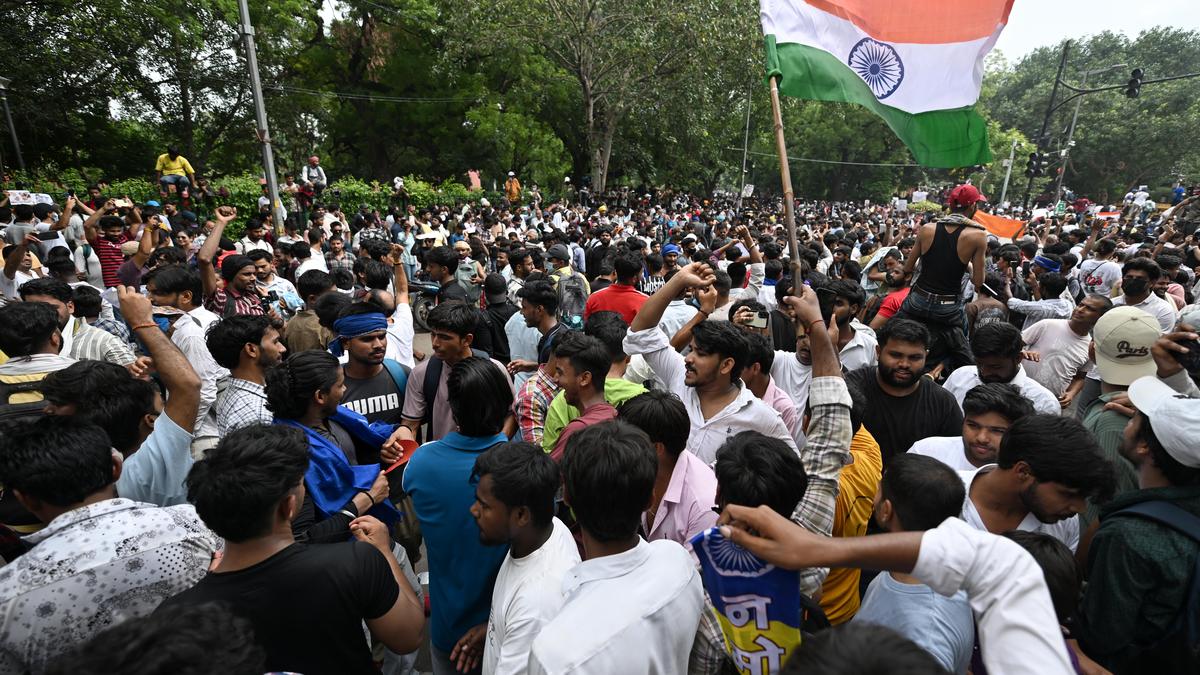
In the judicial and political spheres, the panic takes the form of elite closure: established governing classes treating outsiders’ demands for entry as proof of their inadequacy rather than as legitimate claims upon the system. It is worth asking plainly which young Indians actually stand outside recruitment boards and examination centres.
Government jobs have long been among the few reliable ladders into stable employment for first-generation graduates from marginalised and rural backgrounds.
When a Chief Minister questions this group’s basic competence, the remark cuts deep. He is speaking to people who believed the public sector remained the one arena where merit—not surname or networks—determined outcomes.
None of this scapegoating is entirely unique to India. Executives ranging from Jack Ma, whose “996” work culture remarks became globally controversial in April 2019, to Elon Musk, who has repeatedly defended 80- to 100-hour work weeks since acquiring Twitter in 2022, have made similar arguments for extreme working hours. But what is specifically Indian about this moment is the reliance on caste-coded assumptions about who “deserves” a government job and gendered assumptions about domestic responsibilities. On 25 November 1949, in his final address to the Constituent Assembly, B.R. Ambedkar warned that India could not indefinitely sustain the contradiction between political equality and profound social and economic inequality. Today, that warning reads less like history than like a description of the daily news cycle. Every time an institution’s failure is rebranded as a generation’s flaw, the resolution of that contradiction is postponed once again.

The tragedy here is not merely the insults. It is the refusal of accountability. When a courtroom aside, a corporate prescription and a political slur all rely on the same scapegoat, they reveal a governing class that has ceased to explain its own failures.
Blaming the young is no longer simply a reactionary reflex; it has become the default language through which India’s elite speaks to its own future.









**A timely and thought-provoking piece. Instead of dismissing young people as entitled or impatient, we need to ask why so many of them feel unheard despite working harder than ever. Blaming a generation is easier than confronting the structural failures they face. An important read that challenges comfortable narratives.**
Thank you, sir!
Well arugued piece Harish.
Every example here from Subrahmanyan’s “90-hour week,” Ranaut’s “Generation Gutter,” to the CJI’s “parasites” is a case of youth being right about a systemic failure and getting a character slur in return. The data proves that it isn’t a discipline problem, it’s an absorption problem. So when does the elite stop blaming the young instead of the systems they run?