

“This Is an Era of Protests”: Prakash Raj on Voter Deletions, Public Hearings and the Fight for Democratic Rights

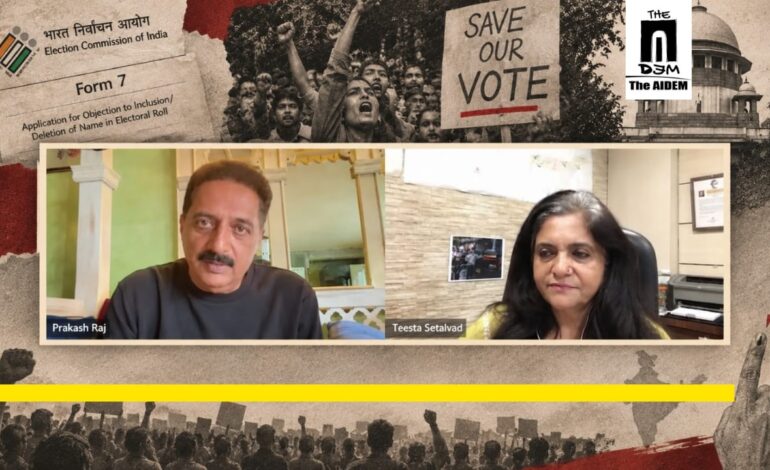
Prakash Raj in Conversation with Teesta Setalvad on SIR and Vote Deletions- Part 2
The controversy surrounding the Special Intensive Revision of electoral rolls has brought attention to the difficulties faced by citizens whose names are missing from voter lists or whose identities and addresses are being questioned. For actor and activist Prakash Raj, these experiences demonstrate why the campaign against the SIR must move beyond statistical arguments and political rallies to direct engagement with affected communities.
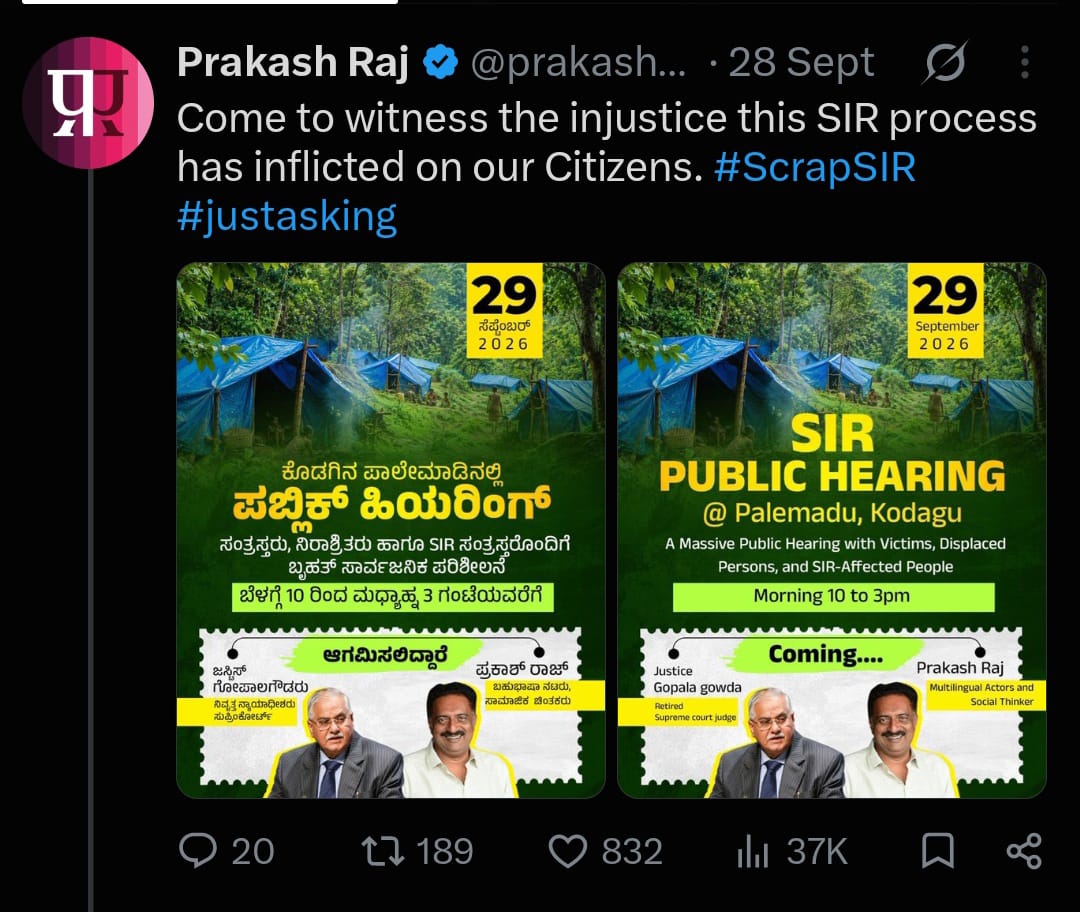
In the concluding part of his conversation with Teesta Setalvad, Prakash Raj recounts encounters with transgender persons, Adivasi workers and voters who say they have been wrongly classified as absent or deceased. He discusses allegations of irregularities in Form 7 applications, questions the Election Commission’s procedures and calls for decentralised public audits and Jan Sunwais. The conversation also addresses his decision to reduce his film commitments, the support of his family, the role of young protesters and his belief that civil society must sustain a peaceful, nationwide campaign for electoral accountability.
Teesta Setalvad: You have been speaking about the importance of taking this campaign directly to people. During your travels across Karnataka, you have encountered individuals whose experiences would otherwise remain hidden behind the statistics.
What have these encounters taught you?
Prakash Raj: When I travelled across Karnataka, I met people whose stories would never have been heard if we had confined ourselves to discussing numbers.
For example, who would tell the stories of the transgender persons who came to our public hearings?
They told me, “Sir, they are questioning us because our names do not match and we do not have permanent addresses.”
When they were born, they had one name. When they left their families or were forced out of their homes, they adopted another name.
They may not have a permanent address. Yet they are being asked for documents, including certificates relating to gender-affirming surgery.
Where are they supposed to get these documents? Where are they supposed to say their homes are?
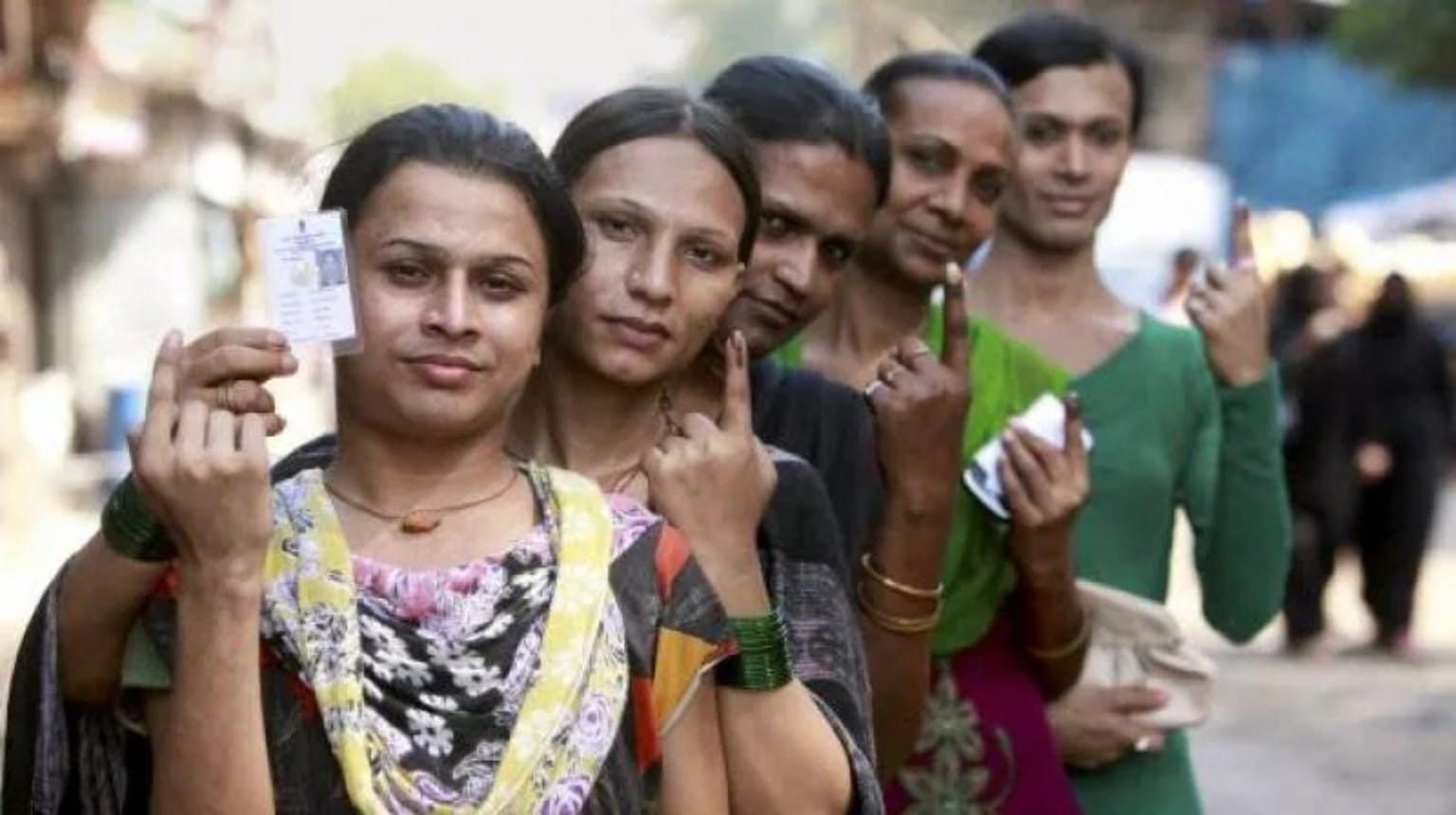
For decades after Independence, transgender persons struggled for legal recognition of their identities. The Supreme Court eventually recognised their rights.
Now, even those protections are being undermined in the electoral process.
I also met Adivasi workers in Kodagu who live in line houses on large estates.
Many live in conditions of extreme dependence on estate owners. Some have moved from one place to another because of fear or exploitation.
Their votes have existed in the electoral rolls for years. Earlier, estate owners would take them to polling stations and make them vote.
Now they are being treated as people without a proper address or as absent voters.
Look at my own experience.
I was marked as absent at my address. I tweeted about it, and the Election Commission contacted me.
They said, “Sir, we will correct it.”
I said, “Please correct it.”
Then they asked me to tweet again.
I said, “No, first correct it. How are you going to correct it?”
They told me to submit Form 6.
Why should I submit Form 6?
Teesta Setalvad: Because Form 6 is meant for inclusion of a name in the electoral roll. You are being asked to apply as though you were a new voter, despite having voted before.
Prakash Raj: Exactly.
And we must also ask questions of the Supreme Court.
When the Election Commission makes statements that are challenged by evidence, why are there no consequences?
When the Court asks the Election Commission to produce information within a specified period and that information is not produced, why is there no accountability?
We have to ask these questions respectfully but firmly.
Teesta Setalvad: In Karnataka, the authorities could identify only 771 cases.
Prakash Raj: That is what I am saying.
There were claims about lakhs of infiltrators. Political speeches referred to huge numbers.
But when the authorities examined the cases, they reportedly found only around 700.
Many were Nepalese nationals. We have a long history of people from Nepal coming to India and working here, including as security guards, cooks and in other occupations.
Some were people from Karnataka who had lived abroad.
The authorities reportedly identified only two persons from Bangladesh and Pakistan, both women who had married here.
So where are all these so-called ghuspaithiyas, or infiltrators?
And now Amit Shah says there are infiltrators in Hyderabad.
Where are they?
Teesta Setalvad: Such statements are completely irresponsible.
Prakash Raj: The Home Minister is responsible for the country’s internal security.
If there is a problem involving illegal entry, it is his responsibility to address it.
How can he make such claims without explaining what his government has done?
And why is the government intervening in matters that should be handled by an independent Election Commission?
Why are people protesting electoral issues being treated as though they are enemies?
Why are young protesters being pushed around and denied space?
We should be asking these questions.
We must also ask Narendra Modi and Amit Shah because they were part of the majority that selected Gyanesh Kumar.
If the Chief Justice of India had been part of that selection process, I would have asked questions of the Chief Justice too.
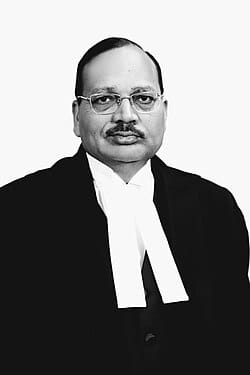
But the present arrangement placed the decision in their hands.
There was also the Indian Express report concerning differences within the Election Commission over the SIR.
The Commission’s response did not, in my view, adequately address the questions raised.
Teesta Setalvad: The press release did not deny the substance of the report. In fact, we believe it vindicated important aspects of it.
Prakash Raj: Exactly.
They said the SIR was a collective decision. But the questions concerned differences over the process.
If two Election Commissioners took one position and the Chief Election Commissioner took another, who was in the minority?
Gyanesh Kumar was the person in the minority.
These are the things we must explain to people.
Civil society must continue doing that. Protests cannot simply be events.
There must be a continuing process of collective action and public education.
People are already giving enormous amounts of their time to this campaign.
Teesta Setalvad: And you will continue giving your time?
Prakash Raj: I have stopped shooting films because I believe it is necessary for me to continue this work.
It is important to travel, meet people, give interviews and explain what is happening.
The BJP’s representatives have not been able to answer many of the questions we are raising.
Teesta Setalvad: I wish there were at least five or six other prominent public figures from cinema, culture or other fields who would give their time to this struggle.
Their participation would help amplify the work being done by activists and transparency campaigners.
Many of us have been raising questions about electoral processes for years.
In 2024, our Vote for Democracy report examined the Lok Sabha elections and alleged serious irregularities.
Our assessment was that, had the election been conducted fairly, the Opposition could have won 79 additional seats.
That was our report and our assessment. But at the time, the Opposition parties did not show sufficient interest in examining it.
Prakash Raj: That is what I cannot understand.
Are these political leaders not educated? Are they not aware of what is happening?
How could parliamentarians and political parties fail to see this coming?
It is deeply disappointing.
Teesta Setalvad: Their awakening has been very late.
Prakash Raj: Very slow.
Teesta Setalvad: And very late.
Prakash Raj: But they must wake up now.
And waking up does not mean organising occasional events.
They must go to the people, conduct audits and social audits, take the support of civil society and work together.
Otherwise, democracy itself will be in danger.
Teesta Setalvad: Prakash, you mentioned that you have stopped shooting films. I want to make a small digression.
A recent video featuring your wife, Pony, attracted considerable attention. It was touching to hear her speak about the sacrifices you have made and how quietly you have made them.
How has your family dealt with all this?
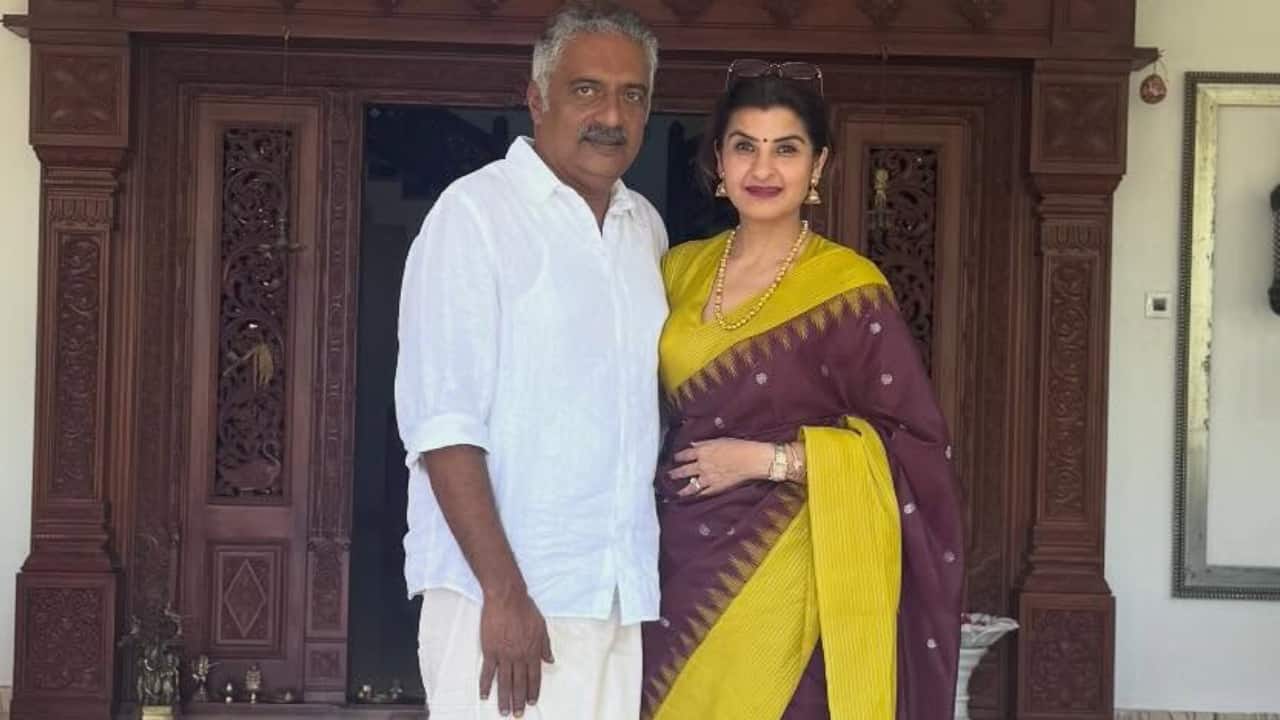
Prakash Raj: I do not want to play the victim.
I knew what I was getting into. I knew there would be a price to pay.
Fortunately, I am relatively privileged. I am not feeling the financial pressure as much as many others would.
I should be honest about that.
I have earned enough to manage. I am not going to be on the streets because I have stopped working for some time.
At least I must tell people that truth.
I do not want to complain and say, “Look what they are doing to me.”
That is not necessary.
But my wife has also experienced the emotional strain. Many families go through that.
Over the years, Pony has understood why I am doing this. She knows I am standing for what I believe is the truth.
Her support means a great deal to me.
I have also spent time explaining things to her. I cannot become irritated when she expresses concern because her concern is genuine.
She is worried about my well-being.
She has stood by me, and that is wonderful.
My daughters have also stood by me.
Teesta Setalvad: Coming back to the SIR, we are discussing the Karnataka electoral rolls and the elections approaching in several states.
I want to sharpen one of the central demands.
It is not enough to say that the SIR must be scrapped. We must also demand a return to the 2024 electoral rolls.
Prakash Raj: Yes.
Teesta Setalvad: Unless these two demands are linked, the authorities could retain the revised rolls, which we believe are seriously flawed.
The demand should be to restore the 2024 Lok Sabha rolls and add new voters who have become eligible since then, through a publicly audited process.
There are also questions about the elector-population ratio in Karnataka.
The figures released by the Election Commission have been challenged by commentators who believe that a much larger number of people may have been excluded.
Prakash Raj: Where are the population figures? Where is the supporting data?
Teesta Setalvad: Even the figure of 99.3 lakh given by the Election Commission has been questioned. Commentators such as Shiva Sundar have argued that another 25 to 27 lakh people may have been left out.
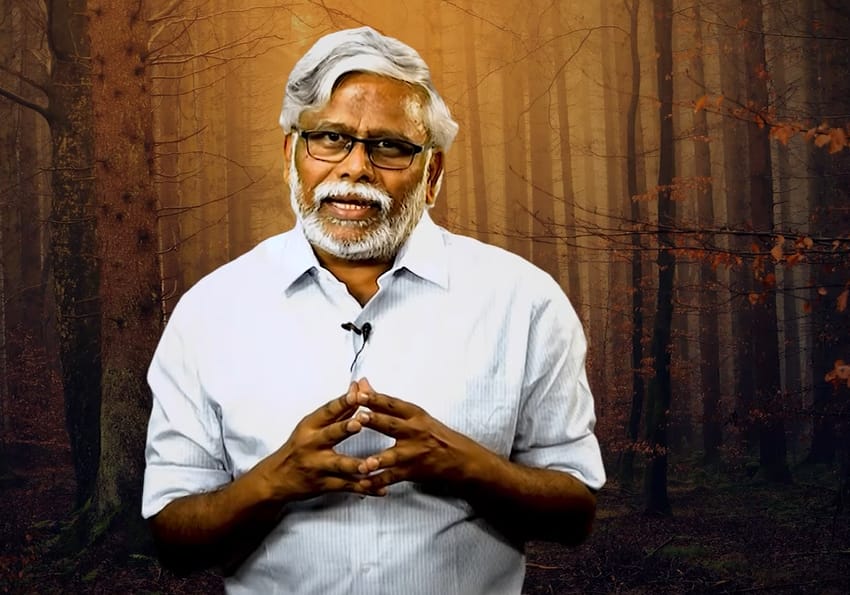
Prakash Raj: Yes. There are also questions about the number of voters classified as deceased.
Where are the supporting records?
I have travelled and met people who say, “Sir, we are alive.”
Yet their names have been removed on the grounds that they are dead.
They are standing before us and saying, “I am alive.”
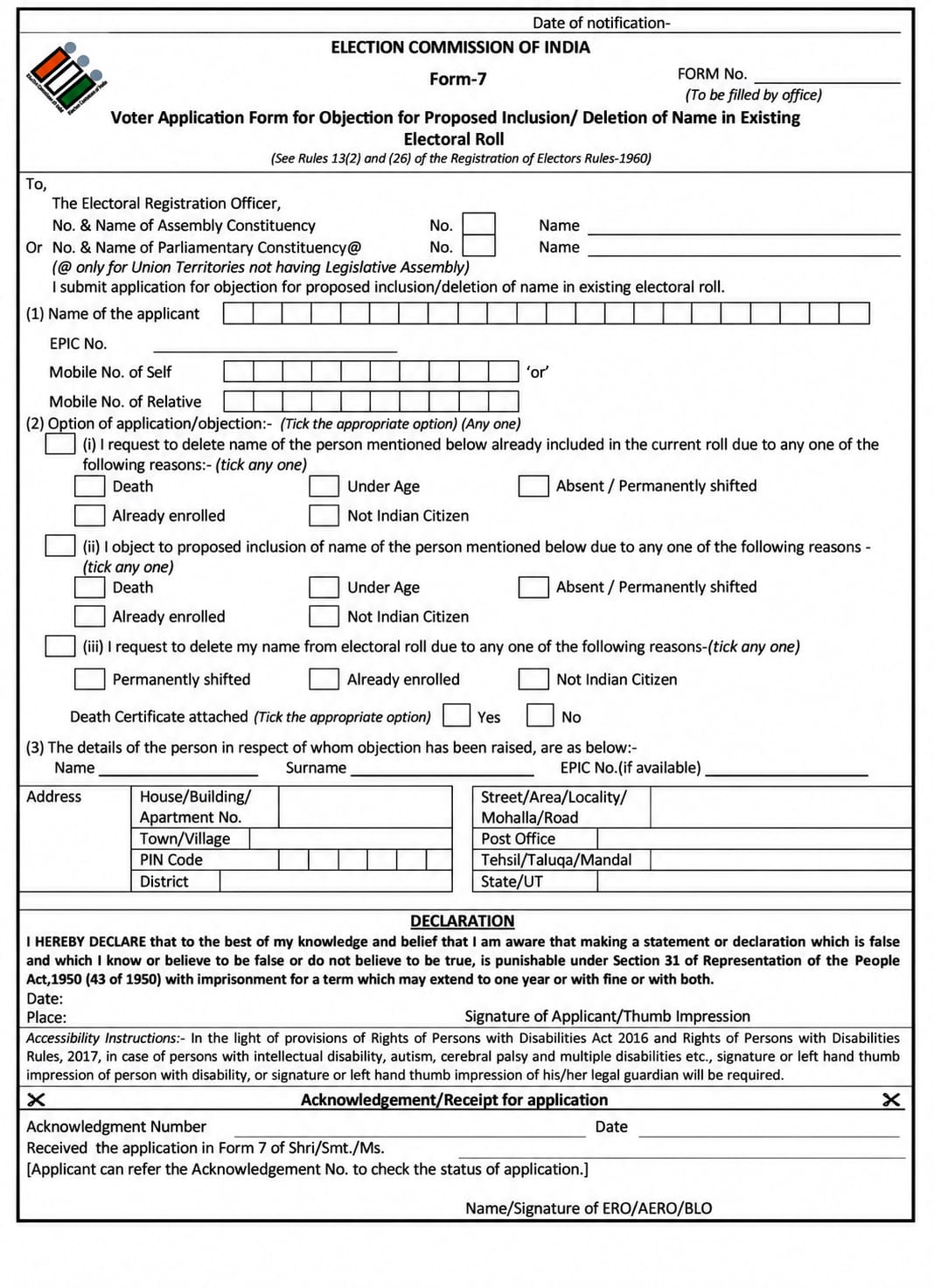
Teesta Setalvad: And then there is the issue of Form 7 applications.
Prakash Raj: We encountered one of the first such cases during our travels in Belgaum.
We found printed Form 7 applications in Belgaum North.
There were around 200 forms.
The names, EPIC numbers and reasons for deletion had already been printed.
Only the details of the person submitting the applications were to be filled in by hand.
One person was filing around 200 forms.
Teesta Setalvad: Such a process raises serious questions about the role of the Booth Level Officer and the electoral authorities.
Prakash Raj: We were told that the forms had come from a BJP candidate who had lost the election.
When we confronted the people involved, they said, “Sorry, we were only checking. If something is wrong, leave it.”
I asked them who had given them the forms.
They said the instructions had come from above.
Who gave those instructions?
There were even cases where people realised that applications had been filed to delete the names of their own neighbours.
These are the things we have been encountering.
And when citizens are protesting against the SIR, the Home Minister responds by talking about infiltrators and Bangladeshis.
What kind of political rhetoric is that?
Teesta Setalvad: There is no concern in that response for the right to vote or for citizens whose names have been removed.
I think this also reflects an ideology that does not adequately respect democratic rights.
Prakash Raj: Because they have done this themselves. I believe it has become a question of their political survival.
Teesta Setalvad: The challenge is to bring more people into the streets and demand accountability throughout the process.
Prakash Raj: People are beginning to understand what is happening.
The government has no convincing answers to genuine questions.
Even if another five or six per cent of people begin questioning the government’s narrative, that can make a difference.
Some people support Modi simply because they have supported him for years. They continue defending him because they do not want to admit that they may have been wrong.
But I believe the numbers are no longer in the government’s favour.
I do not believe it has a genuine mandate.
Teesta Setalvad: What was your experience at Ramlila Maidan?
Prakash Raj: A large number of people came.
Some were mobilised by political organisations. Others came because they wanted to be there.
But something is happening.
Before the Ramlila Maidan gathering, there had also been a large march.
The BJP may keep saying that people did not turn up. That is part of political argument.
But the important thing about the Ramlila Maidan gathering was that people knew why they had come.
Let us acknowledge that.
They knew why they were there.
Teesta Setalvad: The challenge now is to take the campaign beyond urban centres.
Prakash Raj: Recently, I was invited to a function where they wanted to honour me.
When I went on stage, I said, “This is not the time for events and functions. This is an era of protests.”
The next two years must be an era of protests, comparable in commitment to the freedom struggle.
Teesta Setalvad: Because our freedoms are being weakened.
Prakash Raj: So many young people have joined the protests.
Many of them were only 13, 14 or 15 years old when this government first came to power. They were not the people who elected it.
Now they are asking questions.
And the more you try to suppress them, the more questions they will ask.
They will remember how they were treated.
I believe the government has lost touch with the people.
It has been living within its own echo chamber.
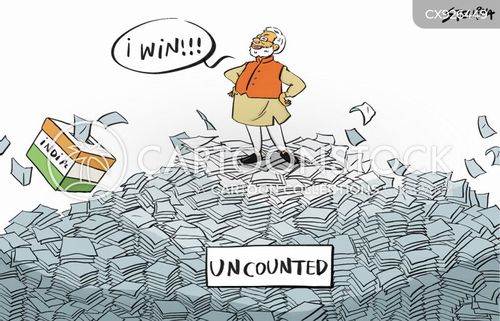
Now the voices from the ground are reaching it.
That is why protesters are being pushed around and denied space.
The authorities fear that the protests could grow beyond their control.
Let them make those mistakes.
But civil society must continue working tirelessly and peacefully in the streets for the future of this country.
Teesta Setalvad: I want to make a strong appeal to you.
You have connections with prominent people in cinema and other fields. We need more public figures to lend their voices to this campaign.
Just as we have public figures serving as ambassadors for international causes, we need more people willing to speak about democratic rights in India.
Prakash Raj: At least the recognition we have received, the power of our names, should be useful for a cause like this.
Teesta Setalvad: Exactly. We need more people to come forward, as we have seen with figures such as Dia Mirza.
Prakash Raj: But people should not come forward with the intention of becoming leaders.
They should say clearly that they do not want political positions.
Otherwise, people will not trust them.
This country has seen many movements and many promises. People have also experienced disappointment.
They are looking for honesty and integrity.
Are you genuinely speaking for the country? That is the question.
We need more voices, supported by research and committed to peaceful action.
There will be attempts to divert the movement and provoke people. We must not allow that to happen.
This is a critical moment.
If we fail, I fear that the country could face more violence and deeper divisions.
Even if the present political establishment eventually loses power, the wounds inflicted on society could remain.
Teesta Setalvad: We already have the scars of Partition in 1947 and the violence that followed.
We cannot afford another such experience.
We must pursue this struggle as peacefully as possible.
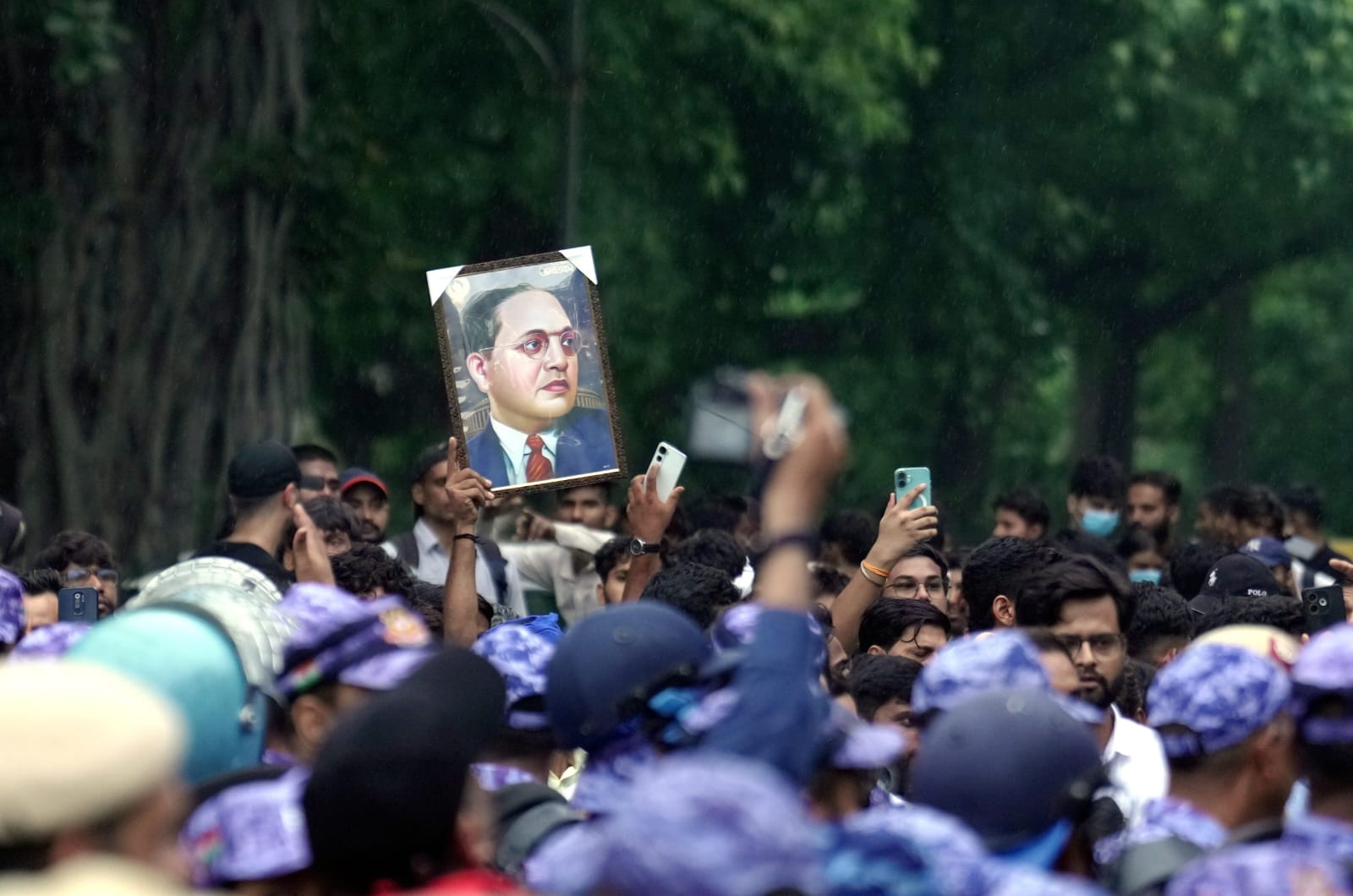
Prakash Raj: We can do that because we have Ambedkar’s Constitution.
We have the history and example of Mahatma Gandhi.
We have powerful democratic traditions available to us.
Teesta Setalvad: And their commitment to the people.
Prakash Raj: Yes.
I felt very happy when I visited Jantar Mantar and saw young people talking about Gandhi and Ambedkar.
There were young women participating, and they seemed comfortable.
It was a safe space.
That was beautiful to see. It gives me hope.
Teesta Setalvad: I felt the same at protests in Jantar Mantar and Mumbai.
They were safe spaces for women and for Muslims.
Many people had advised Muslims to stay away from these protests.
But they came and participated — not simply as Muslims, but as Indians.
They wanted to be part of this moment.
Prakash Raj: That is exactly what matters.
There is also so much creativity emerging from these gatherings.
Teesta Setalvad: I know you are tired and have been through a difficult period. But I hope you will continue speaking to us about these issues.
We want to produce shorter campaign videos from these conversations.
Before we conclude, I want you to explain why social public audits and Jan Sunwais, or public hearings, are so important.
How should they be conducted?
Prakash Raj: They are important because they represent decentralisation.
That is what is being undermined when powers are taken away from Electoral Registration Officers and decisions are centralised.
Look at the history of the Election Commission.
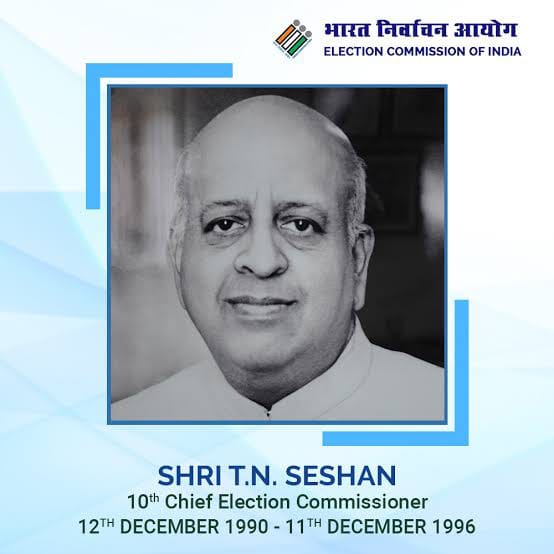
When T.N. Seshan was Chief Election Commissioner, the Narasimha Rao government introduced a three-member Election Commission.
Seshan challenged that decision in the Supreme Court.
But the Court upheld the principle that, however capable one person may be, democratic institutions should not depend entirely on the decisions of one individual.
That is why power must be decentralised.
The Electoral Registration Officer has an important role.
Public hearings have an important role.
People in a village know who lives there, who has died and who has moved away.
Teesta Setalvad: It cannot be a top-heavy process.
Prakash Raj: Exactly.
It cannot be done entirely by a computer or a machine.
Teesta Setalvad: Public scrutiny and procedures for objections are already part of the electoral-roll framework, including the Registration of Electors Rules, 1960.
Why are these procedures not being properly followed?
Prakash Raj: How can somebody sitting in Delhi make decisions about citizens based on spelling mistakes or mismatched records?
Who made those spelling mistakes in the first place?
Often, the errors occurred when officials recorded people’s details.
Now the citizens are being made responsible for correcting mistakes they did not make.
It is as though the entire country has been asked to sit for an examination to prove that its citizens are eligible to vote.
They say the SIR is not new and refer to earlier exercises.
But what happened in the past was different.
Officials would visit homes and collect information.
That was part of the normal process.
Teesta Setalvad: They would collect the details themselves.
Now the responsibility for identifying deceased voters and people who have shifted residence is being transferred to ordinary citizens.
Prakash Raj: That is not the citizens’ job.
The Election Commission and its officials are paid from public funds to maintain accurate and inclusive electoral rolls.
This work should happen continuously.
Electoral rolls are revised regularly.
The responsibility is to ensure that every eligible citizen is included.
How can you undertake an exercise covering a population of several crores within such a short period?
In Karnataka, we questioned how the work could be completed within one month.
Where is the manpower?
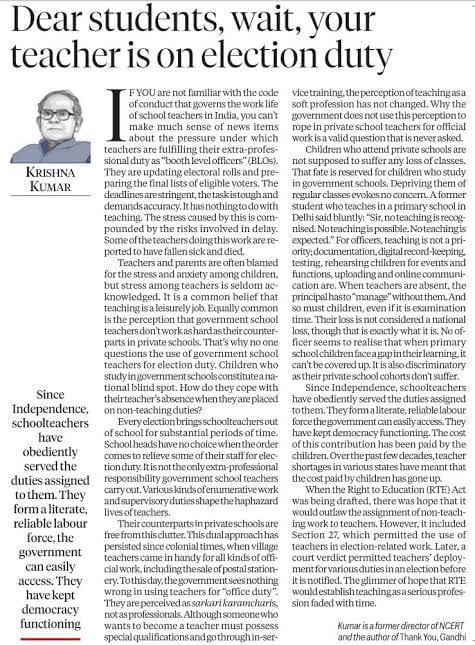
Schoolteachers are being diverted from their regular duties.
That affects children’s education.
Other government work is also disrupted.
There is inadequate training.
How can such a massive exercise be carried out properly?
And when elections are still some time away, what is the urgency?
That is why I believe there is a larger political purpose behind it.
Teesta Setalvad: We believe the purpose is to delete legitimate voters, particularly those considered politically inconvenient.
Prakash Raj: We must also remember that the census process is approaching.
Demographic information will become increasingly important.
All these developments have to be examined together.
Teesta Setalvad: Prakash, please take care of your health.
I also hope you will encourage more prominent public figures to join this struggle.
You have been among those who have taken the initiative. If you can inspire others to participate, it could make a substantial difference.
Prakash Raj: I am happy to hear that more people are coming forward.
Teesta Setalvad: They can become voices for people whose concerns are not being heard.
I hope you will speak to people in other states and encourage them to participate.
Karnataka may provide somewhat more space for this kind of intervention than some other states.
But Uttar Pradesh, Bengal and Bihar also need such efforts urgently.
Thank you very much, Prakash.
Prakash Raj: Thank you.
Read part 1 of this conversation here: PART 1
Watch the audiovisual of the full interview published on Teesta Setalvad’s YouTube channel here





This is indeed an era of resistance, because democracy cannot survive when citizens are reduced to silent spectators. Voter deletions are not mere administrative errors; they strike at the very foundation of democratic representation. Public hearings, people’s movements and collective resistance are essential to hold those in power accountable. As Prakash Raj rightly emphasises, the right to vote and the right to dissent are non-negotiable pillars of democracy. No government or institution should be allowed to undermine them without being challenged.