

Trump’s Electoral Defeat, the Limits of Strongman Politics and the Message for Modi

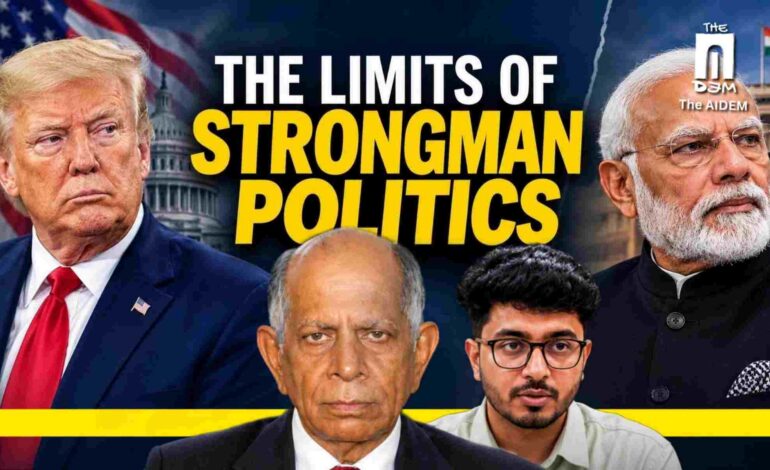
K. P. Fabian in conversation with Shubham Chohan
The Democratic Party’s electoral gains in the United States have raised important questions about the future of Donald Trump’s presidency, the resilience of American democratic institutions and the implications for countries such as India. Former Indian diplomat K. P. Fabian views the results as an indication that American democracy retains the capacity for course correction. He argues that Trump’s own policies, particularly his handling of the economy, immigration and the war against Iran, have contributed substantially to the political setback suffered by the Republicans.
In this wide-ranging conversation with Shubham Chohan, Fabian examines the possibility of renewed congressional scrutiny of the Trump administration, the prospects for an India–US trade agreement and the changing political situation in Israel following its elections. He also considers whether the weakening of Trump’s political position carries a message for Prime Minister Narendra Modi. While acknowledging the international significance of the American results, Fabian maintains that the more important message for India’s political leadership is emerging from democratic mobilisations within the country itself.
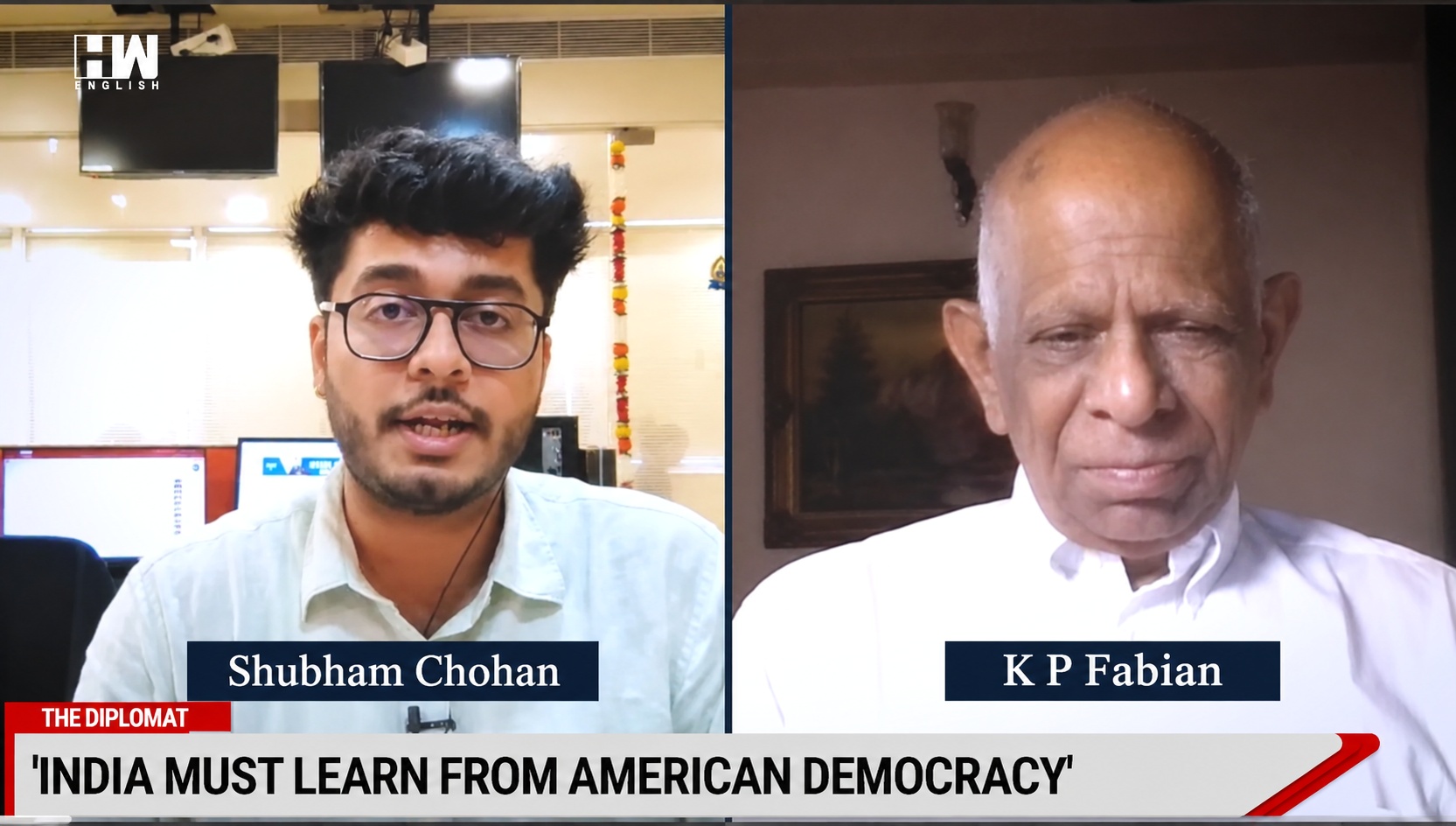 Shubham Chohan in conversation with K P Fabian, former Indian diplomat, analysing the implications of the US midterm election results, Trump’s political setback and the message for India’s democratic leadership.
Shubham Chohan: K. P. Fabian sir, thank you for joining us this week. It has been an eventful period, with elections taking place in several countries and producing some interesting results.
Let us begin with the United States. President Donald Trump has suffered a major electoral setback midway through his second presidency. The Democrats have made substantial gains in the midterm elections.
According to the figures available to us at the time of recording, the Democrats have gained control of both chambers of Congress, while also making gains in gubernatorial contests. There is clearly little for the President to celebrate.
Trump has responded by saying that he was not personally on the ballot. What are your initial thoughts on these results?
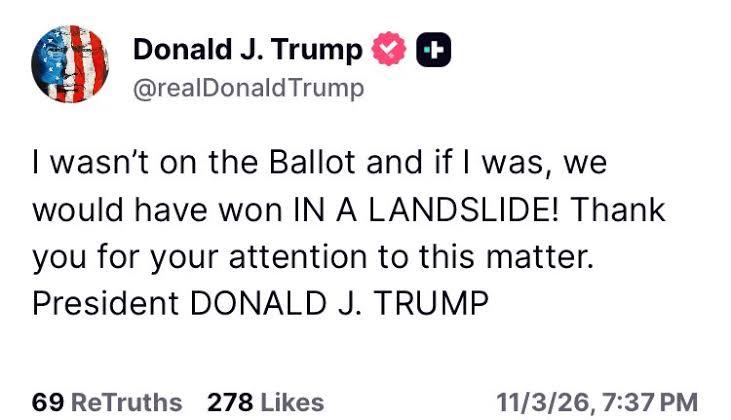 Screenshot of President Donald Trump’s Truth Social post responding to Republican losses in the 2026 midterm elections.
K. P. Fabian: My first thought is that this is good for America. It is good for the rest of the world, including India. America is restoring its democratic credentials.
America is demonstrating that a democracy is capable of course correction. This is something other democracies may take note of.
The popular impression is that the Democrats have administered a Waterloo to Trump. That is correct. But if one reflects on it more deeply, Trump has defeated himself through his policies, actions and statements, which have violated the fundamental values of the American Constitution and the American Revolution.
And this has happened in the 250th anniversary year of the Declaration of Independence of 1776.
Trump has caused his own defeat. He has been hoisted by his own petard. That is the underlying truth.
The Democrats have swept through, but Trump prepared the ground for their victory. In short, he is his own worst enemy.
You mentioned his claim that he was not on the ballot. In fact, at numerous campaign events, including those in strongly Republican districts, he had asked voters to imagine that he was on the ballot and vote accordingly.
So Trump is contradicting himself. He told American voters that he was effectively on the ballot. They took him seriously and decided to administer a sharp rebuke. That is what has happened.
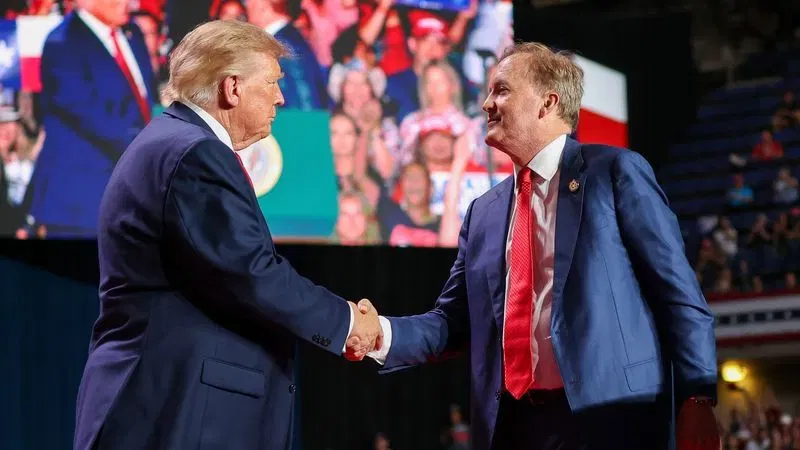 Trump campaigning with Ken Paxton during rallies ahead of the Texas U.S. Senate election Ken Paxton at the Freeman Coliseum on October 07, 2026 in San Antonio, Texas. Paxton was later defeated by Democrat James Talarico, ending the Republicans’ 38-year winning streak in Texas Senate elections.
Shubham Chohan: There has already been considerable analysis of the elections, both before and after the results. But for our audience, could you explain in relatively simple terms why these midterm results matter?
Trump still has approximately two years remaining in his presidency. How will this defeat affect his ability to govern during the remainder of his term?
K. P. Fabian: The impact will depend partly on how he reacts.
His immediate reaction was to say that he would become “Mr Veto”. In other words, he would veto any legislation passed by Congress that he did not like.
Technically, that is a strong position. Under the American Constitution, if the President vetoes a bill, Congress must pass it again with a two-thirds majority in both chambers to override the veto.
From the figures you have mentioned, the Democrats are not going to have a two-thirds majority in the Senate. Nor is such a majority expected in the House of Representatives.
So, technically, Trump can continue vetoing legislation. That is why he said he would be Mr Veto.
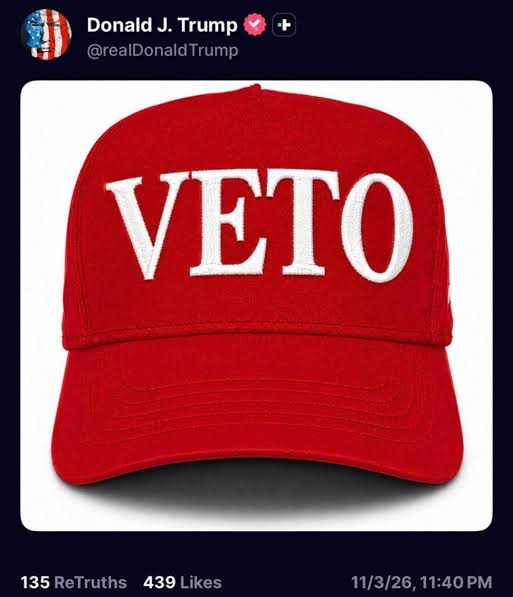 Donald Trump’s “VETO” hat post on Truth Social on November 3, 2026, signaling his strategy following the midterm election results.
But a few hours later, he told The New York Times that he would work with the Democratic-controlled Congress. In other words, he appears to have recognised the political reality.
One possibility is that he becomes a lame-duck President but cooperates with Congress and leaves behind a reasonably good legacy. That is one scenario.
The other is that he behaves like an angry bird, becomes confrontational and continues vetoing legislation.
What will he actually do? I do not want to predict that, because Trump can say one thing now and something entirely different half an hour later.
My assessment is that he may have learnt a lesson and will try to cooperate. Otherwise, Congress can initiate numerous investigations involving the Epstein files, his family’s business interests and several other matters.
He could even face impeachment again. Of course, impeachment does not necessarily mean conviction by the Senate. He has already been impeached twice, which is a record for an American President.
Let us hope he chooses cooperation.
Congressional power, the Epstein files and impeachment
Shubham Chohan: Are you suggesting that a Democratic-controlled Congress can pass legislation without Republican support, while Trump retains the power to veto it? Does this mean that the President will now be substantially constrained by the Democrats?
K. P. Fabian: What I said is that he can technically veto legislation.
Even if some Republicans support a bill along with the Democrats, the President can still veto it. There are constitutional procedures governing the exercise of that power, including the requirement that he return the legislation within the prescribed period.
But if he vetoes a bill, Congress needs a two-thirds majority in both chambers to override him.
The Democrats will not have that majority on their own. And it is unlikely that enough Republicans will break with Trump to make such a majority possible.
So, from a constitutional point of view, Trump retains considerable power.
But exercising that power continuously would have political consequences.
Congressional investigations into the Epstein files, his family business interests and other matters could proceed regardless. Such investigations can be conducted aggressively or with greater restraint.
Either way, Trump is going to face difficulties.
Shubham Chohan: Let us take the Epstein files as an example. If the Democrats control Congress, can they order an inquiry, demand the release of the relevant documents and compel administration officials to answer questions?
And are you also saying that another impeachment of Trump is a possibility?
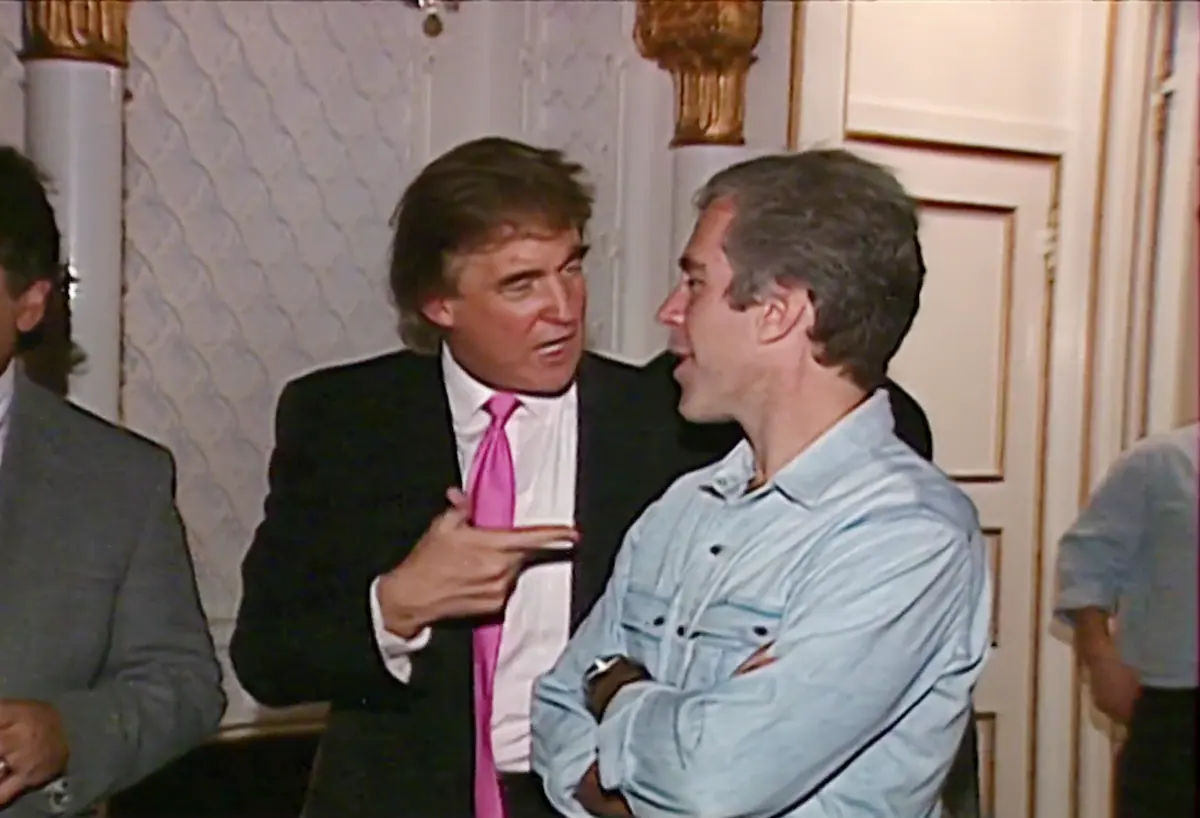 Donald Trump (left) talking with Jeffrey Epstein (right) at a party hosted at Mar-a-Lago in 1992.
K. P. Fabian: Yes.
On the Epstein files, Congress could pass a resolution demanding their full release. If there is a delay, congressional committees could subpoena the Attorney General and other officials and ask them to explain why the documents have not been released.
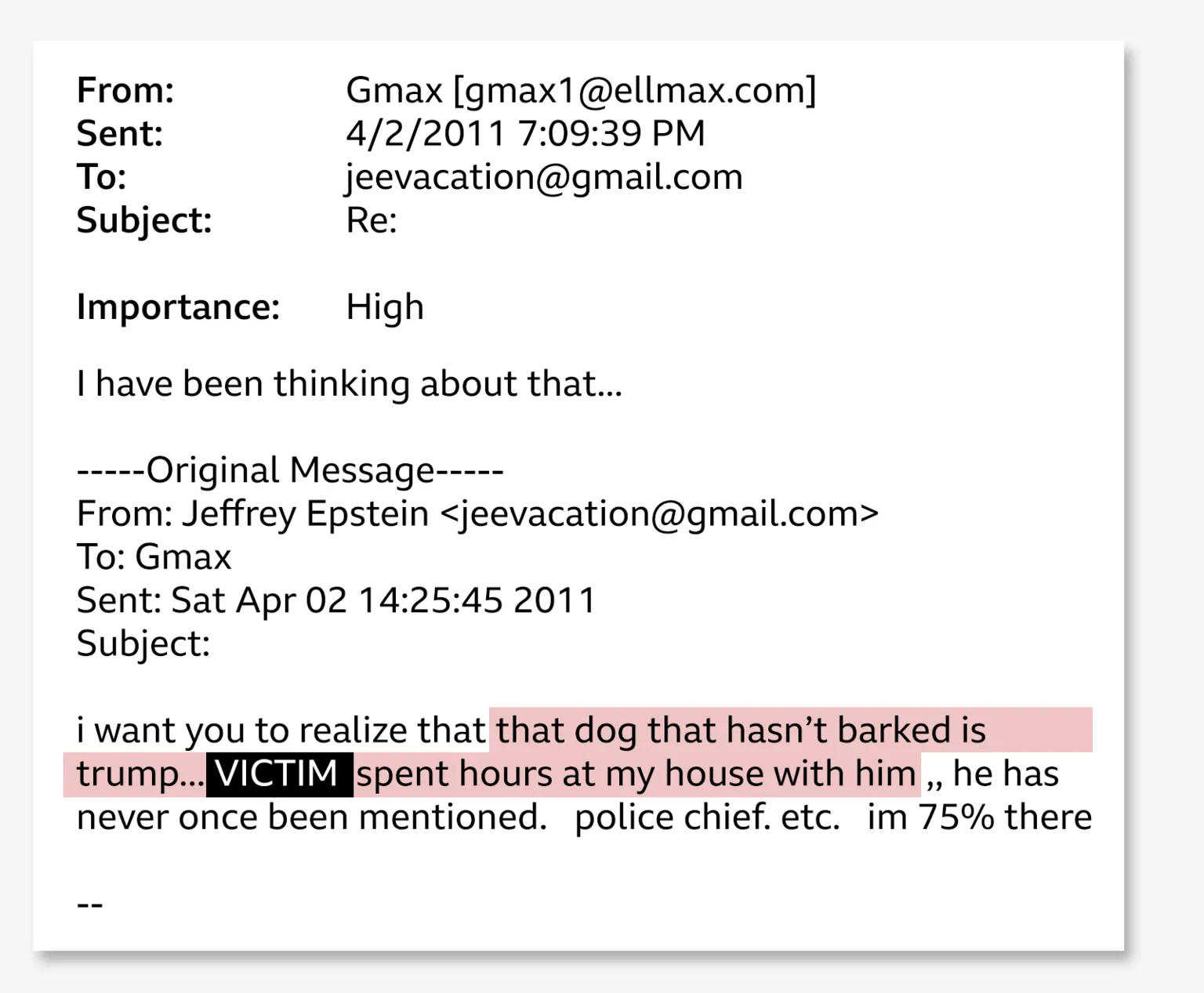 A redacted email exchange from April 2, 2011, between Jeffrey Epstein and Ghislaine Maxwell discussing Donald Trump, released by the U.S. House Oversight Committee.
That could lead to a confrontation between congressional authority and presidential authority. The matter might even reach the Supreme Court.
But as I said earlier, America is undergoing a process of course correction. I expect that process to continue rather than be reversed.
Why did the Republicans lose?
Shubham Chohan: Let us examine the causes of the Republican defeat.
There is considerable criticism of the American war against Iran, both domestically and internationally. Would it be correct to say that the war cost Trump the midterm elections, or were other factors equally important?
K. P. Fabian: There were other factors as well. But let me first say something about the war.
If the war had succeeded in the way Trump imagined when he launched it — if the Iranian government had surrendered, or if Iran had been destabilised or fragmented — many Americans might have regarded it as a great achievement.
So morality is not necessarily the decisive factor in the political response.
What mattered to ordinary Americans was that they had to pay more for petrol. Diesel prices also increased, affecting the prices of commodities because goods are transported by trucks and agricultural machinery depends heavily on diesel.
Inflation became a major issue. Americans now speak increasingly about affordability.
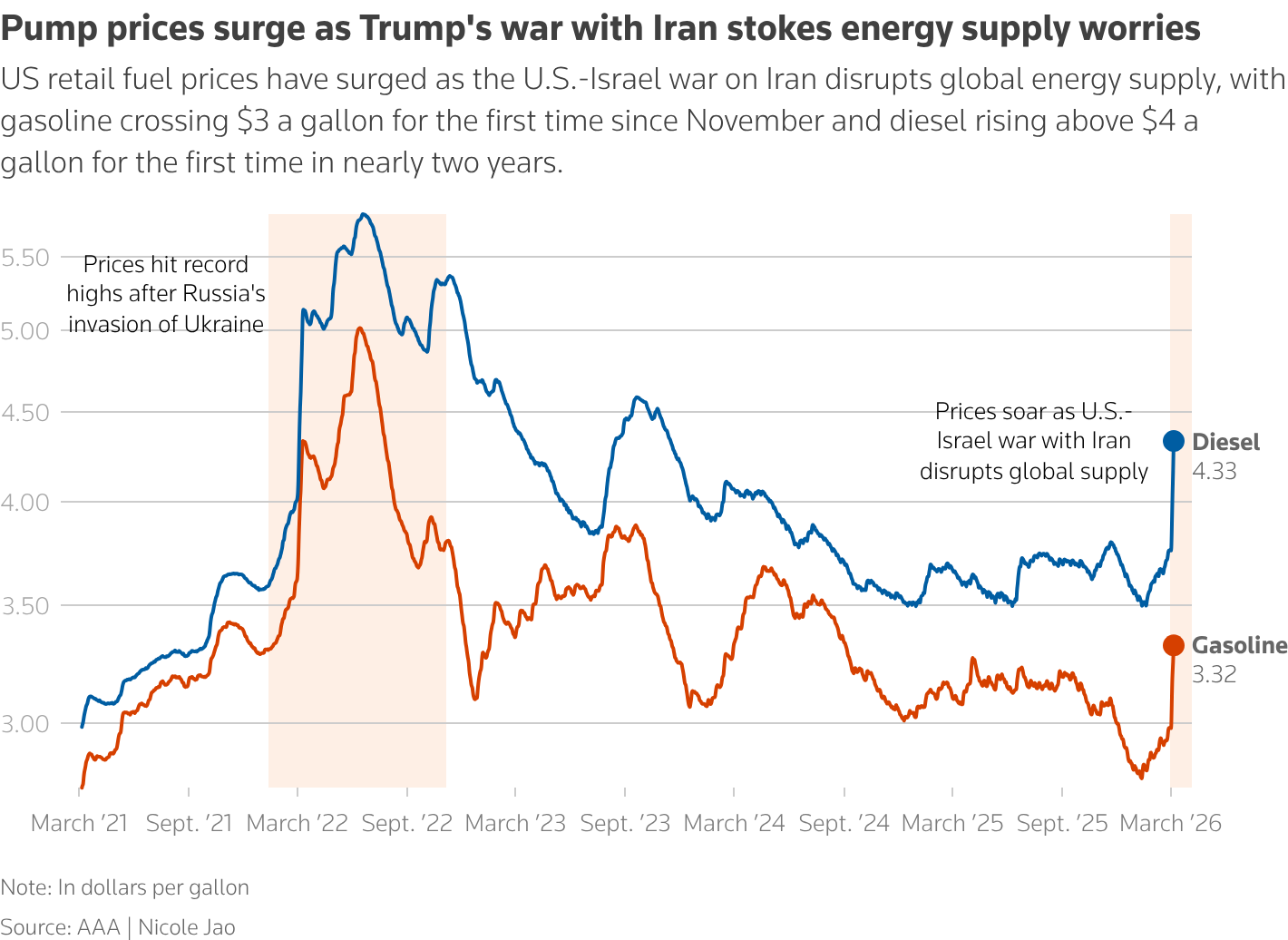
U.S. retail fuel prices (gasoline and diesel) from 2021 through March 2026, highlighting a sharp surge attributed to the conflict involving the U.S., Israel, and Iran, with gasoline passing $3 a gallon and diesel crossing $4 in March 2026.
It brings to mind the famous political expression, “It’s the economy, stupid.”
That is one major factor.
The second is Trump’s violation of American democratic values.
The third is the manner in which his administration pursued the deportation of undocumented immigrants.
Consider an American citizen who employed a driver from Nicaragua. Suddenly, that driver might be detained and deported.
Whatever the actual number of undocumented immigrants, millions of them were part of the American economy. They worked as drivers, agricultural labourers, fruit pickers and in many other economically useful occupations.
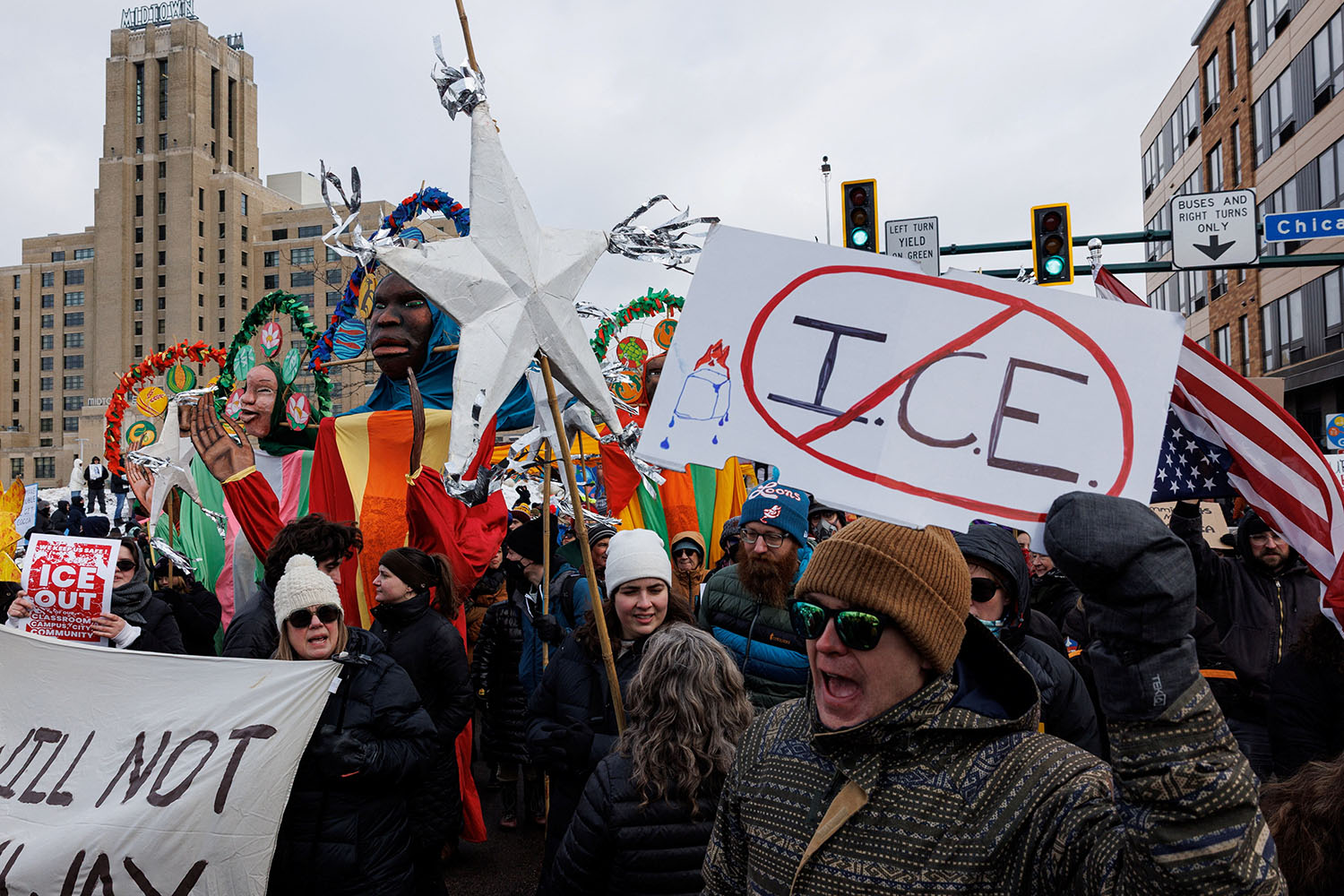
People march during a protest against increased immigration enforcement, after the fatal shooting of Renee Nicole Good by a U.S. Immigration and Customs Enforcement (ICE) agent, in Minneapolis, Minnesota, U.S., January 10, 2026.
Large numbers were deported, often under humiliating conditions.
Remember the Indians who were deported with their hands and legs restrained?
The Government of India failed to respond adequately to that humiliation. If I remember correctly, the External Affairs Minister described it as an internal matter of the United States.
But how can the humiliation of Indian citizens be regarded merely as an internal American matter?
Indian deportees kept in handcuffs and chains inside a U.S. C-17 aircraft during a repatriation operation, a practice that drew sharp criticism from communities and officials alike.
The response of other countries also emboldened Trump.
Then there is the question of his support for Israel and the political consequences of that position.
Take the example of Abdul El-Sayed in Michigan. Trump attacked him using allegations about extremism and his Muslim identity, even suggesting that he should be sent back to where he came from.
Yet El-Sayed secured a significant electoral victory.
So there were several factors.
The war became unpopular largely because Trump failed to achieve his objectives and because of the economic consequences.
Among Arab Americans and sections of the Black American population, the injustice associated with the war and American policy towards the region was also important.
But for many other voters, particularly sections of the white electorate, the economic consequences were more immediately significant.
Do the Democrats have an advantage in the next presidential election?
Shubham Chohan: Opinion polls had already shown a decline in Trump’s approval ratings. Now the Democrats appear to have gained renewed energy, including in areas traditionally considered Republican strongholds.
Does this give the Democrats an advantage in the next presidential election?
And could someone like Kamala Harris, who was unsuccessful in the previous presidential contest, emerge as a serious contender again?
K. P. Fabian: The Democrats have a good chance, but they must agree on a candidate sufficiently early.
Kamala Harris entered the contest rather late last time.
Joe Biden should not have attempted another term. Then came his disastrous debate performance, followed by concerns about his age, attentiveness and ability to continue.
The Democrats must begin the process early enough to identify a strong candidate.
If they do that, I believe neither Vice-President J. D. Vance nor Secretary of State Marco Rubio, who are among the possible Republican contenders, will have an easy path to victory.
America needs a change. It would be better if the Democrats returned to power.
What does Trump’s setback mean for India?
Shubham Chohan: You say it would be better if the Democrats returned to power. Is that also what New Delhi might be hoping for?
India has had a turbulent relationship with Trump during his second presidency, particularly over tariffs, trade negotiations and his claims concerning the ceasefire following Operation Sindoor.
Interestingly, some political commentators in India who initially welcomed Trump’s return are now celebrating his electoral setback. They argue that Trump tried to pressure India and has now received a political rebuke himself.
How should New Delhi interpret these results?
K. P. Fabian: Trump’s policy towards India will depend on which of the two approaches I mentioned earlier he adopts.
He can become pragmatic, reconnect with reality and recognise the limitations of his policies. Alternatively, he can become an angry bird, attacking everyone.
My assessment is that there is a greater probability of his becoming pragmatic.
As part of that pragmatism, he may realise that his policy towards India has not served American interests.
India is a growing power, both geopolitically and geoeconomically. It is also a leading voice of the Global South.
Therefore, it is in America’s interest to maintain good relations with India. Of course, it is in India’s interest as well, but this is not a one-way relationship.
America also suffers when its relations with India deteriorate.
So there is an opportunity for improvement.
At the same time, we must recognise that Trump has a soft corner for Pakistan. He appears to admire Field Marshal Asim Munir. These factors will continue to influence his approach.
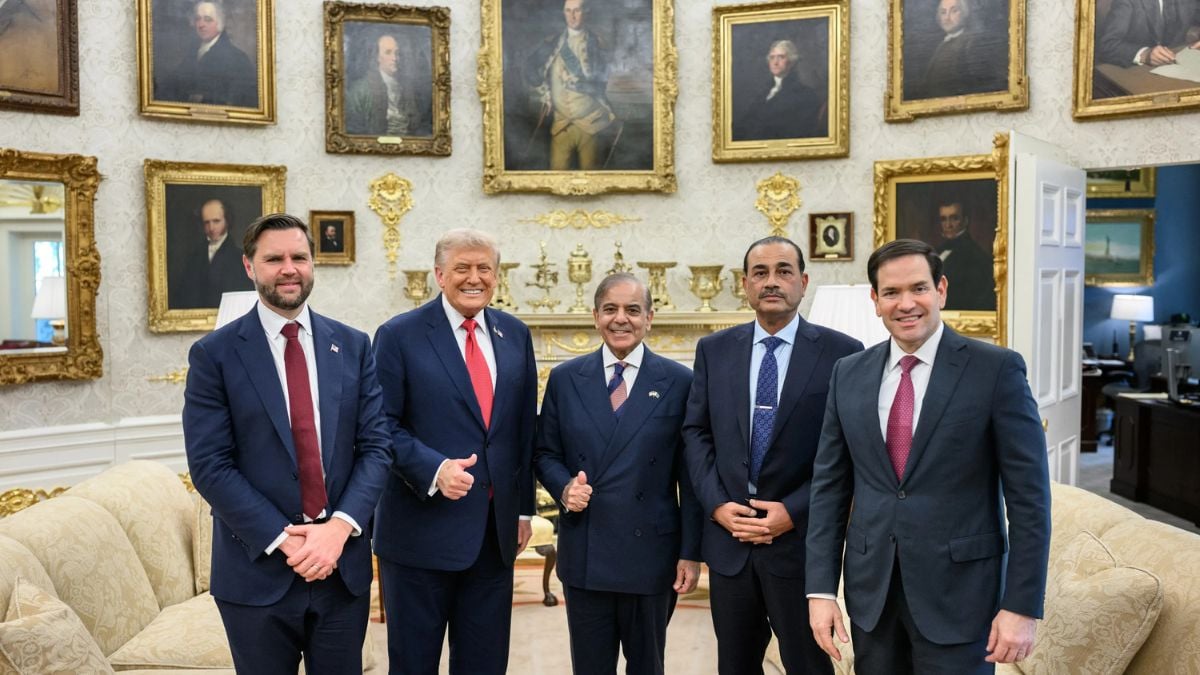 President Donald Trump, Vice President JD Vance, and Secretary of State Marco Rubio pose for a photo with Prime Minister Shehbaz Sharif and Chief of Army Staff General Asim Munir of Pakistan, Thursday, September 25, 2025, in the Oval Office. (From left: Vice President JD Vance, President Donald Trump, Prime Minister Shehbaz Sharif, General Asim Munir, and Secretary of State Marco Rubio).
Nevertheless, I expect the India–US trade agreement to come through now.
Trump will have to abandon the approach of simply taking and taking, without giving anything in return.
There will have to be give and take.
India will have to make some concessions, and America will have to make concessions as well.
If that approach prevails, an agreement should be possible.
However, India is not necessarily very high on Trump’s list of priorities at present. He has several other matters to handle.
Therefore, much will also depend on India’s diplomatic ability to secure the President’s attention.
Shubham Chohan: So, in your assessment, Trump’s electoral defeat puts New Delhi in a stronger bargaining position in the trade negotiations, and you believe an agreement is now more likely?
K. P. Fabian: Yes, most likely.
Is there a message for Narendra Modi?
Shubham Chohan: Let us turn to a larger political question arising from these elections: the future of strongman politics.
Several candidates who aligned themselves closely with Trump adopted aggressive rhetoric and political positions associated with his leadership. Vivek Ramaswamy is one example.
Trump himself projected the image of a strong leader who could dominate the political system. Yet the electoral results have exposed the limits of that approach.
Internationally, we have also witnessed political setbacks for leaders associated with authoritarian or strongman styles of governance, including Jair Bolsonaro in Brazil, Aleksandar Vučić in Serbia and Viktor Orbán in Hungary.
We will discuss Israel separately.
But does this broader political trend, and particularly Trump’s setback, carry a message for Prime Minister Narendra Modi?
K. P. Fabian: I would put it this way. There is a message.
But there is also a message for him coming from India itself — from Delhi, Mumbai, Hyderabad, Jantar Mantar and Ramlila Maidan.
And that message is louder, clearer and more important.
Ultimately, everything depends on how one receives these messages.
If Prime Minister Modi chooses to examine closely what has happened in the United States, he might be able to absorb the lessons.
But the establishment in Delhi is already rather rattled, and it is becoming increasingly so.
In my assessment, an important test will be the Uttar Pradesh Assembly election next year.
I also think it is quite possible that the Chief Election Commissioner may leave office either before or immediately after that election.
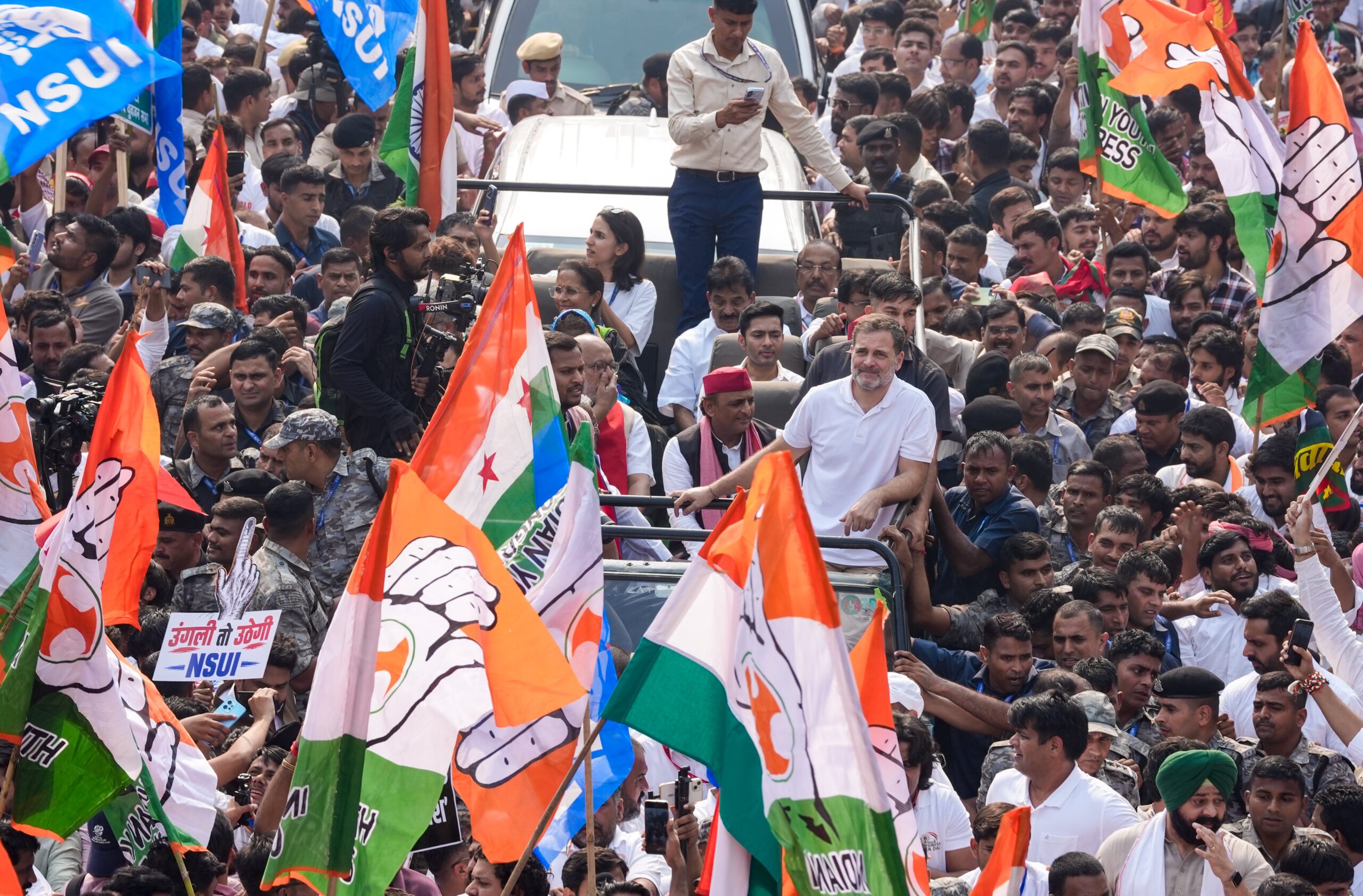 The INDIA bloc’s ‘Chalo Dilli’ rally at Ramlila Maidan, New Delhi, on November 1, 2026, demanding accountability from the Election Commission and the resignation of Chief Election Commissioner Gyanesh Kumar.
Shubham Chohan: Do you think the Prime Minister would allow Chief Election Commissioner Gyanesh Kumar to leave office?
We recently heard the American President praising Gyanesh Kumar and the Indian electoral system. Do you believe the government would respond to mounting political pressure by allowing the Chief Election Commissioner to go?
K. P. Fabian: I suppose that by now, people in Delhi know the value of praise from the American President.
Israel’s election and the possibility of a government without Netanyahu
Shubham Chohan: Let us move to Israel, where the electoral outcome has produced a complicated political situation.
Unlike the United States, where the Democrats have registered substantial gains, Israel appears to be heading towards difficult coalition negotiations.
According to the figures available at the time of recording, Prime Minister Benjamin Netanyahu’s bloc has fallen short of the 61 seats required for a majority in the 120-member Knesset.
The opposition bloc associated with Gadi Eisenkot has 48 seats, while the Arab-led parties together have 19 seats, including 11 for the Joint List and eight for Ra’am.
Israel’s electoral authorities have also reportedly rejected allegations of electoral fraud, while President Isaac Herzog has begun the constitutional process associated with government formation.
What are the possibilities now? Could a government be formed without Netanyahu? What role might the Arab parties play?
K. P. Fabian: Technically, a minority government could be formed by Eisenkot with the tacit support of the Arab parties.
As you mentioned, the Arab parties have 19 seats, while the Eisenkot bloc has 48.
That gives a combined strength of 67, which is comfortably above the required majority of 61.
So, technically, it is possible.
The difficulty is political.
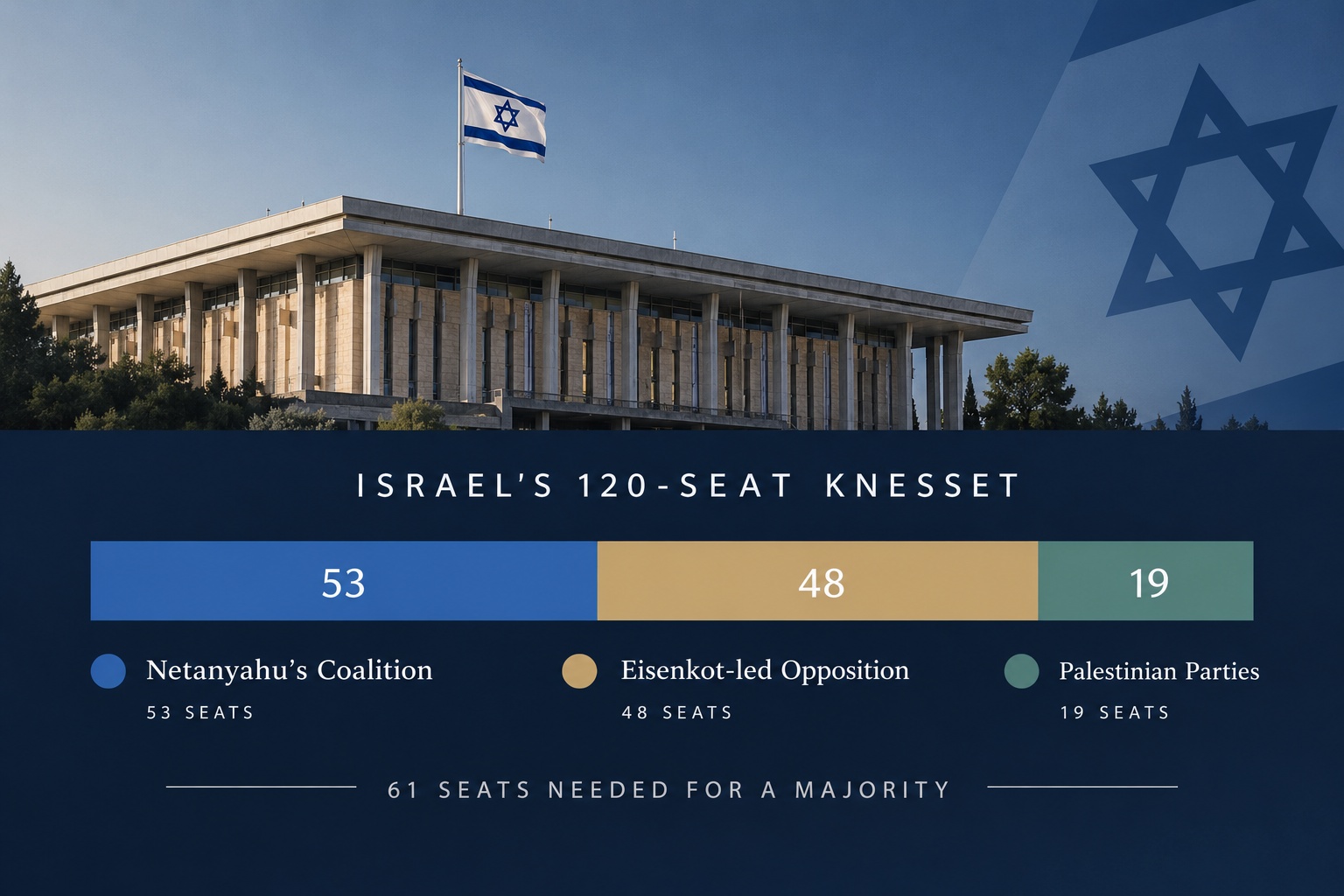 The composition of Israel’s 25th Knesset reflects a deeply fragmented political landscape, with coalition arithmetic set to shape the country’s next government.
A substantial section of Jewish Israeli society regards Arab citizens as second-class citizens. Some even believe that granting them voting rights was a mistake.
There is strong opposition in these sections to any government that depends on Arab political support.
The Arab parties, for their part, would naturally demand something in return for their support.
I have used the expression “tacit support” deliberately. They may not necessarily demand ministerial positions.
They might also be reluctant to give the impression that they fully endorse the existing Israeli political system, particularly in view of what Israel has done in Gaza and continues to do in the West Bank.
But they would certainly seek political commitments.
One would be an end to the expansion of Israeli settlements in the West Bank.
The second would be a credible path towards the establishment of a Palestinian state.
I am using the word “path” carefully. They would not necessarily demand the immediate establishment of a Palestinian state.
Whether Eisenkot’s bloc can make such commitments, publicly or tacitly, remains uncertain.
That is the first issue.
The second concerns Netanyahu’s strategy.
His objective is to prolong the negotiations over government formation because he can remain caretaker Prime Minister during that period.
If the negotiations fail, another election could become necessary, and he could continue in office in the interim.
His calculation may have been that Trump would permit him to resume the war against Iran.
Iran would retaliate, creating a national security crisis. Netanyahu could then appeal for national unity and argue that Israel needed continuity in leadership.
That appears to have been part of his political calculation.
But Trump’s electoral setback has complicated that possibility.
Nevertheless, we cannot predict how Israeli politics will develop.
Under the constitutional process, the President must consult the political parties and choose a member of the Knesset who appears most likely to form a government.
That person is initially given 28 days, with a possible extension of 14 days.
If the attempt fails, the President can explore another candidate. There are also provisions under which a majority of Knesset members can request that a particular lawmaker be entrusted with forming a government.
These procedures can take considerable time.
Netanyahu could therefore remain caretaker Prime Minister for quite a while.
Shubham Chohan: So you are not ruling out the possibility of an understanding between the anti-Netanyahu bloc led by Eisenkot and the Arab parties, who could effectively become kingmakers?
Could such an arrangement keep Netanyahu out of office?
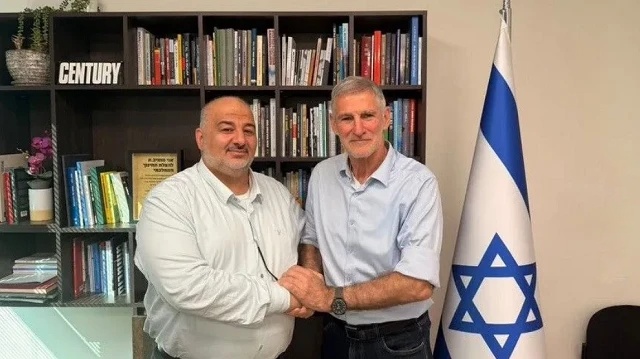 Yair Golan (right), leader of the Democrats, with Mansour Abbas (left), leader of Ra’am, during a meeting on 29 October 2026, highlighting potential cooperation between Israel’s opposition bloc and Arab parties.
K. P. Fabian: Yes, that possibility exists.
Ideally, I would also like to see some lawmakers who currently support Netanyahu recognise that his continuation in office is not good for Israel.
They could then extend support to Eisenkot.
In that case, their support would have to be explicit rather than merely tacit.
But Israeli politics is more complicated than quantum physics.
Will the United States and Israel resume the war against Iran?
Shubham Chohan: Let us consider what these electoral developments mean for the war against Iran.
The American President has suffered a major political setback, while Netanyahu faces uncertainty about his political future.
Both leaders also face the possibility of further legal and political scrutiny.
Does this make a renewed American or Israeli military offensive against Iran less likely?
There have reportedly been some limited attacks before the midterm elections. Where do you see the conflict heading now?
K. P. Fabian: There was a limited attack on Kharg Island, but that does not amount to a full resumption of the war.
First, I want to draw attention to the way Iran has handled the situation.
The Iranians have played their chess very well.
They did not want to return to the negotiating table before the American midterm elections.
If they had negotiated an agreement before the elections, Trump could have claimed that he had secured what he wanted from Iran.
He could then have argued that the war had been worthwhile.
That might have improved his electoral prospects.
The Iranians did not want to give him that advantage.
Now comes the question of whether Trump will launch another war.
I doubt it.
Congress controls the allocation of funds, and if Trump initiates another major military operation, he could face opposition not only from Democrats but also from some Republicans.
Congress can place financial constraints on the administration and subject Defence Secretary Pete Hegseth to difficult questioning.
Hegseth is already facing considerable criticism.
A renewed war would therefore create additional problems for Trump.
It would be in his interest to negotiate with Iran.
He could consider the Iranian proposals involving the release of frozen funds, the lifting of restrictions on oil sales and the restoration of normal navigation through the Strait of Hormuz.
That would serve American interests.
But whether Trump will do what is in his own interest is another question. His record shows that he frequently acts against his own interests.
Shubham Chohan: So you believe a resumption of the war is unlikely?
K. P. Fabian: Unlikely. And that would be a good thing for the whole world.
Shubham Chohan: Does that mean we could see a peace agreement, or are we more likely to witness a prolonged stalemate, as we have seen in Ukraine?
K. P. Fabian: It could be more of a stalemate.
Shubham Chohan: So you do not see an immediate peace agreement on the horizon?
K. P. Fabian: A peace agreement is also possible, particularly because of the economic pressures.
Oil prices cannot continue rising indefinitely without serious consequences.
People say that the price of oil is around $100 or $105 per barrel.
But they often overlook the distinction between FOB, or free on board, and CIF, which includes cost, insurance and freight.
Insurance costs have increased sharply.
Therefore, the actual landed cost can be substantially higher. In some circumstances, it could reach around $160 per barrel.
That is why the economic consequences are so serious.
The situation cannot continue indefinitely unless navigation through the Strait of Hormuz returns to something approaching normal conditions.
Of course, Iran will have its own conditions.
There is also the question of the safety of shipping.
Indian sailors have lost their lives.
I do not think the Government of India has responded adequately to this danger.
It should advise Indian sailors against undertaking voyages through areas where the risks are unacceptably high.
 21-year-old Indian seafarer Gandhar Nahim Ajij, who lost his life when the mechanised sailing vessel MSV Al Jusufi (left) was struck by a projectile off the coast of Oman, near the Strait of Hormuz. He is the 15th Indian sailor to die in the ongoing conflict.
American Central Command may provide assurances or advice, but it cannot eliminate the dangers posed by mines, missiles and drones.
It would be extremely unwise for a ship’s captain to take an oil tanker through such waters simply on the assumption that American military protection would guarantee safety.
We are talking about human lives, as well as cargoes that may contain millions of barrels of oil.
I do not think the Government of India has acted correctly or wisely on this issue.
I have suggested earlier that India should work with other countries that have large numbers of seafarers, including the Philippines, to develop a coordinated approach.
Simply repeating that India believes in freedom and safety of navigation is not enough.
Such statements have little practical value unless accompanied by concrete measures.
Should Modi debate Rahul Gandhi?
Shubham Chohan: We have discussed the American midterms and the Israeli election at considerable length. Before concluding, let me turn to one question concerning Indian domestic politics.
Leader of the Opposition Rahul Gandhi has challenged Prime Minister Narendra Modi to a public debate.
He has raised issues relating to financial matters, the Epstein files and what he describes as India’s surrender to the United States.
The Prime Minister has not responded directly. BJP leaders have instead suggested that Rahul Gandhi should raise these matters in Parliament.
Do you think the time has come for a direct, televised debate between the Prime Minister and the Leader of the Opposition, rather than the continuing exchanges between their respective parties?
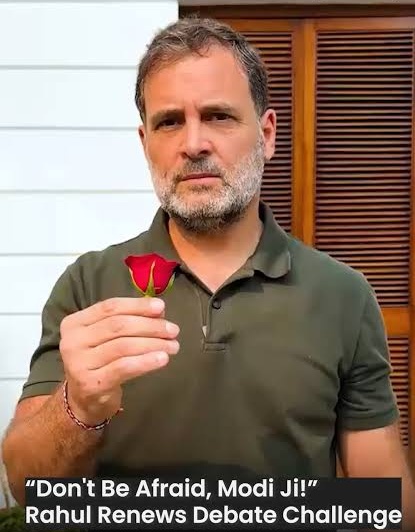 On November 3, 2026, Leader of the Opposition Rahul Gandhi publicly challenged Prime Minister Narendra Modi to an open, face-to-face debate regarding “anti-national” allegations, telling him, “Dariye mat” (Don’t be afraid).
K. P. Fabian: I would put it this way.
If India were a healthy democracy — mark my words, if India were a healthy democracy — such a debate would have taken place.
That is my first point.
My second point is that Prime Minister Modi has a remarkable command of language. He is a master of elocution.
But, for reasons that remain rather mysterious, he does not want to address the media in a setting where journalists like you can question him freely.
He does not want to take questions from journalists.
And I do not expect him to take questions from Rahul Gandhi either.
So there are two issues.
First, India has not developed into a sufficiently mature democracy in this respect.
Second, the Prime Minister appears to have his own psychological inhibitions about such interactions.
What can India learn from American democracy?
Shubham Chohan: But India can take a cue from the United States and correct itself, as you suggested in your opening answer.
K. P. Fabian: We should. We certainly should.
The Americans have a system of primaries through which candidates are selected.
In India, whether in the Congress or the BJP, candidate selection is largely controlled by the party high command.
That is an important difference.
Then there is the fact that members of the American House of Representatives are elected for two years, whereas our Lok Sabha has a five-year term.
There is also the limitation on presidential tenure in the United States.
An American President can serve only two elected terms.
Why should we not consider a similar limitation for the Prime Minister of India?
After all, the Prime Minister is the head of government.
I know that Jawaharlal Nehru served for a long period, as did Indira Gandhi.
But we should examine the American experience.
Franklin D. Roosevelt was elected repeatedly, breaking the earlier convention that Presidents should serve no more than two terms. Subsequently, the Americans amended their Constitution to establish a two-term limit.
We must learn from history.
And we must also learn from other democracies.
Let the world’s largest democracy learn from one of the world’s oldest constitutional democracies.
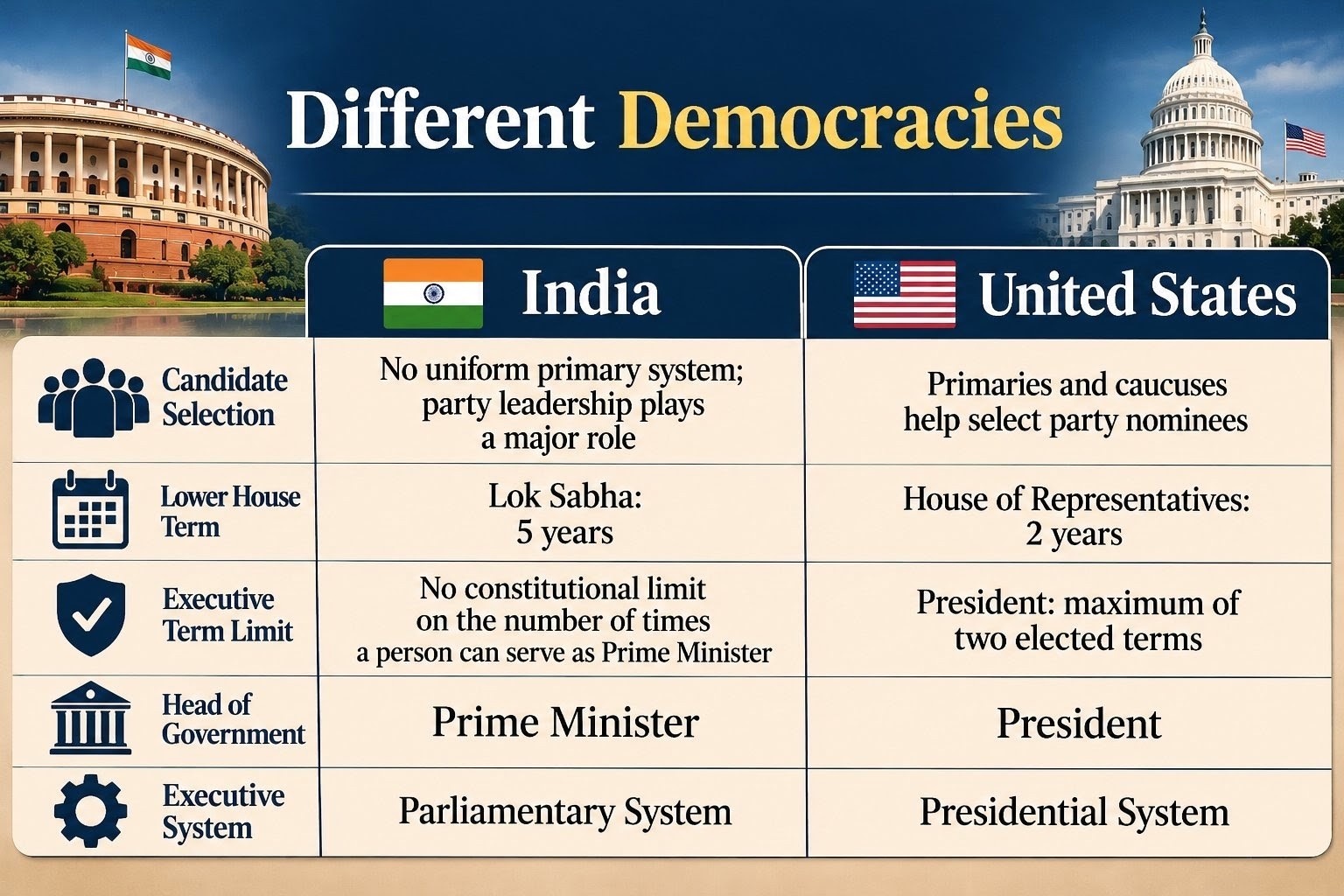 A comparison of India’s parliamentary democracy and the United States’ presidential system, highlighting key differences in candidate selection, legislative terms and executive term limits.
Shubham Chohan: That is an important point on which to conclude. The world’s largest democracy can certainly draw lessons from the experience of other democracies.
K. P. Fabian sir, thank you for joining us and sharing your assessment of these major political developments.
K. P. Fabian: Thank you.
Click the link here to watch the audiovisual of the interview originally published in HW News English :

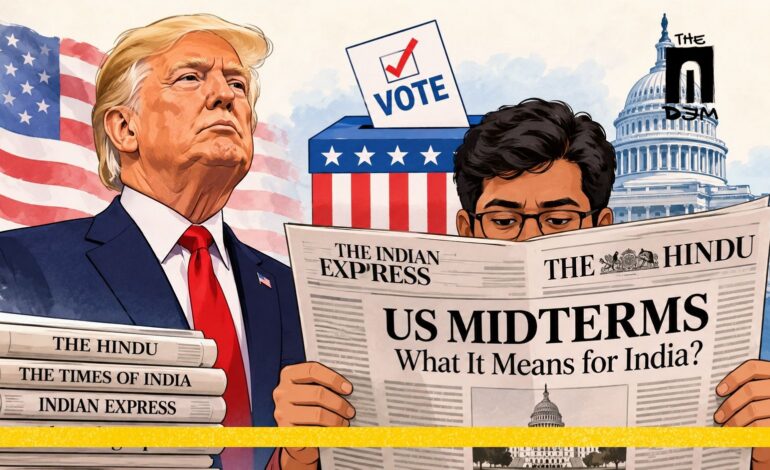






Trump’s electoral defeat sends a powerful message to every leader who believes that personal popularity, aggressive rhetoric and the politics of fear can guarantee permanent power. Democracy is ultimately stronger than any individual leader, and voters will always have the final say. This is an important warning for Narendra Modi as well: no leader is above accountability, and no government can take the people’s mandate for granted. Strongman politics may dominate the headlines, but it cannot permanently silence democracy.