

Rameshan Paleri: The Cooperative Visionary Who Built Institutions, Not Monuments

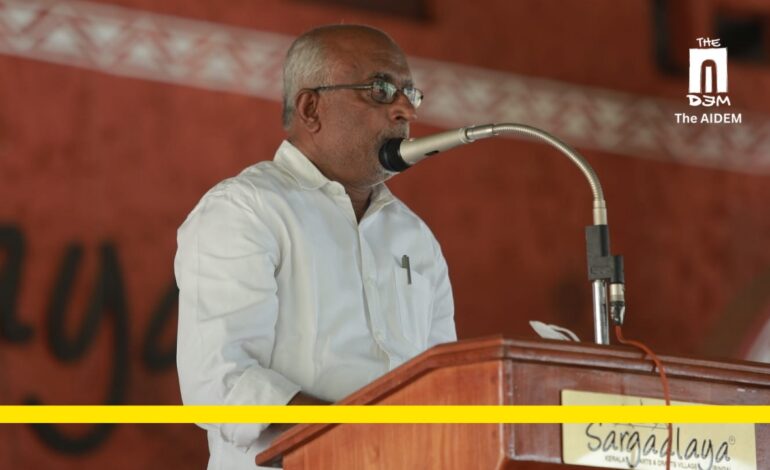
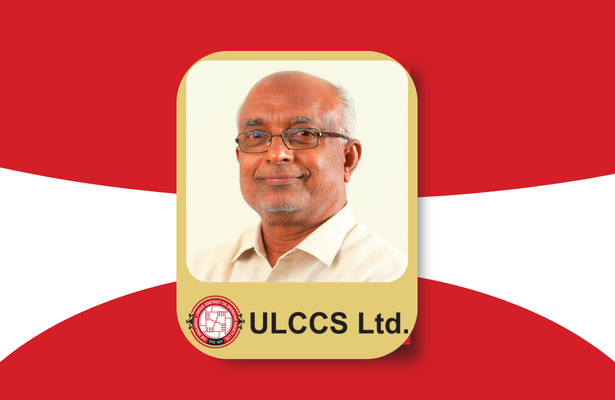
The passing of Rameshan Paleri, Chairman of the Uralungal Labour Contract Co-operative Society (ULCCS), marks the end of one of the most remarkable chapters in the history of Keralam’s cooperative movement. He died on Tuesday morning at a private hospital in Coimbatore after a prolonged illness. He was 66.
His death is not merely the loss of the head of one of India’s most successful cooperative institutions. It is the passing of a leader who demonstrated over four decades that worker-owned enterprises could combine social commitment with technological innovation, managerial excellence and economic competitiveness without sacrificing democratic ownership or collective purpose.
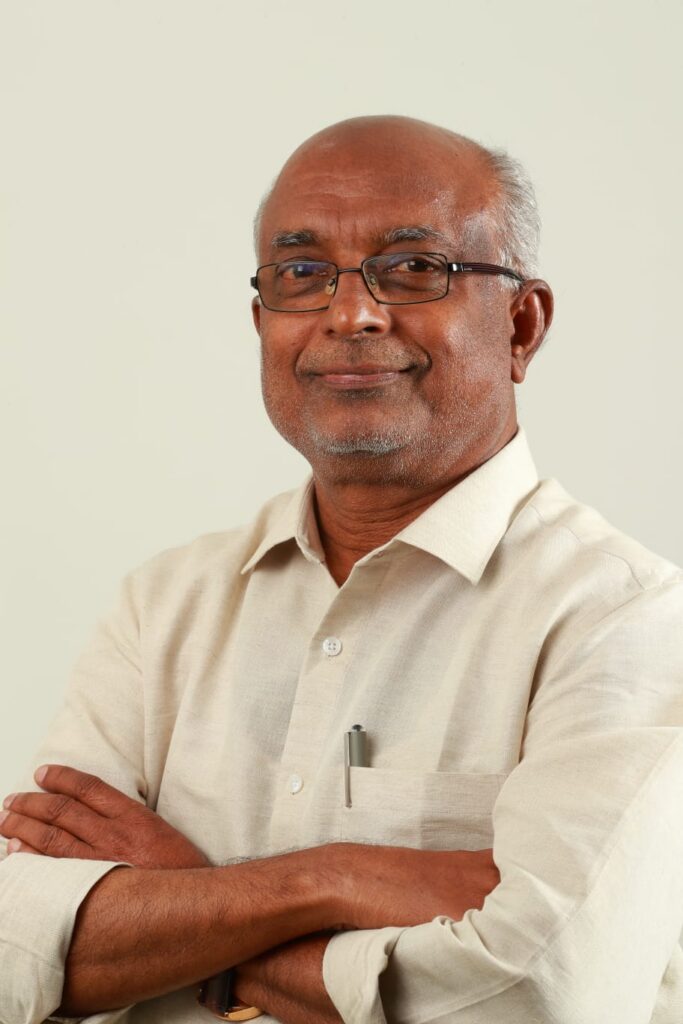
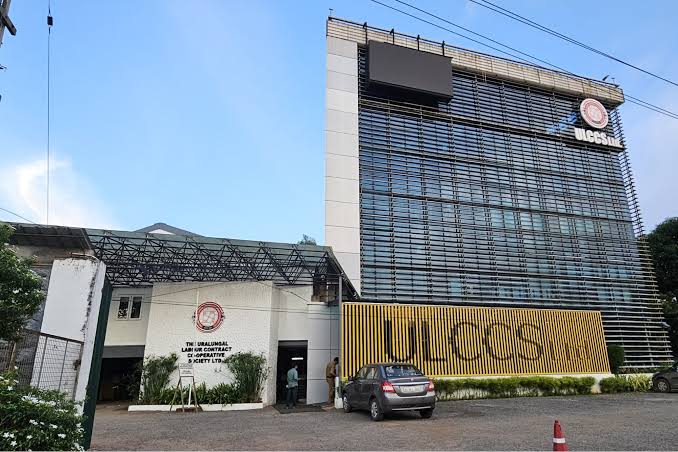
For many, Paleri came to personify the modern journey of ULCCS itself—a cooperative born out of struggles against caste oppression that evolved into one of the world’s leading labour cooperatives while remaining rooted in the ideals of social justice and collective labour.
Public homage will be paid to him at Kozhikode Town Hall at 3 p.m., Vadakara Town Hall at 6.30 p.m. and Madappally GVHSS at 8.30 p.m. His funeral will take place on 29 July at 11 a.m. at his residence on Nadapuram Road, followed by a condolence meeting at the ULCCS headquarters.
Founded in 1925 by disciples of the social reformer Vagbhatananda, ULCCS emerged from an extraordinary social experiment. At a time when communities were ostracised for challenging caste hierarchies, the Society sought to restore dignity through collective ownership of labour. Employment was conceived not merely as a means of livelihood but as an instrument of social emancipation. That philosophy continued to guide the institution even as it evolved into one of India’s most respected engineering and infrastructure enterprises.
Paleri belonged to this history by birth, but earned his place in it through work. He was the grandson of Madappally Paleri Chanthamman, one of the Society’s founders, and the son of Paleri Kanaran Master, another prominent cooperative leader. After training in civil engineering draftsmanship, he joined ULCCS as an Overseer in 1984. Eleven years later, at the age of 35, he was elected President—a decision that would profoundly reshape both the institution and the cooperative imagination of Keralam.
When Paleri assumed leadership in 1995, ULCCS was largely confined to small construction contracts in northern Keralam. His contribution was not simply to expand the organisation but to redefine what a labour cooperative could become. Believing that professional management, technological sophistication and worker ownership were complementary rather than contradictory, he modernised ULCCS without compromising its democratic character.
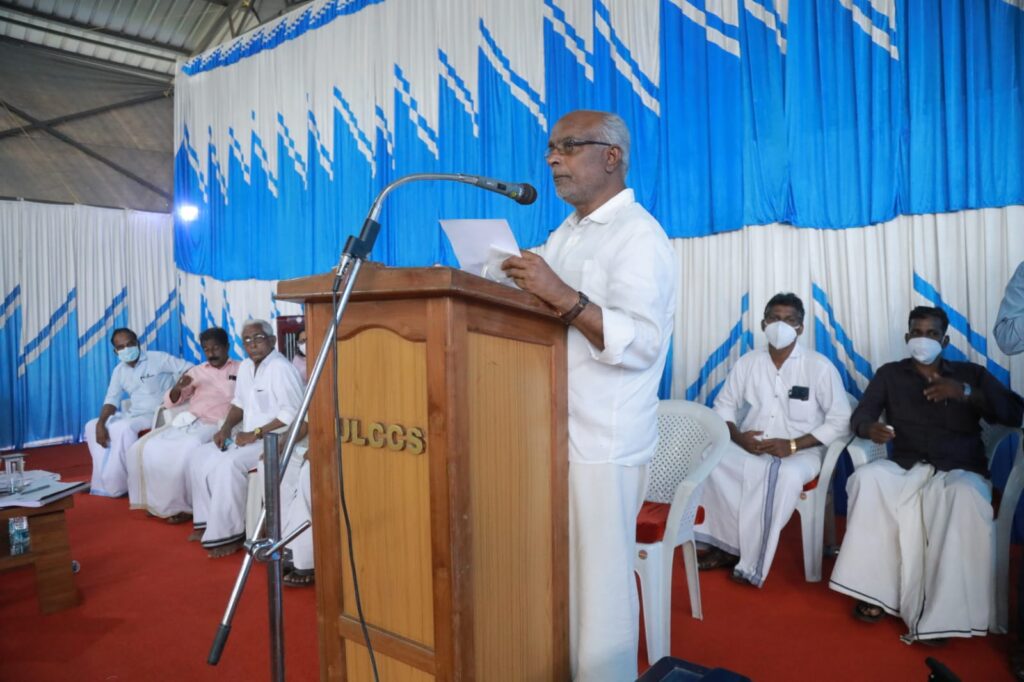
This transformation coincided with Keralam’s People’s Plan Campaign, which opened new opportunities for decentralised development. As local self-governments sought technically competent agencies capable of executing projects transparently and efficiently, ULCCS emerged as a trusted public partner. It built a reputation for completing projects on time, maintaining high engineering standards and upholding financial integrity.
Many of modern Keralam’s landmark infrastructure projects bear the imprint of ULCCS under Paleri’s leadership. These include the Valiyazheekkal Bridge, recognised as Asia’s largest bow-string bridge, the reconstruction of the Palarivattom Flyover in record time, and major National Highway works under the Bharatmala programme. Over time, ULCCS became the only cooperative institution in Keralam capable of undertaking some of the country’s largest infrastructure contracts.
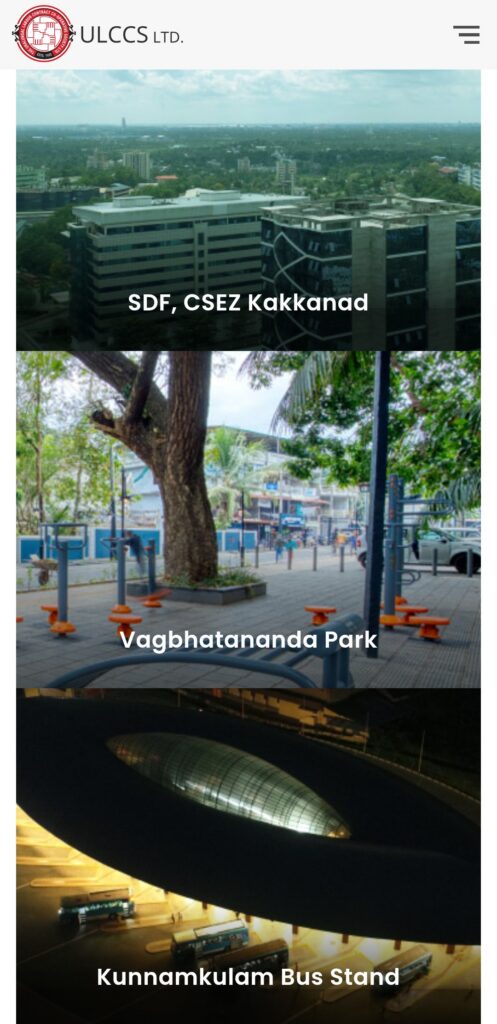
Yet Paleri’s vision extended well beyond construction. Recognising that Keralam’s changing economy demanded new opportunities, he led ULCCS into information technology, housing, infrastructure testing and advanced engineering. UL CyberPark became Malabar’s first IT Special Economic Zone and the world’s first worker-owned cooperative IT park. Other initiatives, including UL Technology Solutions, Matter Lab and several new ventures launched during the Society’s centenary year, reflected his determination to ensure that the cooperative remained relevant in a rapidly changing economy.
For Paleri, diversification was never an end in itself. It was a strategy for creating dignified employment for new generations educated through the very cooperative movement that had transformed their families’ lives.
His understanding of cooperation also extended far beyond business. Through the ULCCS Foundation, the organisation invested in disability inclusion, autism training, elderly care, education, telemedicine and community welfare. These initiatives reflected his conviction that a cooperative must measure its success not only through economic growth but through its contribution to society.
The achievements of ULCCS attracted international recognition. The United Nations Development Programme selected it as a model cooperative in 2013, while the International Cooperative Alliance admitted it as its first and only primary cooperative member in 2019. The Society also emerged as the world’s second-largest cooperative in the industrial and consumer services sector by turnover, demonstrating the continuing relevance of Keralam’s cooperative experience in an increasingly market-driven world.
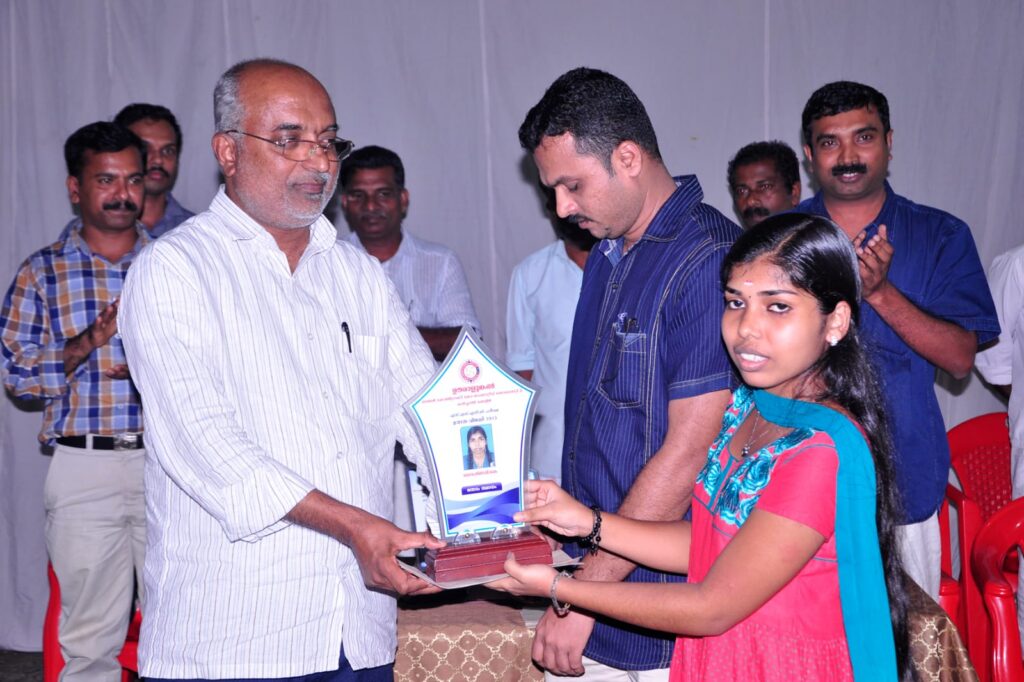
Despite receiving numerous honours, including the Robert Owen Award instituted by the Government of Keralam, Paleri consistently resisted personal glorification. He regarded every recognition as an acknowledgement of the collective labour of thousands of workers rather than of individual leadership. That humility became one of his defining characteristics.
Today, ULCCS directly employs around 18,000 people while supporting thousands more through its wider network of enterprises. Its presence spans infrastructure, information technology, housing, education, healthcare, skill development and social welfare.
The bridges, highways and institutions associated with Rameshan Paleri will endure, but his greatest legacy lies elsewhere. He proved that democratic ownership, professional excellence and social purpose can coexist, challenging the assumption that only private capital can build world-class institutions. His life reaffirmed one of Keralam’s most enduring ideas—that collective endeavour, rooted in dignity and social justice, can produce institutions capable of competing with the very best.
Even during moments of controversy, Paleri rarely allowed himself to be distracted by public criticism. When allegations of corruption were levelled against him and ULCCS during different phases of the Society’s expansion, he remained characteristically unruffled. Colleagues and associates recall that he neither responded with public acrimony nor allowed the accusations to deflect the institution from its work.
Confident that the Society’s record and systems would ultimately speak for themselves, he met criticism with composure rather than confrontation—a quality that reflected both his personal temperament and his faith in the collective integrity of the cooperative he had helped build.
His passing closes an extraordinary chapter in the history of Keralam’s cooperative movement. The institution he transformed over three decades remains his finest memorial and a lasting testament to the power of cooperation as a democratic vision of development.
He is survived by his wife, Shobha; sons Remin and Ashwin; daughters-in-law Arunima and Shilpa; and an extended family whose history has long been intertwined with that of ULCCS.








Rameshan Paleri’s legacy reminds us that true leadership is measured not by monuments, but by the institutions that empower ordinary people. A powerful tribute to a visionary who proved that cooperative values can transform communities and inspire generations. Rest in peace.
Thank you AIDEM for acknowledging Paleri ji , a valiant cooperative visionary , whose work people like me have been admiring from North India . My Pranams to the departed soul