


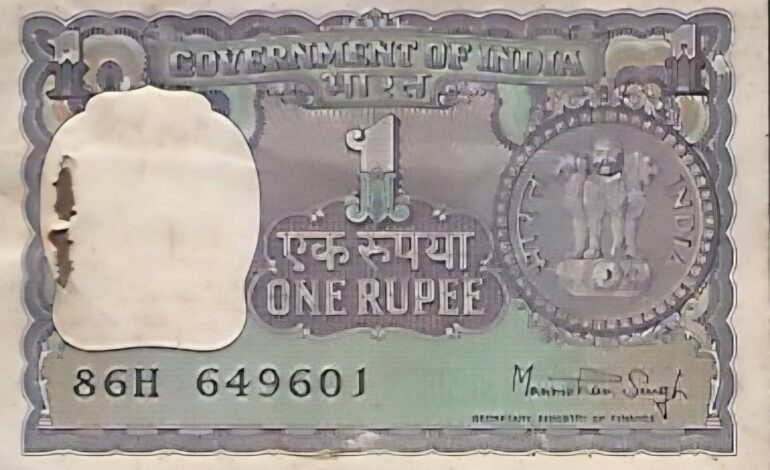
My visit to the bank yesterday—on a Sunday—turned out to be historic—a once-in-a-lifetime occurrence, perhaps—as branches were functioning on a Sunday, right before the commencement of a nationwide three-day strike. (the strike was ultimately put off after negotiations) While the strike was being advanced to protect “labour welfare”, banks remained hyper-vigilant about maintaining uninterrupted service, driven by the fear of losing ground in an increasingly competitive and personalised banking landscape.
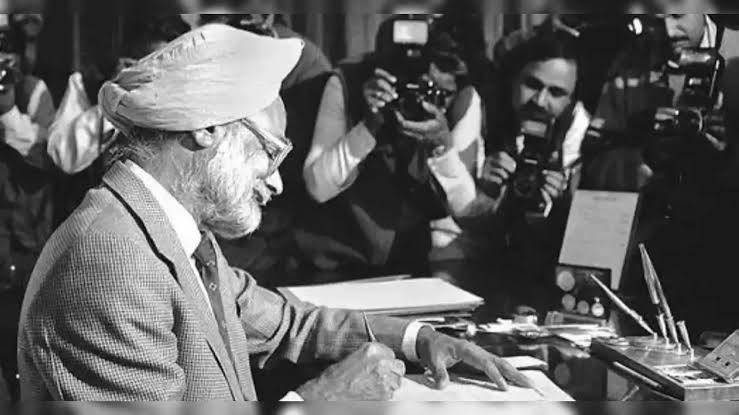
In his poignant six-minute speech in the Rajya Sabha immediately following the 2016 demonetisation, Dr Manmohan Singh spoke of the foundational trust underpinning the banking system, warning that the faith of the public in banking must not be shattered. Unfortunately, we now live in an era where that public faith has largely eroded. The modern banking conglomerate operates in a landscape where capital revolves around credit cards, hidden decimals, and micro-service charges.
To be poor in India today feels almost criminalised, as strict minimum-balance maintenance clauses ruthlessly penalise the economically vulnerable. Indian banks collected over ₹26,170 crore in penalties from customers for failing to maintain a Minimum Average Balance (MAB) across four financial years (FY23 to FY26). In the most recent financial year (FY 2025–26) alone, total penalty collections reached nearly ₹7,100 crore.
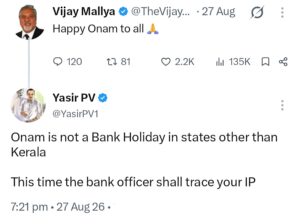 Meanwhile, Vijay Mallya comfortably posts cheerful tweets from abroad on special occasions—greetings that ironically coincide with Indian bank holidays. In a parallel reality, Bank of Baroda wrote off ₹35,715 crore in loans above ₹100 crore while steadfastly refusing to disclose the names of these major defaulters despite RTI obligations. The bank defended its stance by claiming that the information was personal in nature, related to third parties, and that disclosure would cause an “unwarranted invasion of privacy”.
Yet, these same banks regularly hire third-party recovery agencies that breach individual privacy and human dignity through intimidation tactics and strong-arm enforcement. HR departments frequently report receiving harassment calls from recovery agents targeting defaulting employees, explicitly designed to create intense professional and psychological pressure. Simultaneously, banking has devolved into an aggressive, telephonic cold-calling operation, pitching top-up loans at exorbitant interest rates of 18–25%. In a country facing severe economic stress, vulnerable individuals frequently fall prey to these desperate financial traps.
In 19th-century America, industrialists and bankers who amassed vast fortunes through ruthless tactics and monopolies were branded “Robber Barons”—a title famously tied to figures like John D. Rockefeller (Oil), Andrew Carnegie (Steel), Cornelius Vanderbilt (Railroads), and J.P. Morgan (Banking). These “Barons” were awarded lucrative railway contracts and vast federal land grants through corporate corruption, while petty thieves served long prison sentences.
Anti-monopolist reformer Tom Johnson famously satirised this blatant double standard:
“Steal a loaf of bread and you are a thief; steal a railroad and you are a senator.”
In The Threepenny Opera, Bertolt Brecht took aim at the financial elite with razor-sharp satire, asking:
“What is a bank robbery compared to the founding of a bank? What is the robbing of a train compared to the ownership of a railway?”
Socialist leader Eugene V. Debs similarly exposed how the legal apparatus criminalises working-class survival while rewarding institutional theft:
“The man who steals a ride on a train is called a tramp; the man who steals the railroad itself is called a captain of industry.”
Fast-forward to modern India, where the “Kingfisher” comfortably tweets holiday pleasantries while safely lounging abroad. The centuries turn, but the fundamental adage endures:
“Steal a loaf of bread and they hang you; steal a kingdom and they make you king.”
Today, daily banking has turned into a desperate campaign for fixed deposit (FD) targets, where employees are forced to actively cultivate personal relationships with anyone holding liquid cash or digital capital. Banks have increasingly become habitats of disguised unemployment, overwhelmingly recruiting B.Tech engineers. These technocrats are effectively reduced to glorified factory workers, tethered to computer screens all day.
While the banking institution itself has earned a notorious reputation, there is another side of the coin: a deep sympathy for its workforce. One witnesses bank staff toil late into the night under relentless, crushing pressure to meet their deposit and FD targets. It is precisely this toxic overwork culture that makes the “Right to Disconnect Bill”, introduced in the Lok Sabha by Supriya Sule, so profoundly necessary.
However, this structural empathy exists alongside a stark personal contrast for many customers of nationalised banks. There was once an infamous news story about a fake State Bank of India (SBI) branch that was exposed primarily because customers grew suspicious of how courteous and efficient the staff were—a demeanour that flatly contradicted the legendary reputation of SBI customer service in the 2000s and 2010s. The endless cartoons and satires about bank staff behaviour were born out of this shared cultural memory.
Yet, a bank cannot be split into segments where institutional leadership is judged separately from labour. For the customer, the system functions as a unified whole. Treating a bank as a singular, living entity—rather than a disjointed cluster of departments—is precisely where institutional design intersects with service culture. When a customer interacts with a bank, the teller at the counter and the chief executive in the boardroom are not isolated actors; their actions merge into a single impression of organisational ethos.
Institutions with a genuine service culture do not leave courtesy or dignity to chance; these are embedded in orientation, continuous training, and operational values. In such places, the customer does not merely transact—they feel a sense of belonging, experiencing the bank as theirs.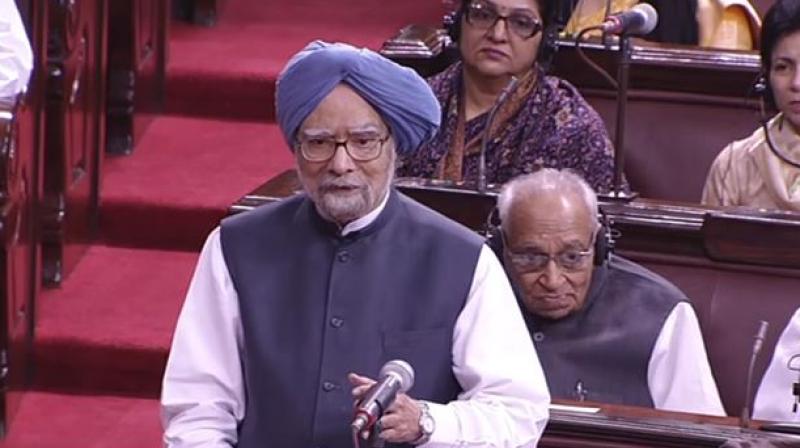
Judging a nationalised bank—with its vast base of workers—is rooted in behavioural economics and heuristics. Public perception is shaped by mental shortcuts and cumulative impressions. The widespread cartoons, satires, and anecdotes circulating across society are not isolated flukes or statistical outliers; they are the aggregated, first-hand expressions of a massive populace reflecting a systemic reality.
An establishment must project its work culture through deliberate courtesy and rigorous training. There are indeed banks with a deeply satisfying work culture—places where a customer can step inside and genuinely feel, “This is my bank.” In fact, this trust was central to what Dr Manmohan Singh envisaged in his Rajya Sabha speech.
Yasir PV serves as Strategist to ULCCS and Archival Researcher at Labour Capital Ekistics & Heuristics Lab










This article resonates deeply with me as a middle-class bank customer. We were encouraged to move towards a cashless economy—use UPI, make digital payments, keep money within the formal banking system—and most of us embraced it. Yet, increasingly, it feels as though ordinary customers are being penalised for doing exactly that.
Maintaining minimum account balances itself can be difficult when you have multiple accounts and household expenses to manage. Then there are various banking and transaction-related charges, and even the anxiety of accounts being flagged or frozen because of a high volume of UPI transactions. If digital transactions were actively encouraged as an alternative to cash, why should an ordinary customer have to worry about being penalised or questioned simply for using them frequently?
The disparity becomes particularly frustrating when viewed against how large corporate defaults are dealt with. We routinely read about enormous loans running into hundreds or thousands of crores being written off or remaining unpaid, while an ordinary borrower can miss a single EMI of ₹5,000 and immediately face repeated calls and reminders—and, in my own experience, a ₹472 charge for that one missed payment.
For a middle-class family, ₹472 is not an insignificant amount. Neither are minimum-balance penalties and the many small charges that quietly accumulate over a year.
That, for me, is where the question of “faith in the banking system” really lies. Most ordinary people are not asking to escape their financial obligations. We understand that loans must be repaid and banking services have costs. What is difficult to accept is a system that can appear extraordinarily strict when dealing with a ₹5,000 EMI or a minimum-balance shortfall, while seeming far more accommodating when the sums involved run into crores.
Accountability should not become harsher simply because the customer has less money and less power.