


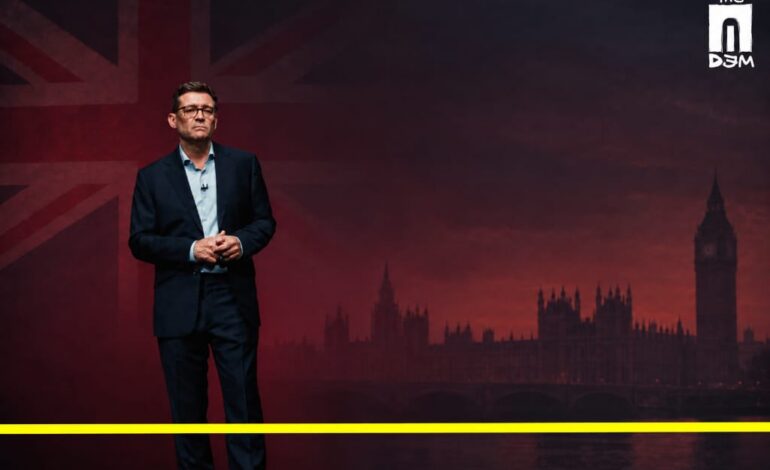
Britain’s Brexit debate has re-entered the political centre stage after Prime Minister Andy Burnham urged ministers to examine every option for Britain’s future relationship with the European Union, including eventual membership. His intervention challenges years of political orthodoxy, revives arguments over Brexit’s economic costs, and offers Labour a strategic opportunity as well as a potentially dangerous electoral gamble.
British Prime Minister Andy Burnham’s latest intervention marks the most consequential British reconsideration of Brexit since the 2016 referendum. Speaking after Labour’s conference, the Prime Minister said Britain should examine every feasible long-term relationship with the European Union, including a customs union, single-market participation, a Canada-style arrangement or, eventually, full membership.
He insisted that an immediate referendum would be premature, yet conceded that a future Labour manifesto could include one. This is not a commitment to rejoin; it is a deliberate reopening of political possibility. The distinction matters because Burnham is attempting to replace Brexit’s binary, emotional politics with a pragmatic argument about the national interest.
From Referendum To Reconsideration
The announcement also represents a sharp evolution in Labour’s position. Keir Starmer’s government promised an EU “reset” while ruling out the single market and customs union, hoping to avoid reigniting the cultural conflict that helped Labour lose traditional working-class constituencies. Burnham now argues that “where we are” is inadequate and that the country requires an evidence-based assessment of alternatives.
His approach resembles a strategic review rather than a reversal: first identify the economic and constitutional costs, then establish what closer alignment could deliver, and only later decide whether voters should be consulted. Emmanuel Macron and Pedro Sánchez have welcomed the possibility, although European governments would expect Britain to meet demanding conditions as a new applicant.
How Britain Arrived Here
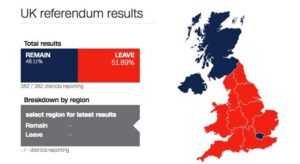 The UK’s 2016 EU referendum result: 51.89 per cent voted Leave and 48.11 per cent voted Remain. Image credit: CNN
Earlier campaigns explain why this issue remains combustible. David Cameron promised a referendum in response to Conservative Euroscepticism and pressure from the UK Independence Party, assuming that Remain would win and party unity would be restored. The official Remain campaign emphasised economic security, jobs and expert warnings, but communicated fear more effectively than hope.
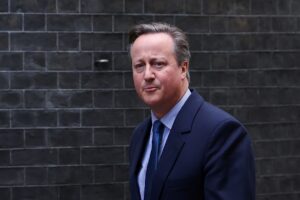 David Cameron, who called the 2016 referendum on the UK’s membership of the European Union.
Vote Leave, by contrast, converted sovereignty, immigration and democratic frustration into a simple promise: “take back control.” Nigel Farage’s campaign linked EU membership to migration, while Boris Johnson gave Brexit a patriotic and populist face. The 51.9 per cent Leave victory therefore reflected not one coherent economic programme, but a coalition of grievances, identity claims and distrust of Westminster.
The Difficult Road To Brexit
The implementation campaigns were equally transformative. Theresa May tried to reconcile contradictory promises: leaving the single market, avoiding a hard Irish border, ending free movement and preserving frictionless commerce. Her “Brexit means Brexit” formula postponed rather than solved those conflicts. Parliament rejected her agreement repeatedly.
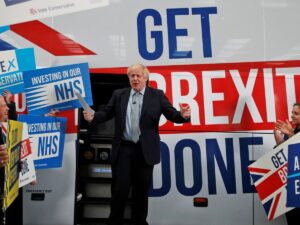 Boris Johnson during the campaign that pledged to “Get Brexit Done”.
Boris Johnson then converted complexity into the slogan “Get Brexit Done,” winning the 2019 election by presenting parliamentary obstruction as betrayal. His campaign succeeded electorally, but the settlement transferred unresolved costs to trade paperwork, Northern Ireland’s constitutional tensions and an increasingly restrictive labour regime. Rishi Sunak’s later Windsor Framework repaired some relations with Brussels, yet did not restore the advantages of membership.
Brexit And Britain’s Premiers
Brexit also became a graveyard of premierships. Cameron gambled his leadership on a referendum and resigned after losing. May was consumed by negotiations, parliamentary rebellion and the impossibility of satisfying both Conservative factions; she eventually departed. Johnson achieved the electoral mandate to deliver Brexit, but scandal, rule-breaking and internal revolt forced him out. Liz Truss’s 45-day premiership was not caused solely by Brexit, but her deregulatory, tax-cutting vision drew confidence from the promise of post-EU economic freedom.
The resulting market turmoil destroyed her authority. Sunak stabilised the government without resolving Brexit’s economic or political liabilities. Starmer’s collapse, followed by Burnham’s succession in this account, illustrates how the issue continues to destabilise leaders.
The Economic Reckoning
The economic evidence is now stronger than the early political rhetoric. Brexit did not create every British difficulty: the pandemic, the energy shock, weak productivity and an ageing population also matter. Nevertheless, separating causes does not mean denying effects.
Recent research estimates that by 2025 Brexit had reduced GDP by 6 to 8 per cent, investment by 12 to 18 per cent, employment by 3 to 4 per cent and productivity by 3 to 4 per cent. Other assessments are more conservative, placing the GDP effect at around 2 to 5 per cent. The range reflects counterfactual uncertainty, but the direction is consistent: Britain grew more slowly than comparable economies after the referendum.
Employment And Migration
Employment effects are especially complicated. Ending free movement reduced the supply of European workers in hospitality, agriculture, logistics, social care and food processing, producing labour shortages and higher recruitment costs. Non-European migration subsequently increased, meaning Brexit did not achieve the promised reduction in overall migration.
Instead, the composition of migration changed, while employers faced new administrative barriers and less flexibility. Lower investment and weaker productivity also limit the creation of secure, well-paid jobs. The issue is therefore not simply unemployment; it is diminished employment potential, slower wage growth and a labour market less efficiently matched to regional and sectoral needs. These costs are dispersed, gradual and politically harder to attribute than a factory closure.
Trade: The Clearest Mechanism
Trade provides the clearest mechanism. The UK formally retained tariff-free trade with the EU under the Trade and Cooperation Agreement, but tariff-free is not friction-free. Customs declarations, rules of origin, sanitary checks and regulatory divergence impose fixed costs that disproportionately hurt small exporters.
Goods trade has been weaker, while services have proved more resilient, especially in areas where Britain retains expertise. The promised compensation from distant trade agreements has not matched the scale or convenience of the European market. Nor has regulatory autonomy generated a dramatic productivity dividend. Brexit’s central paradox is that sovereignty has expanded formally while economic influence and negotiating leverage have narrowed.
Why Burnham Is Reopening Brexit
Burnham’s decision could revive Labour because it aligns political opportunity with public experience. Younger voters overwhelmingly favour rejoining, and broader opinion has moved towards viewing Brexit as harmful. A serious European strategy could offer Labour a growth narrative: lower trade barriers, more investment, improved research cooperation, easier mobility for selected workers and stronger influence over rules affecting British firms.
It could also challenge Reform UK by addressing the grievances that fuelled Brexit without imitating its nationalism. Burnham can say that sovereignty is not isolation and that control is meaningful only when it improves living standards. That argument could reunite metropolitan professionals, younger voters and economically anxious communities.
Yet the gamble could equally damage Labour. Conservatives and Reform will portray Burnham as reversing democracy and surrendering borders to Brussels. Many Leave voters may interpret gradual alignment as betrayal, even if its economic benefits are tangible.
The Credibility Problem
Labour’s credibility is also endangered by Burnham’s recent assurances that Brexit would not be rerun. Therefore, he must avoid tactical ambiguity. He should publish a costed options paper, distinguish between a customs union, single-market association and membership, explain migration consequences honestly, and promise a public vote only after negotiation. Consultation, parliamentary scrutiny and measurable economic objectives would make the policy democratic rather than opportunistic.
A Different Brexit Question
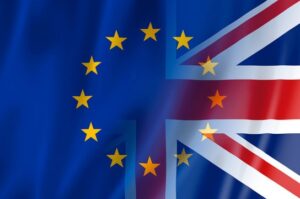 The UK’s future relationship with the European Union remains an open question as Britain revisits the choices shaped by Brexit.
Ultimately, Burnham has not resurrected Brexit’s old referendum battle; he has changed its question. The issue is no longer whether Britain can symbolically “take back control,” but whether the control it gained has produced prosperity, employment and political stability.
Rejoining the EU would be legally difficult, economically disruptive during the transition and politically divisive. Closer alignment may be more achievable, but partial solutions retain some costs and surrender some benefits. Burnham’s positive decision is to make the trade-offs visible.
If Labour combines that honesty with growth, regional investment and respect for voters who chose Leave, Europe could become not a source of permanent factional warfare, but the foundation of a credible national recovery.







Brexit was presented as a final answer to Britain’s problems, but a decade later the questions are still very much alive. The debate is no longer simply about Leave or Remain—it is about whether sovereignty, trade freedom and political choices have actually delivered greater prosperity and stability. Reopening the conversation with facts, evidence and democratic accountability is not about rewriting the past; it is about honestly examining its consequences and deciding what kind of relationship Britain should have with Europe in the future. A timely and thought-provoking analysis by The AIDEM.