
The Coming of the West Wind: Democratic Resistance in Contemporary India

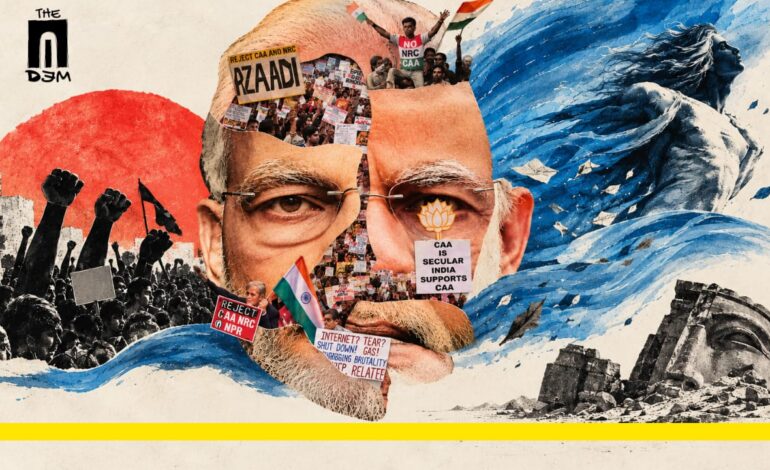
Drawing on Percy Bysshe Shelley’s radical vision, this essay examines contemporary India through the intertwined themes of political tyranny and democratic renewal. It invokes the crumbling grandeur of Ozymandias to reflect on executive monumentalism, the restless energy of the West Wind to understand emerging youth resistance, and the defiance of Prometheus to explore the possibilities of civic courage and democratic emancipation.
The shift in the political atmosphere does not announce itself with the blare of trumpets or the calculated cadence of state broadcasts. It arrives almost imperceptibly, slipping through the cracks of an overconfident political edifice and stirring the dust of public squares long swept clean by institutional decree. It is the sudden tremor of the West Wind — that wild spirit which Percy Bysshe Shelley immortalised as both a “destroyer and preserver”.

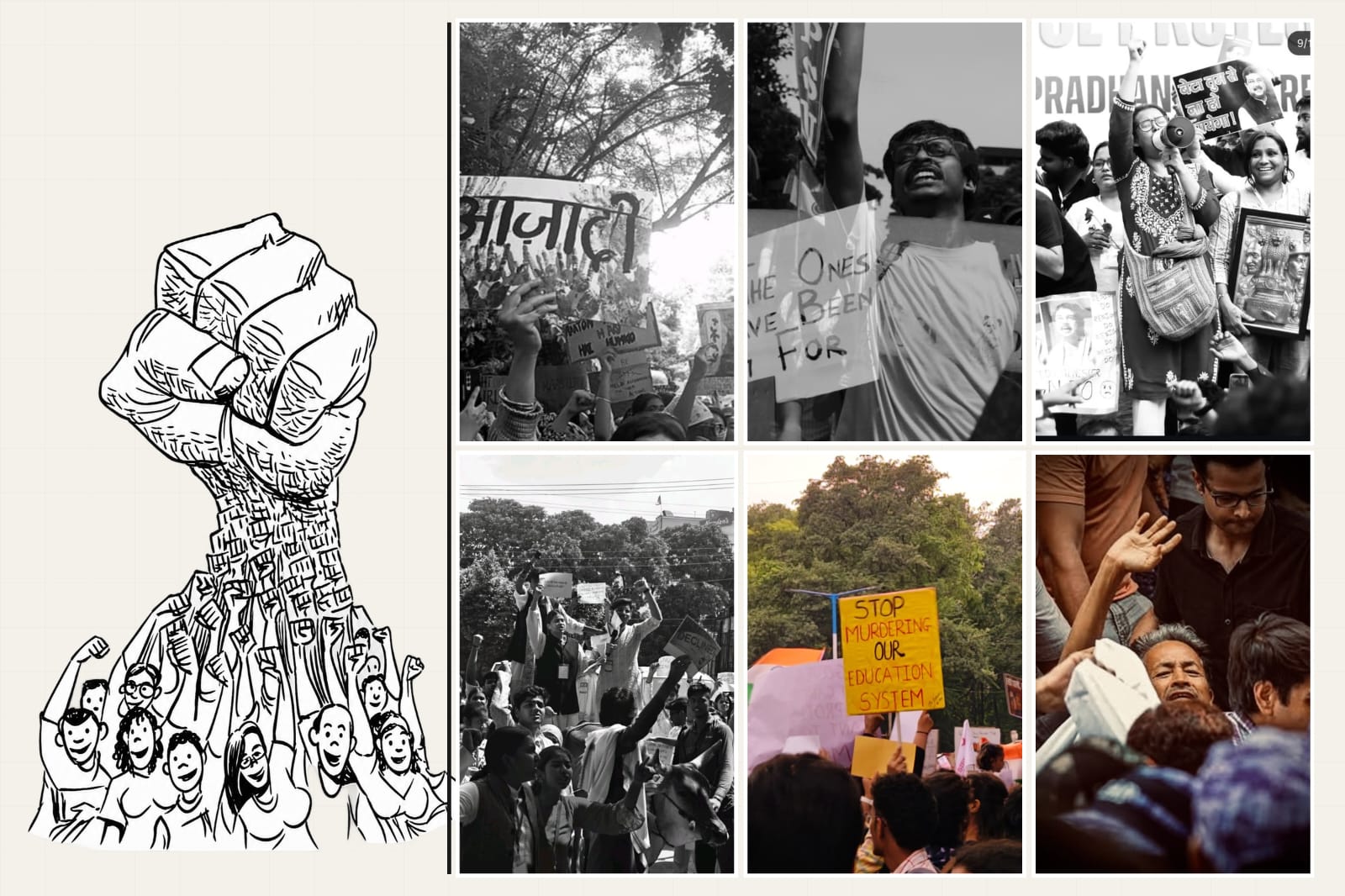
In contemporary India, this gale has found an unexpected incarnation in the decentralised, rapidly spreading resistance of young people, exemplified by the emerging energy of the Cockroach movement. Born of economic precarity, digital exhaustion and institutional dismissiveness, such movements have often been dismissed with derogatory labels by the entrenched apparatus of power. Yet they are now reclaiming those very insults as badges of collective resistance. Like the dry leaves of autumn scattered before an approaching tempest, a populace long subdued by surveillance and the relentless homogenisation of public discourse is beginning to stir.
Shelley understood that genuine political renewal never descends as a benevolent gift from the corridors of power. It emerges from the margins, driven by those who have little left to lose. The West Wind requires no formal party machinery, rigid bureaucratic hierarchy or official sanction. It moves through dispersed voices that gradually coalesce into a formidable force, bypassing the heavily guarded gates of executive dominance. It sweeps through the stagnant air of political complacency with a singular, disruptive message: the future does not belong exclusively to those who build monuments in stone, but to those who carry the breath of change.
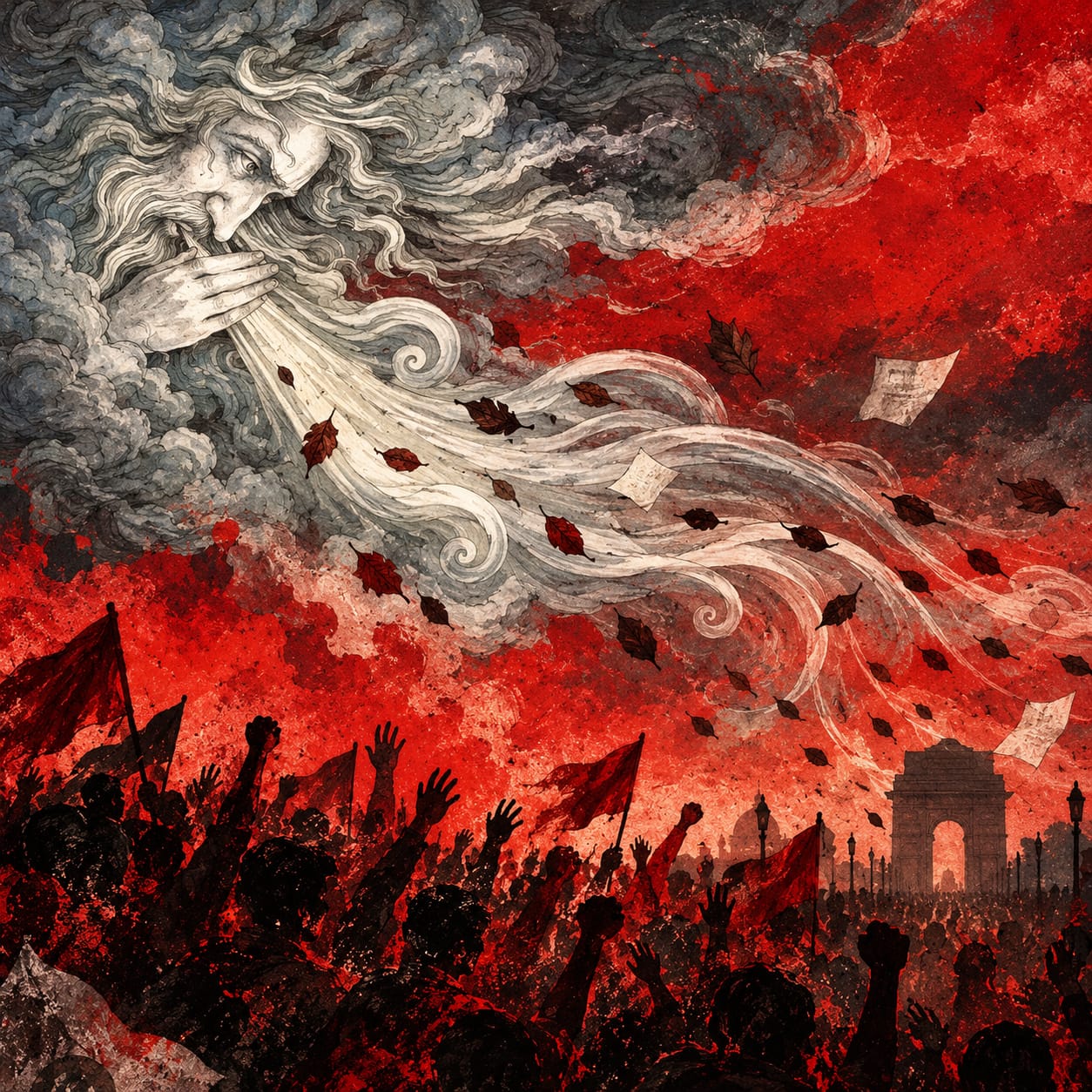
When power sits too securely upon its throne, confident in its own narrative of historical inevitability, it fails to anticipate the changing weather. It listens for the organised opposition, forgetting that storms can gather in the open air, drawing strength from countless whispered grievances until they become an irresistible gale.
Ozymandias and the Modi Regime
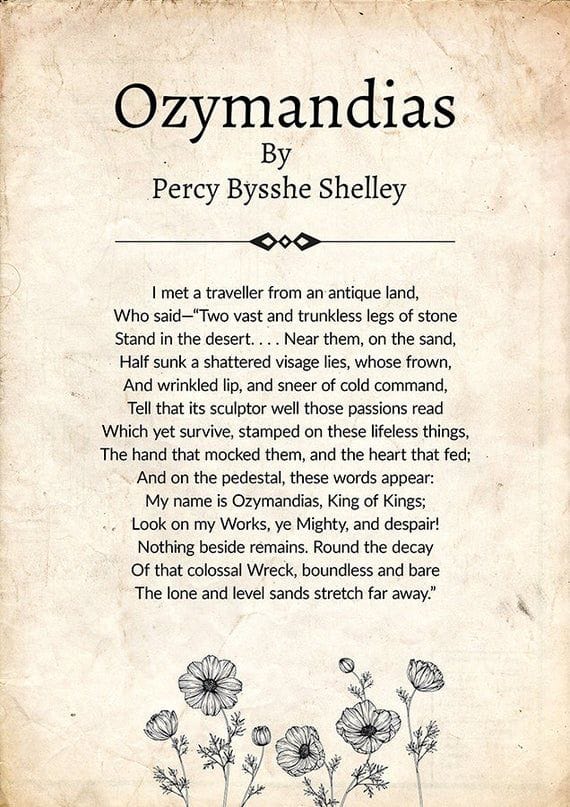
To understand the fragility underlying contemporary political monumentalism, one must turn to the shattered desert pedestal of Ozymandias. In 1818, Shelley wrote his famous sonnet not merely as a reflection on antiquity, but as a universal warning to every autocrat who mistakes temporary dominance for eternal authority.
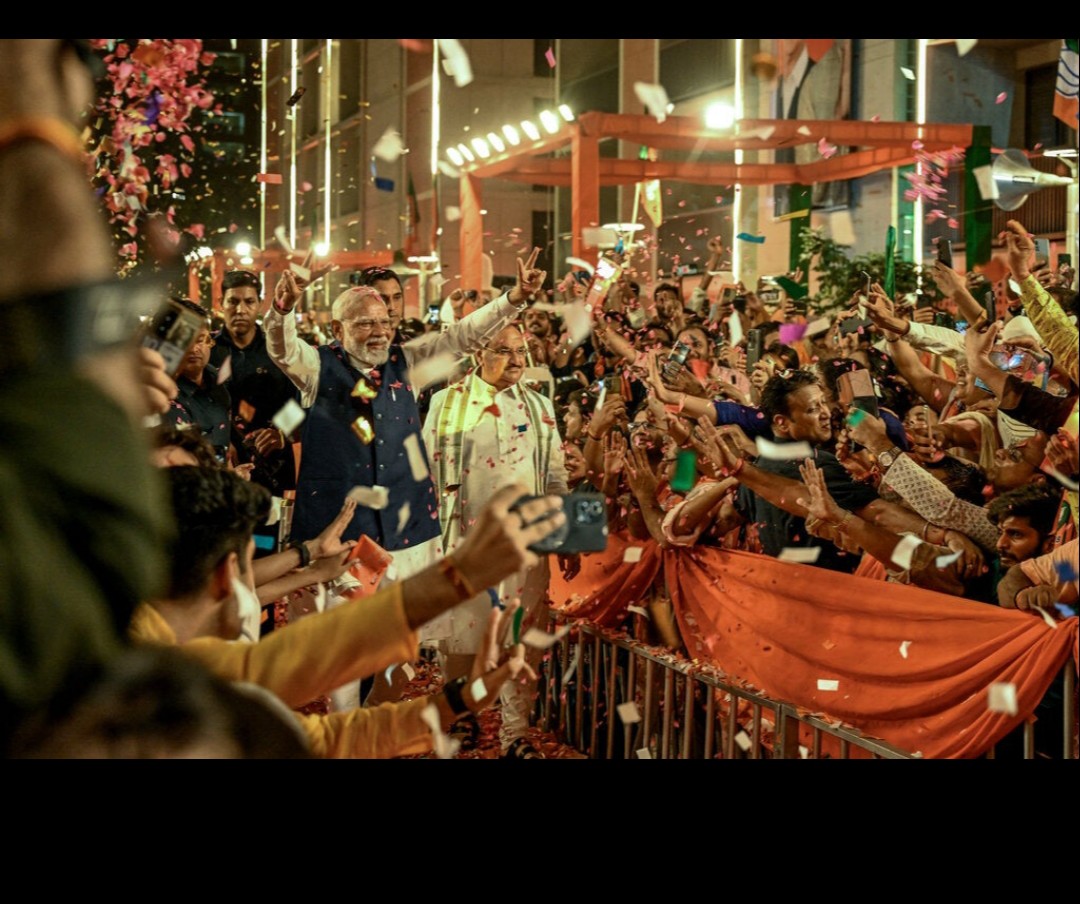
In contemporary India, the architecture of executive hegemony under Prime Minister Narendra Modi projects an aura of permanence. Marked by towering centralisation, ubiquitous political branding, monumental infrastructure projects cast in concrete and an omnipresent state apparatus, the regime frequently presents its tenure as the fulfilment of a historical destiny. Dissent is systematically criminalised, institutional checks are sidelined, and the pluralistic fabric of the republic is strained under the weight of a political narrative that claims infallibility. The rhetoric of contemporary power echoes the arrogant boast carved into the stone of Shelley’s fallen king:
“My name is Ozymandias, King of Kings;
Look on my Works, ye Mighty, and despair!”
Yet Shelley’s genius lies in exposing the profound delusion of absolute power. The central irony of Ozymandias is that nothing of the tyrant’s vast empire remains. Surrounding the shattered visage are only “the lone and level sands” — an empty expanse that mocks the despot’s ambition to conquer time itself.
Statecraft built upon the suppression of dissent, the erosion of federalism and the manufacture of forced consensus ultimately rests on shifting ground. The louder a regime proclaims its eternal supremacy, the more vulnerable its claims become to historical scrutiny. The desert eventually reclaims its territory. The granite monuments of executive arrogance, however imposing they may appear under the floodlights of political propaganda, may ultimately become historical curiosities buried beneath the relentless passage of time.
Shelley’s Political Philosophy
To read Shelley exclusively as a poet of Romantic melancholy is to overlook the fierce intellectual rigour of his political thought. Deeply influenced by the radical Enlightenment, William Godwin and the democratic ideals unleashed by the French Revolution, even as he recoiled from its later bloodshed, Shelley developed a philosophy profoundly hostile to institutional tyranny.
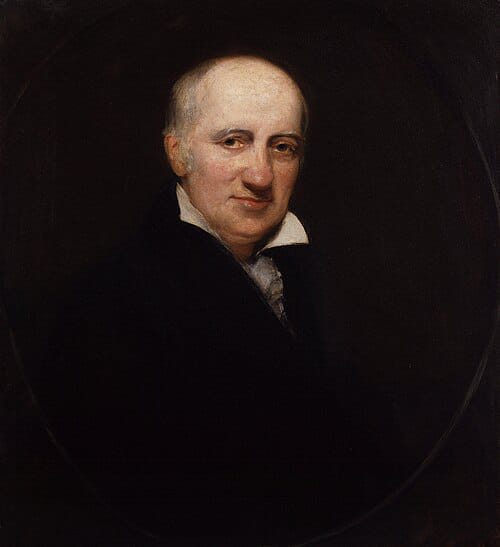
His political ideals rested on several foundational principles. Shelley maintained that legitimate governance could not rest on brute force, fear or divine right. He viewed monarchies, established religions and autocratic regimes as artificial structures designed to enslave the human mind and exploit the labour of the many for the enrichment of the few.
Rather than advocating violent insurrection that might merely reproduce the machinery of oppression, Shelley championed passive resistance, moral endurance and the awakening of collective conscience. In works such as The Mask of Anarchy, written in the aftermath of the Peterloo Massacre of 1819, he urged the working classes to recognise their numerical strength and moral authority over the ruling elite:
“Rise like lions after slumber
In unvanquishable number…
Ye are many—they are few.”
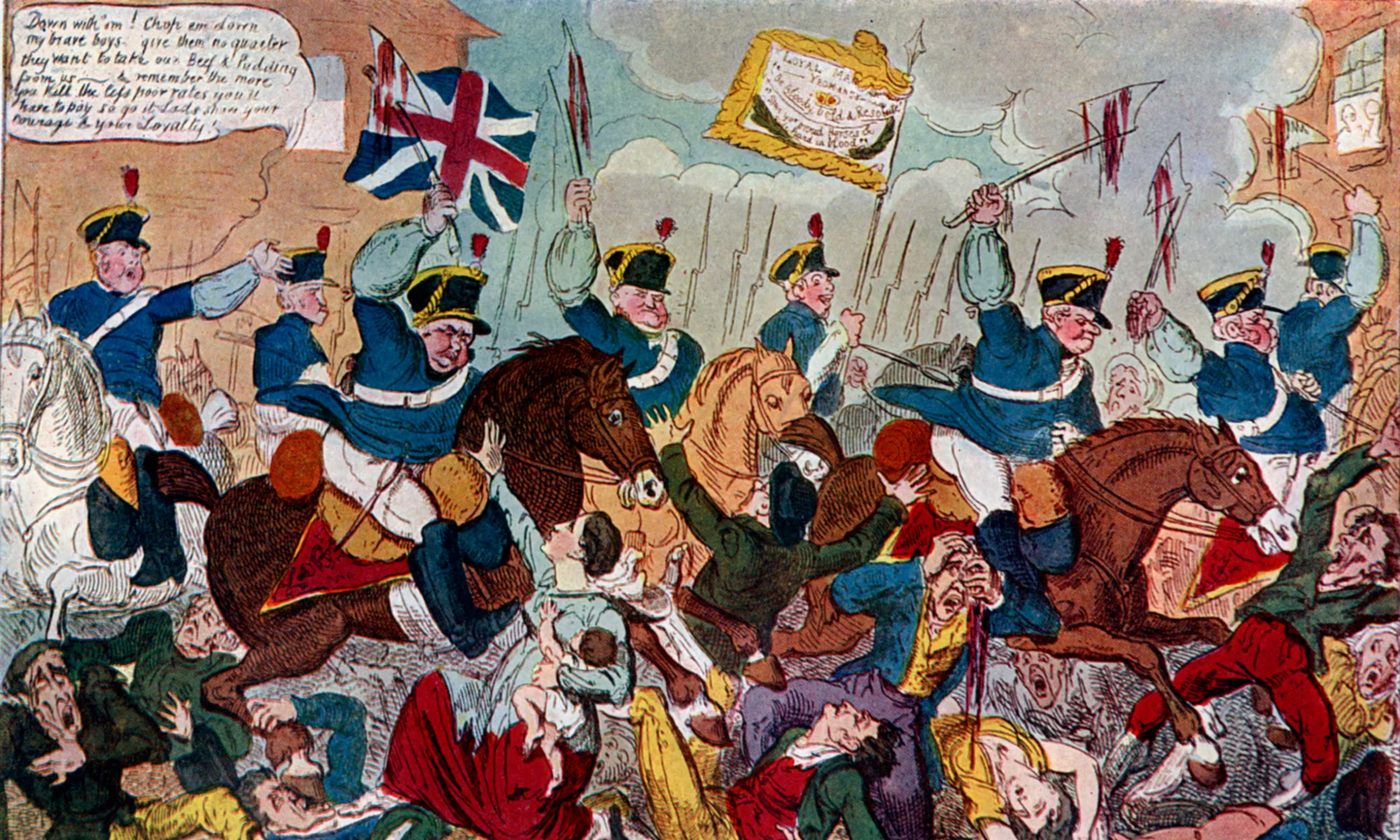
For Shelley, freedom was not merely the absence of physical chains. It was a comprehensive condition encompassing love, economic justice, gender equality and unrestricted freedom of expression. He believed that poetry and the human imagination could become revolutionary forces, capable of dissolving prejudice and dismantling the psychological barriers that sustained servitude.
In Shelley’s political imagination, the legitimacy of the state depended upon its relationship with human liberty. Once it became an instrument of oppression, it forfeited its moral claim to obedience.
The Titan on the Crag
If Ozymandias depicts the eventual decay of tyranny and the West Wind represents the destructive yet regenerative force of popular resistance, Shelley’s monumental lyrical drama Prometheus Unbound (1820) offers a vision of what might follow: the emergence of a genuinely emancipated society.
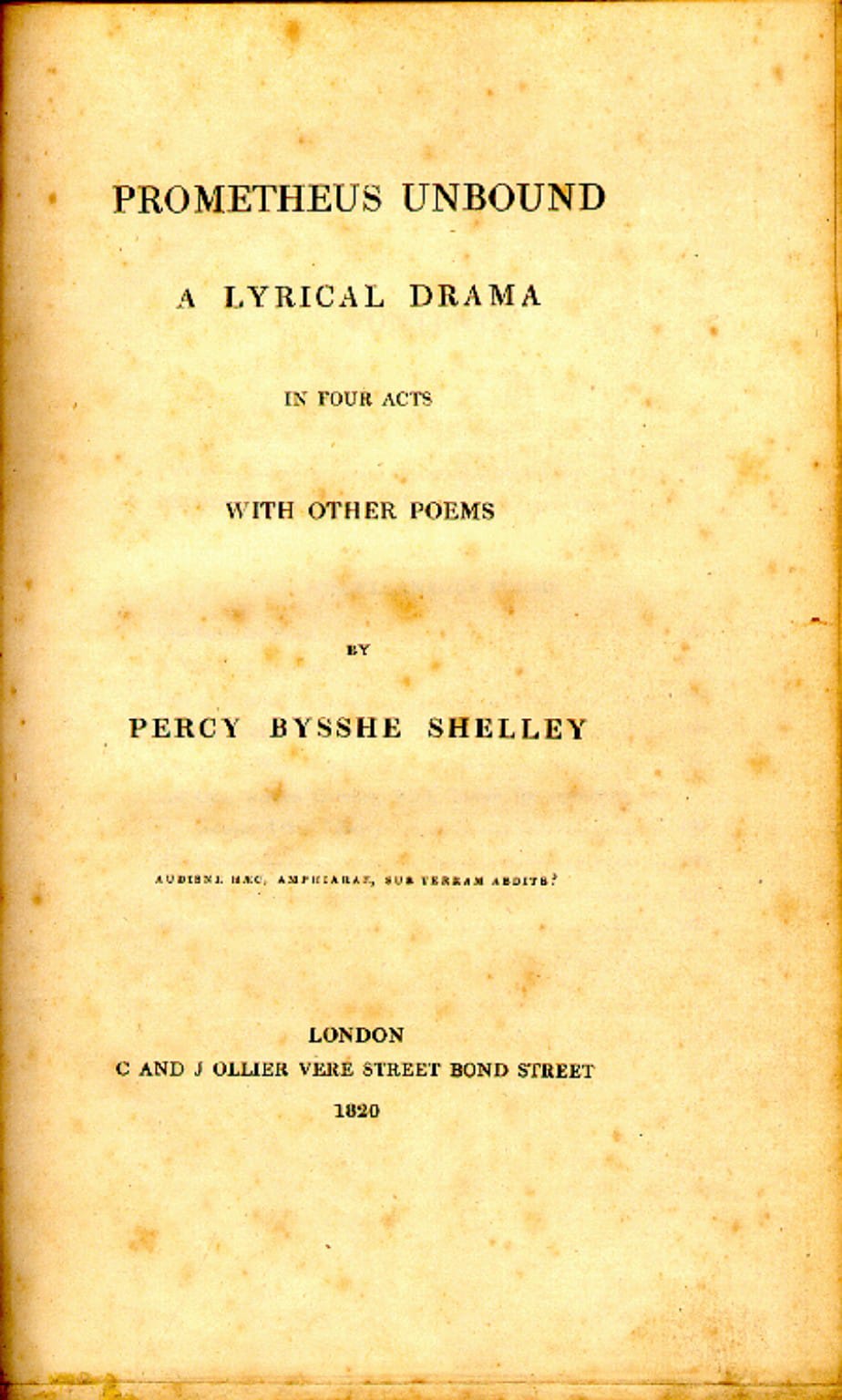
In the drama, Jupiter represents the celestial embodiment of absolute and arbitrary sovereignty — a supreme ruler who maintains his authority through terror and enforced submission. Chained to a desolate crag is Prometheus, the Titan associated with bringing fire and enlightenment to humanity. Prometheus refuses to yield. His true strength lies not in physical power, but in his refusal to submit spiritually or reproduce the malice of his tormentor.
Through Prometheus, Shelley suggests that liberation must also be psychological. A people cannot remain permanently enslaved once their collective consciousness ceases to recognise the moral legitimacy of tyranny.
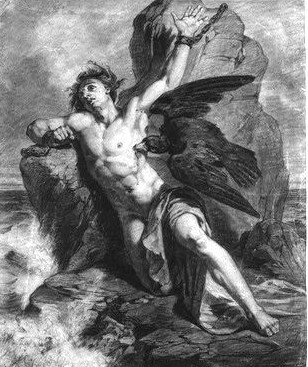
When Jupiter is finally overthrown, his fall does not lead to the installation of another autocrat. Instead, Shelley imagines a transformed world in which coercive hierarchies give way to freedom, cooperation and harmony. Asia, embodying nature, love and creative vitality, is reunited with Prometheus, heralding a new epoch of human emancipation.
A Profound Promise
In contemporary India, Prometheus can be understood as the enduring spirit of the citizen, student, lawyer, journalist and worker who refuses to surrender the republic’s constitutional soul. The future of Indian democracy does not lie in preserving towering executive egos or accepting the unquestioning compliance demanded by modern-day Jupiters. It lies in the Promethean recovery of civic courage — the steadfast refusal to allow fear to determine the boundaries of public life.
As India navigates its complex democratic trajectory, the three strands of Shelley’s vision — the sweeping gale of the West Wind, the shattered monument of Ozymandias and the unconquerable defiance of Prometheus — offer both a sobering warning and a profound promise.
They remind us that no concentration of political power, however deeply entrenched, is immune to the passage of time or the awakening of public conscience. Monuments of stone may eventually sink into the sand, while the chains of tyranny can be broken by the moral resolve of people determined to remain free.
When the winter of authoritarian complacency appears interminable, we are reminded of Shelley’s immortal question in the concluding lines of Ode to the West Wind:
“O Wind,
If Winter comes, can Spring be far behind?”
The democratic future of India belongs not to kings of clay and concrete, but to the living, breathing wind of its people.