

The Grammar of Popularity and the Reception of ‘Rajinism’


There are moments when cinema ceases to be merely a spectacle and transforms into a social emotion. In such moments, the audience seems to transcend the screen itself, becoming, in a sense, co-creators of the cinematic experience. The phenomenon that is Rajinikanth has repeatedly created and recreated such moments of wonder in the history of Indian cinema.

Yet, the excitement and box-office frenzy surrounding Jailer 2, directed by Nelson Dilipkumar, appear to offer more than the story of a commercial success. They invite us to undertake a cultural inquiry. As Jailer 2 breaks popularity records, transcending the simulated realities and mechanical rhythms of modern visual culture, its triumph may be understood not merely as the victory of a film but also as the triumph of an actor whose confidence has endured the passage of time.
The Roots of Mass Appeal
What truly transforms a popular film into a phenomenon celebrated on such a scale? It is not simply its graphics or the millions invested in technological spectacle. The answer becomes clearer when we consider the deeper foundations of such films. Their greatest strength lies in their ability to resonate with fundamental human emotions: revenge, the longing for justice, loneliness and love for family.
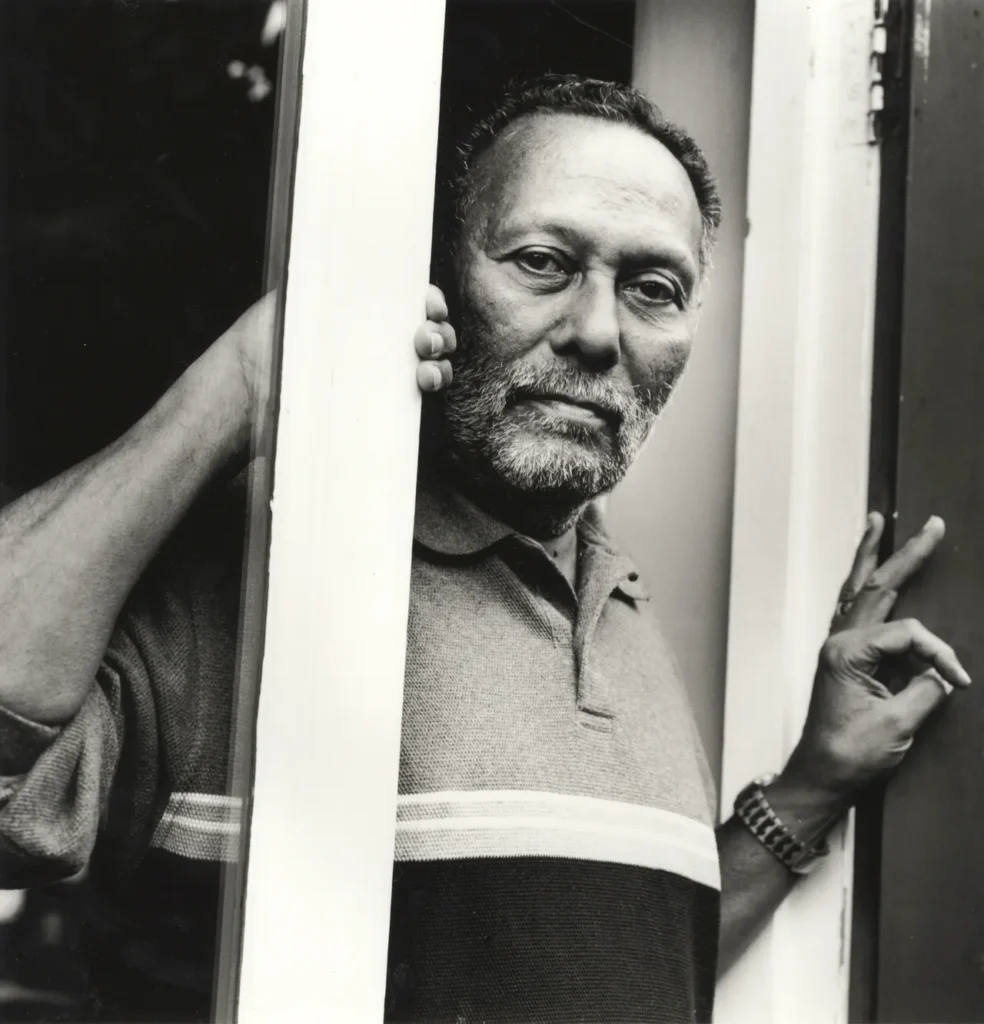
Beyond box-office figures, it is fascinating to examine such cinematic successes through the lenses of mythology, the collective psyche and cultural studies. The psychological theories of Carl Jung and the concepts of encoding and decoding developed by Jamaican-British sociologist Stuart Hall offer particularly illuminating ways of understanding this phenomenon.
According to Jung, beneath the surface of the conscious mind lies a deeper psychological stratum known as the collective unconscious. It contains archetypes and symbols shared by humanity across generations, rooted in the myths and primordial patterns of human experience.
In Jailer 2, Rajinikanth’s character, Muthuvel Pandian, rises beyond the realm of an actor’s performance to become, at a subconscious level, an archetypal figure. Amid the helplessness and insecurity experienced by society, he embodies the powerful saviour who arrives to deliver justice. Audiences come to recognise in him a source of strength that they themselves long to possess.
Theatres, therefore, cease to be mere spaces of entertainment. They become arenas in which suppressed emotions and unfulfilled aspirations find expression. It is not difficult to see that audiences are no longer watching only an actor; they are encountering a symbol of their own desires, struggles and survival.
The Inner Meaning of Collective Euphoria
While Jung explores the psychological depths of the human mind, Stuart Hall’s encoding/decoding model examines communication, interpretation and resistance within society. Cultural products such as cinema are created with particular meanings encoded into them. Yet audiences, especially ordinary people and marginalised communities, decode these works in different ways, interpreting them through the realities of their own lives.
The reception of Jailer 2 can be understood in this light. For working-class audiences and ordinary people, the film may be more than a cinematic experience; it can become an expression of resistance.
While mainstream media and large production houses may regard the film as a commercial product, the crowds that gather in theatres embrace it with an emotional intensity that resembles the assertion of their own rights. The milk poured over enormous cut-outs, the drum performances and the celebrations outside theatres point, in a sense, towards a form of cultural self-determination among ordinary people.
For those who feel marginalised by the prevailing social order, the cinematic hero becomes a means of reclaiming strength and dignity. Such celebrations are not merely expressions of admiration for a star. They also reflect the ways in which popular culture allows people to imagine themselves as powerful, visible and capable of overcoming their circumstances.
Films such as Jailer 2 demonstrate that mass cinema is not simply a visual spectacle; it is also a collective emotional experience. I am particularly reminded of an elderly woman standing in front of me at the theatre who told me that she had come to watch the film for the third time.
These mass films bring together Jung’s world of archetypes and Stuart Hall’s cultural politics. They also reveal a remarkable capacity to unite a fragmented digital society, if only for a while, through a shared emotional experience. In the darkness of a theatre, people rejoice, find consolation and celebrate triumph together. These films become something like living chronicles of a people’s collective history.
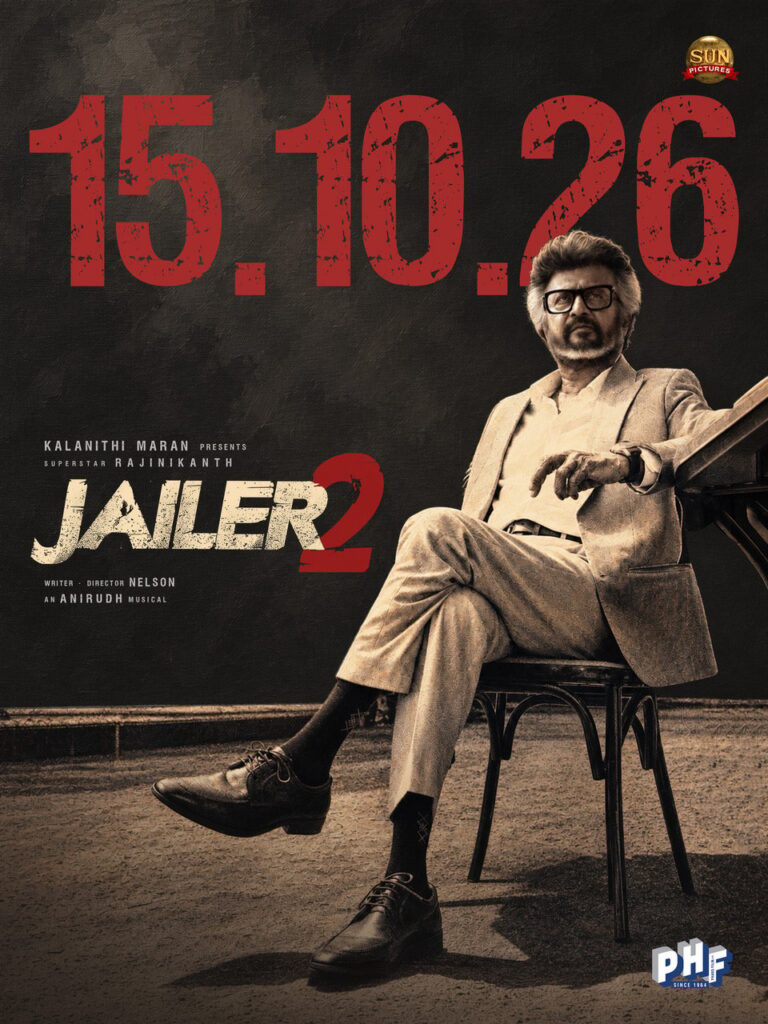
As suggested earlier, the mass appeal of a film cannot be reduced to a succession of action sequences or an excess of noise and spectacle. Audiences embrace it almost as a rhythmic ritual. Theatres fill like festival grounds, with crowds gathering to participate in a celebration larger than themselves.
When Tiger Muthuvel Pandian appears on screen, the eruption of excitement carries the echoes of a society’s collective unconscious. When justice is denied through the loopholes of law and the failures of established institutions, a saviour emerges in the imagination of the ordinary person. When Rajinikanth steps into that role, audiences are not merely watching a film; in a sense, they are reclaiming dreams they have lost.
Popular culture, in this context, also becomes a form of resistance to the dominance of elite sensibilities. It embraces the simple joys and intense passions of ordinary people without apology.
The Uniqueness of ‘Rajini Style’
At seventy-six, Rajinikanth continues to command the screen, defying the passage of time through his distinctive style and charisma. His presence lends Jailer 2 its kinetic energy, while also securing his place in cinematic history.
Beyond the aura of a superstar, he appears deeply attentive to the complexities of his character. A slight movement of his sunglasses, the faintest curve of a smile, or a stern glance can captivate millions. The emotional moments of Muthuvel Pandian in Jailer 2 reveal just how far Rajinikanth has evolved as an actor. Even as he creates peaks of excitement, the depth of expression in his eyes recalls the talent of a fine dramatic performer.

Rajinikanth has transformed the wrinkles etched by time and his white beard into sources of strength. What we see now is not merely an energy untouched by age, but a maturity shaped by it. His success is therefore not simply a triumph of popularity; it is also a testament to an artist’s enduring dedication to cinema.
The magic of Rajinikanth cannot be explained merely through the familiar gestures: tossing a cigarette into his mouth, adjusting his sunglasses with a flick, or walking with a distinctive roll of the shoulders. These are only outward expressions of a deeper confidence. Through a body language entirely his own, he has immortalised what we now recognise as Rajini style.
Once again, through Muthuvel Pandian, Rajinikanth demonstrates that silence can sometimes carry more force than a lengthy speech, and that a fleeting glance can leave a deeper impression than a torrent of dialogue. When the camera moves into a close-up of his face, the mystery and determination in his eyes naturally hold audiences spellbound.
At the beginning of his career, Rajinikanth established himself through roles as a ruthless villain and an anti-hero. He subsequently evolved into a beloved popular hero. The memory of those earlier, darker shades lends a distinctive weight and depth to his mass characters, a quality that Jailer 2 once again brings to the fore.
Background music, too, has always played a vital role in the success of Rajinikanth’s films. From M. S. Viswanathan to Ilaiyaraaja, A. R. Rahman and Anirudh, generations of composers have given his every movement a distinctive dramatic presence. The moment he steps onto the screen, the theme music seems to send a surge of excitement coursing through the audience.
It would not be an exaggeration to suggest that several elements of the visual language later adopted by South Indian cinema, including Malayalam cinema, found early and influential expression in Rajinikanth’s films. The strategic shift into slow motion just before an impact, a gunshot or a sudden burst of sound heightens anticipation and draws audiences deeper into the spectacle. This carefully constructed visual rhythm has become one of the recognisable features of his cinema.
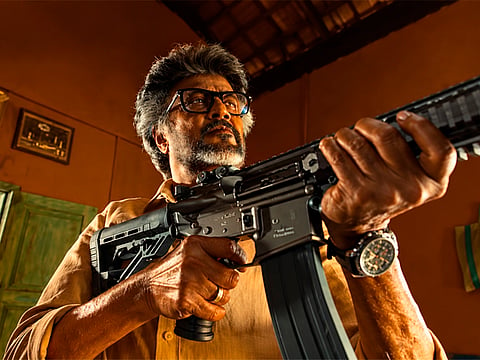
Rajinikanth has, in effect, created a visual language of his own. The mass appeal of his films often becomes a cinematic expression of the suppressed desire for resistance and revenge felt by ordinary people. When justice is denied through the loopholes of law and the limitations of established institutions, the saviour emerges once more.
But this saviour is not merely a conventional superhero. He is also the man who lives among ordinary people, sometimes appearing as a daily-wage worker or someone from an unremarkable background, before transforming into an irresistible force. It is this transformation that repeatedly sets theatres alight with cheers and celebration.
Direction and Technical Craft
Vijay Kartik Kannan’s cinematography plays a decisive role in elevating the film’s visual experience. Through close-up shots and carefully crafted lighting patterns, the camera captures Rajinikanth’s stylish appearance and the impact of his mass sequences with considerable effectiveness.
The natural beauty and greenery of Kerala are also presented with a striking sense of immediacy. Locations such as Vagamon, Theni and the uru boat-building yard in Kozhikode contribute to the film’s visual texture.
Anirudh’s music and background score, as in the first Jailer, form one of the film’s principal pillars. The score accompanying Tiger Muthuvel Pandian’s entry scenes and the action sequences is designed to generate tremendous excitement in theatres. The songs, too, leave their mark. Rajesh Madhavan’s comic performance as a singer deserves special mention.
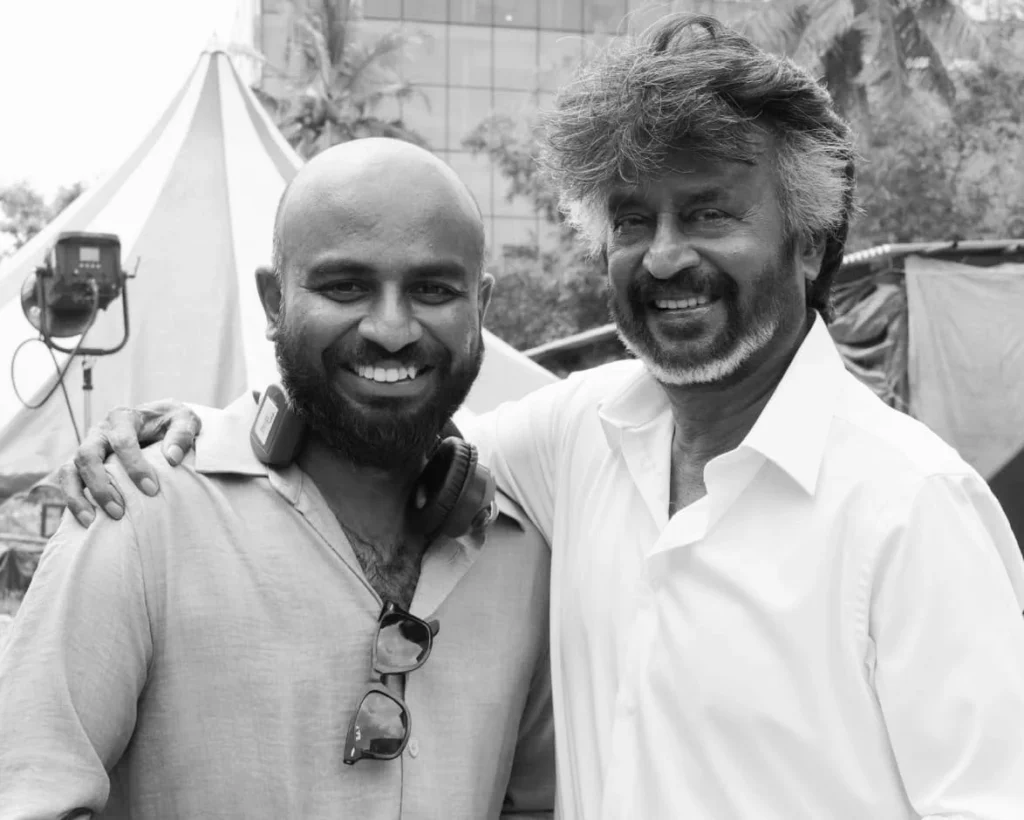
The choreography of the action sequences helps sustain the film’s mass appeal. Nevertheless, certain portions of the second half feel slightly drawn out. Even so, Nelson’s screenplay and signature filmmaking style keep the narrative moving. His ability to introduce touches of satire and mystery amid serious action sequences deserves particular attention. It allows the film to retain a curious balance: it can feel weighty while remaining accessible.
The high-voltage action sequences are another of the film’s defining features. The action moments featuring Rajinikanth, alongside those involving stars such as Mohanlal and Shiva Rajkumar, are woven together with creative intent. Gunshots, fight sounds and dialogue delivery have been mixed using modern technologies, including Dolby Atmos, to create an immersive audiovisual experience in theatres. This technical treatment further intensifies the film’s mass sensibility.
In conclusion, when Rajinikanth appears in Jailer 2, he seems to embody more than a film star. He becomes a reflection of the social mood of an era. This is a popular phenomenon that should not be dismissed lightly; it deserves deeper study and understanding.
As Rajinikanth transcends age and the limitations of ordinary life through his distinctive style and magnetic mass appeal, the dark sunglasses and unmistakable swagger on screen become enduring emblems of Rajinism, destined to remain etched in the history of cinema.
From the deeper perspectives of ‘Aalokanam’. Click here to explore more articles by Raghunathan Parali
Read the Malayalam version here








Rajinism is more than a superstar’s popularity—it reflects the powerful connection between cinema, identity, and mass politics. Rajinikanth’s appeal shows how charisma can transcend social and cultural boundaries, but true greatness lies in how celebrity influence translates into meaningful social change. Popularity may create a phenomenon, but lasting impact requires substance, responsibility, and a deeper understanding of the people.
This is film review unravelling sociological and philosophical nuances even while analysing the craft of filmmaking at is own level . Reminded one of the indepth film criticisms of Iqbal Masood and Sashi Kumar that used to adorn the pages of the Indian Express and The Hindu in the 1990s – Mr Reghunathan Parali – glad to see you and The Aidem reach such heights