
Israel’s Election Deadlock Leaves Four Paths to Power and Questions for Region

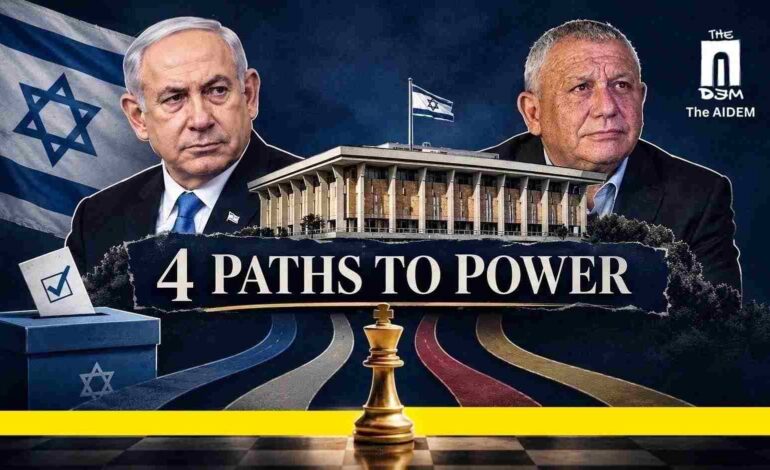
Israel’s election has left Netanyahu without a majority, opening the door to rival coalition deals or another vote, with consequences for a renewed war with Iran, Palestinian statehood and India’s diplomatic position.
As Israel awaits the formal certification of the results of its 27 October general election, it is worth examining the possible outcomes and their implications, not only for Israel but also for the Middle East and the wider world.
Of particular concern is the possibility of Israel resuming its war against Iran, with the consent or acquiescence of US President Donald Trump, who has yet to pursue diplomacy with the decisiveness the situation demands.
Before considering the possible scenarios, however, we should take note of a few features of Israel and its electoral system.
First, whichever government emerges in Tel Aviv will exercise authority over Israel and varying degrees of control over the occupied West Bank, Gaza where a genocide has been carried out, the Syrian Golan Heights, and parts of southern Lebanon where Israeli forces remain deployed.
The demographic balance across these territories raises uncomfortable questions.
We do not have reliable figures for the population of the entire area. However, according to the Palestinian Central Bureau of Statistics, about 7.4 million Palestinians lived between the Jordan River and the Mediterranean Sea at the end of 2025. Of these, about 5.6 million lived in Gaza and the occupied West Bank, while another 1.8 million lived within Israel.
Israel’s official figures, meanwhile, put the population of Israel, Jews and others classified together, at about 7.8 million in September 2026.
In short, Israel exercises varying degrees of control over a territory in which millions of Palestinians have no right to vote in elections to the Knesset, although its decisions profoundly affect their lives.
Can Israel then claim to be a democracy, or is it closer to a Sparta-type oligarchy?
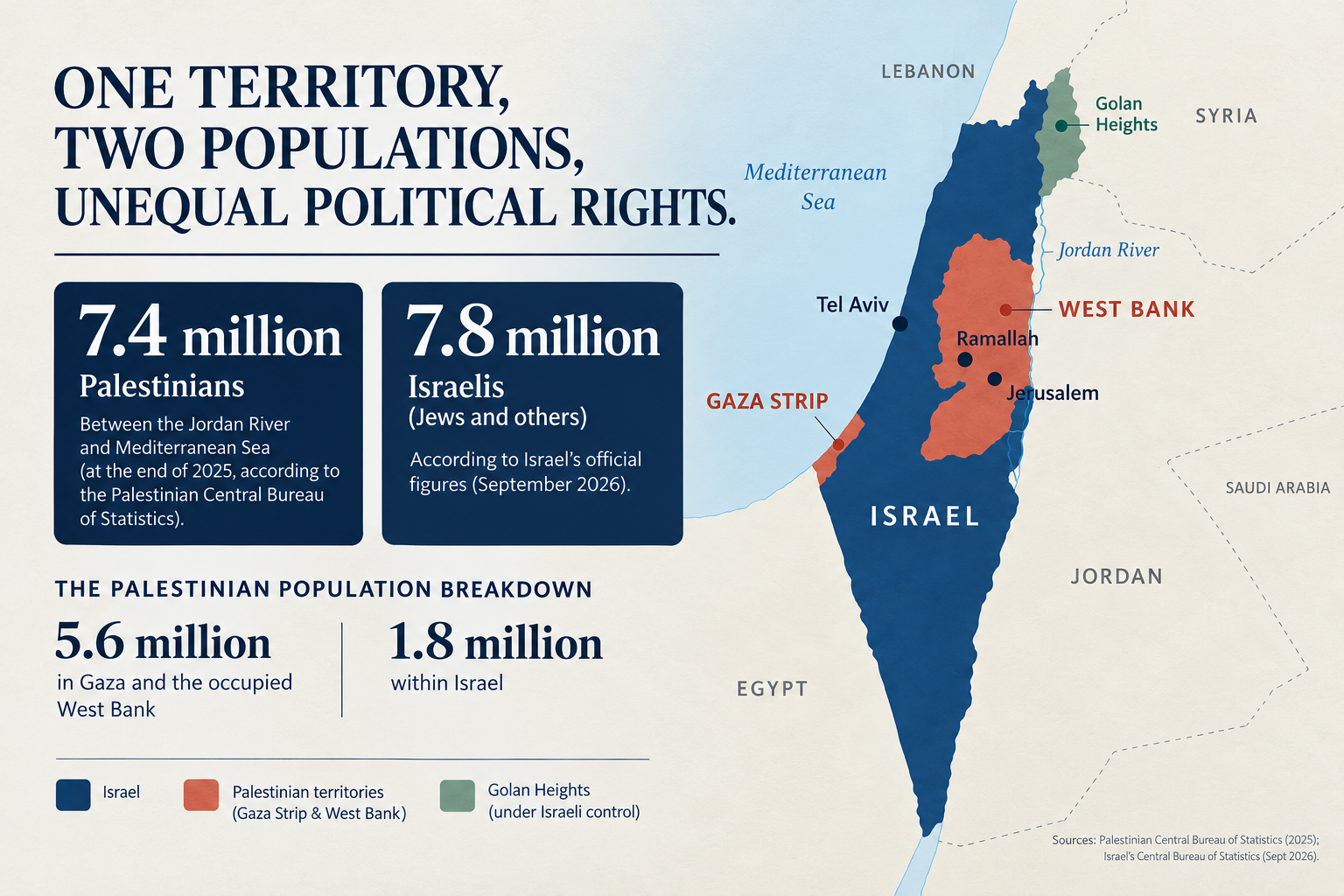 The demographic landscape between the Jordan River and the Mediterranean Sea, highlighting the population distribution and territorial realities shaping Israel’s political and democratic debate.
Second, Israel’s system of proportional representation, under which parties must secure at least 3.25% of the national vote to enter the Knesset, encourages the proliferation of political parties and makes coalition-building an exercise in prolonged bargaining. Political instability is almost built into the system.
As many as 34 parties contested this election.
New parties emerge with remarkable frequency. Yashar, led by Gadi Eisenkot, a former chief of staff of the Israel Defense Forces (IDF), was formed only in September 2025.
Voter turnout reached 77.9%, the highest since 1999.
The vote count has now been completed, though the results remain subject to formal certification, expected on 4 November.
The figures leave Prime Minister Benjamin Netanyahu’s coalition with 53 seats, a sharp fall from the 68 it held in the outgoing Knesset. The opposition bloc led by Eisenkot has 48 seats.
The remaining 19 seats have gone to the Palestinian parties, generally referred to in Israeli politics as Arab parties. The Joint List has secured 11 seats and the United Arab List, known as Ra’am, eight.
This gives neither Netanyahu nor Eisenkot the 61 seats required for a majority in the 120-member Knesset.
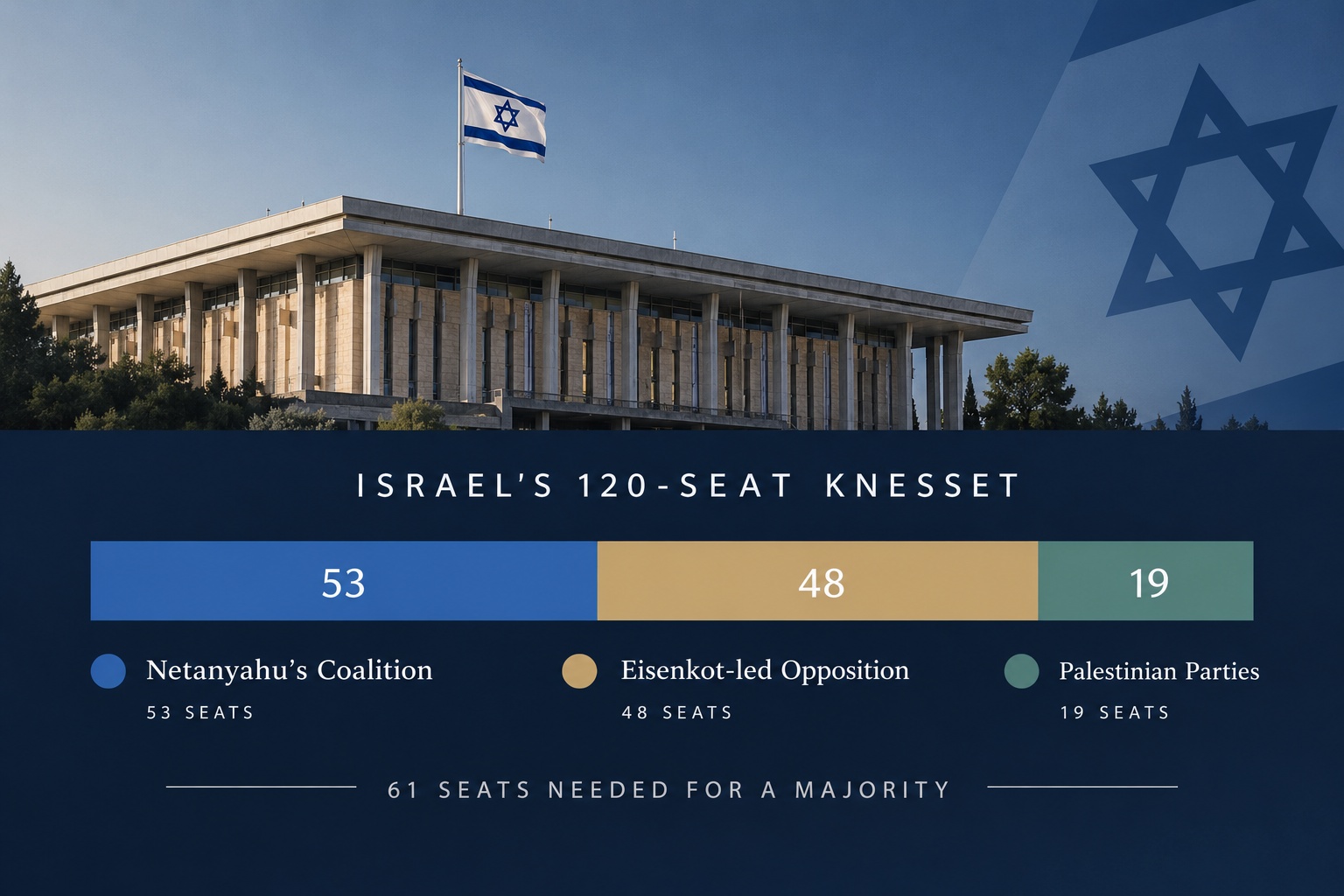 The composition of Israel’s 25th Knesset reflects a deeply fragmented political landscape, with coalition arithmetic set to shape the country’s next government.
The Process of Forming a Government
Once the results are formally submitted, President Isaac Herzog will consult the leaders of the political parties before inviting one of them to form a government.
The president is under no obligation to choose the leader of the largest party, which in this case is Netanyahu’s Likud, with 27 seats. Nor is he obliged to choose the leader of the largest coalition, again Netanyahu’s.
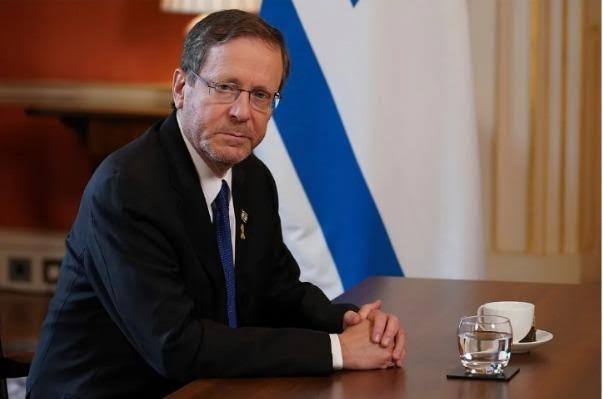 Isaac Herzog, President of the State of Israel.
His responsibility is to select the person who, after consultations, appears best placed to command a parliamentary majority.
That person will have 28 days to form a government, with a possible extension of up to 14 days.
If the attempt fails, the president may invite another member of the Knesset, who will have 28 days, without any extension.
If that effort also fails, or the president concludes that no government can be formed, the Knesset has 21 days to nominate another candidate with the support of at least 61 lawmakers. That candidate would then have 14 days to form a government.
If all these attempts fail, another election must follow, within 90 days of the Knesset’s dissolution.
Four scenarios now present themselves. I list them in no particular order of probability or desirability.
First Scenario: Netanyahu Forms a Broader Coalition
Netanyahu could succeed in building what he might describe as a “national coalition,” or, more precisely, a Zionist coalition, by persuading parties or lawmakers currently aligned with Eisenkot to support him.
With 53 seats, he needs eight more to secure a majority.
Trump might use his considerable influence to facilitate such an arrangement.
Both leaders could argue that Israel must “complete the job” against Iran, warning that Tehran could otherwise acquire a nuclear weapon and use it against Israel.
Indeed, on 25 October, just two days before the election, Netanyahu shared an AI-generated image depicting Tel Aviv in flames following a nuclear attack. The accompanying warning presented Iran’s nuclear ambitions as an existential threat to Israel.
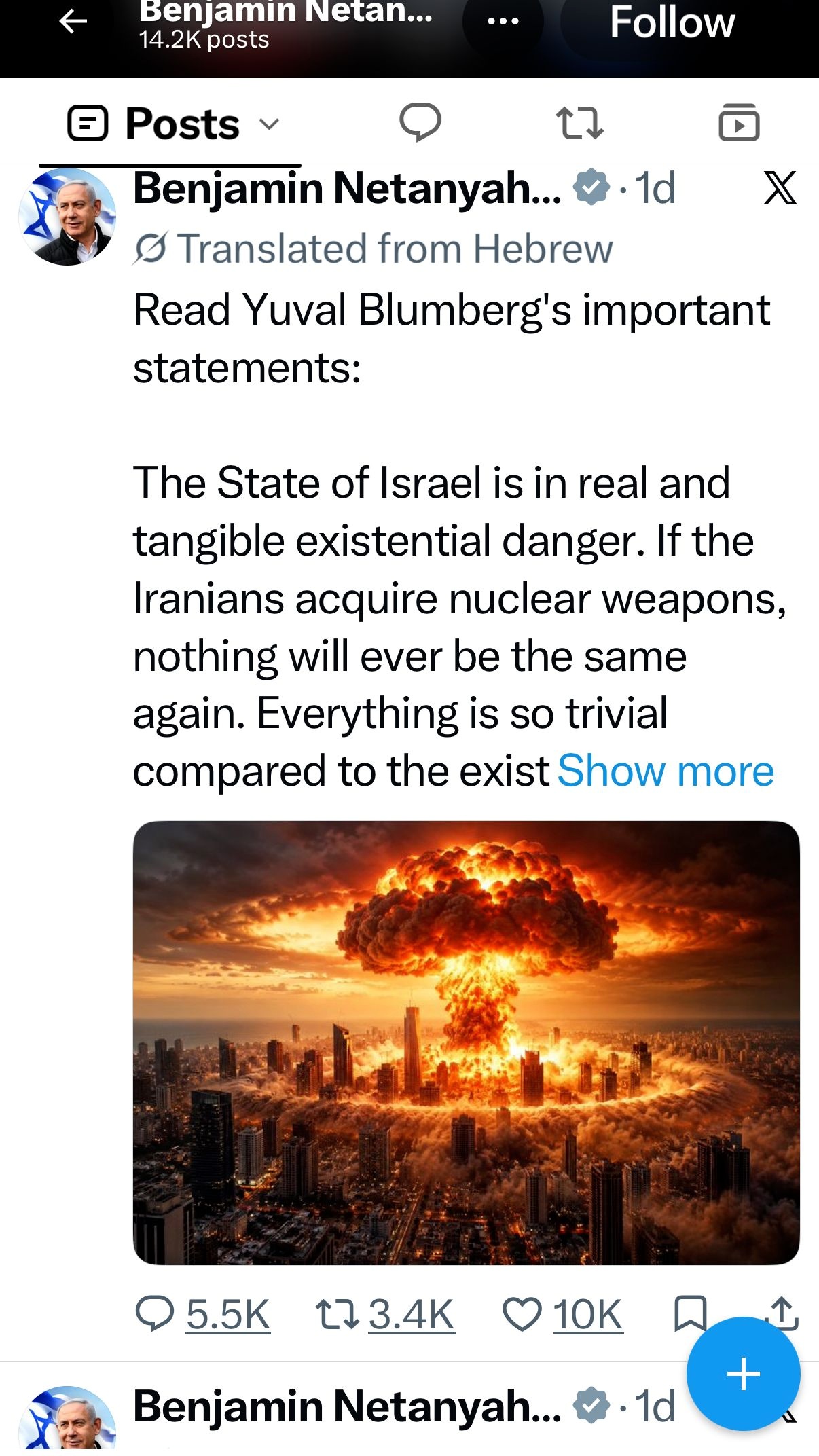 Screenshot of Benjamin Netanyahu’s original X post featuring the AI-generated depiction of a potential Iranian nuclear attack on Tel Aviv.
More troubling was a report that IDF Chief of Staff Eyal Zamir had resisted an instruction from Netanyahu concerning unspecified military action linked to Iran, fearing it could provoke an escalation shortly before the election. According to Israel’s Channel 12, Zamir sought written authorization that was not given. Netanyahu dismissed the report.
The episode illustrates how closely the domestic struggle for power has become intertwined with the possibility of another regional war.
A Netanyahu-led government, particularly one dependent on his existing right-wing partners, could continue to regard military action against Iran as central to its security policy.
The consequences would extend far beyond Israel.
Second Scenario: Eisenkot Forms a Government
Eisenkot’s bloc has 48 seats. He needs another 13 to reach the required 61.
The two Arab parties, with a combined 19 seats, could provide that support, even without formally joining the government.
Ra’am, with its eight members, might consider participating in a coalition, as it did in 2021, although the willingness of the other opposition parties to accept such an arrangement remains uncertain.
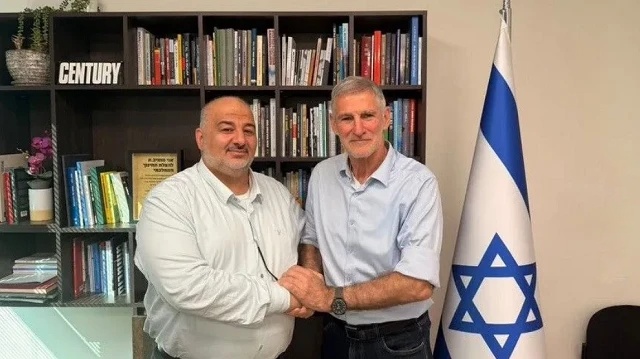 Yair Golan (right), leader of the Democrats, with Mansour Abbas (left), leader of Ra’am, during a meeting on 29 October 2026, highlighting potential cooperation between Israel’s opposition bloc and Arab parties.
However, all this might prove to be ephemeral, as such support would require Eisenkot to make significant concessions, including the ending of the expansion of “settlements” in the West Bank.
Palestinians have faced growing violence from settlers, including attacks aimed at driving them from their homes and agricultural land.
The Arab parties might seek firm commitments to halt settlement expansion, curb settler violence and improve the political and civil rights of Palestinians.
They might also press for negotiations that could eventually lead to an independent Palestinian state.
Would Eisenkot agree?
And if he did, could he survive politically?
We should remember that support for the idea of Greater Israel extends well beyond Netanyahu’s immediate political circle, although Israelis differ sharply over its meaning and territorial ambitions.
Eisenkot himself is no advocate of Palestinian statehood. His opposition to Netanyahu should not be mistaken for a fundamental rejection of Israel’s prevailing security doctrines.
Even if Eisenkot obtained parliamentary support from the Palestinian parties, he would have to reconcile their demands with the positions of his own allies.
A government resting on such an uneasy understanding could prove short-lived.
Third Scenario: Netanyahu and Eisenkot Share Power
In this, Eisenkot agrees to join Netanyahu in a national unity government.
Netanyahu could even propose a rotating premiership, promising to step aside after a specified period and allow Eisenkot to take over.
Would Eisenkot accept such an arrangement?
There are compelling reasons for him to be wary.
He need only recall the experience of Benny Gantz, another former IDF chief, who entered a unity government with Netanyahu in 2020.
Under their agreement, Netanyahu was to serve as prime minister for 18 months before handing over the office to Gantz.
The arrangement collapsed before the transfer could take place as Netanyahu refused to step down. The government’s failure to pass a budget triggered its dissolution and another election.
Gantz never became prime minister under that agreement.
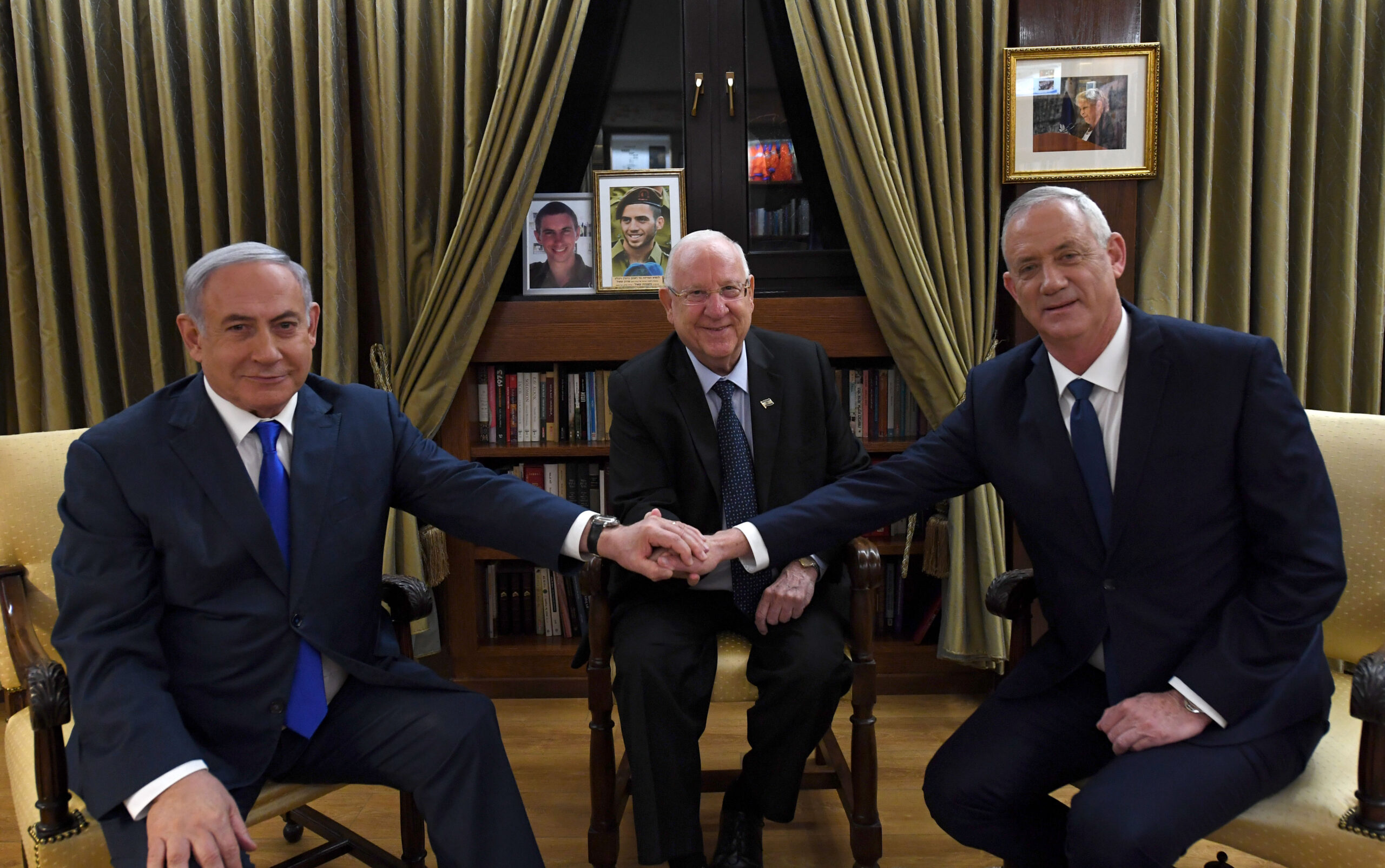 Benjamin Netanyahu (left), President Reuven Rivlin (centre) and Benny Gantz (right) during unity-government talks at the President’s Residence in Jerusalem on 15 March 2020. The rotation agreement collapsed before Gantz could assume the premiership.
Eisenkot would naturally have reservations about entering a similar arrangement, particularly after campaigning to remove Netanyahu from office.
He would also have to explain to his supporters why he had joined the very leader he had promised to replace.
For Netanyahu, however, a unity government could offer a way to retain power without depending entirely on the far-right and ultra-Orthodox parties that have sustained his coalition.
The price could be substantial concessions over ministerial portfolios, military service, judicial policy and the conduct of future military operations.
The question is whether either man is prepared to pay that price.
Fourth Scenario: Another Election
The fourth possibility is that every attempt to form a government fails, forcing Israel back to the polls after 70 days or 91 days depending on the scenario.
Under that scenario, Netanyahu would remain caretaker prime minister until a new government is sworn in.
He might hope to improve his position in another election, particularly if political fatigue, changes in turnout or developments in regional security alter the electoral landscape.
One aspect of the 27 October vote deserves attention.
An estimated 67,000 Israelis living abroad planned to return home to vote, many reportedly motivated by a desire to end Netanyahu’s rule.
Would they be willing to make another expensive journey if Israel were forced into a fresh election within months?
And would their enthusiasm survive another inconclusive result?
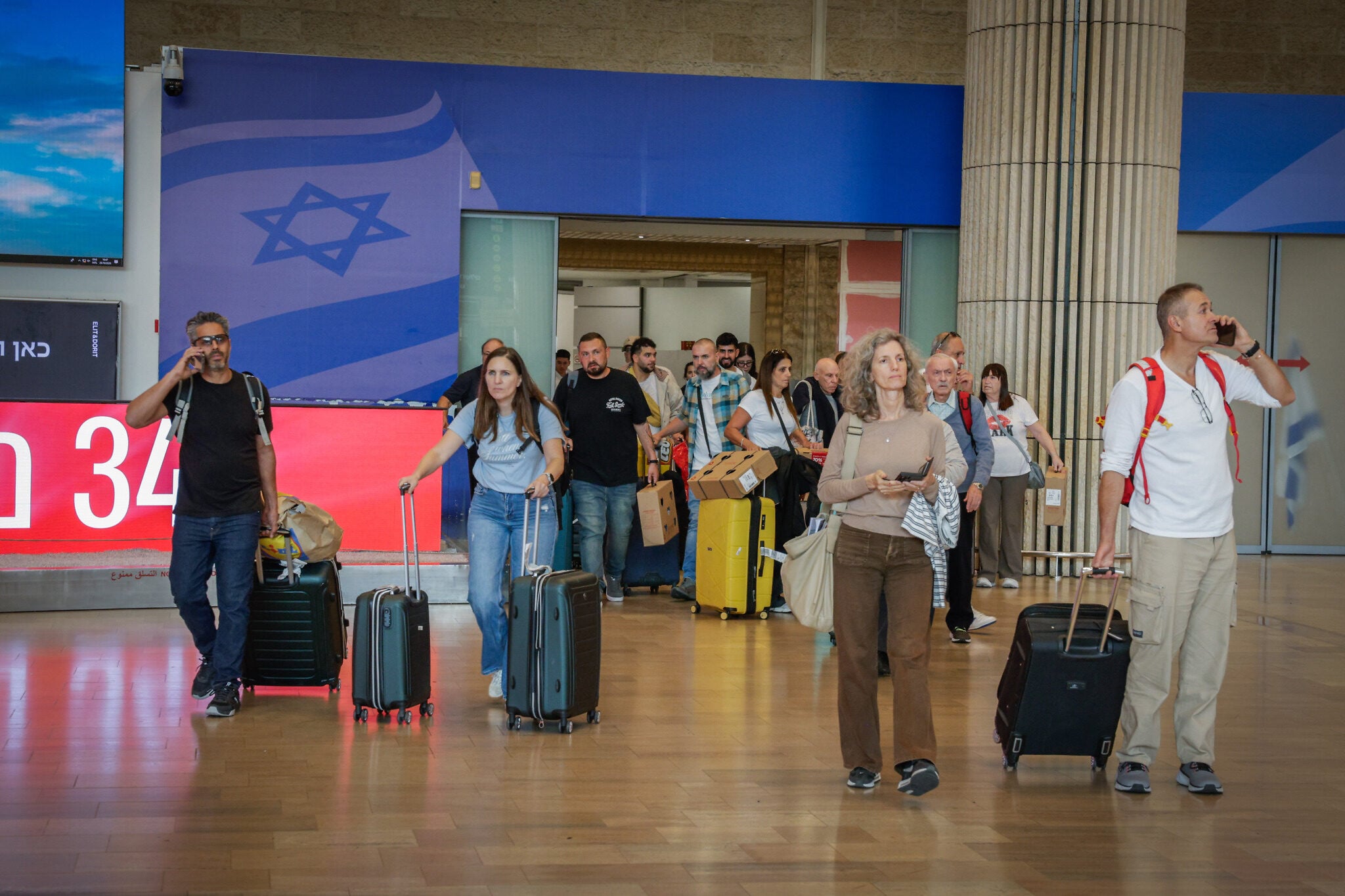 Israeli citizens arrive at Ben Gurion Airport from overseas to cast their ballots in the 27 October 2026 election, in a significant show of participation by voters living abroad.
For Netanyahu, prolonged coalition negotiations would at least have one advantage. He would remain in office while his opponents struggled to agree on an alternative.
The caretaker government would continue to exercise executive authority, including responsibility for national security, although it would remain subject to legal and parliamentary constraints.
That raises an obvious question: What would Netanyahu do with that authority if another confrontation with Iran appeared imminent?
The Palestinian Question
These scenarios cannot be properly assessed without considering the position of Palestinians, including those who are citizens of Israel.
Palestinian citizens have had the right to vote in Israeli elections since 1949, but their relationship with the Israeli state has been marked by discrimination, unequal treatment and profound disagreements over national identity.
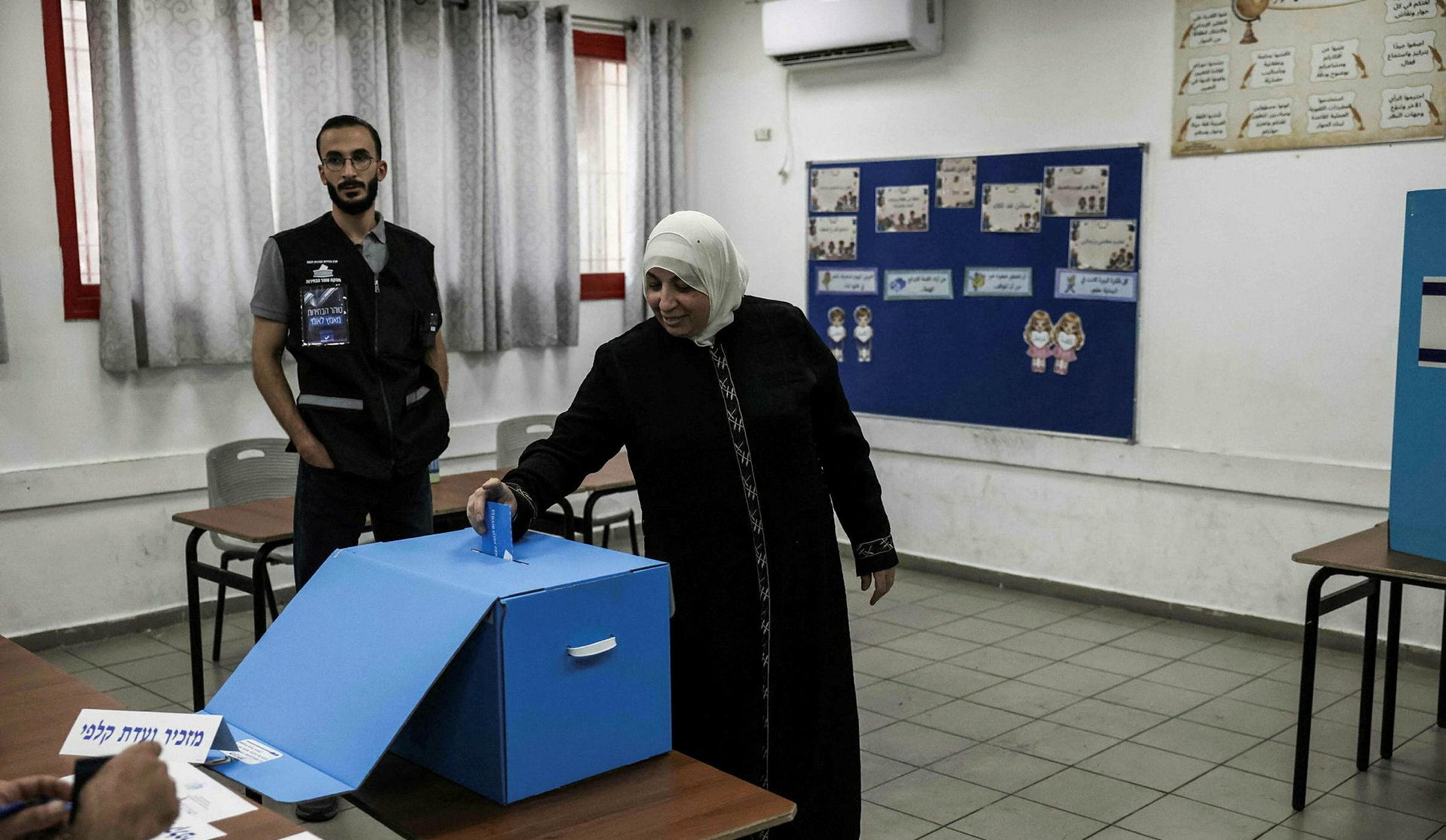 A Palestinian voter casts a ballot at a polling station in East Jerusalem during Israel’s 27 October 2026 election, highlighting Palestinian participation in the country’s electoral process.
Electoral participation has varied considerably over the decades. At different times, sections of the Palestinian community have advocated boycotts, arguing that participation lends legitimacy to a political system that denies Palestinians full national self-determination and basic human rights to non-Jews as Israel is a Zionist state by law.
Others have regarded voting as an essential means of defending their rights and influencing government policy.
Israel does not have a written constitution. Instead, it has a series of Basic Laws that govern its institutions and define aspects of the state’s character.
One of these, adopted in 2018, declares Israel the nation-state of the Jewish people and reserves the right of national self-determination in Israel to Jews.
For Palestinians, that provision reinforces longstanding concerns over equality and the place of non-Jews in the state.
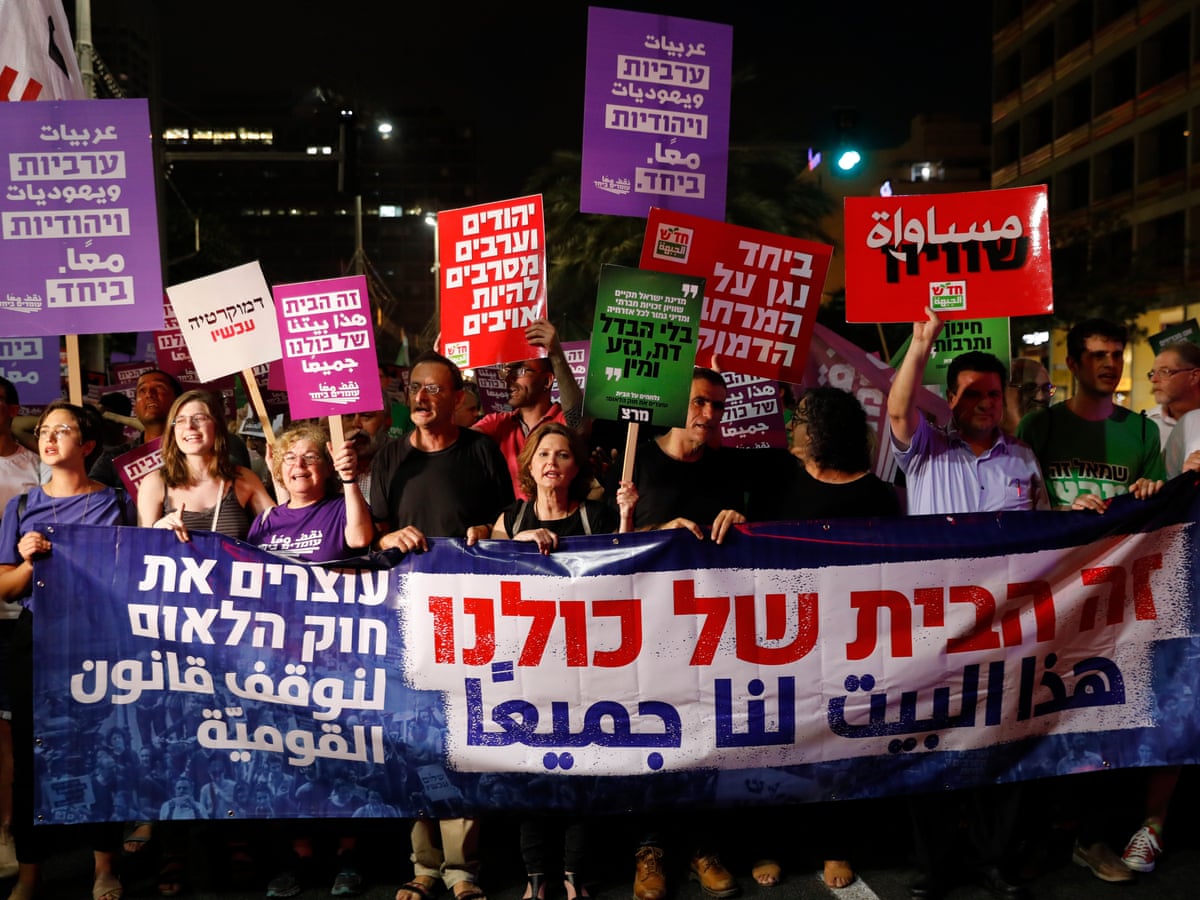 Demonstrators protest against Israel’s 2018 Nation-State Law, which defines Israel as the nation-state of the Jewish people and reserves national self-determination in the country to Jews.
The latest election has demonstrated that Palestinian voters can influence the parliamentary balance.
Yet the willingness of Jewish-led parties to share power with Palestinian representatives remains sharply limited, pointing to the central contradictions of Israeli electoral politics.
Incidentally, the Central Elections Committee, equivalent to India’s Election Commission, had disqualified the Palestinian parties from contesting before the Supreme Court overturned that decision.
What the Outcome Means for the Middle East and India
What would Netanyahu’s continuation as prime minister, whether in a caretaker capacity or at the head of a new government, mean for the region?
The possibility of renewed war with Iran cannot be dismissed. Given the military capabilities involved and the wider regional tensions, another confrontation could have consequences far beyond the two countries, and even the region.
Much would depend on Washington.
Trump has so far been central to Israel’s calculations concerning Iran, and his decisions could determine whether another military confrontation takes place or whether diplomacy is given a serious opportunity.
A renewed conflict could draw in other regional powers, disrupt energy supplies and further destabilize the Middle East, already in turmoil.
India would not be immune.
New Delhi’s close relationship with Israel, increasingly shaped by direct political engagement at the highest levels, has raised questions about how it balances that strategic cooperation with its longstanding support for Palestinian statehood.
As argued in these columns before, the excessive personalization of diplomacy carries risks, particularly when relations with individual leaders appear to overshadow broader national interests.
India has launched its campaign for a non-permanent seat on the United Nations Security Council for the 2028–29 term.
Its position on Israel and Palestine could complicate its effort to get the support of countries that expect New Delhi to act as a credible voice of the Global South.
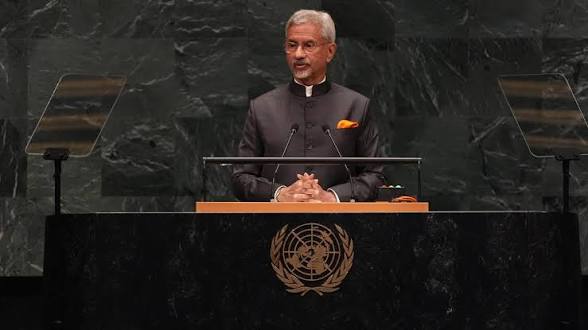 S. Jaishankar addresses the United Nations General Assembly (UNGA), where India has reiterated its support for a negotiated two-state solution and an independent Palestinian state alongside Israel.
Its claim to represent those countries may face closer scrutiny if it is seen as unwilling to challenge policies that many of them regard as violations of Palestinian rights.
A Choice Israel Is Unlikely to Make
In my view, the most constructive outcome would be an Eisenkot-led government supported by the Palestinian parties, provided it committed itself to meaningful negotiations toward a two-state solution.
Such an arrangement could offer Israel an opportunity to move away from perpetual confrontation and address the rights and aspirations of Palestinians.
But that would require political courage and concessions that Eisenkot and his prospective partners have so far shown little willingness to make.
It would also demand a serious reconsideration of the expansionist policies that have made a negotiated settlement increasingly difficult.
How can a state established in the shadow of the Holocaust pursue policies toward another people that invite such troubling historical comparisons?
The lesson of the Holocaust, surely, must be that no people should be denied their dignity or fundamental rights.
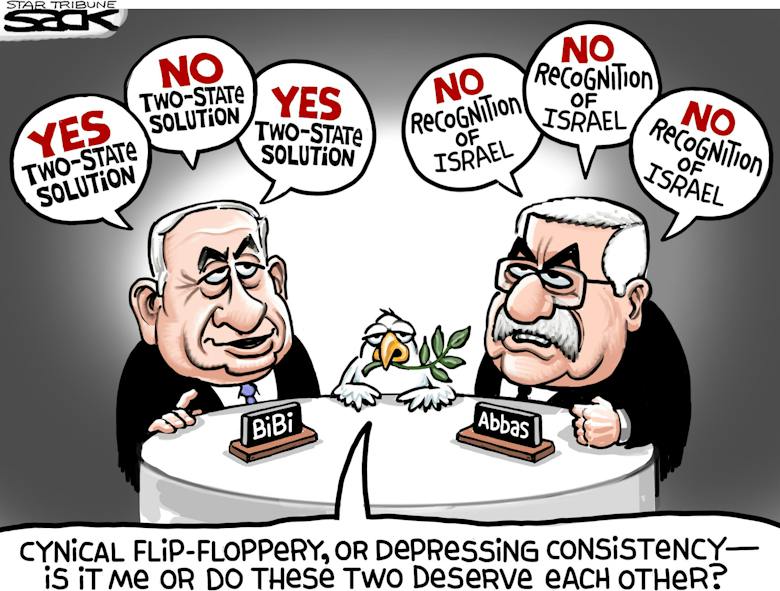
A satirical cartoon depicting the contradictory positions of Israeli Prime Minister Benjamin Netanyahu and Palestinian President Mahmoud Abbas on the two-state solution and mutual recognition, highlighting the political deadlock surrounding prospects for peace. (Cartoon by Steve Sack, Star Tribune).
Well, dear reader, the most desirable outcome is also the one that appears furthest from the political calculations of those who hold power.
History shows that human beings or rather their political leaders seldom learn from the past.
For those determined to acquire or retain power at any cost, almost everything else becomes expendable.
Originally published in pressinsider.com and can be read here:
Israel’s election deadlock leaves four paths to power and questions for region
Here’s the Link to an audiovisual conversation with KP Fabian in Malayalam on the Israel situation :






Israel’s election deadlock exposes a deeper crisis than the struggle for political power. The real test of Israeli democracy is whether Palestinian voices will be treated as equal political partners or remain excluded whenever power is at stake. A change of government means little if occupation, discrimination and expansionist policies continue. Netanyahu’s departure alone will not bring peace; what the region needs is an end to endless wars, genuine political equality and a credible path to an independent Palestinian state. India, too, must stand firmly for its principles rather than allow strategic partnerships to overshadow justice and human rights.