

Can the Adivasi Speak? Reclaiming Lost Voices in Umar Khalid’s ‘Fractured Communities’

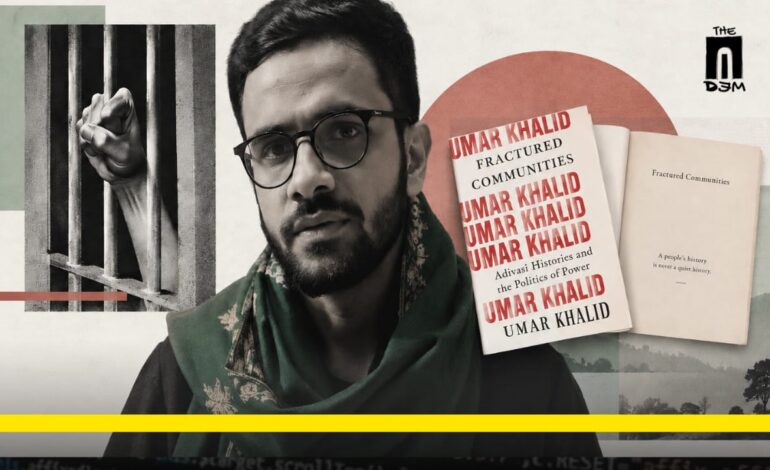
September 13 marks six years of Umar Khalid’s incarceration. On this anniversary, Anena S turns from the prisoner to the scholar, reading ‘Fractured Communities: Adivasi Histories and the Politics of Power’ as a compelling exploration of Adivasi history in Singhbhum and the enduring struggles over land, power, colonialism and political agency.
“Muslims in India, somewhat like Adivasis, are always told to ‘integrate’ and to join the ‘mainstream’. The difference between Muslims and Adivasis is that the former are seen as unwilling to be ‘mainstreamed’ and the latter as incapable of it.” — Nandini Sundar, in the Afterword to Fractured Communities: Adivasi Histories and the Politics of Power
Umar Khalid will complete six years in prison on 13 September. A brilliant young mind incarcerated behind bars under the draconian UAPA, waking up to the morning ginti — the counting of prisoners — instead of the wake-up call of his research guide, acts as a metaphor for an academic nightmare: the price one needs to pay for speaking up against the government.
“Khalid utho, haath hilaao
Khalid, abbay zinda hai?
(Khalid, get up, move your hand.
Khalid, hey! Are you alive?)”
— Excerpts from Umar Khalid’s Prison Diary: A Day in Tihar
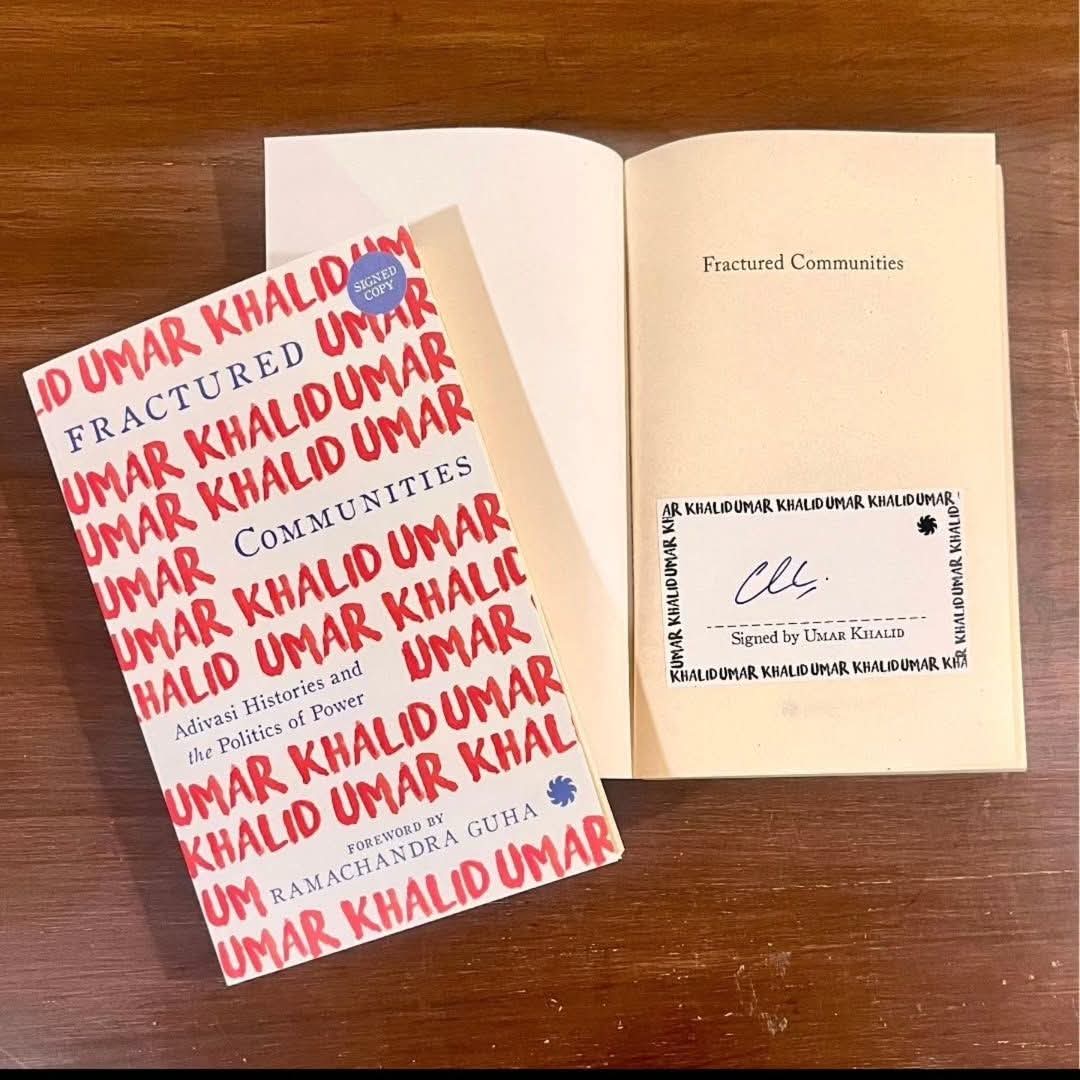
Reading Umar Khalid’s Fractured Communities: Adivasi Histories and the Politics of Power was nothing short of an astonishing experience. What began as a doctoral thesis that extensively examines nearly two centuries of Adivasi history in Singhbhum — a historical and prominent region located in the Indian state of Jharkhand, now divided into three districts: East Singhbhum, West Singhbhum and Saraikela Kharsawan — particularly the Ho community of the Kolhan region in present-day Jharkhand, is now a 400-page book published by Juggernaut in 2026.
Ramachandra Guha, who wrote the foreword, lauds the researcher and hopes that, through the book’s publication, Umar gets the recognition he deserves as a prolific scholar. The book combines archival research with political, cultural and social history to examine how colonial administration transformed existing institutions, how internal divisions within the Adivasi community grew, scarred and metamorphosed society, and how struggles over land, forests, resources and political authority continued into postcolonial India.
Produced under extraordinary circumstances, including a targeted campaign of defamation and a subsequent arrest, Khalid wrote his thesis while under trial after being charged with sedition in 2016. As paradoxical as it may sound, Khalid emerges as a seditious hero of the unheard, the displaced and the subaltern — the ideal trope of a modern metropolitan rather than a medieval hero, intellectually banished from his homeland. He is a 21st-century Dante, detained only to produce his own Divine Comedy.
Ways of Seeing: Confronting and Envisioning Singhbhum
“Seeing comes before words. The child looks and recognises before it can speak.”
— From John Berger’s Ways of Seeing
Adivasis, also referred to as Adibasis, are diverse indigenous and tribal communities spread across the Indian subcontinent. The term “Adivasi”, a 20th-century designation that broadly translates to “original” or “ancient inhabitants”, has increasingly been adopted as a form of self-identification by many communities officially classified as Scheduled Tribes in India. In India, Adivasis account for about 8.6% of the population, or around 104.2 million people, according to the 2011 Census. (Wikipedia)
Umar takes his readers to the epicentre of his research interest — Singhbhum, in present-day Jharkhand — and its indigenous inhabitants, particularly the fiercely private and guarded Ho community in the Kolhan region in the southern part of the Chota Nagpur Plateau. The early chapters take us on a stroll through the rugged terrain of Singhbhum, almost like a prolonged icebreaker session, as readers traverse a topography that conspicuously acts as a metaphor for the Ho’s insurmountable yet intriguing world.
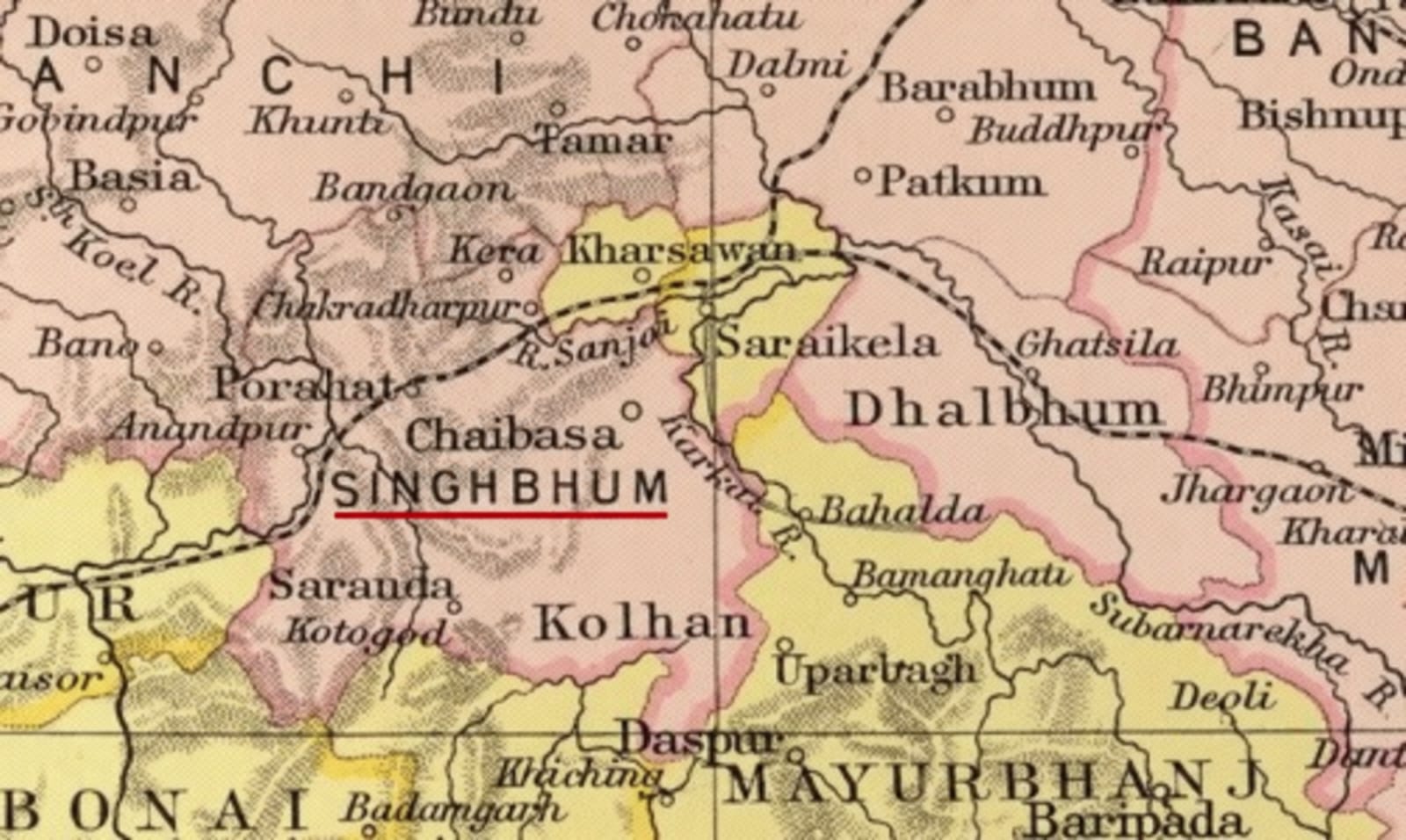
Soon, the untouched lands meet the outsider’s gaze, and Singhbhum, between 1801 and 1900, becomes a colonial administrative space. It was not simply a forced colonial takeover but a process of political and cultural appropriation, carried out through military pressure, Christian missionaries — which gave rise to a new, educated tribal intelligentsia — alliances with local rulers, decentralisation and the devolution of powers to tribal headmen, especially through the reinstatement of the traditional self-governance framework of the Manki-Munda system used by the Hos.
Long before the British entered Jharkhand, Adivasi communities had already developed well-established political and social organisations. Among these were the Manki-Munda and Parha-Parganait systems, which governed individual villages, known as hatus, as well as larger supra-village units referred to as pir, parha or pargana. These institutions emerged alongside the transition to settled village life and were deeply rooted in the political evolution of Adivasi communities. Among the Hos of Kolhan, this process can be traced to the migration of Munda groups from the Chotanagpur Plateau into Singhbhum, beginning around the tenth century CE. (Prof. Ashok Kumar Sen, Kolhan University)
Khalid’s scholarly take on the Manki-Munda system is strangely riveting, opening a profoundly new dimension in looking at the Adivasi community. Umar shatters the age-old romanticised trope of Adivasis as idyllic, naïve communities united in resisting the encroachment of outsiders. In the process, the book consigns these stereotypes to the graveyard and gives birth to an understanding of Adivasi communities as political entities rather than aesthetic spectacles to be exoticised.
The formation of the Kolhan Government Estate in 1837 gave the British formal administrative control over the region. Through the Manki-Munda system, the colonisers succeeded in appointing village headmen to collect rents, resolve disputes and maintain peace within the community. Scholars and local critics note that this minor indigenous elite — which the Manki-Munda system paved the way for under colonial rule — could sometimes act as intermediaries in resource extraction or administrative corruption, occasionally distancing themselves from the everyday struggles of the wider, more marginalised tribal populace.
The book underscores the curious process of Spivak’s “Othering”, but in this case, it occurs within the tribal community itself: a need to break ties from within, a cultural and political estrangement occurring internally.
An excerpt from the book follows: The Hos, according to Majumdar (D.N. Majumdar) in 1950, had never been an “isolated people” and had always lived in contact with other castes and tribes from very early times. And this “clash of cultures”, according to Majumdar, had induced far-reaching changes within the Hos, most notably the growing differentiation within the tribe. The Hos had split into separate classes who were increasingly living a separate existence from each other. The mankis and the mundas ate better-quality food and hardly inter-dined with their raiyats. The growth of this class consciousness amongst these wealthy families of the headmen was such that their children refused to eat together with the children of the raiyats in government boarding schools and hostels. (Fractured Communities: Adivasi Histories and the Politics of Power)
Administrative Exceptionalism: Paternal Protectionism or Curated Restriction?
In psychoanalytic theory, Sigmund Freud presents the father figure as inherently paradoxical: both the child’s protector and greatest threat. Classical Freudian thought suggests that paternal protection is inseparable from aggression, control and fear. In Singhbhum, this dynamic reappears as a form of administratively induced anxiety.
Khalid points to nineteenth-century reforms intended to protect the “simple” and “truthful” Hos from “aggrandising outsiders” (Dikus), as well as to preserve their special form of village administration. The 1837 appointment of Captain Thomas Wilkinson as the Political Agent of the Kolhan Government Estate placed colonial control over customary chiefs at the helm.
Khalid further substantiates the 20th-century reforms by referring to the Government of India Act, 1919, which classified many tribal regions as “Backward Tracts”, and the Government of India Act, 1935, which divided them further into “Excluded” and “Partially Excluded Areas”, where the Governor had special powers to decide whether provincial laws would be applicable. This system reflected the colonial idea that Adivasi areas required special administrative arrangements, which later influenced the constitutional provisions for Scheduled Areas under the Fifth Schedule.
Administrative exceptionalism provides an important framework for understanding how the colonial state governed Singhbhum. Yet it does not fully explain why the colonial government was so invested in controlling what appeared to be an untameable and difficult frontier. Singhbhum was not simply a secluded territory inhabited by relatively autonomous Adivasi communities. It was also a region rich in forests and minerals, making it increasingly important to the colonial economy.
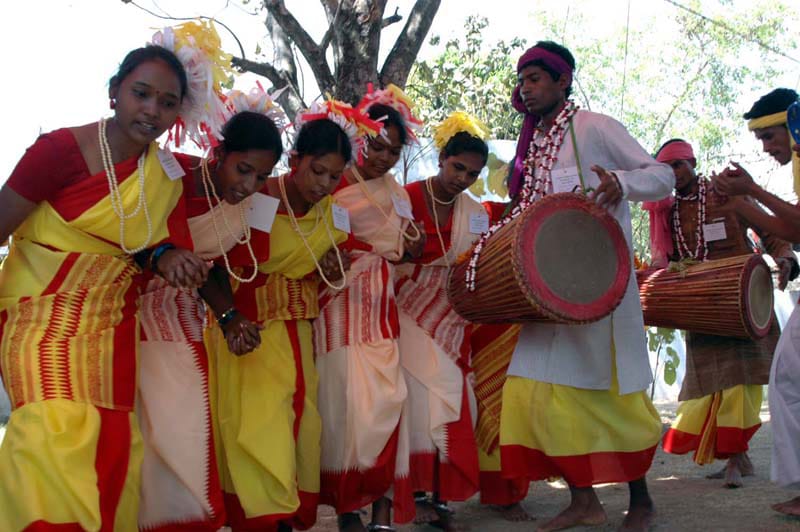
In his book, Khalid writes that “The forests of Singhbhum were too defining a feature of the region to have ever escaped official notice; they moreover were home to several myths, beliefs and an abode to gods and spirits”. Its forests supplied timber needed for railway expansion and military purposes, while its mineral resources gained greater significance as colonial capitalism expanded and the region became integrated into wider markets. Thus, administrative exceptionalism was not merely a political and social tool but also an economic one.
Colonial surveillance oversaw economic extraction. This relationship becomes even more important when Singhbhum is examined across the colonial and postcolonial periods. Under British rule, the exploitation of Singhbhum was unequivocal; the gradual expropriation of forest lands and resources imposed the greatest hardship on local communities. In postcolonial India, exploitation can be understood as a continuation, rather than a break, from colonial patterns. Although safeguarded by the Constitution through the Fifth Schedule and laws protecting tribal rights, the community is still a victim of land alienation, displacement, loss of forest rights and political marginalisation.
Mining, dams, industrial projects and infrastructure development have displaced tribal communities and imposed severe economic, social, cultural and environmental costs. For these communities, land is more than property: it anchors cultural identity, sustains social relations and connects people to their collective history. Their bond with the land is therefore not merely material and transactional but deeply emotional and cultural. An emotional contract exists between the individual and the land. (ResearchGate)
CNTA and Its Repercussions: Who Is the Real Owner of the Land?
The Chota Nagpur Tenancy Act of 1908 is widely regarded as an important colonial measure to prevent the alienation of Adivasi land and protect ancestral tenure rights. Earlier violations of these rights had fuelled agrarian unrest across Chota Nagpur during the nineteenth century, most notably the Ulgulan led by Birsa Munda.
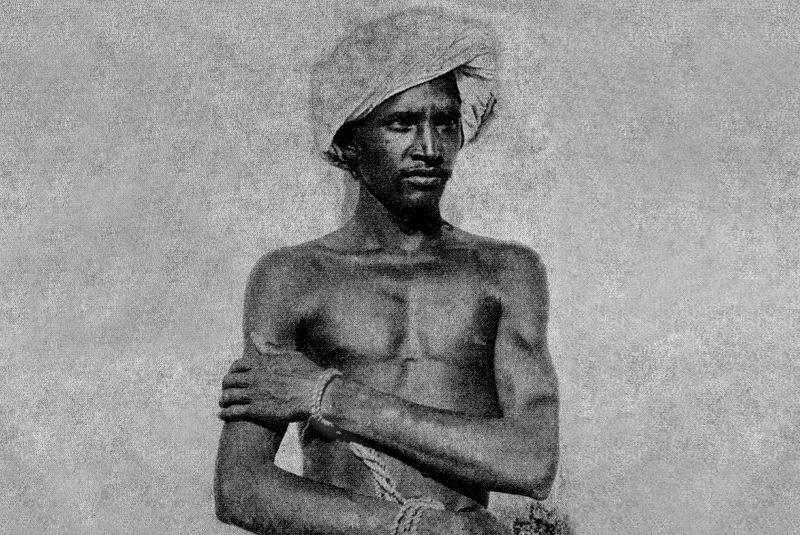
The Act formally recognised the khuntkattidar as a distinct tenurial category, identifying such holders as descendants of the original settlers who had cleared forests and established villages. It granted special protection to khuntkatti land, including rent reductions and protection against rent enhancements and transfer. Khalid, however, highlights the anxiety within this framework: once the state legally defined the category, it also had to decide who could legitimately claim it; determining the “original settlers” inevitably led to contested claims. A measure intended to protect customary tenure therefore generated new disputes over ownership, entitlement and authority.
The history of resistance offers an important counterpoint to colonial intervention. Movements led by figures such as Birsa Munda show that Adivasi communities were active political agents rather than passive subjects of colonial rule. The Ulgulan challenged the erosion of land rights, customary authority and religious autonomy. In Khalid’s broader interpretation, such resistance was not simply opposition to foreign rule; it was also a struggle to determine how land, community and political authority should be organised.
Can the Adivasi Speak and Be Heard? Some Notes to Consider
The question remains: can voices from society’s margins truly be heard? If they are denied a voice, who speaks for them? And how many others, like Umar Khalid, are willing to raise the questions that power would rather leave unasked?
To conclude, Fractured Communities firmly rejects a simplistic narrative in which a unified Adivasi community confronts an oppressive state. Instead, Khalid presents a panoramic political landscape shaped by competing interests, internal divisions and shifting forms of authority. His discussion of movements such as the Haribaba movement, led by Duka Ho, and the Adivasi Mahasabha — founded under Jaipal Singh Munda and later reorganised as the Jharkhand Party in 1949 — shows that Adivasi political consciousness was, and remains, an evolving process. This political awareness developed through a collectively constructed solidarity rooted in memory, grief and territorial belonging.
In his book, Umar humanises the tribes, opens their historical wounds, and exposes the fractures and fissures in their personal and political landscape. And this is exactly what makes it a gripping read.
Ends


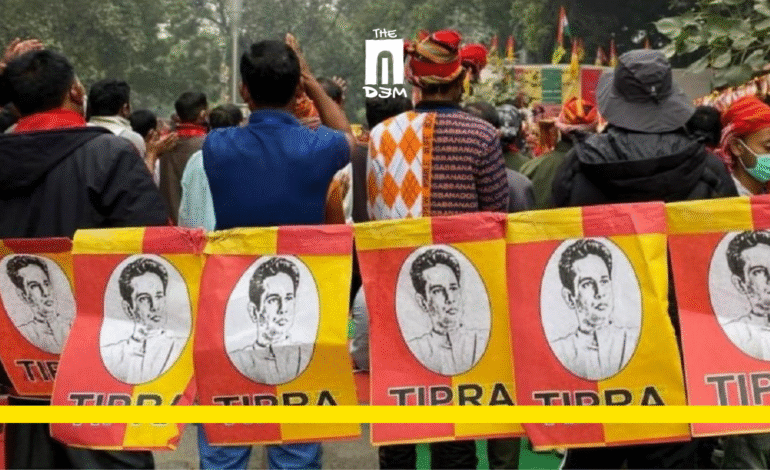






A powerful and deeply thought-provoking piece by Anena S. Umar Khalid’s Fractured Communities reminds us that Adivasis are not silent figures at the margins of history, but political communities with their own voices, struggles and agency. At a time when land, forests and indigenous rights remain under pressure, this work becomes even more important. A compelling reclaiming of histories that power has too often ignored—and a reminder that the most important question is not just whether the Adivasi can speak, but whether we are willing to truly listen.