

Caste, Rights and India’s Reckoning By UN Report on Racial Discrimination

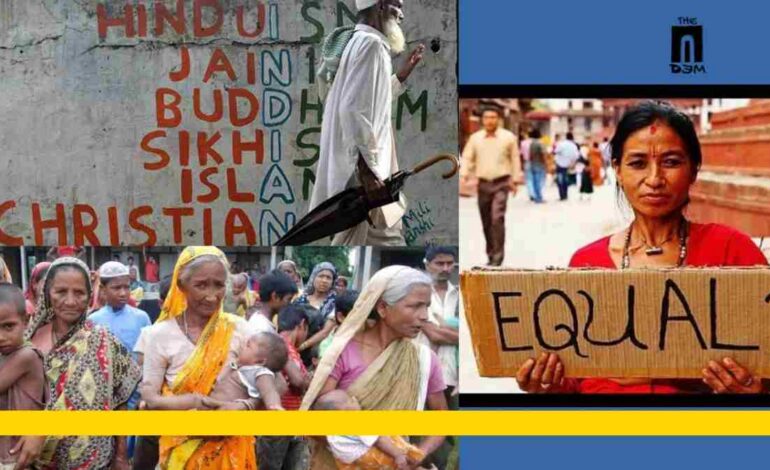
The UN Committee on the Elimination of Racial Discrimination’s (CERD) 2026 review of India puts caste discrimination at the centre of international scrutiny, reopening a fundamental dispute over whether the entrenched inequalities faced by Dalits can be kept outside the ambit of discrimination based on “descent”.
The 2026 report of the United Nations Committee on the Elimination of Racial Discrimination (CERD) on India does something politically and legally significant: it foregrounds caste discrimination as a major human-rights concern and places the lived realities of Dalits and other marginalised communities within the framework of India’s international obligations.
Nearly two decades after India was last reviewed by the Committee, CERD’s 2026 concluding observations return to a question that New Delhi has persistently contested: can caste discrimination be treated as discrimination based on “descent” under the International Convention on the Elimination of All Forms of Racial Discrimination?
India says it cannot. CERD says it can. This disagreement lies at the heart of the 2026 review and gives the report a significance that extends well beyond the catalogue of human-rights concerns it raises.
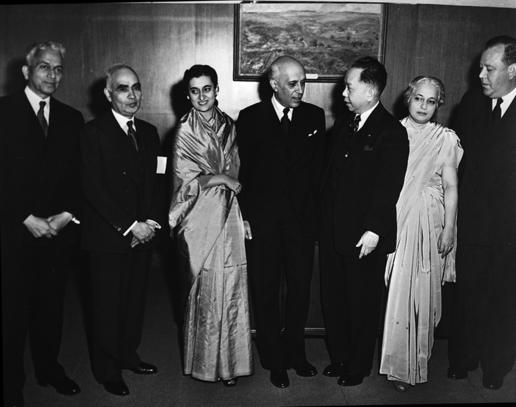
India ratified the Convention in 1968. Its longstanding position is that caste and race are distinct concepts and that caste-based discrimination therefore does not fall within Article 1 of the Convention. During its engagement with CERD, the Indian delegation argued that the Convention’s reference to “descent” should not be interpreted as encompassing caste.
CERD has consistently taken a different view. It does not simply equate caste with race. Rather, its position is that discrimination rooted in inherited social status can fall within the Convention’s prohibition of discrimination based on descent. This interpretation has informed the Committee’s engagement with India for decades and has been reiterated in the 2026 review.
The distinction is crucial. The international argument is not that caste and race are identical social formations. The question is whether a system in which status, exclusion and discrimination can be inherited by birth can remain outside international scrutiny simply because it is called caste rather than race. And behind that legal argument lies a far more disturbing landscape.
Caste Beyond the Law Books
CERD has expressed serious concern over reports of physical and other forms of violence involving law-enforcement authorities against Scheduled Castes, particularly Dalits, Scheduled Tribes and Adivasis, minority ethnic and religious groups, and non-citizens.
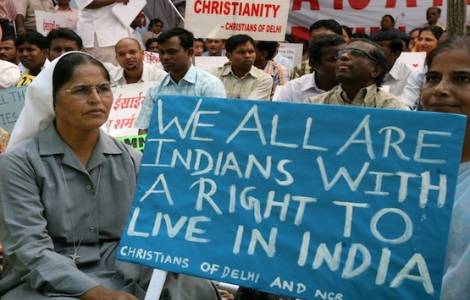
The concerns placed before the Committee include allegations of excessive use of force, arbitrary or prolonged detention, torture and ill-treatment, sexual violence and extrajudicial killings.
These are grave allegations and require careful attribution and credible investigation. But CERD’s criticism is sharpened by what it sees as insufficient detailed and updated information from India on investigations, accountability and action taken in response to reported violations.
The problem becomes particularly stark when constitutional and statutory guarantees are placed alongside everyday social reality.
India possesses an extensive legal framework against caste discrimination. Untouchability is constitutionally prohibited. Scheduled Castes and Scheduled Tribes are protected by affirmative-action provisions and specific legislation. Yet caste violence, social exclusion and degrading occupations persist.
Manual scavenging offers perhaps the starkest example.
Despite legislation prohibiting the practise, members of historically oppressed caste communities continue to clean sewers and septic tanks under hazardous conditions. Recurrent deaths during such work expose the gulf between abolishing manual scavenging in law and eliminating it in practise.
CERD’s intervention therefore shifts the debate from whether India has anti-discrimination laws to a harder question: how effectively are those laws enforced, and whose lives remain untouched by their promise?
From Dalits to Adivasis
The Committee’s concerns extend equally to Scheduled Tribe and Adivasi communities.
Land alienation, displacement, forest rights, security operations and large development projects have long shaped the relationship between the Indian state and Adivasi populations.
The Committee has raised concerns about the implementation of the Forest Rights Act and the acquisition or diversion of tribal land for development projects. It has also questioned exemptions granted to certain projects linked to “national security” from consultation requirements under forest-conservation legislation, warning of the possible consequences for the traditional rights of tribal communities and their access to natural resources.
Bastar in Chhattisgarh represents an especially sensitive dimension of this debate. Allegations concerning extrajudicial killings and security operations affecting tribal populations were among the matters brought into the Committee’s scrutiny. The original material before CERD also referred to reports of a policy offering rewards for capturing specified individuals “dead or alive”, prompting questions about its legal basis.
Such allegations cannot automatically be treated as judicially established facts. But their seriousness cannot be answered by dismissal either. The democratic response must be transparent investigation and accountability.
Rohingya, Bengali-Speaking Muslims and Citizenship
CERD’s 2026 scrutiny also encompasses Rohingya refugees and Bengali-speaking Muslims.
The Committee has raised concerns about hate speech targeting Rohingya Muslims, the precarious conditions in which many live and measures resulting in deportation. It also examined reports concerning intensified action against Rohingya and Bengali-speaking Muslims following the Pahalgam terror attack of April 2025.
The situation of Bengali-speaking Muslims in Assam brings the discussion directly into the contentious terrain of citizenship.
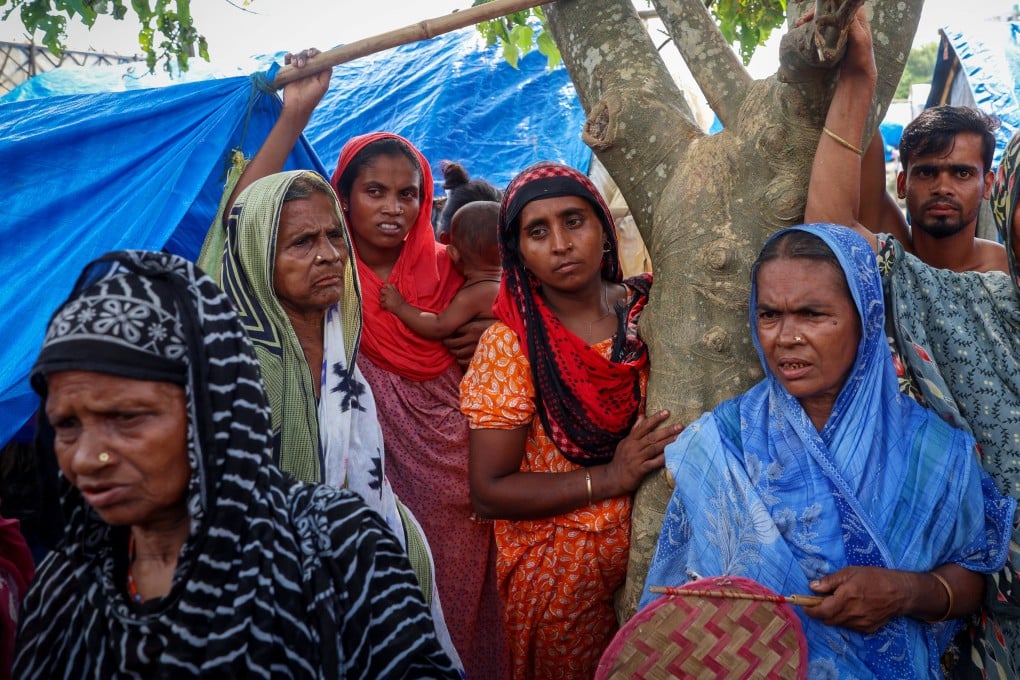
The National Register of Citizens process has forced large numbers of people to establish their citizenship through documentary proof. CERD has expressed concern about the consequences of the Assam NRC process for people whose citizenship status has become uncertain.
For poor, migrant and historically disadvantaged communities, the demand for documentary proof is not merely a bureaucratic inconvenience. It can become an existential question.
A supposedly neutral administrative requirement affects citizens differently depending on poverty, migration history, literacy, land ownership, gender and access to state institutions.
Similar concerns arise over electoral rolls. The Committee has taken note of complaints surrounding the Special Intensive Revision process and allegations that eligible voters, particularly among marginalised, migrant and poor communities, could be disproportionately affected by deletions.
The point is not that every deletion is illegitimate. It is that any exercise capable of removing citizens from electoral rolls imposes a heightened responsibility on the state to ensure transparency, accessibility and effective remedies.
Citizenship and the franchise are too fundamental to depend upon bureaucratic opacity.
Hate Speech and the Politics of Belonging
Another powerful strand running through CERD’s concerns is hate speech.
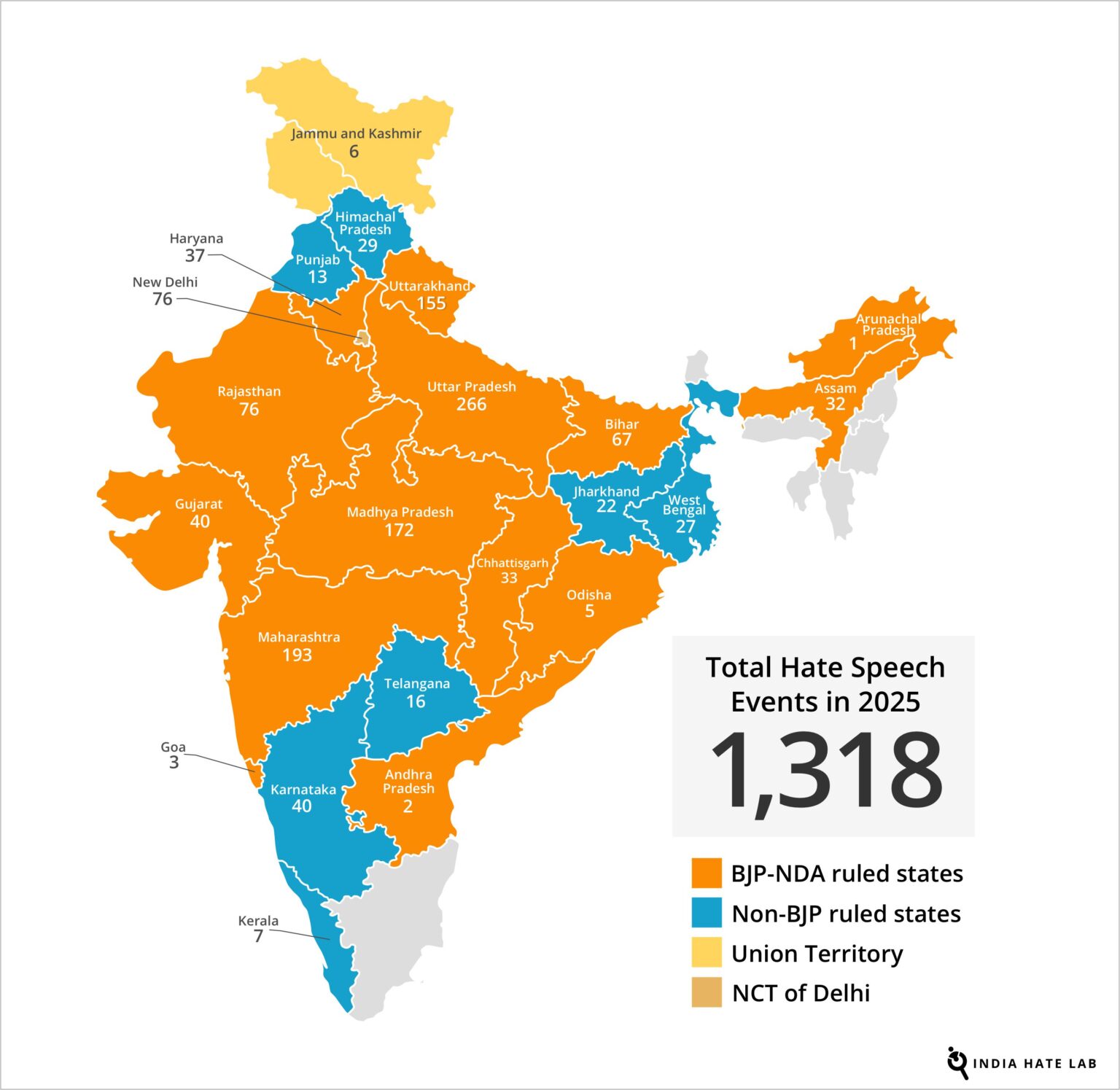
The Committee has questioned whether India’s existing legal framework adequately addresses racially or descent-motivated hate speech and whether crimes motivated by caste, race or ethnicity receive sufficiently specific treatment in criminal law.
Independent monitoring organisations have reported more than 1,300 incidents of anti-Muslim hate speech in India during 2025. Such figures must, of course, be read according to the methodology and definitions employed by the organisations compiling them. But they point towards a larger concern that CERD has also highlighted: the normalisation of language that represents communities as alien, dangerous or less deserving of equal citizenship.
Dalits and Ambedkarite voices have likewise faced caste abuse, including on digital platforms.
The political significance of hate speech goes beyond offensive words. When particular communities are repeatedly depicted as threatening, impure or inherently suspect, discrimination can gradually acquire social legitimacy.
And when such rhetoric enters mainstream political discourse, the boundary between prejudice at society’s margins and prejudice backed by institutional power becomes dangerously porous.
The Missing Data Problem
One of the less dramatic but potentially far-reaching issues raised by CERD concerns data.
The absence of timely, independently disaggregated information on disadvantaged communities makes it difficult to evaluate claims about progress against caste and other forms of discrimination.
The long delay in conducting a new census after 2011, together with delays in the publication of other official data, has created a serious information deficit. Welfare measures and assessments of social progress cannot indefinitely depend upon demographic and socio-economic information that is more than a decade old.
The decision to collect caste-related data in the new census therefore assumes considerable significance. CERD has treated moves towards updated information and self-identification positively.
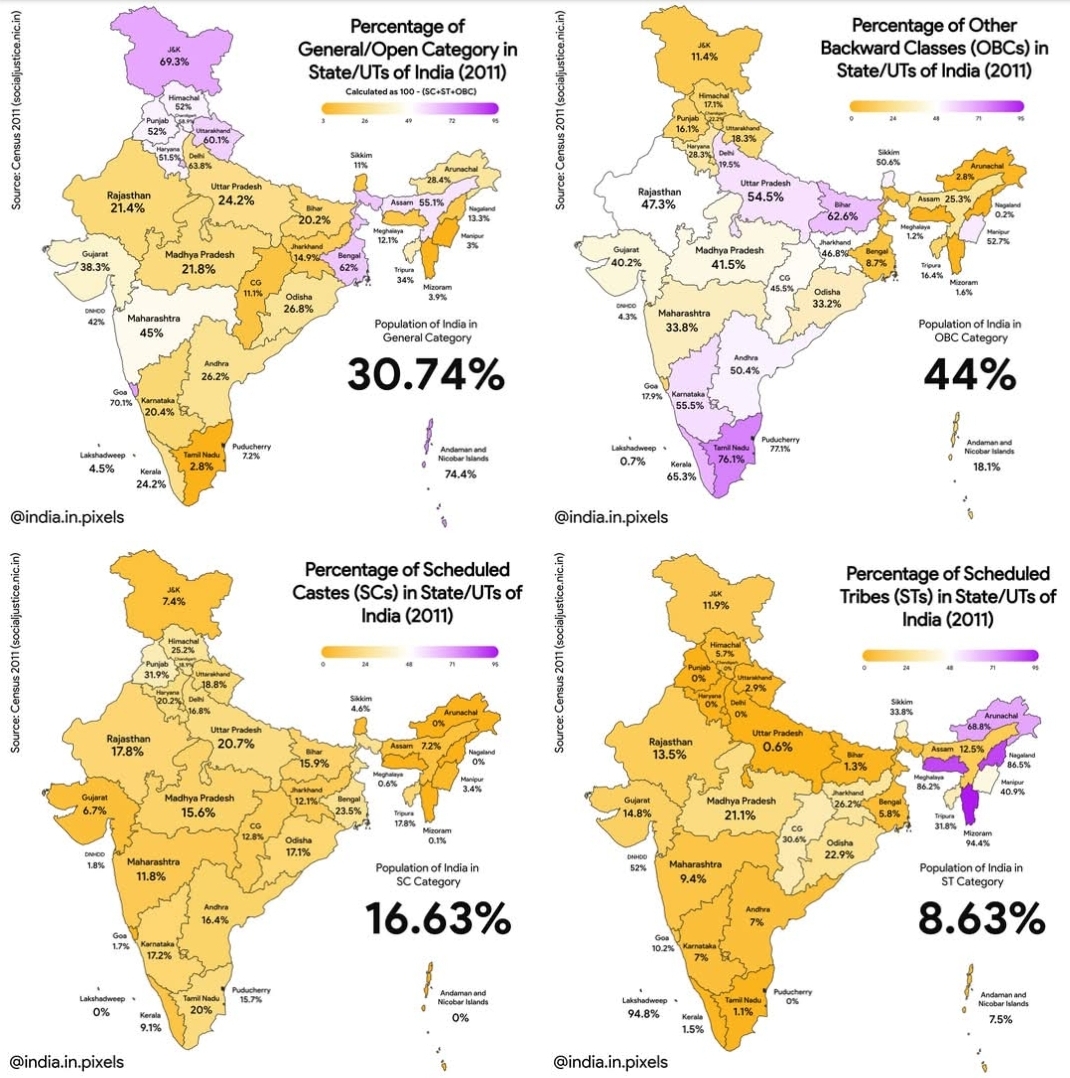
But collecting the information is only the first step.
Its value will ultimately depend upon how comprehensively it is collected, how transparently it is published and whether policymakers are prepared to confront what the numbers reveal about inequality.
Without reliable data, discrimination can disappear statistically while remaining brutally present socially.
Civil Society and the Watchdogs
CERD’s concerns also intersect with the shrinking space alleged by many civil-society organisations.
Human-rights groups have repeatedly questioned the use of legislation such as the Foreign Contribution Regulation Act (FCRA), the Unlawful Activities (Prevention) Act (UAPA), the Armed Forces (Special Powers) Act (AFSPA) and the Prevention of Money Laundering Act (PMLA), arguing that their operation can impede organisations and activists working on questions of rights and marginalised communities.
Governments undoubtedly have the authority to regulate foreign funding, maintain national security and prosecute genuine violations of law. But regulation becomes a democratic problem when its effect is to make independent scrutiny increasingly difficult.
A functioning democracy needs institutions capable of questioning the state—journalists, lawyers, academics, voluntary organisations and human-rights defenders among them.
Questions have also arisen internationally about the independence and composition of India’s National Human Rights Commission, including concerns over diversity and the role of police personnel in investigative functions.
CERD cannot substitute for the NHRC. One is an international treaty-monitoring mechanism; the other is a domestic national human-rights institution.
But precisely when the independence or effectiveness of domestic watchdogs is questioned, scrutiny by international treaty bodies acquires added significance.
India’s Push- Back and its Limitations
The Indian delegation has firmly rejected CERD’s interpretation of caste. It reiterated that caste should not be equated with race and maintained that the Convention was not intended to cover caste-related questions. India has pointed to its constitutional architecture, the fundamental right to equality, reservations and numerous welfare programmes for Scheduled Castes and Scheduled Tribes as evidence of its commitment to combating discrimination.
The exchanges also exposed a deeper conceptual disagreement over Adivasi identity. India’s position regarding the applicability of international notions of “indigenous peoples” to its tribal populations prompted questions from Committee members, particularly given the distinct constitutional recognition accorded to Scheduled Tribes within India itself.
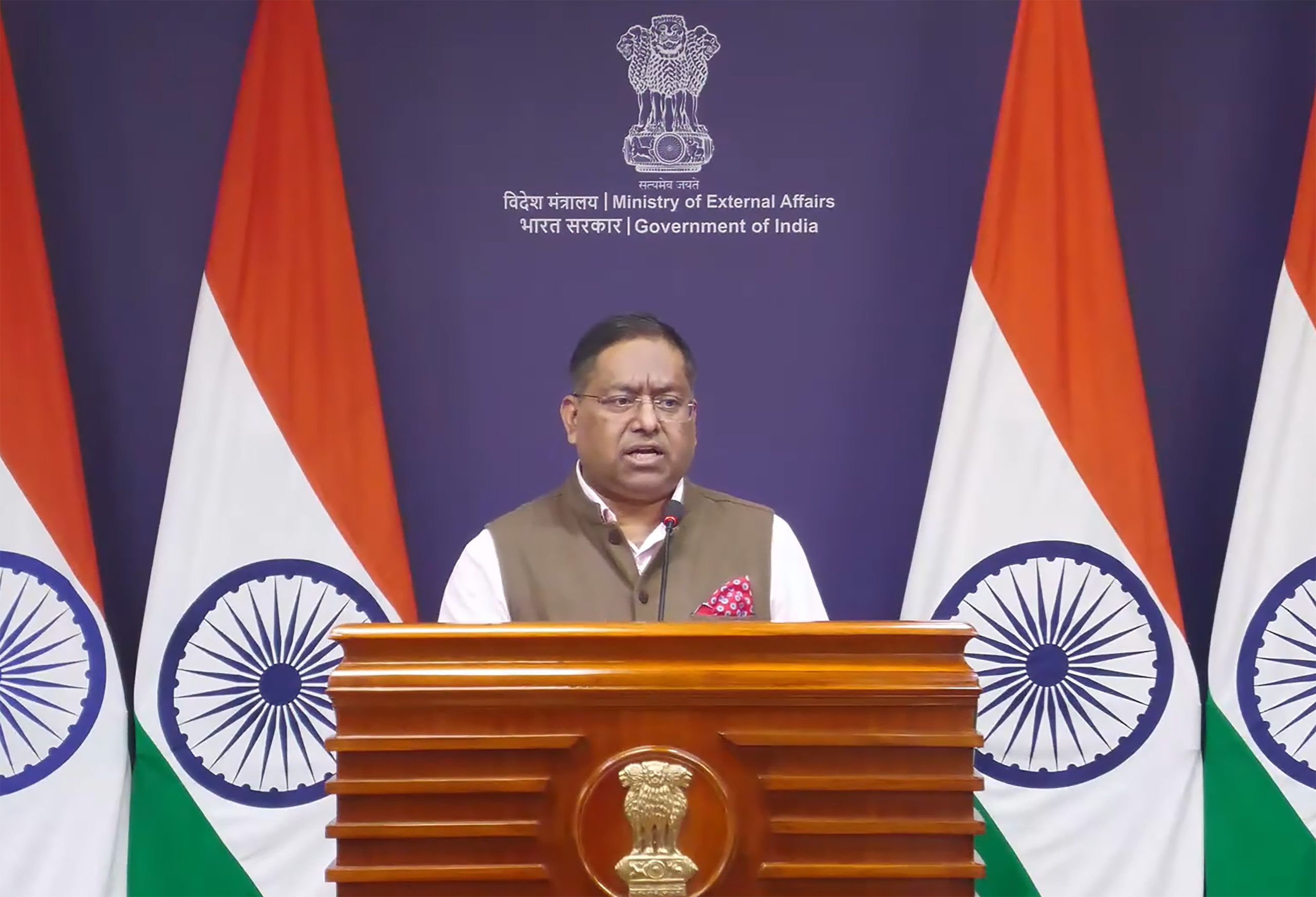
The Government of India has strongly contested the wider thrust of CERD’s observations, describing elements of the criticism as politically motivated and prejudiced and insisting that international assessments must be objective, evidence-based and faithful to the Convention’s original purpose.
India is entitled to contest evidence and interpretation. International human-rights bodies are not infallible. But the argument over terminology cannot dispose of the underlying problem.
The real question raised by CERD is not whether India chooses to call caste “race”. It is whether discrimination determined by birth and inherited social status can be excluded from international norms prohibiting descent-based discrimination. That question cannot be resolved simply by changing the vocabulary.
This is ultimately where the importance of the CERD 2026 report lies. It should neither be treated as an infallible verdict on India nor dismissed as an exercise in external interference. It is better understood as a mirror held up to promises India has itself made.
The Constitution promises equality and dignity. It abolishes untouchability. It provides affirmative protection for historically disadvantaged communities. In that sense, many of the questions raised by CERD are not principles being imposed upon India from outside. They are questions about the distance between India’s constitutional commitments and social reality.
The way forward therefore requires more than rebutting a UN committee. It requires strengthening the independence and credibility of the National Human Rights Commission; ensuring effective investigation of caste and communal violence; eliminating manual scavenging not merely in legislation but on the ground; protecting Adivasi land and livelihood rights; producing timely and transparent social data; safeguarding citizenship and electoral processes from arbitrary exclusion; combating hate speech while protecting legitimate dissent; and preserving the democratic space in which civil society can function.
International scrutiny cannot achieve these objectives on India’s behalf. Nor should it. The decisive work must be done within India—by constitutional institutions, governments, courts, civil-society organisations, journalists, activists and citizens.
But that does not make international scrutiny irrelevant. A democracy confident in its constitutional commitments should be capable of examining uncomfortable criticism without either accepting it unquestioningly or rejecting it reflexively. Above all, India must recognise caste discrimination as a living structure of inequality rather than merely an historical wrong supposedly overcome by constitutional proclamation.
That is what gives the CERD 2026 report its larger significance. The argument it places before India extends beyond a dispute between New Delhi and a United Nations committee. It asks whether one of the world’s most deeply entrenched systems of inherited hierarchy can be insulated from universal principles of equality and dignity by describing it as an exclusively domestic social category.
India can dispute CERD’s jurisdictional reasoning. It can challenge individual findings. It can demand greater evidentiary rigour. But the argument over whether caste is “race” cannot be allowed to obscure the more fundamental question that the 2026 report has brought forcefully back to the foreground:
Why, nearly eight decades after the Constitution promised equality, does birth still determine dignity, opportunity and vulnerability for millions of Indians?









A powerful and deeply necessary article by Vikas Parashram Meshram. The real question is not whether caste fits a particular international definition, but why birth still determines dignity, opportunity and vulnerability for millions of Indians. Constitutional promises mean little unless they are reflected in everyday reality. India must have the courage to confront this truth—not deny, deflect or dismiss it. :::