


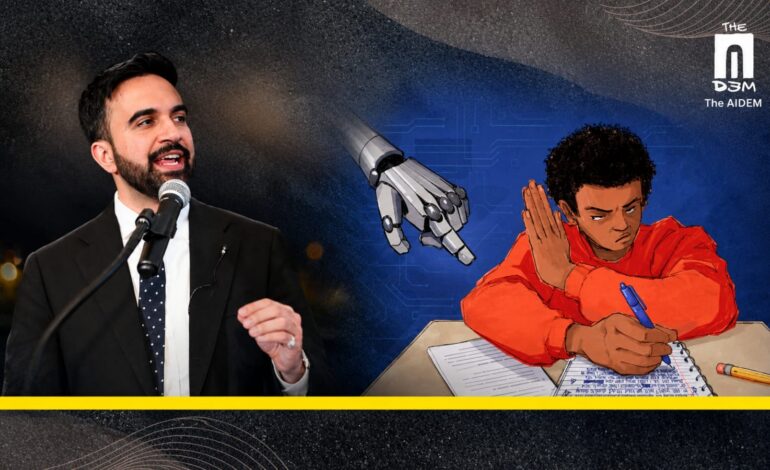
PART TWO: New York Mayor Zohran Mamdani’s restrictions on generative AI in schools are widely perceived as an attempt to reclaim intellectual struggle, human interaction and independent thought as essential parts of education. Anena’s 2-part series explores the various dimensions of the one-year moratorium on student-facing generative AI for children from 2-K through Grade 8. This is part two of the series, and it focuses on how countries like India, China and Australia tackle and tame AI. It examines the situation through three educational approaches—and asks a question that may define the next generation of schooling: when does AI become a tool for extending a child’s intellect, and when does it begin to replace the very process of developing one?

Vision AI: Three Countries, One AI
As generative AI gains a growing foothold in classrooms around the world, New York City is choosing to proceed with caution rather than embrace the technology wholesale. Meanwhile, when we look at other Countries like China, India and Australia, they are all preparing their education systems for an AI-shaped future; what separates them is how early they want AI to enter children’s lives, what they want it to do with it and how much control they are willing to provide to AI platforms.
China represents the acceleration model. Its education policy increasingly treats AI literacy as a foundational capability, with primary-school pupils being introduced to age-appropriate concepts and applications. The country identifies Artificial intelligence in education as a national priority, aiming to integrate AI across all levels of education by 2030. The most surprising factor is that cities like Beijing require students to complete a set number of hours of AI coursework per academic year. Despite promoting wider AI adoption, policies impose clear limits on AI use among young children, i.e., elementary school students, prohibiting them from using generative AI independently without the direct supervision of teachers or parents. China’s objective extends beyond teaching children how to use AI: it is about preparing an entire generation for an economy in which AI is expected to become pervasive.
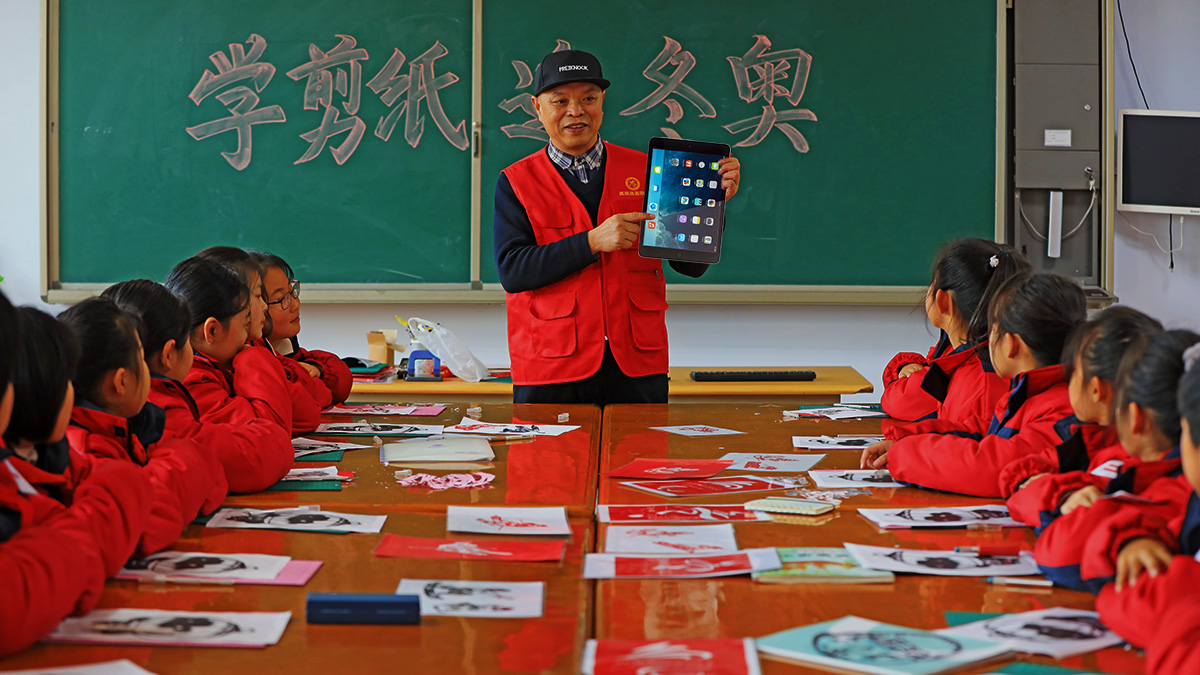
India is pursuing a somewhat different ambition. Its emphasis is on making AI and computational thinking part of mainstream education rather than allowing these skills to remain the preserve of elite schools or specialised programmes. India’s approach to artificial intelligence in education is markedly different from New York City’s recent decision to restrict student-facing generative AI. Rather than imposing a broad pause on classroom AI, India has largely opted for early integration, AI literacy, and skills development, while increasingly emphasising ethical and responsible use. The foundation for this approach lies in the National Education Policy (NEP) 2020, which identifies Artificial Intelligence, machine learning, big data analysis, and other emerging technologies as important areas for India’s educational and economic future.
Rather than treating AI as merely another addition to the school curriculum, the policy seeks to develop computational thinking, problem-solving abilities and technological competence from an early age. This approach is reflected in the introduction of a dedicated Computational Thinking and Artificial Intelligence curriculum for Classes III to VIII from the 2026–27 academic year. The curriculum places logical reasoning, pattern recognition, algorithmic thinking and data literacy at the core of AI education, while also introducing students to the ethical and responsible use of AI. The broader objective is therefore not simply to prepare a future workforce for the technology sector, but to equip students with the critical skills needed to understand, question and engage responsibly with AI. (PIB)
This emphasis on early AI exposure reflects India’s broader vision of how education must respond to the changing world of work. Rather than viewing AI solely as a disruption to traditional learning, policymakers increasingly see it as an economic and employment opportunity. The National Education Policy 2020 links emerging technologies to future employability and stresses the need to build expertise in areas such as artificial intelligence, machine learning, and big data analysis. Schools are consequently being positioned to give students an early understanding of these technologies, preparing them for further education and an increasingly AI-driven workforce.
Australia has chosen neither to shut the classroom door on AI nor to throw it wide open. Instead, it is trying to find a middle ground where technology can be useful without taking away from the human side of learning. Its framework for generative AI in schools places emphasis on student wellbeing, privacy, fairness and transparency, while keeping teachers at the centre of decisions about how AI is used. The underlying idea is simple: children should learn to work with AI without allowing it to do the thinking for them. Australia’s approach recognises that AI will inevitably be part of the world students grow up and work in, but argues that preparing them for that future should not come at the cost of curiosity, judgement, creativity and human connection. ( Australian Govt Dept of Industry, Science and Resources)
And beneath all these approaches lies the same unresolved question: when does an educational technology stop being a tool that extends a child’s intellect and start becoming a substitute for developing it?
Age Matters
One of the more significant aspects of the policy is precisely this age-based differentiation. A two-year-old, a 10-year-old and a 17-year-old do not have the same cognitive development, educational needs or capacity to assess the information produced by an AI system. Treating their relationship with technology as identical makes little educational sense.
The Mamdani administration is extending this reasoning beyond generative AI to screen use more generally. The city recommends limits on one-to-one device use of around 30 minutes per day for Grades 3–5 and 45 minutes per day for Grades 6–8, while individual device use is to be avoided for the youngest children. (The Guardian)
The underlying concern is digital saturation. Education requires information, but it also requires attention. Children need conversations, disagreements, friendships, teachers, books, play, boredom and the experience of trying something that does not immediately yield an answer. A screen can facilitate some of those experiences. It cannot substitute for all of them.
But Can Schools Keep AI Outside?
There is, however, another side to the argument. The children whom New York seeks to protect from premature dependence on AI are growing up in a world that will increasingly be shaped by AI. Universities, workplaces, journalism, medicine, science, administration and creative industries are already experimenting with generative AI.
Preventing students from learning how to use these systems could therefore create another form of disadvantage. There is also the question of inequality. Children from affluent families may gain sophisticated exposure to AI tools at home, through private tutoring and extracurricular programmes, while those who depend primarily on public schools face greater restrictions.
The challenge, therefore, cannot simply be to keep AI out of classrooms. It must be to determine what children should know before AI enters the classroom.
New York’s decision to combine restrictions for younger students with AI literacy for older ones implicitly recognises this dilemma. The real challenge for education is not choosing whether to accept or reject AI, as neither returning to a tech-free past nor avoiding an automated future is possible.
It is about ensuring that children develop the intellectual independence necessary to use powerful technological tools without surrendering their judgement to them.
The Experiment Behind the Moratorium
That is why the one-year duration of the moratorium matters. Rather than presenting the restrictions as a permanent verdict on artificial intelligence, the city is effectively creating a large educational experiment: restrict student-facing generative AI for younger children, test selected applications for older students, teach AI literacy, and assess what happens.
The success of the policy should ultimately be judged not by how little AI students use, but by whether the restrictions and pilots improve learning outcomes, critical thinking and classroom engagement.
Evidence must determine what comes next. That principle may prove more consequential than the moratorium itself. For years, the dominant question surrounding technology and education was: How quickly can schools adopt the newest tools?
New York is asking a more difficult one: Should every technology that can enter a classroom necessarily be allowed to reshape it?
The distinction becomes especially important with generative AI because a machine’s ability to generate an answer is not the same as a child’s ability to reason their way towards one.
Schools will undoubtedly have to teach students how to live and work alongside increasingly intelligent machines. But their first responsibility remains older and more fundamental: Teaching children how to think.
If New York’s experiment succeeds, its most important achievement may not be keeping AI away from children for another year.
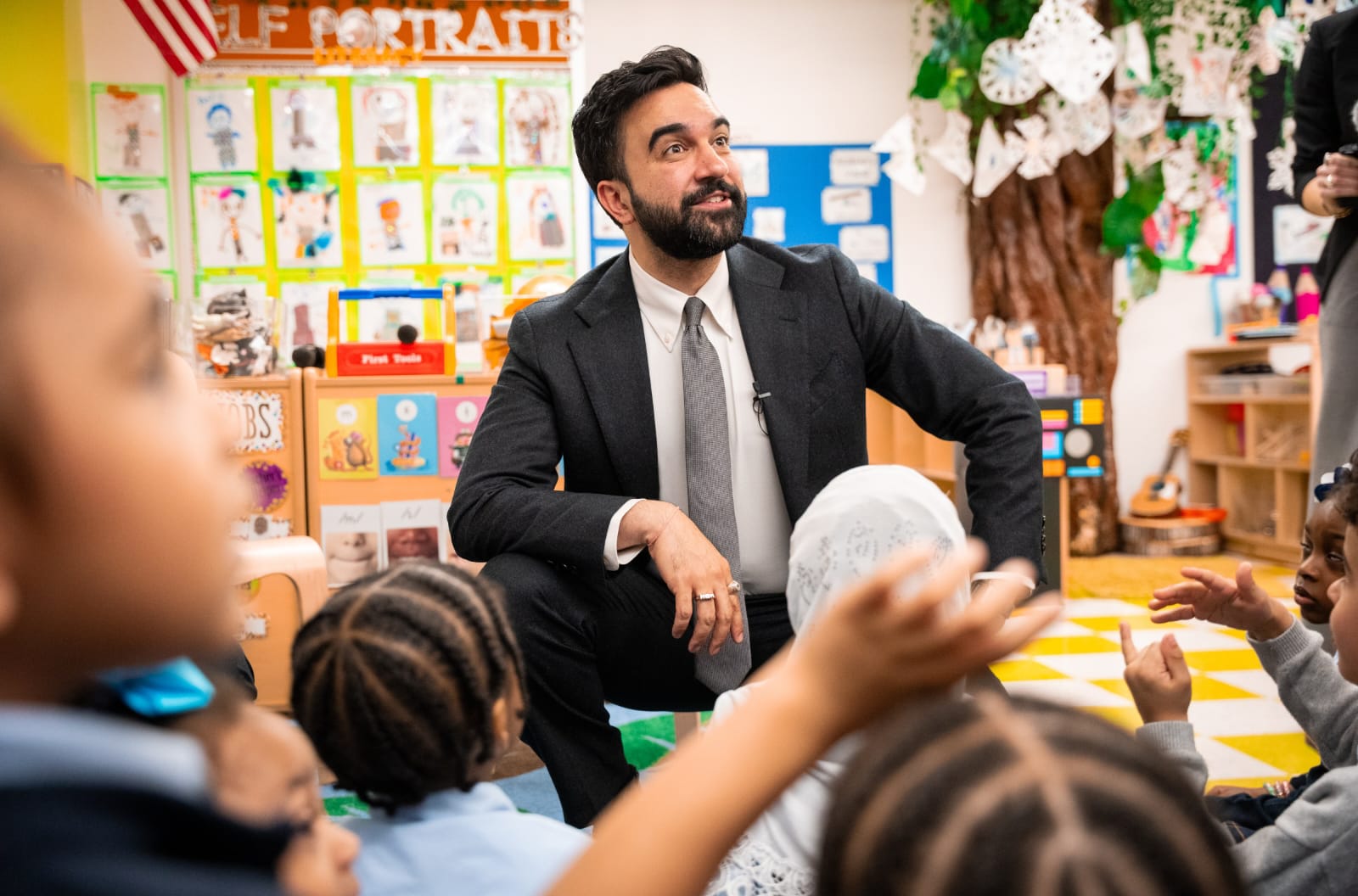
It might be reminding us that education is not simply the production of correct answers. It is the long, arduous and profoundly human process of learning how to arrive at them.
Read Part 1 of the series .here










A thought-provoking continuation by Anena S. The debate over AI in education is not about rejecting technology, but about protecting the human ability to think, question and learn independently. As AI rapidly reshapes classrooms worldwide, the real challenge is to ensure that innovation strengthens human intelligence rather than making intellectual effort optional.
Make the comment more concise
Add a sharper political edge
Make the ending more memorable