

Cockroaches, Gadflies, and Xenophon: Lessons for the India Opposition

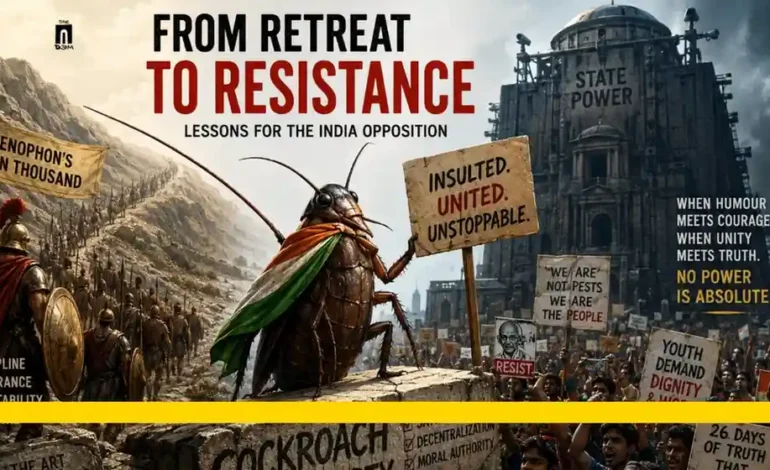
As traditional party structures fracture under institutional pressure, the recent, explosive triumph of the youth-led “Cockroach” movement offers a vital playbook. By synthesising Xenophon’s tactical endurance, Socratic enquiry, and this new subaltern agility, the Indian opposition can turn systemic marginalisation into moral and strategic survival.
The contemporary crisis of the Indian opposition is frequently framed through the narrow vocabulary of electoral mathematics, structural defections, and asymmetric state power. Weakened by internal ideological fissures, financial attrition, and the relentless machinery of investigative apparatuses, opposition coalitions often appear trapped in an existential, reactive retreat. Every electoral setback is treated as a fatal blow; every defection, an unravelling. Yet political history repeatedly demonstrates that forced retreats need not culminate in total annihilation. When governed by tactical discipline, adaptive decentralisation, and moral self-mastery—what the ancients termed sophrosyne—a strategic retreat can become the essential prelude to systemic reclamation.

To navigate its present quagmire, the opposition must look beyond legacy party playbooks and absorb lessons from two contrasting yet surprisingly congruent sources: Xenophon’s classical march of the Ten Thousand and the recent, historic feat of the modern “Cockroach” movement (Cockroach Janta Party). Together, they offer both a philosophical anchor and an operational blueprint for enduring and overcoming an overwhelming political hegemon.
Art of Strategic Endurance
In 401 BCE, ten thousand Greek mercenaries found themselves stranded deep inside the hostile heartland of the Persian Empire following the death of their patron, Cyrus the Younger, at the Battle of Cunaxa. Surrounded by hostile cavalry, navigating unfamiliar and treacherous terrain, and betrayed by Persian generals who assassinated their top leadership under the guise of a truce, the army faced absolute existential doom.
Rather than succumbing to collective panic or seeking immediate, suicidal confrontation against an empire with endless resources, the young Athenian strategist Xenophon helped organise a disciplined, highly adaptive retreat. Xenophon was a devoted student and defender of Socrates, whose writings—most notably the Memorabilia and Apology—provide a practical, civic-minded portrayal of the philosopher’s life and moral teachings. Recorded in Xenophon’s germinal work, the Anabasis, the Ten Thousand survived not through brute strength but through tactical flexibility, continuous internal deliberation, and sheer endurance. They altered their marching formations to suit mountain passes, absorbed local tactical methods, decentralised operational command, and, crucially, refused to grant the Persian Empire the single, decisive pitched battle it desperately sought to deliver.
For the Indian opposition, the lesson of Xenophon’s Anabasis is stark and immediate. When confronting an asymmetric adversary backed by vast resources and the dominant state machinery, survival requires replacing short-term electoral impatience with long-term strategic endurance. Power cannot be reclaimed through panicked, ad hoc alliances cobbled together weeks before an election. It must be preserved through a disciplined, continuous march—building organisational stamina, maintaining internal democratic consensus despite ideological differences, and surviving in hostile terrain through structural resilience.
The “Cockroach” Feat
If Xenophon supplies the blueprint for defencive endurance, the sudden, explosive rise of the “Cockroach” movement offers a masterclass in subaltern agility and adaptive political offence.
The movement was sparked by an elite courtroom remark that pejoratively likened protesting unemployed youth to “cockroaches”—pests to be swept away by administrative force. Rather than retreating into injured pride or defencive outrage, the movement executed a masterstroke of rhetorical judo: it embraced the insult. By adopting the insect as a badge of honour, the movement converted a dehumanising trope into a symbol of indestructible survival, adaptability, and omnipresence.
Through a potent synthesis of sharp digital satire, decentralised grassroots organising, and unyielding street-level mobilisation—culminating in a historic 26-day hunger strike alongside civic activists that ultimately forced the resignation of a Union Cabinet minister—the movement demonstrated how a seemingly power-starved populace can compel major institutional concessions from an entrenched state.

The Cockroach movement’s historic feat rested on three distinct operational pillars. The first is reclaiming the narrative through Socratic satire. Much like Socrates acting as the persistent “gadfly” of Athens, the movement used weaponised humour, memes, and relentless public cross-examination (elenchus) to expose the absurdity, arrogance, and moral hollowness of dominant official narratives. The second has been indestructible decentralisation. Unburdened by top-heavy party bureaucracies or vulnerable central headquarters, the movement operated with organic, diffuse resilience. It proved impossible for the authorities to crush with a single heavy-handed stroke because its roots were non-hierarchical and deeply embedded in everyday material grievances. The third pillar has been the conversion of marginalisation into moral authority. By transforming state-imposed dismissal into collective dignity, the movement mobilised millions without access to corporate funding, legacy media houses, or state apparatuses.
The Socratic-Gandhian Imperative
Satire and tactical manoeuvring, however, remain hollow unless anchored in a deeper ethical framework. What gave both Xenophon’s mercenaries and the youth of the Cockroach movement their staying power was an underlying commitment to a shared truth. In the Indian context, this requires a synthesis of Socratic enquiry and Gandhian Satyagraha.
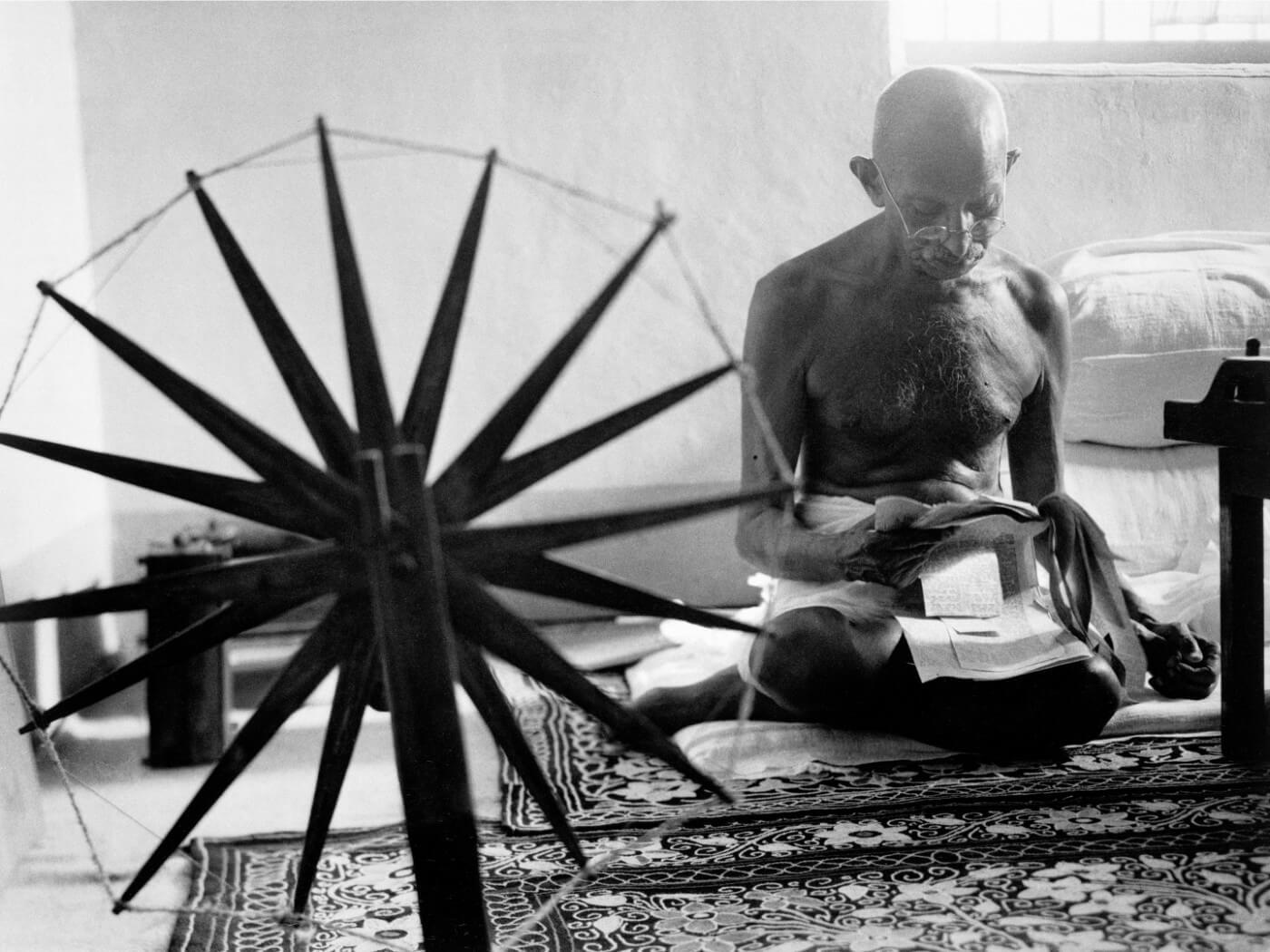
Socrates argued that true civic duty consists not in flattering the state but in relentless, disruptive questioning that forces the polity to confront its own contradictions. Gandhi brought this concept into mass politics by demonstrating that non-violent resistance derives its ultimate strength from constitutional and moral truth. When opposition politics reduces itself to mere managerial disputes over governance or mirrored rhetoric, it loses its defining purpose. To challenge an entrenched monolith, the opposition must embody a clear ethical contrast—holding a firm mirror to institutional overreach while remaining unflinchingly grounded in constitutional morality.
The main opposition forces in India continue to suffer because they remain structured as rigid, top-heavy empires trying to fight an asymmetric, modern political war using conventional twentieth-century tools. When struck by high-profile defections or targeted administrative pressure, they crumble because they lack both the strategic patience of Xenophon’s Ten Thousand and the organic, subaltern flexibility of the Cockroach movement.
To construct a durable counter-hegemonic alternative, the opposition must integrate three core imperatives into its long-term strategy. The first is embracing the Xenophonic long-game strategy. Political leadership must stop treating every state election as an all-or-nothing last stand. The opposition must focus on the quiet, unglamourous work of building resilient ground cadres capable of sustaining political pressure over years rather than months, surviving hostile institutional terrain through internal democracy and ideological clarity. The second is the adoption of “Cockroach” adaptability. Resistance in the modern digital era cannot rely exclusively on formal press conferences, scripted rallies, and legacy party apparatuses. It requires decentralised subaltern agility that reclaims the narrative through humour, sharp digital fluency, and unfiltered civic engagement that speaks directly to everyday material anxieties—such as youth unemployment, rising prices, and local institutional corruption. The third is anchoring itself in constitutional truth. Practical strategy without a moral core degenerates into cynicism. True political resistance derives its power from standing unequivocally upon constitutional ethics, defending democratic norms not merely when politically convenient but as a foundational article of faith.
The historic feat of the Cockroach movement proved that even the most dismissively labelled citizens can disrupt entrenched political dominance when they combine humour, structurally decentralised unity, and an absolute refusal to yield. If the Indian opposition learns to pair Xenophon’s disciplined tactical endurance with the relentless, adaptive survivalism of the cockroach, it will discover a timeless political truth: no political monolith is permanent, and no power is absolute.








A compelling piece that reminds us history is not just about remembering the past, but learning how to respond to the present. The references to Xenophon, the gadfly, and even the cockroach as metaphors make for a thought-provoking reflection on opposition politics. Insightful and engaging.