

Toying Around… and Paying the Price: When Adult Nostalgia Becomes Big Business

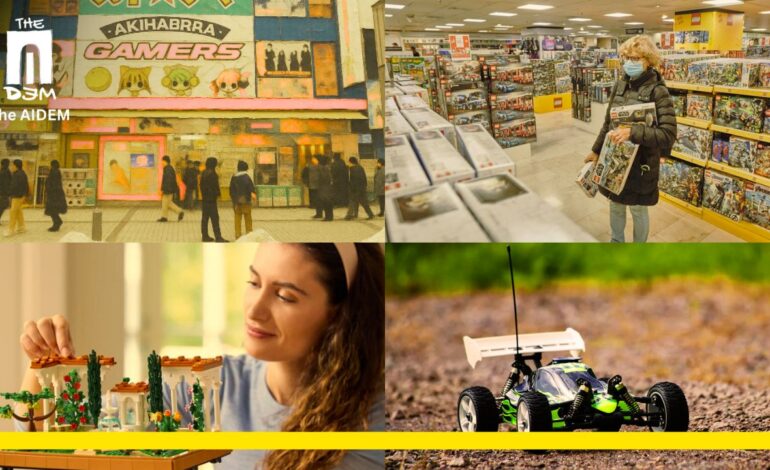
Imagine a world where eight-year-old children buy stocks, splurge on luxury watches and designer items, leaving adults to make do with whatever is left. The reverse is happening in the kingdom of toys. Adults are voluntarily hogging toys for personal and professional reasons, leaving youngsters to fend for themselves.
Statistics show that 55% of toy sales were driven by childless adult consumers in the first half of 2026 in America. This is particularly amusing, considering that toys were originally meant to entertain children. How times change! LEGO sets, Funko Pops, Pokémon cards and Barbie dolls are among the toys most sought after by adults. LEGO saw a 12% rise in consumer sales, driven primarily by adult consumers.

In interviews with adult toy enthusiasts, most attributed their interest to reviving childhood memories or adding to their ever-growing collections. However, there is also a category of buyers known as ‘scalpers’, who purchase toys in bulk to resell them at higher prices. Another category comprises adults who buy toys solely to produce ‘unboxing’ videos for the internet.
Mass consumerism and mindless spending have exacerbated the issue. Toys have increasingly become objects of hoarding rather than enjoyment. Toy companies, too, are catering to adult tastes, given the enormous consumer base they represent.
Toys ‘R’ Us, once a dwindling company, is now opening 120 new stores across America, sensing the rising demand for toys, primarily among adult consumers. LEGO introduced a new slogan, ‘Adults Welcome’, while McDonald’s launched its first-ever ‘Adult Happy Meal’.
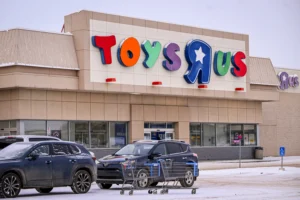
These developments show how companies are capitalising on products and experiences that were once meant to cater primarily to children, who may now find themselves unable to afford certain toys because adults are emptying the shelves.
Nostalgia, Escapism and the Adult Toy Market
Several factors induce adults to spend their income on toys and collectibles. Adults are buying LEGO sets and collectibles for their “positive mental health benefits as they spark nostalgia and bring escapism from global turmoil”, observed Melissa Symonds, Executive Director of UK Toys at Circana.
The COVID-19 pandemic also left adults with more disposable income, which some chose to spend on their toy collections. We are also living in a time when attitudes towards life and the ways in which we choose to spend our time have undergone considerable change.
Many adults are choosing not to have families and consequently have more time on their hands and fewer responsibilities. Incidentally, buying toys has begun to appeal to the now ‘reformed’ adult mind. The definition of fun and pleasure has changed with the times, and hoarding toys may well be how adults today seek both.
Moreover, adults who have been collecting toys since childhood are more inclined to continue that hobby well into adulthood. They are therefore willing to pay through the nose simply to add that one Barbie doll or Pokémon card to their vast collections.
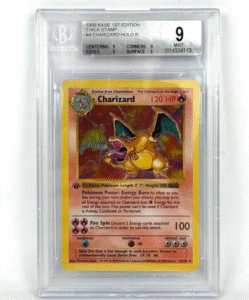
Pokémon cards are among the most widely collected items by adults, with the holographic Charizard card costing over $10,000.
Some of us might feel that this unwarranted hoarding of toys could crowd out spaces meant for children, especially when parents are unable to afford these toys within their already limited budgets. Childless adults do not have to worry about such considerations and are therefore left with more money and greater freedom to decide how they wish to spend it.
In this highly capitalistic world, relying on toy companies to create a level playing field through fair pricing is a futile exercise. Wealthy adults, meanwhile, are more than willing to swell these companies’ coffers.
Must Adult Nostalgia Come at the Price of Childhood?
Must adult nostalgia come at the price of childhood? This is the big question looming over this emerging ‘issue’. In my opinion, toys are an essential part of childhood, and the right kinds of toys can certainly hone children’s social and interpersonal skills.
Playing with physical toys is a much healthier pastime for children than spending excessive time with gadgets, which can leave them with a dearth of social skills and a need to consult an ophthalmologist. It is therefore crucial that children are exposed to physical toys that stimulate their minds and bodies, rather than merely to digital gadgets that can dull their mental faculties.
However, to bridge the affordability gap between the two categories of adults — those with children and those without — it is important to direct resources towards making toys amply accessible to children as well as adults.
Tokyo’s Akihabara shops offer a splendid example in this respect. They have separate sections for toys meant for adults, without encroaching upon spaces intended for children. Children, too, are kept away from these adult-only sections, lest they be led astray by their indecency.

However small this issue may seem, the kind of exposure children receive during childhood shapes the way they perceive the world around them. Toy companies should therefore try to adopt the Akihabara model and make toys more accessible to children.
Ultimately, the problem is not that adults continue to find pleasure in toys. It is that an increasingly commercialised market must not allow purchasing power, speculative buying and the pursuit of profit to diminish children’s opportunities for play.








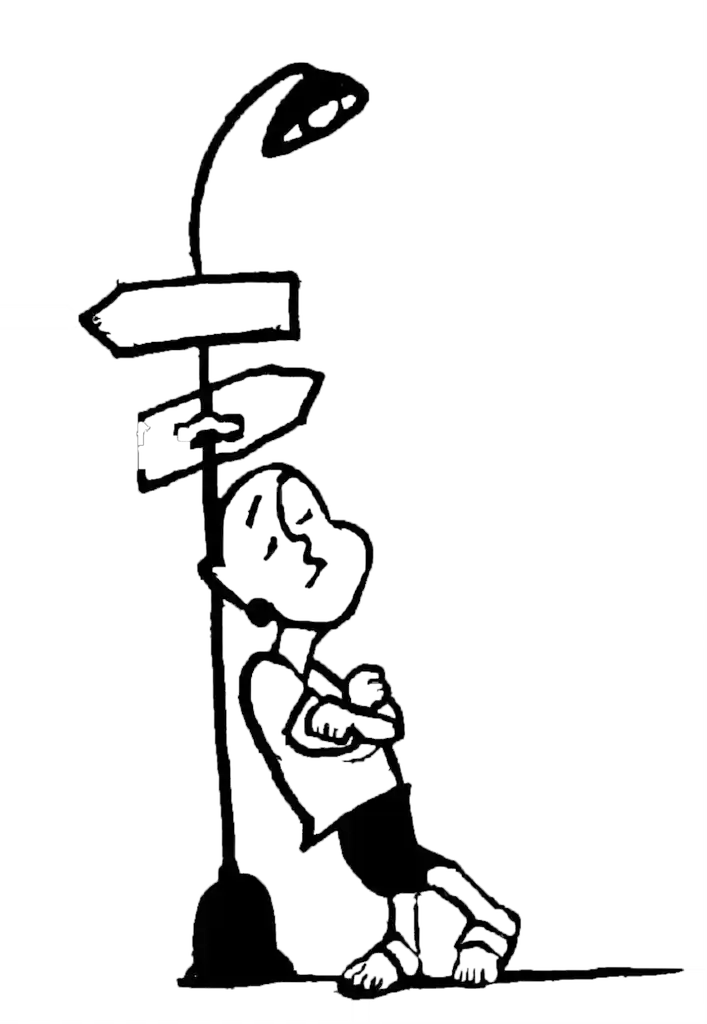
Adult nostalgia should never come at the cost of childhood. Toys are not merely collectibles or investment assets; they are essential tools for a child’s imagination, creativity and social development. When corporate greed, speculative buying and consumerism turn playthings into expensive commodities, children are the ones who lose out. Adults have every right to enjoy their hobbies, but the toy industry must ensure that profit and purchasing power do not steal the joy of childhood. A childhood is meant to be played, not priced out of the market.
Interesting article. 👏