

Gandhi, Patel and Nehru: Differences, Decisions and the Making of Independent India

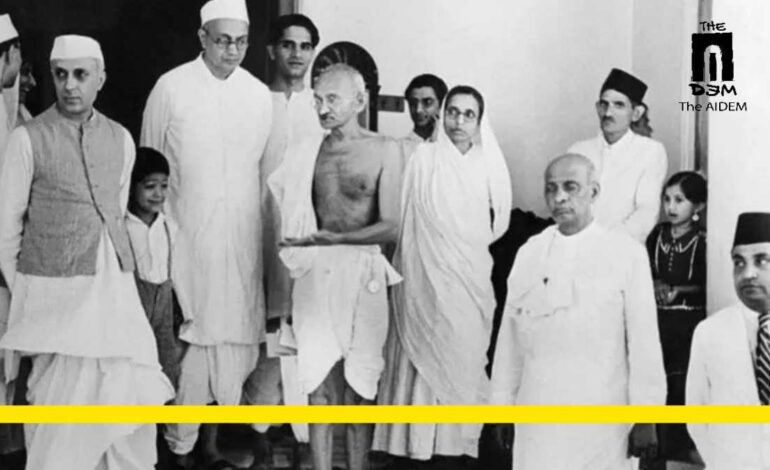
Part II – From Barrister to Sardar: Patel, Gandhi and the Making of a National Leader
In the second part of the five-part series titled “From Barrister to Sardar: Patel, Gandhi and the Making of a National Leader” writer and researcher Anu Jain marks the 150th birth anniversary of Sardar Vallabhbhai Patel, examining the complex political dynamics among three towering national leaders, – Gandhi, Nehru and Patel – through the Quit India Movement and their imprisonment to the negotiations that followed the Second World War.
As India moved towards independence, the political relationship between Mahatma Gandhi, Sardar Vallabhbhai Patel and Jawaharlal Nehru was marked by both shared commitments and significant differences in outlook and approach. Yet, despite their disagreements, their ability to work together remained crucial to the freedom struggle and the shaping of independent India.
By the early 1940s, the relationship between Gandhi, Vallabhbhai Patel and Jawaharlal Nehru had become central to the direction of the Indian national movement. They shared the objective of independence, but their approaches to achieving it and their visions of India’s future were not always the same. Gandhi remained committed to non-violent resistance and moral leadership; Patel brought organisational discipline, political negotiation and administrative experience; while Nehru viewed the struggle through a broader international and socialist perspective. Their differences sometimes gave rise to serious disagreements, but the movement continued to depend on their ability to work together.
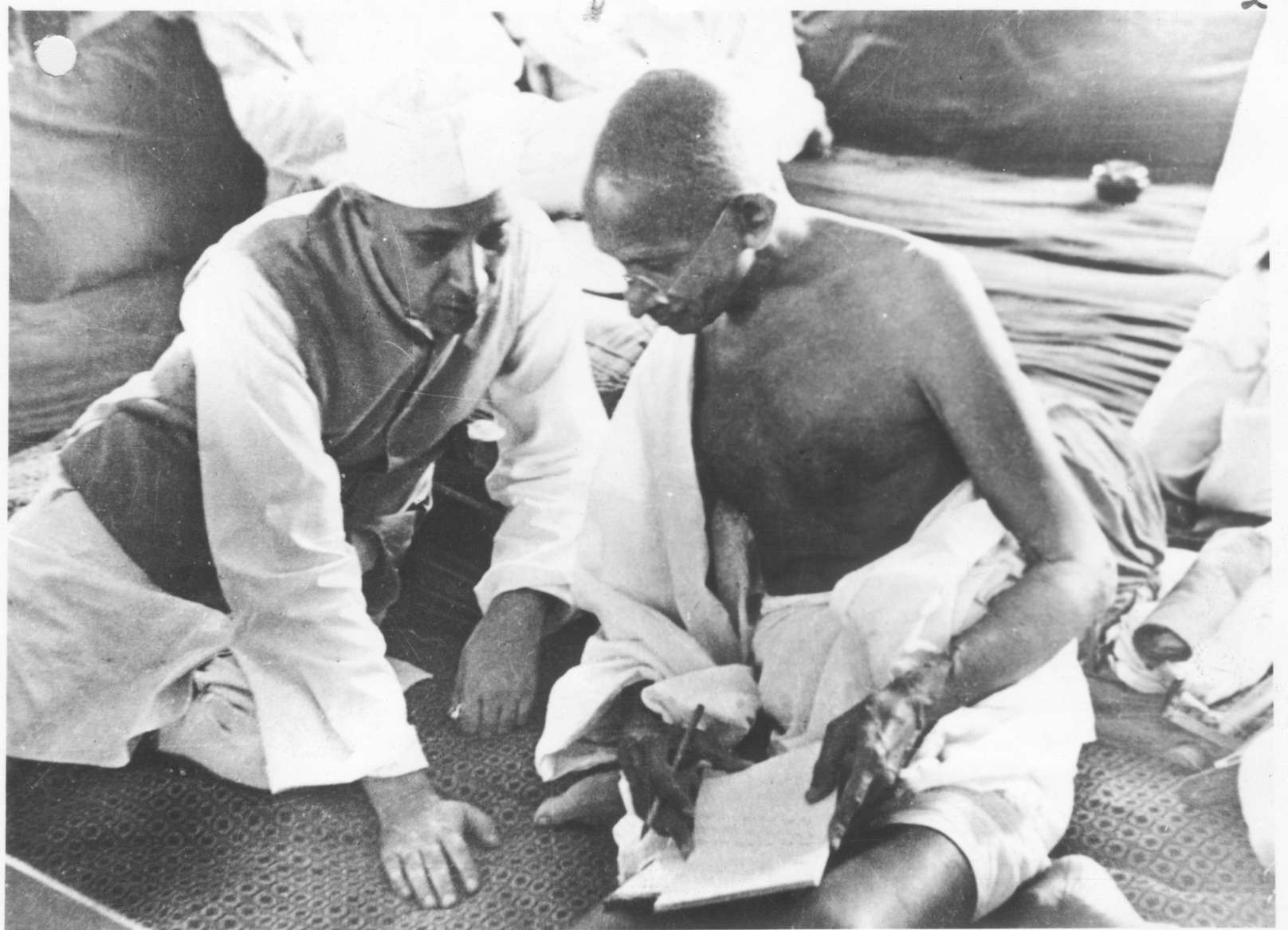
The final years of British rule would test this relationship in unprecedented ways. From the Quit India Movement and years of imprisonment to the Cabinet Mission, the question of Congress leadership and the transfer of power, each faced decisions that would shape the country’s future. At the centre of this unfolding story was not merely a contest between political personalities, but a complex relationship marked by trust, disagreement, accommodation and shared responsibility. How Gandhi, Patel and Nehru navigated these differences would help determine the course of India’s transition from colonial rule to independence.
Gandhi, Patel, Nehru and the Approach to Quit India
The decision to launch the Quit India Movement emerged from Gandhi’s growing conviction that British rule could no longer be allowed to continue, particularly in the circumstances created by the Second World War. The failure of the Cripps Mission in March–April 1942 had made it clear that the British government was unwilling to transfer real power to Indians, even as it expected India to support the Allied war effort. The rapid advance of Japanese forces in Southeast Asia had also brought the war closer to India’s borders. Gandhi believed that continued British rule had become a danger to India and that the country needed to assume responsibility for its own freedom and defence. He therefore pressed for an immediate end to British rule.
The proposal was considered by the Congress Working Committee at Wardha in July 1942, which endorsed Gandhi’s call for a mass struggle. The decision was subsequently placed before the All India Congress Committee in Bombay. It was, therefore, not simply an individual decision by Gandhi, but a political course that the Congress leadership debated and ultimately endorsed. The approach to Quit India also revealed another dimension of Patel’s political character. He was an experienced organiser who understood the risks of another confrontation with the British, having witnessed repression during Bardoli and endured repeated imprisonments. Yet he recognised that, after decades of negotiations, satyagrahas and limited constitutional reforms, the political moment had changed.
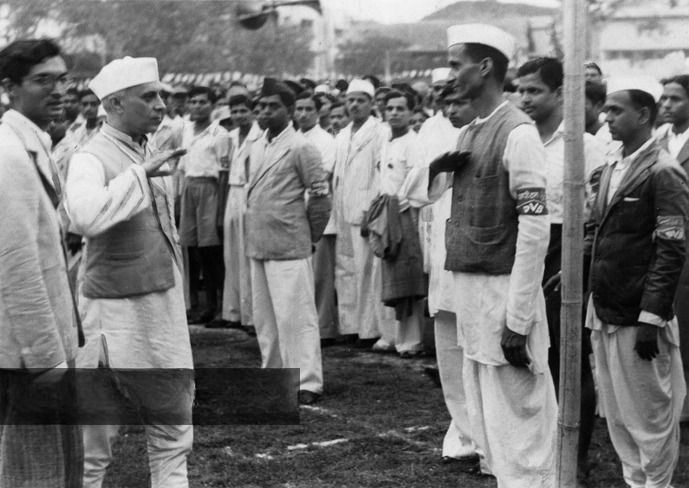
Nehru’s position brought another dimension to the debate. Deeply opposed to fascism and Nazism, he was concerned about the international consequences of the movement and the threat of Japanese expansion. Yet he did not believe that India should remain under British rule in order to resist that threat. In his press statement, “The British Must Leave India“, dated 10 June 1942, Nehru declared his full agreement with Gandhi’s demand for the immediate and orderly withdrawal of British rule. He also made it clear that Indians would resist a Japanese invasion.
In his address to the Allahabad Journalists’ Association on 31 July 1942, titled “The Demand to ‘Quit India’“, Nehru further explained that Congress did not wish to help the Axis powers or take advantage of Britain’s difficulties. Rather, he argued that a free India could mobilise the national will to resist Japanese aggression and contribute to the wider struggle for freedom.
Patel’s contribution is often overshadowed by Gandhi’s final appeal and the upheaval that followed. Yet his role in preparing Congress workers for a national confrontation was significant. Nehru’s role, too, was crucial: he moved the resolution and defended its international implications, while Patel seconded it and argued for the necessity of collective resistance.
Quit India: Gandhi’s Last Struggle
On 7 August 1942, Nehru moved the Quit India resolution at the All India Congress Committee meeting in Bombay, and Patel seconded it. In his speech supporting the resolution, Patel argued that India could not be expected to contribute fully to the war effort without the cooperation of its people. Nehru, in his own address that day, reiterated that the demand was not directed against the Allied powers and that a free India could help resist Japanese aggression. The resolution was adopted on 8 August, endorsing an immediate end to British rule and a mass struggle under Gandhi’s leadership.
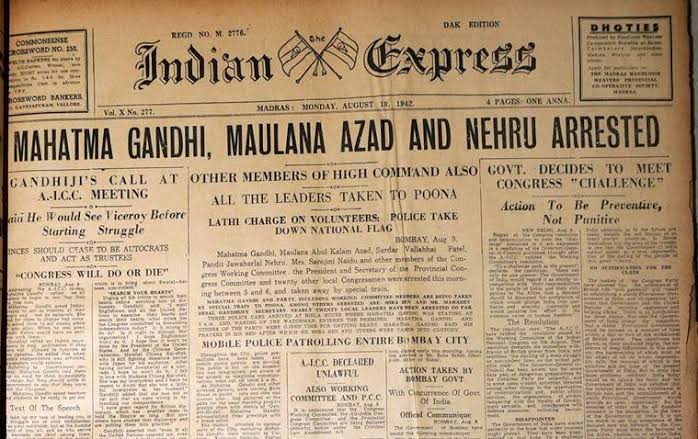
There was an irony in the name: the words “Quit India” do not appear in the resolution itself, although the expression had already entered political circulation. In the early hours of 09 August, the British arrested Gandhi, Nehru, Patel and other Congress leaders. Gandhi was detained at the Aga Khan Palace in Pune, while Patel and Nehru were taken to Ahmednagar Fort in present-day Ahilyanagar district, Maharashtra.
The Proposed Deportation of Congress Leaders
The British government’s plans for dealing with the Congress leadership went considerably beyond ordinary imprisonment. As Ramachandra Guha records in Chapter 29, “Towards ‘Quit India’“, Lord Linlithgow had considered keeping Gandhi at the Aga Khan Palace in Poona while sending Nehru, Patel and the other members of the Congress Working Committee to a British colony in Africa for the duration of the war. Uganda and Nyasaland were among the possible destinations.
The proposal was discussed in considerable detail. The British Army’s Commander-in-Chief in India even suggested that Nehru, Patel and their colleagues could be transported in flying boats, although he questioned the practicality of such a journey. The Governor of Nyasaland, on the other hand, was enthusiastic about the arrangement. He identified a hotel at Dedza, about 120 miles north of Zomba, which could be prepared to accommodate the deportees. It had electricity, hot water and what he considered a healthy climate.
The proposal, however, encountered strong resistance from the Governors of several major Indian provinces. The Governor of Bihar warned that deporting Nehru and Patel to Africa would be regarded as a grave injustice and would provoke resentment. The Governor of Bombay feared that it would shock moderate opinion and alienate support for the British government. Only the Governor of Punjab, where Congress had comparatively little influence, supported the scheme. Faced with this opposition, Linlithgow reluctantly abandoned the plan. The Working Committee members were instead sent to Ahmednagar Fort in the Deccan, where the moat and drawbridge would keep them, in Linlithgow’s words, effectively cut off from the outside world.
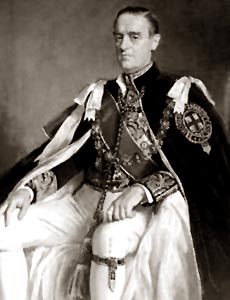
The episode is revealing. The British were not merely seeking to arrest Congress leaders; they were contemplating removing them from India altogether, away from the political environment in which their influence could be felt. Even after abandoning the deportation plan, the authorities chose a place of detention designed to ensure their isolation.
Once the leadership was imprisoned, the movement continued through strikes, demonstrations, underground networks and attacks on symbols of colonial authority. The British response was severe, and events soon developed beyond the direct control of the imprisoned leaders. This exposed a paradox at the heart of the Congress leadership: Gandhi had spent decades insisting on non-violence and discipline, Patel had helped build the organisation, and Nehru had articulated the international dimensions of the struggle. Yet, once they were removed, none of them could fully control the course the movement took.
The British had imprisoned the men at the centre of Congress, but they could not imprison the political consciousness that years of organising had helped create.
A Memory of the Man Patel Had Been
The imprisonment of 1942 also gave rise to moments of remembrance. On 15 August, while Gandhi and Mahadev Desai were walking in the garden of the Aga Khan Palace, Gandhi asked Mahadev what Vallabhbhai Patel had been like before they met in 1917.
Mahadev recalled a very different man: a successful barrister, a prosperous member of Ahmedabad’s professional elite, meticulously dressed and fond of bridge. His legal practise was sufficiently lucrative for him to earn, in a single week, enough to spend much of the rest of the month at the Gujarat Club.
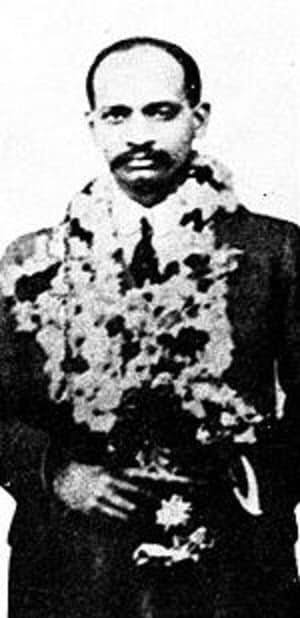
The contrast with the man imprisoned with Gandhi in 1942 was striking. The prosperous barrister in tailored suits had become an organiser of peasants, the leader of Kheda and Bardoli, and one of Gandhi’s closest political associates. The transformation had not happened overnight, nor had Gandhi simply “made” Patel. Patel already possessed considerable ability, discipline and independence of mind; Gandhi gave those qualities a new political direction.
Gandhi was released from detention on 6 May 1944 on medical grounds, following a period of serious illness and the deaths of Mahadev Desai and Kasturba Gandhi at the Aga Khan Palace. Jawaharlal Nehru and Vallabhbhai Patel, however, remained imprisoned until June 1945. Nehru was released on 15 June 1945, after 1,041 days in prison. Their release marked the return of the Congress leadership to active political life, but they returned to a country and a political situation that had changed considerably since August 1942.
From Prison to the Return of Politics
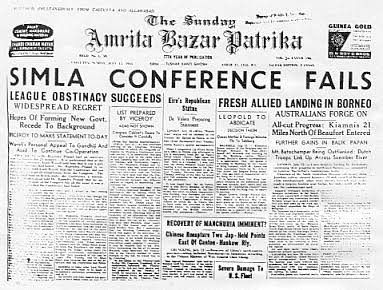
The first major political development after their release was the Simla Conference, convened by Viceroy Lord Wavell in June 1945 to discuss the reconstitution of the Viceroy’s Executive Council. Gandhi was consulted but did not attend as a Congress delegate. Congress was represented by its president, Maulana Abul Kalam Azad, while Nehru participated in the discussions. The conference ultimately broke down over Muhammad Ali Jinnah’s insistence that the Muslim League alone should nominate the Muslim members of the proposed Executive Council. Congress rejected this demand because accepting it would have undermined its claim to represent Indians across religious communities.
The failure of the Simla Conference did not bring political negotiations to an end; rather, it exposed the difficulties that lay ahead. Gandhi continued to exercise considerable influence over the direction of Congress, although he held no formal organisational position. Nehru increasingly emerged as the public face of the party’s demand for independence, while Patel’s strength lay in organisation, discipline and the management of the party’s internal machinery. Their political approaches were not identical, but the negotiations ahead would require all three to work within the same political framework.
The international situation also favoured a renewed political initiative. The Second World War ended with Japan’s surrender in August 1945, and the Labour government under Clement Attlee, which had come to power in Britain in July, announced elections to the central and provincial legislatures. These were held in December 1945 and January 1946. The British government also renewed its commitment to the formation of a constitution-making body. Congress now had to shift from mass struggle to electoral organisation, political negotiations and preparations for the transfer of power.
By 1946, India was unmistakably on the path to freedom. The end of British rule was no longer a distant aspiration but an approaching political reality. It was equally clear that Gandhi, Patel and Nehru would occupy pivotal positions in shaping the transition and determining the political direction of the new nation. Yet the path they would take was far from settled. Who would lead Congress at this decisive moment? How would Gandhi’s preference, Patel’s organisational strength and Nehru’s political vision come together in the making of independent India? And what would their choices mean for the country that was about to be born? These questions would come to define the final phase of their political partnership. The next part will examine how the choice of leadership unfolded, how the three men navigated the transfer of power, and how their decisions helped shape the foundations of independent India.
To read previous article from the series, click here.
Make sure to check back tomorrow for the third part of article in this series.








Gandhi, Nehru and Sardar Vallabhbhai Patel were three towering figures whose differences never diminished their collective contribution to India’s freedom and nation-building. Patel’s organisational strength, Nehru’s modern and democratic vision, and Gandhi’s moral leadership complemented one another at a defining moment in history. Today’s attempts to manufacture a rivalry between them and selectively appropriate Patel’s legacy for political gain do a disservice to history. Their contributions deserve to be remembered together, with honesty, balance and historical integrity.
Reading the series one by one very eagerly. Welcome respite from the chaos of other news articles