

Beyond the Portrait: Young Artists Reimagine India’s Trailblazing Women Through Art

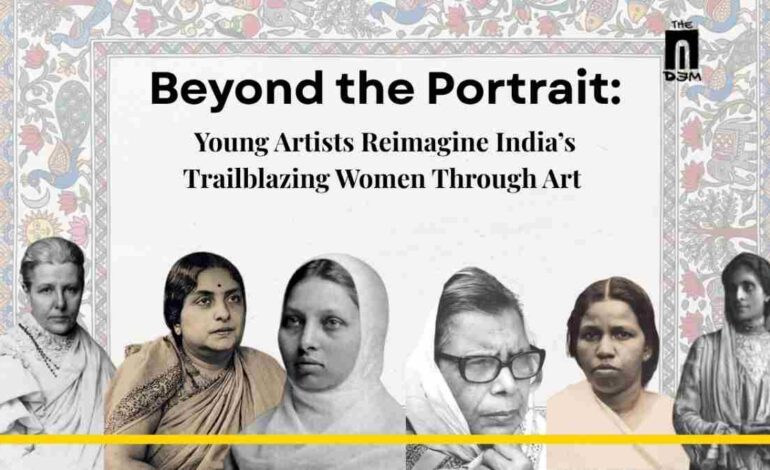
Six women who shaped debates around education, social reform, literature, law, culture and equality will be revisited through contemporary visual art in Trailblazing Women of India, an exhibition opening at the Malaviya Moolya Anusheelan Kendra, Banaras Hindu University (BHU), Varanasi on September 28.
Organised by Shuruart, the exhibition will run until October 9 and bring together works by young professional artists responding to the lives and legacies of Annie Besant, Kamaladevi Chattopadhyay, Pandita Ramabai Saraswati, Mahadevi Verma, Dakshayani Velayudhan and Cornelia Sorabji.
The exhibition draws inspiration from Trailblazing Women of India, a six-part YouTube series on The AIDEM’s channel by Dr Priyanka Jha, whose guidance also informed the selection of the six historical figures. New Historia is associated with the project as its Knowledge Partner, while The AIDEM is the exhibition’s official media partner.
Rather than commissioning straightforward biographical portraits, the project has encouraged participating artists to engage with the ideas, work and historical contexts of the women they represent. The process has involved several months of research, reading, layout development and feedback before the works reached their final stages.
The project began taking shape in June, with around 40 artists applying to participate. The final selection of works is still underway, but the artists whose submissions are being developed have spent the past three months researching their subjects through material provided from Dr Jha’s video series, independent study and additional readings.
Senior artist Mridula Sinha, former Head of the Department, Faculty of Visual Arts, BHU, has reviewed the artists’ layouts and offered feedback on both conceptual and visual development.
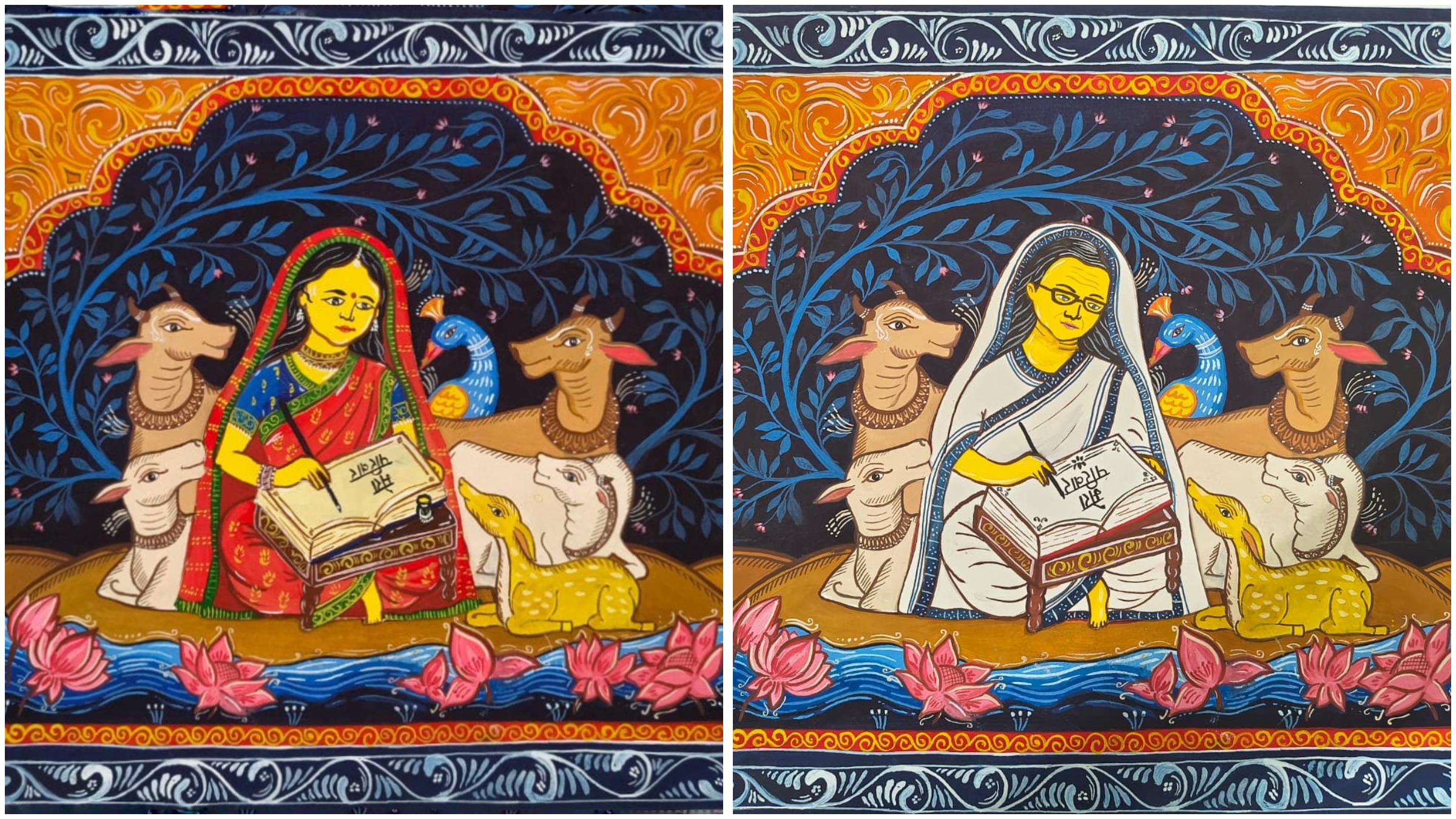
One of the works in progress, by Anish Kumar of Patna University, illustrates how research has reshaped the artistic process. His initial submission on Mahadevi Verma was centred largely on her portrait. Further reading, including Verma’s Mera Parivar, led him towards a more narrative composition: a figure suggestive of the writer at work, surrounded by animals that recall the affectionate world documented in the book.
Following feedback, the work was refined further to evoke Mahadevi Verma herself rather than an anonymous female figure. The shift, from portrait to narrative, reflects a larger concern underlying the exhibition.
“Research is important because it helps an artwork develop further,” says Sana Sabah, CEO of Shuruart. “A painting is also a storytelling device, and research refines that storytelling.”
Most of the works are acrylic on canvas. The artists—drawn from institutions including Banaras Hindu University, the University of Allahabad and Patna University—have developed individual visual approaches, in some cases drawing on elements associated with traditions such as Gond, Madhubani, Mithila and Tikuli art.
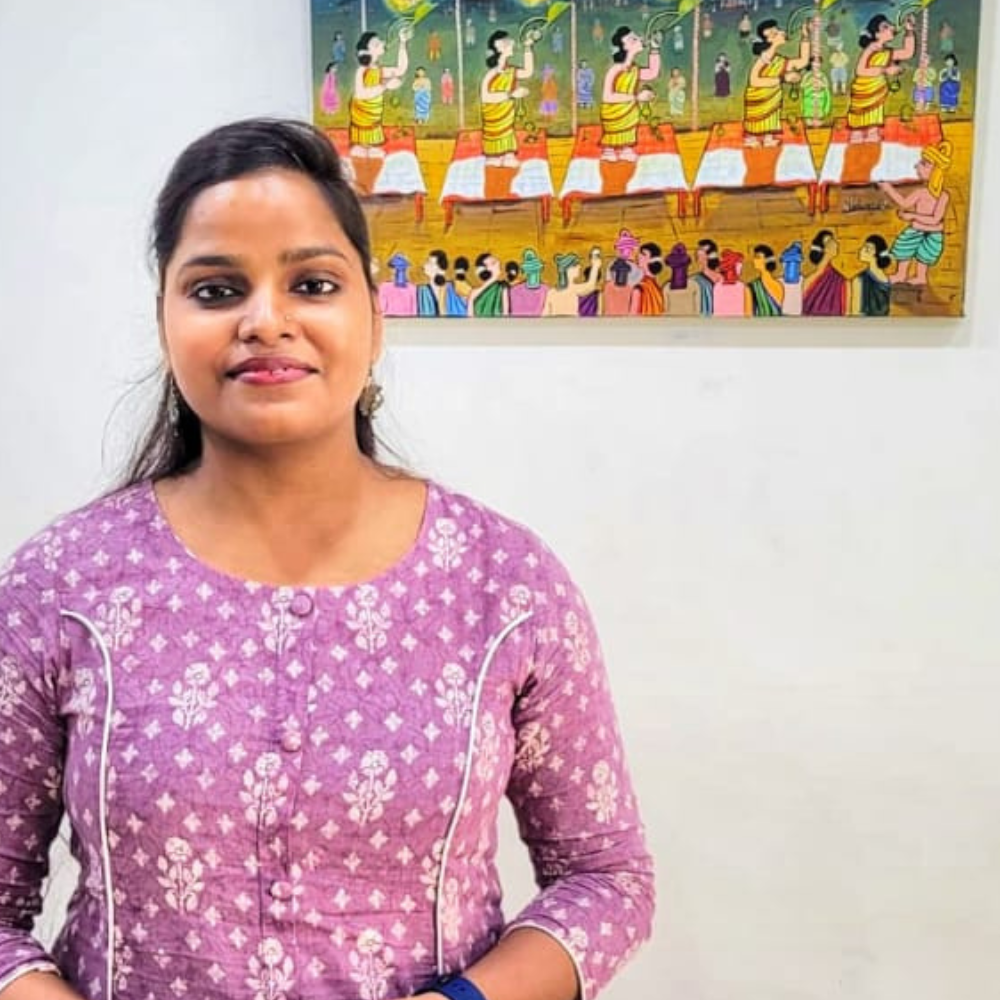
For Neelam Gupta, who is working on Kamaladevi Chattopadhyay, the subject has offered a point of connection with her own concerns as an artist.
“As an artist, I connected with Kamala Devi because she cared deeply about art, artisans and traditional crafts,” Gupta says. “She recognised the importance of the people behind these art forms and that is something I really relate to.”
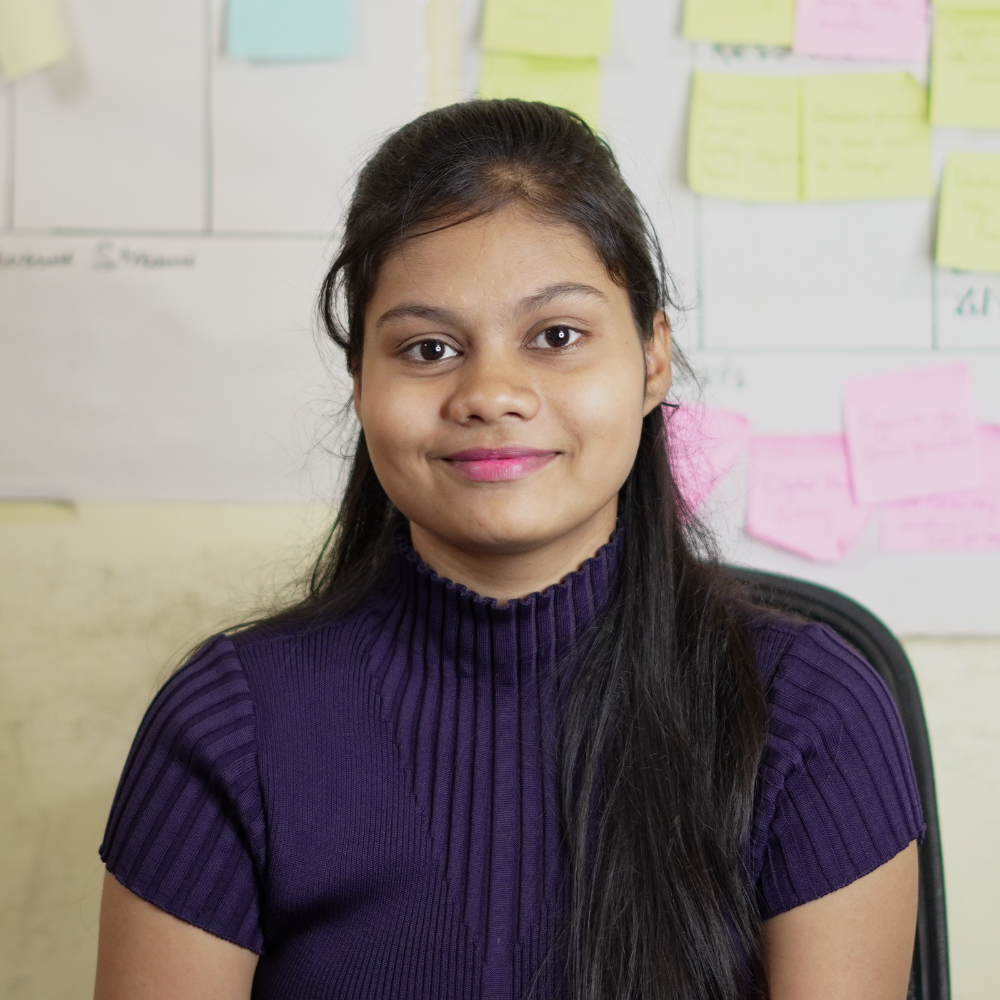
Priti Raj of the University of Allahabad, who has also responded to Chattopadhyay, was particularly drawn to her work in theatre and the arts.
“I found it interesting how she encouraged creative spaces at a time when these conversations were still evolving,” Raj says.
Annapurna Shivhare, also of the University of Allahabad, has turned to Cornelia Sorabji’s journey through law and education.
“I chose Cornelia Sorabji because she went abroad to study law at a time when very few Indian women had that opportunity,” Shivhare says. “What stayed with me was that she didn’t stop with her own education. She used what she learned to help other women access the law and fight for their rights.”
The exhibition is also shaped by a broader concern with how historical figures enter public memory. While the achievements of these six women are well documented in academic and specialist contexts, the project seeks to revisit their contributions through a medium that can reach audiences differently.
“The work these women did to bring India to where it is today is not appreciated or discussed enough among the masses,” Sabah says. “Art can be one of the strongest ways of bringing those stories to a wider public.”
For Shuruart, the exhibition is also consistent with its work with emerging artists, particularly those from smaller cities, where sustaining an independent artistic practise can remain a challenge. Founded in December 2014, the organisation works with artists through its digital platform and other initiatives aimed at helping them develop sustainable careers around their practise.
The Varanasi exhibition will include a public talk on the lives and work of the six women. It is envisaged as the first stop of a travelling exhibition, with further presentations planned in other cities. A showing at Bapu Tower in Patna is among the proposed future venues, with dates under discussion.
The Varanasi edition is being organised in collaboration with the Malaviya Moolya Anusheelan Kendra, with Dr Sutapa coordinating the institutional engagement.
At its centre, however, the exhibition returns to a simple proposition: that a painting can do more than reproduce a face. It can investigate a life, recover an idea and open a historical story to new audiences.
For the participating artists, Trailblazing Women of India has become as much an exercise in research and interpretation as in representation—asking them to look beyond the surface of a subject and find a visual language capable of carrying its complexity.





A powerful initiative that brings history, art and women’s legacy together. These trailblazing women were far more than faces in portraits—their ideas and struggles helped shape modern India. Reimagining their stories through the vision of young artists is a beautiful way to keep their courage, creativity and contributions alive for a new generation. Art truly has the power to make forgotten histories speak again.
A truly inspiring initiative that proves history is not meant to remain confined to books or forgotten portraits. By reimagining the lives of India’s trailblazing women through art, these young artists are giving their courage, ideas and struggles a powerful new voice. This is how a new generation keeps the legacy of extraordinary women alive—by turning memory into inspiration and history into a living conversation. :::
Very unfortunate that not a single Muslim woman or tribal woman was selected