

When Jantar Mantar Travels: Gen Z and the New Politics of Protest

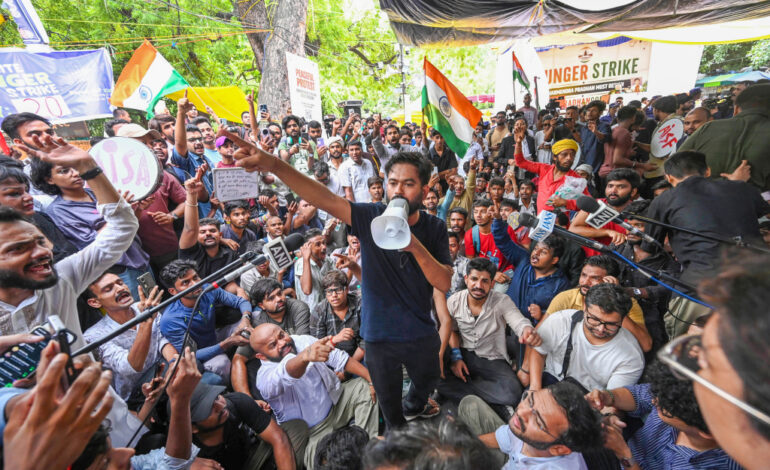
The most significant development in India’s extraordinary GenZ mobilisation may no longer be what happened at Jantar Mantar, but what has happened since. The crowds that turned a corner of central Delhi into the epicentre of youthful anger over examination irregularities, unemployment and the education system have dispersed. Dharmendra Pradhan, whose resignation became the movement’s most visible demand, has gone, and the Supreme Court has quashed FIRs registered against several students who participated in the protests. A proposed September 5 mobilisation in Delhi was consequently withdrawn.
Yet the agitation has not ended. From Mumbai and Patna to Jharkhand, Rajasthan and towns across Uttar Pradesh, different streams of the movement are attempting something considerably more difficult than organising a spectacular protest: sustaining political momentum after an initial victory. At the centre of this phase are AISA national president Neha Bora, Cockroach Janta Party founder Abhijeet Dipke and CJP leaders Saurav Das and Ashutosh Ranka, each representing a different mode of youth mobilisation.
Neha Bora Takes the Movement Nationwide
Perhaps the most systematic effort to carry the energy of Jantar Mantar beyond Delhi has come from Bora and the All India Students’ Association. AISA launched its “Gen Z Rising” campaign on August 7, broadening the agenda from examination irregularities to education, employment, recruitment systems and the wider concerns confronting young Indians.
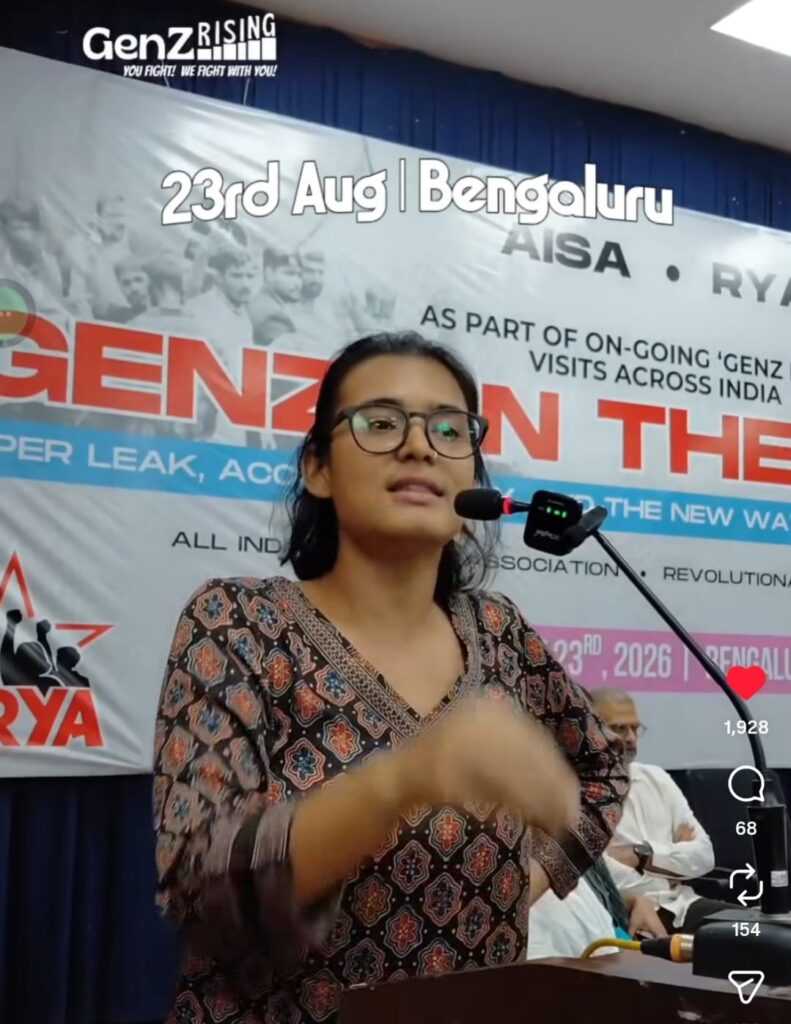
That shift is significant because movements organised around a single demand frequently lose momentum once that demand is met. Bora has sought instead to present the resignation of the Education Minister as evidence that collective mobilisation can produce results — and therefore as a reason to organise further rather than retreat.
Speaking in Mumbai in late August, she placed the Jantar Mantar agitation within a wider history of popular mobilisation, invoking experiences such as the farmers’ movement and the anti-CAA protests. More than 800 young people reportedly attended AISA’s “Dil Se Bol: Mumbai With Gen Z Rising” programme, indicating an attempt to create a political constituency extending beyond those directly affected by a particular examination controversy.
The campaign reached Patna on September 6, when AISA and the Revolutionary Youth Association organised a “Gen Z Rising” meeting bringing together participants from Jantar Mantar as well as youth movements in Bihar and Jharkhand. Bora called for mobilisation around education, employment, democracy and social justice.
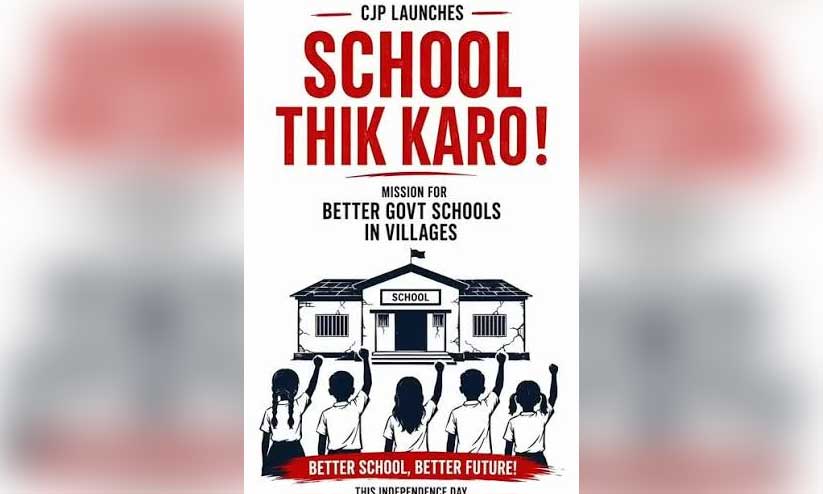
The accompanying “School Thik Karo, Shiksha Sudharo” campaign takes this expansion further by shifting attention towards the condition of education from the primary level upwards. Meetings planned across Uttar Pradesh — including Lucknow, Varanasi, Rae Bareli, Meerut, Allahabad, Gorakhpur, Azamgarh and Faizabad — suggest that Jantar Mantar is no longer merely a protest site. It is becoming an itinerary for a wider political conversation.
Dipke and the Politics of the Cockroach
Running parallel to this organised student mobilisation is the more unconventional experiment created by Abhijeet Dipke. The Cockroach Janta Party began by appropriating an insult and converting it into an identity. Memes became placards, social-media followers became protesters and a joke acquired the attributes of a movement.
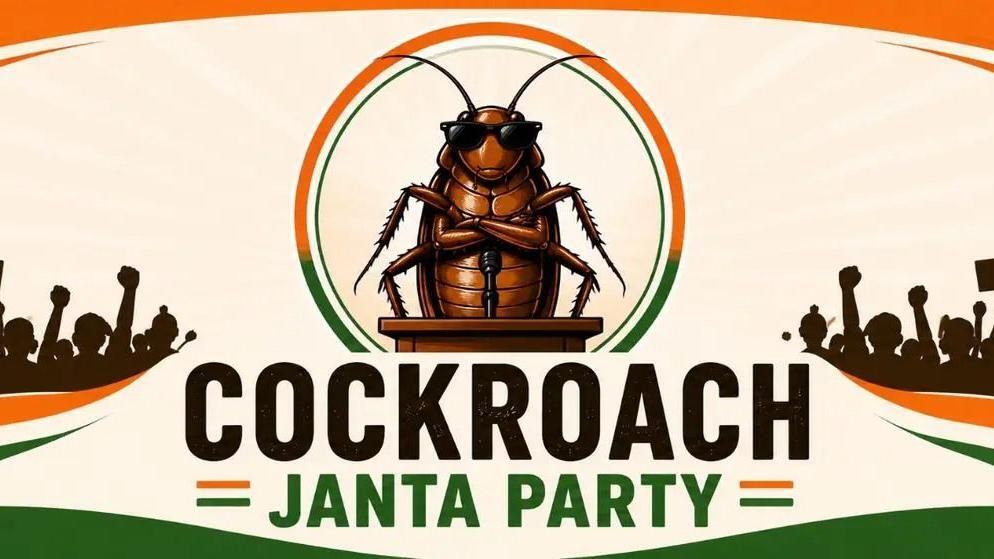
Dipke understood something distinctive about the political vocabulary of his generation: humour and anger need not be opposites. Mockery could challenge authority as effectively as solemn political rhetoric. The more important test, however, has come after the initial virality.
CJP moved from its Delhi mobilisation towards campaigns elsewhere, with Dipke declaring that the movement would travel across India before returning to the capital with greater strength if its demands remained unresolved. The expansion has brought confrontation as well. During a June protest in Jaipur over examination irregularities and unemployment, Dipke was assaulted while entering the protest venue, after which several people were arrested.
The organisation has also widened its concerns beyond examinations. Dipke’s intervention after the collapse of a paying-guest accommodation near Delhi’s Satya Niketan, where he argued that students were again paying the price for failures of regulation and infrastructure, indicated how CJP is trying to connect examination grievances with the everyday conditions in which young Indians study, rent rooms, seek work and construct uncertain futures.
Das and Ranka: From Street Pressure to Accountability
Saurav Das represents another dimension of this evolving politics: an effort to combine street pressure with negotiation, litigation and institutional intervention. CJP had threatened another major mobilisation on September 5 because commitments made after the earlier protests — including withdrawal of criminal cases and compensation for affected families — remained unresolved.
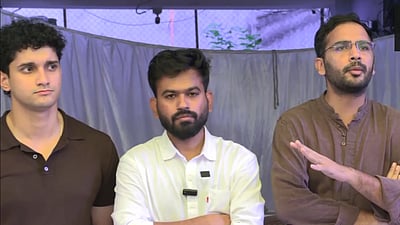
The Supreme Court subsequently quashed FIRs against protesting students, and Das appeared before the Court to announce the withdrawal of the September 5 march following steps taken by the government. The Court used its powers under Article 142 to close proceedings in most of the cases. This demonstrated how sustained agitation could produce outcomes without requiring every confrontation to culminate in another mass rally.
But calling off one demonstration did not mean abandoning street politics. Das and other CJP activists subsequently marched to Parliament Street police station demanding stronger action following the assault on the father of Jantar Mantar protester Nishu Azad. On September 6, Das also publicly challenged Prime Minister Narendra Modi’s use of the expression “dimaagi Naxal”, arguing that the pressing questions confronting young Indians were unemployment, inadequate educational infrastructure and shrinking opportunities.
Ashutosh Ranka has complemented this approach by keeping the agitation focused on measurable questions of accountability. As CJP spokesperson and co-convenor, he helped press demands extending beyond Dharmendra Pradhan’s resignation, including withdrawal of cases against peaceful protesters, compensation for affected families and protection of the democratic right to dissent. After the Supreme Court quashed the FIRs, Ranka described the intervention as historic.
His role has also taken the movement beyond Delhi. In Rajasthan, CJP took up the condition of the dilapidated Rampura government school, with renovation work subsequently beginning. Ranka presented the development as a concrete victory for students — an example of how a movement born around a national examination controversy could intervene in the everyday failures of public education.
At a Gen Z gathering in Bengaluru on September 6, Ranka widened that argument further, warning that India’s celebrated “demographic dividend” could become a “demographic disaster” unless failures in education and employment were addressed. Together, the interventions of Das and Ranka demonstrate a movement learning when to march, when to negotiate and litigate, and how to convert protest into specific demands for institutional accountability.
The Anger Beneath the Meme
The Gen Z agitation consequently no longer has a single centre or organisational form. Bora operates through an established Left student organisation with an ideological history and cadre structure. Dipke emerged through social media and created an organisation whose very name mocks conventional political language. Das and Ranka are testing how the disruptive energy of the street can be translated into legal, administrative and political outcomes.
Their approaches differ, but the anxieties they address overlap: examination leaks, recruitment failures, unemployment, expensive and inadequate education, police action, caste discrimination and the democratic right to dissent. Beneath them lies a larger question about what kind of future India can offer its young.
This is why reducing the agitation to NEET or any single examination controversy misses its wider significance. Competitive examinations represent far more than tests for millions of families. They embody expectations of mobility built upon years of coaching fees, preparation and deferred ambitions. Young people postpone employment, financial independence and other life decisions because they are told that merit and perseverance will eventually be rewarded
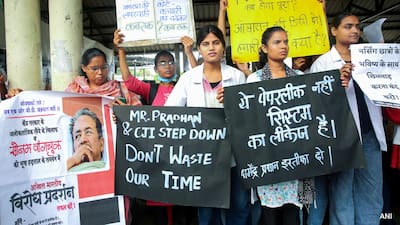
When examinations are compromised by leaks, delays or irregularities, therefore, the damage extends beyond a question paper. Confidence in the fairness of the system itself begins to erode. The protesters who gathered at Jantar Mantar were ultimately asking not merely whether an examination had been properly conducted, but whether the institutional promise made to them could still be trusted.
When Jantar Mantar Travels
During the earlier protests, a resident of Tughlaqabad Extension offered an evocative description of this transformation: “Jantar Mantar is no longer a spot confined to a particular place. Most homes today are microcosms of Jantar Mantar.”
That observation has acquired greater meaning as the agitation has spread. The movement is travelling physically through Mumbai, Patna, Rajasthan, Jharkhand, Bengaluru and, next, a chain of meetings across Uttar Pradesh. A protest site in Delhi is becoming a political metaphor for households containing young people preparing for examinations, searching for employment or confronting uncertain futures.
The challenge now is the difficult second act. Social-media movements can grow with astonishing speed and disappear equally quickly. The first stage of mobilisation has an immediate grievance, a recognisable opponent and an emotionally powerful demand. Sustaining it after the first victory requires organisation, a broader programme and the ability to connect individual grievances to structural questions.
The developments of recent weeks suggest that the protagonists understand this challenge. Bora is carrying the mobilisation across states and widening its educational agenda. Dipke is extending CJP’s vocabulary beyond the examination controversy. Das is combining street action with legal and institutional pressure, while Ranka is tying the agitation to concrete questions of accountability, public education and employment.
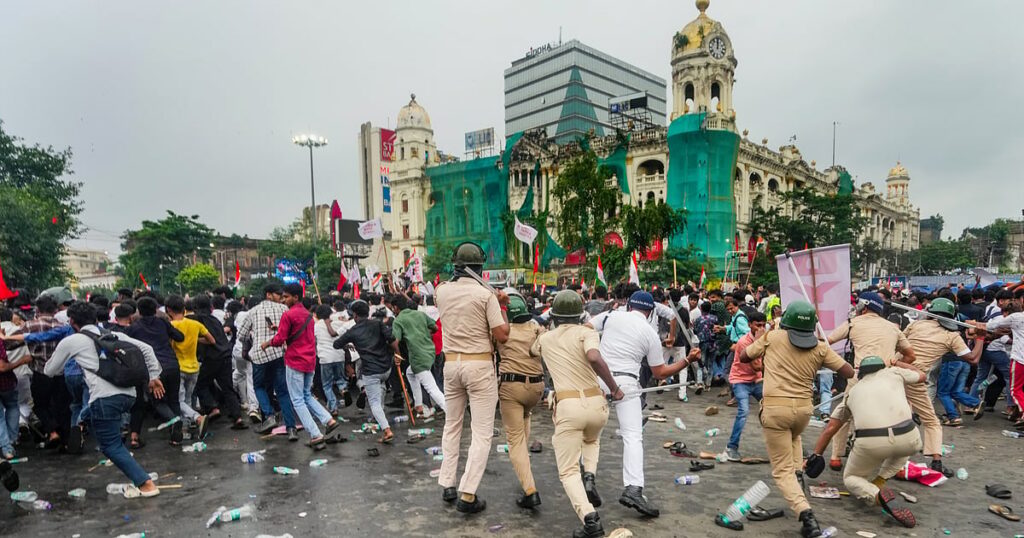
What is emerging is therefore more complicated than the Cockroach Janta Party alone: part meme, part student movement, part street agitation, part institutional negotiation and part nationwide conversation about education and employment. Whether these different currents eventually converge, remain independent or dissipate remains uncertain.
But something has already changed. A generation frequently caricatured as addicted to smartphones has discovered that digital anger can acquire a physical presence — and that the street need not remain in one place. Neha Bora is taking that politics from city to city; Dipke is keeping its irreverence alive; Das is testing how protest pressure can secure institutional outcomes; and Ranka is connecting those victories to a wider politics of accountability.
The important question for Indian democracy, therefore, is no longer whether Gen Z will come to Jantar Mantar. It is what happens when Jantar Mantar begins travelling across India.

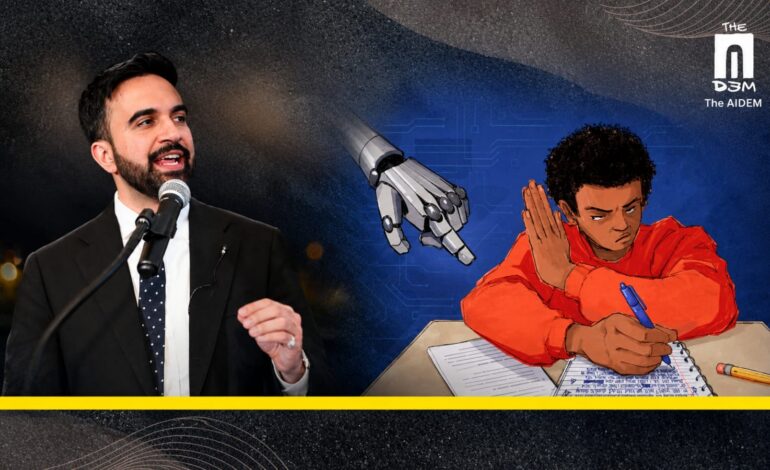






This is a powerful and timely article by Dr. Danish Reza. It brilliantly captures how Gen Z’s anger over education, unemployment and injustice is evolving into a wider democratic movement. Jantar Mantar is no longer just a place—it is becoming a symbol of resistance travelling across India