

‘Dharmendra Pradhan Helped the BJP Win Odisha; Gyanesh Kumar Is Helping It Win Across India’: Aishe Ghosh

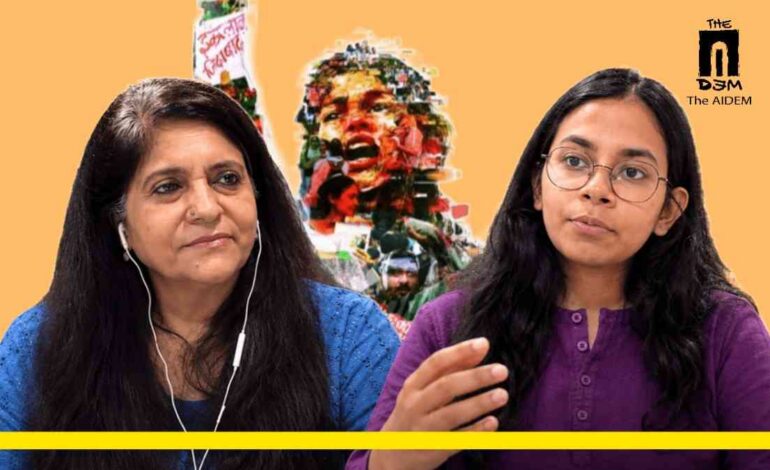
Part Two | Gen Z, State Repression and the Future of Democratic Resistance
The struggle against electoral manipulation in India has brought a new generation of activists into the forefront of democratic resistance. But can the energy of young protesters sustain a prolonged confrontation with an increasingly repressive state? And can student-led mobilisation grow into a wider movement embracing workers, farmers, marginalised communities and opposition political forces?
These questions form the central thread of the second part of the conversation between veteran activist and journalist Teesta Setalvad and student leader Aishe Ghosh, All India Joint Secretary of the Students’ Federation of India (SFI).
Ghosh argues that the present movement cannot afford impatience or political isolation. Drawing on the experience of the farmers’ agitation, the anti-CAA protests and earlier democratic struggles, she challenges the tendency to portray Gen Z activism as a phenomenon detached from the history of mass movements. Young people, she insists, can be catalysts for change, but lasting resistance requires the participation of society’s wider working and marginalised sections.
The conversation moves from the demand for accountability from Chief Election Commissioner Gyanesh Kumar to the possibility of intensified police repression, the dangers of surveillance and fabricated digital evidence, and the historical lessons of the Emergency and Partition. Running through the exchange is a shared conviction that the defence of democratic freedoms must transcend generations and that resistance to hatred must remain rooted in solidarity, equality and constitutional values.
The link to watch the full audiovisual interview of is given at the bottom of the page.
Teesta Setalvad: Let me now turn to the immediate movement. Permission has reportedly been given for a protest at Connaught Place today. I do not want to enter into the differences that may exist between Abhijeet Dipke and other groups. Those matters require a more careful understanding.
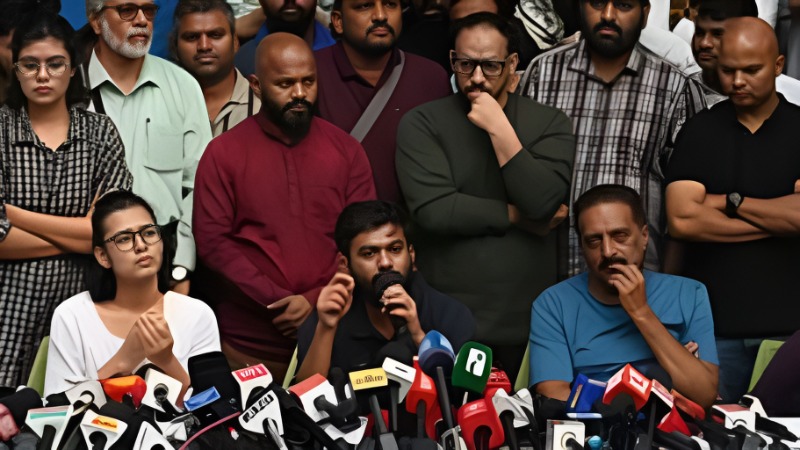
What is planned for today, and how do you see the movement developing? The immediate demand concerns Chief Election Commissioner Gyanesh Kumar. But there are larger questions about the Election Commission, the Special Intensive Revision of electoral rolls, the legitimacy of elections conducted on disputed voter lists, and the 2023 law governing appointments to the Election Commission.
There are also questions about the transparency of electronic voting systems and the broader need to de-weaponise the electoral process. A movement cannot necessarily raise every demand simultaneously. But how will you sustain the momentum, particularly when the government appears determined to suppress the protests?
Aishe Ghosh: We are very clear that the crackdown on this movement could be much more severe than what we experienced when we demanded the resignation of the Education Minister.
We have discussed this repeatedly. We know the risks.
But I do not want to present this as a question of my personal courage. I belong to an organisation with a long history of struggle, including resistance during the Emergency. That collective experience gives us strength.
My greater concern is for ordinary citizens who are participating in these protests. They are not all experienced activists. Many are coming onto the streets for the first time.
During the earlier Jantar Mantar protests, I met genuine aspirants and students who were deeply affected by what was happening.
I made a point at a recent press conference: Dharmendra Pradhan helped the BJP win Odisha; Gyanesh Kumar is helping it win across the country through vote stealing.
During the earlier agitation over education, we could remain at one place and gradually build pressure. In the present movement, even that space is being restricted.
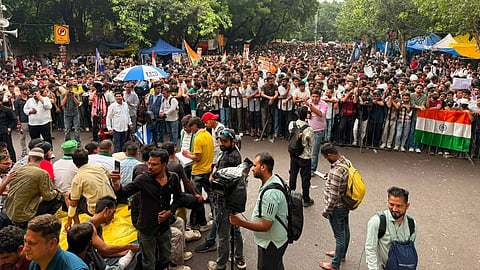
Yet I would not say that we have failed to build pressure. Students and young people continue to appear at protests, sometimes quite unexpectedly. Public awareness of electoral manipulation has grown considerably.
Our first responsibility is to ensure that the movement does not lose momentum. We cannot afford to be impatient. This will be a long struggle.
The government would like us to become frustrated and take steps that could be used to discredit the movement or justify further repression.
We must not allow that to happen.
Teesta: People concerned about electoral transparency have been waiting for a movement of this kind for a long time. Many have been raising these issues since 2024.
But there have also been differences over strategy. Do you think the decision by some organisers to enter discussions with government representatives weakened the earlier agitation?
Aishe: Different organisations and individuals have different ways of conducting struggles. If I am leading a movement, I have organisational structures through which such decisions are discussed.
Some of the young organisers involved in the earlier protests were participating in a major movement for the first time. They did not necessarily have years of experience in education-related struggles.
I think we should recognise that and give them the benefit of the doubt. We offered whatever suggestions and support we could. What mattered was that pressure had been created. The police action against participants, including the detention of prominent individuals, generated considerable public anger and brought more people into the movement.
Teesta: I want to acknowledge something here.
I spoke separately to some of the young organisers, including Ashutosh Ranka and Saurav Das, and also had conversations with Abhijeet Dipke. They acknowledged that when they initially arrived at Jantar Mantar, they expected a stage and an organised gathering because of the support they had received on social media. But the arrangements were not in place.
At that point, the SFI stepped forward and helped organise the necessary infrastructure.
I think that is an important contribution. It demonstrates how an established student organisation can support a broader movement without necessarily attempting to take it over.
Aishe: I agree. But I also want to challenge the idea that students alone can accomplish everything.
Student and youth movements are extremely important, but they cannot bring about fundamental social change by themselves.
Workers, farmers, agricultural labourers and other sections of society must participate.
Students and young people can act as catalysts. They bring energy, new ideas and organisational enthusiasm. But a mass movement must extend much further.
Even during the freedom struggle, young people played a crucial role. Yet the struggle against colonial rule could not have succeeded without the participation of workers, peasants and the wider population.
The same principle applies today.
Teesta: Particularly because electoral exclusion can disproportionately affect agricultural labourers, migrant workers, Dalits, Adivasis and other marginalised communities.
Many people do not possess the documents that administrative authorities may demand. Adivasi communities, for instance, have struggled for generations to secure land and community forest rights.
Aishe: Exactly. That is why the movement must expand patiently and bring more sections of society together.
Opposition political parties have an important responsibility because they possess the organisational capacity to reach large numbers of people.
Student organisations can energise the struggle, but broader mobilisation requires cooperation across society.
Teesta: Young activists also bring humour, creativity and a certain fearlessness. Perhaps they are sometimes more courageous than our generation.
Aishe: I appreciate those qualities. But I also think we should be careful about portraying creativity and courage as something unique to the present generation.
Every generation has had its young rebels.
In 2019, when we were students protesting against the CAA and NRC, we were the young activists of that period. During the Emergency, there was another generation of young people resisting authoritarianism.
What is distinctive about the present generation is its greater familiarity with social media and digital communication. Young people are more outspoken, better connected and often more willing to challenge authority.
That deserves recognition.
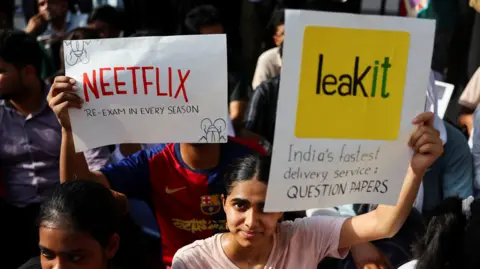
But we should not overlook the creativity of farmers’ and workers’ movements.
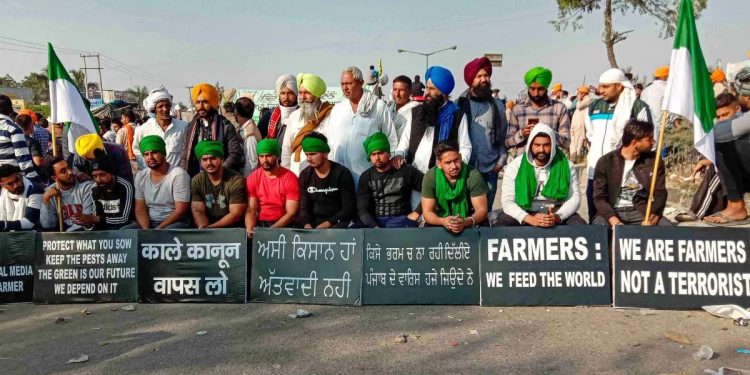
I participated in solidarity activities during the farmers’ movement. The creativity I witnessed there was extraordinary. Farmers developed their own forms of communication, cultural expression and even newspapers.
Workers and farmers may not receive the same media attention as students. They also have less time because they must earn their livelihoods and support their families.
That does not mean they lack creativity or political understanding.
Teesta: Absolutely. I have witnessed remarkable creativity among agricultural workers and Adivasi communities.
During a visit to Sonbhadra, I heard songs associated with harvesting, carrying produce and working in the forests. The cultural expressions of women, in particular, were deeply inspiring.
These are traditions of creativity that rarely receive the recognition they deserve.
So, despite the difficulties, you remain hopeful that the present movement will continue?
Aishe: Very hopeful.
What gives me hope is that people who were never previously involved in political organisations are beginning to participate.
Young citizens who have never attended a political meeting or joined a protest are realising that this is not merely about party politics.
It is about democracy and the need to protect it.
Of course, there will be crackdowns. There may be periods when the movement loses momentum. But the political awakening that is taking place cannot be dismissed.
Teesta: Do you fear that the repression could become as severe as what followed the anti-CAA protests?
Aishe: It is possible.
As activists, we understand that the government may try to break the movement by arresting organisers, filing cases or using surveillance and other forms of intimidation.
There are serious concerns about digital evidence, the misuse of technology and the possibility of fabricated material being used against activists.
With artificial intelligence and increasingly sophisticated surveillance systems, those concerns have become even greater.
We have seen what happened in cases such as Bhima Koregaon. These experiences make activists apprehensive about what could happen next.
But we must prepare people for such possibilities rather than allow fear to paralyse us.
At the same time, we must remember that most people have responsibilities beyond political activism. They have jobs, families and livelihoods.
We cannot expect everyone to protest every day.
Even as an activist, I do not want to spend my entire life responding to attacks on existing rights. I would rather organise people around demands that improve society.
Take education. Ideally, we should be fighting for better classrooms, improved facilities and greater opportunities for students.
But when existing rights and institutions are under threat, we are forced to spend our energy defending what we already have.
How can we demand new rights when we are constantly struggling to protect the old ones?
That is one of the most frustrating aspects of the present situation.
Teesta: That is an important point.
We have often discussed the Emergency of 1975–77. It was an authoritarian period and its excesses should never be minimised.
But what we are witnessing today has additional social, economic and political dimensions. There is a combination of communalism, caste hierarchy, corporate power and authoritarian politics that requires a much wider struggle.
Aishe: There is something else I find significant.
Today, we can openly discuss the Emergency. We can criticise what happened then. Organisations can proudly recall how their members resisted it and went to prison.
Even the present government repeatedly invokes the Emergency and the experiences of those who opposed it.
That tells us something about the democratic space that survived that period.
But when we criticise the present situation, we face enormous pressure. People are afraid of speaking out. Families seeking justice, such as Ankita Bhandari’s parents, continue to struggle.
The contrast is deeply troubling.
Teesta: The conduct of the police is another major concern.
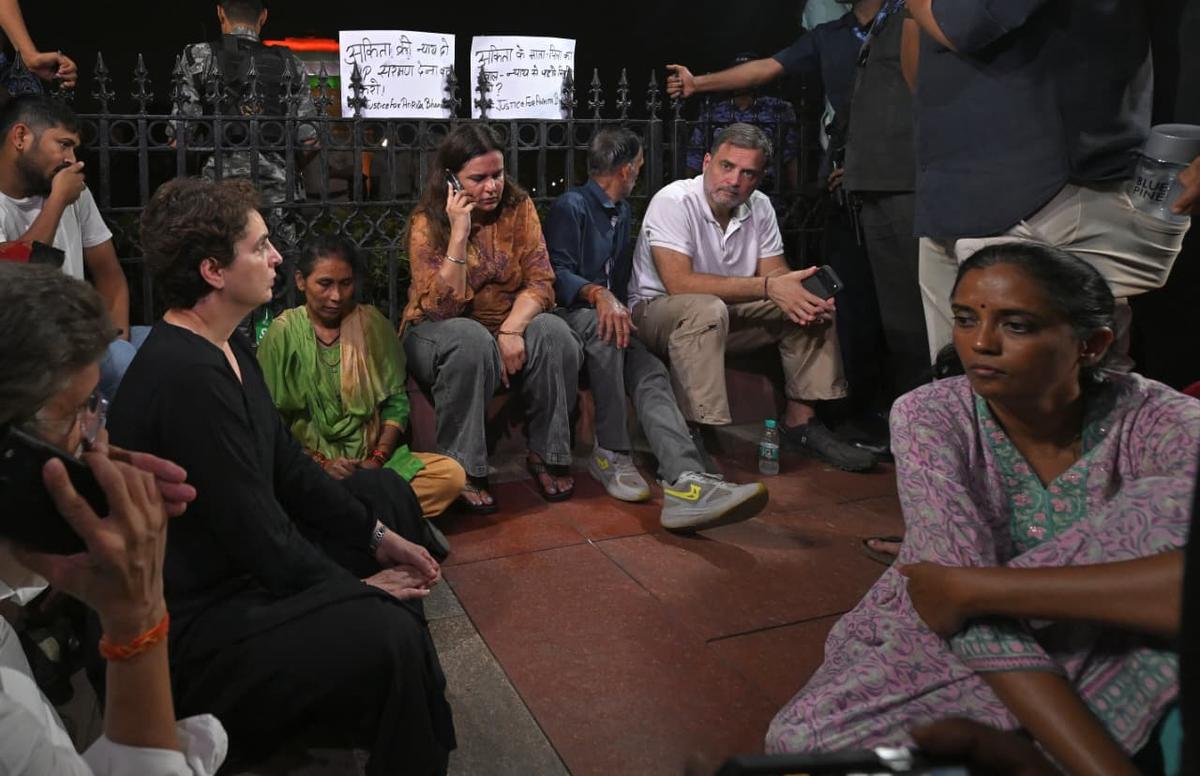
We have repeatedly witnessed disturbing instances of brutality by the Delhi Police, including women police personnel.
There are questions about the chain of command. Who issues the orders? Who authorises the use of force? But beyond those questions, how do you understand the conduct of individual police officers?
Aishe: I find it deeply disturbing.
Police officers are also citizens of this country. Yet the hatred and hostility directed towards protesters can become so intense that they begin to treat fellow citizens as enemies.
I am reminded of the Jallianwala Bagh massacre. General Dyer gave the order to fire, but Indian soldiers carried it out.
That history raises a difficult question about obedience to authority and individual responsibility.
Today, police personnel sometimes justify their actions by saying that they were merely following orders.
But does an order absolve someone of moral responsibility? If you are ordered to assault another citizen, should you simply obey?
We must ask how such hostility is cultivated within institutions and how power affects those entrusted with enforcing the law.
Teesta: Power, hatred and sycophancy can become a dangerous combination.
Aishe: Exactly.
But our response cannot be to reproduce the same hatred. The more hatred they spread, the more determined we must be to defend peace, solidarity and democratic values.
India was not built on hatred alone. Our freedom struggle also carried powerful ideas of equality, coexistence and collective emancipation.
People fought for independence because they wanted to live freely in their own country.
As members of a younger generation, we want that freedom to remain meaningful. We want to think freely, speak freely and live without fear.
I come from Bengal, and I grew up hearing stories of Partition. Those stories were heartbreaking. They remind us of the terrible consequences of communal division.
We should not allow another generation to experience the same kind of hatred and suffering.
Teesta: Partition remains one of the most painful chapters of our history. Whether we look at Bengal, Punjab, Bihar, Delhi or the regions that became Pakistan, we see how communal hatred produced an immense human tragedy.
In our constitutional education programmes, I often use maps to explain Partition and the ways different communities experienced it.
But there is also another lesson.
Communal violence does not begin only when mobs gather on the streets. It begins when hatred is allowed to grow in people’s minds.
Over the years, I have encountered extraordinary individuals who stopped violence simply by refusing to participate in it.
I remember women who stood before mobs and declared that violence would take place only over their dead bodies.
Such acts of courage remind us that ordinary people can resist communal hatred, even in moments of extreme danger.
Aishe: That is precisely the lesson our generation must carry forward.
We have grown up hearing stories of Partition from our grandparents and reading about the suffering it caused.
We should be able to say: enough.
We do not want another communal tragedy. We do not want our country divided by hatred. We do not want citizens turning against one another because of religion or identity.
We want people to live safely, develop their abilities and flourish. We want a country where young people can imagine a future without fear.
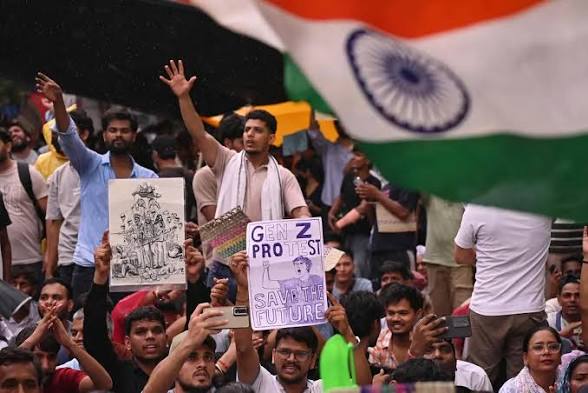
That is what our generation is fighting for: the freedom to live freely in our own country, without hatred and division.
Teesta: Equality, non-discrimination, harmony and love. Those are the values we must defend.
It has been a pleasure speaking with you, Aishe. There are many more questions we could discuss, and I hope we can continue this conversation.
On behalf of people of my generation, and those working for democratic rights in Mumbai and other cities, I want to express our solidarity with you and the other young people involved in this struggle.
I also want to make an appeal.
When repression intensifies, those of us who are not immediately at the receiving end must not remain silent.
We cannot expect young activists alone to bear the consequences of state action. We have seen how prolonged imprisonment and legal persecution can affect individuals and families. Umar Khalid and others continue to remain in prison.
Defending democratic rights must be a collective responsibility, across generations.
Thank you, Aishe, for your courage and commitment.
Aishe: Thank you, Teesta. Your work has also been a tremendous inspiration to many of us.
Teesta: Thank you for saying that.
To read the Part I click here and watch the full interview in audiovisual format here.






An election is not a licence to manipulate democracy. The allegations surrounding the Special Intensive Revision (SIR) of electoral rolls and questions over the Election Commission’s impartiality demand transparent answers and independent scrutiny. When citizens begin to doubt whether every vote counts equally, the credibility of the entire electoral process is at stake. The Election Commission must remain accountable to the Constitution, not appear accountable to the ruling party. Democracy belongs to the people, not to those in power.