

Two Generations of Resistance: Teesta Setalvad and Aishe Ghosh on the Battle for India’s Democracy


Part One | From the Anti-CAA Struggle to the Fight Against Electoral Disenfranchisement
There is a distinct historical significance to this conversation between Teesta Setalvad and Aishe Ghosh, two committed social activists representing different generations of India’s democratic resistance. Setalvad brings to the dialogue decades of engagement with struggles against communalism, institutional injustice and the erosion of constitutional rights. Ghosh represents a younger generation whose political consciousness has been shaped by battles over public education, citizenship, electoral rights and increasingly aggressive state repression. Their exchange is more than an interview; it is a meeting of political experiences across generations, united by a commitment to defending democratic values.
From the brutal attack on Jawaharlal Nehru University on 5 January 2020 to the ongoing protests against electoral manipulation and the Special Intensive Revision (SIR) of electoral rolls, Aishe Ghosh has remained a prominent voice of student resistance. As All India Joint Secretary of the Students’ Federation of India (SFI), she has been involved in struggles that have brought students and young people into confrontation with the policies and practises of the Narendra Modi government.
In the first part of this wide-ranging conversation, originally published in the audiovisual format in Sabrangindia, Setalvad and Ghosh examine the changing character of mass movements, the differences between the anti-CAA protests and the present struggle over electoral rights, and the RSS’s long-term project of reshaping Indian society.
The link to watch the full audiovisual interview of is given at the bottom of the page
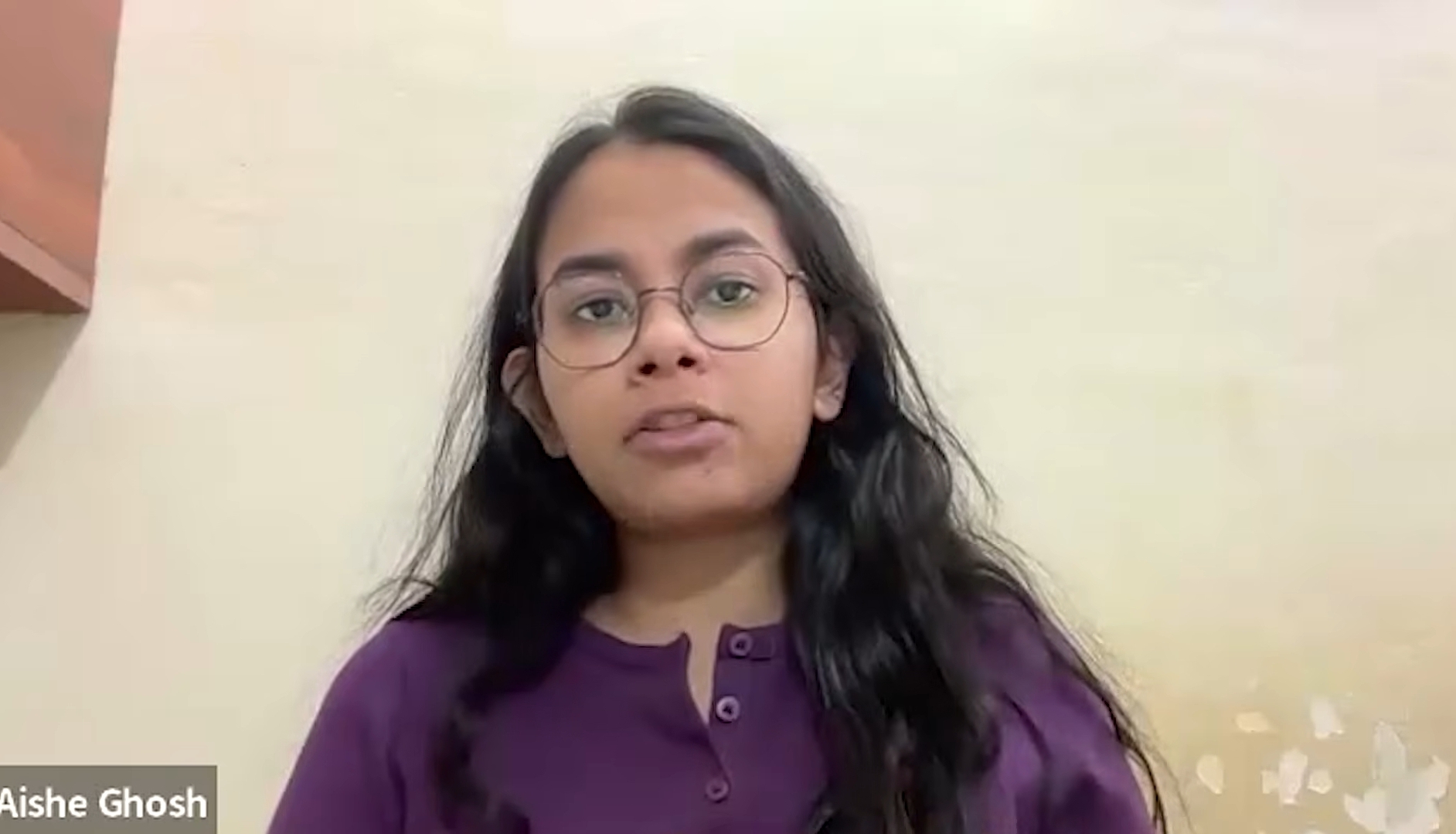
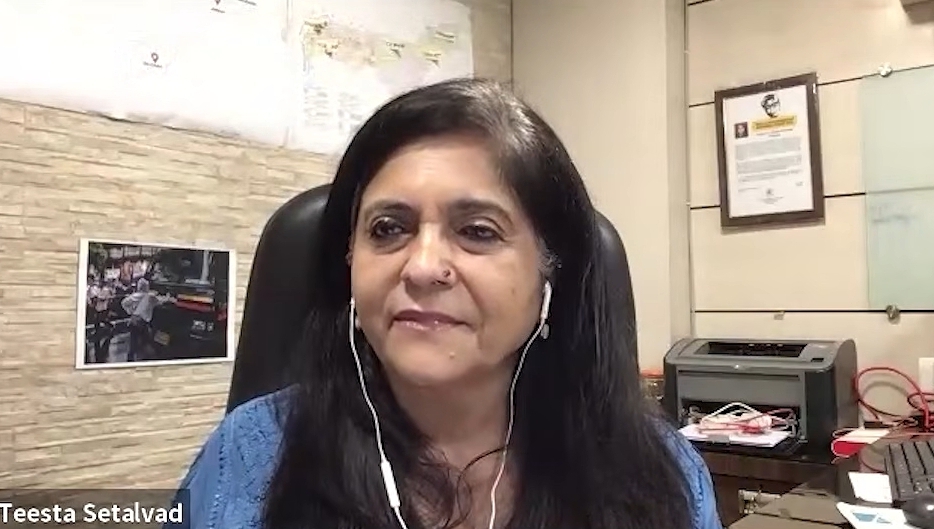
Teesta Setalvad: Good afternoon, Namaste, Salaam. We have with us a young colleague who has been involved in several important struggles over the past six to ten years.
Aishe Ghosh, All India Joint Secretary of the Students’ Federation of India, has become one of the prominent faces of the current protests. But when I think of Aishe, I also remember 5 January 2020, when masked attackers brutally assaulted students on the JNU campus. This happened against the backdrop of the nationwide anti-CAA and anti-NRC protests, shortly after the police attack on Jamia Millia Islamia on 15 December 2019.
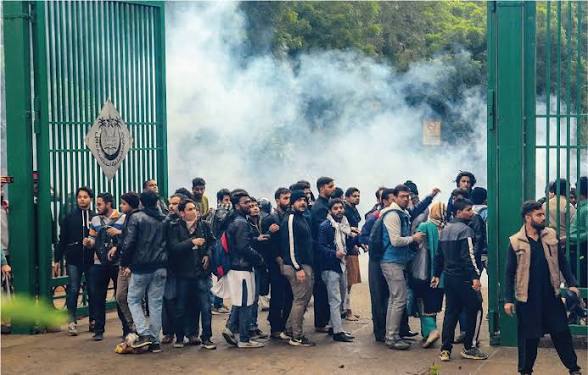
Aishe was seriously injured in that attack. Even today, the attackers have not been brought to justice.
Now, once again, we are witnessing police brutality against students, women, journalists and ordinary citizens participating in protests in Delhi. Aishe, having personally experienced such attacks, how do you see the present movement? How is it different from the anti-CAA and anti-NRC struggles, and where do you think it is heading?
Aishe Ghosh: The present movement has a very different trajectory from the anti-CAA and anti-NRC protests of 2019. The circumstances in which the two movements emerged were different.
In 2019, there was already considerable unity among students across campuses because of the continuous increase in fees and the larger struggle to defend public education. When the Citizenship Amendment Bill came up in Parliament, that issue became part of an already developing movement.
Then came the attacks on campuses such as Jamia Millia Islamia and Aligarh Muslim University. There was growing apprehension that minorities were being reduced to second-class citizens and that the RSS’s ideological agenda was being translated into government policy.
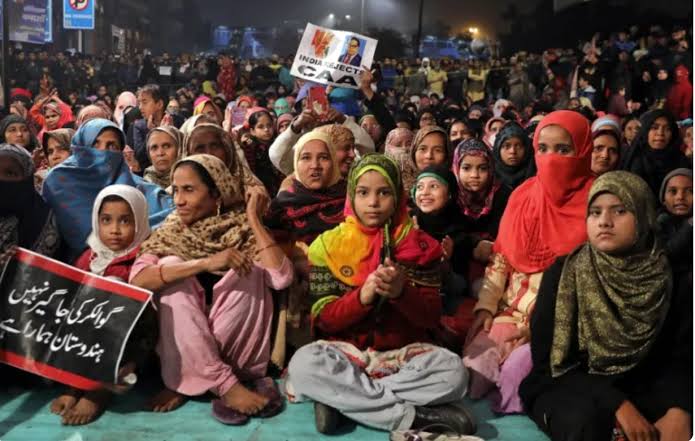
The solidarity that emerged was remarkable. Women came out in large numbers at Shaheen Bagh and sustained a peaceful democratic protest until the COVID-19 pandemic. We also witnessed the communal violence in Delhi. I was part of a fact-finding team that visited the affected areas.
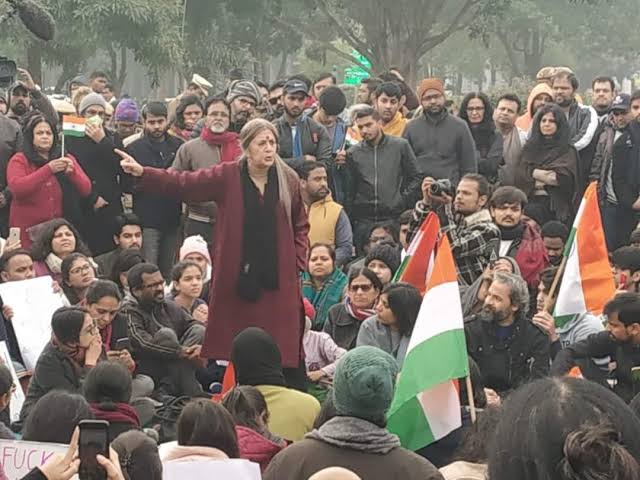
Teesta: Was that the team with Brinda Karat? I remember publishing its findings.
Aishe: Yes, Brinda Karat was there.
But there is an important difference between that period and 2026. The BJP had returned to power in 2019, and a considerable section of the population was still willing to accept its narrative about ghuspetiyas, or infiltrators, and Bangladeshis.
Today, I see a change. People are no longer prepared to accept everything Amit Shah says. If there are so many infiltrators, where is the list? What has a government that has been in power for more than a decade done about them? Where is the data?
As political activists, we understand the ideological foundations of the RSS. We know how minorities, Leftists and intellectuals are portrayed as internal enemies. I have studied these political theories as a student of political science, so the ideological pattern does not surprise me.
But it is much more difficult for ordinary people to comprehend. They have grown up believing that political parties come to power through elections and can be voted out. It is difficult for them to imagine that a political organisation could systematically reshape institutions and electoral processes to perpetuate its hold on power.
That is why I see an important change in the present movement. People are beginning to question the electoral system itself.
The beauty of the movement against vote chori is that it has brought together people across caste, class, religion and gender. That is what a mass movement should do.
In 2019, although people from different communities participated in the anti-CAA protests, the BJP succeeded in portraying them primarily as Muslim protests. It repeatedly highlighted Shaheen Bagh and other Muslim-majority areas to suggest that only minorities were opposing the government.
Today, when Abhijeet Dipke, Neha, I and so many others are protesting, that narrative becomes more difficult to sustain. The movement also includes opposition political parties and ordinary citizens.
We are telling people something fundamental: you may vote for the BJP, Congress, the Left or any other political party. But if your voting rights can be taken away without your consent, that should concern you regardless of your political preference.
The right to vote is not a question of which party you support. It is a question of whether you retain the right to choose at all.
Teesta: That unity is certainly energising and reassuring. But there is another concern. When Muslims were being attacked, when their lives, livelihoods and religious identities were targeted, sections of society appeared willing to accept or even endorse the hatred being spread.
That remains a serious problem. Can the solidarity generated by the present movement help overcome it?
Aishe: I want to be very frank about this. I do not believe that the communal hatred cultivated over so many years will disappear in a year or two.
We have a great deal of work to do.
It is important that people from different communities are standing together today. When someone like Junaid helps Abhijeet Dipke organise a protest, such images create trust and solidarity. But we should not mistake these moments for the disappearance of deep-rooted communal prejudices.
The RSS is not concerned merely with winning elections for the BJP. It has a much larger project of social and structural transformation.
That is why its efforts to capture the education system are so important. When children encounter communal stereotypes in textbooks from an early age, those ideas shape their understanding of society.
A five- or six-year-old child generally accepts what is taught in school. Unless parents or others challenge such ideas, they become part of the child’s worldview.
Let me give you a simple example from gender socialisation. In our school textbooks, we often encountered the image of a father going out to earn money while the mother cooked at home.
But mothers also work outside the home, and housework itself is work. Yet children are taught to associate men with earning and women with domestic responsibilities.
I realised this in my own life. Before coming to JNU, I had never really cooked, but I somehow knew recipes and understood how a kitchen was organised. My mother had never formally taught me these things. I had absorbed them simply by watching her.
Boys may not absorb the same lessons because society conditions them differently.
That is how ideas become embedded across generations. Communal prejudice also operates through similar processes of socialisation.
So, while the present movement creates important images of unity and mutual trust, organisations like ours, civil society groups and everyone concerned about democratic values must continue working at the grassroots.
Teesta: You are making an important distinction between political mobilisation and the longer struggle to transform society.
There is another change worth acknowledging. For a long time, the opposition’s response to the government was largely confined to Parliament. Now we see opposition parties participating more visibly in street protests.
Aishe: Exactly. Earlier, opposition parties seemed to believe that raising issues in Parliament would be sufficient. Meanwhile, farmers, workers and students were carrying out major struggles outside Parliament.
But the BJP and RSS have increasingly restricted the space for parliamentary dissent. Opposition MPs are suspended, legislation is passed without adequate discussion, and institutions are being brought under political control.
We saw this even in education. During the COVID-19 pandemic, the National Education Policy was introduced without adequate consultation with students, teachers and other stakeholders.
The pandemic was a public health emergency. Yet major changes affecting education were pushed through at that time.
The opposition now understands that it cannot confine its struggle to parliamentary debates. Elected representatives must also come onto the streets and participate in people’s movements.
Teesta: One cannot describe a political formation as having proto-fascist tendencies and then expect it to leave democratic institutions untouched.
Aishe: Precisely. Institutional control is part of the larger political project. That is why resistance must take place both inside and outside Parliament.
Teesta: Let me return to something you said about gender and the way social attitudes are formed.
When the student protests began, questions concerning examinations, corruption, nepotism and the future of education were prominent. At the same time, there were protests against violence directed at women, including disturbing incidents around women’s colleges in Delhi. Do you think those issues have been pushed into the background by the movement over electoral rights?
Aishe: No, I do not think so. In a mass movement, different struggles do not necessarily compete with one another. They often develop together.
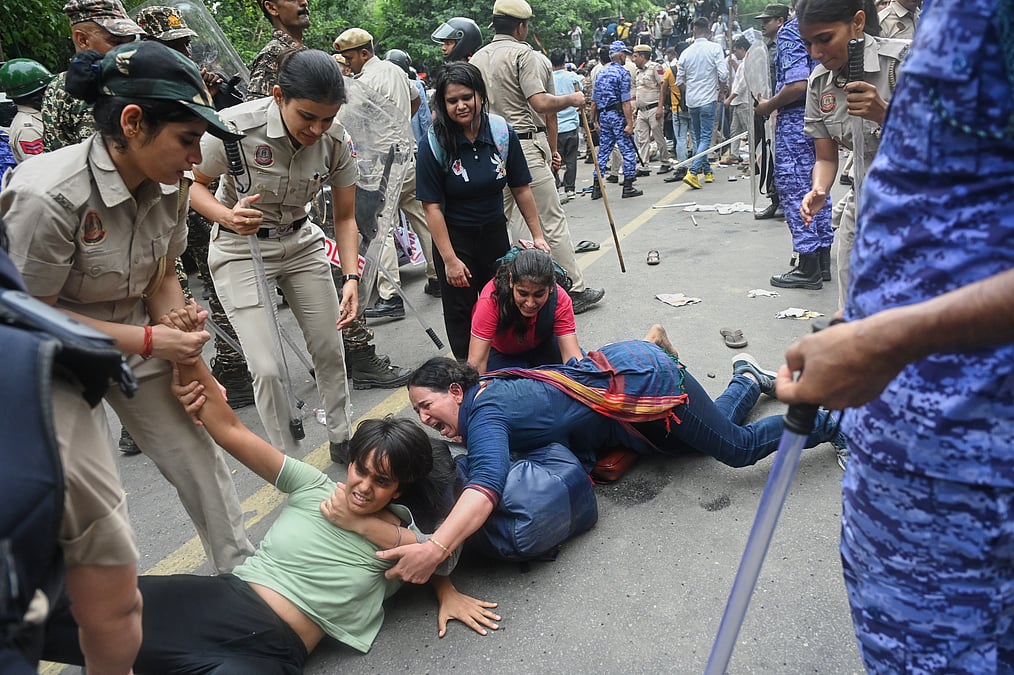
When women confront police barricades, stop police buses or climb onto them during protests, they are also challenging patriarchal expectations about how women should behave.
Society expects women to protest in a certain restrained and prescribed manner. But women are breaking those conventions. They are occupying public spaces, confronting authority and asserting their political agency.
So it is not women’s safety versus voting rights, or education versus democracy. These struggles are interconnected.
Mass movements can create liberating spaces for people marginalised by gender, caste, class or religion.
I saw this during the different phases of the Jantar Mantar protests. The first phase involved people sitting together at a protest site. In the second, we were constantly moving, confronting barricades and responding to police action.
The circumstances were different, but one thing remained striking: students and young people from marginalised communities were among the most active participants.
And I want to emphasise something. Those of us who become publicly recognised faces of a movement are not necessarily its most important leaders.
Many people from marginalised backgrounds are doing the actual work of sustaining these struggles. They often face the greatest consequences.
Teesta: That is a very important observation.
Aishe: Social media and mainstream media can make some of us visible very quickly. We must recognise that this visibility is also a form of privilege.
Think of the women of Shaheen Bagh. How many of them can most people name? Yet they sustained an extraordinary movement and faced immense pressure from the state.
Many people involved in such struggles continue to deal with criminal cases and legal proceedings. These can drag on for years, imposing enormous personal and financial burdens.
Teesta: I certainly know what prolonged legal proceedings can mean.
And we should not forget the Supreme Court’s response to the Shaheen Bagh protests. The language and reasoning of that judgement raised serious concerns.
Aishe: Exactly. Every movement leaves behind experiences, lessons and networks of solidarity. The present movement has grown out of those earlier struggles.
For us, particularly as members of a Left organisation, the responsibility is not simply to mobilise people around one immediate demand. It is also to create opportunities for those who have historically been denied them.
There is enormous talent among young people from disadvantaged backgrounds. Many have never had access to elite institutions or professional training, not because they lack ability but because the system has failed to provide equal opportunities.
When people from such backgrounds demonstrate their abilities, we must help create spaces in which they can pursue their aspirations.
End of Part One. The second part- “Pradhan helped BJP win Odisha, Gyanesh is helping it win across India” Aishe Ghosh speaks to Teesta Setalvad on democracy, crackdowns and the fight for a better India- examines the immediate struggle over electoral rights, the role of Gen Z, the challenges of sustaining mass movements and the growing threat of state repression.
Watch the full interview in audiovisual format here.





Two generations, one unwavering fight for democracy. Teesta Setalvad and Aishe Ghosh represent the courage to question power, defend constitutional rights and resist the politics of fear. A democracy cannot survive when dissent is branded as a threat and those who raise uncomfortable questions are silenced. India needs fearless voices, strong student movements and solidarity across generations. The fight for democracy is not a crime; silencing those who defend it is a threat to the Republic itself.