


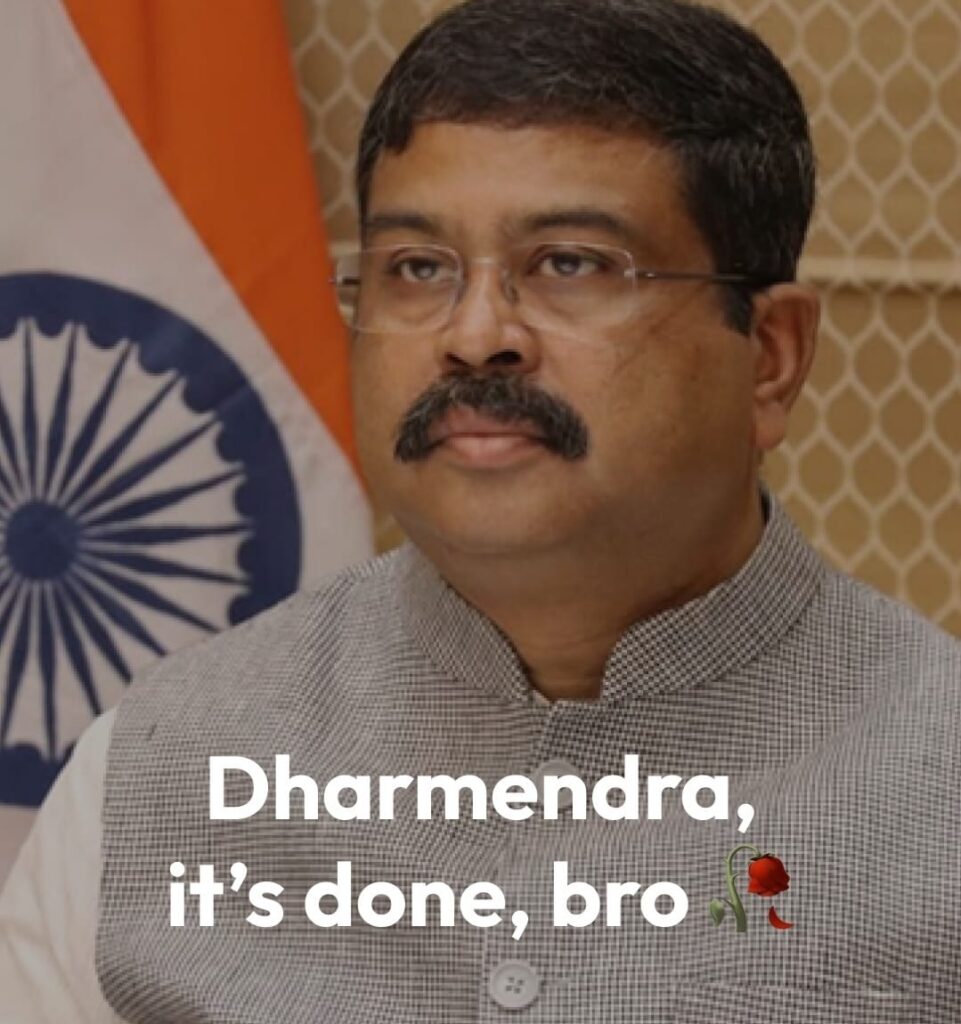
“Sonam, it’s done, bro.”
Bollywood actor Salman Khan’s post addressing scientist and social activist Sonam Wangchuk was meant to reassure the activist and his associates in the Cockroach Janata Party (CJP)-led agitation for education sector reforms. The context of the social media post was Prime Minister Narendra Modi’s announcement that those responsible for the paper leak would face strict action.
Following that announcement, Salman Khan posted an appeal directed at Wangchuk. In essence, he wrote: “Sonam, it’s done, bro. Don’t extend this. Keep the spirit for another day if there is a need, which I doubt, and eat something. If you want, I will send you food from home.” He was conveying that the government had responded and that Wangchuk should end his fast.
But the Bollywood star’s post soon escaped its original context to become one of the defining memes of the nationwide CJP protests, and this was just the tip of the iceberg.
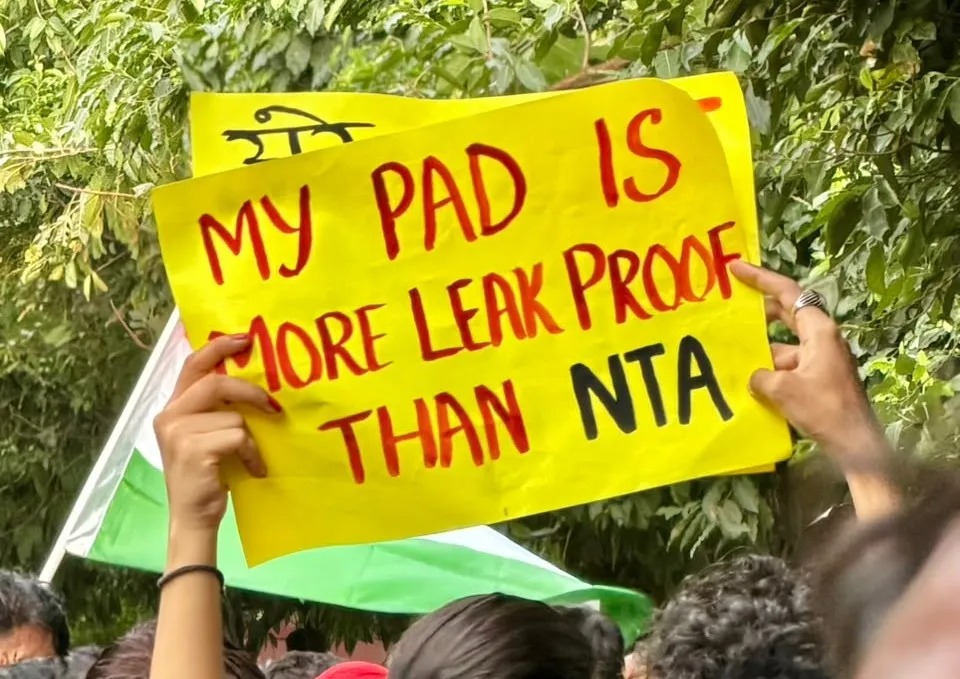
Protest slogans such as “My pad is more leakproof than the NTA” travelled from placards at Jantar Mantar to millions of social media feeds, turning humour into one of the movement’s most recognisable political languages.
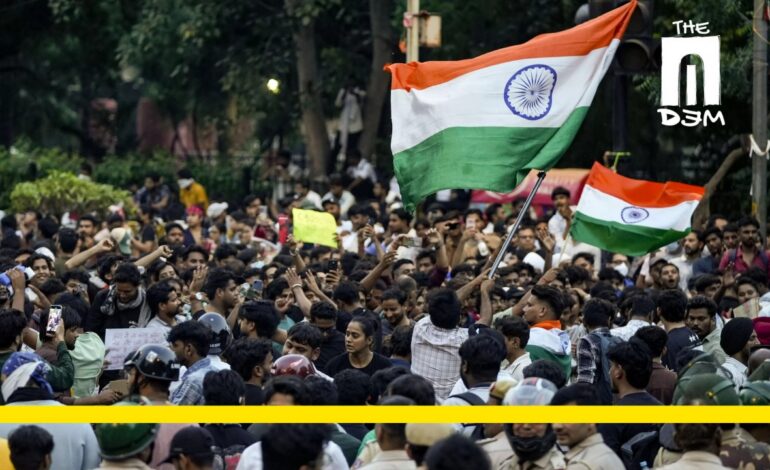
These posts were not simply comic interludes amid a serious political crisis. They reflected a larger transformation in how India’s younger generations communicate dissent. As the CJP protests against the NEET-UG paper leak gathered momentum and eventually culminated in the resignation of the Union Education Minister, memes, reels and sarcastic videos became almost as important to mobilisation as speeches and rallies.
Much of this activity unfolded on platforms such as Instagram, X and Facebook, where creators blended entertainment with political messaging to reach audiences that conventional activism often struggles to engage.
Every generation develops its own vocabulary of protest. For Gen Z, that vocabulary is shaped by internet culture—irreverent, self-aware and often deliberately absurd. Beneath the jokes, however, lies a serious political purpose: using humour to build solidarity, puncture official narratives and keep public attention fixed on issues that algorithms and news cycles are quick to bury.
Much of the mobilisation for this movement took place on online platforms such as X, Instagram and Facebook, with many Gen Z content creators and influencers speaking out in solidarity. A common phenomenon today is creators using humour and relatable content to make political issues more accessible.
Many of them shared their own experiences of preparing for competitive examinations, attending protests in different cities and posting photographs of humorous placards, while blending comedy into their own content to raise awareness about the issue.
For instance, much of the opposition to the CJP protests revolved around claims that “Sonam Wangchuk has links to China and Pakistan!” These allegations surfaced during the renowned activist’s 26-day hunger strike, although most of the claims were either unverified or misleading.
As for the allegations regarding Pakistan, they stemmed from a climate conference that Wangchuk attended in February 2025, organised by a Pakistani media conglomerate, where he spoke on a panel titled “Glacial Melt: A Sustainable Strategy for the Water Towers of South Asia.”
The allegations regarding China, meanwhile, stemmed from a clipped video appearing to show Wangchuk speaking about showing China the route through Ladakh if it invaded India. The Quint later confirmed that the video had been selectively edited and that, in the original recording, Wangchuk was quoting a comedian.
Many creators who expressed solidarity with the protests took to social media to criticise these allegations through sarcasm. Stand-up comedian Urjita Wani and creator Khushi Kumari, among others, posted two-sided POV sketches mocking the claims. They can be viewed below.
https://www.instagram.com/reels/Da8P8oEM7ud/
https://www.instagram.com/reels/DPbW2hyjMzU/
This phenomenon is not new. Humour has historically been part of social movements, often helping reduce tension among protesters. An earlier version of this tradition could be seen in Indian newspapers and magazines using cartoons as a weapon against the British Raj—a practice that, ironically, continued even during the Emergency, when dissent against the ruling government was heavily censored.
Indian Gen Z protest humour has a distinctive character of its own. It blends internet memes with pop culture references and the everyday realities of supporting the left-wing in India.
https://www.instagram.com/reel/DaV5vXgxI2c/?igsh=amd6dDFpMmQyNXhp
One of the most striking examples was Salman Khan’s now-famous “Sonam, it’s done, bro” post, which rapidly evolved into a meme template used across social media during the CJP protests.
Memes inspired by Salman Khan’s quote “Sonam, it’s done, bro”

https://www.instagram.com/indian.tweets/?utm_source=ig_embed&ig_rid=AnfLxgXvzdNzcqKF4Jf8Rp6
There were instances, however, where using humour and a deliberately unserious style to promote the issue, despite good intentions, generated mixed reactions online.
Rena Fathima, a popular lifestyle and beauty influencer from Kozhikode, Kerala, posted a “GRWM As I Attend My First Protest” video on Instagram. It attracted considerable criticism from followers who felt it trivialised a serious political issue in pursuit of engagement.
https://www.instagram.com/reels/DbF2uidTffo/
Yet it is important to remember that platforms such as Meta actively downrank political content and adjust their recommendation systems to reduce its visibility.
Given these circumstances, many creators, including Rena herself, have begun incorporating political content alongside their regular lifestyle content. This allows them to work around the algorithm while continuing to raise awareness about important issues.
GRWM (“Get Ready With Me”) videos on platforms such as Instagram, TikTok and YouTube Shorts are consistently favoured by recommendation algorithms and therefore tend to reach much larger audiences.
Gen Z’s blend of humour and activism through internet memes, witty placards and creative reels represents a new era of political dissent in India, proving that raising awareness and sharing a laugh can go hand in hand.
With social media platforms increasingly limiting political content, creators are finding new ways to blend awareness with entertainment. This style of protest may fade — or it may become a lasting feature of India’s activist culture.







Memes may look like jokes, but they can also become powerful tools for questioning authority and amplifying unheard voices. This article thoughtfully captures how Gen Z is reshaping the language of dissent in the digital age—where humour, creativity, and political engagement increasingly go hand in hand. A timely and insightful read